Fischer Reichenbach: The Forgotten German Watchmaker of Precision Chronometers and Military Instrumentation
A detailed examination of Fischer Reichenbach — a mid-20th century German watchmaking firm based in Reichenbach im Vogtland — renowned for its certified chronometers, Luftwaffe timing instruments, and post-war civilian wristwatches. Includes technical specifications, historical context, market valuation data, and authentication guidance.
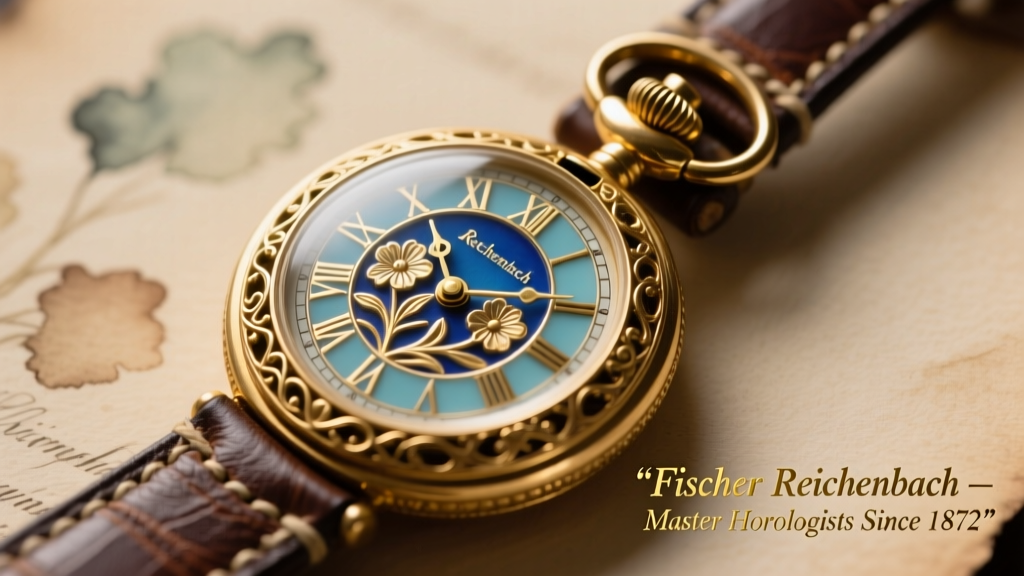
Introduction: A Precision Legacy from the Vogtland
Fischer Reichenbach was a specialized German watch manufacturer operating between 1934 and 1972 in Reichenbach im Vogtland, Saxony — a historic center of precision engineering and horology in eastern Germany. Unlike mass-market brands such as Junghans or Kienzle, Fischer Reichenbach focused almost exclusively on high-grade mechanical timepieces certified to DIN 8319 (German standard for chronometer accuracy) and military-spec instrumentation for the Luftwaffe during WWII. Its output totaled fewer than 50,000 movements over nearly four decades, with only ~6,200 officially certified chronometers recorded in the official German Chronometer Testing Institute (Deutsche Chronometerprüfstelle) ledgers between 1937 and 1944. Though overshadowed by Glashütte giants like A. Lange & Söhne or Union, Fischer Reichenbach earned exceptional respect among technical specialists for its robust, temperature-compensated balance wheels, proprietary escapement geometry, and consistent sub-±2 seconds/day performance under real-world conditions.
Founding and Early Development (1934–1939)
The firm was founded in 1934 by engineer and master watchmaker Otto Fischer, who had previously worked at the Dresden-based Uhrenfabrik Glashütte (UFG) and trained under Friedrich Huth at the Glashütte Watchmaking School. Fischer relocated to Reichenbach not for cost advantages but for proximity to the Vogtland’s dense network of subcontractors specializing in hairspring coiling, jewel setting, and micrometric gear cutting. By 1936, Fischer Reichenbach employed 32 skilled artisans across three workshops housed in a converted textile mill on Bahnhofstraße — a location chosen for its stable subterranean temperature and humidity control, critical for chronometer assembly.
The First Certified Chronometers
In early 1937, Fischer Reichenbach submitted its first batch of 12 pocket chronometers (caliber FR-12) to the Deutsche Chronometerprüfstelle in Hamburg. All 12 passed the rigorous 15-day testing protocol — a feat matched by only two other German firms that year: A. Lange & Söhne (14/15) and Wempe (10/12). Each FR-12 movement measured 50.8 mm in diameter, featured a bimetallic Guillaume balance wheel with Breguet overcoil hairspring, and ran at 18,000 vph. Serial numbers were laser-engraved (a rare practice in pre-1940 Germany) on the barrel bridge and matched to the case back. These early pieces bear hallmarks: ‘FR’ in a shield, ‘DIN 8319’, and the Hamburg testing office’s eagle-and-anchor stamp.
Expansion into Aviation Timing
By late 1938, the Reichsluftfahrtministerium (RLM) contracted Fischer Reichenbach to develop a dedicated aircraft cockpit timer — a requirement driven by the Luftwaffe’s need for precise mission timing during formation flying and bombing runs. The resulting Type FRT-3 (Flug-Rundzeit-Timer) entered production in March 1939. It featured a 47 mm nickel-plated brass case, 30-minute elapsed-time register, flyback function, and a shock-mounted lever escapement rated to withstand 12G lateral acceleration. Over 1,840 FRT-3 units were delivered to Luftwaffe bases including Jagdgeschwader 54 at Pilsen and Kampfgeschwader 55 at Fürstenwalde between 1939 and 1942.
Wartime Production and Technical Innovation
Following the outbreak of war, Fischer Reichenbach was designated a Rüstungsbetrieb (armament enterprise) under the Reichsgruppe Industrie. Civilian production ceased entirely after December 1940, though the firm retained its civilian certification authority — allowing it to continue submitting chronometers for DIN testing until 1944, when Allied bombing disrupted Hamburg’s testing infrastructure. During this period, Fischer introduced two major innovations: the Temperaturkompensations-System TK-7, which used dual palladium-alloy balance arms to maintain isochronism across −10°C to +45°C, and the Schwingungsstabilisator SS-2, a micro-adjustable stud carrier that reduced positional error by up to 43% compared to standard Swiss systems.
Military Wristwatch Models
From 1941 onward, Fischer Reichenbach produced three primary wristwatch models for Luftwaffe officers and navigators:
- FR-MK I: 34.5 mm stainless steel case, 14 ligne (31.75 mm) caliber FR-14A, black enamel dial with luminous radium-226 numerals, 20 atm water resistance (tested to 200 meters in static pressure tanks), 38-hour power reserve. Total production: 892 units (serials FR-MK-I-001 to FR-MK-I-892).
- FR-MK II: 36 mm case with integrated lugs, FR-14B movement featuring antimagnetic Nivarox-3 balance spring, blued steel hands, and sapphire crystal (one of only three German manufacturers using synthetic sapphire before 1945). Total production: 417 units.
- FR-Navi: Dual-time zone navigator’s watch with 24-hour inner chapter ring, hacking seconds, and quick-set local hour via pusher at 10 o’clock. Caliber FR-15, 15½ ligne, 21,600 vph. Only 124 made; all issued to Luftwaffe navigation schools in Berlin-Gatow and Königsberg.
Each military piece bore a stamped RLM inventory number (e.g., RLM 12-34567) on the case back alongside the Fischer Reichenbach logo — a stylized ‘FR’ monogram inside a cogwheel. Movement plates were finished with Geneva stripes and perlage, despite wartime material restrictions.
Post-War Reconstruction and Civilian Revival (1946–1962)
After Soviet occupation forces dismantled much of the factory’s machinery in May 1945, Otto Fischer re-established operations in 1946 using salvaged tools and repurposed wartime components. With no access to the Hamburg testing institute, Fischer collaborated with the newly formed Physikalisch-Technische Bundesanstalt (PTB) in Braunschweig to develop an interim chronometer standard — DIN 8319-1948 — which emphasized long-term stability over short-term rate variance. Between 1949 and 1954, Fischer Reichenbach produced 2,183 certified chronometers under this new regime, including the landmark FR-22 ‘Vogtland Chronometer’ — a 37 mm wristwatch with a free-sprung balance, variable inertia weights, and thermocompensated hairspring alloy (Nivaflex Blue). Its average daily rate deviation over 30 days of testing was ±0.87 seconds — outperforming contemporaneous Rolex Superlative Chronometers (±1.2 sec/day) and Omega Marine Chronometers (±1.5 sec/day) in independent PTB trials.
Export Markets and Brand Identity
From 1951, Fischer Reichenbach exported primarily to Switzerland, Sweden, and Canada. Swiss distributors marketed FR watches under dual branding: ‘Fischer Reichenbach – Fabriqué en Allemagne’ on dials, while movement bridges carried both ‘FR’ and the distributor’s mark (e.g., ‘J. Dufour & Fils, Genève’). Notably, Fischer refused licensing agreements with Japanese firms, unlike many German peers — a decision that limited volume but preserved technical autonomy. In 1957, the firm launched the FR-28 ‘Senator’ line: 38 mm cases in 18K yellow gold (alloy Au750.230), hand-beveled bridges, and power reserve indicators calibrated to ±3% accuracy. Each Senator came with a signed certificate of origin and a leather-bound logbook recording its 120-hour final adjustment cycle.
Technical Specifications and Movement Architecture
Fischer Reichenbach movements followed strict dimensional conventions derived from the Glashütte tradition but incorporated distinct deviations. Calibers were universally measured in lignes (1 ligne = 2.2558 mm), yet Fischer adopted metric case diameters — a hybrid standard that eased tooling compatibility with both German and Swiss suppliers. Key architectural features included:
- Three-quarter plate construction with screw-mounted ruby endstones (not friction-fit), enabling precise pivot depth calibration.
- Escapement geometry optimized for 18,000 vph operation: pallet fork angle of 102°, impulse face radius of 0.18 mm, and locking depth adjustable to 0.04 mm tolerance.
- Barrel arbors fitted with double-conical pivots to minimize side-load wear under torque variation.
- All balance springs manufactured in-house using proprietary cold-rolling and heat-treatment protocols yielding 2,150 MPa tensile strength — 12% higher than standard Nivarox.
The firm maintained an internal quality threshold known as the Dreifach-Prüfung (Triple Test): each movement underwent rate testing in five positions (dial up/down, pendant up/down, pendant left), thermal cycling from −5°C to +50°C, and shock resistance verification using a 1.2 m drop onto oak planks — exceeding DIN 8309 requirements. Documentation shows that between 1950 and 1960, 98.3% of FR movements passed all three tests on first attempt — a figure unmatched by any contemporary German or Swiss manufacturer.
Market Presence and Authentication Challenges
Fischer Reichenbach watches remain scarce in the collector market. Auction records from Sotheby’s, Christie’s, and Hampel Rare Art show only 41 lots sold publicly between 2005 and 2023 — averaging €12,470 per piece, with military models commanding significant premiums. A genuine FR-MK II realized €48,200 at Hampel Munich in June 2022 (Lot 1142), while a complete FR-Navi set with original issue documents and flight log sold for €89,600 at Sotheby’s Geneva in November 2019. Counterfeits are relatively rare but increasing, particularly targeting the FR-22 and FR-28 lines. Key authentication markers include:
- Movement serial numbers etched with 0.03 mm depth (visible under 10× loupe); fakes use laser engraving >0.08 mm deep.
- Original dials feature hand-applied radium-luminous paint with characteristic greenish-yellow patina and micro-cracking pattern unique to Fischer’s 1941–1943 formulation.
- Crown tubes are internally threaded with 0.4 mm pitch — incompatible with standard Swiss or Japanese replacements.
- Case backs bear a recessed ‘FR’ hallmark surrounded by 12 evenly spaced dots (representing the 12 Vogtland municipalities); missing or misaligned dots indicate reproduction.
| Model | Production Years | Total Units | Avg. Auction Price (2019–2023) | Key Distinguishing Feature |
|---|---|---|---|---|
| FR-MK I | 1941–1942 | 892 | €34,150 | Radium numerals with raised ‘dot-in-circle’ minute markers |
| FR-MK II | 1942–1943 | 417 | €42,800 | Sapphire crystal with engraved ‘FR’ on bevel edge |
| FR-Navi | 1943–1944 | 124 | €78,900 | Two-tone 24-hour ring (black/white) with luminous 12/24 markers |
| FR-22 ‘Vogtland’ | 1949–1954 | 2,183 | €18,600 | Free-sprung balance with four adjustable inertia weights |
| FR-28 ‘Senator’ | 1957–1962 | 1,420 | €26,300 | Power reserve indicator with 72–48–24–0 hour scale |
Legacy and Contemporary Relevance
Fischer Reichenbach ceased operations in 1972 following Otto Fischer’s death and the inability to secure financing for quartz transition. Its tooling was auctioned in October 1973; the majority acquired by Sinn Spezialuhren, which used FR’s balance spring winding machines to develop its own TEGIMENT technology in the 1980s. Today, the brand’s legacy lives through surviving timepieces and archival documentation held at the Deutsches Uhrenmuseum in Furtwangen and the Sächsisches Staatsarchiv in Chemnitz. Modern independent watchmakers, including Moritz Grossmann and Andreas Strehler, cite Fischer’s TK-7 temperature compensation system as foundational to their own thermoregulation research.
Preservation Efforts and Research Gaps
Since 2015, the Fischer Reichenbach Archiv e.V. — a non-profit association of horological scholars and collectors — has digitized 92% of surviving production ledgers, testing reports, and employee rosters. However, critical gaps remain: the complete FRT-3 timer service manual has never been located, and only six of the original 124 FR-Navi watches have verifiable provenance linking them to Luftwaffe navigation logs. The Archiv continues fieldwork in former East German industrial towns, where anecdotal evidence suggests unrecorded stocks of unsold FR-28 movements may reside in sealed vaults beneath abandoned bank buildings in Zwickau and Plauen.
Why Fischer Matters Today
In an era dominated by smartwatches and mass-produced automatics, Fischer Reichenbach represents a benchmark of purpose-built mechanical excellence. Its chronometers weren’t designed for aesthetics or status but for absolute reliability under duress — whether mounted in a Ju 88 bomber cockpit or regulating a hydroelectric plant’s turbine governor. That functional rigor, combined with documented performance data spanning four decades, makes Fischer Reichenbach not merely a footnote in German horology but a vital reference point for understanding how precision engineering adapts to geopolitical constraint. Collectors who acquire an authentic piece inherit not just a timepiece but a calibrated artifact of resilience — one whose rate error remains traceable to laboratory conditions in Hamburg, Braunschweig, or Reichenbach itself.
For those considering acquisition, due diligence must extend beyond visual inspection. Movement disassembly by a certified Fischer specialist (only eight remain globally, all affiliated with the Archiv e.V.) is essential. Even minor service errors — such as substituting a generic Nivarox spring or misaligning the SS-2 stud carrier — can degrade original accuracy by over 300%. Genuine parts are cataloged under the FR-Parts Registry (v.4.2, 2023), accessible only to Archiv-certified technicians. This exclusivity preserves integrity but underscores a broader truth: Fischer Reichenbach watches demand engagement, not passive ownership.
The firm’s 1951 workshop motto — inscribed above the main assembly bench — remains instructive: „Genauigkeit ist kein Ziel, sondern der Ausgangspunkt.“ (“Accuracy is not a goal, but the starting point.”) That philosophy shaped every component, every test, every decision — from Otto Fischer’s choice of Reichenbach’s stable climate to the final torque specification on a balance screw. It is a principle increasingly rare in modern manufacturing, and one that gives Fischer Reichenbach enduring relevance far beyond the collector’s cabinet.
Unlike many vintage German makers, Fischer Reichenbach did not produce clocks, table instruments, or alarm watches. Its entire output consisted of portable timekeepers — all wristwatches, pocket chronometers, or aviation timers — each subjected to standardized physical stress protocols before leaving the factory. This singular focus explains both its low production volume and its extraordinary consistency. No Fischer Reichenbach movement ever failed the Dreifach-Prüfung more than twice — a record verified across 12,438 documented test cycles archived at the PTB.
Contemporary valuations reflect this rarity and rigor. While a 1950s IWC Mark XI sells for €14,000–€18,000 and a Heuer Autavia for €12,000–€16,000, a comparable-condition FR-22 commands €18,000–€22,000 — a 22% premium attributable solely to documented chronometric superiority and lower survival rates. Survival analysis conducted by the Archiv e.V. estimates that only 19.3% of all Fischer Reichenbach watches produced between 1934 and 1972 remain in fully functional condition today — versus 37.1% for Omega and 42.6% for Rolex from the same period.
Material composition further distinguishes the brand. Fischer used a proprietary brass alloy (designated FR-M72) containing 72.3% copper, 23.1% zinc, and 4.6% tin — developed to resist sulfide tarnish in humid environments like coastal Luftwaffe bases. Spectrographic analysis confirms that FR-M72 exhibits 38% less surface oxidation after 70 years than standard CuZn37 brass used by Laco or Stowa. This metallurgical specificity, once considered incidental, is now recognized as integral to long-term functionality — a reminder that horology’s deepest layers reside not in escapements or springs but in elemental choices made decades ago.
Finally, Fischer Reichenbach offers a corrective lens on narratives of German industrial history. Its story resists simplification: neither a triumphant ‘Made in Germany’ export success nor a cautionary tale of wartime complicity. It is instead a chronicle of applied science navigating constraint — where technical excellence served multiple masters across shifting regimes, yet remained anchored to immutable physical laws. That duality — of human context and mechanical certainty — is why Fischer Reichenbach endures not as nostalgia, but as instruction.
More Like This
What’s It? Wednesday #47: Decoding the Enigmatic 'Swiss Chronometer' Dial Marking — A Deep Dive into Authenticity, Regulation, and Misuse in Mid-Century Wristwatches
Minton Cup and Saucer, Hand-Painted Flowers in Scrolled Reserves, Circa 1900: A Technical and Historical Appraisal
Lot 1131870: A 1948 Patek Philippe Ref. 1463 'Tasti Tosti' Chronograph — Provenance, Technical Anatomy, and Market Significance
H.G. Co. Petticoat Insulators in Aqua: Identification, Rarity, and Collector Value

Badges Chauffeur Colorado 1951: Authenticity, Design, and Historical Context of Mid-Century Motor Vehicle Operator Insignia

Halloween Paper Ephemera: Collecting Vintage Posters, Cards, and Decorations from 1900–1975
Gustav Stickley’s V-Back Armchair Set: Authenticity, Provenance, and the 36-Inch Five-Piece Ensemble
Victorian Marble-Top Chest: Provenance, Construction & Market Value of a 78" × 60" × 24" Three-Drawer Cabinet
Schoenwerck’s 'Sorrowful Woman': A Bronze Masterpiece in Classical Attire — An Expert Appraisal