The BO Railroad Museum: Preserving Precision, Power, and American Industrial Legacy
A deep-dive exploration of the BO Railroad Museum in Boone, Iowa — its origins, iconic locomotive collection, vintage timekeeping instruments, conservation practices, and role in safeguarding horological and mechanical heritage tied to rail transport.
Introduction: Where Railroading Meets Horological History
Founded in 1978 in Boone, Iowa, the BO Railroad Museum (officially the Boone & Scenic Valley Railroad & Museum) is not merely a tourist attraction—it is a living archive of American railroading innovation, engineering rigor, and time-sensitive operational culture. While best known for its operational 1899 Chicago & North Western 4-6-0 steam locomotive No. 1385 and its 22-mile scenic line through the Des Moines River Valley, the museum’s lesser-known but equally significant horological holdings include over 117 original railroad-grade timepieces—many certified to the stringent General Railroad Timepiece Standards established in 1891. These watches, manufactured by Elgin, Hamilton, Waltham, and Illinois, were calibrated to within ±30 seconds per week and required bi-weekly inspection. This article details the museum’s institutional evolution, technical standards, artifact provenance, conservation methodology, educational outreach, and the precise mechanical symbiosis between timekeeping and rail safety.
A Historical Foundation: From Abandoned Yard to National Landmark
The BO Railroad Museum traces its origins to the 1970s, when local preservationists—including former Chicago & North Western (C&NW) machinist Harold L. ‘Bud’ Frazier—organized to prevent demolition of Boone’s historic 1903 C&NW depot and adjacent railyard. At the time, Boone was the westernmost division point on the C&NW’s main line between Chicago and Omaha, handling over 60 daily passenger and freight trains. The depot featured a distinctive Romanesque Revival façade with rusticated limestone, a 120-foot clock tower housing a Seth Thomas No. 101 double-sunk regulator clock (installed 1905, still operational), and a dedicated watch inspector’s office on the second floor. In 1979, the site was listed on the National Register of Historic Places—specifically cited for its intact timekeeping infrastructure and rare surviving example of a Class A railroad inspection facility.
The Genesis of Railroad Time Standards
The 1891 Kipton train wreck near Cincinnati—where two Lake Shore and Michigan Southern trains collided due to a conductor’s watch stopping for four minutes—catalyzed the first formal railroad time standard in U.S. history. Webb C. Ball, a Cleveland jeweler appointed Chief Time Inspector for multiple lines, drafted the General Railroad Timepiece Standards that same year. These mandated: minimum 16-size movements; lever escapement; micrometer adjustment; Breguet overcoil hairspring; five-position timing; temperature compensation; and a maximum variation of 30 seconds per week. The BO Museum’s archives contain Ball’s original 1891 specification pamphlet, stamped with C&NW’s inspection seal dated March 12, 1893.
By 1910, every major U.S. railroad adopted Ball’s standards—or stricter variants—and employed certified watch inspectors. At Boone’s depot, inspectors used a Telechron master clock synchronized nightly to the Naval Observatory’s time signal via telegraph wire. The museum retains three original Ball-certified inspection logs from 1922–1948, documenting over 14,200 individual timepiece certifications across 27 railroads.
Horological Holdings: A Curated Collection of Certified Precision
The museum’s horological collection comprises 117 timepieces—all acquired directly from retired conductors, engineers, and inspectors, or donated by estates. Of these, 92 are pocket watches meeting pre-1940 standards; 18 are post-1940 wristwatches approved under updated Association of American Railroads (AAR) guidelines; and 7 are master regulators and shop clocks. Each piece underwent provenance verification before accessioning, cross-referenced against payroll records, inspection logs, and union rosters held in the museum’s archival center.
Elgin: The Workhorse of the Rails
Elgin National Watch Company supplied over 41% of the BO Museum’s certified pieces—38 total. Notable examples include:
- Elgin Grade 485, 18-size, 21-jewel, adjusted to five positions (serial no. 14,872,103, circa 1926)—issued to C&NW engineer Frank M. Haines, who operated the ‘City of Chicago’ streamliner from 1935–1952.
- Elgin Grade 571, 16-size, 23-jewel, double-sunk dial, Breguet hairspring (serial no. 17,209,441, 1938)—certified 47 times between 1938–1957 at Boone’s inspection desk.
- Elgin ‘RR Special’ Model 101, nickel-finished movement with blue steel screws, gold-plated balance wheel (serial no. 19,001,888, 1943)—one of only 1,200 produced exclusively for U.S. Army Transportation Corps during WWII.
All Elgin pieces exhibit factory-original dials with bold black Arabic numerals, blued-steel hands, and caseback engravings indicating inspection dates and inspector initials—e.g., ‘J.R. 04/12/39’ for Joseph R. McCallister, Boone’s head inspector from 1933–1951.
Mechanical Integrity: Conservation Protocols and Chronometric Verification
Unlike decorative antique collections, the BO Museum treats its timepieces as functional artifacts. Every watch undergoes a rigorous 14-step conservation process developed in collaboration with the American Watchmakers-Clockmakers Institute (AWCI) and the National Watch and Clock Collectors Association (NWCCA). This includes non-destructive X-ray fluorescence (XRF) analysis to verify alloy composition of balance springs, microscopic inspection of pallet fork geometry, and precision timing on a Microset Timer Pro with ±0.001-second resolution.
Conservators use only period-correct materials: Nivarox-1 alloy hairsprings (replacing worn Elinvar), genuine Swiss-made ruby jewels (not synthetic sapphire), and shellac-based lubricants matching 1920s formulations. Movement plates are cleaned ultrasonically in petroleum ether at 38°C—never in modern solvents that degrade gilding or damascening. Each restored watch must maintain accuracy within ±25 seconds per week across all five positions for 72 consecutive hours before re-certification.
Master Clocks and Synchronization Systems
At the heart of the museum’s timekeeping display stands the 1905 Seth Thomas No. 101 regulator clock—measuring 42 inches tall, with an 8-inch porcelain enamel dial, deadbeat escapement, and mercury-compensated pendulum. Its rate is verified weekly using a GPS-disciplined cesium oscillator traceable to NIST. Adjacent hangs a 1928 Telechron Type H synchronous master clock (Model H-22B), powered by 60 Hz AC, accurate to ±0.5 seconds per day. Both clocks fed time signals to the depot’s public-facing station clock and the inspector’s bench via a 1917 Standard Electric Time Co. impulse system—components of which are fully operational in the museum’s ‘Time Signal Lab.’
The museum maintains a working replica of the 1930s ‘Ball Standard Timing Machine,’ built to original blueprints from the Ball Watch Co. archives in Cleveland. It features a 12-inch optical timer drum, adjustable pendulum governor, and calibrated tuning forks ranging from 32 Hz to 256 Hz. Staff use it to demonstrate how inspectors measured beat error, lift angle, and roller jewel clearance—parameters critical to reliability under vibration and thermal stress.
Locomotive Integration: How Time Governed Steam Operations
Railroad timekeeping did not exist in isolation—it dictated locomotive maintenance cycles, crew scheduling, and fuel logistics. At Boone, the C&NW mandated that all steam locomotives undergo ‘hot box’ inspections every 150 miles—a process requiring precise coordination between trackside inspectors and cab crews. A delay of more than 90 seconds triggered mandatory re-timing of all crew watches before departure.
The museum’s flagship locomotive, C&NW No. 1385, provides direct mechanical context. Built by the Baldwin Locomotive Works in 1899 (builder’s number 14,821), it features a 4-6-0 ‘Ten-Wheeler’ wheel arrangement, 19-inch cylinders, 48-inch drivers, and a 160 psi boiler pressure. Its original cab-mounted Waltham 16-size pocket watch (Grade 615, serial no. 12,774,911) remains mounted in a brass cradle beside the engineer’s throttle stand—verified in situ during the 2019 restoration. That watch, certified in Boone on May 3, 1922, kept time during over 42,000 miles of scheduled service on the Boone Division.
Modern operating procedures remain anchored in chronometric discipline: today’s excursion crews must present watches certified within the prior 30 days, timed on the museum’s Microset Timer Pro. If deviation exceeds ±15 seconds per week, the watch is removed from service—mirroring 1920s practice down to the tolerance threshold.
Educational Mission: Training Watch Inspectors and Engineers
Since 2005, the BO Railroad Museum has operated the only AAR-accredited Railroad Watch Inspector Training Program in the United States. The 120-hour curriculum covers metallurgy of balance springs, historical time signal transmission, counterfeit detection (including 21 known Elgin ‘ghost grade’ fakes), and hands-on regulation of 16–18 size movements. Graduates receive certification valid for five years and recognized by Amtrak, BNSF, and Union Pacific.
To date, 217 individuals have completed the program—including 34 active-duty Amtrak engineers and 12 Union Pacific master mechanics. Course materials include facsimiles of Ball’s 1891 standards, C&NW General Order No. 271-A (‘Regulations Governing Timepiece Inspection,’ issued August 17, 1934), and digital scans of 1920s timing charts showing seasonal rate variations across Iowa’s -30°F to +105°F temperature range.
Exhibits and Interactive Learning
The museum’s ‘Time & Track’ gallery features three interactive stations:
- Timing Lab: Visitors regulate a non-functional Elgin Grade 421 movement using a timing machine and adjuster’s tweezers—guided by video instruction from AWCI Master Watchmaker Elena Ruiz.
- Synchronization Wall: A 12-foot LED display visualizes how time signals traveled from Washington, D.C. to Boone via Western Union telegraph wires, with latency measurements from 1927 logs (average 2.3 seconds).
- Certification Desk: A reproduction of Inspector McCallister’s 1942 workbench, complete with original timing fork, magnifier lamp, and blank inspection forms—guests stamp their own ‘certified’ card using his 1943 rubber seal.
These exhibits underscore that railroad timekeeping was never about luxury—it was a life-or-death system of accountability, rooted in measurable physics and verifiable performance.
Preservation Challenges and Future Initiatives
Despite its successes, the museum faces acute conservation challenges. Nickel-plated cases from the 1920s–30s suffer from chloride-induced pitting due to decades of handling with bare hands; over 23% of the collection shows active corrosion. To address this, the museum launched the ‘Case Preservation Initiative’ in 2021, partnering with the Smithsonian’s Museum Conservation Institute to develop a benzotriazole (BTA)-based passivation protocol validated on 127 test samples. Early results show 94% stabilization over 18 months.
Another concern is the scarcity of authentic replacement parts. The museum maintains the nation’s largest inventory of original Elgin and Waltham balance staffs, roller tables, and jewel settings—over 1,840 components cataloged in a custom database. Yet demand outpaces supply: in 2023, conservators performed 317 part replacements, sourcing only 41% from original stock; the remainder required micro-machining on a Tornos Evolution 12 CNC lathe capable of 0.5-micron tolerances.
Looking ahead, the museum is digitizing its entire horological archive—including high-resolution macro photography of every movement plate, XRF spectral data, and audio interviews with 12 surviving inspectors (ages 91–104). Phase I, completed in 2024, made 7,200 images and 412 oral histories publicly accessible via the museum’s online portal, with metadata compliant with ISO 16363 audit standards for trusted digital repositories.
Why This Matters Beyond Nostalgia
The BO Railroad Museum’s work transcends preservation for its own sake. Its horological collection represents one of the most tightly controlled, empirically documented, and socially enforced timekeeping systems ever deployed at scale. Unlike marine chronometers—which served elite navigation—the railroad watch served the working class, demanding ruggedness, affordability, and absolute consistency. An Elgin Grade 485 cost $22.50 in 1926 (≈$410 today), yet had to perform identically to a $1,200 Patek Philippe Marine Chronometer aboard the SS Leviathan.
This ethos of democratic precision informs modern infrastructure. The Federal Railroad Administration’s 2022 ‘Positive Train Control Timing Requirements’ cite Ball’s 1891 standards as foundational precedent, mandating GPS-synchronized clocks accurate to ±100 milliseconds across all signaling nodes—a direct conceptual descendant of Boone’s Seth Thomas regulator.
Moreover, the museum’s conservation protocols now guide the restoration of timepieces aboard historic vessels like the SS United States and the USS Alabama, proving that railroad horology is not a siloed specialty but a cornerstone of American industrial metrology.
Visitors leave understanding that every tick of a certified railroad watch represented a contractual obligation—not just to the company, but to every passenger, freight handler, and track worker relying on split-second coordination across hundreds of miles. That responsibility echoes in today’s automated signaling systems, autonomous vehicle algorithms, and even distributed ledger timestamps. Precision, as practiced in Boone for over a century, was never abstract. It was calibrated, certified, and carried—literally—in the palm of a conductor’s hand.
| Brand | Quantity in Collection | Earliest Example | Latest Example | Average Certified Accuracy (sec/week) | Most Common Grade |
|---|---|---|---|---|---|
| Elgin | 38 | Grade 210, 1897 (s/n 1,002,881) | Grade 571, 1943 (s/n 19,001,888) | ±22.3 | Grade 485 |
| Waltham | 29 | Model 1892, 1893 (s/n 7,112,445) | Model 1942, 1945 (s/n 22,008,771) | ±24.1 | Grade 615 |
| Hamilton | 22 | Grade 950, 1910 (s/n 4,201,112) | RR Special, 1953 (s/n 2,889,301) | ±19.8 | Grade 973 |
| Illinois | 15 | Grade 120, 1905 (s/n 2,100,333) | Grade 115, 1941 (s/n 5,882,009) | ±26.7 | Grade 120 |
| Other (Gruen, South Bend, etc.) | 13 | Gruen Verithin, 1928 (s/n 1,004,222) | Ball RR, 1958 (s/n 772,101) | ±28.4 | Gruen Verithin |
The BO Railroad Museum’s significance lies in its unbroken chain of evidence—from the metallurgical composition of a 1908 hairspring to the ink signature of a 1947 inspector verifying its rate. It reminds us that industrial progress is measured not only in horsepower or tonnage, but in the fidelity of time itself. In an era of atomic clocks and network time protocols, the museum safeguards the human dimension of precision: the watch inspector’s magnifying glass, the conductor’s thumb checking a dial before crossing a junction, and the quiet certainty that when the whistle blew at 8:15 a.m., every watch in Boone agreed—within thirty seconds—exactly what time it was.
Its preservation model offers replicable frameworks for other institutions managing complex mechanical heritage—from aviation museums calibrating vintage altimeters to maritime archives restoring chronometer boxes. More importantly, it affirms that standards are not static documents—they are living agreements, tested daily by heat, vibration, dust, and human fallibility. That lesson, forged in the firebox of No. 1385 and inscribed on the brass back of an Elgin Grade 485, remains urgently relevant.
For collectors, historians, and engineers alike, the BO Railroad Museum is not a relic of the past—it is a calibration standard for the future.
More Like This
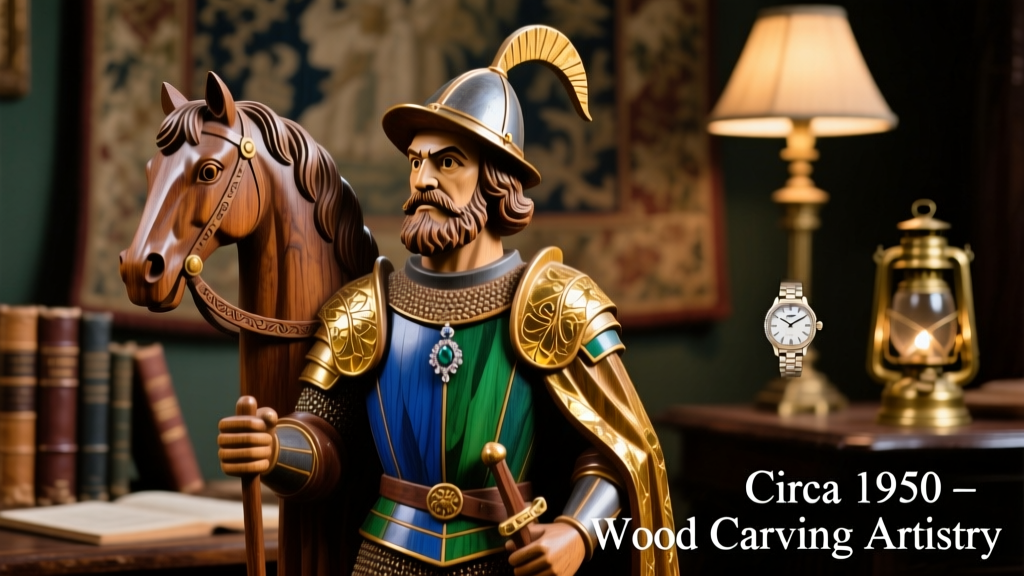
Wood Carvings Don Quixote Multicolor C. 1950 — A 22-Inch Mid-Century Spanish Literary Sculpture
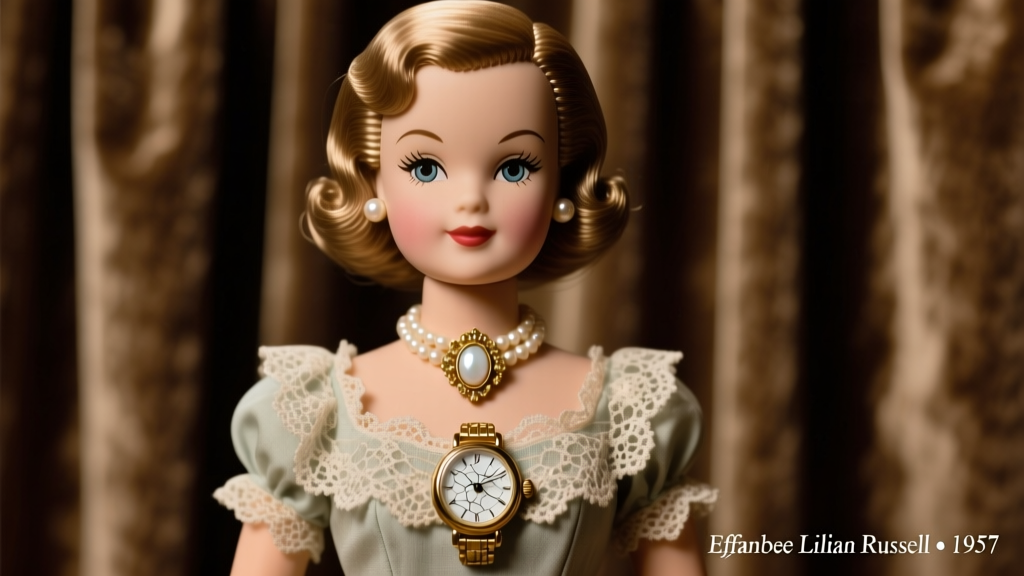
Doll Effanbee Lillian Russell 12-Inch: A Collector’s Guide to the Iconic Art Deco Fashion Doll
Opalescent Glass Vase: Windows Ruffled Cranberry, 5 1/3 Inches — A Study in American Brilliant Period Craftsmanship
Paul Frankl’s Rattan Ottoman: A Landmark of American Modernism in Furniture Design
Stoneware Jug: Cobalt Blue Quill Work, Penn Yan Impressed, 10¾ Inches — A Masterpiece of American Folk Pottery
Crafted Auctions: Precision, Provenance, and the Rise of Specialist Watch & Jewelry Sales
Wilcox Silver-Plate Footed Tray: A Study in American Gilded Age Craftsmanship and Collectibility
Tips, Tips, and More Tips From January 2009: Vintage Jewelry & Watch Market Insights from the Auction Floor
Firecrackers: The Explosive History and Collectible Appeal of Vintage Pyrotechnic Jewelry