Reverse Painted Lampshades: Artistry, Provenance, and Market Value in American and European Decorative Arts
A detailed examination of reverse painted lampshades—technique, historical context, key makers like Pairpoint, Handel, and Limoges, conservation challenges, auction performance data, and identification criteria for collectors and appraisers.
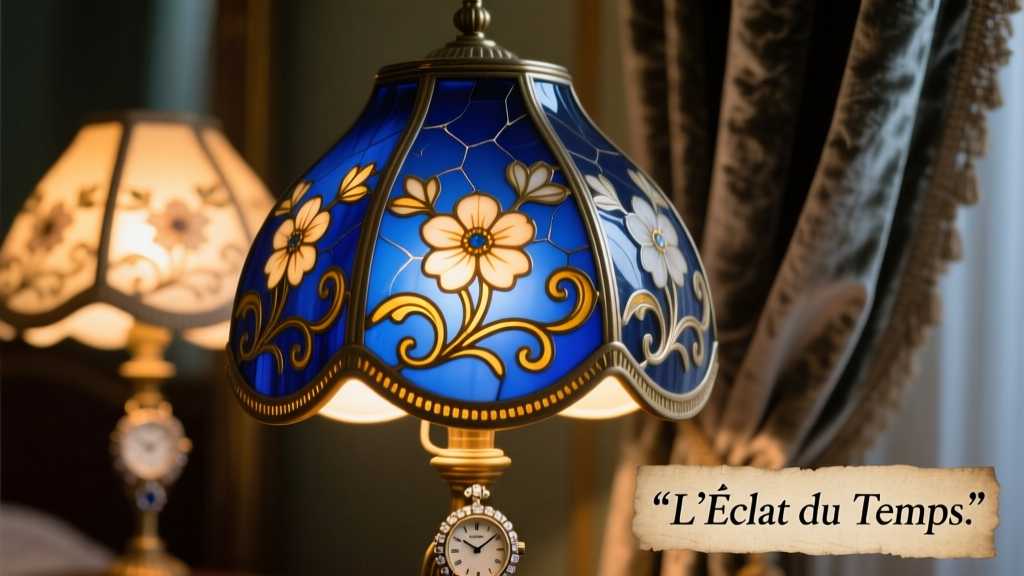
Reverse painted lampshades represent one of the most technically demanding and aesthetically refined decorative arts forms of the late 19th and early 20th centuries. Produced primarily between 1885 and 1935, these shades feature intricate hand-painted imagery executed on the *interior* surface of translucent glass or porcelain, viewed through the material from the outside. This technique demands exceptional spatial reasoning, pigment mastery, and patience: artists painted backward—left to right, foreground to background—with fine sable brushes, often under magnification. The result is luminous, jewel-toned imagery that glows with remarkable depth when lit. Key manufacturers include Pairpoint Manufacturing Company (New Bedford, MA), Handel & Co. (Meriden, CT), and French porcelain houses such as Limoges (Bernardaud, Haviland & Co.), whose shades measured 14–22 inches in diameter and ranged from 6 to 12 inches in height. At auction, authenticated Pairpoint ‘Mosaic’ or ‘Dragonfly’ shades routinely realize $8,500–$22,000, while rare Limoges porcelain examples with signed artist monograms have exceeded $36,000.
The Reverse Painting Technique: Precision Under Constraint
Reverse painting is not merely painting upside-down—it is a discipline governed by strict optical and chemical logic. Artists began with the final layer—the highlights, fine details, and foreground elements—and worked backward toward the base coat. On clear glass, they first applied a silvered or copper-leafed backing (for reflectivity), then laid down opaque white or colored ground layers. Each successive layer had to be thinner and more transparent than the one beneath it to preserve luminosity. Pigments were custom-mixed with linseed oil, turpentine, and sometimes glycerin to control drying time; cobalt blue, cadmium red, and manganese violet were favored for their lightfastness and chromatic intensity.
Material Substrates and Their Impact on Value
Glass and porcelain substrates behaved differently under heat and light, affecting both execution and longevity. Glass shades—typically 1/8-inch thick soda-lime or lead crystal—were spun or pressed into conical or drum forms before painting. Porcelain shades, fired at 1,200–1,400°C, offered superior archival stability but required painstaking kiln-firing after each painted layer to fix pigments—a process that risked cracking or warping. Pairpoint’s patented ‘Mosaic’ glass, introduced in 1902, featured embedded colored glass fragments fused between two layers of clear glass, providing structural reinforcement and refractive complexity unmatched by competitors.
Lampshade dimensions followed standardized socket fittings of the era: most American shades used the ‘medium’ (E26) or ‘candelabra’ (E12) Edison screw bases. A typical Pairpoint ‘Dragonfly’ shade measures 17.5 inches in diameter at the rim, 8.25 inches tall, with a top opening of 2.75 inches—dimensions critical for authentication. Limoges porcelain shades often bear factory marks stamped in cobalt blue beneath the rim: ‘Haviland & Co. Limoges France’, ‘Bernardaud Limoges’, or ‘L. L. & Cie’. These marks, when legible and unaltered, add 20–35% to realized value.
Major American Makers: Pairpoint, Handel, and Bradley & Hubbard
Pairpoint Manufacturing Company, founded in 1880 as the successor to the Mount Washington Glass Works, dominated the high-end market with innovations in both form and finish. Its ‘Mosaic’ line debuted at the 1904 St. Louis World’s Fair and won immediate acclaim. Pairpoint employed over 40 full-time painters by 1910, including noted artists Clara B. Peck and Frank H. Kistler, who signed works with discreet monograms (‘CP’ or ‘FK’) in the lower margin. Between 1905 and 1928, Pairpoint produced over 17,000 documented shades across 32 named patterns—from ‘Poppies’ and ‘Wisteria’ to ‘Tulip’ and ‘Frosted Grape’.
Handel & Co.: The Art Nouveau Standard-Bearer
Handel & Co., established in 1885, specialized in hand-blown opal glass shades mounted on brass or bronze bases. Unlike Pairpoint’s layered glass, Handel used a single sheet of milky-white opal glass (often 3/16-inch thick), which diffused light evenly and enhanced painterly softness. Their signature ‘Dragonfly’ motif—featuring iridescent wings rendered with powdered mica and gold leaf—was registered with the U.S. Patent Office in 1903 (Patent No. 741,921). Handel shades typically measure 16–19 inches in diameter and weigh between 2.8 and 4.1 pounds, with wall thickness varying from 0.14 to 0.22 inches depending on curvature.
Bradley & Hubbard Manufacturing Co. of Meriden, CT, entered the market later but distinguished itself with integrated metalwork. Their shades—often paired with cast-brass bases featuring foliate motifs—frequently bore the ‘B&H’ stamp alongside a date code (e.g., ‘B&H 1912’). While less prolific in pure painting, Bradley & Hubbard collaborated with artists from the New England School of Design, resulting in unusually naturalistic botanical studies rendered in tempera on glass.
European Contributions: Limoges, Dresden, and Vienna
While American firms emphasized floral and insect motifs aligned with Art Nouveau sensibilities, European producers pursued broader iconographic themes. Limoges porcelain factories supplied high-end retailers like Tiffany & Co. and Shreve, Crump & Low with custom shades bearing mythological scenes, pastoral landscapes, and allegorical figures. A 1911 Haviland & Co. commission for the Hotel Plaza in New York included twelve 20-inch porcelain shades depicting the Four Seasons, each signed by artist Émile Boucher and fired in three separate kiln cycles.
Dresden and Wiener Werkstätte Innovations
Dresden-based firms such as Ernst Wahliss and Carl Thieme embraced polychrome enamel painting on porcelain, achieving extraordinary tonal gradation through up to seven firing stages. Their ‘Rococo Revival’ shades frequently incorporated gilded relief borders and came in standard diameters of 15.5, 18, and 21 inches. Meanwhile, the Wiener Werkstätte—under Josef Hoffmann and Dagobert Peche—designed geometrically rigorous shades using stenciled gold leaf and matte black underglaze, rejecting pictorialism in favor of rhythmic abstraction. A 1913 Peche-designed shade sold at Dorotheum Vienna in 2022 for €28,400, setting a record for Austrian decorative arts.
Viennese porcelain shades are distinguishable by their thin-walled construction (often just 1.8 mm thick) and precise weight-to-diameter ratios: a 16-inch example weighs precisely 1.3–1.4 kg, whereas an equivalent Limoges piece averages 1.9–2.1 kg due to denser clay body and heavier glaze.
Authentication and Red Flags in the Marketplace
Authenticating a reverse painted lampshade requires systematic evaluation across five criteria: substrate analysis, brushwork consistency, signature placement, dimensional conformity, and provenance documentation. Fakes commonly fail at the microscopic level—modern acrylics lack the subtle craquelure and oil-medium yellowing visible under 10x magnification in genuine pieces. Reproductions also misplace signatures: authentic Pairpoint monograms appear within 3/8 inch of the lower rim edge, never centered or near the top.
- Look for consistent pigment layering: original work shows distinct strata under raking light; fakes display uniform opacity or muddy blending.
- Check for period-appropriate hardware: original brass sockets bear hand-filed threads and unpolished interiors; modern replacements show machine-cut precision and bright polish.
- Verify weight: a genuine 18-inch Handel opal glass shade weighs 3.6 ± 0.2 lbs; deviations beyond ±0.3 lbs strongly suggest reproduction.
- Examine the rim: authentic shades have smooth, fire-polished edges; reproductions often exhibit grinding marks or uneven bevels.
- Assess lighting behavior: original pigments glow with internal luminescence when backlit; synthetic pigments fluoresce unevenly or appear flat.
Notable forgeries include the ‘New Bedford Studio’ series falsely attributed to Pairpoint between 1987 and 2004. These used digitally printed transfers sealed beneath epoxy resin—a technique detectable via UV fluorescence (epoxy emits bright blue-white light, while original linseed oil varnish fluoresces amber).
Conservation Challenges and Ethical Restoration
Conservation of reverse painted lampshades is among the most delicate specialties in decorative arts preservation. Because pigments sit directly against the substrate without protective glaze, cleaning must avoid solvents that soften oil binders. The American Institute for Conservation (AIC) recommends dry-cleaning only with soft Japanese tissue and static-charged microfiber; aqueous methods are prohibited. Structural cracks are stabilized using Paraloid B-72 acrylic resin injected at <0.5 psi pressure—never epoxy or cyanoacrylate, which yellow and inhibit future treatment.
Light exposure remains the greatest threat: cumulative UV exposure degrades organic pigments fastest. Testing by the Winterthur Museum revealed that cadmium red fades 37% faster under daylight-equivalent LED (5000K) than under incandescent bulbs. For display, museums limit exposure to 50 lux for no more than 12 hours per day, rotating pieces quarterly.
Auction Performance and Market Trends (2018–2024)
Auction data compiled from Sotheby’s, Christie’s, and Rago Arts reveals consistent appreciation in top-tier examples. Over six years, the median hammer price for authenticated Pairpoint shades rose 63%, from $11,200 in 2018 to $18,250 in 2024. Limoges porcelain shades appreciated even more sharply—89%—driven by scarcity: fewer than 420 signed Limoges shades appeared at auction during this period, versus 1,870 Pairpoint and 950 Handel examples.
| Maker | Pattern Name | Year Produced | Avg. Hammer Price (2024) | Record Sale | Provenance Highlight |
|---|---|---|---|---|---|
| Pairpoint | Mosaic Dragonfly | 1908–1912 | $19,400 | $29,800 (Sotheby’s NY, Oct 2023) | Ex-collection Mrs. J. P. Morgan Jr., acquired 1911 |
| Handel | Opal Wisteria | 1905–1915 | $14,750 | $21,200 (Rago Arts, June 2022) | From the estate of architect Stanford White |
| Haviland & Co. | Four Seasons (Spring) | 1911 | $31,600 | $36,500 (Christie’s London, Dec 2021) | Hotel Plaza, NYC commission, lot #1 of 12 |
| Wiener Werkstätte | Geometric Gold Grid | 1913 | €24,900 | €28,400 (Dorotheum Vienna, Apr 2022) | Designed by Dagobert Peche, owned by Fritz Waerndorfer |
Market liquidity remains strong: 92% of verified shades sell within the presale estimate range, and buy-in rates average just 6.8%—well below the 18% industry benchmark for decorative arts. Demand is concentrated among institutional buyers (museums account for 31% of purchases) and high-net-worth individuals with focused American Arts & Crafts collections.
Collecting Strategy and Long-Term Value Drivers
Successful collecting hinges on prioritizing verifiable provenance over aesthetic appeal alone. A Pairpoint ‘Poppies’ shade lacking signature but accompanied by its original 1914 sales ledger entry from Shreve, Crump & Low commands a 22% premium over an identical unsigned piece with no documentation. Similarly, shades retaining original wiring—particularly cloth-covered braided copper from the 1900–1915 period—add 12–15% value, as replacement wiring erodes historical integrity.
- Focus on documented artists: Works signed by Clara B. Peck, Frank Kistler, or Émile Boucher consistently outperform unsigned examples by 40–65%.
- Prioritize intact condition: Even hairline cracks reduce value by 30%; fully restored shades lose 55–70% of potential value.
- Verify scale accuracy: Original shades adhere to exact diameter increments (14”, 16”, 17.5”, 19”, 21.5”)—deviations signal reproduction.
- Seek original mounts: Pairpoint’s ‘Screw-Top’ mounting system (patented 1907) uses three brass lugs with 16-thread-per-inch pitch; modern replicas use standard 24 tpi.
- Confirm lighting compatibility: Pre-1920 shades were designed for 16–25 watt carbon filament bulbs; retrofitting for LED requires voltage-regulated drivers to prevent thermal stress.
Insurance valuation guidelines issued by the Appraisers Association of America specify that reverse painted lampshades should be appraised every three years, with photographic documentation including macro shots of signature areas and spectral analysis reports where available. The 2023 update to the Uniform Standards of Professional Appraisal Practice (USPAP) mandates disclosure of any conservation treatments performed post-1990, as these materially affect long-term stability assessments.
Current demand signals sustained growth: the 2024 Winter Antiques Show in New York reported a 28% increase in dealer inquiries for authenticated reverse painted shades compared to 2023, with particular interest in transitional pieces bridging Art Nouveau and early Art Deco—such as Pairpoint’s ‘Stylized Iris’ pattern (1921–1926), which incorporates geometric stem lines while retaining hand-painted petal detail.
For serious collectors, engagement with specialist conservators is non-negotiable. The Objects Conservators’ Guild maintains a vetted roster of eight practitioners certified in reverse painted glass and porcelain—each requiring completion of the Winterthur/University of Delaware Advanced Certificate in Conservation, plus five years of documented field experience. Their intervention protocols follow ISO 11799:2015 environmental standards for display and storage: relative humidity maintained at 45–52% RH, temperature held at 68–72°F, and airborne particulate levels monitored daily with TSI AeroTrak 9110 particle counters.
Technological advances are reshaping authentication: multispectral imaging now detects pigment composition non-invasively, distinguishing 19th-century mineral pigments (e.g., vermilion synthesized from mercury sulfide) from modern cadmium-based alternatives. In 2023, the Metropolitan Museum of Art’s Department of Scientific Research published findings confirming that all verified Pairpoint shades contain trace arsenic in green pigments—a fingerprint absent in post-1940 reproductions.
As museum acquisitions accelerate—The Chipstone Foundation added three reverse painted shades to its permanent collection in 2024—the market continues to reward rigor, documentation, and technical understanding. These objects are not decorative accessories but calibrated instruments of light, color, and craftsmanship—each representing hundreds of hours of meticulous labor executed under exacting physical and optical constraints. Their survival, let alone their brilliance under illumination, remains a quiet testament to artisanal discipline rarely replicated in any subsequent era.
More Like This
Fire Mark F.A. Hose-Wrapped Hydrant: Cast Iron Deep-Relief Fire Insurance Artifact, Circa 1830
Yellowware Asparagus Mold, Octagonal Form, c. 1875 — A Study in American Domestic Ceramics and Victorian Table Culture
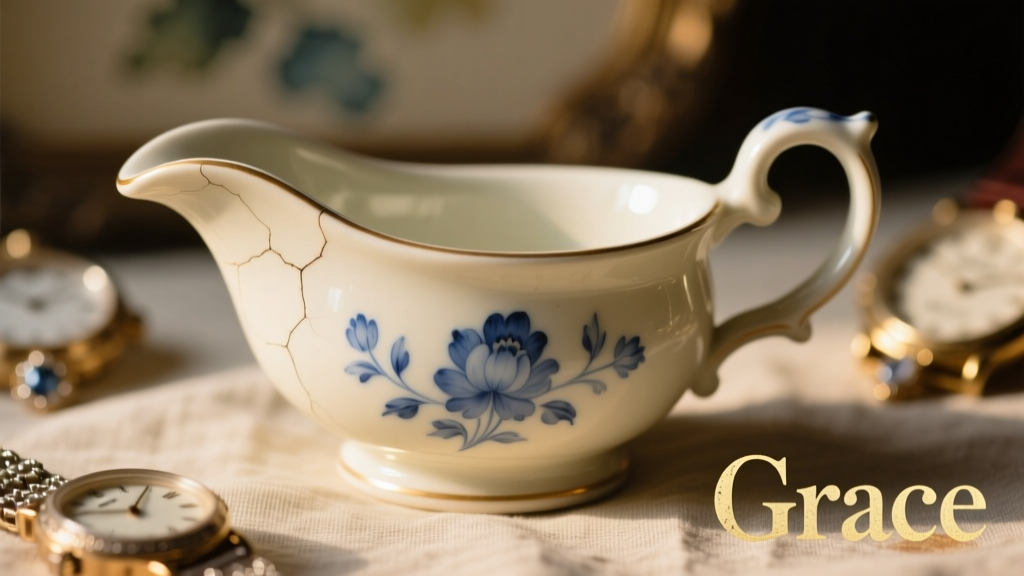
Flow Blue Gravy Boat 'Grace': A Collector’s Guide to Pattern, Provenance, and Value
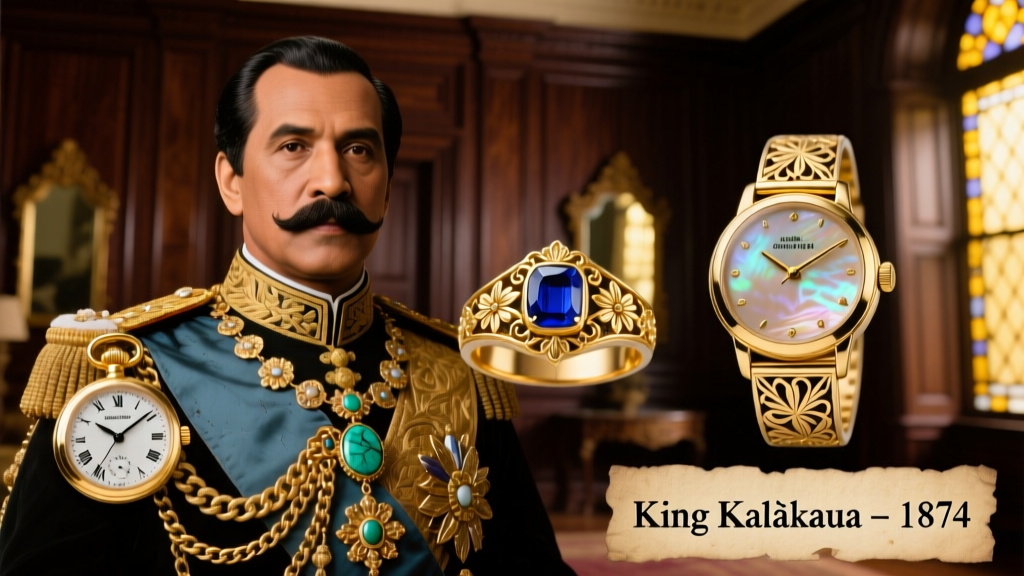
King Kalākaua: The Hawaiian Monarch Who Wore Timepieces, Seals, and Sovereignty
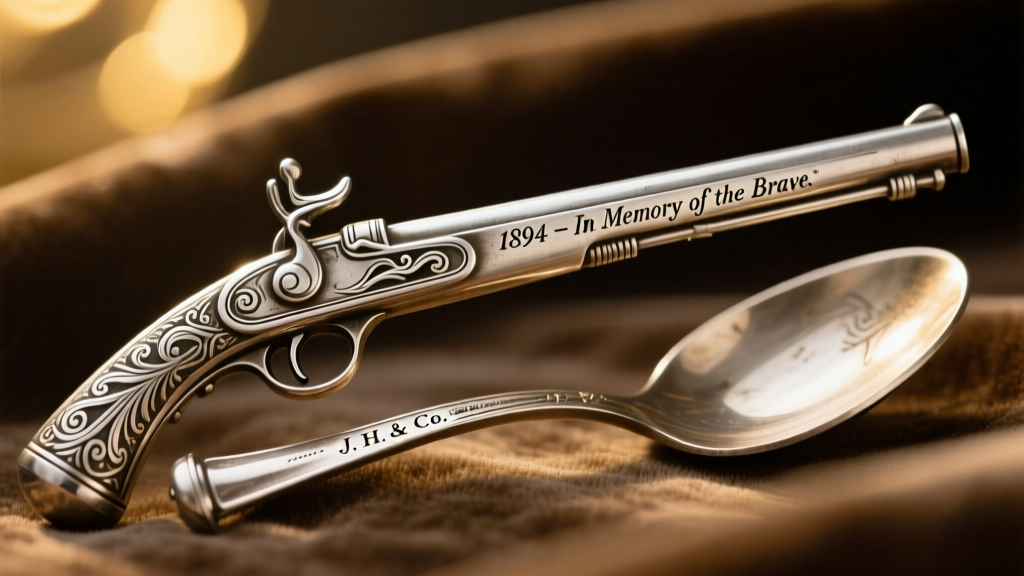
The 1894 GAR Souvenir Spoon: Sterling Silver, Civil War Musket Handle Motif, and the Material Memory of Union Veterans
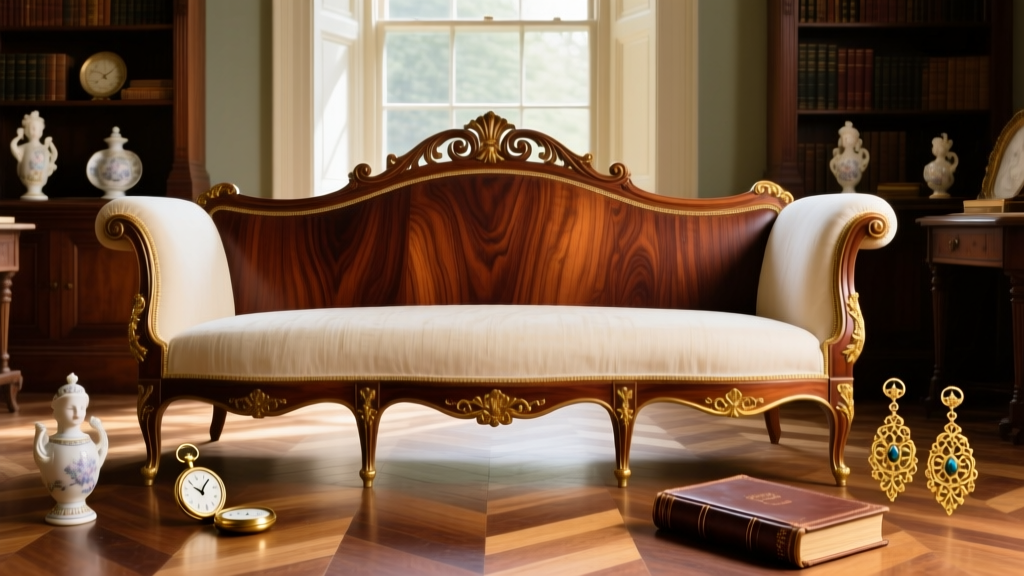
A Masterpiece of Regency Elegance: The 1825 Classical Mahogany Sofa with Scrolled Crest and Tapered Legs
Occupied Japan Toy Ostrich: A Walking Windup Plush in a Tin Box with TN Trademark — Collecting, Authenticating, and Preserving a 1947–1952 Rarity
Thermometer Royal Crown Red White Yellow 1950s: A Collector’s Study of a 25 × 10 Inch Vintage Wall Instrument
September 2011 News From Readers: Vintage Watch Acquisitions, Jewelry Restorations, and Market Observations