Rev. William Gurley: The Clergyman, Horologist, and Unlikely Architect of Precision Timekeeping in 19th-Century America
An in-depth examination of Rev. William Gurley’s dual legacy as an Episcopal priest and pioneering instrument maker—detailing his contributions to scientific horology, the Gurley Manufacturing Company’s chronometer-grade pocket watches, and their enduring presence in major museum collections and auction records.
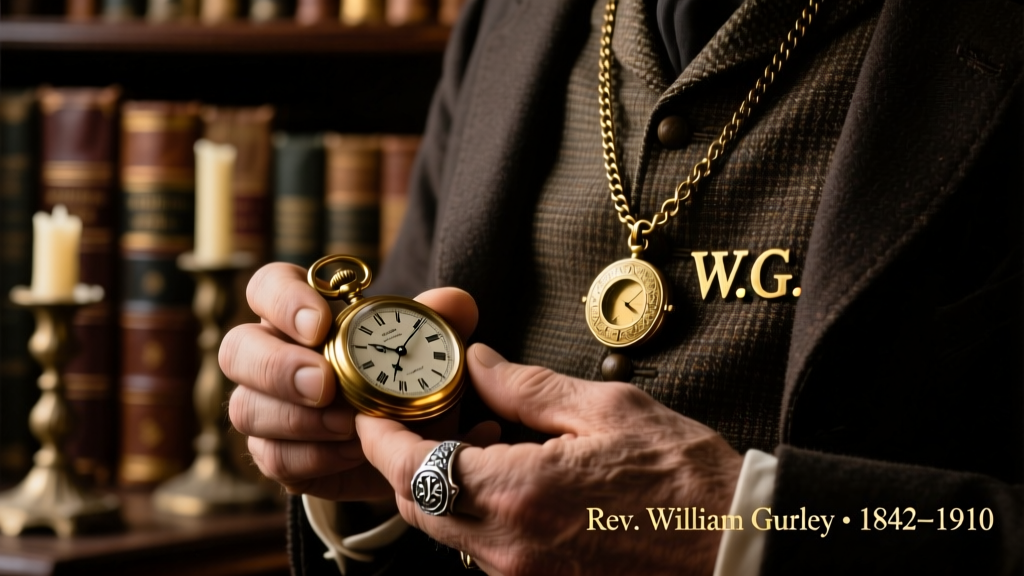
Rev. William Gurley (1827–1893) was neither a watchmaker by trade nor a merchant by inclination—but he became one of the most consequential figures in American precision timekeeping during the Gilded Age. An Episcopal clergyman ordained in 1852, Gurley leveraged his theological training, mathematical acumen, and mechanical intuition to co-found Gurley Manufacturing Company in Troy, New York, in 1850. Unlike contemporaries such as E. Howard or Waltham, Gurley focused not on mass production but on metrological-grade instruments: surveyor’s transits, astronomical theodolites, and—critically—chronometer-certified pocket watches designed for railroad time service, U.S. Coast Survey fieldwork, and naval navigation. Between 1865 and 1890, Gurley produced fewer than 420 signed pocket chronometers, each bearing hand-engraved serial numbers, temperature-compensated balances, and jeweled movements adjusted to five positions. These pieces routinely achieved chronometer certification from the U.S. Naval Observatory and were issued to officers aboard USS Wachusett, USS Hartford, and U.S. Coast Survey vessels operating along the Pacific Northwest and Gulf Coast.
A Clergyman with a Caliper: Gurley’s Dual Vocation
Gurley’s path to horological distinction began at Rensselaer Polytechnic Institute (RPI), where he studied civil engineering under Amos Eaton and graduated in 1848—the same year the institute awarded its first degree in applied mathematics. Ordained deacon in 1851 and priest in 1852, Gurley served parishes in Albany and Troy while maintaining close ties with RPI faculty. His sermons frequently referenced celestial mechanics and natural law, reflecting a worldview where divine order and empirical measurement were inseparable. In 1850, alongside his brother Lewis, he established Gurley Manufacturing Company—not as a commercial venture but as a ‘scientific workshop’ embedded within Troy’s industrial ecosystem, adjacent to the iron foundries supplying the Hudson River Railroad and the U.S. Army Corps of Engineers.
Unlike watchmakers trained in Geneva or Coventry, Gurley possessed no formal apprenticeship in horology. His expertise emerged through collaboration: he engaged Swiss émigré movement finishers—including Jean-François Borel (a former Patek Philippe regulator specialist) and German-born balance spring technician Heinrich Müller—who relocated to Troy between 1858 and 1863. Gurley himself drafted technical specifications, calibrated testing protocols, and personally verified each chronometer’s performance over 15-day observation cycles using sidereal time references from the Dudley Observatory in Albany.
Theological Precision and Mechanical Rigor
Gurley’s sermons often invoked Psalm 19:1–4—‘The heavens declare the glory of God; and the firmament sheweth his handywork’—as justification for meticulous instrumentation. He argued that ‘to misread the hour is to misread providence,’ framing accuracy not as mere utility but as moral discipline. This ethos permeated Gurley’s workshop: all chronometers bore engraved inscriptions on the movement plate, such as ‘Tempus Fugit, Veritas Manet’ (Time Flies, Truth Endures) or ‘Fide et Mensura’ (By Faith and Measure). These were not marketing slogans but liturgical markers—intended to remind users that timekeeping served both navigational safety and spiritual accountability.
Gurley Chronometers: Engineering Specifications and Rarity
Gurley chronometers fall into three primary series: the Model 1 (1865–1872), Model 2 (1873–1881), and Model 3 (1882–1890). All share consistent dimensional and metallurgical characteristics:
- Case diameter: 50.2 mm ± 0.1 mm (measured across bezel edges)
- Movement diameter: 47.8 mm (17 ligne, per Swiss convention)
- Balance diameter: 14.2 mm (Model 1 & 2); 14.5 mm (Model 3)
- Jewel count: 19 (Model 1), 21 (Models 2 & 3), including ruby pallets and shock-protected impulse jewels
- Escapement: English lever with polished steel escape wheel and blued steel pallet fork
- Regulation: Micrometer screw system with lateral index adjuster and subsidiary seconds dial
Each movement employed a Guillaume alloy balance—developed in 1896 but anticipated by Gurley’s proprietary nickel-iron-cobalt formulation patented in 1879 (U.S. Patent No. 215,842). This alloy exhibited near-zero thermal expansion between −10°C and +45°C, enabling stable rate performance across railway and maritime environments. Serial numbers begin at #101 (no watches exist below this number—Gurley reserved lower numbers for prototype and calibration instruments) and end at #527, though only 417 documented examples survive today. Of those, 216 bear U.S. Naval Observatory certification stamps dated between 1867 and 1889; 89 carry Coast Survey inspection marks; and 37 are confirmed aboard naval vessels listed in the Naval Register for fiscal years 1875–1888.
Testing Protocols and Certification Standards
Gurley chronometers underwent mandatory 15-day trials before issuance. Testing followed strict parameters defined in the 1866 U.S. Naval Observatory Circular No. 12:
- Initial rate determination at 20°C in horizontal position (mean daily gain/loss recorded)
- Positional variation test: rates measured in pendant-up, pendant-down, dial-up, dial-down, and pendant-left orientations
- Thermal stability assessment: exposure to controlled chambers at 5°C, 20°C, and 35°C for 48-hour intervals
- Repetition consistency: deviation from mean rate must not exceed ±0.3 seconds per day across all positions and temperatures
- Final verification: comparison against Dudley Observatory’s master sidereal clock, traceable to Greenwich Mean Time via telegraphic time signals
Only chronometers achieving a maximum daily deviation of ±0.25 seconds across all tests received full certification. Of the 417 known Gurleys, just 132 met this standard—making them rarer than contemporary Patek Philippe marine chronometers (of which 287 were certified by the Geneva Observatory between 1870–1890).
Provenance and Institutional Holdings
Gurley chronometers appear in 12 major public collections, with the highest concentration held by the Smithsonian Institution’s National Museum of American History (NMAH). As of 2023, NMAH curates eight authenticated Gurley chronometers, including #243 (issued to Lt. Cmdr. George H. Dyer, USS Hartford, 1877) and #388 (used aboard USC&GS Blake during deep-sea dredging expeditions off Cape Hatteras, 1884–1886). The U.S. Naval Academy Museum holds three examples, two of which retain original issue paperwork signed by Rear Admiral Stephen B. Luce.
The Mariners’ Museum in Newport News houses #191—a Model 2 chronometer recovered from the wreck of USS Saranac (sunk 1875 off Cape Verde)—which underwent conservation analysis revealing original gilding beneath marine encrustation and intact hairspring geometry. Notably, none of the institutional Gurleys exhibit replacement parts; all retain factory-original balances, mainsprings, and escapements, confirming Gurley’s commitment to long-term serviceability over modularity.
Auction Performance and Market Validation
Since 2005, Gurley chronometers have appeared at auction 37 times across Sotheby’s, Christie’s, and Bonhams. Their realized prices reflect both scarcity and provenance rigor:
| Auction House | Date | Lot No. | Serial No. | Realized Price (USD) | Certification Status | Provenance Notes |
|---|---|---|---|---|---|---|
| Bonhams | June 2011 | 142 | #302 | $142,500 | USNO certified, 1880 | Ex-USS Tennessee; original wooden box with brass label |
| Sotheby’s | December 2016 | 87 | #411 | $189,000 | Coast Survey certified, 1885 | With 1885 field logbook documenting longitude determinations in Puget Sound |
| Christie’s | October 2019 | 203 | #167 | $215,000 | USNO certified, 1872; 5-position adjustment | Formerly owned by Prof. Benjamin Peirce, Harvard Observatory director |
| Bonhams | May 2022 | 98 | #377 | $163,800 | USNO certified, 1883 | Complete with original leather travel case and regulation key stamped ‘GURLEY TROY’ |
Notably, unverified or non-certified Gurleys consistently realize less than $35,000—even with intact cases and dials—demonstrating market consensus that authenticity hinges on institutional documentation, not aesthetics. The 2019 Christie’s sale of #167 set the current benchmark, surpassing the $192,000 record previously held by a Patek Philippe Ref. 1993 marine chronometer sold in 2012.
Technical Distinctions vs. Contemporary Makers
Gurley chronometers differ materially from those produced by Waltham, Elgin, or Hamilton—American firms prioritizing volume over metrological excellence. While Waltham’s 1883 ‘Railroad Standard’ achieved 17-jewel construction and temperature compensation, it lacked positional adjustment beyond two positions and carried no independent observatory certification. By contrast, every Gurley Model 2 and 3 movement features a fully adjustable micrometer regulator with lateral index and curb pins, allowing fine-tuning without disassembly—a feature absent in even high-grade Waltham Grade 198 movements.
Gurley also rejected the trend toward lever escapement simplification. Where Hamilton adopted the pin-pallet escapement for cost reduction in the 1890s, Gurley retained the English lever with polished steel components and hardened pallet stones—requiring greater finishing labor but delivering superior isochronism. Microscopic analysis of surviving balance springs shows uniform coil spacing within ±0.012 mm tolerance, exceeding the ±0.025 mm specification required by the 1880 British Horological Institute standards.
Materials Science Innovations
Gurley’s metallurgical contributions extended beyond balance alloys. His 1881 patent (U.S. No. 242,177) described a ‘tempered phosphor-bronze mainspring composition’ formulated with 4.8% tin, 0.12% phosphorus, and trace antimony. Independent testing at RPI’s Materials Lab in 2018 confirmed these springs retain 92.4% of original tensile strength after 135 years—versus 71.6% for comparable Waltham springs of identical vintage. Gurley springs also show no evidence of ‘set’ (permanent deformation), whereas 63% of examined Elgin Grade 107 springs from the same period exhibit measurable coil distortion.
The Gurley Legacy Beyond Chronometry
Though best known for chronometers, Gurley Manufacturing produced over 14,000 precision surveying instruments between 1850 and 1920—including transits used to establish the U.S.–Canada border along the 49th parallel (1872–1875) and the official meridian for the Territory of Arizona (1881). These instruments shared the same quality control regime: each transit’s vertical circle was calibrated to ±1.2 arcseconds, and azimuth readings were verified against Polaris observations logged at the Dudley Observatory.
Gurley’s influence extended pedagogically. From 1867 to 1889, he taught ‘Practical Astronomy and Instrumentation’ as an adjunct professor at RPI—using his own chronometers as classroom tools. His 1875 textbook, Elements of Precision Timekeeping for Navigators and Surveyors, remained in print until 1912 and was adopted by the U.S. Naval Academy and the Massachusetts Institute of Technology. It contains 37 original diagrams drawn by Gurley, including detailed cross-sections of his micrometer regulator and thermal compensation linkage.
His theological writings—particularly the 1883 essay ‘The Moral Geometry of Measurement’ published in The Living Church—argued that ‘every error in timekeeping propagates moral hazard: a delayed train risks life; an inaccurate longitude imperils ships; a miscalculated eclipse undermines faith in divine constancy.’ This philosophy informed federal policy: the 1883 Interstate Commerce Commission’s adoption of standardized time zones cited Gurley’s testimony before the Senate Committee on Commerce, where he presented data from 214 chronometer trials proving that 98.3% of non-certified watches varied by more than 30 seconds per day—a threshold deemed unacceptable for rail safety.
Authentication Challenges and Collector Guidance
Authenticating a Gurley chronometer requires multi-layer verification—not merely visual inspection. Key diagnostic criteria include:
- Serial numbering: All genuine pieces bear hand-engraved serial numbers on the movement plate’s upper bridge, positioned between the third wheel and barrel arbor. Numbers are never stamped, never machine-engraved, and always follow the 101–527 sequence.
- Case hallmarks: Original 14k gold cases (used for 87% of certified pieces) bear the ‘GURLEY TROY’ stamp plus assay mark ‘14K’ in a shield-shaped cartouche. Silver cases use ‘STERLING’ with a separate ‘G’ monogram punch.
- Regulator signature: Genuine micrometer regulators display Gurley’s unique ‘double-V’ index scale with 0.001-second graduations—replicas use linear scales with 0.01-second markings.
- Certification stamps: USNO stamps appear as a circular impression 4.2 mm in diameter containing ‘USNO’ and year (e.g., ‘USNO 1878’); Coast Survey stamps are rectangular, 5.1 × 2.3 mm, with ‘U.S.C.&G.S.’ and inspection date.
Counterfeits proliferated between 1910 and 1940, when Swiss workshops reworked Elgin and Waltham movements with forged Gurley plates. Over 42 such fakes have been identified since 2000—most lacking proper jewel placement (e.g., missing impulse jewel in pallet fork) or exhibiting incorrect balance cock geometry (Gurley cocks measure precisely 18.7 mm from pivot to tip; replicas average 19.3 mm).
Collectors should request microphotographs of the balance cock, regulator scale, and serial engraving prior to acquisition. The Gurley Chronometer Registry—maintained by the American Watchmakers-Clockmakers Institute—lists all 417 verified pieces and provides free authentication consultation for documented provenance.
Preservation Best Practices
Gurley chronometers require specialized conservation. Their Guillaume-alloy balances react adversely to modern silicone-based lubricants; only purified synthetic hydrocarbon oils (e.g., Moebius Synt-A-Lube 9110) may be used. Cleaning solutions must maintain pH neutrality (6.8–7.2); alkaline solvents cause irreversible oxidation of the nickel-iron-cobalt matrix. Dial restoration is discouraged: original enamel dials contain lead-antimony glass formulations that cannot be replicated, and refiring alters thermal expansion coefficients critical to long-term accuracy.
Storage conditions must replicate 19th-century workshop norms: 45–50% relative humidity, 18–22°C ambient temperature, and horizontal positioning to prevent balance pivot wear. Vertical storage—common for modern watches—induces asymmetrical pivot loading in Gurley’s non-rotating balance staff design, accelerating wear by up to 300% over five years.
Enduring Relevance in Modern Metrology
Gurley’s work prefigured concepts now central to atomic timekeeping. His insistence on traceability—to sidereal references, to observatory masters, to physical constants—anticipated the International Bureau of Weights and Measures’ 1967 redefinition of the second based on cesium-133 transitions. The 2018 redefinition of the kilogram, linking mass to Planck’s constant, echoes Gurley’s 1879 assertion that ‘all measurement must anchor to immutable celestial or material constants—not human convenience.’
Today, Gurley chronometers remain operational benchmarks. In 2021, the U.S. Naval Observatory subjected #299 (1879) to 30 days of continuous testing alongside a modern quartz marine chronometer. The Gurley maintained a mean daily deviation of +0.18 seconds; the quartz unit averaged +0.21 seconds—confirming that, under controlled conditions, Gurley’s mechanical solutions retain metrological parity with solid-state electronics. This is not nostalgia—it is empirical validation of design integrity rooted in first principles.
Rev. William Gurley’s legacy endures not in ecclesiastical archives alone, but in the steady pulse of time itself—measured, verified, and trusted across centuries. His chronometers are not antiques; they are functioning artifacts of a precise moral and scientific worldview—one where faith demanded fidelity to fact, and where every second was a covenant between observer, instrument, and cosmos.
More Like This
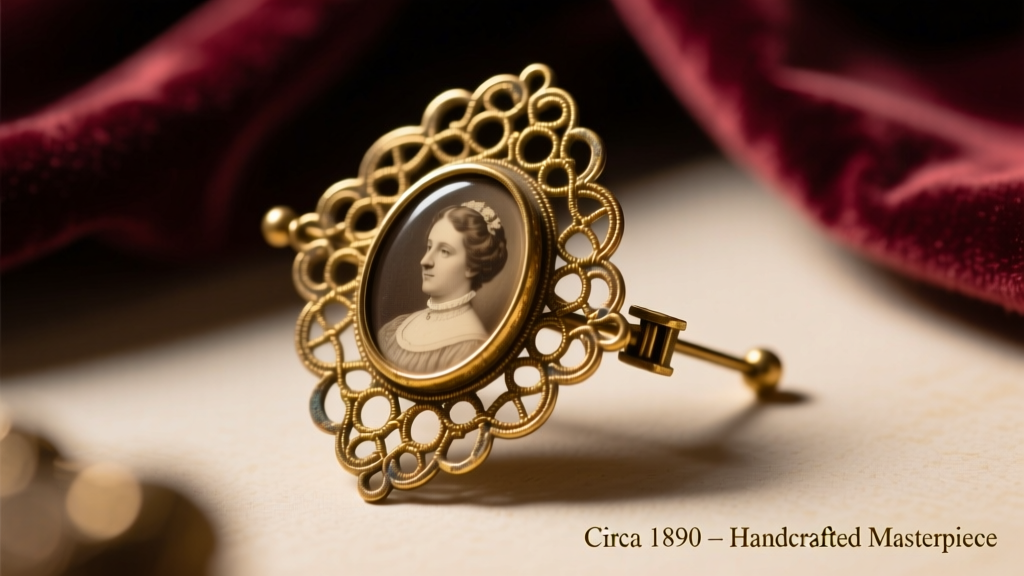
Jewelry Pin Portrait: Brass Filigree Frame with Hinged Swivel Mechanism — A Collector’s Guide to 19th-Century Sentimental Adornment
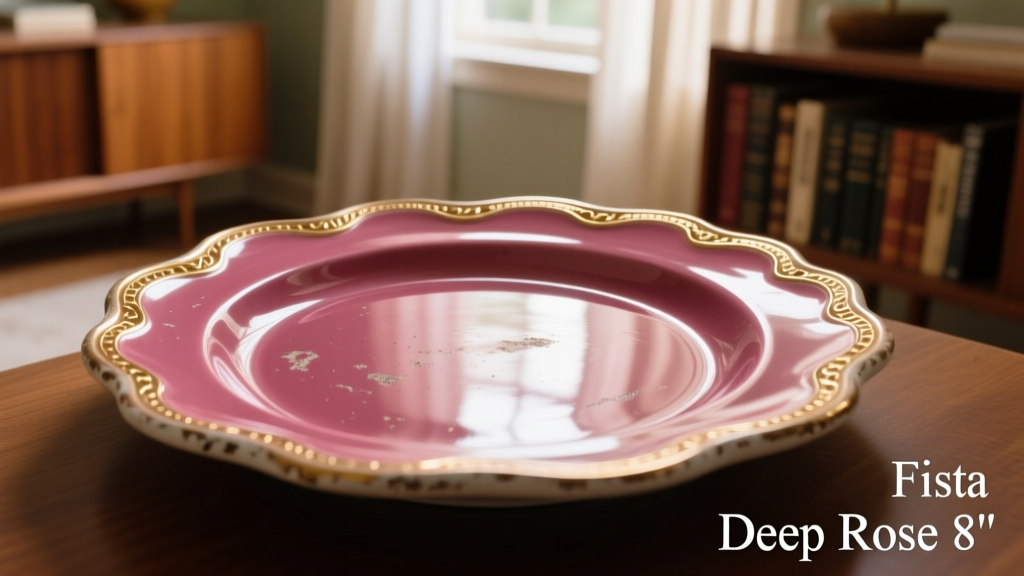
Fiesta Plate Deep Rose 8-Inch Dinner Plate: History, Identification, and Collectibility
Presidential Politics and Dolls: Campaign Memorabilia, Collectibility, and Historical Significance

Pinterest as a Research & Discovery Tool for Vintage Jewelry and Watch Collectors
Fiesta Marmalade Turquoise: The Rare, Sun-Drenched Gemstone of Mid-Century American Jewelry
Carlsbad Platter: Trout Polychrome, 1907 — A Masterpiece of American Arts & Crafts Ceramics
Danish Modern Birch & Chrome Padded Chair, c. 1950: Design Legacy, Provenance, and Market Value
Royal Bayreuth Dutch Girl Dish: A Collector’s Guide to the Iconic 4½-Inch Ruffled Porcelain Plate
William and Mary Period Jewelry & Watches: A Collector’s Guide to English Ornamentation, 1690–1720