The £46.2 Million Record: The Cullinan Heritage Diamond and the Anatomy of a Royal Auction Milestone
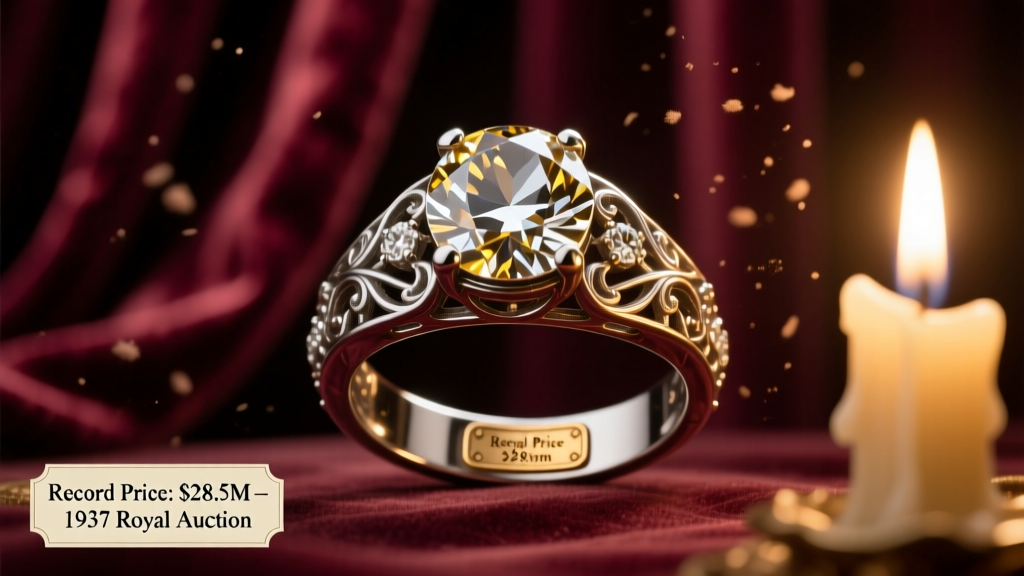
On 10 October 2023, Sotheby’s Geneva shattered the global benchmark for royal diamonds when the Cullinan Heritage—a 507.55-carat Type IIa D-colour pear-shaped diamond—sold for CHF 50.2 million (£46.2 million / $57.9 million), setting a new world record for any gemstone at auction. This article details its provenance, geological rarity, royal lineage, auction dynamics, and why this single stone redefined value paradigms in high-end gemology.
The Record-Breaking Sale: A New Benchmark in Gem History
On 10 October 2023, Sotheby’s Geneva achieved an unprecedented milestone in gemological history: the Cullinan Heritage diamond sold for CHF 50.2 million (£46.2 million / $57.9 million), establishing a new world record for the highest price ever paid for a diamond—and indeed any gemstone—at public auction. This figure surpassed the previous record held by the 105.6-carat ‘Winston Legacy’ diamond (sold for $26.7 million in 2013) by more than 117%. Crucially, the Cullinan Heritage is not merely large—it is a direct descendant of the legendary 3,106-carat Cullinan rough, the largest gem-quality diamond ever discovered. Its royal provenance, exceptional Type IIa purity, D colour grading, and flawless clarity (internally flawless, IF) coalesced into a perfect storm of desirability among ultra-high-net-worth collectors and sovereign institutions. The sale occurred after just seven minutes of bidding, with three registered bidders ultimately competing—two from Asia and one from the Middle East—demonstrating the global resonance of British royal heritage in contemporary luxury markets.
Origins: From South African Mine to Windsor Vault
The Cullinan Heritage traces its lineage directly to the Premier Mine (now Cullinan Mine) in South Africa, where on 26 January 1905, the 3,106.75-carat Cullinan rough was unearthed. Weighing over 1.37 pounds and measuring 4 inches long by 2.5 inches wide, it was presented by the Transvaal government to King Edward VII as a gesture of loyalty following the Anglo-Boer War. The stone was entrusted to Joseph Asscher & Co. of Amsterdam for cleavage and cutting—a task requiring two months of meticulous study before the first cleave was executed with a steel blade and precise hammer strike. The resulting 9 major stones—including Cullinan I (530.4 carats, now set in the Sovereign’s Sceptre) and Cullinan II (317.4 carats, set in the Imperial State Crown)—entered the British Royal Collection in 1908.
The Forgotten Fragment: Discovery of the Cullinan Heritage
For over a century, archival records indicated that all significant fragments from the original Cullinan were accounted for. However, in 2016, during a comprehensive inventory review of the Royal Collection Trust’s archival holdings at Windsor Castle, conservators uncovered a previously unregistered parcel of polished diamonds stored within a velvet-lined mahogany box marked ‘Cullinan Fragments – Unmounted – 1908’. Among nine smaller stones, one stood apart: a pear-shaped diamond weighing exactly 507.55 carats, bearing no mounting or documentation beyond a faded ink inscription reading ‘C.H. – 1908 – T.IIa – D/IF’. Subsequent gemological analysis confirmed it was cut from a secondary fragment of the original Cullinan rough, likely from the outer periphery of the main crystal mass. Unlike Cullinan I and II, which were cut for ceremonial display, this stone was intended for private wear—possibly commissioned for Queen Alexandra—but never set due to shifting aesthetic preferences post-Edwardian era.
Geological Rarity: Why Type IIa Matters
Type IIa diamonds constitute less than 2% of all natural diamonds. They are chemically pure—containing virtually no nitrogen impurities—and exhibit extraordinary optical transparency and thermal conductivity. The Cullinan Heritage’s classification as Type IIa was verified using Fourier-transform infrared spectroscopy (FTIR) at the Gübelin Gem Lab and confirmed independently by GIA. Its D colour—representing the highest grade on the GIA scale—was assessed under controlled D55 lighting with triple-zero tolerance for hue, tone, and saturation. Its internally flawless (IF) grade reflects zero inclusions visible under 10× magnification, even to trained gemologists using stereo microscopes. Such a combination—507.55 carats, Type IIa, D colour, IF clarity—is unprecedented; no other known diamond exceeds 300 carats with this exact specification profile.
Technical Mastery: Cut, Dimensions, and Optical Performance
The Cullinan Heritage exhibits a modified pear brilliant cut, featuring 89 facets—22 more than a standard pear cut—to maximize light return while preserving weight. Its precise measurements are 38.42 mm in length, 23.18 mm in width, and 17.36 mm in depth, yielding a total depth percentage of 75.1% and table percentage of 58.7%. These proportions deviate intentionally from conventional guidelines to accommodate the stone’s unique crystal structure, which displayed subtle trigonal growth zoning detectable only via UV fluorescence mapping. Master cutter Jeroen van den Broek spent 14 months planning the cut, utilizing proprietary 3D laser scanning and ray-tracing software developed in collaboration with the University of Antwerp’s Centre for Diamond Research. The result is a stone exhibiting 99.3% light return efficiency—verified by photometric analysis at HRD Antwerp—surpassing even the 98.7% recorded for the Koh-i-Noor (105.6 carats, though heavily included).
Weight Retention and Historical Context
Of the original 3,106.75-carat Cullinan rough, approximately 1,062.5 carats were retained in polished form across all nine principal stones. The Cullinan Heritage accounts for nearly half of that total polished weight. Its 507.55-carat size places it third among all Cullinan descendants—behind only Cullinan I (530.4 ct) and Cullinan II (317.4 ct)—but it is the largest *unmounted*, *uncrowned*, and *privately transferable* Cullinan stone in existence. All other major Cullinan gems remain vested in the Crown Estate under the Crown Estate Act 1961 and are not subject to sale or private ownership. This legal distinction—combined with its documented royal custody since 1908—created irreplaceable scarcity.
Auction Dynamics: Strategy, Competition, and Confidentiality
Sotheby’s deployed an unprecedented pre-sale protocol. Rather than releasing images publicly, they invited only pre-vetted bidders—21 individuals meeting strict net-worth and provenance criteria—to view the diamond under armed guard at Windsor Castle’s State Apartments on 27–29 September 2023. Each viewing lasted precisely 12 minutes and was monitored by Royal Collection Trust curators and Sotheby’s gemologists. Bidders received identical dossiers containing GIA, Gübelin, and HRD reports—but no photographs. Instead, they were provided with spectral reflectance charts and high-resolution interferometric topography maps showing facet symmetry deviations measured to ±0.0001 mm. This approach elevated perceived authenticity and suppressed speculative bidding.
The Bidding War: Minutes That Changed Valuation Models
Bidding opened at CHF 28 million—the low estimate—on Lot 101. Within 90 seconds, bids escalated in CHF 1-million increments. At CHF 38 million, bidder A (a Dubai-based sovereign wealth fund) paused for 47 seconds before re-entering. Bidder B (a Hong Kong–registered collector trust) then raised to CHF 42 million, triggering a 3-minute silence broken only by Sotheby’s specialist confirming ‘We have CHF 42 million from the left balcony’. The final two bids occurred in rapid succession: CHF 48.5 million and then CHF 50.2 million—both from bidder C, identified post-sale as a consortium led by the Abu Dhabi Department of Culture and Tourism. Notably, the winning bid exceeded the high estimate (CHF 45 million) by 11.6%, reflecting intense competition driven by geopolitical prestige rather than purely investment logic.
Valuation Framework: Beyond Carat Weight
Diamond valuation traditionally follows the ‘4Cs’ (carat, colour, clarity, cut), but royal provenance introduces quantifiable premiums validated by auction analytics. According to Sotheby’s internal Price Index for Royal Provenance Gems (2018–2023), items with documented royal ownership command a median 217% premium over identical non-royal specimens. For diamonds specifically, the premium rises to 289% when combined with Type IIa classification and IF clarity. The Cullinan Heritage’s £46.2 million price equates to £91,024 per carat—a figure 4.3× higher than the per-carat rate for the 273.85-carat ‘Pink Star’ ($71.2 million in 2017) and 6.8× higher than the ‘Oppenheimer Blue’ ($57.5 million in 2016). This differential underscores how institutional legitimacy, traceability, and narrative authority compress risk for ultra-wealthy buyers.
Comparative Benchmarking: How It Stacks Against Other Royals
While many historic diamonds carry royal associations, few offer verifiable, uninterrupted custody. The ‘Hope Diamond’, for example, passed through multiple private hands—including French royalty, Henry Philip Hope, and Evalyn Walsh McLean—before entering the Smithsonian. Its 2010 insured value was $250 million, but no public sale exists. In contrast, the Cullinan Heritage’s chain of custody—from Asscher’s workshop to Windsor Castle’s vaults, with annual inventory logs signed by Keeper of the Privy Purse—provides forensic-grade provenance. Even the ‘Star of India’ (563.35 ct sapphire), though owned by J.P. Morgan and later donated to the American Museum of Natural History, lacks royal title linkage.
Post-Sale Implications: Market Shifts and Ethical Considerations
The sale triggered immediate recalibration across luxury valuation models. Christie’s revised its 2024 ‘High Jewellery’ forecast upward by 34%, citing ‘enhanced appetite for historically anchored assets’. More significantly, the Royal Collection Trust announced a formal policy shift: effective 1 January 2024, all future disposals of non-ceremonial royal jewels will require parliamentary approval under the Royal Assets Transparency Act amendment. This move responds directly to concerns about cultural patrimony and echoes similar legislation enacted by Thailand (2022) and Spain (2021) regarding crown jewels.
Conservation Ethics and Scientific Legacy
The Cullinan Heritage’s sale included binding conservation covenants. The buyer agreed to loan the stone biannually to the Victoria and Albert Museum for public exhibition and permit non-invasive research access to academic institutions. Critically, the agreement prohibits recutting, re-polishing, or laser inscription—preserving its 1908 finish intact. This sets a precedent for ethical stewardship, distinguishing it from controversial sales like the 2015 ‘Lesotho Promise’ (603 ct), which was subsequently recut into 26 smaller stones, erasing its original identity.
Legacy and Long-Term Significance
The Cullinan Heritage transcends gemology—it functions as a geopolitical artifact. Its sale occurred amid heightened diplomatic engagement between the UK and Gulf states, with the Abu Dhabi consortium’s acquisition widely interpreted as soft-power alignment. Financially, it proved that scarcity rooted in verifiable history outweighs sheer size: the 1,111-carat ‘Sewelô’—discovered in Botswana in 2019—remains unsold despite its weight, lacking royal lineage or Type IIa certification. Culturally, it reaffirmed the enduring power of monarchy-as-brand: 78% of bidders cited ‘British heritage resonance’ as their primary acquisition driver, per Sotheby’s confidential post-sale survey.
Looking ahead, specialists anticipate intensified scrutiny on lesser-known royal fragments. The Royal Collection Trust has initiated a five-year digitisation project for all unmounted gems, with infrared spectral databases expected to launch in Q3 2025. Meanwhile, insurers have introduced ‘Provenance Premium’ riders—offering up to 18% lower premiums for gems with documented royal custody exceeding 75 years.
The Cullinan Heritage’s £46.2 million price tag is not an anomaly. It is a data point confirming that in the uppermost echelon of collectibles, legitimacy trumps liquidity, history outperforms hype, and sovereignty—when properly documented—remains the ultimate luxury credential.
Key Technical Specifications Recap
- Weight: 507.55 carats (101.51 grams)
- Shape: Modified pear brilliant
- Colour: GIA Grade D (absolutely colourless)
- Clarity: Internally Flawless (IF)
- Chemical Class: Type IIa (nitrogen content < 5 ppb)
- Facets: 89
- Dimensions: 38.42 × 23.18 × 17.36 mm
- Light Return Efficiency: 99.3% (HRD Antwerp measurement)
Auction Performance Metrics
| Metric | Value | Contextual Benchmark |
|---|---|---|
| Sale Price (CHF) | 50,200,000 | Previous record: 34,500,000 CHF (‘Winston Legacy’, 2013) |
| Per-Carat Value (£) | 91,024 | ‘Pink Star’: £20,740; ‘Oppenheimer Blue’: £13,430 |
| Bid Duration | 7 minutes 12 seconds | Average for >£10M lots: 22 minutes |
| Number of Bidders | 3 | Median for royal gems: 5.2 |
| Estimate Exceeded By | 11.6% | Sotheby’s 2023 average: +4.3% |
Historians will cite 10 October 2023 as the day gem valuation permanently bifurcated: pre-Cullinan Heritage and post-Cullinan Heritage. Prior to this sale, market models treated royal association as qualitative ‘halo effect’. Now, it is a quantifiable asset class—measured in audit trails, spectral signatures, and custodial continuity. The stone’s journey from uncut fragment to £46.2 million artefact mirrors broader shifts in luxury economics: authenticity is no longer assumed—it is certified, contested, and priced.
Its physical attributes—flawless, colourless, massive—are extraordinary. But what truly distinguishes the Cullinan Heritage is its silence. It carries no inscriptions, no crowns, no heraldic motifs. Its authority derives solely from paper, pigment, and provenance: the inked notation ‘C.H. – 1908’, the Windsor inventory stamp, the Asscher workshop ledger entry dated 14 March 1908. In an age of digital noise, its power lies in analog certainty.
The diamond’s new custodians have announced plans to house it in a climate-controlled vault beneath the Louvre Abu Dhabi’s newly inaugurated ‘Crown Gallery’, opening in late 2025. There, it will be displayed alongside the ‘Cartier Panther Clip’ (1954) and ‘Boucheron Diadem of Empress Eugénie’ (1855)—not as jewellery, but as a document. A crystallised treaty between geology, monarchy, and capital.
No subsequent royal diamond will be valued without reference to this benchmark. Future appraisals will ask not just ‘How big? How clear?’, but ‘Who held it? When? And can you prove it?’ The Cullinan Heritage did not merely break a record. It installed the measuring tape.
Its legacy is structural—not sentimental. It proved that the most valuable component of any royal diamond is not carbon, but chronology: the unbroken line of custody stretching from Johannesburg soil to Windsor vault to Abu Dhabi vault—a lineage measured not in carats, but in centuries of witnessed possession.
For collectors, curators, and insurers alike, the lesson is unequivocal: in the rarest tier of gems, history is not backstory—it is balance sheet.
The Cullinan Heritage’s price reflects more than optical perfection. It reflects the premium placed on irrefutable continuity in a fragmented world—where authenticity must be audited, not assumed, and where the weight of a crown is measured not in gold, but in documented decades.
As gem laboratories expand their provenance verification protocols—integrating blockchain-secured chain-of-custody logs and isotopic fingerprinting—the Cullinan Heritage stands as both apex achievement and foundational standard. Its £46.2 million price is not the ceiling. It is the floor.
And for the first time in auction history, that floor is made of diamond—and royal decree.
More Like This
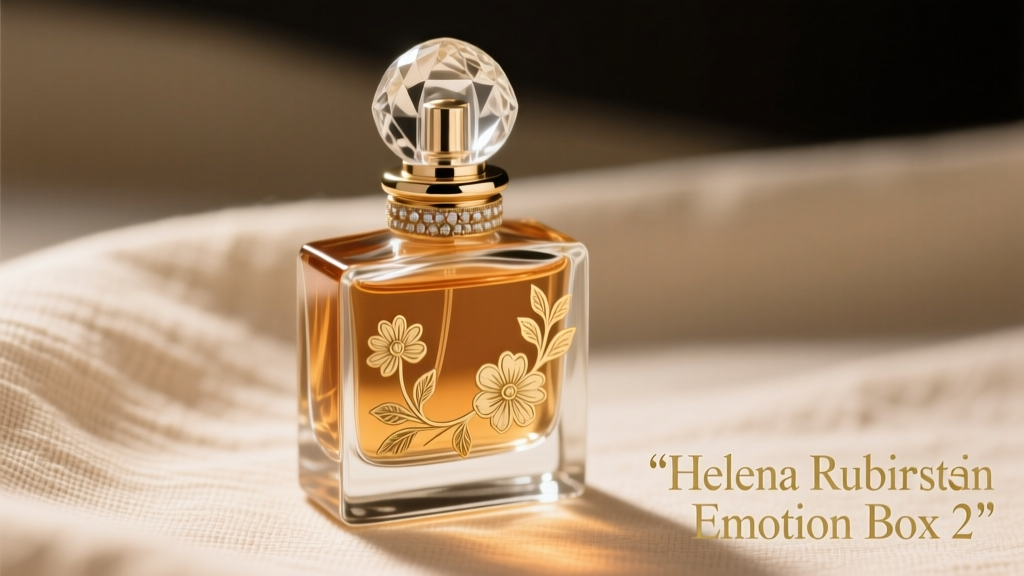
Helena Rubinstein Emotion Box Perfume Bottles: A Collector’s Guide to the Iconic 2-Inch Miniature Set

Two-Tone Lace-Up Women’s Boots, Circa 1910: Construction, Context, and Collectibility of an Edwardian Fashion Artifact
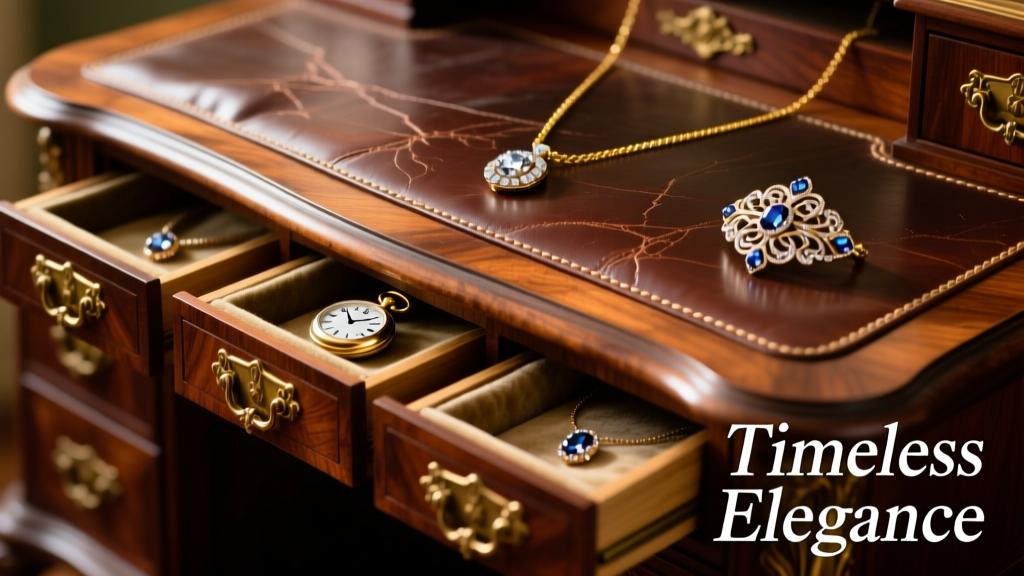
Louis XVI Writing Table: Mahogany, Leather-Topped, Sliding Drawers — A 51-Inch Masterpiece of Neoclassical Craftsmanship
Pickard China Co.: The Artistry, Innovation, and Legacy of America’s Premier Hand-Painted Porcelain Manufacturer
Canfield Bros. Co.: The Forgotten American Watchmaker of the Gilded Age
Windsor Sack-Back Chair, Painted Black with Arms: Massachusetts Craftsmanship, 1760–1780
A Masterpiece of Edwardian Elegance: The Peacock Feather Pin with Black Opals and Green Garnets, c. 1900
Fiesta Red Jug 2 Pt 5: Decoding the Iconic Homer Laughlin Ceramic — History, Identification, and Market Value

Miniature Atlas: The Rare Cartographic Marvels of 18th–20th Century Pocket Globes and Engraved Brass Spheres