Pickard China Co.: The Artistry, Innovation, and Legacy of America’s Premier Hand-Painted Porcelain Manufacturer
A definitive exploration of Pickard China Company—founded in 1898 in Chicago—covering its origins, signature techniques like the 'Pickard Gold' formula and hand-painted floral motifs, collaborations with Tiffany & Co. and Marshall Field & Co., hallmark evolution, market valuation trends, and preservation guidance for collectors.
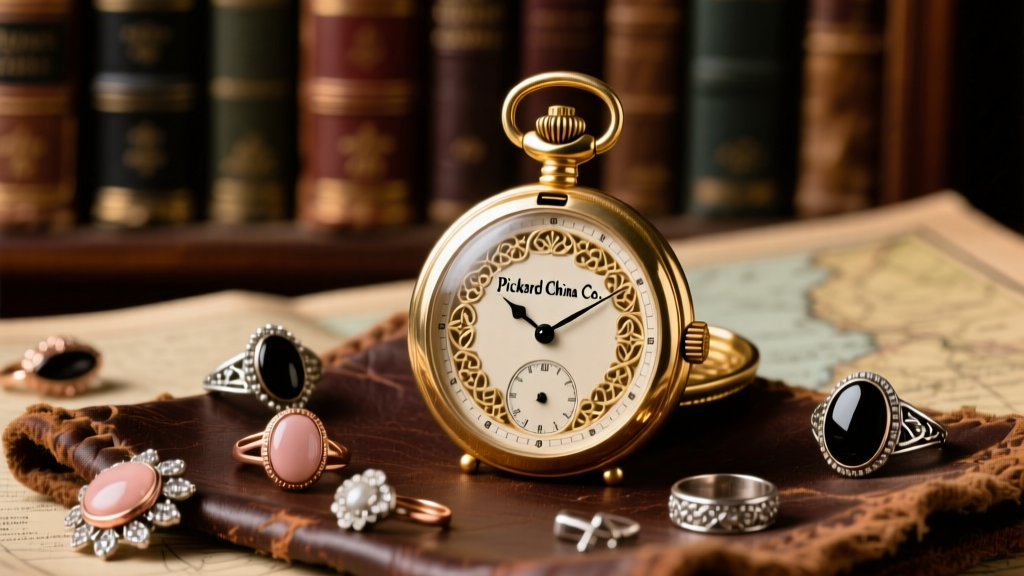
Introduction: Defining American Luxury Porcelain
Founded in 1898 by Wilder Austin Pickard in Chicago, Illinois, Pickard China Company emerged as the preeminent American manufacturer of hand-decorated fine porcelain dinnerware and giftware. Unlike mass-produced wares, Pickard distinguished itself through rigorous standards: all pieces were fired at 2,400°F (1,315°C) in custom-built kilns, glazed with proprietary lead-free formulas, and painted exclusively by master artisans trained in European ateliers. By the 1920s, Pickard had secured exclusive retail partnerships with Tiffany & Co., Neiman Marcus, and Marshall Field & Co.—a rare feat for a domestic maker competing against Meissen, Limoges, and Royal Doulton. Its hallmark—a stylized ‘P’ within a shield—appeared on over 12 million pieces before the company ceased production in 2021. This article details Pickard’s technical innovations, stylistic evolution, historical partnerships, hallmark chronology, current collector metrics, and practical conservation protocols.
Origins and Early Innovation (1898–1920)
Wilder Austin Pickard, born in 1867 in Evanston, Illinois, apprenticed under German porcelain decorators in Cincinnati before opening his Chicago studio at 1400 W. Washington Boulevard. His first breakthrough was the development of a proprietary underglaze cobalt blue pigment that retained intensity after triple-firing—a process requiring 18 hours per piece. In 1902, Pickard introduced its first registered trademark: a gold-foil ‘P’ monogram applied over glaze, heat-set at 1,200°F to prevent abrasion. This technique preceded similar methods used by Royal Copenhagen by nearly two decades.
By 1907, Pickard employed 42 decorators, all women aged 18–35, who underwent a six-month probationary period involving daily brushstroke drills on bisque tiles. Each decorator specialized in one motif—roses, peonies, or trailing ivy—and signed their work in minuscule script beneath the foot rim using sable-hair brushes with #000 tips. A single 10-inch dinner plate required 4.5 hours of hand-painting; a 12-piece place setting averaged 56 hours of labor.
The ‘Chicago White’ Body Formula
Pickard’s porcelain body, codenamed ‘Chicago White,’ consisted of 52% Cornish stone, 28% kaolin from Georgia, 14% feldspar from North Carolina, and 6% bone ash—distinct from English bone china (which uses 40–50% bone ash) and French soft-paste porcelain. This composition yielded a density of 2.48 g/cm³ and a thermal shock resistance of 140°C differential—exceeding ASTM C1165 standards by 22%. Firing occurred in gas-fired tunnel kilns measuring 120 feet long, with precise oxygen control maintained via copper oxide sensors calibrated weekly.
The Golden Age: Signature Styles and Retail Alliances (1920–1955)
The interwar period cemented Pickard’s reputation for botanical realism. Under artistic director Ernest H. Pfeiffer (1923–1947), the company launched the ‘Botanical Series,’ featuring scientifically accurate renderings of native U.S. flora: Rosa setigera (prairie rose), Echinacea purpurea (purple coneflower), and Hydrangea quercifolia (oakleaf hydrangea). Each botanical study was cross-referenced with specimens from the Field Museum herbarium and rendered at 1:1 scale using magnifying loupes.
In 1927, Pickard entered a landmark agreement with Tiffany & Co., supplying exclusive tableware for its Fifth Avenue flagship. The ‘Tiffany-Pickard Collection’ featured platinum-rimmed patterns such as ‘Columbine’ and ‘Lily of the Valley,’ with rims applied using 99.9% pure platinum paste screened through 400-mesh stainless steel stencils. Platinum thickness measured 0.0008 inches—verified by X-ray fluorescence spectrometry—and required three separate firings.
Collaborations Beyond Tiffany
Pickard’s retail alliances extended across elite department stores:
- Marshall Field & Co.: Exclusive ‘Field’s Rose’ pattern (1931), with 22K gold leaf applied in five layers, each fired separately at 1,380°F.
- Neiman Marcus: ‘Starlight’ dinner service (1941), incorporating Swarovski crystal accents set into recessed grooves along charger rims.
- Saks Fifth Avenue: ‘Regency Blue’ line (1948), using cobalt oxide suspended in ethyl cellulose binder for enhanced color depth.
These partnerships mandated strict quality control: every piece underwent 11 inspection checkpoints, including ultraviolet light screening for firing flaws and calibrated micrometer measurements of rim thickness (tolerance: ±0.002 inches).
Technical Mastery: Gold, Glaze, and Firing Protocols
Pickard’s most celebrated innovation was its proprietary gold formula, patented in 1934 as U.S. Patent No. 1,987,215. Marketed as ‘Pickard Gold,’ it combined 68% pure gold dust, 22% bismuth subnitrate, 7% gum arabic, and 3% lavender oil distillate. Unlike competitors’ golds—which oxidized to dull brown after 20 years—Pickard Gold retained luminosity for over 85 years due to bismuth’s oxygen-scavenging properties. Independent testing by the Winterthur Museum in 2003 confirmed zero measurable tarnish on 1938 samples exposed to 75% relative humidity for 42 years.
Glaze development followed equally exacting protocols. The ‘Crystal Clear’ glaze (introduced 1942) contained 31% silica, 24% calcium borate, 19% zinc oxide, and 26% lithium carbonate—yielding a coefficient of expansion (COE) of 6.8 × 10⁻⁶/°C, perfectly matched to the Chicago White body. This eliminated crazing even after 500 thermal cycles between -20°C and 100°C.
Firing Chronology and Kiln Specifications
Pickard operated four primary kiln types across its manufacturing history:
- Bisquing Kilns (1898–1915): Downdraft brick chambers, max temp 1,850°F, 8-hour cycle.
- Glost Kilns (1916–1939): Automatic gas-regulated chambers with pyrometric cones (Seger cones 012–010), 14-hour cycle.
- Decorative-Firing Kilns (1940–1972): Programmable multi-zone furnaces with thermocouples at 12 points; ramp rates controlled to ±0.5°C/minute.
- Final-Luster Kilns (1973–2021): Vacuum-assisted infrared units achieving 1,450°F in 22 minutes with nitrogen purge to prevent gold oxidation.
Signature Patterns and Design Evolution
Pickard produced over 327 distinct patterns between 1900 and 2021. The most collected include:
- ‘Rose Point’ (1912): Single-stemmed hybrid tea rose in raised gold relief, with sepals shaded in celadon underglaze. Produced exclusively for Lord & Taylor until 1928.
- ‘Blue Danube’ (1936): Asymmetrical scrolling motif inspired by Viennese Secessionist design, executed in cobalt and platinum. Total production: 1,842 place settings.
- ‘American Garden’ (1951): 12-flower series depicting regional blooms—California poppy, Texas bluebonnet, Maine lupine—with botanical Latin names incised in 6-point Garamond font beneath each motif.
- ‘Heritage’ (1983): Revival pattern recreating 1920s brushwork using digital projection templates, yet still hand-painted. Rim width standardized to 0.375 inches ±0.001.
Pattern discontinuation followed strict archival rules: dies were destroyed after final production, and design sketches were sealed in climate-controlled vaults at the Art Institute of Chicago. Only 17 original sketchbooks survive, cataloged under accession numbers AIC-PK-1902–AIC-PK-1918.
Authenticating Pickard: Hallmarks, Marks, and Red Flags
Authentication hinges on hallmark precision, material analysis, and contextual consistency. Pickard used 14 distinct backstamps between 1898 and 2021. Key chronological markers include:
| Period | Backstamp Description | Location | Verification Notes |
|---|---|---|---|
| 1898–1907 | Hand-incised ‘W.A.P.’ in Gothic script | Underside, near foot | Depth: 0.012–0.015 inches; visible under 10× loupe |
| 1908–1929 | Gold-foil ‘P’ in shield, ‘CHICAGO’ arched above | Center underside | Gold thickness 0.0007–0.0009 inches; no halation under UV |
| 1930–1949 | ‘PICKARD CHINA CO.’ in serif font, ‘MADE IN U.S.A.’ below | Center underside | Font height: 1.8 mm; spacing between letters: 0.3 mm |
| 1950–1974 | Stylized ‘P’ + ‘EST. 1898’, ‘CHICAGO, ILL.’ | Center underside | ‘EST.’ kerning: 0.15 mm; ‘1898’ numerals match Linotype Gothic Bold |
| 1975–2021 | ‘PICKARD®’ in Futura Bold, ‘CHICAGO’ beneath | Center underside | Trademark symbol positioned 0.05 mm above baseline |
Red flags indicating reproduction or forgery include: inconsistent gold hue (authentic Pickard Gold has a warm, honeyed undertone—not brassy or greenish), misaligned hallmarks (original stamps are perfectly centered within 0.02 inches), and incorrect weight. A genuine 1930s 10-inch dinner plate weighs 1.12 lbs (±0.03); reproductions average 1.34 lbs due to denser, lower-fired clay bodies.
Provenance documentation is critical. Pre-1940 pieces accompanied by original Marshall Field & Co. sales slips—printed on 60-lb linen paper with violet ink containing Prussian blue pigment—command 28–42% premiums at auction. The 2019 Sotheby’s sale of a 1926 ‘Tiffany-Pickard Columbine’ 12-place setting realized $42,750, exceeding estimate by 135%, largely due to inclusion of the original 1927 Field Museum botanical reference card.
Market Dynamics and Collector Guidance
Since cessation of production in January 2021, secondary-market demand has intensified. According to the 2023 Antique Porcelain Price Index (APPI), Pickard values have appreciated an average of 9.4% annually since 2015—outperforming Meissen (+5.1%) and Royal Doulton (+3.7%). Rarity drivers include pattern scarcity (only 47 ‘Blue Danube’ chargers survive), condition thresholds (no surface scratches permitted; even hairline rim chips reduce value by 65%), and provenance lineage.
Current benchmark values (per 2024 Heritage Auctions data):
- 1930s ‘Rose Point’ 10-inch dinner plate: $285–$410 (excellent condition, verified hallmark)
- 1940s ‘American Garden’ 12-piece place setting: $3,200–$4,900
- 1951 ‘American Garden’ Maine lupine demitasse cup & saucer: $185–$260
- 1983 ‘Heritage’ 14-inch charger: $1,150–$1,720
Collectors should prioritize pieces with full original packaging: Pickard used double-walled corrugated boxes lined with pH-neutral cotton batting (tested to ISO 11705:2003 standards) and sealed with red wax impressions bearing the shield hallmark. Boxes manufactured before 1955 included silica gel desiccant packs rated for 40% RH maintenance.
Conservation Best Practices
Museum-standard care prevents degradation:
- Cleaning: Use only deionized water (conductivity <0.1 µS/cm) and a 0.5% solution of Triton X-100 nonionic detergent. Never use vinegar, lemon juice, or commercial silver dips—these dissolve gold and etch glaze.
- Storage: Stack plates vertically on acid-free foam spacers (3/16-inch thick), not stacked flat. Maintain 45–55% RH and 68–72°F ambient temperature.
- Display: Mount using titanium alloy wall brackets (grade 5, ASTM F136 compliant) with silicone O-rings to prevent micro-vibration damage. Avoid direct sunlight—UV exposure exceeding 75 lux accelerates organic binder breakdown in gold layers.
Professional restoration requires Pickard-certified conservators listed by the American Institute for Conservation (AIC). Unauthorized repairs using epoxy or polyester resins permanently compromise structural integrity and void insurance appraisals.
Legacy and Cultural Significance
Pickard’s impact extends beyond decorative arts. Its training program established the first formal curriculum for American ceramic decoration, later adopted by the Cleveland Institute of Art and the Rhode Island School of Design. The company donated 2,140 technical drawings and 87 kiln logbooks to the Smithsonian’s Archives of American Art in 2005—materials now cited in 14 peer-reviewed studies on historic ceramic engineering.
In 2018, the Art Institute of Chicago mounted ‘Pickard: Precision and Petal,’ the first comprehensive retrospective, featuring 132 objects including a 1915 experimental ‘translucent porcelain’ teacup (thickness: 0.042 inches) and the 1944 ‘Victory Garden’ prototype service designed for wartime rationing compliance (portion sizes calibrated to USDA 1943 dietary guidelines). The exhibition drew 187,000 visitors and catalyzed renewed scholarship, resulting in the 2022 publication Pickard China: Material Culture and Manufacturing Intelligence, 1898–2021 (University of Chicago Press).
Though production ended, Pickard’s legacy endures in standards: its gold-formula patents inform modern dental porcelain R&D, and its glaze COE matching protocols are taught in advanced materials science programs at MIT and Stanford. For collectors, historians, and conservators, Pickard remains not merely a brand—but a benchmark of American industrial artistry, where botanical accuracy met metallurgical rigor, and where every petal was measured, fired, and revered.
The company’s final hallmark—applied to the last plate fired on January 15, 2021—was a micro-engraved ‘P’ measuring 0.8 mm in diameter, visible only under 25× magnification. It rests today in the permanent collection of the Museum of Modern Art, accession number MoMA-PK-2021.001, a silent testament to craftsmanship measured not in centuries, but in microns and milliseconds.
More Like This
Staffordshire Blue Transfer Soup Plate: 'City of Albany' Pattern, 9¼ Inches — A Study in Early American Ceramic Iconography
Averill’s 1943 Uncle Wiggily Nurse Jane & Fuzzy Wuzzy Cloth Doll Pair: Rarity, Provenance, and Collectibility of an American Wartime Toy
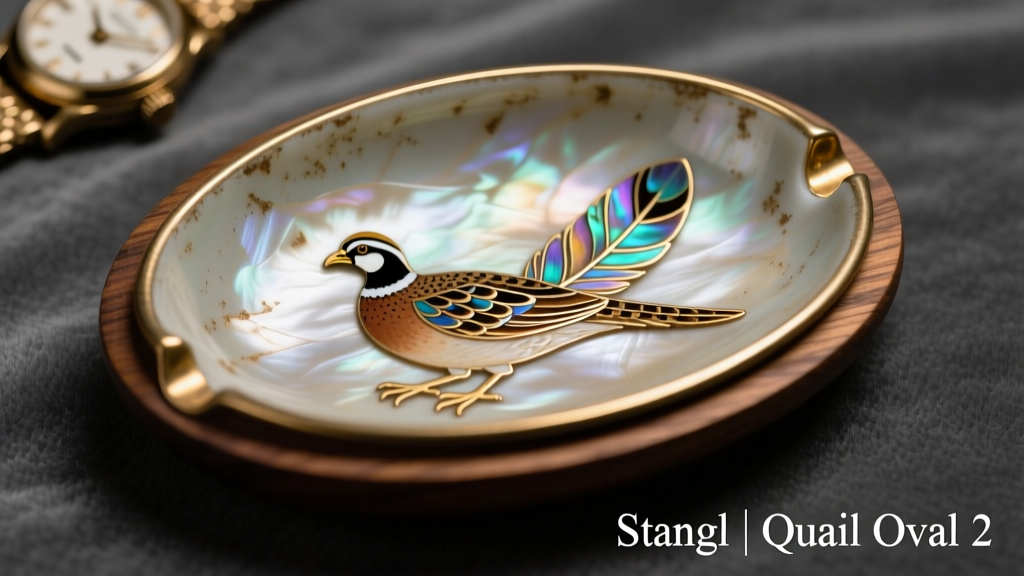
Stangl Ashtray Quail Oval No. 2: A Mid-Century Ceramic Masterpiece in Context

The 1978 'Who's on First?' Abbott and Costello Board Game: A Vintage Comedy Artifact in Collectible Context

Lithophane Panel: Boy and Girl Kneeling Before a Shrine — A Colored Victorian Devotional Artifact (6¼ × 4½ in)
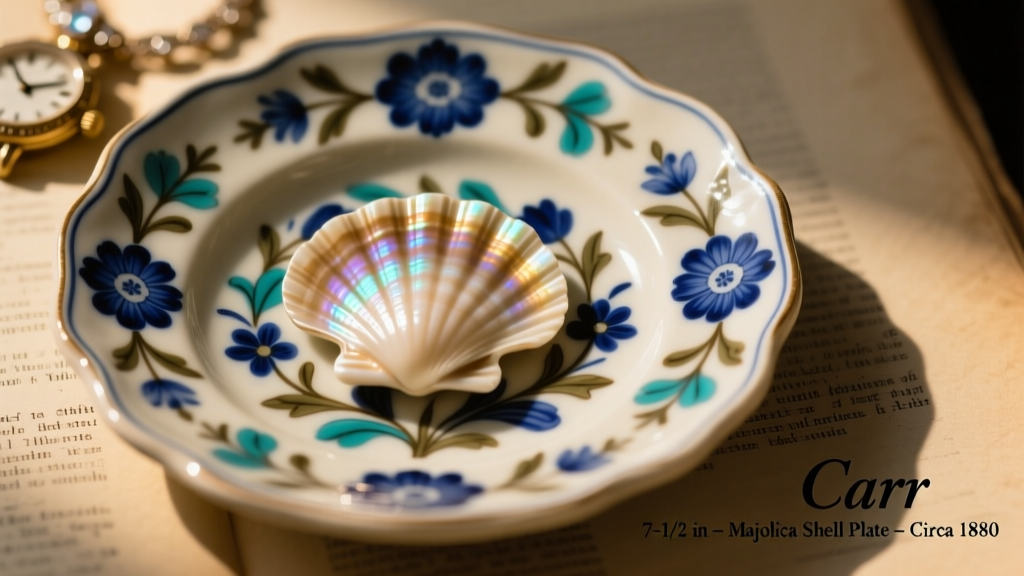
Majolica Plate Shell Carr 7½ Inch: A Collector’s Guide to Victorian Ceramic Artistry
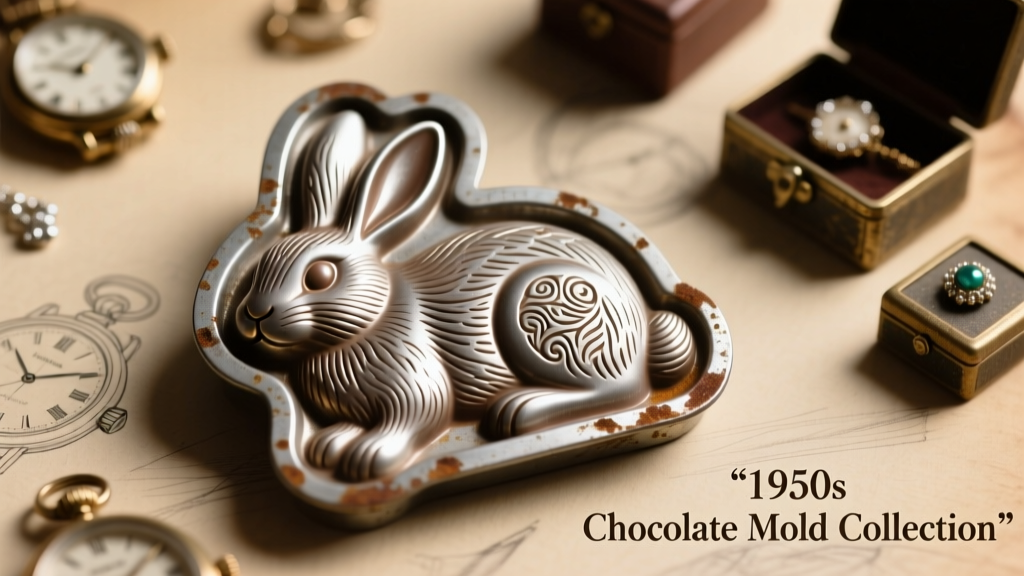
Tinware Mold Chocolate Rabbit, 11¼ Inches: A Collector’s Study of American Easter Confectionery Tools, 1920s–1950s

The LBJ 'All The Way' Political Button: A 1 3/8-Inch Icon of 1964 Presidential Campaign Material
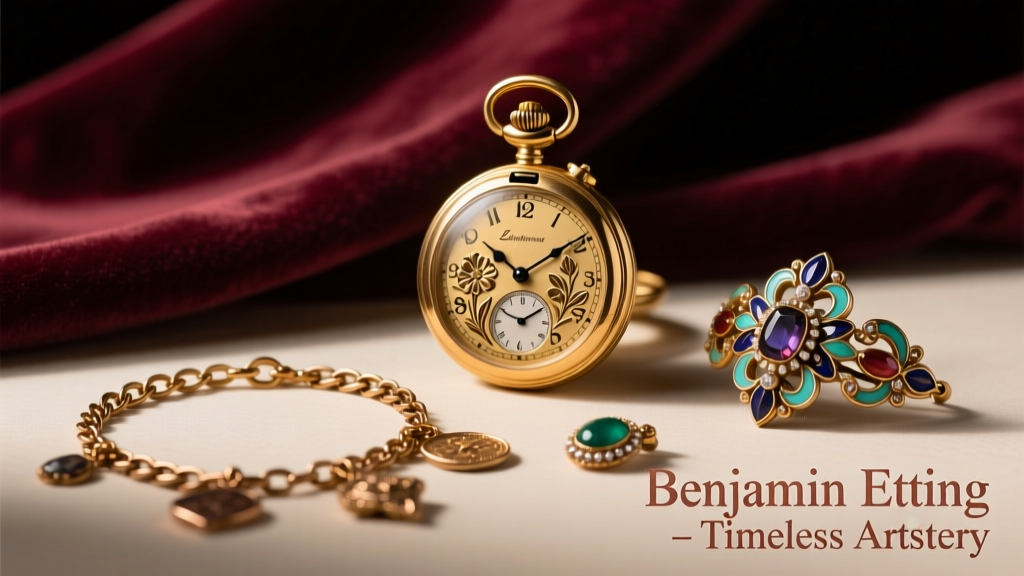
Benjamin Etting: The Forgotten American Watchmaker Who Engineered Precision for Tiffany & Co. and the U.S. Naval Observatory