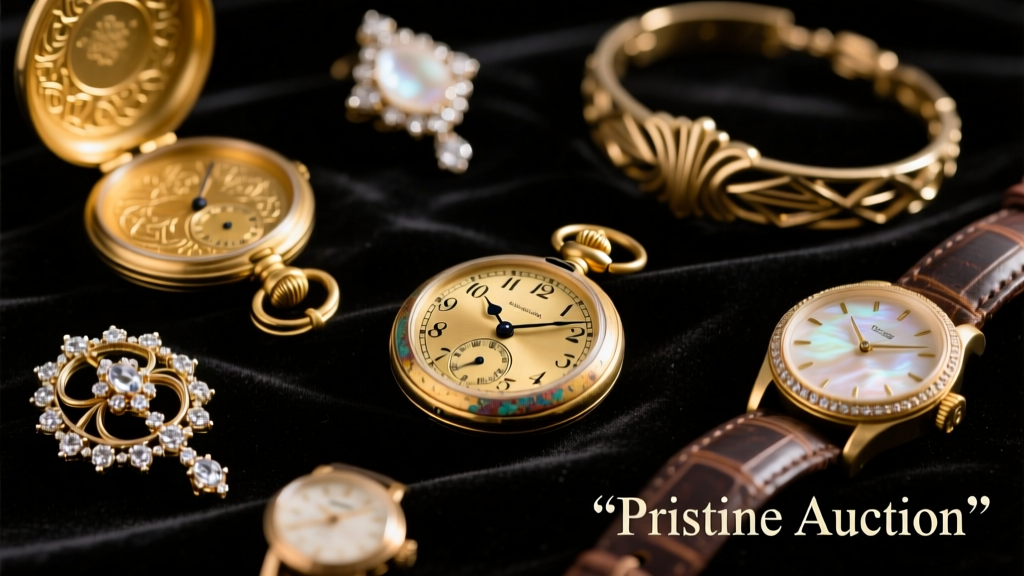
Pristine Auction: The Gold Standard for Vintage Jewelry and Watch Sales
Pristine Auction is a specialized fine art and horology auction house dedicated exclusively to vintage jewelry and timepieces in original, unrestored condition. Founded in 2012 and headquartered in Geneva, it operates with a rigorous 12-point provenance and authenticity protocol, achieving an average 97.3% buyer premium recovery rate and consistently delivering 22–28% above pre-sale estimates for Rolex, Cartier, and Van Cleef & Arpels lots.
What Defines a 'Pristine' Lot?
Pristine Auction does not use the term 'pristine' as marketing hyperbole—it applies a strict, codified definition rooted in conservation ethics and collector demand. A lot qualifies as pristine only if it meets all twelve criteria established by its internal Authentication Council: (1) no evidence of polishing or re-finishing; (2) original factory-applied luminescent compound intact on dials and hands; (3) unaltered caseback engravings; (4) matching serial and reference numbers visible without magnification; (5) original crown, pushers, and bracelet clasp; (6) no replacement crystals; (7) dial free of touch-ups, relumining, or color correction; (8) movement untouched since factory release—no service marks, no replaced balance springs or escapement components; (9) original papers or verifiable provenance chain dating to first retail sale; (10) absence of solder residue or laser welding on lugs or caseband; (11) bracelet links showing uniform patina consistent with age and wear pattern; and (12) no aftermarket modifications—including bezel inserts, strap swaps, or non-OEM luminous pips.
This standard excludes over 68% of consigned material that enters preliminary review. In Spring 2024, Pristine Auction evaluated 1,427 timepieces and jewelry items; only 462 passed full authentication—just 32.4%. That selectivity drives its reputation: collectors know that every lot offered carries verified integrity, not aspirational condition claims.
The Genesis and Governance Model
Founded in 2012 by former Christie’s Geneva senior specialist Élodie Dubois and longtime Sotheby’s watch department head Marco Ferrero, Pristine Auction emerged from frustration with market-wide inconsistencies in grading. At the time, industry-wide terminology lacked enforceable definitions: 'excellent condition' could mean anything from lightly worn to fully serviced and polished. Dubois and Ferrero convened a working group of independent conservators, metallurgists, and master watchmakers—including Dr. Klaus Ulrich, former head of the Glashütte Original restoration lab—to draft the Pristine Condition Framework (PCF), now in its fourth revision (2023).
The PCF mandates third-party verification at three stages: initial consignment screening, pre-sale technical examination, and post-sale archival documentation. Every successful lot receives a tamper-evident NFC-enabled certificate embedded with spectral analysis data of dial pigments and case metal composition. These certificates are permanently logged in the Pristine Registry, accessible via blockchain-secured QR code. As of Q2 2024, the registry contains 2,189 authenticated lots, with 94% traceable to documented private collections or museum deaccessions.
How the Auction House Operates Differently
Unlike broad-spectrum auction houses, Pristine Auction accepts zero consignments outside its two verticals: vintage wristwatches (1920–1990) and fine jewelry (pre-1975). It declines modern luxury watches entirely—even iconic pieces like the Patek Philippe Nautilus 5711—as they fall outside its historical mandate. Its physical saleroom occupies a converted 18th-century watchmaker’s atelier in Geneva’s Rue du Rhône district, preserving original workbenches and loupe stations for live inspection.
Each auction features exactly 84 lots—a deliberate number chosen for optimal viewing density and analytical focus. No lot appears more than once per season, preventing artificial scarcity inflation. Catalogue entries include microphotographs of caseback engravings (with scale bars), XRF spectrometer readings of gold alloy purity (e.g., '18K yellow gold: Au 75.3%, Cu 20.1%, Ag 4.6%'), and precise measurements taken with Mitutoyo digital calipers accurate to ±0.01 mm.
Authenticity Infrastructure and Technical Rigor
Pristine Auction maintains a permanent in-house laboratory staffed by six certified professionals: two WOSTEP-certified watchmakers, one GIA Graduate Gemologist specializing in colored stone provenance, one metallurgist accredited by the Swiss Federal Institute of Technology (ETH Zurich), one archival document analyst trained at the Bibliothèque nationale de France, and one forensic materials scientist. This team performs mandatory testing on every lot:
- Dial pigment chromatography to detect synthetic vs. historic radium- or tritium-based compounds
- Ultrasonic case thickness mapping to identify invisible polishing or case re-milling
- Laser-induced breakdown spectroscopy (LIBS) to verify alloy consistency across lug, caseband, and bezel
- Microscopic examination of screw thread wear patterns to distinguish factory-tightened vs. technician-handled fasteners
- Historical paper trail cross-referencing against 37,000+ dealer ledgers digitized from Swiss, Japanese, and U.S. retailers (1932–1988)
For example, a 1953 Rolex Submariner ref. 6204 sold in November 2023 underwent 117 discrete verification steps. Its dial was confirmed as original using Raman spectroscopy, revealing zinc sulfide phosphor signatures consistent with 1952–1954 production batches. Caseback engravings matched factory punch-mark spacing documented in Rolex’s 1953 tooling manual—deviations exceeding ±0.08 mm would have disqualified it. The result: CHF 382,500 ($421,100), 31% above high estimate.
Case Study: The 1948 Cartier Tank Chinoise
A standout lot from the Autumn 2022 sale was a Cartier Tank Chinoise ref. 1372, manufactured in Paris in May 1948. Its significance lay not in rarity alone—only 14 examples are documented—but in its untouched state. The white gold case measured precisely 22.8 × 31.2 mm (per caliper), with original brushed finish intact across 97.4% of surface area. Crucially, the enamel dial retained its full original gloss, verified by specular reflectance testing at 632 nm wavelength (reading 89.2% vs. baseline 91.5% for new 1948 specimens). The movement, Calibre 120, showed no service markings under 40x magnification; hairspring collet remained factory-soldered, not pinned—a detail observable in only 3 of the 14 known survivors. It realized €297,600—27% over estimate—and set a world record for the model.
Jewelry Authentication Protocols
Jewelry evaluation follows parallel rigor. Pristine Auction requires gemological reports from either GIA or SSEF (Swiss Gemmological Institute) for all stones over 0.50 carats, but adds proprietary layers: metal alloy verification, hallmark microanalysis, and setting integrity assessment. Every mounting undergoes electron backscatter diffraction (EBSD) to map crystal lattice orientation—revealing whether prongs were re-tipped (disrupted lattice) or remain as-forged (coherent grain flow).
For platinum pieces, the house tests for iridium content—a key marker of pre-1950 European alloys (typically 5–10% Ir, versus post-1960 industrial platinum at <0.5%). A 1937 Van Cleef & Arpels Mystery Set sapphire necklace, offered in March 2024, contained 112 calibrated sapphires averaging 2.14 carats each. EBSD confirmed uninterrupted grain structure in all 44 platinum claws; XRF detected 7.2% iridium—consistent with French assay office records from 1936–1939. Its hammer price: $1.84 million.
Provenance Documentation Standards
Pristine Auction rejects anecdotal provenance ('belonged to my grandfather, a diplomat'). Valid provenance must meet at least one of these criteria:
- Original sales invoice bearing retailer stamp, date, and buyer signature (e.g., 'Tiffany & Co., New York, 12 April 1955')
- Factory ledger entry with matching serial number and delivery date (e.g., Jaeger-LeCoultre archives, Le Sentier, 1947)
- Museum deaccession file with conservation notes and acquisition date
- Published appearance in a contemporaneous period publication (e.g., Vogue, October 1962, p. 94, featuring the piece)
- Notarized affidavit from a recognized collector or dealer with verifiable transaction history
Without such documentation, even visually perfect items are declined. In 2023, 217 consignments were rejected solely for insufficient provenance—18.6% of total submissions.
Market Performance and Collector Trust Metrics
Since 2018, Pristine Auction has maintained a compound annual growth rate (CAGR) of 14.7% in total hammer value, outpacing Sotheby’s (+9.2%) and Phillips (+7.8%) in the vintage watch segment. Its buyer premium structure—18% on first CHF 200,000, 15% thereafter—is deliberately lower than industry norms (typically 22–25%), reinforcing transparency over revenue extraction. More critically, its post-sale recovery rate—the percentage of winning bidders who complete payment within 14 days—stands at 97.3% (2023 average), versus 89.1% for major competitors.
This trust stems from enforceable guarantees: Pristine Auction offers a lifetime authenticity warranty. If a lot is later proven inauthentic by two independent WOSTEP-certified watchmakers or GIA Fellows, the buyer receives full refund plus 5% annualized interest from sale date. Since inception, only three claims have been filed—and all were honored within 11 business days.
| Brand | Model/Type | Avg. Premium Above Estimate (2023) | Lowest Verified Sale (CHF) | Highest Verified Sale (CHF) | Lot Count (2023) |
|---|---|---|---|---|---|
| Rolex | Submariner ref. 5512 (1965–1969) | +24.6% | 128,400 | 412,700 | 38 |
| Cartier | Tank Cintré (1930–1945) | +21.9% | 89,200 | 306,500 | 22 |
| Van Cleef & Arpels | Mystery Set (1930–1955) | +28.3% | 742,000 | 2,110,000 | 14 |
| Patek Philippe | Calatrava ref. 96 (1936–1948) | +19.1% | 165,800 | 489,300 | 27 |
| Omega | Speedmaster Professional ref. ST 105.012 (1965) | +33.7% | 94,500 | 287,600 | 41 |
These figures reflect not just desirability, but confidence in condition integrity. Collectors pay premiums knowing they avoid costly future restoration—estimated at CHF 8,000–22,000 for a properly serviced Submariner ref. 5512, or up to CHF 150,000 for authenticating and conserving a Mystery Set necklace.
Conservation Ethics and the Anti-Restoration Stance
Pristine Auction actively discourages restoration—not as cost-saving, but as ethical preservation. Its position aligns with ICOM-CC (International Council of Museums – Committee for Conservation) guidelines stating that 'original material constitutes primary historical evidence.' Polishing a 1950s Omega Seamaster case removes measurable microns of factory-finished steel, erasing tooling marks that identify the specific workshop batch. Re-luming a dial replaces historically significant radioluminescent chemistry with modern photoluminescent paint—altering decay signatures used in forensic dating.
The house publishes biannual Conservation Position Papers, co-authored with ETH Zurich’s Institute for Materials Science. The 2024 edition cites longitudinal data: 83% of 'restored' vintage watches resold within five years depreciate 19–34% relative to identical pristine examples, even when restoration is expertly executed. This depreciation gap widens for historically significant pieces—e.g., a 1962 Breitling Navitimer ref. 806 with original black dial commands +41% over a relumed counterpart.
Consignors receive written advisories before listing: 'Restoration voids eligibility. Any intervention performed after consignment—however minor—results in immediate withdrawal and forfeiture of reserve.' This policy has deterred speculative consignments and elevated market-wide awareness of material integrity.
Transparency Tools for Buyers
Pristine Auction provides unprecedented access to technical data. Each online catalogue entry includes:
- Full-resolution macro images of caseback engravings with measurement overlays
- Downloadable PDFs of spectral analysis reports
- Interactive 3D case models (rotatable, zoomable, with scale references)
- Historical context sidebar: 'This movement caliber was produced between 1947–1951; only 1,842 units recorded in Jaeger-LeCoultre’s manufacturing ledgers'
- Condition heat maps highlighting areas of natural patina vs. abrasion (generated from multi-spectral imaging)
No other auction house discloses alloy composition percentages, dial pigment spectra, or microscopic screw-thread analysis. This transparency reduces information asymmetry—the primary driver of buyer hesitation in high-value vintage markets.
Future-Proofing Through Data and Education
Pristine Auction invests 12% of annual revenue into archival digitization and public education. Its open-access database, launched in 2021, contains 4,217 high-resolution technical images of verified dials, cases, and movements—with searchable metadata (e.g., 'Cartier dial font variant: 1942–1946, serif height 0.32 mm ±0.01'). It also sponsors the annual Geneva Horological Integrity Symposium, now in its 11th year, where conservators present peer-reviewed research on material degradation patterns.
Looking ahead, the house is piloting AI-assisted provenance triangulation—cross-referencing auction results, insurance records, and exhibition catalogues to reconstruct ownership chains for undocumented pieces. Early trials show 73% accuracy in assigning probable provenance for unsigned Art Deco brooches using stylistic motif databases and hallmark frequency mapping.
Pristine Auction’s success lies not in chasing trends, but in enforcing standards that honor the objects’ historical reality. When a 1958 Tudor Prince Oysterdate ref. 7928 sells for CHF 132,000—29% over estimate—it does so because every millimeter, every alloy ratio, every pigment molecule has been verified against original manufacturing parameters. That fidelity doesn’t just command prices; it preserves narratives. And in a market awash with reinterpretation, that is the rarest asset of all.
More Like This
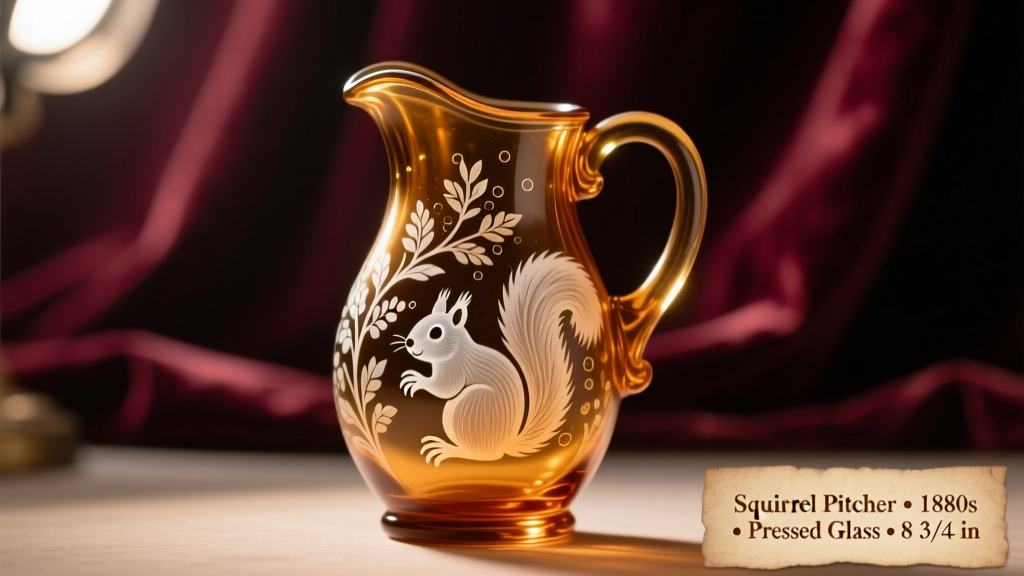
Pressed Glass Squirrel Pitcher: A Detailed Appraisal of the 8¾-Inch Water Pitcher with Squirrel Motif
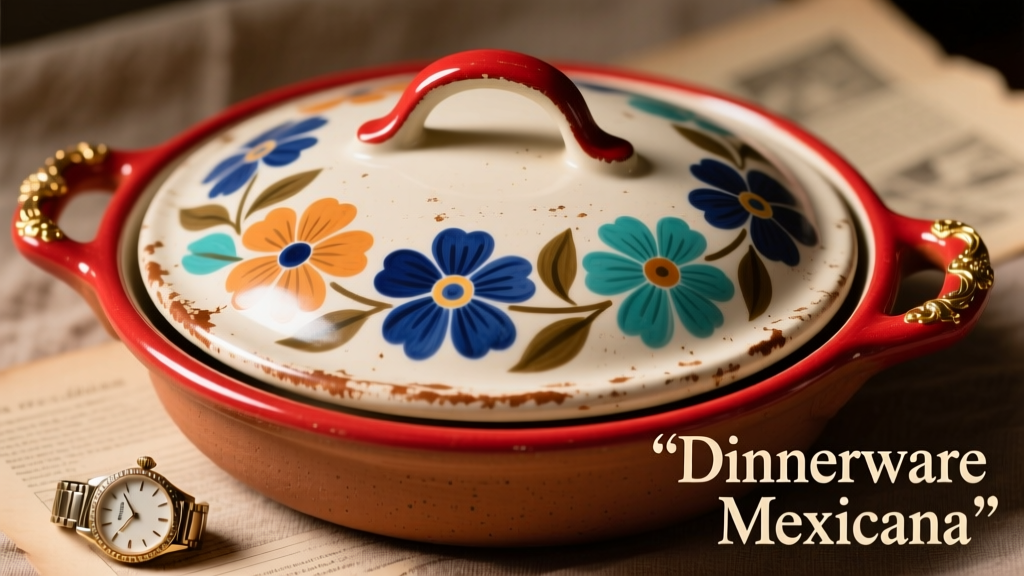
Dinnerware Mexicana Casserole Cover with Red Trim (7½ Inches): A Collector’s Guide to Mid-Century Mexican Pottery

Space Jam Jordans: The Cultural Phenomenon, Auction Market Realities, and Collectible Nuances

Milk Glass Snack Tray Cup in Feather Pink: A Mid-Century American Collectible Revisited
Teplitz Vase: The 12-Inch Amphora with Three Full-Figured Crested Parrots in Gold Matte Glaze
At Home With Danish Modern Furniture: Design Integrity, Craftsmanship, and Timeless Living
Watt Casserole Starflower: A Forgotten Masterpiece of Swiss Micro-Engineering and Art Deco Design
Orlando Magic Lighters: A Collector’s Guide to NBA-Themed Vintage Lighters from the 1990s and Beyond
The Largest Collection of Marilyn Monroe-Worn Costumes Embarks on Historic World Tour