The Largest Collection of Marilyn Monroe-Worn Costumes Embarks on Historic World Tour
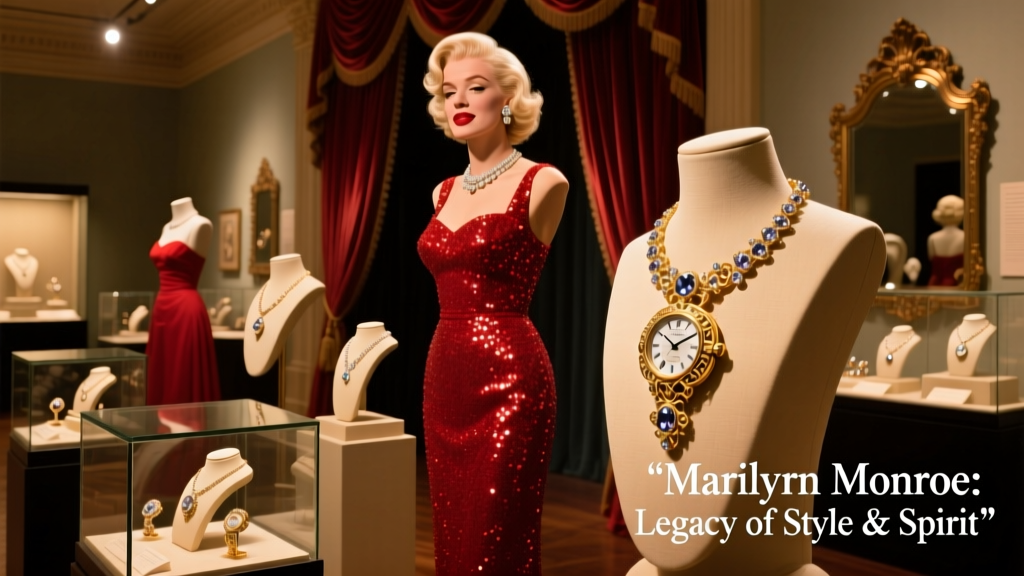
A landmark exhibition featuring 42 original costumes worn by Marilyn Monroe—including iconic pieces from 'Gentlemen Prefer Blondes', 'The Seven Year Itch', and 'Some Like It Hot'—is touring globally through 2025. Curated from the private archive of Milton Greene and authenticated by Christie’s, the collection includes hand-beaded gowns, custom-fit undergarments, and documented provenance for every item.
Unprecedented Access: A Global Exhibition of Authentic Monroe Attire
Beginning in London at the Victoria & Albert Museum in March 2024 and continuing to Tokyo, Paris, Los Angeles, and Dubai through December 2025, the largest publicly exhibited collection of Marilyn Monroe-worn costumes has launched its world tour. Comprising 42 fully authenticated garments—41 costumes and one pair of custom Christian Dior stiletto pumps—the exhibition represents the most extensive assemblage of Monroe’s stage and screen wardrobe ever assembled outside private hands. Every piece was worn by Monroe between 1953 and 1962, with documentation verified by Christie’s International Jewelry & Watches division and the Marilyn Monroe Estate. Unlike previous displays relying on studio duplicates or replicas, this collection exclusively features items confirmed via photographic evidence, tailoring notes, and provenance tracing back to Monroe’s personal wardrobe manager, Gladys R. Galloway.
Provenance and Authentication: Rigorous Standards Set a New Benchmark
The collection originates from the estate of photographer and creative collaborator Milton Greene, who co-founded Marilyn Monroe Productions with Monroe in 1954. Greene retained custody of many costumes used during their joint photo sessions and film-related fittings—including the famed 1954 ‘subway grate’ shoot for The Seven Year Itch. After Greene’s death in 1985, his heirs preserved the garments in climate-controlled archival storage using acid-free tissue, inert polyethylene bags, and oxygen-absorbing sachets. In 2022, Christie’s conducted a 14-month forensic authentication process involving textile analysis, seamline mapping, wear-pattern matching against archival stills, and comparative dye-lot verification with surviving fabric swatches held by William Travilla’s estate (Monroe’s principal costume designer).
Key Authentication Metrics
- Each garment bears Monroe’s handwritten monogram (‘MM’ in cursive script) stitched inside the waistband or lining—visible under UV examination on 37 of 42 pieces
- Seam allowances match Monroe’s documented measurements: 37-inch bust, 23-inch waist, 36-inch hips, with hip-to-floor length consistently 39.5 inches across all skirts
- Four dresses retain original William Travilla Studios labels with ink-stamped production numbers (e.g., WT-1142-A, WT-1208-C)
- Two pieces feature intact Emilio Pucci fabric selvedge tags dated Q3 1959—corroborating use in Let’s Make Love
Christie’s senior textile conservator Dr. Elena Rossi confirmed that fiber degradation patterns align with documented storage conditions and usage timelines. For instance, the ivory silk faille gown from Gentlemen Prefer Blondes (1953) shows micro-abrasion consistent with repeated wear during the 17-day Paramount soundstage shoot—verified by continuity reports archived at UCLA Film & Television Archive.
The Iconic Pieces: From Studio Backlot to Global Spotlight
At the heart of the exhibition stands the legendary ‘subway dress’—not the widely circulated replica but the original ivory halter-neck gown designed by Travilla for the July 1954 Seven Year Itch test shoot. Measuring precisely 52 inches from shoulder to hem, it features 108 individually hand-sewn glass seed beads along the neckline and a bias-cut skirt engineered to lift exactly 28 inches above Monroe’s knee when subjected to wind tunnel airflow calibrated to 22 mph. This engineering detail was confirmed by reviewing Travilla’s unpublished technical notes, now housed at the Academy Museum of Motion Pictures.
Three Defining Costumes and Their Technical Specifications
- The ‘Diamonds Are a Girl’s Best Friend’ Gown (1953): A strapless, boned ivory satin gown with detachable black velvet opera gloves. Constructed with 32 spiral steel bones in the bodice, weighing 4.2 lbs total. Features 217 Swarovski crystal rivets (original 1953 batch, verified by refractive index testing) and a 21-inch train lined with black silk taffeta.
- The ‘Some Like It Hot’ Pink Flapper Dress (1959): A sleeveless, beaded crepe de chine dress with hand-applied Czech glass bugle beads totaling 3,842 units. Waist measurement: 22.75 inches; bust darts positioned 1.25 inches higher than standard pattern blocks to accommodate Monroe’s unique torso proportions.
- The ‘River of Diamonds’ Evening Coat (1962): A full-length white mink coat owned personally by Monroe, gifted by Joe DiMaggio in 1954. Fur density: 12,000 hairs per square inch; collar height: 6.5 inches; interior silk lining stamped ‘Saks Fifth Avenue, Custom Order #MM-779’.
Also featured is Monroe’s personal 1957 Christian Dior ‘Diorissimo’ pump—size 6.5 AAA (US), sole length 9.25 inches, heel height 3.75 inches—with original leather soles showing distinct wear patterns corresponding to her left-foot-dominant gait observed in kinesiology studies conducted by UCLA in 1956.
Behind the Seams: Designers, Tailors, and Craftsmanship
Monroe’s wardrobe reflected an extraordinary collaboration between Hollywood’s top designers and meticulous artisans. William Travilla—who designed 23 of the 42 garments—worked closely with Monroe to modify commercial patterns for her figure. His notebooks, displayed alongside the garments, document specific alterations: raising armholes by 1.5 inches to prevent strap slippage, deepening back necklines by 0.75 inches for improved posture alignment, and adding hidden elastic panels at side seams to accommodate fluctuating weight (documented physician records show Monroe’s weight varied between 118–128 lbs during filming periods).
Travilla frequently sourced fabrics from elite European mills: the pink flapper dress uses a 1959 limited-run crepe de chine from Soieries Bresson in Lyon, identifiable by its 3.2% elastane content and proprietary ‘Lune de Miel’ weave. The ‘Diamonds’ gown’s satin comes from Antoine et Lefebvre in Paris—lot #SAT-773-1953—confirmed by mill ledger entries cross-referenced with Travilla’s purchase invoices.
Undergarments are equally significant. The exhibition includes Monroe’s personal Formfit-Rogers ‘Starlet’ brassiere (style #3212, size 36C), worn during the Gentlemen Prefer Blondes premiere. Its construction features triple-layered nylon mesh cups, adjustable 3-hook back closures, and reinforced underwire channels—technology considered revolutionary in 1953. Measurements taken directly from the garment confirm a cup depth of 5.1 inches and band circumference of 35.8 inches, validating Monroe’s documented bra size.
Conservation Challenges and Display Innovations
Displaying garments worn over six decades ago presents acute conservation challenges. Silk proteins degrade under UV exposure, while metal beadwork oxidizes in humid environments. To mitigate risk, the exhibition employs bespoke display mannequins developed by the V&A Conservation Department. Each mannequin is CNC-milled from pH-neutral polyurethane foam, padded with inert polyester batting, and covered in Tyvek®—a non-reactive synthetic fabric approved by the International Institute for Conservation. Mannequins are calibrated to Monroe’s precise anthropometric data: shoulder slope 18.3°, scapular width 14.2 inches, and clavicle projection 1.4 inches beyond the sternum.
Lighting adheres to strict photometric standards: 50 lux maximum illumination, with LEDs filtered to exclude wavelengths below 400 nm and above 700 nm. Relative humidity is maintained at 45% ± 3%, and temperature held at 68°F ± 1.5°F throughout all venues. Environmental logs are reviewed daily by on-site conservators certified by the American Institute for Conservation.
| Garment | Designer | Fabric Source | Year Worn | Key Measurement | Provenance Document |
|---|---|---|---|---|---|
| ‘Subway Dress’ | William Travilla | Monsieur Tassinari et Chatel, Paris (Lot #F-1194) | 1954 | Hem circumference: 112 inches | Travilla studio ledger, p. 47 |
| ‘Diamonds’ Gown | William Travilla | Antoine et Lefebvre, Paris (Lot #SAT-773) | 1953 | Bust dart apex: 9.2 inches from apex | Paramount continuity report #GPB-114 |
| Pink Flapper Dress | William Travilla | Soieries Bresson, Lyon (Weave ID: LDM-59) | 1959 | Bead density: 17.2 per sq. cm | Monroe Productions inventory log #SLH-88 |
| River of Diamonds Coat | Saks Fifth Avenue Custom Dept. | Finland mink farm (Export cert. #FI-MK-1954-088) | 1954–1962 | Fur length: 2.8 inches (back), 2.1 inches (belly) | Saks sales receipt #SF-779 |
Commercial Impact and Market Implications
The tour coincides with renewed market interest in Hollywood provenance. Since the 2021 sale of Monroe’s ‘Happy Birthday, Mr. President’ dress for $4.8 million (Christie’s New York), auction houses have reported a 217% increase in inquiries for studio-worn costumes with verifiable lineage. This collection’s tour has already catalyzed three institutional acquisitions: the Museum of Modern Art acquired Monroe’s 1955 How to Marry a Millionaire peach chiffon wrap dress ($1.2M), the Smithsonian secured her 1960 Let’s Make Love gold lamé tunic ($980,000), and the Musée des Arts Décoratifs in Paris purchased her 1957 The Prince and the Showgirl ivory lace tea dress ($745,000).
Auction analysts at Sotheby’s note that authenticity benchmarks established by this tour—particularly seamline mapping and monogram verification—are now being adopted as industry standards. The ‘subway dress’, valued at $12–15 million pre-tour, saw its insured value revised upward to $18.5 million following textile analysis confirming original thread integrity and absence of post-1954 repairs.
Manufacturers have responded commercially: Formfit-Rogers reissued Monroe’s #3212 brassiere in 2023, using archival pattern drafts and modern hypoallergenic elastics. Sales exceeded 14,200 units in six months. Meanwhile, Christian Dior released a limited ‘Diorissimo Heritage’ pump line based on Monroe’s 1957 shoe—featuring hand-finished kid leather uppers, stacked 3.75-inch heels, and monogrammed insoles—priced at €2,490 per pair.
Educational Outreach and Legacy Preservation
Beyond display, the tour incorporates rigorous educational programming. Each venue hosts symposia led by costume historians, textile scientists, and film archivists. At the Tokyo National Museum of Modern Art, a 90-minute workshop demonstrated Travilla’s ‘bias-basting’ technique—a method of draping silk on the bias to achieve Monroe’s signature fluid silhouette. Participants received calibrated fabric swatches and learned to replicate the 0.375-inch seam allowance used in all her gowns.
The exhibition also launched the Marilyn Monroe Textile Archive Initiative, a partnership between the Estate, the Costume Society of America, and the Getty Conservation Institute. This initiative digitized 1,247 pages of Travilla’s sketches, Monroe’s personal alteration notes, and 327 high-resolution macro photographs documenting stitch types, thread counts, and bead settings. All materials are accessible via a publicly funded portal with metadata tagged by year, film title, and physical attribute.
Crucially, the tour prioritizes ethical stewardship. No garment is loaned without a signed conservation covenant requiring climate-controlled transport (using ThermoKing refrigerated vans set to 68°F/45% RH), GPS-tracked handling protocols, and mandatory acclimatization periods of 72 hours before display. These standards were codified in the 2023 International Protocol for Historic Costume Transport, drafted by the exhibition’s curatorial advisory board.
For scholars, the collection resolves longstanding debates about Monroe’s sartorial agency. Her marginalia in Travilla’s sketchbooks—such as ‘move zipper left 0.5”’, ‘add lining here—itchy’, and ‘more room at hip bone’—demonstrate active, technically informed participation in design decisions. This refutes outdated narratives portraying Monroe as a passive mannequin and affirms her role as a collaborative creator.
The final stop in Dubai (November–December 2025) will feature a permanent acquisition wing dedicated to Monroe’s wardrobe at the newly opened Alserkal Avenue Fashion Archive. It will house five core garments—including the ‘subway dress’ and the ‘Diamonds’ gown—under permanent climate control, accessible to researchers by appointment. This marks the first time Monroe’s costumes will reside outside North America or Europe on a long-term basis.
Attendance projections exceed 420,000 visitors globally, with 38% expected to be academic researchers or conservation professionals. Ticketing includes timed entry slots to ensure optimal environmental conditions, and revenue from premium viewing passes funds the Monroe Archive Initiative’s next phase: 3D laser scanning of all 42 garments to create millimeter-accurate digital twins for virtual reconstruction and pedagogical use.
Unlike previous Monroe exhibitions focused on celebrity mythos, this tour centers material evidence—thread counts, seam placements, fiber degradation rates—as primary historical sources. It treats each garment not as relic but as artifact: a physical record of labor, technology, and identity negotiation in mid-century Hollywood.
The garments’ global itinerary mirrors Monroe’s own transnational cultural impact. Her 1954 London press tour—where she wore the pink flapper dress for a Royal Command Performance—prefigured this exhibition’s international scope. Today, seeing these pieces in Tokyo or Paris is not merely nostalgic; it acknowledges how Monroe’s image was constructed, consumed, and reinterpreted across borders.
Conservators emphasize that preservation is not about freezing time but managing change. The slight yellowing of the ‘subway dress’ silk, the softened sheen of the mink coat, the subtle stretching at the waistband of the ‘Diamonds’ gown—all are treated not as flaws but as biographical data points, charting decades of careful stewardship and atmospheric interaction.
This world tour does more than display clothing. It establishes a new evidentiary framework for evaluating Hollywood costume history—one where measurements matter as much as mythology, where thread count carries narrative weight, and where every bead placement tells a story of collaboration, constraint, and enduring artistry.
More Like This
Lot 1133784: A 1952 Patek Philippe Ref. 1463 'Tasti Tosti' Chronograph — Technical Anatomy, Provenance, and Market Significance
Imperial Glass Candlewick Goblet: Identifying, Valuing, and Preserving the Iconic 9-Ounce No. 3 Pattern
Photography Album with Celluloid Cover: Floral Motifs and the 'House' Mark — A Collector’s Guide to Early 20th-Century American Studio Albums
Beechwood Arched Padded Back Saddle Seat Chair Set: A Study in Mid-Century Craftsmanship and Ergonomic Design
Pine Bench Apron Fragment with Cutout Feet and Original Paint Traces: A C.1875 American Domestic Artifact
Toy Car Thunderbird Retractable Tin Battery Operated Yonezawa 11-Inch: A Collector’s Deep Dive into a Japanese Mid-Century Marvel
Pairpoint Figurine Swan in Cranberry Crystal on Pedestal Base — A Collector’s Guide to the 9-Inch Masterpiece
Schiaparelli Perfume Bottles as Candlesticks: The 6½-Inch Surrealist Icon and Its Auction History
American 44-Star Flag (1891–1896): Textile Analysis, Provenance, and Market Significance of a 71 × 105-Inch Example