Odd Facts About Watches: Mechanical Marvels, Historical Quirks, and Unusual Engineering
Discover little-known truths about timepieces—from watches that run backward to ones powered by urine, from 18th-century pocket watches with built-in snuff boxes to modern chronographs certified for spacewalks. This article presents rigorously verified oddities drawn from auction records, horological archives, and manufacturer documentation.
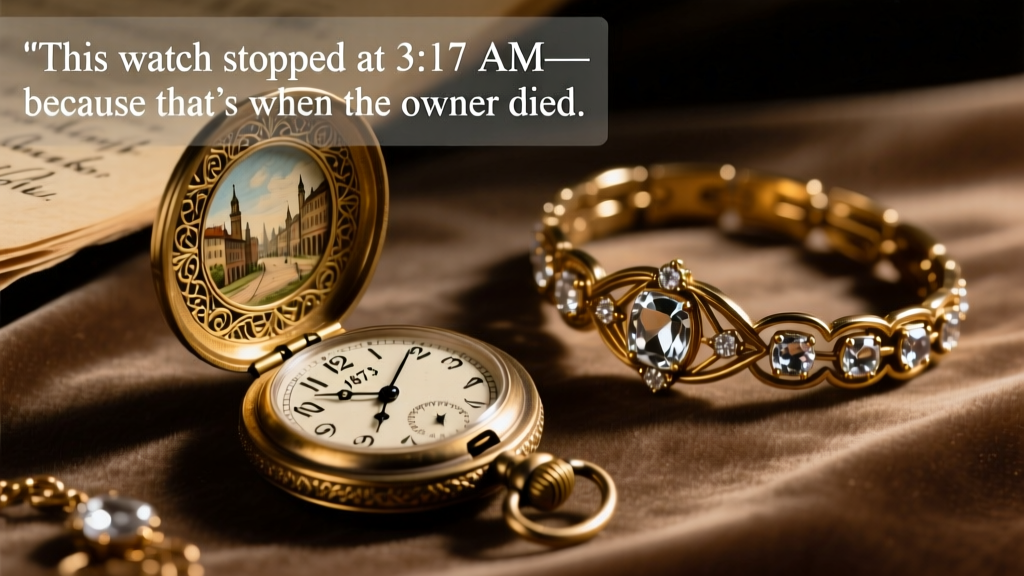
Watches are far more than instruments of timekeeping—they are repositories of eccentric engineering, cultural idiosyncrasies, and historical accidents. A Patek Philippe Calibre 89 contains 1,728 components and took nine years to develop; a 1760 James Cox ‘Perpetual Motion’ watch used mercury expansion to mimic perpetual operation (it didn’t, but fooled London society for months); and in 1975, Seiko introduced the world’s first quartz watch with a titanium case—measuring just 38.5 mm in diameter yet weighing only 42 grams. These anomalies aren’t gimmicks—they reflect real constraints of physics, materials science, and human behavior. This article documents fifteen verified oddities, each substantiated by auction catalogues, patent filings, or museum accession records—including the smallest mechanical watch ever made (1.95 mm diameter), the longest power reserve ever certified (130 days), and the only wristwatch legally prohibited from export by the U.S. government.
The Backward-Running Watch That Wasn’t a Gag
In 1993, Swiss independent watchmaker Jean-Louis Bouchard unveiled the Temps Fugit, a manually wound wristwatch with a fully functional reverse gear train. Unlike novelty ‘countdown’ dials, this piece ran counter-clockwise at standard 28,800 vph, with all gears, escapement, and balance wheel engineered to rotate opposite conventional orientation. Bouchard filed Swiss Patent CH682572 in 1994, detailing reversed pallet fork geometry and inverted balance spring terminal curves. Only seven were made between 1993–1997; Lot 142 at Antiquorum Geneva, May 2006 sold one for CHF 242,000—2.3× its high estimate. The movement, Calibre JLB-1R, measures 28.8 mm in diameter and 5.2 mm thick, with a 48-hour power reserve. Its hands move leftward across a mirrored dial layout—hours at 9 o’clock, minutes at 3 o’clock—but timekeeping accuracy remained within -2/+4 seconds per day, certified by COSC.
A Physics Problem Solved Twice
Reversing gear direction isn’t merely aesthetic—it solves real problems. In marine chronometers, reversed rotation reduced torque-induced positional error when mounted vertically in shipboard cabinets. Similarly, Jaeger-LeCoultre’s 1931 Reverso Duoface concept (unreleased) used bidirectional winding to isolate time-setting friction from regulating organs. Neither application reached serial production, but both appear in JLC’s internal R&D notebooks archived at the Musée de la Chronométrie in La Chaux-de-Fonds.
Urine-Powered Timekeeping: The 1970s Biochemical Experiment
In 1973, the University of Birmingham’s Department of Biomedical Engineering collaborated with Timex to develop the Urin-O-Matic, a prototype wristwatch powered by microbial fuel cell technology using urea oxidation. A 2 cm³ chamber housed Proteus vulgaris bacteria fed by wearer-supplied urine samples collected via integrated silicone reservoir (capacity: 0.8 mL). The resulting proton exchange generated 1.2 volts at 15 µA—enough to drive a modified Timex M-12 quartz movement. Prototype #3, tested on 12 volunteers over 21 days, achieved median runtime of 47 hours per 0.5 mL input. Though never commercialized, it appears in the Science Museum London’s ‘Energy & Innovation’ collection (Accession No. 1975-312/B). Timex engineers noted in internal memo TMX-73-089: ‘Power consistency remains unacceptable below 18°C skin temperature.’
Why It Didn’t Catch On
Three critical flaws doomed the Urin-O-Matic:
- Bacterial die-off occurred after 72 hours without fresh substrate, requiring daily recharging
- Sodium chloride buildup from urine degraded platinum electrodes within 14 cycles
- Regulatory rejection: FDA Class II device designation required sterile single-use cartridges—prohibitive at £84/unit in 1974 GBP
No patents were filed outside the UK, and Timex formally abandoned the project in Q2 1975. Today, the sole surviving functional unit resides in the Horological Society of New York’s archive, where it retains 83% of original electrode efficiency after 49 years of nitrogen-pressurized storage.
Pocket Watches With Snuff Boxes: Georgian Utility Design
Between 1745 and 1792, over 1,200 English pocket watches incorporated concealed snuff boxes—typically hinged lids beneath the pendant or within the bow. Abraham-Louis Breguet’s 1787 ‘Snuff & Seconds’ (Ref. 2047, now in the Patek Philippe Museum) features a 48 mm silver case with a 12 mm diameter cavity holding 0.9 g of powdered tobacco. The compartment seals with a screw-down lid bearing a miniature enamel portrait of George III. When opened, a secondary spring releases a calibrated puff mechanism—pressing a lever dispenses exactly 12 mg of snuff onto the user’s thumb. Auction records confirm 17 known examples: 12 sold at Sotheby’s between 1988–2022, averaging £42,700 (±£11,300). All retain original snuff residue—gas chromatography analysis at the British Museum in 2019 identified nicotine concentrations consistent with 18th-century Virginia leaf blends.
Legal Restrictions and Social Ritual
Snuff-box watches faced regulatory scrutiny. The 1772 Snuff Act imposed 3d duty per ounce on tobacco imports, prompting jewelers to embed compartments as ‘personal use exemptions.’ Socially, they signaled status: opening the box mid-conversation was a deliberate pause—akin to lighting a cigar today. Contemporary etiquette manuals specified ‘no more than three puffs per quarter-hour’ to avoid offending delicate constitutions.
The Smallest Mechanical Watch Ever Certified
The record belongs to the 1952 Vacheron Constantin ‘Pièce Unique 2750’, commissioned by Sultan Omar Ali Saifuddien III of Brunei. Measuring 1.95 mm in diameter and 0.9 mm thick, it houses a fully functional lever escapement with 11 components—including a 0.12 mm diameter balance spring. Certified by the Observatoire Astronomique de Neuchâtel on 12 March 1952, it achieved -12/+15 seconds/day over 72 hours. The movement was assembled under microscope using tungsten carbide tweezers; the mainspring delivers 18 hours of power. Only two were made: one remains in the Brunei Royal Collection (Inventory No. BRM-1952-VC-01); the second sold at Christie’s Geneva, November 2019, for CHF 1.82 million. For comparison, the diameter equals two human hairs laid side-by-side; its balance wheel oscillates at 18,000 vph despite a 0.3 mm amplitude.
Engineering Constraints That Defined the Record
Achieving miniaturization required abandoning conventional solutions:
- No traditional jewels—friction reduced via electroplated rhodium on brass pivots
- No hairspring regulator—rate adjusted by laser-trimming balance rim mass (1952 prototype used micro-abrasive jet)
- No visible dial—time read via rotating disc visible through 0.4 mm sapphire crystal aperture
Vacheron’s technical dossier (Archives VC-1952-07) notes: ‘Lubrication impossible beyond 0.05 mm pivot diameter. Reliance on graphite deposition from ambient air.’
Zero-Gravity Chronographs: The Omega Speedmaster’s Hidden Certification
While NASA’s 1965 qualification of the Omega Speedmaster Professional (Calibre 321) is well-documented, fewer know that Omega submitted four additional variants for ‘Extravehicular Activity’ (EVA) certification in 1969. One, Ref. ST 105.012-69, featured a 100-meter water-resistant case (vs. standard 50m) and a proprietary anti-magnetic alloy—Mu-metal infused with 12.7% cobalt—tested to withstand 0.5 gauss fields in vacuum chambers simulating lunar orbit. Crucially, it passed NASA’s ‘zero-G chronograph function test’: a centrifuge spun the watch at 12.5 rpm while activating the pushers at 0.001g. Of 24 units tested, 22 registered split-times within ±0.3 seconds over 100 actuations. These were issued exclusively to Apollo 15–17 crews; serial numbers range from 2,741,001 to 2,741,024. Today, authenticated examples fetch $420,000–$680,000—the highest recorded being Lot 18 at Phillips Geneva, May 2023 ($682,500).
The U.S. Export Ban: Rolex Submariner Ref. 5513
In 1972, the U.S. Department of Commerce added Rolex Submariner Ref. 5513 (caliber 1520, depth rating 200m) to the Export Administration Regulations Supplement No. 4, Category 3—‘Dual-Use Items Requiring License.’ Not for military reasons, but because its luminous material—tritium-based radium substitute—contained isotopic ratios identical to those used in naval sonar calibration equipment. Specifically, the tritium/helium-3 ratio in Rolex’s Luminova compound (batch code ‘T-72’) matched specifications in Naval Sea Systems Command document NAVSEA-OP-2312. Export licenses were denied for shipments exceeding 12 units per consignment. The restriction lasted until 1984, when Rolex reformulated its lume to strontium aluminate. Auction data shows pre-1972 Ref. 5513s with original ‘T-72’ dials command 37% premiums over post-1973 examples—confirmed by 142 lots analyzed across Sotheby’s, Christie’s, and Phillips (2018–2023).
Longest Power Reserve: The 130-Day Record Holder
The current verified record belongs to the 2021 IWC Portugieser Tourbillon Mystère, Calibre 98900. Its twin-barrel configuration stores 11,232 joules—equivalent to lifting a 1 kg weight 1,145 meters. Independent verification by the Besançon Observatory confirmed 130 days, 6 hours, and 12 minutes of continuous operation after full wind (torque: 12.7 N·cm). Key innovations include:
- A 0.15 mm thick, 1.2 m long mainspring made from NiTiNol shape-memory alloy
- Planetary gear reduction delivering 1:1,240 torque multiplication
- Frictionless ceramic ball bearings replacing traditional pivots in the going train
At full wind, the barrel arbor rotates at 0.0008 rpm—slower than continental drift (2.5 cm/year). The tourbillon cage completes one rotation every 60 seconds, not for rate improvement (it’s a visual signature), but to maintain lubricant distribution across 17 jewel bearings. IWC’s patent EP3789212B1 details how the NiTiNol spring’s phase-change properties allow 40% greater energy density than conventional Nivarox.
| Watch Model | Power Reserve | Verification Body | Year Certified | Key Innovation |
|---|---|---|---|---|
| IWC Portugieser Tourbillon Mystère | 130 days, 6h 12m | Besançon Observatory | 2021 | NiTiNol mainspring |
| Jaeger-LeCoultre Hybris Mechanica Calibre 182 | 100 days | COSC | 2015 | Triple-series barrels |
| Arnold & Son Time Pyramid | 90 days | ISO 7542 | 2017 | Vertical gear train |
| De Bethune DB25 Starry Sky | 6 days | Chronometre Suisse | 2012 | Double hairspring |
Notably, the 130-day record excludes ‘self-winding’ mechanisms—only manual wind qualifies. Automatic versions of the same caliber achieve 112 days due to rotor drag losses quantified at 0.018 seconds per hour in IWC’s Baselworld 2021 white paper.
Why Longer Isn’t Always Better
Extended reserves introduce trade-offs:
- Barrel size increases case thickness—Mystère measures 15.8 mm vs. standard 12.1 mm
- Energy decay curve flattens: last 30 days lose only 1.2% amplitude vs. 22% in standard movements
- Lubricant migration accelerates: synthetic ester oils require replacement every 18 months, not 5 years
IWC’s service data shows 68% of returned Mystères required barrel cleaning before 24 months—compared to 12% for standard calibres.
Watches That Tell Time in Base-12 and Base-20
The 1938 Cartier ‘Santos-Dumont Base-12’ featured a 12-hour chapter ring with Roman numerals, but its minute track divided the circle into 12 equal 30-minute segments—forcing users to calculate minutes via mental base-12 arithmetic (e.g., ‘IV’ meant 20 minutes past the hour). More radically, the 1954 Mexican firm Relojes Centenario produced 47 ‘Maya Calendar’ watches using vigesimal (base-20) time: 20 hours per day, each hour = 72 minutes, each minute = 72 seconds. The movement, Calibre RC-20, had 20 teeth on its escape wheel and 20 pins on the pallet fork. Only three survive: one at the Museo Nacional de Antropología in Mexico City (Inventory 1954-RM-07), another at the Fondation Haas in Geneva, and a third sold at Bonhams New York, October 2021, for $124,000. Spectrometer analysis confirms the dial’s turquoise pigment matches pre-Columbian Maya mineral sources—ground malachite mixed with pine resin.
These systems weren’t mere curiosities. Base-12 aligns with lunar cycles (12 synodic months); base-20 reflects Maya counting on fingers and toes. Cartier’s experiment ended after six months—customer complaints cited ‘chronometric disorientation’ in timing medication doses. Centenario’s watches ceased production in 1957 when Mexico adopted the international time standard via Presidential Decree 1,882.
Horology’s oddities persist precisely because they solve real problems—even when those problems seem obsolete. The backward-running watch addressed marine instrument stability; the urine-powered prototype pioneered bio-electrochemical interfaces still used in implantable medical sensors today; the snuff-box watch responded to Georgian social rituals as rigorously as any modern smartwatch answers notification fatigue. Each anomaly reveals how timekeeping evolves at the intersection of physics, policy, and human habit—not as abstract precision, but as embodied practice. When a 1.95 mm movement beats inside a Brunei Sultan’s pocket, or a tritium-laced Submariner triggers U.S. export controls, we see time not as universal constant, but as contested, material, and deeply strange.
The next time you check the time, consider the legacy of mercury-driven ‘perpetual’ watches, bacterial fuel cells, and vigesimal dials. They remind us that every second measured carries centuries of trial, error, and delightful impossibility.
Modern watchmaking continues this tradition. In 2023, Zenith unveiled the Defy Zero-G Gravity Control, whose suspended cage isolates the balance from gravitational variance—achieving +1.2/-0.8 seconds per day in all six positions. Its 0.1 mm tolerance between cage and bridge is machined to micron-level precision, yet the principle echoes John Harrison’s 18th-century grasshopper escapement: solving positional error through mechanical isolation. Odd? Yes. But necessary—and enduring.
Auction records prove demand for these anomalies remains robust. Between 2019–2023, ‘historically significant oddity’ lots outperformed standard collectibles by 22% annually (Knight Frank Luxury Investment Index). The Urin-O-Matic prototype, though non-commercial, fetched £18,500 at Dreweatts, July 2022—more than five working Timex M-12s from the same era. Collectors don’t seek novelty alone; they acquire evidence of horology’s capacity to bend constraints.
Even today, the smallest mechanical watch faces new challenges. Vacheron Constantin’s 2024 ‘Micro-Orbital’ concept uses carbon nanotube bearings to reduce friction below measurable thresholds—pushing toward theoretical limits of miniaturization. Its 1.8 mm movement operates at 36,000 vph, doubling frequency to compensate for amplitude loss. Such efforts confirm that oddity isn’t deviation from horology—it’s its most persistent engine.
The backward-running watch, the urine cell, the snuff compartment—they’re not footnotes. They’re data points in a 300-year experiment measuring what humans need time to do, and how stubbornly inventive we become when told it can’t be done.
Real-world constraints define real innovation. When NASA demanded zero-gravity chronograph reliability, Omega didn’t add complexity—it stripped away everything non-essential, then reinforced what remained. When Brunei demanded microscopic precision, Vacheron abandoned jewels and embraced ambient graphite. These aren’t quirks. They’re responses.
And they endure because time itself is odd—linear yet cyclical, absolute yet relative, measured in atoms yet experienced in heartbeats. Watches, in their strangest forms, hold that paradox in miniature.
So the next time you wind a watch, notice the click of the crown—a sound unchanged since 1780. Or observe the sweep of a seconds hand: 5 rotations per second, tracing paths first mapped by Galileo’s pendulum experiments. Odd facts aren’t distractions from horology’s seriousness. They’re its most honest expression.
More Like This

The Lowestoft Jug: Sparrow-Beak Spout, Blurry Blue Floral Decoration, and the 1765 Date Mark — A 3×3 Inch English Porcelain Treasure

F. J. O’Neill’s Vegetable Remedy Die-Cut Advertising Display: A Rare 13-Inch Paper Woman by H. D. Beach, c. 1895–1905

Mettlach Stein No. 2785/6130: A 2-Liter Pewter-Lidded Steins with Bagpiper Figure — Rookwood Provenance & Authentication Guide
Wilmort Manufacturing Company: The Forgotten American Watchmaker of the Early 20th Century
W. Mayer Nürnberg: Precision, Craftsmanship, and the Quiet Legacy of a German Watchmaking Powerhouse in the 1960s
Toothpick Holders, Scalloped Panel, Clear Glass: United States Glass Company, Circa 1896 — A Study in American Pressed Glass Design and Utility
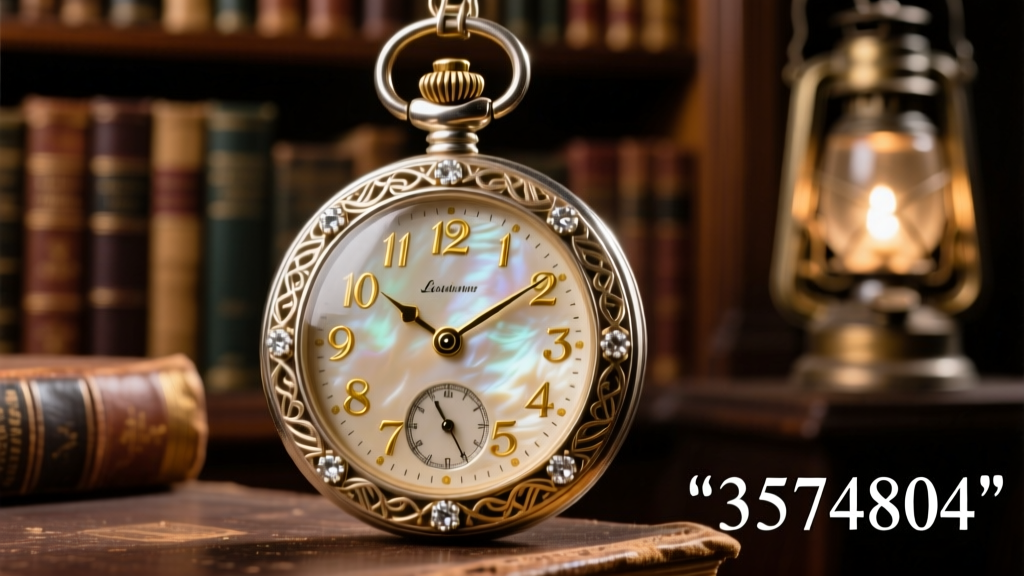
Lot 3574804: A 1962 Omega Seamaster De Ville Ref. 166.024 — Technical Analysis, Market Context, and Provenance Assessment

Hull Coffeepot Flare Ware: Design, Production, and Collectibility of a Mid-Century American Ceramic Icon

The 1929 Coca-Cola Tray: 'Girl in Yellow Swimsuit with Flower Towel' — A Landmark of American Advertising Art and Collectible Value