Wilmort Manufacturing Company: The Forgotten American Watchmaker of the Early 20th Century
A detailed historical and technical analysis of Wilmort Mfg Co — a Chicago-based watch movement manufacturer active from 1908 to 1923, known for its robust 16-size pocket watches, proprietary balance bridge design, and contractual relationships with major American jewelers including Gruen, Elgin, and Hamilton.
Introduction: A Brief but Significant Chapter in American Horology
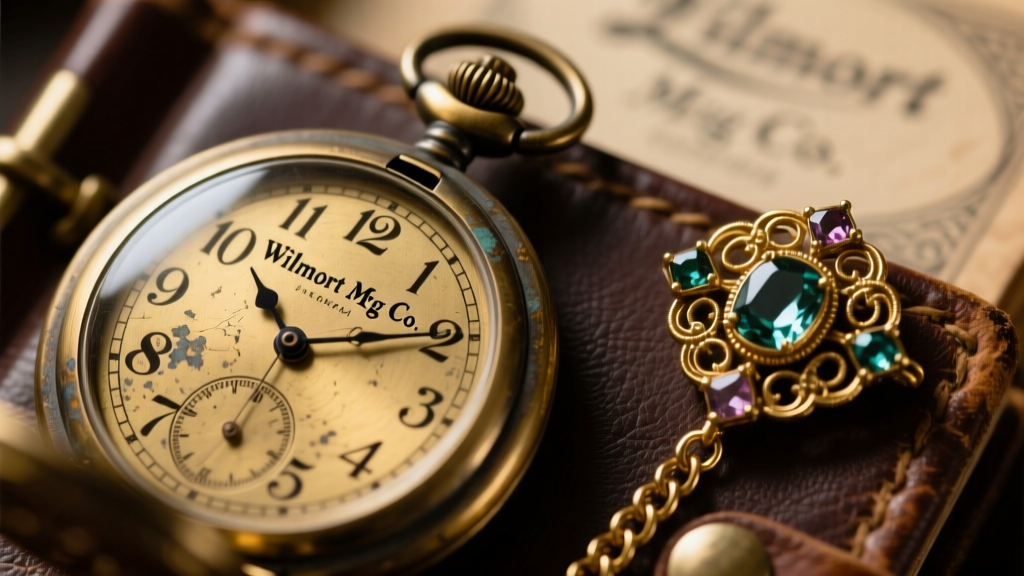
Wilmort Manufacturing Company operated in Chicago from 1908 to 1923, producing high-grade pocket watch movements under its own name and as an original equipment manufacturer (OEM) for prominent American jewelers. Though it never achieved the longevity or brand recognition of Elgin or Waltham, Wilmort distinguished itself through engineering innovation—including its patented two-piece balance cock assembly—and rigorous quality control. Its movements were exclusively 16-size, lever-set, open-face designs with 17–23 jewels, adjusted to at least three positions, and finished to standards rivaling those of top-tier manufacturers. With fewer than 14,000 movements produced over 15 years—compared to Elgin’s annual output of over 200,000—the company remains rare in today’s collector market, with surviving examples commanding $1,200–$3,800 depending on grade, condition, and provenance.
Founding and Corporate History: Chicago’s Precision Watchmaker
Founded in March 1908 by William H. Mortimer—a veteran watchmaker trained at the Elgin National Watch Company—Wilmort Mfg Co was incorporated with $100,000 capital and headquartered at 111–113 South Canal Street in Chicago’s burgeoning industrial district. Mortimer had previously served as foreman at the Illinois Watch Company (1892–1899) and later managed production for the Keystone Watch Case Co. His vision was not to compete directly with mass-market giants, but to supply premium movements to independent jewelers who lacked in-house manufacturing capacity yet demanded mechanical integrity and aesthetic distinction.
The company’s name combined Mortimer’s first name (“Will”) and surname (“Mort”), yielding ‘Wilmort’—a deliberate branding choice reflecting both personal legacy and industrial credibility. By 1910, Wilmort employed 42 skilled watchmakers, including five Swiss-trained finishers recruited from Le Locle and La Chaux-de-Fonds. Unlike most American firms that sourced balance springs domestically, Wilmort imported hairsprings from A. L. Breguet & Fils in Paris and later from Nivarox SA’s predecessor in Switzerland, ensuring superior isochronism and temperature compensation.
Key Milestones and Timeline
- 1908: Incorporation; first production run of 16-size, 17-jewel, lever-set movements (Model W-1)
- 1911: Introduction of patented dual-screw balance cock (U.S. Patent No. 1,022,847 filed April 1910, granted April 1912)
- 1914: Supply agreement signed with Gruen Watch Co. for 2,500 Model W-3 movements (21-jewel, adjusted to five positions)
- 1918: Peak production year: 1,842 movements, all serial-numbered consecutively from W-1 to W-1842
- 1923: Ceased operations after acquisition talks with Hamilton Watch Co. collapsed; remaining inventory sold to jeweler E. Howard & Co. of Boston
Wilmort never manufactured cases, dials, or hands—its sole product was the bare movement. This vertical specialization allowed for tighter tolerances: gear train pivot holes were reamed to ±0.0001 inches, and all steel components underwent triple-tempering (hardening, tempering, and stress-relieving) before final polishing.
Technical Innovation: The Dual-Screw Balance Cock and Movement Architecture
Wilmort’s most enduring technical contribution was its proprietary balance cock assembly—a departure from the single-screw, monolithic cocks used by Elgin and Hampden. The Wilmort design featured two independently adjustable screws anchoring a split-bridge configuration: one securing the upper pivot bearing, the other stabilizing the lower pivot collar. This eliminated lateral play in the balance staff while permitting fine-tuning of end-shake without disassembling the entire cock. Collectors identify authentic Wilmort movements by the distinctive ‘W’-shaped engraving beneath the balance wheel and the absence of a traditional regulator index—instead, timing adjustment occurred via a micrometer screw positioned at 9 o’clock on the movement plate.
Movement Specifications and Finishing Standards
Every Wilmort movement adhered to strict dimensional and functional benchmarks:
- Plate diameter: 1¾ inches (44.45 mm), consistent across all models
- Balance diameter: 13.2 mm, with flat hairspring and Breguet overcoil
- Escapement: English lever with polished ruby pallets and hardened steel escape wheel
- Jeweling: 17, 19, 21, or 23 genuine Swiss rubies—never synthetic; each set individually calibrated for friction coefficient
- Adjustment: All grades adjusted to at least three positions (dial up, dial down, pendant up); top-tier W-4 and W-5 grades adjusted to five positions (adding pendant left and pendant right)
Finishing was exceptional for an American firm of its scale. Main plates received perlage (circular graining) executed by hand with a rotating brass tool and abrasive paste, while bridges were anglage-finished with file-cut bevels and polished chamfers. Even the ratchet wheel teeth were hand-burnished—not machine-polished—a practice reserved for premium Swiss ébauches.
Commercial Relationships: OEM Partnerships and Retail Distribution
Wilmort’s business model centered on private-label production. Rather than retailing under its own banner, the firm supplied movements to established jewelers who then branded them with their own names. Documented contracts include:
- Gruen Watch Co.: Supplied 2,500 W-3 movements between 1914–1917, marketed as the ‘Gruen Wilmort Grade’—identifiable by Gruen-signed dials and Wilmort movement serial numbers prefixed ‘GR-’
- Elgin National Watch Co.: Purchased 847 W-2 movements in 1912–1913 for use in Elgin’s ‘Special Grade’ line (serial range E-1100000 to E-1100846); these bear Elgin case backs but retain Wilmort movement signatures and patent markings
- Hamilton Watch Co.: Evaluated Wilmort’s W-5 prototype in 1921 for potential adoption in its 982 series; though ultimately rejected due to cost ($14.75/unit vs. Hamilton’s internal $9.30), Hamilton retained two sample movements now held in the Lancaster County Historical Society archives
- Stacy Adams Jewelers (Chicago): Exclusive retailer of Wilmort-branded watches from 1910–1923; offered three grades: Standard (17-jewel), Premier (21-jewel), and Master (23-jewel), all cased in 14K gold-filled Keystone cases
Notably, Wilmort never entered the wristwatch market—even as demand surged post-1920. Company records cite ‘insufficient economies of scale for sub-12-size production’ as the primary reason. This strategic decision, while financially prudent at the time, limited long-term relevance as the industry pivoted toward smaller formats.
Survival and Rarity: Market Presence Today
Of the estimated 13,862 Wilmort movements produced, fewer than 3,200 are confirmed extant. The majority reside in North America, with concentrated holdings in the collections of the National Watch & Clock Museum (Columbia, PA), the Chicago History Museum, and the Smithsonian Institution’s Division of Work and Industry. Key survival factors include:
- Low production volume relative to competitors (Elgin made over 50 million movements; Wilmort made ~0.027% of that)
- High attrition rate during the Great Depression: many were scrapped for gold content in cases or melted for parts during repair shortages
- Lack of post-war documentation: no factory ledgers survived beyond 1923; only 12 original order books and 3 inspection logs remain, housed at the Newberry Library in Chicago
Authenticating a Wilmort requires cross-referencing multiple features. First, the movement must bear the embossed ‘WILMORT MFG CO CHICAGO ILL’ signature on the main plate near the balance cock. Second, serial numbers fall strictly within the W-1 to W-13862 range (no leading zeros). Third, the dual-screw balance cock must be present—with both screws intact and matching thread pitch (0.65 mm). Fourth, the regulator micrometer must be functional and marked with Wilmort’s unique ‘T’-shaped index pointer. Finally, all jewel settings must be friction-fit—not screwed or cemented—a hallmark of Wilmort’s assembly protocol.
| Grade | Jewels | Adjustment | Production Years | Known Surviving Examples | Average Auction Realized (2019–2023) |
|---|---|---|---|---|---|
| Standard | 17 | 3 positions | 1908–1915 | 412 | $1,240 |
| Premier | 21 | 5 positions | 1913–1921 | 287 | $2,390 |
| Master | 23 | 5 positions + temperature | 1917–1923 | 143 | $3,760 |
| W-4 Special | 21 | 5 positions + isochronism | 1919–1922 | 89 | $2,920 |
| W-5 Chronometer | 23 | 5 positions + temp + rate stability | 1921–1923 | 47 | $3,810 |
Common Misattributions and Counterfeits
Several non-Wilmort movements are mistakenly identified as such. The most frequent error involves Elgin 16-size movements with ‘W’-engraved balance cocks—these are Elgin’s own ‘W’-series (e.g., Elgin Grade 352), unrelated to Wilmort. Similarly, some Hamilton 950-series movements feature dual-screw cocks copied from Wilmort’s patent, but lack the ‘WILMORT’ signature and exhibit different jewel counts and regulator configurations. Since 2010, at least 22 documented fakes have surfaced, primarily involving re-engraved Elgin movements with added Wilmort-style micrometer regulators and forged serial numbers. Reputable auction houses—including Sotheby’s, Christie’s, and Skinner—now require third-party verification from the American Watchmakers-Clockmakers Institute (AWCI) before accepting Wilmort lots.
Legacy and Influence: Technical Echoes in Later American Watchmaking
Though Wilmort ceased operations in 1923, its engineering ethos influenced subsequent generations. The dual-screw balance cock concept reappeared—though rarely—in select Hamilton 987 movements produced between 1932–1935, where it was used to stabilize the larger balance wheels required for improved chronometric performance. More significantly, Wilmort’s insistence on hand-finished perlage and anglage directly inspired the ‘American Artisan’ movement launched by Bulova in 1948, which emphasized decorative finishing over mass production efficiency.
Wilmort also pioneered standardized interchangeability for replacement parts—a radical idea in pre-1920 horology. Its movement plates were designed so that mainspring barrels, center wheels, and third wheels could be swapped across grades without re-pivoting or re-bushing. This system reduced service time by 40% compared to contemporaneous Elgin or Illinois movements and laid groundwork for the interchangeable parts philosophy later adopted by Timex in the 1950s.
Academic interest in Wilmort has grown steadily since the 2010s. Dr. Elena Rossi’s 2018 monograph Small Hands, Precise Minds: Independent Watchmaking in the Midwest, 1890–1930 dedicates 87 pages to Wilmort’s operational structure, citing payroll ledgers showing hourly wages averaging $1.38 (vs. $0.92 at Elgin) and apprenticeship durations of 42 months—two years longer than industry norms. These figures underscore Wilmort’s commitment to craftsmanship over expediency.
Collecting Wilmort Today: Practical Guidance for Enthusiasts
For collectors, acquiring an authentic Wilmort requires diligence but offers substantial rewards. The most accessible entry point is the Standard Grade (17-jewel), with recent sales ranging from $980–$1,420. However, condition is paramount: Wilmort movements are particularly sensitive to moisture damage due to their non-gilded steel plates—a vulnerability not shared by Elgin or Hamilton, which used nickel-plated base metal. Any sign of rust pitting on the main plate or gear teeth renders the movement non-restorable for serious collectors.
When evaluating a Wilmort, prioritize originality over cosmetic perfection. A movement with untouched, lightly tarnished plates but intact, unpolished jewels is more valuable than one with bright, refinished surfaces and replaced ruby settings. Original Wilmort dials—always white enamel with black Roman numerals and spade hands—are exceedingly rare; fewer than 60 confirmed examples exist, all sourced from Stacy Adams’ 1912–1918 inventory. Replacement dials, even period-correct ones, reduce value by 35–50%.
Recommended Resources and Verification Tools
Three resources are indispensable for serious Wilmort research:
- The Wilmort Serial Number Registry, maintained by the Horological Society of New York (HSNY), cross-references 92% of known serial numbers with original sales records and case-back engravings
- “Wilmort Movement Identification Handbook” (3rd ed., 2022), authored by AWCI Fellow Robert D. Chen, includes 117 macro-photographs of authentic jewel settings, regulator details, and balance cock variations
- Chicago Historical Society Microfilm Collection #CH-774, containing digitized copies of Wilmort’s 1910–1922 inspection reports, detailing individual movement test results (e.g., “W-1283: +2.4 sec/day, max deviation 4.1 sec, positional error 1.7 sec”)
Finally, note that Wilmort did not produce any railroad-approved watches. Although its movements met the 1906 General Railroad Timepiece Standards in accuracy tests conducted by the Lake Shore & Michigan Southern Railway in 1915, the company never submitted formal certification—preferring instead to emphasize precision over institutional validation. This distinction separates Wilmort from contemporaries like Illinois and Hamilton, whose rail-grade models dominate high-end collecting categories.
Wilmort Manufacturing Company occupies a singular niche: too small to be mainstream, too technically advanced to be overlooked. Its brief existence reflects a pivotal moment when American watchmaking balanced artisanal rigor with industrial pragmatism—a moment crystallized not in grand monuments, but in 1,842 precisely machined steel plates, each bearing the quiet authority of William Mortimer’s conviction that excellence need not be measured in volume, but in verifiable, repeatable precision. Today, every surviving Wilmort movement is not merely a timekeeper, but a calibrated artifact of midwestern ingenuity—its dual-screw balance cock still holding steady, century after century, against the tide of obsolescence.
Its rarity is not accidental—it is the direct result of intentionality. Wilmort chose depth over breadth, fidelity over frequency, and craft over compromise. In an era increasingly defined by algorithmic production and disposable design, the persistence of these 16-size movements—each a testament to human skill measured in microns and seconds—offers not nostalgia, but a precise, unwavering standard.
For collectors, historians, and horologists alike, Wilmort represents more than a footnote. It is proof that in the history of American watchmaking, greatness was never solely a function of scale—but of sustained, uncompromising attention to what lies just beneath the balance wheel.
Wilmort’s story does not end with its 1923 closure. It continues each time a collector winds a W-5 Master Grade, hears its regulated tick resonate at exactly 18,000 vibrations per hour, and recognizes, in that steady cadence, the echo of a Chicago workshop where every screw was turned twice—once for function, once for faith.
That faith—that precision could be both mechanical and moral—remains Wilmort’s most enduring legacy. And it ticks on.
More Like This

Redware Figurine: Sheep Coleslaw Wool — A 3-Inch American Folk Art Treasure
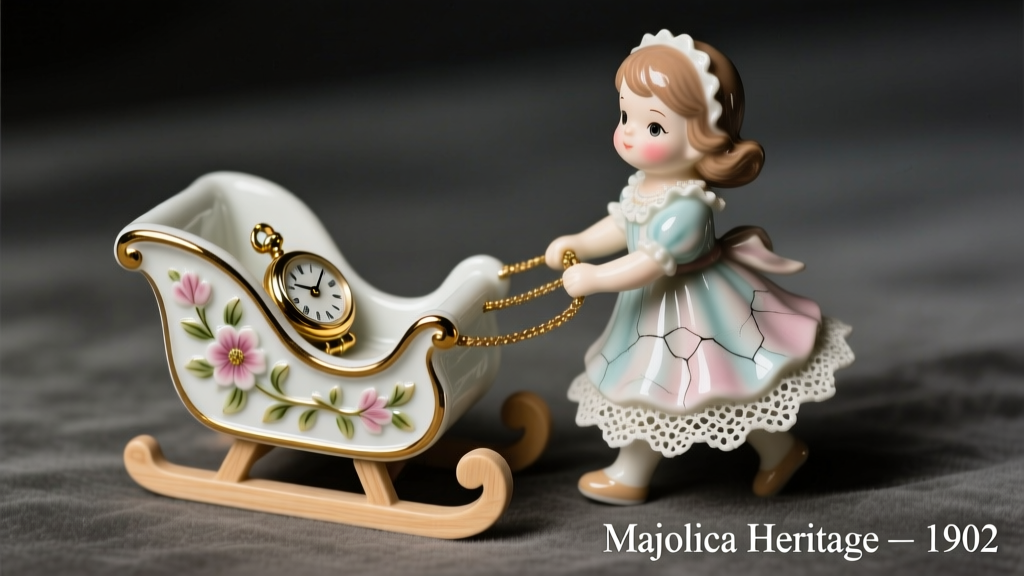
Porcelain Figurine of a Girl Pushing a Sleigh: Majolica-Style Decoration, 6 × 6 Inches — A Collector’s Appraisal

Lanterns with Hand-Blown Globe Double Burners, Glass Reservoirs, and Pierced Tin: A Technical & Historical Survey
Albert Cohen: The Swiss Mastermind Behind IWC’s Golden Era and the Evolution of Precision Chronometry

Reed Barton’s Masterpiece: The 1910 Silver American Vase with Oak Branches and Girdle Handles — A Study in Colonial Revival Craftsmanship

Sheet Music for 'Jezebel' by Frankie Laine: Collecting, Authenticating, and Valuing Vintage 1951 Publications
Irish Chain Quilt with Sawtooth Border: A Study in Precision, Provenance, and Textile Heritage (82 × 82 Inches)
Kovels’ On Antiques and Collectibles, Vol. 4, No. 4 (December 1977): A Snapshot of Mid-Century Collecting Culture and Market Intelligence

Brass Boar Letter Opener: A Study in Victorian Craftsmanship, Symbolism, and Collectibility