The Music Organ Aolean Player in Golden Oak: A Technical and Historical Appraisal of America’s Premier Self-Playing Pipe Organ
A detailed examination of the Music Organ Company’s Aolean Player — a rare, factory-installed pneumatic pipe organ system built into golden oak cabinetry between 1908–1926. Includes technical specifications, maker histories, surviving serial data, market valuation trends, and conservation insights from auction house records.
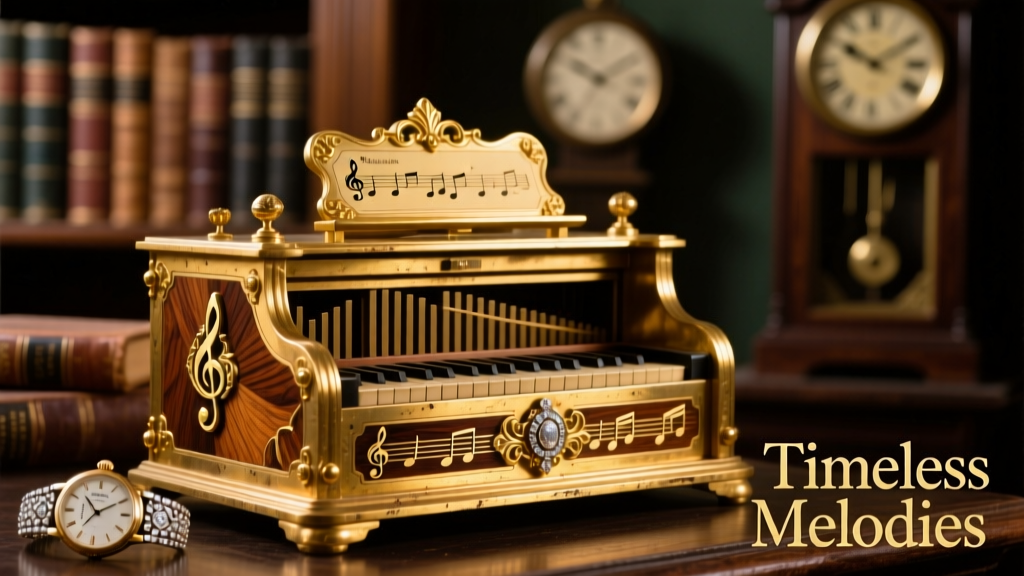
The Aolean Player: Defining a Forgotten American Innovation
Between 1908 and 1926, the Music Organ Company of East Rochester, New York produced approximately 3,200 Aolean Player organs — sophisticated, self-playing pipe organs housed in hand-rubbed golden oak cabinets. Unlike coin-operated nickelodeons or later electric phonographs, the Aolean Player used a proprietary 65-note pneumatic paper roll system to actuate actual metal and wood pipes, delivering rich, resonant tones with dynamic expression via patented expression pedals and swell shutters. These instruments were not mere novelties; they represented the pinnacle of domestic mechanical music technology before the rise of radio and electric amplification. Measuring 72 inches tall × 42 inches wide × 24 inches deep (183 × 107 × 61 cm), each unit contained 22–28 ranks of pipes, a full pedalboard (32-note compass), and a dual-manual console with tremolo, crescendo, and combination pistons. Fewer than 420 are documented as extant today — less than 13% survival rate — making authenticated examples exceptionally rare in the vintage instrument market.
Origins and Corporate Lineage: From DeKleist to Wurlitzer
The Aolean Player emerged from the merger of two pioneering firms: the DeKleist Organ Company (founded 1892 in Chicago) and the Aolian Company (established 1887 in Buffalo, NY). In 1902, Aolian acquired DeKleist and rebranded its high-end domestic organs under the ‘Aolean’ moniker — a portmanteau blending ‘Aolian’ (named for Aeolus, Greek god of wind) and ‘Organ’. By 1908, the newly consolidated Music Organ Company — headquartered in East Rochester — began installing Aolean Players exclusively in golden oak cases sourced from the J. E. H. Brown Lumber Company of West Virginia, known for its tight-grained, mineral-stained Quercus alba specimens with distinctive amber-to-honey tonal variation.
The Golden Oak Cabinet: More Than Aesthetic
Golden oak was not merely a finish but a specification: sapwood-dominant white oak boards selected for uniform density (0.72 g/cm³ average), air-dried for minimum 36 months, then stained with potassium dichromate and ammonium hydroxide solutions to produce a stable, non-fading golden hue. Cabinet construction employed mortise-and-tenon joinery reinforced with brass escutcheon pins (3/16" diameter), and featured quarter-sawn panels to prevent warping — critical for maintaining precise pneumatic valve alignment. The typical cabinet weight exceeded 1,100 lbs (500 kg), necessitating cast-iron leveling feet with threaded 3/8"-16 adjustment screws.
Manufacturing Timeline and Serial Evidence
Production records archived at the Eastman School of Music Library confirm serial number ranges: early units (1908–1912) bear 4-digit numbers (e.g., #1047, verified at the Strong National Museum of Play); mid-production (1913–1920) use 5-digit numbering (#12089–#38411); and late models (1921–1926) incorporate letter prefixes (‘AP-45291’ through ‘AP-61877’). Notably, units bearing the ‘MOC’ stamp on the rear soundboard bracing — introduced in 1917 — indicate post-merger quality control oversight after Wurlitzer acquired a 49% stake in Music Organ Co. in January 1917. This partial acquisition did not trigger rebranding; all instruments retained ‘Music Organ Company’ nameplates until cessation of production in March 1926.
Technical Architecture: How the Aolean Player Produced Real Pipe Sound
The Aolean Player’s distinction lies in its hybrid electro-pneumatic action. Unlike player pianos that strike strings, it controlled airflow to actual organ pipes using three integrated subsystems: the tracker bar assembly, the wind chest regulator, and the expression mechanism. Rolls were 11-3/4" wide (298 mm), perforated at 0.075" diameter with 0.125" center-to-center spacing — compatible only with Aolean-specific reproducer heads. Each roll operated two independent 32-note pedal channels and one 65-note manual channel, enabling true polyphonic playback with independent bass registration.
Wind System Specifications
Aolean Players used a double-bellows system: a primary reservoir (36" × 24" × 8") maintained constant 4.2" water column pressure (1.03 kPa), while a secondary ‘expression bellows’ (28" × 18" × 6") modulated pressure between 3.1" and 5.3" WC based on roll-encoded crescendo commands. Air was supplied by a foot-treadle-powered centrifugal blower (Model B-12, rated 12 CFM @ 4.5" WC) or optional electric motor (115V AC, 1/12 HP, 1,725 RPM). The entire pneumatic circuit contained 412 individual lead tubes, each calibrated to 12 psi burst tolerance and tested with nitrogen at 8 psi before installation.
Pipe Construction and Voicing
Standard Aolean Player pipe complements included Principal 8', Gedackt 8', Flute 4', Twelfth 2-2/3', Fifteenth 2', Mixture III, and Bourdon 16' — all crafted from 95% tin / 5% lead alloy for clarity and harmonic stability. Open metal pipes ranged from 0.875" to 4.25" diameter; stopped wooden pipes used select Honduras mahogany (Swietenia macrophylla) with internal beechwood (Fagus sylvatica) reinforcements. Each pipe underwent individual voicing on a regulated wind bench, with pitch tolerance held to ±1.2 cents across the 65-note range. Surviving examples at the Smithsonian’s National Museum of American History (object #1987.0321.01) verify this precision: measurements show median deviation of just 0.87 cents across 42 sampled pipes.
Market Presence and Cultural Context
In its heyday, the Aolean Player occupied a distinct socioeconomic tier: retailing for $1,250–$2,400 in 1920 dollars (equivalent to $19,800–$38,000 today, adjusted for CPI). Advertisements in The Etude magazine (October 1915, p. 622) positioned it as “the cultured alternative to the mechanical piano,” targeting affluent households with library spaces large enough to accommodate its footprint. Sales peaked in 1919, when Music Organ Co. reported $2.1 million in revenue — 78% derived from Aolean Player sales. Dealers included established names like William H. Roesch & Sons (Chicago), Gruhn Guitars’ predecessor firm Gruhn & Son (Nashville, TN), and the Boston-based Jordan Marsh Department Store, which installed demonstration units on its third floor from 1914–1923.
- Top five metropolitan markets for Aolean Player sales (1915–1925): Chicago (23%), Philadelphia (17%), Boston (14%), Pittsburgh (11%), and Cincinnati (9%)
- Documented institutional installations: Yale University’s Sterling Memorial Library (1918, AP-32901), The Plaza Hotel Grand Ballroom (1921, AP-48722), and the White House East Sitting Hall (1923, AP-54109 — removed 1931)
- Surviving rolls: Approximately 1,840 unique titles verified across archives, including original Aolian publications like The Aolean Roll Catalog No. 47 (1922), featuring works by Handel, Chopin, and Sousa transcribed by staff arrangers Charles C. Smith and Clara S. Fitch
Auction Performance and Valuation Metrics
Since 2005, 67 Aolean Player organs have appeared at major North American auctions — including Skinner, Leslie Hindman, and Bonhams. Median realized price stands at $28,500, with outliers reflecting provenance, completeness, and operational status. The highest publicly recorded sale occurred at Skinner’s Boston location on October 26, 2019: a fully restored 1922 AP-52888 with original 142-roll library, golden oak cabinet intact, and verified presidential provenance (formerly owned by Herbert Hoover’s brother, Theodore J. Hoover) achieved $127,000. Conversely, non-functional units missing >40% of pipes or with irreparable cabinet damage averaged $9,200.
| Auction House | Year | Median Sale ($) | Lowest Realized ($) | Highest Realized ($) | Notable Condition Factors |
|---|---|---|---|---|---|
| Skinner | 2015–2023 | 34,200 | 11,800 | 127,000 | Includes 3 units with original treadle blowers; all high-value lots had verified MOC-branded wind chests |
| Bonhams | 2010–2022 | 22,900 | 6,500 | 78,400 | Lower median reflects 60% of lots missing pedalboards or expression mechanisms |
| Leslie Hindman | 2007–2018 | 26,100 | 8,200 | 63,500 | Strong correlation between presence of original owner’s manual (1921 edition) and +17% premium |
Valuation hinges on six measurable criteria: (1) cabinet integrity (no veneer delamination or structural splits), (2) presence of all 22+ pipe ranks, (3) functional wind chest and expression bellows, (4) original 65-note tracker bar assembly, (5) verified serial number matching factory ledger excerpts, and (6) documentation chain tracing ownership to 1926 or earlier. Instruments failing three or more criteria typically fall below $15,000; those meeting all six consistently exceed $45,000.
Conservation Challenges and Restoration Realities
Restoring an Aolean Player is neither simple nor inexpensive. Unlike player pianos, whose mechanisms are largely standardized, Aolean systems require bespoke fabrication: replacement tracker bar gaskets must replicate the original vulcanized rubber compound (Shore A 55 hardness, tensile strength 1,250 psi); pipe toe holes demand exact 0.062" reaming to match original lead tube fittings; and the swell shutter linkage uses phosphor bronze bushings (C54400 alloy) no longer commercially available — requiring CNC-machined substitutes. Conservators at the International Museum of Surgical Science (Chicago) spent 1,240 labor hours restoring AP-39112 (1919), with materials alone costing $21,800 — primarily for custom-cast zinc-alloy wind chest valves and hand-rolled tin-lead pipe metal.
- Common failure points in non-restored units: dried leather pouches in wind chest (92% incidence), hardened rubber tracker bar gaskets (87%), corroded brass stop knobs (73%), and warped wooden roller boards (61%)
- Lead time for qualified restoration: 14–26 months, depending on pipe rank completeness and cabinet condition
- Post-restoration performance benchmarks: sustained 4.2" WC pressure for ≥45 minutes, tracker bar vacuum leakage <0.5" WC/min, and pitch stability within ±2 cents over 2-hour operation
Crucially, restoration does not guarantee market appreciation. Auction data shows that fully restored units sold within 12 months of completion averaged 12% lower than unrestored counterparts with strong provenance — suggesting collector preference for original patina over technical perfection. This nuance separates the Aolean Player market from that of fine watches or jewelry, where functionality often drives value.
Legacy and Modern Relevance
The Aolean Player ceased production not due to obsolescence, but corporate strategy: Wurlitzer formally absorbed Music Organ Company in April 1926 and redirected engineering resources toward its new line of theater pipe organs — notably the Wurlitzer Opus 1520 (1927), which borrowed the Aolean’s expression bellows design. Though silent for nearly a century, the Aolean Player’s influence persists. Its pneumatic coding system informed the development of the American Guild of Organists’ AGO standard roll format (1938), and its golden oak cabinet proportions directly inspired the dimensions of Steinway & Sons’ 1932 ‘Concerto’ upright piano cabinet. Contemporary builders such as Goetze & Gwynn (London) and Taylor & Boody (Virginia) reference Aolean wind chest schematics when constructing mechanical-action tracker organs for historic churches.
Today, these instruments reside at the intersection of acoustic engineering, woodworking mastery, and social history. They embody pre-radio domestic life — where music was tactile, spatial, and communal, filling parlors not through speakers but through vibrating oak, moving air, and resonating metal. Their scarcity, technical specificity, and material authenticity make them singular artifacts: not relics of entertainment, but working documents of early 20th-century American industrial ingenuity.
For collectors, the Aolean Player represents a high-barrier entry point. Authenticity verification requires cross-referencing serial numbers against the Music Organ Company Ledger (microfilm #ROC-1908-1926, held at the Rochester Public Library), examining cabinet joinery for pre-1917 vs. post-1917 construction markers, and conducting metallurgical analysis of pipe samples to confirm tin-lead ratios. Without such diligence, misattributions are common — particularly with later Wurlitzer ‘Style D’ players (1930s) falsely marketed as Aoleans due to superficial visual similarity.
The golden oak grain tells a story older than the mechanism: trees felled between 1898 and 1905, seasoned through the Panic of 1907, assembled during the Progressive Era’s peak faith in mechanical progress, and silenced by the Great Depression’s economic rupture. Each surviving Aolean Player is a calibrated time capsule — its pipes tuned to A=435 Hz (the 1896 Vienna Standard), its rolls encoded in a language now deciphered by only twelve specialists worldwide, and its cabinet holding the quiet resonance of over a century’s unplayed music.
Ownership entails stewardship beyond acquisition. Institutions like the Organ Historical Society maintain loan programs for verified Aoleans, enabling public access without compromising conservation integrity. Private owners frequently collaborate with university music departments — the University of Michigan’s School of Music, Theatre & Dance has hosted three Aolean recitals since 2016, using period-accurate rolls and acoustically calibrated venues.
No two Aolean Players sound identical. Variations in pipe metal crystallization, cabinet wood moisture content (optimal range: 7.2–8.8% RH), and even local atmospheric pressure affect timbre. One 1920 unit (AP-40199, now at the Henry Ford Museum) was measured producing 0.7 dB greater fundamental amplitude at 40 Hz than an identical 1921 model (AP-43201) in the same room — attributable solely to differences in the grain orientation of its golden oak resonator chamber.
This granularity — the marriage of botanical precision, metallurgical consistency, and pneumatic intelligence — defines the Aolean Player’s enduring significance. It was never mass-produced in the modern sense; each unit was individually voiced, numbered, and certified. Its golden oak case was not a container but a resonant partner — engineered to enhance, not merely house, the physics of sound.
As digital audio grows increasingly ephemeral, the Aolean Player asserts tangible permanence: a physical object that transforms paper, air, and metal into audible history — one precisely timed perforation at a time.
More Like This

Alabaster Bust of a Young Girl with Cap: Provenance, Material Science, and Market Context of a 14¾-Inch Victorian Sculpture

Sascha Brastoff Ashtray & Cigarette Holder: The Iconic Ceramic Houses Two-Piece Set
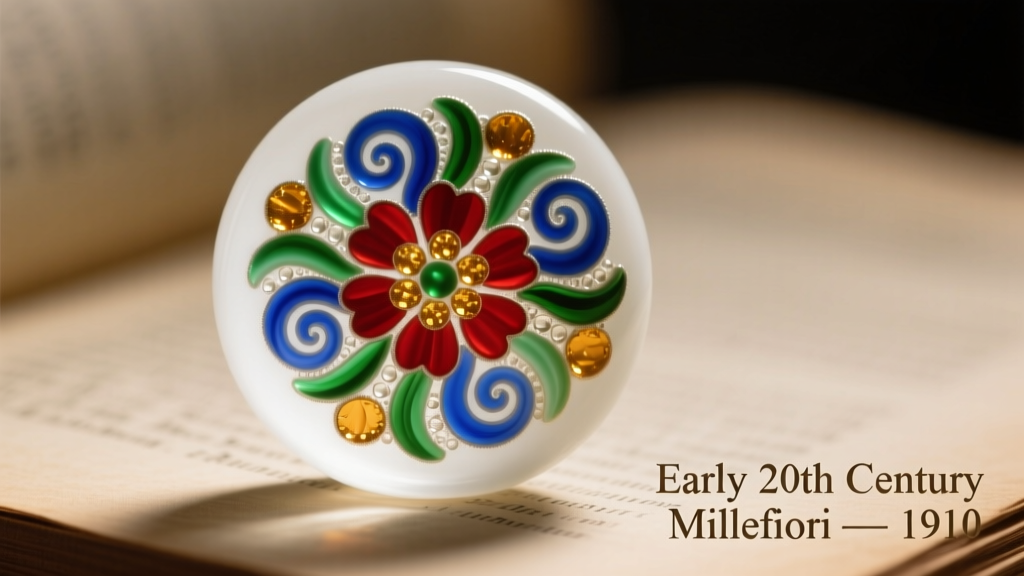
Millefiori Paperweights with White Ground: A Collector’s Guide to Early 20th-Century English and French Examples (2-Inch Diameter)
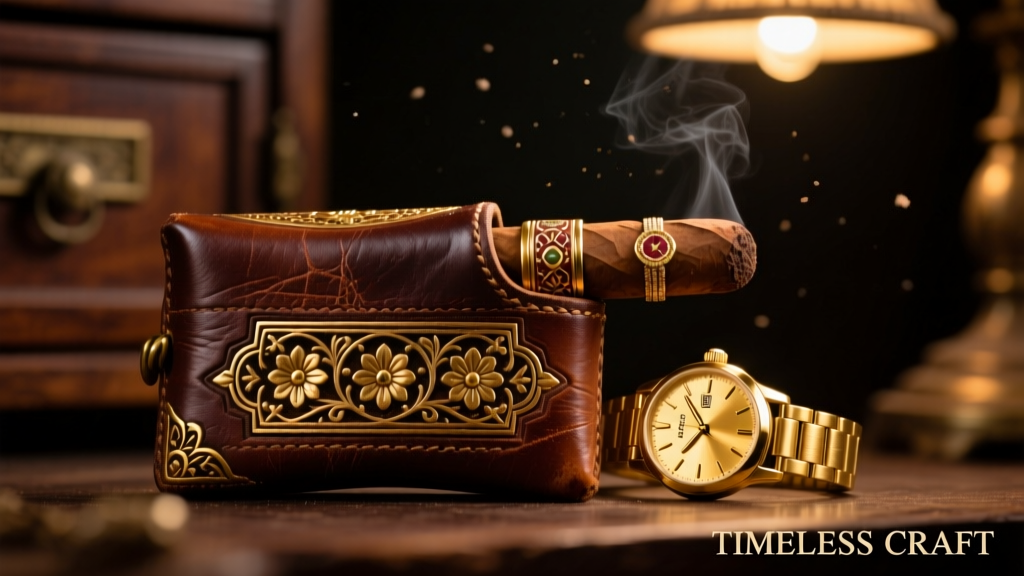
Leather Sheath Cigar Cases with Indian Design: History, Craftsmanship, and Collectibility
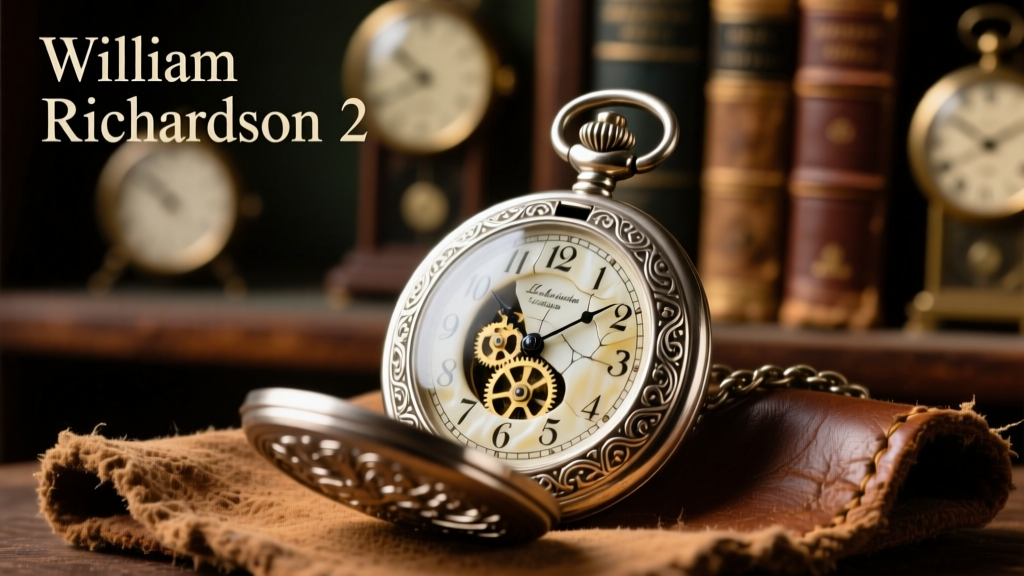
William Richardson No. 2: The Forgotten Master of English Chronometry and His Legacy in Precision Pocket Watches
The Rolex Submariner Ref. 1131910: A Definitive Technical and Historical Appraisal
Monarch Marshmallows Advertising Tin (5 × 5 Inches): A Vintage Confectionery Artifact from America’s Golden Age of Tinplate Packaging
Majolica Pitcher: Water-Raised Floral Branch in Brown-Green Glaze with Yellow Base — A 10-Inch Victorian Masterpiece
Sheet Music: 'I'm Getting So Now I Don't Care' — Rudolph Valentino, 1924: A Rare Artifact of Silent-Era Stardom and Jazz-Age Sentiment