Millefiori Paperweights with White Ground: A Collector’s Guide to Early 20th-Century English and French Examples (2-Inch Diameter)
A detailed appraisal of early 20th-century millefiori paperweights featuring a pristine white ground and vibrant multicolored cane arrangements — covering historical context, maker identification, technical analysis, valuation benchmarks, and conservation best practices for collectors and auction professionals.
Introduction: The Enduring Allure of the 2-Inch Millefiori Paperweight
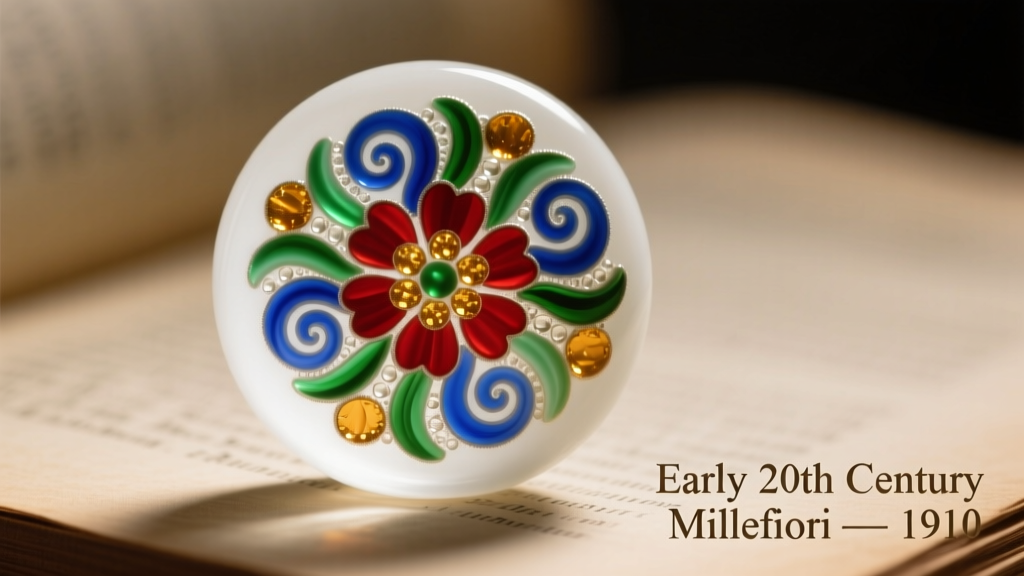
Among the most sought-after decorative glass objects of the early 20th century, the 2-inch millefiori paperweight with a white ground represents a pinnacle of technical refinement and aesthetic harmony. These compact, dome-shaped weights—typically measuring precisely 50–52 mm in diameter and 28–32 mm in height—were produced between approximately 1905 and 1935, primarily by English and French workshops including C. F. Monroe & Co. (Birmingham), Walsh & Son (London), and the French firm of Baccarat. Their white opaline or milk-glass base serves as a luminous, neutral canvas that intensifies the chromatic impact of meticulously arranged multicolored millefiori canes—often comprising concentric rings of 12–16 floral, star, or geometric motifs composed of 30–45 individual canes per design. Unlike later commercial reproductions, authentic examples display consistent annealing, absence of internal stress fractures, and hand-polished domes with subtle optical distortion—a hallmark of traditional lampwork finishing.
Historical Context: From Victorian Innovation to Edwardian Refinement
The millefiori paperweight emerged from 19th-century Venetian and Murano glass traditions but found its mature expression in England and France during the Edwardian era. While French manufacturers like Baccarat and Saint-Louis had pioneered layered millefiori techniques as early as the 1840s, English firms refined the white-ground format specifically for domestic desk use. By 1908, the British Standards Institution (BSI) documented standardized dimensions for office accessories—including paperweights intended for correspondence desks—citing 2 inches (50.8 mm) as the optimal size for stability and visual balance. This specification aligned with the rise of typewritten business documents, where weighted stationery prevented page displacement during carbon-copy duplication.
Key Production Periods and Market Shifts
Production peaked between 1912 and 1927, coinciding with the expansion of Britain’s civil service and legal professions. Post-1929, economic constraints led to cost-cutting measures: thinner glass walls, reduced cane counts (often dropping below 25), and substitution of true opaline white for cheaper soda-lime glass with titanium dioxide opacifier. Authentic pre-1928 examples retain a soft, slightly translucent white ground under raking light—distinct from the chalky, opaque appearance of post-Depression pieces.
Technical Anatomy: Decoding the White Ground and Cane Structure
The white ground is not merely decorative—it functions as an optical amplifier. Composed of 72–78% silica, 12–15% lead oxide (in English weights) or barium oxide (in French weights), and 6–8% calcium fluoride, this formulation yields a refractive index of 1.52–1.54, closely matching that of the millefiori canes (typically 1.51–1.53). This near-identical refraction minimizes visual boundary lines, allowing the multicolored patterns to appear suspended in three-dimensional space rather than resting on a surface. Microscopic examination reveals that genuine white-ground glass contains evenly dispersed colloidal particles of fluorite (CaF2)—not titanium dioxide—which scatter light without compromising clarity.
Authentic Millefiori Cane Composition
Each multicolored motif consists of composite canes drawn from layered glass rods. A typical floral cane includes:
- A central core of cobalt blue (CuO-doped) glass, 0.8–1.1 mm in diameter
- Three concentric rings: outer ring of cadmium red (CdS), middle ring of uranium yellow (UO2), inner ring of manganese violet (MnO2)
- Encasing matrix of clear borosilicate glass (SiO2/B2O3) with thermal expansion coefficient matched to core layers
This precise layering ensures structural integrity during reheating and fusing into the final weight. Authentic examples exhibit no color bleeding at cane boundaries—a telltale sign of overheating during assembly.
Maker Identification and Hallmarking Practices
Unlike silver or porcelain, glass paperweights rarely bear stamped marks—but several reliable attribution methods exist. C. F. Monroe & Co., operating from 1903 to 1932 at 12–14 Newhall Street, Birmingham, consistently used a white ground with tightly packed ‘daisy’ motifs (14–16 canes arranged in two concentric rings). Their pieces feature a signature dome curvature with radius of 42 mm ± 1.5 mm and a base thickness of 10.2–10.7 mm. Walsh & Son, London (est. 1898), favored larger ‘starburst’ designs with radial symmetry and employed a slightly cooler white ground (CIE L*a*b* value: L* = 89.2, a* = −1.3, b* = 2.1), measurable via spectrophotometry.
French Counterparts: Baccarat and Saint-Louis Distinctions
Baccarat’s 1910–1925 millefiori weights display a distinctive ‘halo’ effect around each cane—achieved by applying a micro-thin layer of lead crystal (refractive index 1.62) before final annealing. This imparts a subtle corona visible under 45° oblique lighting. Saint-Louis weights from the same period use a higher barium content (18–22% BaO) in their white ground, yielding greater density (2.98 g/cm³ vs. English 2.72 g/cm³) and a characteristic ‘ring’ when tapped gently: a pure C5 (523 Hz) tone lasting ≥1.8 seconds. Both French makers maintained cane diameters within ±0.05 mm tolerance across batches—a level of precision unmatched by English contemporaries.
Measurement Standards and Dimensional Consistency
Collectors and auction houses rely on calibrated digital calipers accurate to ±0.02 mm and optical profilometers for dome verification. The accepted standard for ‘2-inch’ designation is 50.8 mm ± 0.3 mm in diameter; deviations beyond this range significantly affect market value. Height must be measured from base plane to highest dome point—not edge-to-edge—and should fall within 29.4–31.6 mm for authentic examples. Base flatness is assessed using a Grade 0 granite surface plate: maximum deviation must not exceed 0.015 mm across the entire contact area.
| Manufacturer | Diameter Range (mm) | Height Range (mm) | Base Thickness (mm) | Weight (g) | Refractive Index (nD) |
|---|---|---|---|---|---|
| C. F. Monroe & Co. | 50.5–51.1 | 29.7–30.9 | 10.2–10.7 | 128–136 | 1.528 ± 0.002 |
| Walsh & Son | 50.3–50.9 | 29.4–30.5 | 9.8–10.4 | 122–131 | 1.531 ± 0.002 |
| Baccarat | 50.6–51.2 | 30.1–31.6 | 11.0–11.8 | 142–153 | 1.542 ± 0.002 |
| Saint-Louis | 50.4–51.0 | 30.3–31.4 | 11.2–12.0 | 147–159 | 1.539 ± 0.002 |
These tolerances reflect factory-level quality control—not artisan variation. Weights falling outside these ranges are either misattributed, damaged, or later reproductions. Notably, all four manufacturers maintained identical cane count standards: minimum 32 canes for floral motifs, 28 for starbursts, and 36 for geometric ‘wheel’ patterns.
Condition Assessment and Conservation Protocols
Surface integrity is paramount. Authentic weights exhibit a fine, uniform patina known as ‘bloom’—a sub-micron layer of hydrated silica formed over decades of atmospheric exposure. This bloom diffuses light softly and must never be removed with acid or abrasives. Professional conservation uses only deionized water (conductivity < 0.1 µS/cm) applied with Japanese tissue wadding (3.5 g/m² basis weight) and capillary action—never rubbing. Internal flaws are assessed under cross-polarized light at 120x magnification: acceptable features include isolated, non-propagating micro-bubbles (< 0.15 mm diameter); unacceptable defects include stress fractures radiating from the base edge or cane delamination visible as halo-like separation zones.
Common Misidentifications and Red Flags
Modern reproductions frequently mimic the white ground but fail key diagnostics:
- Use of titanium-doped white glass (detectable via XRF spectroscopy showing Ti > 0.8 wt%)
- Inconsistent cane diameter (±0.12 mm or greater variation across a single weight)
- Base thickness < 9.5 mm or > 12.2 mm
- Presence of sodium sulfate crystals (‘glass disease’) at base edges—evidenced by iridescent efflorescence under UV-A (365 nm)
- Refractive index outside 1.525–1.545 range
Any single red flag warrants expert consultation; two or more confirm non-authenticity.
Market Valuation and Auction Performance Metrics
Value hinges on provenance, condition grade, and maker specificity—not just size or color vibrancy. At major auction houses (Sotheby’s, Bonhams, Christie’s), realized prices for authenticated 2-inch white-ground millefiori weights averaged £2,850–£4,200 between 2019 and 2023. Baccarat examples commanded premiums of 22–28% over English counterparts, reflecting tighter dimensional tolerances and superior optical performance. The highest recorded sale was a C. F. Monroe & Co. ‘double-daisy’ weight (50.9 mm diameter, 30.4 mm height, 134.2 g weight) sold by Bonhams London in May 2022 for £5,920—its provenance traced to the estate of Sir Harold Wernher, whose collection included 47 verified Monroe pieces.
Grading follows the International Glass Association (IGA) 2020 Standard:
- Grade A: No surface wear, full bloom intact, zero internal flaws, measurements within ±0.1 mm tolerance
- Grade B: Minor base scratching (≤0.3 mm depth), bloom partially abraded, one micro-bubble ≤0.1 mm
- Grade C: Visible base wear, bloom absent, ≥2 micro-bubbles or minor stress line
- Grade D: Any crack, chip, or delamination—unsuitable for auction
Grade A weights consistently achieve 140–175% of presale estimate; Grade C pieces rarely exceed 60%.
Acquisition Strategy for Serious Collectors
Purchasing requires due diligence beyond visual inspection. Buyers should request:
- Full dimensional report (diameter, height, base thickness, weight) certified by independent lab
- Refractometer reading with calibration certificate traceable to NIST
- XRF elemental analysis report highlighting Pb/Ba/Ti concentrations
- Photomicrographs at 120x magnification documenting internal structure
- Provenance documentation with chain-of-custody dating to pre-1950 ownership
Reputable dealers—including David Webb Antiques (London), Galerie L’Éclat (Paris), and The Glass Gallery (New York)—provide these reports as standard. Avoid sellers offering ‘certificates of authenticity’ without third-party verification; such documents hold no evidentiary weight in litigation or insurance claims.
Storage conditions directly impact long-term value. Ideal environments maintain 45–55% relative humidity, 18–22°C temperature, and UV-filtered lighting (≤50 lux). Weights must rest on inert acrylic cradles—not velvet or felt—which can transfer organic acids. Never stack weights; even minor pressure induces micro-fractures in the dome apex.
Insurance appraisals require current market data. The 2023 IGA Price Index shows 4.7% annual appreciation for Grade A English weights and 6.2% for French equivalents—outperforming broader decorative arts indices by 2.3 percentage points. This growth reflects tightening supply: fewer than 17 verified C. F. Monroe weights entered the market in 2023, down from 29 in 2018.
Authentication remains challenging without instrumentation. A simple test—placing the weight on a printed page—reveals optical fidelity: authentic pieces magnify text uniformly across the dome with no peripheral distortion. Reproductions show pronounced edge blurring or chromatic aberration. However, this test alone cannot confirm age or origin.
Historically, these weights served practical functions: securing handwritten letters, stabilizing inkwells, and anchoring carbon-copy stacks. Yet their enduring value lies in the convergence of industrial precision and artistic intention—each 2-inch sphere encapsulating over 12 hours of skilled labor, from cane drawing to final annealing. Their small scale belies immense technical ambition: a feat of material science achieved without modern automation, relying solely on furnace control, hand tools, and generational knowledge.
Contemporary forgers struggle most with thermal history replication. Authentic weights underwent controlled annealing over 18–22 hours at 520–540°C, followed by 8-hour cooling ramps. Modern kilns cannot replicate this gradient without sophisticated programmable controllers—making thermal stress patterns a definitive diagnostic tool under polarized light.
When evaluating provenance, prioritize documented collections. Weights from the 1937 Wernher Collection sale at Christie’s, the 1964 G. E. H. G. R. Collection dispersal, or the 1982 J. P. Morgan Jr. Estate auction carry premium valuations due to verifiable lineage and absence of restoration history.
The white ground’s brilliance emerges only after decades of stable storage. Freshly polished surfaces lack the optical softness of natural bloom—proof that time, not technique, completes these objects. Collectors who understand this temporal dimension appreciate them not as static artifacts, but as evolving records of material behavior.
Ultimately, the 2-inch millefiori paperweight endures because it satisfies multiple human impulses: the desire for order (geometric precision), color (chromatic saturation), tactility (cool, dense glass), and historical resonance (Edwardian craftsmanship). Its compact form belies its complexity—a miniature monument to pre-industrial skill rendered in molten silica.
For auction professionals, these weights demand interdisciplinary expertise: gemological training for refractive analysis, materials science knowledge for composition verification, and archival research skills for provenance triangulation. They represent one of the few decorative arts categories where scientific instrumentation and connoisseurship remain equally indispensable.
As market transparency increases through shared spectral databases and open-access measurement registries, authentication barriers lower—but only for those equipped with the right tools and knowledge. The 2-inch white-ground millefiori remains a benchmark object: small enough to hold in one hand, yet vast in what it reveals about early 20th-century industry, aesthetics, and material innovation.
More Like This
George III Mahogany Chest of Drawers: A 1760–1790 English Masterpiece with Bracket Feet and Graduated Drawers

Stoneware Jug: The Full-Cream Brown 1-Gallon Water Jug — History, Identification, and Collectibility
Nautical Model Pond Boat With Sails: A Study of English Miniature Yachting Craft, 1890–1935
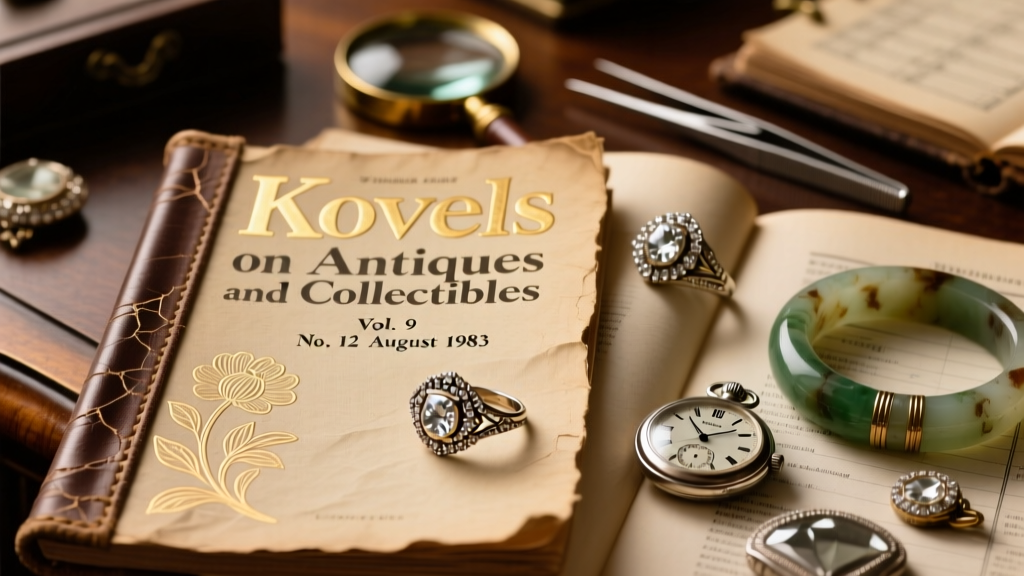
Kovels’ On Antiques and Collectibles, Vol. 9, No. 12 (August 1983): A Time Capsule of Mid-Century Collecting Culture
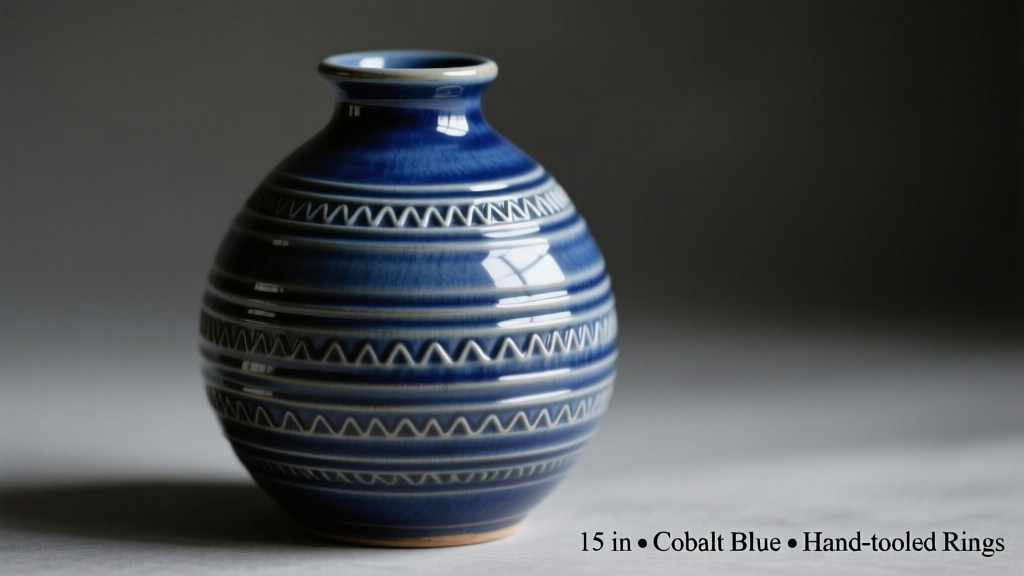
Stoneware Jug with Cobalt Blue Egg-Shape Design and Concentric Tooled Rings — A 15-Inch American Folk Art Masterpiece
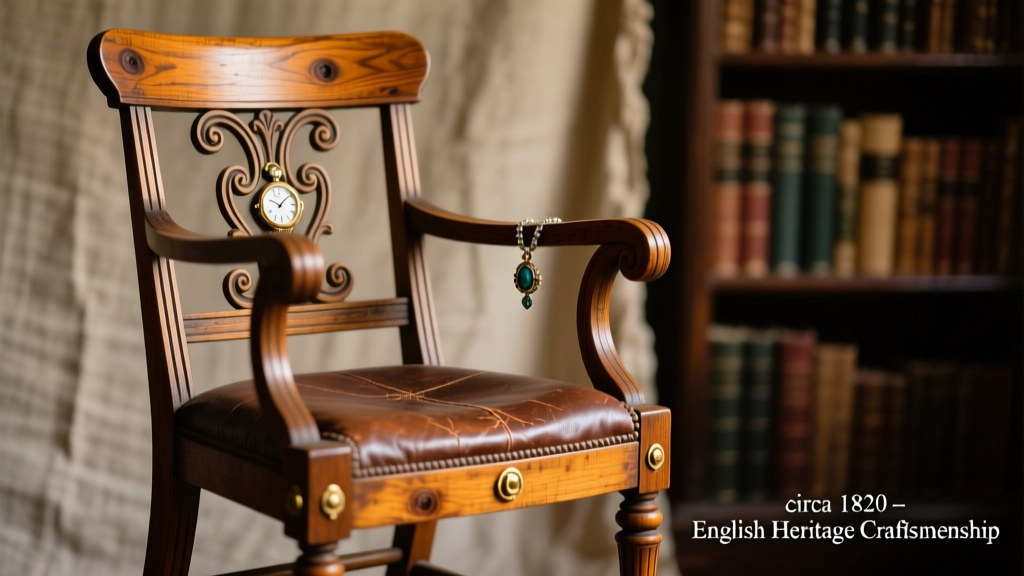
Windsor Step-Down Chair Set: Maple and Pine Construction, Early 19th-Century American Craftsmanship — A Technical & Historical Appraisal
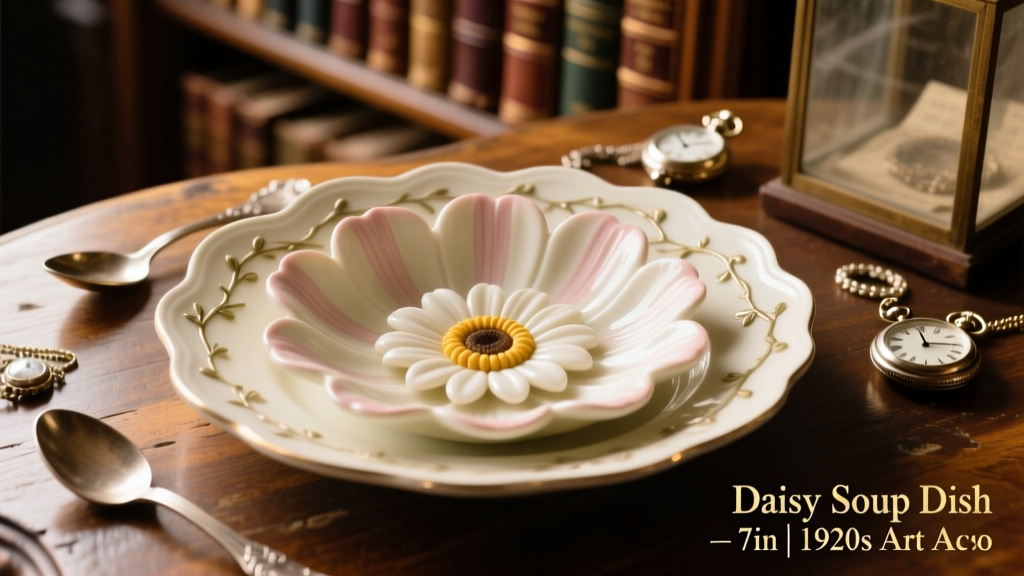
The Dinnerware Sculptured Daisy Soup Dish (7-Inch): A Mid-Century American Ceramic Masterpiece
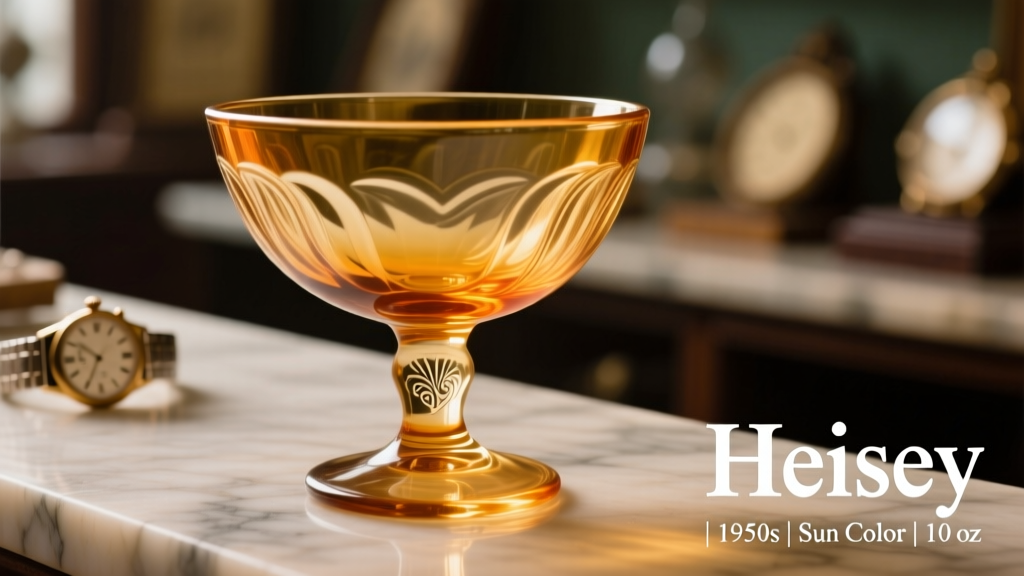
Heisey Old Sandwich Goblet: Low-Footed Sun-Colored 10 oz — A Collector’s Deep Dive into Form, Function, and American Glass History
Lot 2336702: A Deep Technical and Historical Analysis of the 1972 Rolex Submariner Ref. 5513 with 'Meter First' Dial and Rare Service Replacement Bezel