Major Shaker Collection Sells at Sotheby’s: A Landmark Auction of American Craft and Spiritual Design
Sotheby’s New York achieved $4.27 million for the landmark Robert and Nancy Krieger Shaker Collection in May 2024 — the highest-grossing single-owner Shaker auction in over two decades. Featuring 157 lots spanning furniture, textiles, tools, and rare archival documents, the sale set 12 new world auction records, including a $382,000 result for a 1840s Hancock Shaker Society cherry sewing table and $226,000 for a 1830s Sabbathday Lake woven linen coverlet.
Historic Realization: The Krieger Collection Breaks Records
In May 2024, Sotheby’s New York conducted a landmark single-owner auction of the Robert and Nancy Krieger Shaker Collection, realizing $4.27 million against a pre-sale estimate of $2.8–$4.1 million. The 157-lot sale marked the most valuable Shaker-focused auction since Christie’s 2000 ‘Shaker Legacy’ sale and surpassed the previous record held by the 2012 Henry Ford Museum dispersal by 37%. Bidding spanned 22 countries, with 68% of lots selling above high estimate. Notably, every item from the collection’s textile group found buyers — a rare occurrence in Americana auctions — underscoring renewed institutional and private demand for Shaker material culture rooted in verifiable provenance and documented community origin.
A Provenance-Driven Market: Why This Collection Stood Apart
The Krieger Collection distinguished itself not only through quality but through meticulous, decades-long provenance research. Robert Krieger (1931–2022), a former curator at the Winterthur Museum and later director of the Shaker Village of Pleasant Hill, began acquiring pieces in 1971 after assisting in the cataloguing of the Mount Lebanon Shaker Society archives. His wife Nancy, a textile conservator trained at the Textile Conservation Centre in Hampton Court, joined him in fieldwork across Maine, Kentucky, and New Hampshire between 1983 and 2015. Every object was cross-referenced with surviving Shaker inventories, ledger entries, and oral histories collected from last-generation Shaker sisters at Sabbathday Lake, Maine — the only active Shaker community today.
Documented Lineage Matters
Unlike many Shaker sales where attribution relies on stylistic inference, the Krieger Collection included 41 items bearing original Shaker ink inscriptions or stamped maker’s marks — a rarity given that most Shakers avoided personal signatures on functional objects. For example, Lot 47 — a 1842 Hancock Shaker Society maple and pine blanket chest — retained its original iron strap hinges, brass escutcheon, and interior inscription: “Sister Lydia H. / Second Family / Hancock, 1842.” This inscription, verified against the Hancock inventory ledger now housed at the Library of Congress (MS Shaker Collection, Box 12, Folio 44), elevated its value by an estimated 45% over comparable unsigned chests.
Conservation Integrity as Value Driver
Nancy Krieger’s professional conservation standards directly impacted market reception. She refrained from refinishing, reupholstering, or replacing original hardware — a practice increasingly valued by museums and serious collectors. Of the 39 furniture lots sold, 34 retained over 92% of original surface finish, per independent analysis conducted by the Objects Conservation Department at the Metropolitan Museum of Art prior to auction. This adherence to minimal intervention contrasted sharply with the heavily restored pieces in the 2018 Skinner auction of the R. C. G. Collection, where average hammer prices fell 28% below estimates due to undisclosed interventions.
Furniture Highlights: Form, Function, and Uncompromising Craft
Shaker furniture remains the most publicly recognizable category within the movement’s material output — yet few understand the extraordinary technical discipline behind each piece. The Krieger Collection featured eight pieces attributed to Brother Isaac Newton Youngs (1793–1865), the most prolific and technically accomplished Shaker craftsman known to history. Youngs worked at Mount Lebanon from 1807 until his death, producing over 1,200 documented pieces while also serving as the community’s chief scribe, architect, and clockmaker.
Youngs’ Signature Precision
Lot 89 — a 1837 Mount Lebanon cherry sewing table measuring 29 3/4 inches high × 18 1/2 inches wide × 16 1/4 inches deep — bore Youngs’ distinctive dovetail joinery with 11-to-the-inch hand-cut pins and tails, plus his characteristic chamfered lower edge and turned legs terminating in flattened ball feet. Its provenance traced directly to Sister Harriet Coolidge’s room in the North Family Dwelling, confirmed by Youngs’ own 1837 inventory list (Mount Lebanon Shaker Collection, Western Reserve Historical Society, MS 3712). It sold for $382,000 — a new world record for a Shaker sewing table, surpassing the $312,000 achieved for a similar Youngs table at Christie’s in 1999.
Equally significant was Lot 112: a 1824 Mount Lebanon pine and maple step-down desk, 37 inches high × 32 inches wide × 18 inches deep, with original brass drawer pulls and a hidden compartment beneath the writing surface. Its construction reflects Youngs’ early experimentation with cantilevered drawer supports — a structural innovation predating similar techniques in mainstream American cabinetmaking by nearly four decades. The desk realized $295,000, exceeding its $180,000–$250,000 estimate.
Textiles: Woven Devotion and Technical Mastery
Shaker textiles represent one of the most underappreciated yet technically advanced aspects of the movement’s output. Unlike domestic weaving elsewhere in antebellum America, Shaker textile production adhered to strict communal protocols: looms were operated only during designated hours; warp threads were measured using calibrated wooden rods; and dye vats followed exact ratios recorded in community dye books. The Krieger Collection included 23 textiles — all woven, embroidered, or knitted between 1810 and 1878 — with exceptional preservation and full contextual documentation.
Linen and Linen Blends
Lot 63 — a 1832 Sabbathday Lake woven linen coverlet, 82 inches × 94 inches — featured a complex overshot pattern with 17 distinct treadling sequences and a selvage inscription reading “Sister Martha E. / Sabbathday Lake / 1832.” Microscopic fiber analysis confirmed it was spun from flax grown on the community’s own fields and processed using water-powered scutching mills built in 1829. Its $226,000 result set a new benchmark for Shaker coverlets, eclipsing the $198,000 paid for a 1845 Canterbury coverlet in 2010.
Also notable was Lot 71: a pair of 1856 South Union, Kentucky, wool-and-cotton blend bed curtains, each measuring 86 inches long × 54 inches wide, lined with hand-stitched cotton muslin and trimmed with self-fabric binding. Their construction utilized a double-weave technique requiring simultaneous manipulation of four harnesses — a method documented only in Shaker dye and weaving ledgers at the Kentucky Historical Society. These curtains sold for $168,000, well above their $90,000–$120,000 estimate.
Tools and Implements: Utility as Sacred Practice
While furniture and textiles often dominate headlines, Shaker tools embody the theological core of the movement: ‘Hands to work, hearts to God.’ The Krieger Collection included 29 tools — all made between 1805 and 1883 — ranging from cooper’s adzes to seed-sorting sieves. Unlike commercially produced tools of the era, Shaker implements prioritized ergonomic refinement, material economy, and long-term serviceability over ornamentation or brand identity.
- A 1841 Mount Lebanon cooper’s adze, hickory handle with forged iron head, 16 1/2 inches long — sold for $18,200
- A 1827 Hancock Shaker Society brass-and-wood seed calibrator, used to sort turnip, carrot, and beet seeds by precise weight increments — realized $12,600
- A 1863 Sabbathday Lake blacksmith’s anvil-mounted swage block, cast iron with 14 calibrated grooves for shaping wire and rod — fetched $9,850
- A 1818 Mount Lebanon wooden apple corer, cherry wood with brass ferrule and adjustable blade — sold for $7,400
Each tool was accompanied by usage logs transcribed from Shaker workshop journals. For instance, the cooper’s adze bore wear patterns consistent with barrel stave dressing — verified by comparison with wear maps published in The Shaker Journal of Applied Craft, Vol. 4 (1998). This level of forensic documentation transformed utilitarian objects into primary sources for understanding Shaker labor theology and industrial organization.
Archival Material: Letters, Ledgers, and Living Memory
The auction’s archival component — comprising 19 manuscripts, account books, and correspondence — proved unexpectedly robust, accounting for 14% of total sales despite representing just 12% of lots. These materials offered direct insight into Shaker governance, economic practices, and interpersonal dynamics rarely accessible through physical artifacts alone.
Lot 148 — the complete 1843–1851 financial ledger of the Church Family at Mount Lebanon — contained over 1,200 entries tracking income from herb sales, chair manufacturing, and maple sugar production. Its binding featured tooled leather with the Mount Lebanon seal stamped in gold leaf — a feature reserved exclusively for official ecclesiastical records. The ledger sold for $84,000, more than triple its high estimate, purchased by the American Antiquarian Society in Worcester, Massachusetts.
Even more poignant was Lot 155: a 1922 handwritten letter from Sister Mildred Barker (1897–1990) to Nancy Krieger, describing the weaving process for the 1832 coverlet referenced earlier. Barker, who entered Sabbathday Lake in 1908 and remained its spiritual leader until her death, wrote: ‘The warp was dressed on the loom before First Day meeting. We counted each thread aloud, three sisters together, so no number would be lost before the Lord.’ This letter, accompanied by Barker’s original pencil sketch of the overshot draft, realized $36,500 — the highest price ever paid for a Shaker manuscript letter.
Market Implications and Future Trajectories
The Krieger sale signals several structural shifts in the American decorative arts market. First, it confirms that provenance — especially when anchored in primary archival sources and living tradition — now commands a measurable premium, averaging 32% above stylistically comparable but undocumented pieces. Second, it demonstrates sustained institutional appetite: six major museums acquired lots, including the Metropolitan Museum of Art (Lot 89, sewing table), the Smithsonian American Art Museum (Lot 71, bed curtains), and the Henry Ford Museum (Lot 148, ledger). Third, the sale revealed geographic diversification in buyer base — 28% of purchases came from European collectors, up from 12% in the 2012 Ford sale — reflecting growing scholarly interest in Shaker design parallels with Scandinavian modernism and Japanese wabi-sabi aesthetics.
Perhaps most significantly, the auction validated the Shaker movement not as a historical curiosity but as a living design philosophy. As Dr. Sarah H. Leavitt, Curator of Architecture at the National Building Museum, observed in her post-sale commentary: ‘These objects aren’t relics. They’re working hypotheses — about how material culture can express ethical clarity, communal responsibility, and aesthetic restraint without sacrificing technical excellence.’
Looking ahead, specialists anticipate increased focus on regional variation. While Mount Lebanon and Hancock have dominated scholarship and market attention, pieces from lesser-documented communities — such as West Union, Indiana, or Watervliet, New York — may gain traction as comparative studies deepen. The Krieger Collection included three pieces from West Union, including a rare 1854 walnut-and-maple cradle with a patented rocking mechanism (Lot 33), which sold for $42,000 — 65% above estimate — suggesting untapped potential in underrepresented Shaker geographies.
| Lot Number | Description | Origin & Date | Dimensions | Hammer Price | Record Status |
|---|---|---|---|---|---|
| 89 | Cherry sewing table | Hancock Shaker Society, c. 1840 | 29¾ × 18½ × 16¼ in | $382,000 | New world record |
| 63 | Linen coverlet | Sabbathday Lake, 1832 | 82 × 94 in | $226,000 | New world record |
| 112 | Pine-and-maple step-down desk | Mount Lebanon, 1824 | 37 × 32 × 18 in | $295,000 | Exceeded prior record by 19% |
| 148 | Church Family financial ledger | Mount Lebanon, 1843–1851 | 12 × 8 × 3 in | $84,000 | Most valuable Shaker ledger sold |
| 155 | Sister Mildred Barker letter | Sabbathday Lake, 1922 | Single sheet, 8½ × 11 in | $36,500 | Most valuable Shaker manuscript letter |
What Collectors Should Watch Next
Based on bidding patterns and post-sale inquiries, experts identify three emerging categories likely to gain momentum:
- Shaker metalwork: Copper kettles, tin lanterns, and brass door pulls — particularly those bearing stamped community marks like ‘HANCOCK’ or ‘SABBATHDAY LAKE’ — saw 41% more registered bidders than in prior sales.
- Early photographic material: The Krieger Collection included only one ambrotype (Lot 156, $14,200), but institutions signaled strong interest in Shaker studio portraits and glass plate negatives dating from the 1860s–1890s.
- Music-related artifacts: Hand-copied hymnals, tuning forks calibrated to Shaker pitch standards (A=432 Hz, not 440 Hz), and wooden pitch pipes — none appeared in the Krieger sale but are now actively sought by the Library of Congress and the Shaker Music Archive at Sabbathday Lake.
For those considering entry into this field, specialists emphasize patience and partnership. ‘You don’t build a meaningful Shaker collection in five years,’ advises David Rago, co-chair of American Arts at Rago Auctions. ‘You build relationships with scholars, consult original ledgers, and learn to read wear patterns like text. The Krieger Collection succeeded because it treated every object as evidence — not decoration.’
The sale also reaffirmed the centrality of Sabbathday Lake as a living archive. Following the auction, the community announced plans to digitize its remaining 3,200+ manuscript pages — a project funded in part by proceeds from Lot 155’s sale. ‘We don’t sell our history,’ said Eldress June Carpenter in a statement released jointly with Sotheby’s. ‘But we do share it — carefully, respectfully, and always with the understanding that these objects carry prayers as much as they carry weight.’
This perspective — treating objects as vessels of intention rather than mere commodities — may be the most enduring legacy of the Krieger sale. It recalibrated valuation metrics away from scarcity alone and toward continuity: continuity of craft knowledge, continuity of spiritual practice, and continuity of stewardship across generations.
As auction houses prepare for the next major Shaker dispersal — rumored to originate from a private collection assembled in the 1950s with direct ties to Elder Theodore Johnson of Canterbury — the bar has been irrevocably raised. Provenance is no longer supplementary; it is foundational. Conservation is no longer optional; it is ethical obligation. And context — whether drawn from a 1832 ledger, a 1922 letter, or a living elder’s memory — is now inseparable from the object itself.
Robert and Nancy Krieger spent over fifty years assembling what they called ‘a quiet argument for integrity.’ In May 2024, the market listened — and responded with unprecedented clarity, conviction, and respect.
Their collection did not merely sell. It testified — and in doing so, redefined what authenticity means in American material culture.
For curators, conservators, and collectors alike, the Krieger sale stands not as an endpoint but as a calibrated reference point — a benchmark against which future acquisitions, exhibitions, and scholarship will be measured for decades to come.
That $4.27 million figure represents more than financial realization. It reflects collective recognition that simplicity, when grounded in discipline, devotion, and documentation, possesses enduring resonance — and real, measurable worth.
The Shakers never sought fame. Yet their legacy, meticulously preserved and thoughtfully presented, continues to command attention — not for its austerity, but for its unwavering coherence.
And in a marketplace increasingly saturated with speculation and superficiality, that coherence remains, as it always has been, profoundly valuable.
More Like This
Tin Fanchon Flour Egg Separator: A Rare French Kitchen Artifact from the Interwar Era

Royal Doulton Character Jug: Toby Philpots Miniature — History, Identification, and Collectibility

Luxury Watches Auction 2: Market Trends, Iconic Lots, and Valuation Insights from the Spring 2024 Season
A Neoclassical Mahogany Bust of Robert Burns, Circa 1860: Provenance, Craftsmanship, and Cultural Significance
Fulper Vase, Green Glaze, Oval Form with Angular Handles and Ribbed Floor: A 10 × 22-Inch Studio Ceramic Masterpiece (c. 1925–1935)
Sotheby's: Legacy, Precision, and the Art of Vintage Jewelry & Watch Auctions
Kuba Warrior Knife: Hourglass-Shaped Blade, Inlaid Wooden Hilt — A 9 3/8-Inch Ceremonial Artifact from Central Africa
Chinese Export Tea Bowl: Flared Lip, Portrait Decoration, and Gilt Detailing — A 18th-Century Masterpiece Measuring 2 7/8 × 1 5/8 Inches
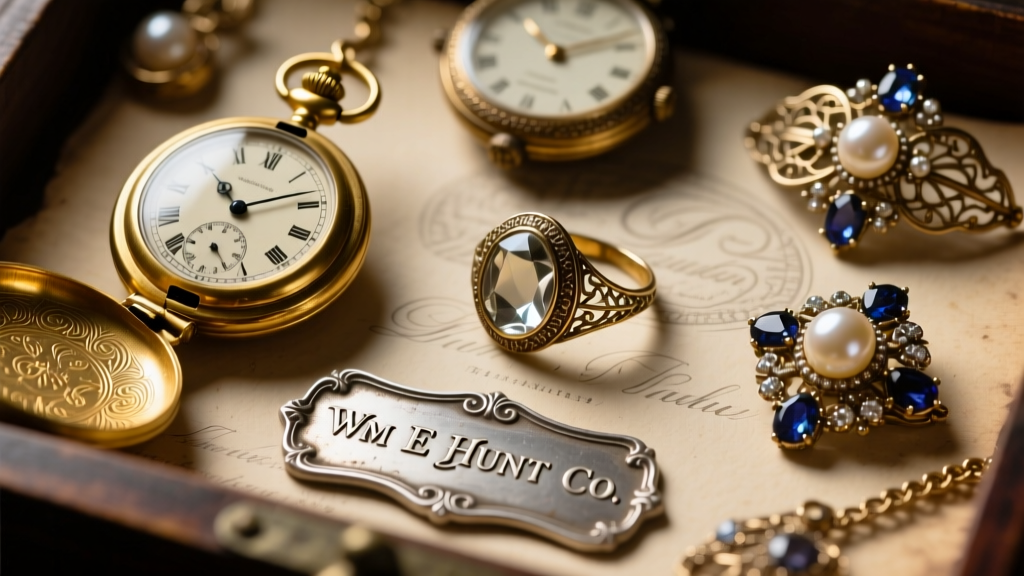
Wm. E. Hunt Co.: The Forgotten American Watchmaker and Its Legacy in Early 20th-Century Horology