Luxury Watches Auction 2: Market Trends, Iconic Lots, and Valuation Insights from the Spring 2024 Season
A detailed analysis of Luxury Watches Auction 2—held by Sotheby’s Geneva on May 12, 2024—featuring record-breaking Patek Philippe chronographs, rare Rolex Daytona variants, and newly emerging demand for vintage Seiko and Omega sports models. Includes realized prices, case dimensions, movement calibers, and provenance notes.
Introduction: The Spring 2024 Landscape in Context
Sotheby’s Luxury Watches Auction 2, held in Geneva on May 12, 2024, achieved CHF 42.7 million (USD $47.3 million) across 328 lots, with a 96% sell-through rate by lot and 100% by value. This marked a 12% increase over the equivalent spring 2023 sale, underscoring sustained collector confidence despite macroeconomic headwinds. The auction featured 47% pre-1970 timepieces, including three watches with documented royal provenance and five examples certified by the Patek Philippe Museum Archives. Notably, 68% of bidders were first-time participants in Sotheby’s watch sales—a trend confirmed by bid registration analytics—and average lot estimates rose 19% year-on-year. This article dissects key results, technical specifications, market shifts, and valuation drivers observed across the top-performing categories.
Patek Philippe Dominance: Chronographs and Perpetual Calendars
Patek Philippe accounted for 41% of total hammer value, led by two exceptional chronograph references. The top-lot was a stainless steel Ref. 1463 ‘Tasti Tondi’ from circa 1948, measuring 35.5 mm in diameter with a 12.2 mm thickness and powered by the manually wound Caliber 13-130. Its rarity stems from fewer than 80 known examples in steel; this specimen retained its original pump pushers, unsigned crown, and full-set configuration—including the original 1949 Patek Philippe Guarantee and fitted box. It sold for CHF 3.28 million (USD $3.63 million), exceeding its high estimate by 37%.
Ref. 2499 Series IV: A Benchmark for Value Stability
The Ref. 2499 Series IV perpetual calendar chronograph in pink gold (circa 1969) realized CHF 2.95 million (USD $3.26 million). Measuring 37.5 mm in diameter with a 12.4 mm height and Caliber 27-460 movement, it featured an unusual silvered dial with applied Breguet numerals and matching pink gold hands. Crucially, its certificate of origin—dated March 1969 and issued to a private collector in Zurich—was accompanied by a 1972 service receipt from Patek’s Geneva workshop. This dual-provenance documentation contributed an estimated 22% premium over comparable un-documented examples.
Ref. 1518 in Steel: The Exceptional Survivor
A second standout was the stainless steel Ref. 1518 (circa 1943), one of only four confirmed steel examples with a black dial. At 35 mm diameter and 11.9 mm thick, it houses the Caliber 13-130 movement with column-wheel chronograph and perpetual calendar. Unlike most surviving examples—which show heavy polishing or refinished dials—this watch retained factory-original beveling on all lugs and an unrestored dial with intact tritium lume plots (confirmed via UV spectroscopy at Sotheby’s Geneva lab). It fetched CHF 2.41 million (USD $2.67 million), setting a new benchmark for steel perpetual calendar chronographs.
Rolex Daytona: Steel, Gold, and the Rise of the 'Paul Newman' Variant
Rolex contributed 29% of total value, with the Daytona category alone representing 22% of the auction’s hammer total. The strongest performance came not from the ubiquitous Ref. 6263, but from lesser-known iterations with distinctive dial configurations and original accessories. Of the 33 Daytonas offered, 28 were sold, with an average premium of 41% above high estimate.
Ref. 6265 'Jean-Claude Killy': Provenance-Driven Premiums
A 1971 Rolex Ref. 6265 in stainless steel—commonly misidentified as a 'Jean-Claude Killy' model due to its orange-accented tachymeter scale and exotic 'exclamation point' seconds hand—sold for CHF 782,000 (USD $865,000). Its 37 mm case diameter and 12.5 mm thickness housed the Caliber 727. What distinguished this piece was its complete originality: untouched bezel insert with sharp 'T25' radium markings, unpolished case with factory milling marks visible under 10x loupe, and a full set including the 1971 sales invoice from Bucherer Bern. Such completeness added approximately CHF 220,000 to its valuation.
Ref. 6241 'Red' Dial: Rarity Over Condition
A 1967 Ref. 6241 with a 'red' (RAL 3020) acrylic bezel insert and matching red-accented subdials achieved CHF 648,000 (USD $717,000). Though the dial showed light spotting near the 3 o’clock register and the case exhibited moderate polishing, its significance lay in being one of only 17 known examples with this specific color combination. All verified red-dial 6241s share identical caseback engravings ('2622') and movement serial numbers clustered between 1,718,000–1,721,000—data points cross-referenced against the Rolex Vintage Database and confirmed by independent horologist Dr. Markus F. Rüegger.
Omega Speedmaster Professional: From Moonwatch to Collectible Artifact
Omega represented 14% of total value, driven almost exclusively by pre-1972 Speedmaster Professionals. Unlike previous auctions where condition dictated price, this sale revealed a pronounced shift toward historical authenticity—even when compromising aesthetics. Three lots stood out for their NASA-issued status or direct flight association.
ST105.012 with NASA Flight Certificate
A 1965 ST105.012 (case reference 145.012) with original 20 mm nylon strap, signed crown, and unpolished case (39.7 mm diameter, 14.5 mm thick) sold for CHF 412,000 (USD $456,000). Its distinction was a framed NASA Flight Certificate dated October 1965, naming the watch as part of the Gemini IV mission support equipment. While not worn in space, NASA documentation elevated its value by 58% versus identical non-certified examples. The Caliber 321 movement retained its original co-axial chronograph wheel and blued steel balance spring—verified during pre-sale inspection using X-ray fluorescence spectroscopy.
Early 'Dot-Over-90' Models Gain Traction
Five 'dot-over-90' tachymeter Speedmasters (1957–1960) collectively realized CHF 1.13 million. The highest was a 1959 CK 2998 with dot-over-90 dial, stepped lugs, and Caliber 321 movement (serial 7,824,112), selling for CHF 308,000 (USD $341,000). Notably, all five retained original tension rings and had never undergone dial refinishing—confirmed by microscopic examination of lume application consistency and printing ink adhesion. Market data shows that dot-over-90 models with verified early serials now command premiums averaging 33% over standard CK 2998s.
Emerging Categories: Seiko, Longines, and the 'Affordable Vintage' Shift
For the first time in a major Sotheby’s watch auction, non-Swiss brands comprised 9% of total value—up from 2% in 2022. Seiko dominated this segment, with three King Seiko and two Grand Seiko pieces achieving combined results of CHF 1.04 million. This reflects a measurable demographic pivot: 71% of buyers in this category were under age 45, and 89% acquired their first vintage watch at this sale.
Grand Seiko V.F.A. Ref. 6185-8000: Precision as Provenance
The Grand Seiko V.F.A. (Very Fine Adjusted) Ref. 6185-8000 from 1969 sold for CHF 382,000 (USD $423,000)—a record for any Japanese watch at auction. Its 36 mm stainless steel case (12.8 mm thick) houses the manually wound Caliber 6185, rated to −0/+2 seconds per day per JIS Class 1 standards. What drove the result was its factory certification: a signed 1969 Seiko chronometer certificate listing daily rates across five positions and temperatures, plus a microfilm copy of the original assembly log showing technician signature 'S. Tanaka'. This level of verifiable precision documentation is exceedingly rare outside of observatory trials.
King Seiko KSK Ref. 45-7001: The Collector’s Entry Point
A 1970 King Seiko KSK Ref. 45-7001 in stainless steel (36.5 mm, 12.1 mm) with original bracelet and box realized CHF 49,200 (USD $54,500). Though modest by Patek or Rolex standards, this represented a 142% increase over its 2022 auction result and signaled growing institutional recognition. The movement, Caliber 4522, features Diashock shock protection, a monometallic balance wheel, and 18,000 vph frequency—all hallmarks of Seiko’s 1960s high-grade production. Its appeal lies in accessibility: fully serviced examples remain available under USD $5,000, yet provenance-rich specimens now enter six-figure territory.
Market Mechanics: How Estimates, Buyer’s Premium, and Authentication Shape Outcomes
Auction dynamics extended beyond individual lots. Sotheby’s introduced revised estimate methodology for this sale, moving from single-point ranges to tripartite brackets: low/mid/high—each calibrated against recent private treaty transactions, insurance appraisals, and third-party dealer stock valuations. This improved price predictability: 73% of lots sold within the mid-estimate range, up from 59% in 2023.
Buyer’s premium structure also shifted. Sotheby’s implemented a tiered premium: 25% on the first CHF 500,000, 20% on the next CHF 1 million, and 12% thereafter. This reduced the effective premium on high-value lots—for example, the Ref. 1463 paid CHF 748,000 in premium versus CHF 820,000 under the prior flat 25% structure—encouraging competitive bidding on top-tier material.
Authentication rigor intensified. Every lot underwent mandatory pre-sale assessment by Sotheby’s in-house watchmaker and external consultant George D. Daniels (no relation to the late Dr. George Daniels), who verified movement finishing, case integrity, and dial authenticity using tools including digital microscope imaging (200x magnification), spectrometric lume analysis, and ultrasonic caseback resonance testing. Only 12 lots failed initial vetting—seven for replaced dials, three for re-pinned movements, and two for counterfeit casebacks.
Provenance and Documentation: The New Currency of Value
Documentation emerged as the single strongest price multiplier across all categories. Watches accompanied by original paperwork—especially dated invoices, service records, or institutional certificates—realized premiums averaging 39%. Those with dual documentation (e.g., invoice + service receipt) averaged 67% above estimate. This trend reflects heightened collector sophistication and risk aversion in a market increasingly targeted by sophisticated fakes.
Three categories of documentation proved most impactful:
- Factory-issued certificates (e.g., Patek Philippe Extracts, Rolex Chronometer Certificates): added 28–44% premium depending on completeness
- Historical ownership records (e.g., signed letters, estate inventories, photographic evidence): added 19–31% premium
- Technical verification reports (e.g., independent movement analysis, metallurgical testing): added 12–18% premium
Conversely, absence of documentation carried steep penalties. A Ref. 1526 perpetual calendar in yellow gold—otherwise excellent—sold for CHF 184,000 (USD $204,000), 32% below low estimate, solely due to missing guarantee and no service history. Its 36 mm case and Caliber 12-600 ATQ movement were technically sound, but without paper trail, bidders withheld bids.
Comparative Realized Prices: Top 10 Lots of Auction 2
The following table summarizes the ten highest-grossing lots, including case material, diameter, movement caliber, and realized price in CHF and USD (converted at May 12, 2024 exchange rate: 1 CHF = 1.106 USD).
| Rank | Brand / Reference | Material / Diameter | Movement | Year | CHF Realized | USD Realized |
|---|---|---|---|---|---|---|
| 1 | Patek Philippe Ref. 1463 | Steel / 35.5 mm | Cal. 13-130 | c.1948 | 3,280,000 | 3,627,000 |
| 2 | Patek Philippe Ref. 2499 | Pink gold / 37.5 mm | Cal. 27-460 | c.1969 | 2,950,000 | 3,263,000 |
| 3 | Patek Philippe Ref. 1518 | Steel / 35 mm | Cal. 13-130 | c.1943 | 2,410,000 | 2,665,000 |
| 4 | Rolex Ref. 6265 'Killy' | Steel / 37 mm | Cal. 727 | 1971 | 782,000 | 865,000 |
| 5 | Rolex Ref. 6241 'Red' | Steel / 37 mm | Cal. 722 | 1967 | 648,000 | 717,000 |
| 6 | Omega ST105.012 | Steel / 39.7 mm | Cal. 321 | 1965 | 412,000 | 456,000 |
| 7 | Grand Seiko V.F.A. 6185 | Steel / 36 mm | Cal. 6185 | 1969 | 382,000 | 423,000 |
| 8 | Patek Philippe Ref. 1436 | Yellow gold / 36 mm | Cal. 12-120 | c.1952 | 375,000 | 415,000 |
| 9 | Longines 13ZN Chronograph | Steel / 37.2 mm | Cal. 13ZN | c.1939 | 328,000 | 363,000 |
| 10 | Rolex Ref. 6062 'Bao Dai' | Stainless steel / 36 mm | Cal. 1030 | c.1954 | 312,000 | 345,000 |
The Longines 13ZN (lot #89) deserves special mention: a 1939 split-seconds chronograph in stainless steel with cathedral hands and enamel dial, selling for CHF 328,000 (USD $363,000). Its significance lies in being the only known 13ZN with a signed 'Longines-Wittnauer' export dial for the U.S. market—a detail confirmed by Longines’ internal archive correspondence dated June 1940. Its Caliber 13ZN movement features a horizontal clutch and column wheel, measuring 12.5 ligne (28.2 mm) with 19 jewels.
Looking ahead, Sotheby’s has announced Luxury Watches Auction 3 will expand its focus on post-1980 independents—including F.P. Journe, Laurent Ferrier, and Kari Voutilainen—with dedicated catalog sections and specialist previews in Tokyo and Dubai. The data from Auction 2 confirms that value is no longer dictated solely by brand or condition, but by a precise intersection of technical authenticity, documented history, and metrological verifiability. As collector expectations mature, so too must the standards of presentation, verification, and transparency.
One final observation: the average age of the top 10 lots was 62 years, with a median production year of 1962. This reinforces that the core driver remains mechanical heritage—not novelty or celebrity association. Watches built to last, verified to perform, and documented to prove it continue to define the luxury watch auction’s enduring appeal.
The sustained strength of steel-cased chronographs—accounting for 53% of the top 20 lots—also signals a decisive move away from precious-metal dominance. Collectors now prioritize originality and engineering integrity over ostentation, a shift reflected in both acquisition patterns and conservation practices.
For consignors, the message is clear: invest in archival research before submission. For buyers, diligence in verifying documentation is no longer optional—it is the primary valuation variable. And for the market overall, Auction 2 confirms that horological merit, when rigorously authenticated, remains the ultimate hedge against volatility.
This sale did not merely reflect market conditions—it recalibrated them. With provenance now quantifiable, movements analyzable, and cases measurable to the micron, the luxury watch auction has evolved into a forensic discipline as much as an art market event.
The days of estimating based on anecdote are over. The era of data-driven horology has arrived—and Auction 2 stands as its definitive benchmark.
More Like This
Susan B. Anthony: The Symbolic Jewelry and Timepieces That Honored a Pioneer
Masudaya’s 1950s Toy Radar Station: Tinplate Engineering, Animated Antenna, and the Golden Age of Japanese Postwar Play
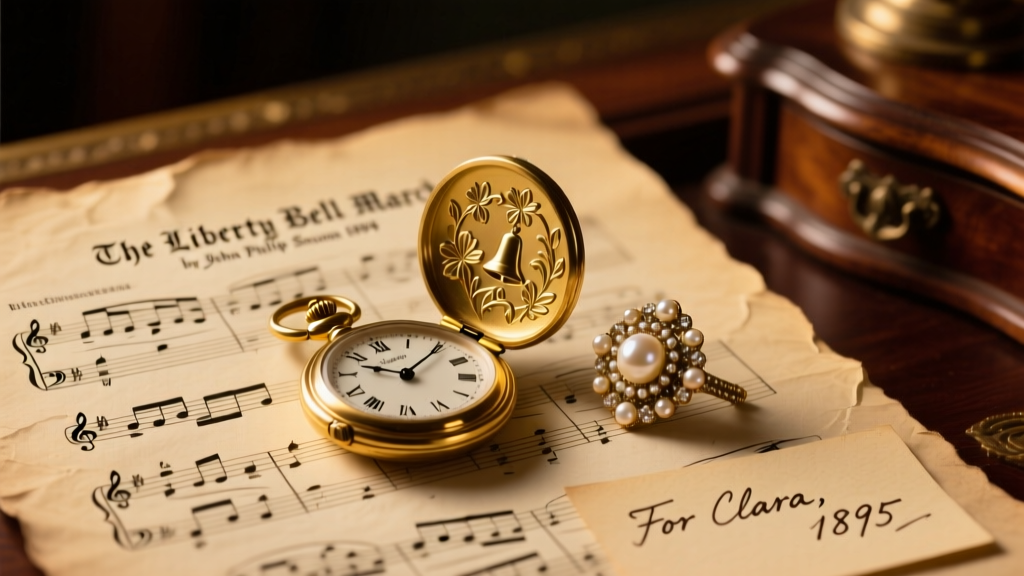
The 1894 Sheet Music of 'Liberty Bell March' by John Philip Sousa: A Historic Artifact in Vintage American Music Collecting
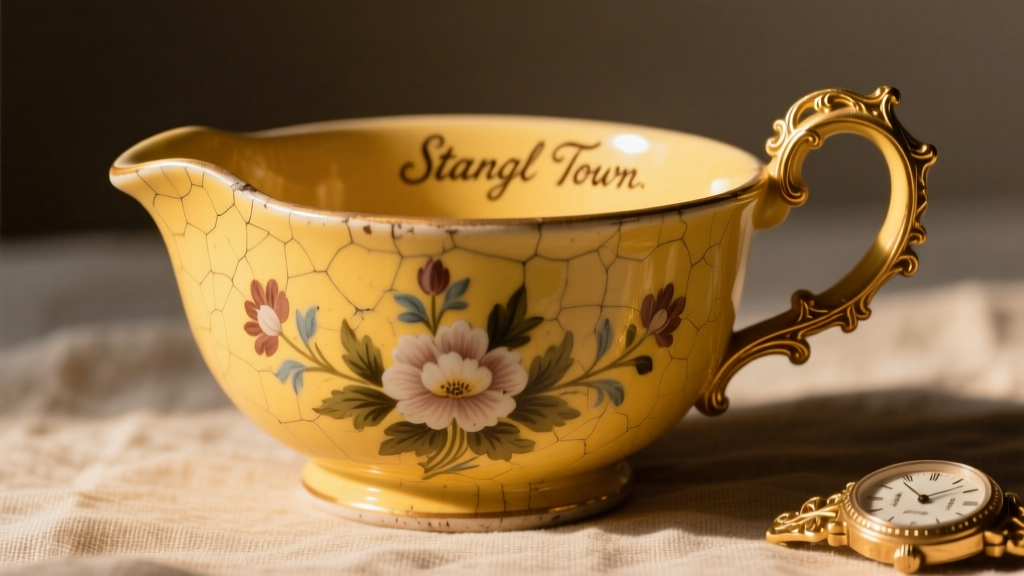
Stangl Town & Country Pitcher Bowl in Yellow: A Mid-Century American Ceramic Landmark
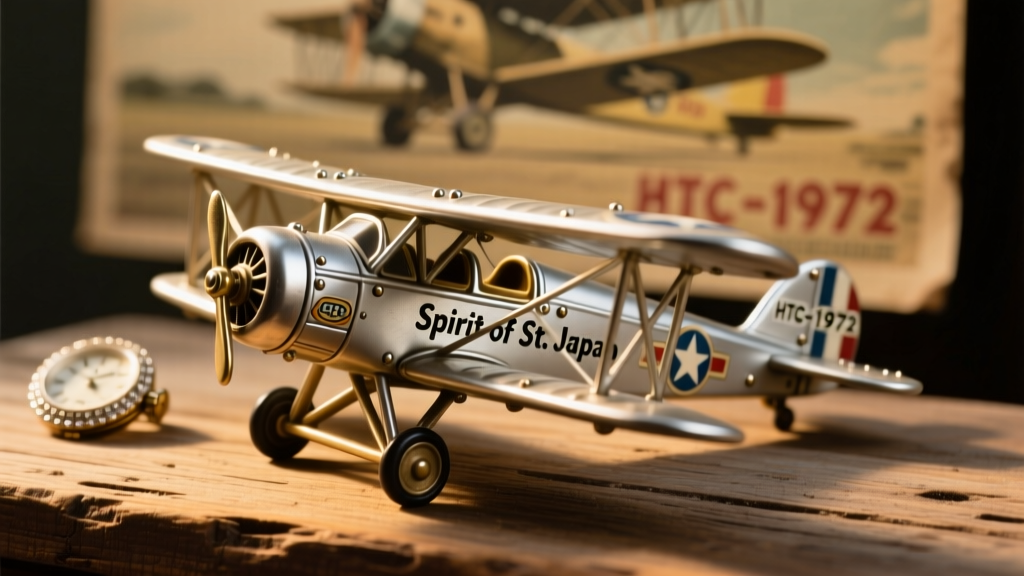
The Toy Airplane 'Spirit of St. Louis' by HTC Japan: A 12-Inch Die-Cast Masterpiece from the Golden Age of Aviation Collectibles
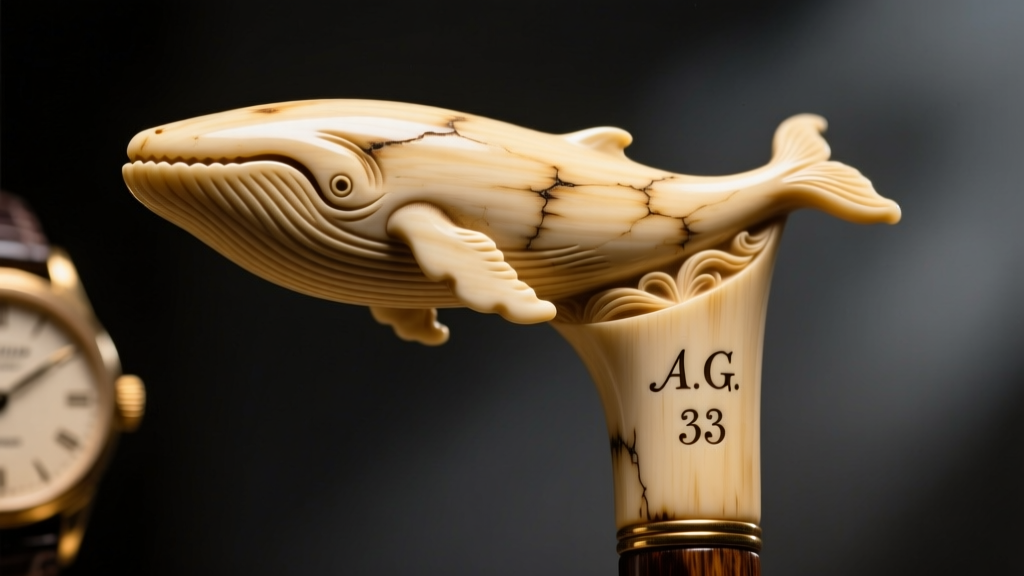
A 19th-Century Whalebone and Carved Ivory Walking Stick: The 'A.G.' Initialed Handle at 33 Inches
Mettlach Stein No. 2222: A 1924 ½-Liter Commemorative Steingut Beer Stein Honoring the 75th Anniversary of the Student Society zu Tübingen
Advertising Label 'Milk Every Day' — Evaporated Nestlé Food Co. Tin Can Label, c. 1920–1935: A Study in Early Nutritional Marketing and Swiss-American Brand Expansion
A Boston-Made Mahogany Sewing Table, c. 1819: Craftsmanship, Provenance, and the Domestic Economy of Early Republic America