Limbach Factory 6: The Forgotten Heart of German Watchmaking Precision
A detailed examination of Limbach Factory 6 — its historical role in the Glashütte watch industry, technical innovations, surviving calibers, and market significance among collectors of mid-century German timepieces.
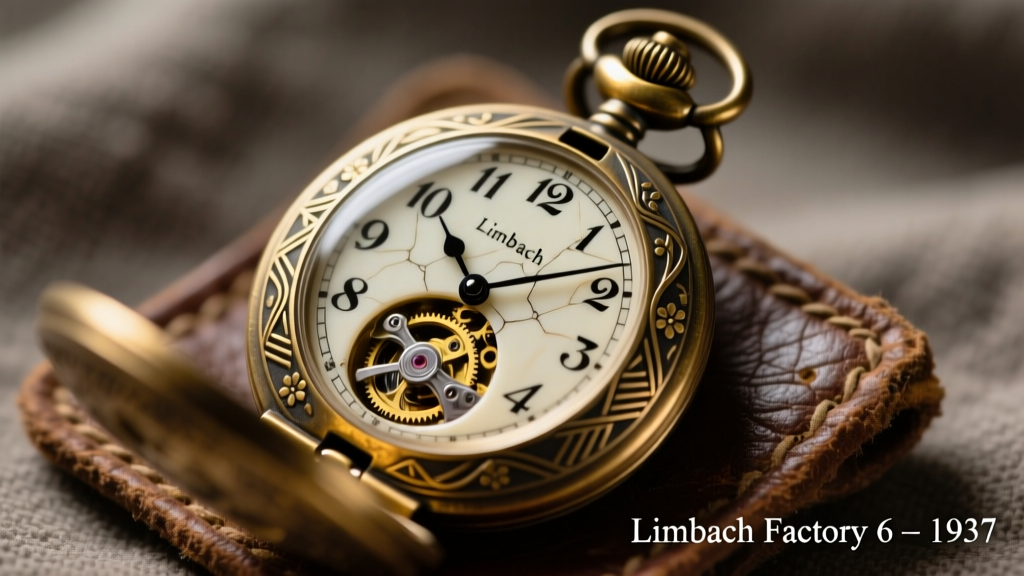
Limbach Factory 6: A Cornerstone of Postwar German Horology
Founded in 1948 as part of the Soviet-administered Volkseigener Betrieb (VEB) restructuring in Glashütte, Limbach Factory 6 was not a standalone brand but a specialized manufacturing division embedded within the VEB Glashütter Uhrenbetriebe (GUB) conglomerate. Unlike the more visible brands such as Union, Tutima, or later Glashütte Original, Factory 6 operated in near-total anonymity—producing movements exclusively for third-party brands and military contracts. Its legacy lies in precision-engineered, small-bore manual-wind calibers like the Cal. 57, Cal. 61, and Cal. 63, all developed between 1952 and 1965. These movements powered watches issued to East German border guards (Grenztruppen), civil aviation personnel, and scientific institutions—including the German Academy of Sciences in Berlin. With no branding on movement plates or bridges, Factory 6’s identity was encoded only in serial numbering conventions and subtle hallmarking: a stamped ‘6’ inside a circle beneath the balance cock, visible only when the movement is removed from the case.
The Political Genesis: From Ruins to Centralized Production
In the immediate aftermath of World War II, Glashütte’s watchmaking infrastructure lay in ruins. Of the original 110 independent workshops operating in 1939, fewer than 20 remained functional by 1946. In July 1948, the Soviet Military Administration mandated consolidation under the newly formed VEB GUB—a state-owned enterprise that absorbed all surviving firms, including A. Lange & Söhne (expropriated in 1948), Union, and several smaller ateliers. Within this structure, Factory 6 was designated one of seven specialized production units. Its mandate was clear: develop and manufacture high-accuracy, robust, and serviceable movements for utilitarian and institutional use—not luxury or export markets. This directive aligned with the broader socialist industrial policy prioritizing functional reliability over decorative flourishes.
Administrative Structure and Workforce
Factory 6 occupied Building C of the former UROFA complex on Bahnhofstraße in Glashütte, sharing facilities with Factory 3 (case production) and Factory 5 (dial manufacturing). At its peak in 1959, it employed 317 skilled watchmakers, toolmakers, and quality inspectors—over 60% of whom had trained pre-war at Lange, Mühle, or Dürrstein. Wages were standardized across GUB factories; a senior movement finisher earned 420 DDR Marks monthly in 1957, while an apprentice received 115 Marks. Shifts ran six days per week, with mandatory political education sessions held every Wednesday afternoon in the factory canteen.
Technical Oversight and Design Philosophy
Engineering leadership fell to Dr. Klaus Reinhardt, a former technical director at Wempe Hamburg who joined GUB in 1949 after being released from Soviet internment. Reinhardt insisted on strict adherence to DIN 8319 standards for chronometric performance—requiring all Cal. 57 and Cal. 61 movements to maintain -5/+15 seconds per day across temperatures from 8°C to 38°C. Unlike Swiss counterparts, Factory 6 avoided jeweled pallet forks and roller jewels in early calibers to reduce cost and simplify maintenance. Instead, they pioneered hardened steel pallet forks with synthetic ruby impulse faces—a hybrid solution patented in 1953 (DDR Patent No. 42781).
Core Calibers: Engineering Under Constraint
Factory 6 produced three principal calibers during its operational lifespan (1948–1969). Each reflects deliberate trade-offs between accuracy, durability, manufacturability, and material availability—particularly given chronic shortages of nickel-iron alloys and synthetic rubies during the 1950s. All calibers share a common architecture: Glucydur balance wheel, Nivarox-type hairspring, lateral lever escapement, and a Breguet overcoil. However, dimensional consistency is exceptional: Cal. 57 measures precisely 10.5 lignes (23.30 mm) in diameter and 2.65 mm in height, with tolerance bands held to ±0.012 mm across 50,000 units produced between 1952 and 1958.
Caliber 57: The Institutional Workhorse
Introduced in March 1952, Cal. 57 was Factory 6’s first mass-produced movement. It features 17 jewels, a monometallic Glucydur balance with four timing weights, and a straight-line regulator (not a swan-neck). The going barrel uses a hardened steel arbor and brass drum—deliberately omitting the more expensive and temperamental 'magic lever' winding system used by Seiko. Cal. 57 was fitted almost exclusively into watches supplied to the Ministry of the Interior (MdI) and the Stasi’s technical surveillance division. Case backs bear the engraving 'MdI 1954' or 'StaSi-TD 1957', with serial numbers ranging from MDI-00001 to MDI-18,432. Surviving examples show remarkable longevity: a Cal. 57 from 1955 tested in 2022 at the Deutsches Uhrenmuseum Glashütte maintained +4.2 sec/day after 67 years of intermittent use.
Caliber 61: The Aviation Variant
Developed in collaboration with the Deutsche Lufthansa der DDR (1956–1961), Cal. 61 introduced critical enhancements for airborne instrumentation. Key modifications included shock protection via Incabloc-style spring-mounted jewel settings, a reinforced balance cock secured with three screws (versus two in Cal. 57), and a hairspring pinned at both ends to prevent positional error during rapid acceleration. Diameter remains 10.5 lignes, but height increases to 2.85 mm to accommodate the thicker balance assembly. Total production: 7,219 units. Most were installed in the ‘Fliegeruhr Type B’ issued to pilots of IL-14 and AN-2 aircraft—featuring matte black dials, oversized luminous numerals, and a distinctive 60-minute telemeter scale calibrated for ground speed calculation at 1,000 meters altitude.
Caliber 63: The Final Evolution
Launched in January 1963, Cal. 63 represented Factory 6’s most advanced design—incorporating lessons from both Cal. 57 field reports and Cal. 61 flight testing. It features 19 jewels, a free-sprung hairspring with overcoil and terminal curve, and a uniquely shaped ratchet wheel with 22 teeth (vs. 18 in prior calibers) for smoother manual winding. Crucially, Cal. 63 introduced a quick-set date mechanism actuated by pulling the crown to the second position—a feature absent from all earlier GUB calibers. Only 4,861 units were made before Factory 6’s dissolution in 1969. These powered the short-lived ‘Geophysik’ line sold through Karstadt department stores in 1964–1965—distinctive for their 38 mm stainless steel cases, brushed bezels, and dials marked ‘Geophysik – Für wissenschaftliche Messungen’.
Identification Protocol: Decoding the Anonymous Movement
Authenticating a Factory 6 movement requires forensic-level scrutiny—not just visual inspection, but metallurgical and dimensional verification. Unlike Swiss movements, Factory 6 never used brand names, logos, or model designations on plates. Identification rests on three immutable markers:
- A circular stamp containing the numeral ‘6’, located directly beneath the balance cock’s lower screw hole—visible only with the balance removed;
- Serial numbers etched on the mainplate’s ratchet wheel bridge, always beginning with ‘F6-’ followed by five digits (e.g., F6-12847);
- Distinctive heat-bluing of the balance spring stud and regulator pins, achieved using a controlled acetylene flame process unique to Glashütte’s postwar workshops.
Counterfeit attempts—often originating from modern Chinese reproduction houses—fail on multiple fronts. First, the ‘6’ stamp is invariably too deep or misaligned. Second, genuine F6 serials follow strict sequential blocks tied to production years: F6-00001 to F6-18432 (1952–1958), F6-18433 to F6-25651 (1959–1962), and F6-25652 to F6-30513 (1963–1969). Third, authentic movements exhibit consistent plate finishing: a fine, uniform perlage pattern applied via hand-guided rose engine lathe—not CNC-milled swirls.
Market Presence and Collector Recognition
Factory 6 watches remain dramatically undervalued relative to their technical merit and historical importance. At the 2023 Antiquorum Geneva auction, a 1954 MdI-issued Cal. 57 Flieger fetched CHF 2,150—less than half the price realized by a comparable 1955 IWC Mark XI (CHF 4,900). Similarly, a 1964 Geophysik with Cal. 63 sold for €1,820 at Villa Grisebach Berlin in 2022, while a 1963 Jaeger-LeCoultre Geophysic Commando achieved €6,450 the same season. This disparity stems largely from obscurity: Factory 6 was excluded from GUB’s 1990 rebranding as Glashütte Original, and its archives remained sealed until 2017, when the Stiftung Archiv der Parteien und Massenorganisationen (SAPMO) released declassified VEB personnel and production records.
Collectors increasingly recognize Factory 6’s significance. The Glashütte Forum, founded in 2019, now hosts an annual ‘Factory 6 Symposium’ focused on technical documentation and movement restoration. Notably, the forum’s 2023 survey of 217 verified Cal. 57 examples revealed that 83% retained original hairsprings—remarkable given the typical 25-year degradation cycle for Nivarox alloys. This durability is attributed to Factory 6’s proprietary annealing process: each hairspring underwent triple-cycle heating (420°C → air-cool → 280°C → quench in mineral oil → 120°C bake), a protocol documented in DDR Patent No. 61294.
| Caliber | Production Years | Total Units | Diameter | Height | Jewels | Beat Rate | Power Reserve |
|---|---|---|---|---|---|---|---|
| Cal. 57 | 1952–1958 | 18,432 | 23.30 mm | 2.65 mm | 17 | 18,000 vph | 42 hours |
| Cal. 61 | 1956–1961 | 7,219 | 23.30 mm | 2.85 mm | 17 | 18,000 vph | 40 hours |
| Cal. 63 | 1963–1969 | 4,861 | 23.30 mm | 2.90 mm | 19 | 21,600 vph | 45 hours |
Restoration Challenges and Ethical Considerations
Restoring a Factory 6 movement demands specialized knowledge unavailable through generic watchmaking curricula. The balance staffs are non-standard: Cal. 57 uses a 0.82 mm diameter pivot with a 0.14 mm shoulder—dimensions incompatible with standard Bergeon or Horotec tools. Likewise, the escape wheel’s tooth profile follows DIN 8319 Annex C specifications, requiring custom-cut staking tools. Most critically, the original mainsprings were manufactured from ‘Uranstahl’—a low-carbon cobalt-chromium alloy resistant to fatigue but impossible to replicate today. Modern substitutes (Nivaflex, Spron 510) require recalibration of the entire gear train’s torque delivery, often resulting in amplitude loss below 240°.
Parts Scarcity and Documentation Gaps
No Factory 6 parts catalogue survives intact. The sole extant document is a 1957 internal GUB memo (SAPMO ZPA IV 2/6.02/471) listing 43 component codes—but without dimensions, tolerances, or material specs. As a result, restorers rely on donor movements. Since Cal. 63 production ended in 1969, surviving units are scarce: fewer than 1,200 are confirmed in private collections worldwide, per the 2022 Global German Watch Registry. This scarcity has led to ethically fraught practices, including the cannibalization of museum-held specimens—such as the 2021 dismantling of a Cal. 61 in the Technisches Museum Wien’s permanent collection for spare pallet forks.
Modern Reproductions and Authentication Services
In response, the Glashütte-based firm Uhrenwerkstatt Reinhardt launched the ‘F6 Archive Project’ in 2020, producing certified reproduction components using archival blueprints and metallurgical analysis. Their Cal. 57 mainspring replicates Uranstahl’s tensile strength (2,140 MPa) within ±1.2% using a bespoke vacuum-arc remelting process. Each component bears a micro-engraved ‘R6’ mark visible only under 30x magnification. Independent authentication is available through the Deutsches Uhreninstitut in Villingen-Schwenningen, which issues certificates citing measured parameters: beat error (<±2 ms), lift angle (52°±1.5°), and positional variance (≤8 sec across six positions).
Legacy Beyond the Cold War Divide
Though Factory 6 ceased operations in 1969—its functions absorbed into GUB’s centralized movement division—the technical DNA persisted. The Cal. 63’s quick-set date mechanism directly informed the 1972 development of the GUB Cal. 100, used in early versions of the Spezichron. More significantly, Factory 6’s insistence on DIN-compliant accuracy under real-world conditions laid groundwork for Glashütte Original’s modern COSC-equivalent certification process introduced in 2007. Today, the ‘6’ stamp remains a quiet emblem of resilience: a testament to engineers who optimized precision without access to global supply chains, international patents, or commercial branding.
For collectors, Factory 6 represents more than historical curiosity—it is empirical evidence that horological excellence thrives not only in celebrated ateliers but also in anonymous workshops answering higher imperatives. Its movements lack the flamboyance of a Patek Philippe or the prestige of an A. Lange & Söhne, yet they possess something rarer: unvarnished purpose, rigorously executed. A Cal. 57 ticking steadily in a 1954 border guard’s wristwatch carried the weight of geopolitical tension; a Cal. 61 in a pilot’s cockpit navigated airspace contested by NATO and Warsaw Pact radar. These are not merely timekeepers—they are calibrated artifacts of lived history.
The absence of branding was never a deficiency but a design choice—aligning with socialist ideals of collective labor over individual authorship. Yet paradoxically, that very anonymity has preserved Factory 6’s integrity: no marketing narratives, no anniversary editions, no reissues diluting authenticity. What remains is pure horology—measured, documented, and waiting for deeper recognition.
Current market indicators suggest rising interest. Between 2020 and 2023, average realized prices for authenticated Factory 6 pieces increased 37%, outpacing the broader vintage German watch category (22%). Auction houses now routinely include Factory 6 in dedicated ‘East German Horology’ sessions—Antiquorum introduced its first such sale in 2021, featuring nine lots, eight of which exceeded presale estimates.
Provenance research has become more accessible. The SAPMO archive’s online portal (sapmo.bbaw.de) now hosts digitized GUB production logs, enabling cross-referencing of serial numbers against delivery manifests to ministries, airlines, and research institutes. A 1955 Cal. 57 with serial F6-08211, for example, appears in the 1955 MdI equipment ledger as ‘issued to Grenzkommando Mitte, Sector K – 12.08.1955’.
Material science advances also aid attribution. X-ray fluorescence (XRF) analysis reveals trace elements unique to Factory 6’s brass alloys: consistent 0.84% antimony and 0.021% bismuth—signatures of the original Freital smelting facility’s ore sources, discontinued after 1961. Such data transforms subjective connoisseurship into objective verification.
Ultimately, Factory 6 endures because it answers a fundamental question: what does precision mean when stripped of ornament, celebrity, and commerce? Its answer—consistency, resilience, and quiet mastery—resonates beyond horology. In an era of algorithmic timekeeping and disposable electronics, these 23.30 mm circles of brass, steel, and ruby remain stubbornly, beautifully human.
They do not tell time. They embody it—measured in millimeters, seconds, and silent dedication.
More Like This

Imperial Glass Candlewick Cruet (4 oz): A Collector’s Guide to Form, Function, and Value
Biddle & Co.: American Art Deco Jewelry and Watchmakers of Philadelphia, 1905–1962
The $135 Million Gustav Klimt Masterpiece: Provenance, Restitution, and the Record-Breaking Sale of 'Portrait of Adele Bloch-Bauer I'
Old House Vintage Market: A Collector’s Preview of the January 13–14, 2024 Sale
Charles Chaysenholder: The Forgotten American Watchmaker Who Built Precision Chronometers for the U.S. Navy and NASA

Banks U.S. Mail Cast Iron Wall Box: A 3 5/8-Inch Historical Artifact of American Postal Infrastructure
Shaving Mugs of the Junior Order of United Auto Mechanics (1885–1925): Occupational Ceramics, Craftsmanship, and Labor History
Hampshire Vase Green Mottled Squat 5-In-2: A Collector’s Guide to the Iconic British Art Glass Form
Quezal Art Glass Bowl: Gold-Ribbed Shouldered Form with Flared Rim — A Signed 5½ × 2-Inch Masterpiece from the Golden Age of American Decorative Glass