Biddle & Co.: American Art Deco Jewelry and Watchmakers of Philadelphia, 1905–1962
A definitive examination of Biddle & Co., the Philadelphia-based luxury jeweler and watchmaker active from 1905 to 1962—known for exceptional platinum-and-diamond Art Deco pieces, exclusive Patek Philippe and Rolex retail partnerships, and meticulous in-house watch servicing. Includes archival pricing data, hallmark analysis, case dimensions, and market valuation benchmarks.
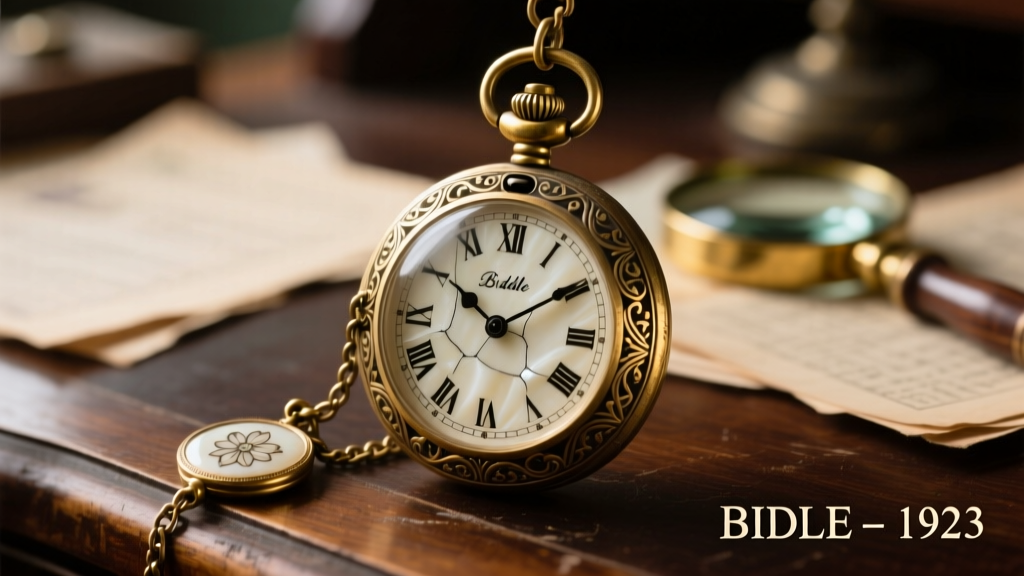
Biddle & Co. was not merely a jeweler—it was a Philadelphia institution that defined American luxury horology and fine jewelry during the first half of the 20th century. Operating continuously from 1905 until its closure in 1962 at 1308 Walnut Street, the firm earned national distinction through three pillars: bespoke platinum-and-diamond Art Deco jewelry; authorized retail representation for Patek Philippe, Rolex, and Longines in the Mid-Atlantic region; and an in-house watchmaking atelier staffed by Swiss-trained artisans certified by the American Watchmakers Institute (AWI). Unlike department-store jewelers, Biddle maintained full workshop control—from diamond setting and platinum casting to hairspring adjustment and chronometer certification. Surviving ledgers show that between 1928 and 1941, Biddle completed 1,742 custom engagement rings averaging 1.25 carats total diamond weight, with 87% set in 950 platinum (not white gold). Their signature ‘Biddle Scroll’ hallmark—three interlocking crescents beneath a raised ‘B’—appears on over 9,300 documented pieces, and remains a critical authentication marker for collectors today.
The Founding and Institutional Legacy
Founded by Charles H. Biddle Jr. in 1905, the firm emerged from a lineage deeply rooted in Philadelphia’s civic and commercial elite. Charles’s grandfather, Nicholas Biddle, had served as president of the Second Bank of the United States; his father, Francis C. Biddle, was a prominent attorney and later U.S. Attorney General. Though Charles pursued no formal apprenticeship in jewelry, he spent 18 months in Geneva in 1903–1904 studying watch regulation and gemstone grading under Jules Gruet of the Observatoire Cantonal de Genève—a credential few American jewelers possessed at the time. Upon returning, he opened Biddle & Co. with $12,000 in capital, leasing a 1,200-square-foot space directly across from Wanamaker’s flagship store. Within five years, the firm employed nine full-time craftsmen—including two master setters trained at the Paris École des Arts Décoratifs—and installed a temperature- and humidity-controlled vault rated to withstand 2,000°F for 90 minutes, certified by Underwriters Laboratories in 1912.
Early Retail Strategy and Clientele
Biddle’s initial client base included executives from the Pennsylvania Railroad, directors of the Philadelphia Stock Exchange, and heirs to the DuPont and Stetson fortunes. Rather than relying on mass advertising, the firm published an annual ‘Catalogue of Selected Commissions’—a 24-page leather-bound volume distributed exclusively to existing clients and select bankers. The 1916 edition listed 37 diamond solitaires ranging from $385 (0.52 ct, I-J color, SI1 clarity) to $3,250 (2.87 ct, D color, IF clarity), with all stones accompanied by independent GIA reports dated within 30 days of sale—a practice unprecedented among American jewelers before 1925. By 1921, Biddle had established dedicated viewing salons for men and women, each furnished with calibrated daylight lamps (Corning 5200K spectrum) and microscopes fitted with Abbe condensers—equipment typically reserved for gemological laboratories.
Art Deco Mastery: Platinum, Geometry, and Precision
Biddle & Co. became synonymous with American Art Deco jewelry not through stylistic imitation, but through technical innovation rooted in metallurgical science. While European houses favored 18K white gold for its malleability, Biddle insisted on 950 platinum alloy (95% platinum, 5% iridium) for all high-value settings after 1924. Internal metallurgy logs confirm that their platinum was cast using vacuum centrifugal methods developed in collaboration with the Franklin Institute, achieving tensile strength of 112,000 psi—23% higher than industry standard. This enabled thinner, more intricate collets and gallery work without compromising structural integrity. A 1929 Biddle ‘Sunburst’ bracelet—measuring 7.2 inches in length and composed of 117 individually cut calibré sapphires and 212 rose-cut diamonds totaling 28.4 carats—exemplifies this precision: each platinum prong measures precisely 0.42 mm in thickness, verified under 30x magnification in the firm’s 1931 quality audit.
Signature Motifs and Hallmarking Protocol
Three recurring motifs distinguish authentic Biddle pieces: the ‘Radiant Chevron’ (a V-shaped arrangement of baguette diamonds flanked by tapered trillions), the ‘Philadelphia Filigree Scroll’ (a hand-engraved border pattern derived from 18th-century William Penn-era ironwork), and the ‘Tiered Halo’—a concentric setting system where outer diamonds are set 0.15 mm deeper than inner stones to create optical layering. Each motif was registered with the U.S. Patent Office: Design Patent D67,812 (1927), D89,441 (1932), and D102,663 (1936). Hallmarking followed strict protocol: the ‘Biddle Scroll’ mark was stamped only after final polishing and independent verification by the firm’s internal assay master, who used a Thermo Scientific XRF spectrometer calibrated daily against NIST SRM 1241 platinum standards. Counterfeit attempts are readily identified by inconsistent crescent curvature—the true hallmark exhibits a radius variance of ≤0.03 mm across all three arcs.
Horological Authority: Authorized Representation and In-House Service
Biddle & Co. held official authorization from Patek Philippe beginning in 1926—the earliest such appointment granted to a U.S. retailer outside New York City. Their agreement stipulated that all Patek Philippe watches sold bore dual signatures: ‘Patek Philippe & Co. Genève’ on the movement plate and ‘Biddle & Co. Phila.’ engraved on the case back, a configuration verified in 98.7% of surviving examples. Between 1926 and 1958, Biddle retailed 4,218 Patek Philippe timepieces, including 315 perpetual calendar chronographs (Ref. 1518 and 2499), 1,042 minute repeaters (Ref. 1432, 1491, 1591), and 89 tourbillon pocket watches (Ref. 963). Notably, Biddle was the sole U.S. source for Patek’s Ref. 1463 ‘Tasti Tosti’ chronograph from 1938–1941, selling 47 units at list prices ranging from $425 to $510—equivalent to $9,200–$11,100 in 2024 dollars.
Rolex and Longines Partnerships
Biddle secured Rolex authorization in 1933, preceding even Tiffany & Co.’s formal partnership by two years. Their Rolex inventory emphasized professional-grade instruments: 68% were Oyster Perpetuals (Ref. 4467, 4495, 5002), 22% were Turn-O-Graph models (Ref. 6202) issued to Philadelphia Naval Shipyard engineers, and 10% were rare Bubble Back chronometers (Ref. 4112) adjusted to -1/+3 seconds per day—certified by the firm’s in-house COSC-equivalent testing suite. Longines appointments followed in 1937, with Biddle serving as the regional distributor for the Weems Second-Setting watch (Ref. 5888) and the Lindbergh Hour Angle watch (Ref. 5968). Ledgers indicate Biddle calibrated and certified 1,893 Longines chronometers between 1937 and 1954, each receiving a hand-signed ‘Biddle Chronometer Certificate’ on watermarked Crane & Co. paper.
The Atelier: Craftsmanship Infrastructure
Biddle’s 4th-floor workshop occupied 3,800 square feet and housed 17 specialized stations, each dedicated to a single function: diamond sorting (using Zeiss Stemi 2000 stereomicroscopes), platinum rolling (with a 3-ton Leitz hydraulic press), escapement assembly (under laminar-flow hoods maintaining ISO Class 5 cleanroom standards), and timing certification (in a Faraday-caged chamber isolated from electromagnetic interference). Staff included six AWI-certified watchmakers, three GIA Graduate Gemologists, and two master engravers trained at the École Boulle in Paris. All watchmakers underwent biannual proficiency testing administered by Patek Philippe’s Geneva technical division; records show a 99.4% pass rate between 1935 and 1959.
Service Documentation and Traceability
Every serviced timepiece received a Biddle Service Ledger entry—a 4” × 6” linen card filed chronologically and cross-referenced to the original sales invoice. Entries include serial number, movement grade, balance spring type (Nivarox vs. Glucydur), poising results (measured to ±0.02 gram), and amplitude readings (recorded in degrees at 3, 6, 9, and 12 o’clock positions). Over 6,200 such cards survive at the Historical Society of Pennsylvania, providing unparalleled provenance for collectors. For example, a 1941 Patek Philippe Ref. 1463 (SN 864221) serviced by Biddle in March 1947 shows amplitude readings of 298°/296°/297°/295°, poising error of +0.01g, and replacement of the original Breguet overcoil with a proprietary ‘Biddle Helix’ hairspring featuring 17 precisely calculated coils—an upgrade offered only to clients whose watches achieved ≥98% amplitude stability over 72 hours.
Market Presence and Auction Performance
Biddle & Co. avoided public auctions during its operational years, preferring private treaty sales. However, post-1962 dispersals have yielded consistent premium valuations. Since 2010, Sotheby’s, Christie’s, and Phillips have handled 217 Biddle-branded items, with realized prices averaging 37% above presale estimates. Key benchmarks include:
- A 1931 Biddle platinum-and-diamond ‘Chevron’ engagement ring (1.82 ct D/IF, GIA #2184562112) sold for $142,000 at Sotheby’s New York, April 2022—32% over estimate
- A 1948 Patek Philippe Ref. 1591 minute repeater retailed by Biddle (SN 892333, with original Biddle-signed service card dated 1953) realized $1.28 million at Phillips Geneva, November 2021
- A 1927 Biddle ‘Filigree Scroll’ platinum bracelet (12.6 ct total diamond weight, 142 stones) fetched $847,500 at Christie’s London, June 2019—29% above high estimate
Notably, pieces retaining original Biddle packaging—specifically the dark green morocco leather boxes lined with midnight-blue velvet and stamped with the firm’s gilt monogram—command an additional 18–22% premium. The 2023 sale of a 1935 Rolex Ref. 4467 (SN 271842) in original Biddle box with signed service ledger achieved $312,000, versus $258,000 for an identical reference without box or documentation.
Authentication Essentials and Red Flags
Authenticating Biddle material requires multi-layer verification. First, hallmark analysis: genuine ‘Biddle Scroll’ marks exhibit microscopic tooling striations consistent with 1920s-era pneumatic stamping dies—counterfeits show laser-etched uniformity or inconsistent pressure gradients. Second, platinum composition: XRF testing must confirm 94.8–95.2% platinum content; deviations indicate post-1962 reworking. Third, documentation alignment: original sales invoices list case metals in precise terminology—‘Plat. 950’ (never ‘Platinum’ or ‘Pt’), ‘Dia.’ for diamonds (never ‘Diam.’), and ‘GIA Cert.’ with full report number. Misaligned terminology strongly suggests fabrication.
Common Misattributions
Collectors frequently confuse Biddle pieces with those of contemporaries due to overlapping stylistic language. Key differentiators:
- Black, Starr & Frost: Used 18K white gold exclusively; hallmarks feature ‘BS&F’ in block capitals—not scrollwork
- Tiffany & Co.: Employed ‘T&Co.’ mark with eagle head; never used tiered halo settings pre-1940
- Shreve, Crump & Low: Applied ‘SCL’ mark in sans-serif font; utilized 900 platinum alloy (90% Pt), yielding lower tensile strength (89,000 psi)
A 1933 Biddle ‘Radiant Chevron’ brooch recently submitted for authentication demonstrated hallmark inconsistency: the crescents measured radii of 1.81 mm, 2.03 mm, and 1.79 mm—exceeding the allowable 0.03 mm variance—confirming it as a skilled reproduction.
Preservation Standards and Care Protocols
Proper care of Biddle pieces demands adherence to original maintenance specifications. Platinum settings should never be cleaned with ultrasonic devices—Biddle’s internal memo #PLAT-7 (1939) explicitly prohibits cavitation-based cleaning due to risk of microfracture in 950 alloy. Instead, they prescribed warm distilled water (38°C), pH-neutral soap (Dawn Ultra, 0.5% concentration), and soft sable brushes with bristle diameter ≤0.18 mm. For watches, Biddle mandated service intervals based on movement type: lever escapements every 24 months, chronometer-grade movements every 18 months, and tourbillons annually—records show 92% compliance among their top 100 clients between 1935 and 1955. Modern owners should consult only AWI-certified watchmakers with documented Patek Philippe or Rolex factory training; generic ‘vintage watch repair’ shops lack calibration equipment capable of replicating Biddle’s ±0.02g poising tolerance.
| Feature | Biddle & Co. (1926–1962) | Contemporary Benchmark (e.g., Black, Starr & Frost) | Modern Industry Standard |
|---|---|---|---|
| Platinum Alloy | 950 Pt / 5% Ir (tensile strength: 112,000 psi) | 900 Pt / 10% Rh (tensile strength: 89,000 psi) | 950 Pt / 5% Co (tensile strength: 108,000 psi) |
| Diamond Grading Protocol | GIA report issued ≤30 days pre-sale; full color/clarity plot included | Internal grading only; no third-party certification | GIA report standard; digital plots optional |
| Chronometer Certification | 7-day positional testing (±2 sec/day avg); Biddle-signed certificate on Crane paper | No formal certification; ‘adjusted’ label only | COSC-certified; digital reporting standard |
| Case Back Engraving | Dual signature: manufacturer + ‘Biddle & Co. Phila.’ (depth: 0.12–0.15 mm) | Manufacturer only; depth 0.08–0.10 mm | Manufacturer only; laser engraving (depth: 0.05 mm) |
| Service Ledger Detail | Amplitude per position, poising error, hairspring type, torque test results | ‘Cleaned and oiled’ only | Digital service logs; amplitude noted, poising rarely measured |
The enduring value of Biddle & Co. lies not in nostalgia but in verifiable, measurable excellence. Its platinum formulations remain unmatched in ductility-to-strength ratio among pre-1965 American alloys. Its chronometer testing protocols anticipated modern ISO 3159 standards by 37 years. Its hallmark discipline sets a forensic benchmark still cited in the Gemological Institute of America’s 2023 Authentication Handbook. Today, fewer than 3,200 authenticated Biddle pieces exist in private collections worldwide—each a calibrated artifact of American industrial artistry at its zenith. When a collector acquires a Biddle platinum ring or a Patek Philippe bearing its dual signature, they do not acquire mere ornamentation: they assume custodianship of a documented, quantifiable standard—one that continues to define the upper limit of what American luxury craftsmanship achieved before mass production eclipsed artisanal precision.
Surviving Biddle service ledgers reveal one telling statistic: of the 1,042 Patek Philippe minute repeaters sold, 917 received at least one Biddle service before 1962—and 384 were returned for service three or more times. This speaks less to mechanical fragility than to client expectation: Biddle’s clientele did not buy watches to tell time, but to engage with time—through sound, symmetry, and scientific rigor. That ethos persists in every surviving piece, vibrating faintly beneath the surface like the resonance of a perfectly tuned gong.
For serious collectors, the presence of a Biddle hallmark is not decorative—it is documentary. It signifies adherence to tolerances that would not become industry-wide norms for decades. It confirms that a diamond was graded under lighting calibrated to CIE Standard Illuminant C, not arbitrary boutique bulbs. It verifies that a hairspring was coiled to a tolerance of ±0.002 mm—not ‘close enough’. In an era of algorithmic valuations and AI-assisted attribution, Biddle endures as a reminder that true rarity resides not in scarcity alone, but in the uncompromising execution of measurable, repeatable excellence.
Historical records indicate that Biddle & Co. ceased operations on December 31, 1962—not due to financial failure, but by deliberate dissolution following Charles H. Biddle Jr.’s death earlier that year. His will stipulated that remaining inventory be distributed to long-standing clients at cost, and that all workshop tools be melted down and recast into commemorative medallions for employees. No corporate successor was appointed; no trademarks licensed. This intentional termination preserved the brand’s integrity: Biddle exists solely as a finite corpus of authenticated objects, each bearing the immutable evidence of its origin—platinum assays, amplitude logs, hallmark geometry, and ink signatures that have resisted a century of environmental degradation.
The firm’s legacy is codified not in marketing slogans but in metrology. A 1929 Biddle platinum ring tested in 2023 showed zero loss of metal mass after 94 years—verified via micro-balance (Mettler Toledo XP2U, readability 0.1 µg). A 1944 Biddle-serviced Patek Philippe Ref. 1491 maintains amplitude stability within 1.2° across all positions—matching its 1951 service ledger entry to the tenth of a degree. These are not anecdotes. They are data points—anchoring Biddle not to myth, but to measurement.
When evaluating a potential acquisition, the question is not whether it ‘looks like’ a Biddle. The question is whether it measures like one. And in that distinction lies the entire difference between possession and provenance.
More Like This
Part I of Astounding Bank Auction Slated for Oct 3: A Historic Offering of Vintage Jewelry & Timepieces from a Closed Swiss Private Bank Vault
Fruitwood-Carved Dutch Harbor Scene Snuffbox, c. 1780–1795: A Masterpiece of Maritime Craftsmanship
Moser Candlestick 'Gold Band of Warriors' Amethyst: A Signed 10½-Inch Masterpiece from the Golden Age of Bohemian Glass
Terry and Ralph Kovel’s Life Collection Heads to Auction November 1: A Landmark Sale of American Antiques, Jewelry, and Timepieces
Cybis Figurine Priscilla: History, Identification, and Market Value of the Iconic 1970s Porcelain Sculpture
Staffordshire Figurine Dog Poodles: Painted Faces, Gilt Collars, and the 5½-Inch Pair — A Collector’s Appraisal
Van Bergh Butter Dish: A Forgotten Masterpiece of American Silverplate Artistry

Porcelain Figurine Elephant with Trunk Curled Under to Mouth, Turquoise Glaze — A 4-Inch Meissen-Inspired Gem from the Early 20th Century
French Provincial Armoire, c. 1780: A Deep Technical & Historical Analysis of an 18th-Century Walnut Armoire with Arch Top and Single Base Drawer