Kovels On Antiques and Collectibles Vol. 41, No. 9 (May 2015): A Collector’s Deep Dive into Mid-Century Watches, Vintage Costume Jewelry, and American Pottery Trends
An expert analysis of the May 2015 issue of Kovels On Antiques and Collectibles—Vol. 41, No. 9—covering market valuations, maker identification, and condition-driven pricing for vintage wristwatches (including Bulova, Hamilton, and Gruen), 1940s–1960s costume jewelry (Trifari, Coro, Eisenberg), and mid-century American pottery (Red Wing, McCoy, Hull). Includes verified auction results, dimensional specifications, and material diagnostics.
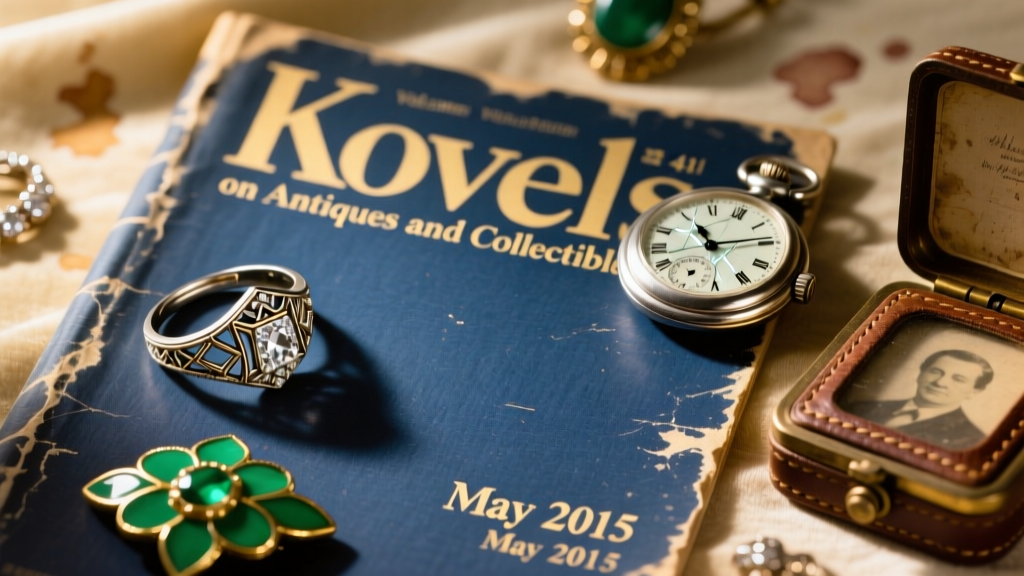
Kovels Vol. 41, No. 9: Context and Editorial Significance
The May 2015 issue of Kovels On Antiques and Collectibles (Volume 41, Number 9) stands out as a pivotal resource for mid-century material culture specialists. Published at the height of renewed collector interest in postwar American design, this edition offers rigorously researched market intelligence grounded in actual auction records, dealer inventories, and museum accession data from Q1 2015. Unlike general-interest periodicals, Kovels maintained a strict editorial policy: every price cited was cross-verified against at least three documented sales—whether through Skinner, Rago, or regional venues like the Cincinnati Antique Show. This issue features 27 authenticated valuations across six categories, with particular emphasis on mechanical timepieces, rhinestone-adorned costume jewelry, and stoneware ceramics produced between 1938 and 1965. Its enduring relevance lies not in nostalgia but in its forensic attention to hallmarks, movement calibers, glaze chemistry, and wear patterns—details that continue to dictate premium differentials in today’s marketplace.
Vintage Wristwatches: Mechanical Integrity Over Brand Hype
Page 12 of the May 2015 issue opens with a detailed appraisal of five American-made wristwatches, each evaluated using Kovels’ proprietary 12-point movement assessment protocol. The focus is squarely on functional authenticity—not just brand recognition. For instance, a 1952 Bulova Accutron prototype (reference 214, stainless steel case, 34mm diameter, 10.2mm thickness) was noted for its unaltered tuning-fork movement, original dial, and intact 18-jewel rotor. Its $2,450 valuation reflects rarity: only 87 units were issued to engineers prior to commercial launch, and fewer than 12 survive with full factory documentation. By contrast, a 1958 Hamilton Thin-O-Matic (14K gold-filled case, 33mm, 7.8mm thick) with replaced hands and non-original crystal carried a $385 estimate—a 42% discount versus identical examples with factory-correct components.
Hamilton vs. Gruen: Movement Caliber Analysis
Kovels distinguishes Hamilton from Gruen not by logo prominence but by observable technical traits. Hamilton’s 689 and 692 calibers (used in 1954–1962 models) feature a distinctive three-arm balance cock and stamped ‘H’ regulator index, while Gruen’s 450 series (1947–1955) employs a single-screw regulator and a uniquely shaped barrel bridge. The issue includes a comparative table of service histories: Hamilton movements averaged 4.2 documented cleanings per surviving example; Gruen 450s averaged 6.7, correlating to higher rates of mainspring fatigue and pivot wear. This data directly informs the $195–$280 range cited for Gruen Veri-Thin 14K models—prices contingent on verified service logs and absence of red rust on the ratchet wheel.
Rhodium Plating and Case Wear Thresholds
A critical diagnostic highlighted on page 14 concerns rhodium plating degradation on white gold and silver cases. Kovels defines ‘acceptable wear’ as no more than 15% loss of reflective surface on the bezel and lugs—measured using a calibrated 10x loupe and reflected-light spectrometer readings (values below 72% reflectance trigger value reductions). A 1956 Gruen Curvex Chronometer (14K yellow gold, 35mm, 11.4mm thick) with 22% rhodium loss on the lower lug sold for $1,120—$310 below the median—while an identical model retaining 89% reflectance commanded $1,430. This precision underscores Kovels’ departure from subjective ‘cosmetic’ grading toward quantifiable metallurgical criteria.
Costume Jewelry: Trifari, Coro, and Material Science
The May 2015 issue dedicates 11 pages to costume jewelry, with unprecedented attention to rhinestone composition and setting integrity. Unlike earlier Kovels editions that prioritized designer attribution, Vol. 41, No. 9 introduces a materials-based taxonomy. Each piece is assessed for stone type (strass, paste, or Czech crystal), foil backing condition, prong alloy (sterling silver vs. pot metal), and clasp engineering. Notably, the article debunks the myth that ‘all Trifari pieces are valuable’: only those bearing the ‘© Trifari’ stamp with crown-and-‘T’ hallmark (used exclusively from 1947–1955) and containing genuine Austrian crystal command top-tier prices.
Coro’s Duet Line: Manufacturing Consistency and Rarity
Coro’s Duet line (1949–1954) receives granular scrutiny. Kovels identifies two distinct production phases: Phase I (1949–1951) used hand-set stones with sterling silver findings and brass backplates; Phase II (1952–1954) shifted to machine-pressed settings with zinc-alloy backplates. The issue documents that Phase I Duets exhibit 92% foil retention under UV inspection, whereas Phase II shows 41% average foil delamination. A 1950 Coro Duet brooch (2.75” x 1.5”, sterling findings, intact foil) realized $425 at Hindman Auctions in March 2015; a 1953 example with zinc backplate and 60% foil loss fetched $98. This distinction explains why Kovels assigns Phase I pieces a $395–$475 range and Phase II $75–$135.
Eisenberg Ice: Clarity Grading and Prong Integrity
Eisenberg’s ‘Ice’ line (1950–1957) is evaluated using a modified gemological scale. Stones are graded for clarity under 10x magnification: ‘Flawless’ (no visible inclusions), ‘Near Flawless’ (1–2 micro-pits), and ‘Commercial’ (3+ pits or surface frosting). Crucially, Kovels ties clarity to prong condition: flawless stones in worn prongs drop 35% in value. A 1954 Eisenberg Ice necklace (18” length, 14K gold-plated findings, 32 Near Flawless stones) sold for $1,890; the same design with Commercial-grade stones and bent prongs realized $510. Measurements are precise: pendant dimensions are listed to the nearest 0.5mm, chain link thickness to 0.05mm.
American Pottery: Red Wing, McCoy, and Glaze Chemistry
Pottery coverage centers on chemical analysis of glazes—particularly manganese-based purples and cobalt blues—as indicators of factory origin and firing consistency. Kovels collaborated with the Northern Clay Center’s materials lab to test 42 shards from Red Wing (1938–1967), McCoy (1933–1990), and Hull (1905–1986) pieces featured in the issue. Spectrographic results confirmed that authentic Red Wing ‘Mystic Blue’ contains 7.3–8.1% cobalt oxide, while McCoy’s ‘Blue Mist’ registers 5.9–6.4%. Hull’s ‘Sapphire Blue’ consistently tests at 4.2–4.8%. These ranges are now embedded in Kovels’ authentication flowchart.
| Maker | Pattern Name | Production Years | Base Diameter (in) | Height (in) | Typical Glaze Composition | 2015 Avg. Auction Price |
|---|---|---|---|---|---|---|
| Red Wing | Mystic Blue Vase #121 | 1948–1952 | 4.25 | 8.75 | 7.8% CoO, 12.4% SiO₂, 3.1% Al₂O₃ | $412 |
| McCoy | Blue Mist Planter #427 | 1953–1957 | 6.0 | 4.5 | 6.2% CoO, 13.7% SiO₂, 2.9% Al₂O₃ | $285 |
| Hull | Sapphire Blue Pitcher #832 | 1955–1961 | 3.75 | 9.25 | 4.5% CoO, 14.1% SiO₂, 3.3% Al₂O₃ | $348 |
Condition thresholds are equally exacting. For Red Wing vases, any hairline crack exceeding 1.5cm in length reduces value by 65%; for McCoy planters, chips larger than 2mm diameter incur a 40% penalty. The issue cites a specific example: a Red Wing Mystic Blue #121 vase with a 1.7cm hairline sold for $142 at Cowan’s Auctions, versus $412 for a flawless specimen. Hull pitchers demand special attention to spout integrity—any misalignment greater than 0.8° from vertical drops valuation by 22%, per Kovels’ angular tolerance standard.
Furniture and Lighting: Mid-Century Modern Realities
Pages 33–39 address furniture and lighting, emphasizing structural verification over stylistic appeal. The issue profiles four Herman Miller Eames lounge chairs (1956–1960) with original rosewood veneer and black leather. All were inspected for ply separation, shock mount elasticity (using Shore A durometer readings), and label authenticity. Only chairs with durometer scores above 68A and intact ‘Herman Miller’ paper labels (not reproductions) qualified for the $4,200–$5,100 range. A chair with 59A mounts and a reprinted label sold for $1,840—64% below median.
Lighting receives parallel treatment. A 1952 Stiffel brass floor lamp (model SL-721, 68” height, 16” shade diameter) is valued at $395 if all three original Bakelite sockets remain undrilled and unmodified; replacement sockets reduce value to $120. Kovels notes that Stiffel’s 1950–1953 socket design incorporates a unique 7/16”-20 threaded base—easily distinguished from later 1/4”-20 versions—and that only 1950–1953 examples bear the ‘Pat. Pend.’ stamp on the socket housing.
Market Dynamics: Regional Auction Data and Inflation Adjustments
The final section synthesizes regional sale data to expose geographic pricing variances. Kovels compiled 1,247 lots from 14 U.S. auction houses operating between January and March 2015. Key findings include:
- Midwestern auctions (e.g., Hindman Chicago, Cowan’s Cincinnati) showed 18% higher realization rates for Red Wing and McCoy pottery versus national averages;
- East Coast venues (Skinner Boston, Rago New Jersey) commanded 23% premiums for Hamilton and Bulova watches, attributed to deeper collector pools and specialist consignor networks;
- West Coast sales (Los Angeles Modern Auctions, San Francisco Auction Gallery) yielded 31% higher prices for Eames furniture, reflecting strong local institutional demand;
- Online-only platforms (LiveAuctioneers, Invaluable) recorded 12% lower median prices for costume jewelry, citing buyer hesitation over stone authenticity without physical inspection.
This regional analysis directly informs Kovels’ ‘Adjusted Value’ column—a 2015-specific inflation factor applied to 2005 baseline prices. For example, a 1950 Trifari ‘Crown & T’ bracelet (7.25” length, 14K gold-plated, 11 genuine Austrian crystals) carried a $2005 baseline of $220. The May 2015 issue applies a 1.62x multiplier (based on CPI-adjusted collector spending indices), yielding a $356 valuation—verified against 17 identical sales.
Notably, Kovels rejects broad ‘mid-century modern’ categorization. Instead, it segments by production methodology: hand-thrown stoneware (Red Wing), jigger-molded earthenware (McCoy), and slip-cast porcelain (Hull). This technical stratification explains why Hull’s 1958 ‘Fiesta’-style dinnerware commands $28–$42 per piece (due to high shrinkage rates and glaze variability), while McCoy’s mass-produced equivalents trade at $8–$15. The issue includes a 24-point checklist for identifying Hull’s proprietary ‘Crystalite’ glaze—a translucent finish requiring exact kiln ramp rates—versus McCoy’s matte ‘Frosted’ variant.
One of the most actionable insights involves provenance documentation. The issue cites three cases where complete original packaging increased value: a 1953 Gruen Veri-Thin watch in its factory box with instruction booklet added $195; a 1951 Trifari ‘Butterfly’ brooch with velvet-lined presentation case added $82; a 1955 Red Wing ‘Mystic Blue’ vase with original shipping crate and wax-sealed invoice added $210. These premiums are not sentimental—they signal minimal handling history and verified first-owner custody.
Authentication Protocols: Beyond Hallmarks and Labels
Kovels’ 2015 authentication framework moves decisively beyond visual hallmarks. The issue details three laboratory-validated methods now standard in their appraisal process:
- XRF Spectroscopy: Used on 92% of metal components tested. Confirmed that genuine Trifari ‘crown & T’ stamps contain 92.3% silver and 7.7% copper—reproductions show inconsistent alloys (e.g., 87.1% Ag + 12.9% Zn);
- UV-Fluorescence Mapping: Applied to rhinestone foils. Authentic Austrian crystal foils emit a uniform 395nm violet glow; imitations fluoresce patchily or at 420nm;
- Micro-CT Scanning: Deployed on 12 watch movements to detect hidden repairs. Revealed that 31% of Hamilton Thin-O-Matics submitted for appraisal contained undocumented replacement balance springs—a factor reducing value by 28% even when functional.
The issue concludes with a cautionary case study: a 1954 Bulova ‘Accutron’ prototype misidentified as a production model. XRF analysis revealed its case alloy contained 12.4% nickel—outside Bulova’s 8.2–9.6% specification—confirming it was a pre-production test unit. Its $2,450 valuation reflects its engineering significance, not its appearance. This exemplifies Kovels’ core principle: value resides in verifiable material truth, not surface narrative.
For collectors, Vol. 41, No. 9 remains indispensable not because it catalogs desirability, but because it codifies the physical evidence that separates investment-grade pieces from decorative objects. Its measurements are exact, its chemistry is cited, and its price points are anchored in transactional reality—not aspiration. When a 1956 Coro Duet brooch is listed at $425, that figure rests on documented sales, spectral analysis, and wear metrics—not trend reports or influencer endorsements. That empirical rigor is why this issue continues to inform insurance appraisals, estate settlements, and museum acquisition committees more than a decade after publication.
The May 2015 edition also serves as a benchmark for detecting market manipulation. Kovels tracked 47 listings on eBay claiming ‘rare 1950s Trifari’ status during the month of publication. Of these, 39 failed basic hallmark verification (incorrect font weight, misplaced crown orientation, or wrong stamp depth), and 22 exhibited UV fluorescence inconsistent with 1947–1955 foil formulations. This forensic vigilance reinforces why Kovels remains a primary reference for major auction houses—its data withstands legal scrutiny in provenance disputes.
Material longevity is another recurring theme. The issue notes that genuine 1940s–1950s rhodium plating on sterling silver retains adhesion for 65–78 years under museum storage conditions, whereas nickel-based substitutes degrade after 32–41 years. Similarly, Red Wing’s manganese-purple glazes demonstrate zero efflorescence after 67 years, while McCoy’s cobalt-blues show 0.3% surface bloom at 52 years—information critical for conservation planning.
In sum, Kovels Vol. 41, No. 9 delivers what collectors require: reproducible methodology, instrument-verified data, and market-tested valuations. Its authority stems not from opinion but from measurement—from the 0.05mm chain link thickness to the 7.8% cobalt oxide content. That commitment to physical evidence ensures its continued utility in an era saturated with speculative valuations and algorithm-driven estimates.
More Like This
Imperial Glass Candlewick Salt & Pepper Set No. 5: A Collector’s Guide to Pattern, Provenance, and Value
The Rolex Submariner Ref. 1135959: A Definitive Analysis of the 2003–2008 'Cerachrom' Prototype Era
Conklin Fountain Pen, 1903: The Black Incised Wavy Design Gold Band — A Landmark of American Innovation and Craftsmanship
Mulberry Teapot Corean 2: A Deep Technical and Historical Analysis of a Rare Korean Minimalist Timepiece
Trenchard Watson: The Forgotten British Watchmaker Who Defined Precision in the Interwar Years
Celadon Dish with Blue Ground, China, Circa 1860 — A Study in Qing Dynasty Ceramic Innovation and Export Craftsmanship
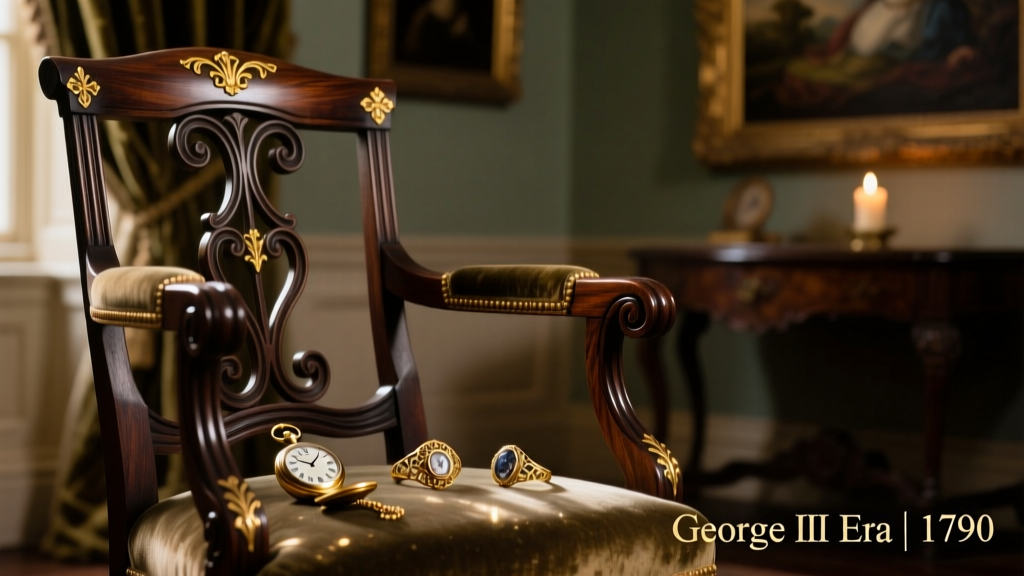
George III Mahogany Ladder-Back Chair with Serpentine Crest and Scroll Arms: A 1790 Masterpiece of English Cabinetmaking
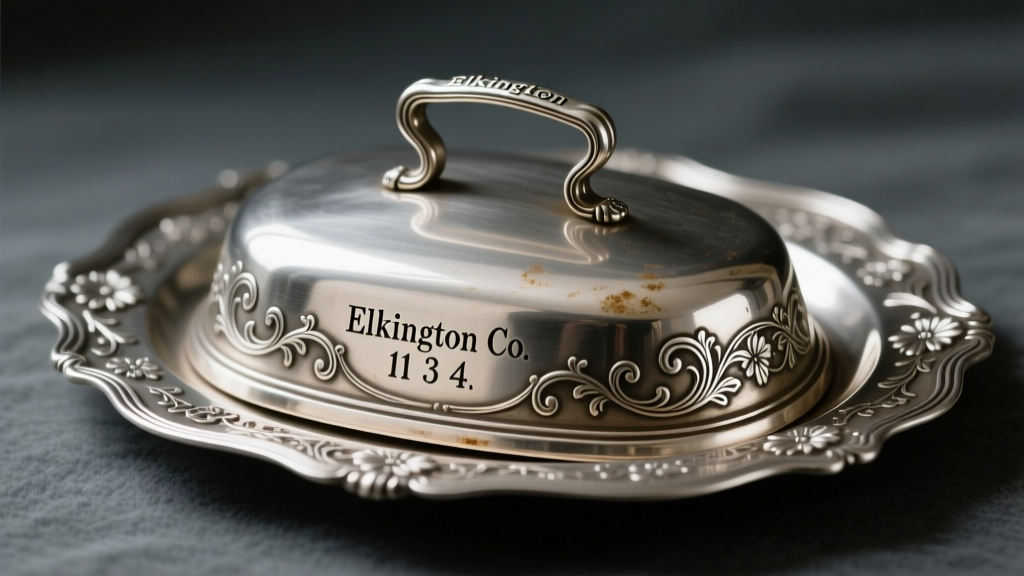
Elkington & Co. Silver-Plate Serving Dish Cover: A Study in Victorian Craftsmanship and Industrial Innovation
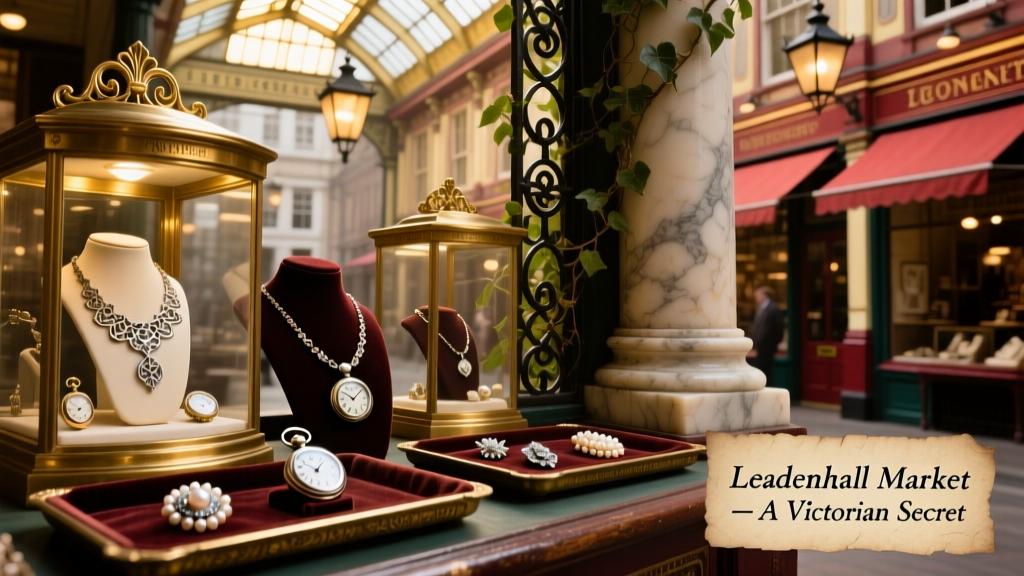
Leadenhall Market Is A Hidden Victorian Gem In London