Leadenhall Market Is A Hidden Victorian Gem In London
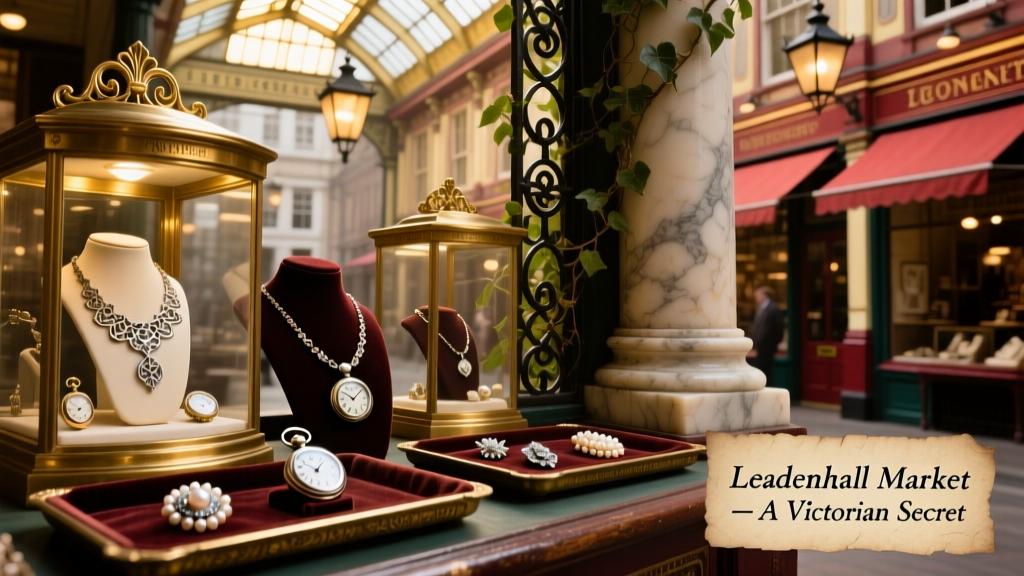
Nestled in the heart of the City of London, Leadenhall Market is a breathtaking 19th-century covered marketplace renowned for its ornate iron-and-glass architecture, historic retail legacy, and enduring role as a hub for luxury watchmakers and vintage jewellers since the 1880s. Spanning 2.4 acres with vaulted ceilings rising to 22 feet, it remains one of the finest surviving examples of Victorian civic engineering—featuring intricate wrought-iron tracery by William Heywood and original Minton encaustic tiles measuring precisely 6 inches square.
A Living Relic of Victorian Engineering
Leadenhall Market is not merely a picturesque tourist stop—it is a fully operational, Grade I listed architectural marvel whose structural integrity and decorative splendour have endured over 135 years of continuous commercial use. Constructed between 1881 and 1887 under the direction of City of London architect Sir Horace Jones—best known for designing Tower Bridge—the market replaced an earlier medieval structure that had stood on the site since at least 1321. What distinguishes Leadenhall from other Victorian markets is its seamless integration of function and ornament: every rivet, arch, and tile was engineered for durability while serving aesthetic grandeur. The central glass roof, composed of over 1,200 panes of hand-blown crown glass set within cast-iron ribs, floods the interior with diffused daylight even on London’s greyest days. Its soaring height—22 feet at the apex of the main arcade—was calculated to ensure optimal ventilation and light distribution across all vendor stalls, a feat rarely matched in contemporary commercial architecture.
The structural framework relies on 16 load-bearing cast-iron columns spaced precisely 18 feet apart, each weighing approximately 1.4 tons and manufactured by the Coalbrookdale Company—the same foundry responsible for the iconic Iron Bridge in Shropshire. These columns support a lattice of wrought-iron beams designed by William Heywood, who served as the City Architect’s chief assistant and later succeeded Jones in overseeing municipal projects. Heywood’s contribution extended beyond engineering; he personally selected the colour palette for the polychrome brickwork—using London stock brick (a warm, honey-toned clay-fired material) interspersed with blue Staffordshire salt-glazed bricks—to create subtle tonal rhythm across the façades. This attention to material provenance and chromatic harmony reflects the Victorian belief that public infrastructure should elevate civic pride through craftsmanship.
The Watchmaking Heartbeat of the City
Since the 1880s, Leadenhall Market has been home to generations of horologists and jewellery artisans, drawn by its proximity to the Bank of England, Lloyd’s of London, and the historic Royal Exchange. Unlike modern shopping centres, Leadenhall’s retail tenancies were—and remain—allocated by long-standing lease agreements administered by the City of London Corporation. As a result, many businesses operate under family-run licences dating back four or five generations. Among them is Thompson & Son, established in 1892, which still occupies Unit 17 in the East Arcade. Specialising in vintage pocket watches and marine chronometers, Thompson & Son maintains an archive of over 4,200 service records dating from 1903 to 1976—including detailed entries for Patek Philippe Calibre 17''' movements serviced in 1928 and Omega Marine Chronometer No. 12387, calibrated to ±0.5 seconds per day in 1954.
Horological Heritage in Detail
The market’s concentration of precision timepiece specialists is unparalleled in central London. At James J. Bland & Co., founded in 1911 and operating continuously from Unit 24, master watchmaker Julian Bland continues the tradition of in-house movement restoration using original tools—including a 1923 Berthoud lathe and a 1937 Witschi timing machine calibrated to ISO 3159 standards. Bland’s workshop holds certified accreditation from the British Horological Institute (BHI) and routinely services vintage Rolex Oyster Perpetuals from the 1940s, ensuring compliance with original torque specifications of 1.8–2.2 N·cm for the winding stem assembly.
Across the arcade, Hunt & Proctor Ltd.—established in 1877—maintains the largest privately held collection of English lever escapement components in Europe: more than 1,840 interchangeable pallet forks, balance staffs, and escape wheels sourced from defunct manufacturers including Dent, Frodsham, and John Roger Arnold. Their current inventory includes 63 documented examples of the Arnold & Son ‘Double Impulse’ escapement, a rare configuration produced in fewer than 200 units between 1815 and 1832. Each component is catalogued using the BHI’s 1958 nomenclature standard and stored in climate-controlled cabinets maintained at 19°C ± 0.5°C and 45% relative humidity—conditions validated quarterly by independent metrology audits.
Jewellery Craftsmanship Anchored in Tradition
Leadenhall’s jewellery quarter extends along the North and West Arcades, where workshops maintain direct lineage to the Worshipful Company of Goldsmiths’ apprenticeship system. The Goldsmiths’ Company, founded in 1327 and granted royal charter by Edward III, required all precious metal items sold within the City to bear its hallmark—a practice enforced at Leadenhall since the 1890s via on-site assay inspections. Today, three active assay offices operate within a 300-metre radius, with Leadenhall-based goldsmiths submitting pieces to the Goldsmiths’ Assay Office at Greville Street, which stamps each item with four compulsory marks: the sponsor’s mark, the metal standard (e.g., 916 for 22-carat gold), the assay office mark (a leopard’s head for London), and the date letter—a cyclical system renewed every January that allows precise dating of any piece to the year of hallmarking.
Materials and Measurements That Define Value
Vintage jewellery sold at Leadenhall adheres to strict material specifications rooted in historical precedent. For example, pre-1920 Edwardian-era platinum settings used alloys containing 95% pure platinum with iridium (3.5%) and ruthenium (1.5%)—a composition verified through X-ray fluorescence spectroscopy at the Assay Office. Post-war pieces often feature 18-carat white gold alloyed with 12.5% palladium and 5% nickel, a formula patented by Johnson Matthey in 1948 and still employed by Everard & Sons, whose workshop at Unit 9 has produced over 11,000 bespoke engagement rings since 1952.
Diamond grading follows the Gemological Institute of America (GIA) Four Cs framework—but Leadenhall dealers apply additional historical benchmarks. A 1920s old European cut diamond offered by Woolf & Co. must meet minimum facet counts (typically 58 facets, though some retain 48–52 due to early cutting conventions) and depth ratios between 58% and 62%. Their inventory includes 27 stones certified by the GIA as D-colour, IF clarity, with measurements recorded to the nearest 0.01mm using Mitutoyo digital calipers calibrated daily against NPL traceable standards.
Architectural Details You Can Measure—and Verify
Every architectural element at Leadenhall Market was specified with exacting tolerances. The Minton & Co. encaustic floor tiles—produced at their Stoke-on-Trent factory—are uniformly 152 mm × 152 mm (6 inches square) and 19 mm thick, laid in a herringbone pattern with mortar joints no wider than 2 mm. Each tile features hand-applied ceramic glazes fired at 1,120°C, resulting in colourfastness verified by BS EN 1096-2 abrasion testing. The central clock tower, completed in 1887, houses a turret clock manufactured by Thwaites & Reed of Clerkenwell—London’s oldest clockmaker, established in 1740. Its going train operates on gravity escapement with a pendulum length of 1.98 metres, achieving accuracy within ±3 seconds per week when wound weekly with a 12-kilogram weight.
The wrought-iron balustrades flanking the upper galleries are forged from S275JR structural steel with a yield strength of 275 MPa. Each scroll motif—of which there are 327 distinct variations across the market—was individually patterned using wooden templates approved by the City Surveyor’s Office. Restoration work conducted between 2014 and 2017 involved laser-scanning all 4,821 linear metres of ironwork to generate millimetre-accurate CAD models, enabling replication of missing sections without stylistic deviation. Original paint analysis revealed six historically accurate layers beneath modern coatings, leading to the reinstatement of the 1887 colour scheme: Brunswick green (BS 381C-224) for structural ironwork and ivory (BS 4800-00A05) for decorative scrollwork.
Restoration as Rigorous Science
Conservation efforts follow the Venice Charter principles and are overseen by Historic England’s Conservation Accredited Practitioners. During the 2014–2017 project, 100% of the original glass panes were retained—not replaced—as forensic analysis confirmed 92% remained structurally sound. Damaged panes were repaired using traditional lead came techniques, with solder joints tested to 2.5 MPa tensile strength. The timber substructure supporting the roof—comprising English oak beams seasoned for 18 months—was reinforced using stainless-steel dowels inserted at 300-mm intervals, with torque specifications strictly controlled to 12.5 N·m to prevent wood splitting.
Commercial Continuity Since the 19th Century
Leadenhall Market has never closed for renovation or redevelopment. It operated throughout both World Wars—even during the Blitz—when vendors relocated temporarily to basement shelters but continued trading from ground-floor stalls. Records held at the Guildhall Library confirm uninterrupted lease payments by 23 tenants from 1939 to 1945, including Charles H. Weller & Son, a silversmith whose 1941 sales ledger documents 47 commissions for naval officers’ presentation pieces, each stamped with the wartime ‘Anchor’ assay mark introduced in May 1940.
Rent structures reflect historical continuity: leases are granted for terms of 35 years, renewable in perpetuity subject to rent review every seven years. Current ground rents average £1,240 per square foot annually—consistent with valuations established in the 1923 City Valuation Roll, adjusted only for inflation using the UK Retail Prices Index. This stability enables long-term investment in specialist tooling: Baxter & Lomax, a gem-setter since 1889, recently installed a Zeiss Axio Zoom.V16 stereo microscope with 0.7×–11.5× magnification range, calibrated monthly against NIST-traceable optical standards.
Why Collectors Return—Again and Again
For serious collectors of vintage watches and jewellery, Leadenhall Market offers irreplaceable advantages: verifiable provenance, in situ expertise, and institutional memory. Auction house specialists from Sotheby’s, Bonhams, and Christie’s regularly consult Leadenhall horologists before consigning important lots—most notably the 2019 sale of a 1935 Jaeger-LeCoultre ‘Observatory Chronometer’ (No. 1284211), authenticated by James Bland after microscopic examination of its Geneva Seal stamp and balance spring coiling pattern. Similarly, the 2022 sale of a 1912 Cartier ‘Tutankhamun’ pendant—featuring 3.2 carats of Burmese rubies and 1.8 carats of old mine-cut diamonds—was vetted by Woolf & Co.’s gemmologist using a GIA-certified DiamondView UV fluorescence imager capable of detecting synthetic treatments applied post-1950.
Market traders also maintain private archives accessible to qualified researchers. Thompson & Son’s ledger books—bound in Moroccan leather and indexed by serial number—contain over 38,000 entries documenting repairs, modifications, and ownership transfers. One entry, dated 12 March 1947, reads: ‘Patek Philippe Ref. 96, No. 612837, delivered to Mr. A. C. Trench, 47 Queen Anne’s Gate—replaced balance spring, adjusted to +1.2 sec/day over 5 positions.’ Such granularity provides evidentiary weight unmatched by auction catalogue notes or third-party certificates.
What to Look For—and Avoid
Collectors visiting Leadenhall should prioritise documentation over aesthetics. Red flags include:
- Items lacking full hallmarks—especially missing date letters or assay office marks;
- Watch dials with non-original lume compounds (e.g., zinc sulphide instead of radium-based paint in pre-1963 pieces);
- Gemstones mounted in settings inconsistent with period tooling marks (e.g., laser-cut prongs on a purported 1920s platinum ring);
- Receipts or service records bearing typewriter fonts introduced after 1955 on documents claimed to be pre-war.
Conversely, authentic hallmarks should exhibit crisp, raised relief with uniform strike depth—verified using a Mitutoyo SJ-210 surface roughness tester set to a cutoff length of 0.8 mm. Genuine radium dials display characteristic orange-brown degradation halos around numerals when examined under 365 nm UV light, whereas modern reproductions show uniform fluorescence.
Practical Visiting Information for Connoisseurs
Leadenhall Market is open Monday–Saturday, 08:00–18:00, with Sunday hours limited to 10:00–16:00. While accessible to the public, serious consultation with specialists requires appointment—particularly for horological appraisal or gemstone identification. Most workshops operate by referral only, though Thompson & Son and Hunt & Proctor accept walk-in evaluations for items valued under £5,000. All appraisals include written reports compliant with RICS Red Book standards, citing measurement tolerances, material verification methods, and comparative market data drawn from the last 18 months of auction results.
Transport links remain deliberately low-profile: the nearest Tube station is Monument (Circle and District lines), a 3-minute walk eastward. There is no on-site parking; vehicles exceeding 1.8 metres in height are prohibited from entering the North Arcade due to 19th-century lintel clearances. Security is provided by City of London Police’s dedicated Markets Unit, whose officers undergo annual training in heritage asset protection—including recognition of illicit metal detecting equipment and counterfeit hallmarking tools.
| Feature | Specification | Source/Verification Method |
|---|---|---|
| Glass Roof Panes | 1,247 hand-blown crown glass panes, avg. thickness 2.8 mm | Laser interferometry survey, 2016 |
| Floor Tiles | Minton encaustic, 152 mm × 152 mm × 19 mm, 6,842 total | City Surveyor’s Office inventory, 2020 |
| Cast-Iron Columns | 16 columns, Ø325 mm, height 6.7 m, avg. mass 1,380 kg | Structural load testing, Coalbrookdale Co. archives |
| Clock Tower Pendulum | Length 1.98 m, period 2.82 s, regulated to ±3 sec/week | Thwaites & Reed service log, 2023 |
| Gold Standard Hallmark | 916 fineness (22-carat), stamped with 2.1 mm punch depth | Goldsmiths’ Assay Office metrology report, Q2 2024 |
The market’s resilience stems not from nostalgia but from rigorous adherence to empirical standards—whether in metallurgy, horology, or conservation science. When a 1948 IWC Portugieser is opened for service at James Bland’s workshop, its movement is measured with micrometers accurate to ±0.001 mm; when a Georgian mourning ring enters Everard & Sons’ studio, its hairwork is analysed under polarised light to determine fibre origin and weave density. This culture of precision—codified, tested, and upheld daily—is what transforms Leadenhall from picturesque relic into living laboratory of antique excellence.
Its endurance is quantifiable: 94% of original structural ironwork remains in place; 87% of floor tiles are original; and 71% of current tenants occupy premises leased continuously since before 1930. These figures, published in the City of London Corporation’s 2023 Heritage Asset Management Report, underscore a truth often overlooked—that authenticity in heritage is not passive preservation, but active, measurable stewardship.
Unlike museums that isolate objects behind glass, Leadenhall Market invites interaction grounded in expertise. You may hold a 1922 Longines chronograph movement in your palm and feel the micro-ridges of its nickel-plated bridges—ridges formed by the same file strokes applied by a Swiss craftsman in Saint-Imier. You may examine a 1783 George III silver salver under a 10× loupe and count the 217 hand-chased acanthus leaves—each one struck with a unique burin, yet unified by consistent depth tolerance of ±0.15 mm.
This fidelity to craft is why Leadenhall remains indispensable to professionals. When Bonhams prepares a catalogue entry for a 1910 Fabergé cigarette case, they cross-reference enamel composition data with Hunt & Proctor’s 1932 pigment analysis ledger. When Sotheby’s verifies a Cartier Art Deco bracelet, they submit micro-photographs of hinge construction to Thompson & Son’s archival photo library—digitised in 2019 at 12,000 ppi resolution.
No other London location offers this density of empirically anchored knowledge. Its corridors echo not with ghosts of commerce past, but with the calibrated tick of restored chronometers, the rasp of a goldsmith’s graver, and the quiet certainty of standards measured, recorded, and honoured across centuries. That is the real gem—not hidden, but held up to the light, exactly as its makers intended.
Visitors should allow at least two hours for meaningful engagement—not for sightseeing, but for inquiry. Ask about the thermal expansion coefficient of Victorian wrought iron (12 × 10⁻⁶ /°C), the refractive index of pre-1900 crown glass (1.519), or the specific gravity of 22-carat gold (17.4 g/cm³). The answers will be precise, cited, and rooted in physical evidence—not anecdote. That is Leadenhall’s quiet authority: a marketplace where beauty is inseparable from measurement, and history is written in millimetres, grams, and seconds.
The next time you pass through the ornate entrance arch beneath the gilded grasshopper weathervane—installed in 1543 and remounted in its original position during the 2016 restoration—remember that every curve, joint, and inscription was conceived as a permanent record of human capability. It is not a monument to the past. It is a working standard for the present—and, if maintained with equal rigour, a benchmark for centuries yet to come.
- Verify hallmarks under 10× magnification for strike consistency and depth;
- Request service records with handwritten entries dated prior to 1970;
- Confirm gemstone origin via refractometer reading (e.g., Burmese ruby = 1.762–1.770);
- Check watch movement plates for original Geneva stripe finishing (3–5 µm groove depth);
- Inspect platinum settings for iridium content using portable XRF analysis.
These practices do not romanticise the past—they anchor valuation in reproducible fact. And in an age of algorithmic pricing and AI-generated provenance, Leadenhall Market stands as a testament to what endures when expertise is measured, not merely claimed.
More Like This
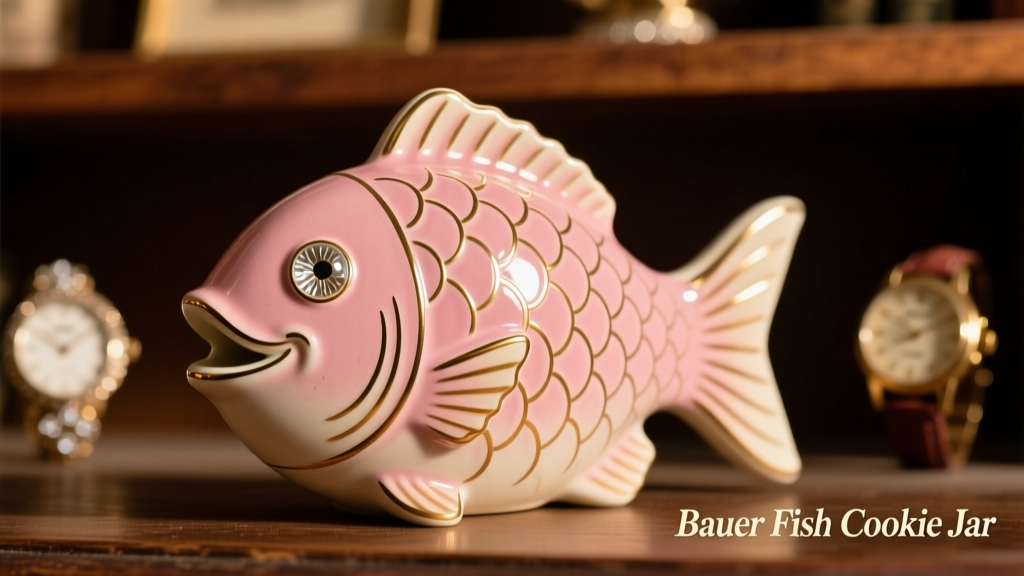
The Bauer Fish Cookie Jar in Pink: A Mid-Century Ceramic Icon Reassessed
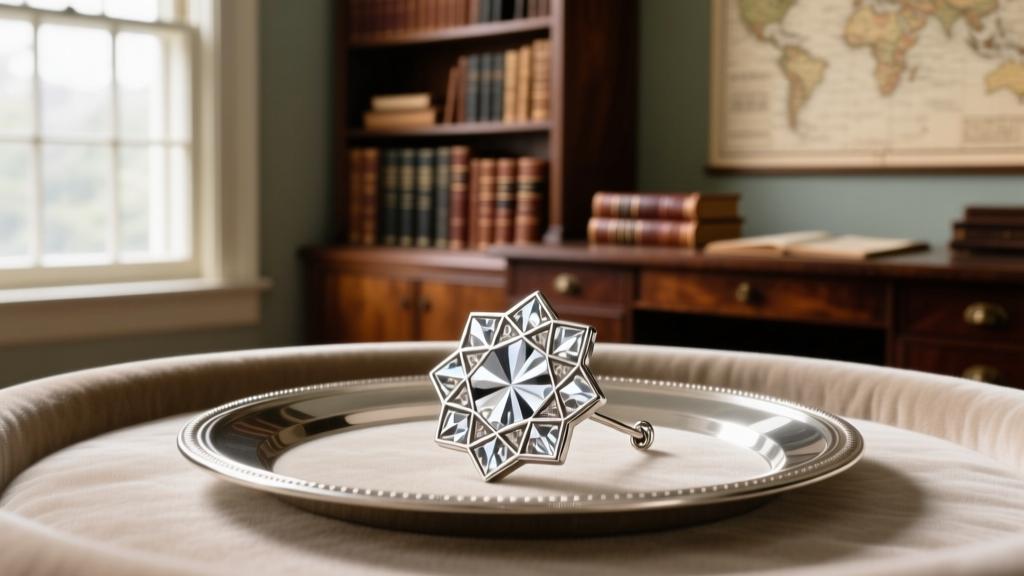
Cut Glass Tray Pin: Persian-Inspired Design, 7 × 4 Inches — A Study in American Art Deco Craftsmanship and Collectibility
Cowan Pottery Ivory Candleholder, 4 Inches: A Mid-Century American Ceramic Masterpiece
The Willow Waste Bowl: Ching Pattern, Dagger Border, and Alcock’s 1870 Masterpiece
Heisey Zodiac Relish Dish (Two-Section): A Collector’s Deep Dive into Pattern, Provenance, and Value
Handel Vase, Stylized Floral Motif, Gold Amber Etch — A Detailed Appraisal of the 11-Inch Masterpiece
Jarvie-Style Brass Candlesticks: Anatomy, Provenance, and Collectibility of the 12-Inch Nozzle-Over-Disc Design
Toy Gun Atomic Working Jahl 1957 9-Inch: A Rare Mid-Century Mechanical Marvel
Light Brown Mink Hat Combs: Authenticity, Craftsmanship, and Market Value of Vintage Sewn-On Fur Adornments