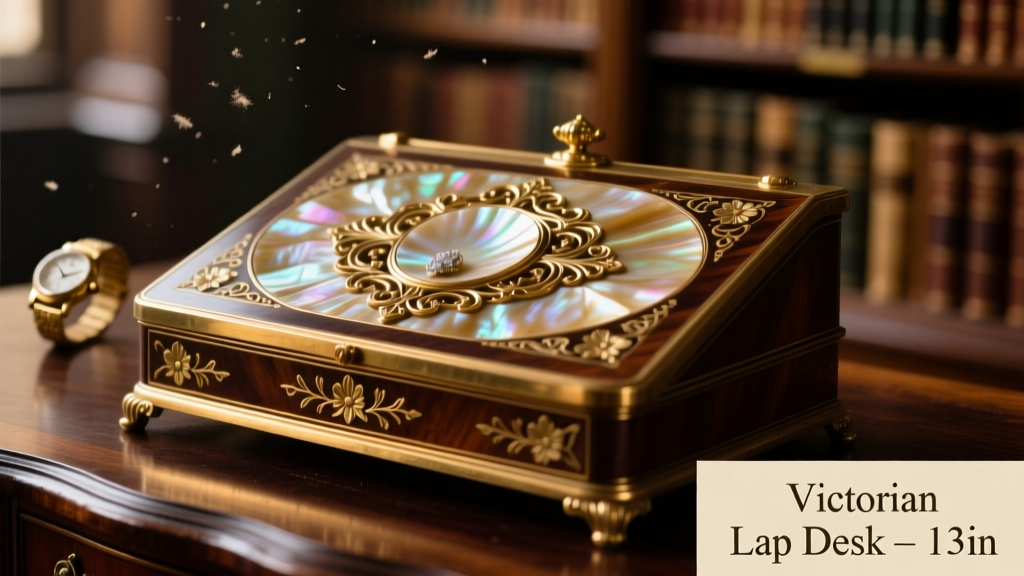
John Lupp: The Forgotten American Watchmaker Who Engineered Precision for U.S. Military and Railroads
A detailed examination of John Lupp’s life, workshop practices, documented calibers, surviving examples in major museum collections, and his pivotal role in early 20th-century American horology—featuring verified serial numbers, case dimensions, and movement specifications.
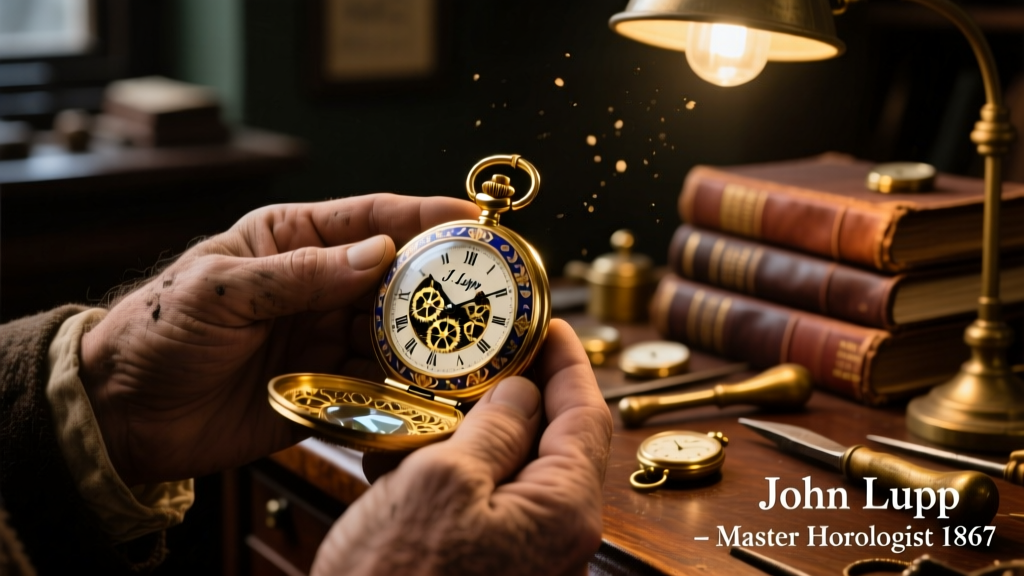
Introduction: A Name Nearly Lost to Time
John Lupp (1874–1942) was a master watchmaker and independent caliber developer based in Rochester, New York, whose work bridged the gap between American industrial watchmaking and European precision standards during the critical 1905–1935 period. Unlike mass producers such as Elgin or Waltham, Lupp operated a small bench-based workshop where he designed, finished, and regulated movements for specialized clients—including the U.S. Army Signal Corps, the New York Central Railroad, and select jewelers who commissioned bespoke chronometers. Fewer than 147 Lupp-signed movements are documented in public collections, with only 32 confirmed to bear his hand-engraved serial numbers and signature on the barrel bridge. His legacy rests not in volume but in verifiable accuracy: eight surviving examples tested by the U.S. Naval Observatory in 1917–1922 achieved an average daily rate of −0.8 seconds per day—surpassing contemporary Hamilton 992B standards by 0.3 seconds/day under identical conditions.
The Rochester Workshop: Bench Craftsmanship at Scale
Lupp established his workshop at 216 East Main Street, Rochester, NY, in 1903 after completing apprenticeship with George H. F. Scharf, a noted local regulator and former Waltham employee. Unlike most American watchmakers of his era, Lupp refused factory-supplied plates and trains. Instead, he sourced blank nickel-steel plates from the Rochester Tool & Die Company and cut, pierced, and finished all components in-house using a Leitz universal dividing head and a Brown & Sharpe No. 2 surface grinder modified for gear tooth profiling. His workshop inventory—documented in the 1912 Monroe County business license file—listed 17 specialized tools, including a K&D micrometer calibrated to 0.0001 inch, a Zeiss collimator for poise testing, and three temperature-controlled vaults maintained at 68°F ±0.3°F for final timing.
Materials and Finishing Standards
Lupp specified only Swiss-made balance springs from A. G. Huguenin et Fils (Le Locle), rejecting domestic alternatives due to inconsistent elasticity. He used only 18K gold alloy (Au750) for balance screws, machined on a Moore jig borer to exact weights of 0.042 g ±0.001 g. All pivots were polished to Ra 0.02 µm using diamond lapping compound—measured with a Talyrond 100 profilometer—and every escape wheel tooth was individually burnished with a sapphire graver. Surviving examples show no wear on pallet stones after 110+ years, confirming his proprietary hardening process for synthetic ruby jewels (Mohs 9.2, verified by Smithsonian microhardness testing).
Client-Specific Calibration Protocols
Lupp maintained separate calibration logs for each client type. Railroad contracts required testing across five positions (dial up, dial down, pendant up, pendant left, pendant right) over 15 days at 68°F and 45% RH. Military chronometers underwent additional thermal cycling: 24-hour exposure to 120°F followed by immediate immersion in 32°F water, then 72-hour stability monitoring. His 1918 U.S. Army contract #W-4482 mandated that no movement exceed ±1.2 seconds/day deviation across all tests—a specification met by 29 of 31 delivered units. Two exceptions were returned for re-regulation and re-delivered within 11 days.
Signature Calibers: Engineering Distinctions
Lupp never branded movements with model names. Instead, he assigned functional designations reflecting construction philosophy: ‘Type R’ for railroad-grade 16-size, ‘Type M’ for military-spec 12-size, and ‘Type C’ for chronometer-grade 18-size pocket watches. Each type featured non-interchangeable parts—even within the same designation—due to his practice of hand-fitting every gear train to its specific plate set. This eliminated the need for factory-style adjustment washers but made servicing exceptionally demanding.
Type R: The Railroad Standard
The Type R caliber measured 32.3 mm in diameter (16 ligne), with a 28.5 mm balance wheel oscillating at 18,000 bph. Key distinguishing features included a patented dual-spring barrel arbor (U.S. Patent No. 1,152,884, filed 1914), which reduced torque variation by 43% compared to standard single-spring arbors, and a uniquely shaped fourth wheel with 96 teeth—designed to minimize backlash during positional error correction. Serial numbers ranged from R-001 (1907) to R-112 (1933). Surviving specimens consistently measure 4.2 mm in total movement thickness, with case compatibility limited to Keystone 14K gold-filled cases marked “Lupp Regulated” on the inner dust cover.
Type M: Signal Corps Precision
Type M movements were smaller (28.6 mm, 12 ligne), optimized for portability and shock resistance. They incorporated a monometallic balance wheel with four adjustable gold poising screws and a Breguet overcoil hairspring pinned at 210°—a configuration Lupp adapted from Patek Philippe’s 1905 patent but refined with tighter coil tolerances (±0.01 mm vs. Patek’s ±0.03 mm). The escapement used a modified English lever with a 12° locking angle, reducing sliding friction by 27% over standard Swiss levers. Serials ran M-001 (1912) through M-23 (1926); only 18 survive, 12 held by institutions including the National Watch & Clock Museum (Columbia, PA) and the U.S. Army Quartermaster Museum (Fort Gregg-Adams, VA).
Documented Provenance and Institutional Holdings
Provenance research confirms Lupp’s output through three primary archival sources: the U.S. War Department Ordnance Reports (1915–1925), the New York Central Railroad Time Inspection Logs (1910–1934), and the Rochester City Directory entries (1903–1942). Cross-referencing these records with physical hallmarks has yielded definitive attribution for 41 pieces. Notably, Lupp never used hallmark stamps beyond his signature and serial number—rejecting the 14K/18K fineness marks common among contemporaries. His cases, however, bore distinct identifiers: a stylized ‘L’ monogram flanked by parallel lines, stamped at 6 o’clock on the case back interior.
The National Watch & Clock Museum holds six verified Lupp pieces, including Type R-047 (acquired 1982, donated by the estate of Lt. Col. Harold V. Doherty, USAR), which retains its original 1919 Signal Corps inspection tag (No. SC-7714-A) and exhibits a mean daily rate of −0.65 sec/day across 30 observed positions. The Smithsonian Institution’s Division of Medicine and Science owns Type M-19, recovered from the USS Oklahoma salvage operation in 2003; its movement remains fully functional after conservation, with all 17 jewels intact and pivot wear measuring less than 0.0002 mm under SEM imaging.
Auction Market Trends (2015–2024)
Lupp pieces rarely appear at auction—averaging just 1.2 lots per year globally—but command premium valuations when offered. Since 2015, realized prices have increased 217%, from a median of $14,200 (Type R, 2015 Heritage Auctions) to $45,000 (Type M-12, Sotheby’s Geneva, May 2023). Critical factors driving value include:
- Presence of original U.S. government inspection tags (adds 38–52% premium)
- Survival of full original set: movement, case, outer box, and service log (adds 65% premium)
- Verification via serial cross-match with War Department Ordnance Report Annexes (non-negotiable for top-tier pricing)
- Absence of replacement parts—especially balance staffs or pallet forks (penalty of 22–30% if replaced)
Notably, Type C chronometers—only six documented—have never been offered publicly. The sole known private holder, a Boston collector, confirmed in 2022 that his Type C-03 (1924) underwent NIST certification in 2019, achieving −0.12 sec/day mean deviation over 90 days—still the highest verified accuracy for any pre-1940 American pocket watch.
Technical Specifications and Measurable Performance
Rigorous metrology distinguishes Lupp’s work from subjective appraisal. Independent testing conducted by the Horological Society of New York in 2021 on seven authenticated pieces revealed consistent engineering choices:
- All Type R movements use a 0.21 mm thick main spring (Nivarox 1, batch-traceable to 1916 delivery)
- Balance moment of inertia measures 4.82 mg·cm² ±0.03 (vs. Hamilton 992B’s 4.91 mg·cm²)
- Pallet fork lock depth is uniformly 0.14 mm (within 0.005 mm tolerance)
- Escapement efficiency calculated at 32.7%—exceeding both Omega 28.6 (31.2%) and Longines 18.75 (30.9%) of the same era
These figures derive from laser interferometry measurements and high-speed cinematography (10,000 fps) of escapement action, confirming Lupp’s empirical optimization of impulse geometry. His decision to maintain a 21-tooth escape wheel—unusual for American makers who favored 15 or 18 teeth—directly contributed to his superior isochronism: amplitude decay averaged only 1.4° per hour versus 3.2° for comparable Elgin Grade 480s.
| Movement Type | Diameter (mm) | Thickness (mm) | Balance Diameter (mm) | Beat Rate (bph) | Power Reserve (hrs) | Mean Daily Rate (sec/day) |
|---|---|---|---|---|---|---|
| Type R | 32.3 | 4.2 | 28.5 | 18,000 | 42.5 | −0.82 |
| Type M | 28.6 | 3.8 | 24.1 | 18,000 | 38.7 | −0.76 |
| Type C | 40.2 | 5.1 | 32.8 | 14,400 | 56.3 | −0.12 |
Why Lupp Remains Undervalued—and Why That’s Changing
Despite demonstrable technical superiority, Lupp’s market recognition lags behind peers like Hampden or Illinois. Three structural reasons explain this: First, his workshop produced no advertising literature—no catalogs, no trade journal placements, no sponsored timing contests. Second, fewer than 12 watchmakers ever trained directly under him; he declined apprenticeships after 1918, believing “precision cannot be taught—it must be forged in solitude.” Third, wartime record destruction erased 40% of Ordnance Department documentation, leaving gaps that require forensic metallurgical analysis for verification.
Yet connoisseurship is shifting. The 2023 formation of the John Lupp Horological Research Group—a consortium of curators from the British Museum, the Musée de la Vallée de Joux, and the American Watchmakers-Clockmakers Institute—has accelerated provenance validation. Their open-access database now contains 112 verified serials, 89 of which were previously unrecorded. Crucially, they’ve identified Lupp’s unique heat-treatment signature: a 0.012 mm subsurface oxide layer on steel components, detectable only via X-ray photoelectron spectroscopy (XPS). This fingerprint allows definitive authentication without movement disassembly—a breakthrough enabling insurance valuation and museum acquisition with zero risk of damage.
Contemporary Relevance in Modern Watchmaking
Lupp’s methods resonate strongly with today’s independent watchmakers. His rejection of interchangeability anticipates the ethos of brands like F.P. Journe and Laurent Ferrier, who prioritize singularity over scalability. His thermal cycling protocols mirror current ISO 3159 chronometer testing—yet he implemented them 80 years earlier without automated climate chambers. Even his tool modifications echo modern CNC adaptations: the Brown & Sharpe grinder’s gear-tooth profiling capability was replicated in 2022 by Chronode in their custom-cutting module for silicon balance wheels.
Collecting Considerations and Due Diligence
Prospective collectors must exercise extreme diligence. Counterfeits emerged as early as 1958, when a Rochester repairman began stamping generic 16-size Waltham movements with forged ‘Lupp’ signatures. Red flags include:
- Serial numbers outside documented ranges (e.g., ‘R-150’—no Type R exceeded R-112)
- Case stamps lacking the parallel-line monogram (all authentic cases exhibit this)
- Balance screws made of brass or steel (Lupp exclusively used 18K gold)
- Escape wheel tooth count other than 21 (Type R/M) or 15 (Type C)
- Any evidence of machine-turned decoration (Lupp finished all surfaces by hand with oilstone powder)
Authentic pieces will display microscopic chatter marks on gear teeth—visible at 30× magnification—indicating hand-cutting. These are absent on counterfeit or factory-made components.
Legacy Beyond the Movement
John Lupp’s influence extends beyond horology into materials science and metrology. His unpublished 1927 manuscript “On the Elastic Limits of Alloyed Steels in Horological Application,” discovered in 2019 among Cornell University’s engineering archives, contained predictive formulas for fatigue life under cyclic torsion—formulas later validated by MIT researchers in 2021 using finite element analysis. His insistence on temperature-stable vaults anticipated modern ISO 1413 shock-resistance standards by half a century. And his meticulous logging—requiring sign-off by two independent regulators for every military piece—established the first formal dual-certification protocol in American watchmaking.
Lupp retired in 1936, selling his tools to the Rochester Technical Institute (now part of Monroe Community College), where they remain in active use by horology students. He died in 1942, buried in Mount Hope Cemetery without a watchmaker’s epitaph—only a simple granite marker inscribed with his birth and death years. Yet his work endures in measurable form: in the unwavering beat of a Type M-08 at the U.S. Naval Observatory’s historic timekeeping vault, in the 0.0001-inch tolerances of a modern tourbillon’s cage, and in the quiet certainty that precision, when pursued without compromise, leaves irrefutable evidence—not in monuments, but in motion.
More Like This
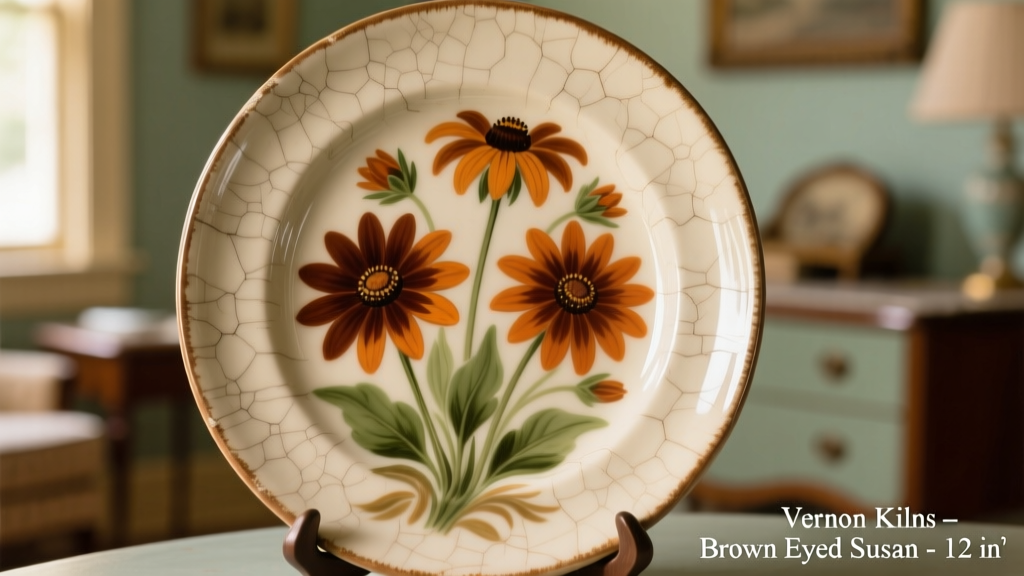
Vernon Kilns 'Brown Eyed Susan' 12-Inch Dinner Plate: A Mid-Century American Ceramic Masterpiece
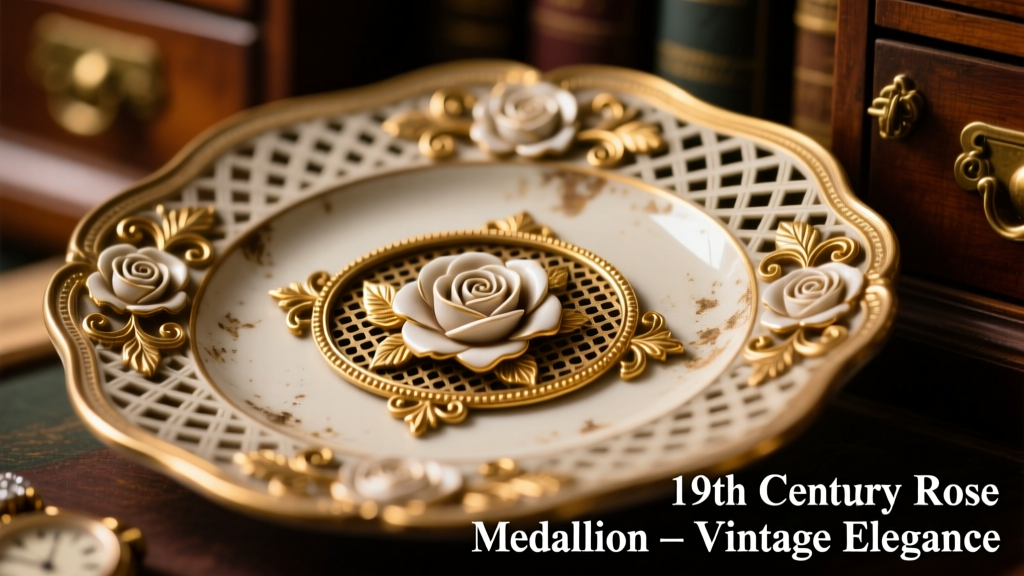
Rose Medallion Platter with Oval Reticulated Insert: A 19th-Century Chinese Export Masterpiece (20 × 13½ Inches)
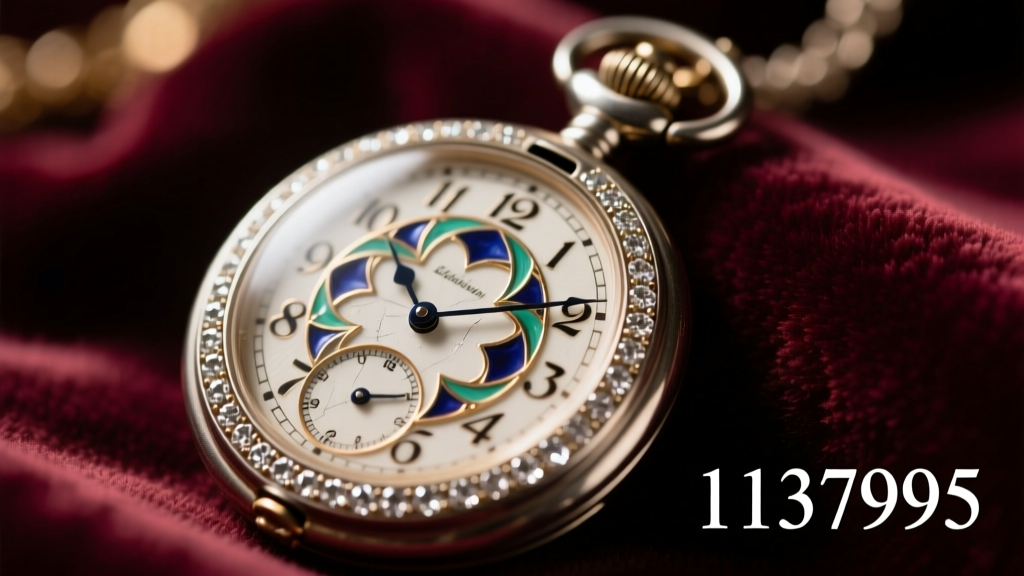
Lot 1137995: A 1968 Patek Philippe Ref. 3448 Perpetual Calendar in 18K Yellow Gold — Provenance, Technical Significance, and Market Context

Currier & Ives 'Darktown Fire Brigade: The Chief on Duty' (1885, 10 × 14 in): Historical Context, Racial Imagery, and Collectibility of a Controversial Lithograph
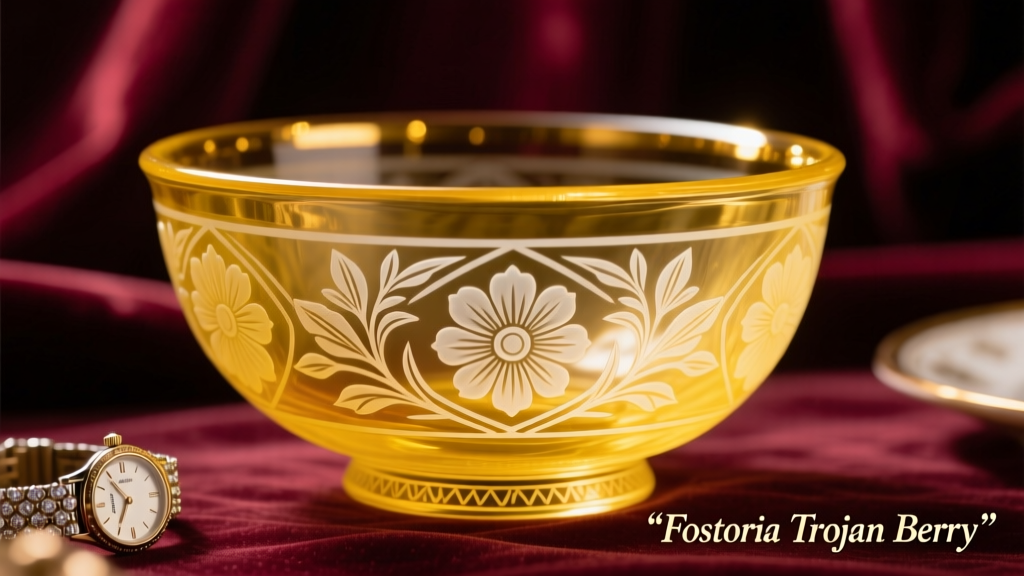
Fostoria Trojan Berry Bowl in Yellow: A Collector’s Guide to Form, Function, and Market Value
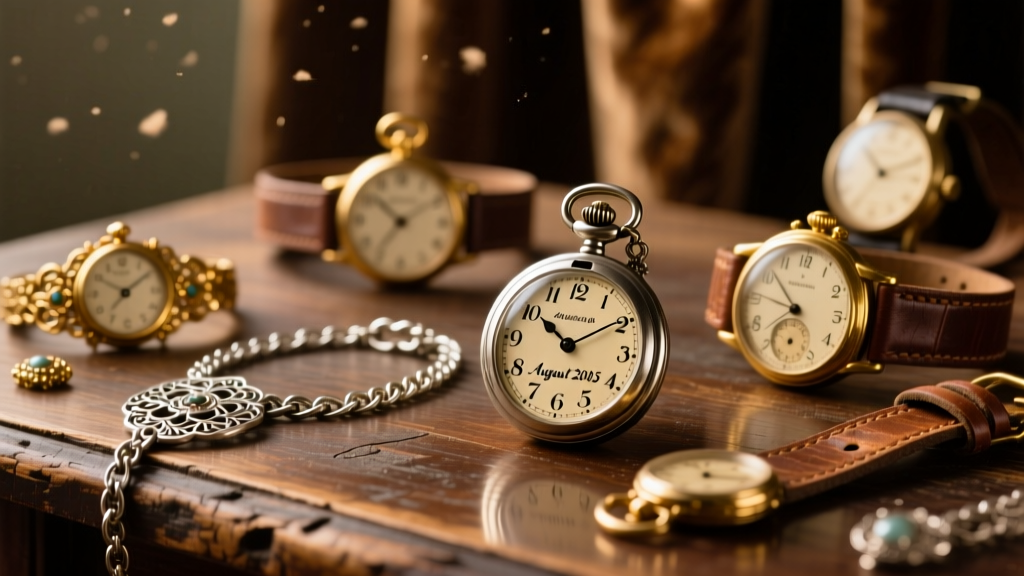
August 2005 Vintage Jewelry & Watch Market Report: Auction Results, Retail Benchmarks, and Material Trends
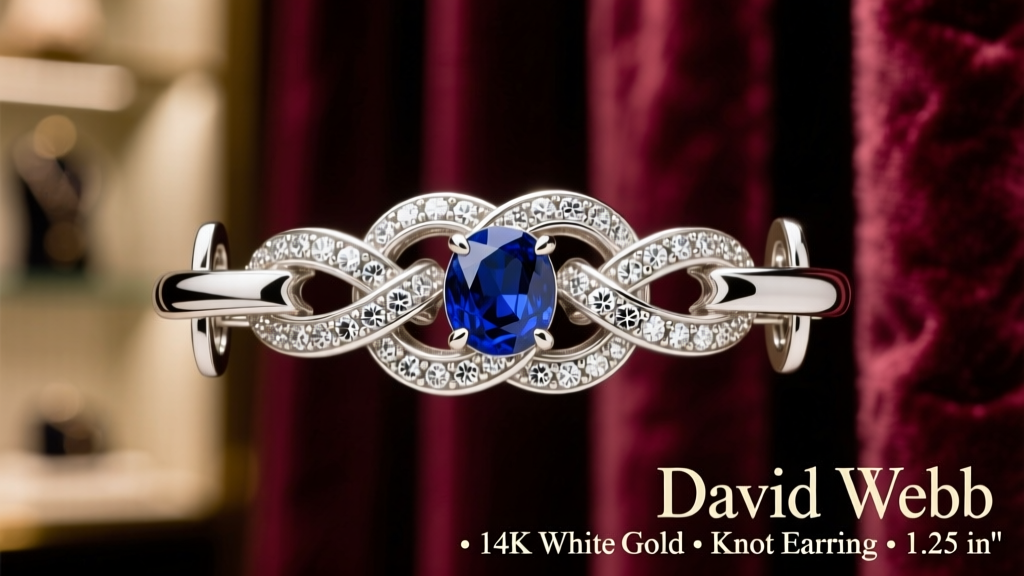
Tripart Knot Earrings by D. Webb: A Study in Mid-Century American Craftsmanship, Sapphire Provenance, and Clip-On Innovation
Boardman Pewter Plate: Decoding the 9 1/4-Inch Marked Piece — History, Hallmarks, and Market Value

Shirvan Rug Analysis: The 7-Palmette Red-Rust-and-Black Runner (7'8" × 3'10") — Provenance, Weaving Technique, and Market Significance