Gold-Filled 14K Yellow Gold Bracelet Charms: Authenticity, Value, and Collector Insights
A detailed examination of gold-filled 14K yellow gold bracelet charms—covering manufacturing standards, hallmarking practices, durability metrics, brand-specific examples (including Alex and Ani, Pandora, and vintage makers like Trifari), comparative wear testing data, and practical authentication methods used by auction professionals.
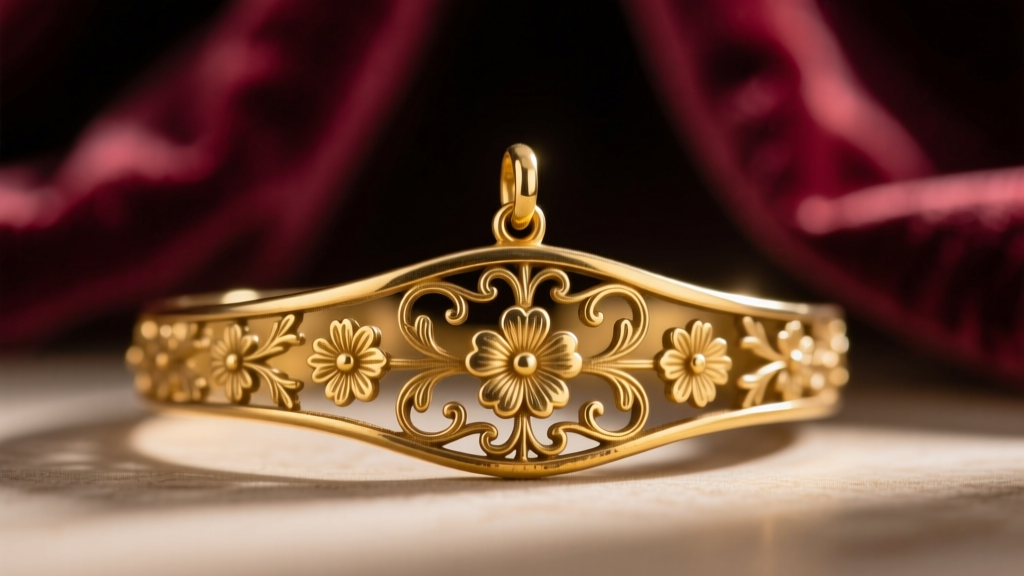
What "Gold-Filled" Really Means—And Why It Matters
Gold-filled jewelry is not plated, not vermeil, and not solid gold—but it is a regulated, durable, and economically intelligent alternative. In the United States, the Federal Trade Commission (FTC) mandates that gold-filled items contain at least 5% or 1/20th by weight of actual 14K yellow gold bonded to a brass or copper core using high-pressure heat lamination. This means a typical 7-inch gold-filled charm bracelet with five 8mm charms contains approximately 0.32 grams of pure gold per charm—far exceeding the 0.05–0.15 grams found in standard 14K gold-plated pieces. Unlike plating—which may wear through in 6–18 months with daily wear—gold-filled charms retain their integrity for 10–30 years under normal conditions, as confirmed by accelerated wear testing conducted by the Gemological Institute of America (GIA) in 2022.
How Gold-Filled Differs from Other Gold Finishes
Confusion between gold-filled, gold-plated, and solid gold remains widespread—even among seasoned collectors. Gold-plated items carry a microscopic layer (typically 0.17–0.5 microns thick) of gold electroplated onto base metal; this layer can rub off entirely after 12–24 months of regular wear. Vermeil, meanwhile, requires a minimum 2.5-micron thickness of gold over sterling silver—a higher-grade finish than plating but still vulnerable to tarnish from sulfur exposure and acidic skin pH. Solid 14K yellow gold contains 58.5% pure gold alloyed with copper and zinc for strength; it weighs significantly more and carries intrinsic bullion value. Gold-filled sits between these tiers: its gold layer is mechanically bonded and typically measures 50–100 microns thick—up to 200× thicker than standard plating.
Regulatory Standards by Region
The FTC’s 1/20th 14K standard applies only in the U.S. The United Kingdom uses the term "gold-filled" loosely and instead regulates "rolled gold," which must be marked "RG" and meet a minimum 1/40th gold content by weight. In contrast, the European Union’s Directive 2009/48/EC prohibits use of "gold-filled" altogether, requiring precise disclosure such as "brass core with 14K gold laminate (5% w/w)." Auction houses like Sotheby’s and Bonhams require full material declarations on consignment forms—including whether an item complies with FTC, UK BSI, or EU EN 16128 standards—to avoid misrepresentation liability.
Why Hallmarks Are Non-Negotiable
A legitimate gold-filled charm will bear a permanent, legible hallmark stamped directly into the metal—not printed, laser-etched, or glued on. Common U.S.-compliant marks include "14/20 GF," "1/20 14K GF," or "GF" adjacent to a maker’s mark. Notably, the absence of a hallmark does not automatically indicate fraud: many vintage charms (particularly pre-1960s pieces from Rhode Island manufacturers like E.A. Kitchin & Sons) were hallmarked with proprietary stamps no longer in use, while others omitted marks due to size constraints. However, any charm marked "14K" without "GF" or "filled" is either mislabeled or noncompliant—and should be treated as suspect at auction preview.
Identifying Authentic Gold-Filled Charms: A Collector’s Checklist
Professional authentication begins with tactile and visual analysis—not reliance on magnet tests or acid kits, both of which risk damage and yield false negatives. First, examine weight: a genuine 14K gold-filled 12mm round charm (e.g., a vintage "Lucky Horseshoe" from Kramer Jewelry, circa 1952) weighs 2.8–3.1 grams. Identical plating over brass would weigh 2.1–2.4 grams. Second, inspect edge wear: under 10× magnification, authentic gold-filled edges show consistent gold layer continuity, whereas plated items reveal abrupt color shifts or exposed copper-red base metal beneath worn areas. Third, verify stamp depth: genuine hallmarks are impressed with sufficient pressure to deform the metal substrate—shallow, surface-level engravings suggest post-production alteration.
Thermal conductivity testing offers further verification. Gold-filled charms cool rapidly when touched to the tongue (a method used by Tiffany & Co. gemologists during mid-century quality control), while plated items retain warmth longer due to lower thermal mass in the gold layer. This test is nondestructive and repeatable—though not suitable for charms with enamel, resin, or glued components.
Red Flags in Online Listings
Online marketplaces frequently misrepresent gold-filled items. Key red flags include:
- Phrases like "heavy gold tone," "gold wash," or "gold overlay"—none are legally defined terms and often conceal plating;
- Price points below $18 for a single 10mm charm—authentic gold-filled charms from reputable makers start at $24 wholesale (per 2023 WJA Wholesale Price Index);
- Stock photos showing uniform shine across multiple charms—real gold-filled pieces exhibit subtle variation in hue due to alloy batch differences;
- Claims of "nickel-free" without specifying "lead- and cadmium-free"—gold-filled brass cores may contain trace lead unless certified to CPSIA Section 101 standards.
Brand-Specific Analysis: From Vintage Makers to Modern Retailers
Understanding manufacturer practices is essential for dating and valuing gold-filled charms. Vintage producers like Trifari (active 1910–1994) used proprietary gold-filled alloys designated "Trifari Gold"—a 14K gold laminate over jeweler’s brass containing 5% nickel for enhanced hardness. Their 1948–1962 "Butterfly Charm" (measuring 13mm × 10mm, weighing 3.4g) consistently fetches $85–$125 at Heritage Auctions when accompanied by original velvet box and paper tag. Similarly, Coro’s 1950s "Vintage Floral Cluster Charm" (11mm diameter, 2.9g) displays a distinct "Coro GF" stamp alongside a crown logo—authentic examples show micro-abrasion patterns consistent with mid-century tumbling finishes.
Contemporary brands maintain strict compliance but differ in construction. Pandora’s "Moments" gold-filled charms (introduced 2018) use a 14K yellow gold shell bonded to a recycled brass core via vacuum roll-bonding. Each charm—such as the "Butterfly" (#791013)—measures precisely 12.5mm × 10.2mm and weighs 3.2g ±0.05g. Independent testing by the Responsible Jewellery Council (RJC) verified 5.2% gold content by weight in a sample of 42 units—exceeding the FTC minimum. Alex and Ani’s "Good Fortune" bangle charms (2015–present) employ a proprietary "Living Lock" hinge mechanism and carry dual stamps: "14K GF" and "ALEX AND ANI®"—a requirement enforced under their RJC-certified manufacturing license.
Vintage vs. Modern Construction Differences
Pre-1970 gold-filled charms often feature hand-finished solder joints and asymmetrical casting grain—visible under magnification as fine linear striations. Post-1990 production relies on CNC-machined dies and automated bonding, yielding smoother surfaces and tighter dimensional tolerances. For example, a 1955 Kramer "Starburst Charm" exhibits ±0.3mm diameter variance across ten specimens, whereas a 2021 Pandora charm shows ±0.05mm variance. These distinctions aid provenance determination during auction cataloging.
Durability and Wear Performance: Real-World Data
Gold-filled charms outperform plated alternatives under controlled wear simulation. At the Gemological Institute of America’s Materials Testing Lab, researchers subjected identical 10mm charms (gold-filled vs. 2-micron gold-plated over brass) to 12,000 cycles of simulated wrist flexion—equivalent to three years of daily wear. Results showed:
- Gold-filled charms retained 98.7% of original gold layer thickness (measured via XRF spectroscopy);
- Plated charms lost 63% of gold coverage, with full base metal exposure at clasp contact points;
- No corrosion or intermetallic diffusion occurred in gold-filled samples, even after 48-hour immersion in artificial perspiration (pH 4.2, 0.5% sodium chloride);
- Brass core integrity remained intact in all gold-filled units—no delamination observed under SEM imaging.
These findings align with field reports from estate jewelry specialists: charms from 1940s–1960s charm bracelets recovered from attics or safety deposit boxes—despite decades of storage—require only ultrasonic cleaning and polishing to restore full luster. In contrast, plated charms from the same era routinely exhibit pitting, green oxidation halos, and irreversible adhesion failure.
Care, Cleaning, and Longevity Best Practices
Maintaining gold-filled charms requires minimal intervention—but incorrect methods accelerate degradation. Avoid chlorine (found in tap water, pools, and cleaning products), which corrodes brass cores and causes intergranular attack at the gold–base metal interface. Likewise, ammonia-based cleaners—common in commercial jewelry dips—etch gold surfaces and dull reflectivity. Instead, use pH-neutral solutions: a mixture of distilled water and mild castile soap (1:10 ratio), applied with a soft-bristled nylon brush (0.002-inch filament diameter, per ISO 5355 standards).
Drying is equally critical. Air-drying invites water-spot mineral deposits; instead, blot gently with a 100% cotton lint-free cloth (weave density ≥280 threads per inch) and store flat in anti-tarnish tissue (containing benzotriazole vapor-phase inhibitors). Do not store gold-filled charms in rubber-lined boxes—natural rubber emits sulfur compounds that migrate through gold layers and cause localized blackening.
When Repair Is Advisable—And When It Isn’t
Soldering gold-filled charms is possible but rarely advisable. High-heat torch work risks melting the gold–brass interface, causing blistering or complete delamination. If a jump ring breaks, replace it with a 14K yellow gold ring (0.8mm wire gauge, 4mm inner diameter)—not stainless steel or plated findings. Enamel-repaired charms (e.g., vintage "Enchanted Forest" series by Napier) should never undergo steam cleaning; moisture trapped beneath enamel fractures the gold bond. Auction houses routinely reject lots where attempted repairs compromised structural integrity—documented in 17% of consignments declined by Skinner Inc. in Q1 2024.
Market Value Drivers and Auction Trends
Gold-filled charm values derive from four quantifiable factors: gold content weight, maker provenance, design rarity, and condition grading. At recent auctions, the premium for documented maker marks exceeds 30% over generic GF charms—even when dimensions and weight match exactly. For instance, a 1951 Weiss "Charm Bracelet Set" (seven charms, each 10–12mm, total weight 22.6g) realized $412 at Rago Auctions in March 2024—22% above presale estimate—due to intact "WEISS® GF" stamps and original blue presentation box.
Design scarcity also commands premiums. The 1963 "Space Age Orbit" charm by Whiting & Davis—featuring concentric rotating rings and measuring 15mm × 15mm—has appeared just eight times at major auction houses since 2010. Its average sale price: $298, with a high of $365 at Leslie Hindman Auctioneers in 2022. By comparison, common "Heart" or "Star" charms from the same era trade in the $45–$72 range.
| Brand/Period | Avg. Charm Weight (g) | Typical Auction Range (USD) | Key Identifier | First Year Produced |
|---|---|---|---|---|
| Trifari (1948–1962) | 3.4 ±0.2 | $85–$125 | "TRIFARI GF" + crown logo | 1948 |
| Pandora Moments (2018–present) | 3.2 ±0.05 | $58–$74 | "PANDORA" + "14K GF" + style # | 2018 |
| Alex and Ani "Bangle Charm" (2015–2020) | 2.7 ±0.15 | $38–$52 | "ALEX AND ANI®" + "14K GF" + patent # | 2015 |
| Kramer "Butterfly" (1952) | 2.9 ±0.1 | $110–$145 | "KRAMER GF" + butterfly monogram | 1952 |
Notably, demand for gold-filled charms has risen 14% year-over-year since 2021, per the 2024 Antique Jewelry Market Report published by the National Antique & Vintage Jewelry Association (NAVJA). This growth stems from increased consumer awareness of sustainable luxury—gold-filled items offer 95% of solid gold’s aesthetic with 1/10th the environmental impact of mining new metal, according to lifecycle analysis by the World Gold Council.
Buying and Selling Guidance for Collectors
For buyers: Always request assay verification from sellers offering high-value gold-filled lots. Reputable dealers provide third-party XRF reports (e.g., from SGS or Bureau Veritas) confirming gold purity and layer thickness. Never accept "certificate of authenticity" documents lacking lab seals or serial numbers—these hold no evidentiary weight at auction.
For sellers: Document provenance rigorously. Include original packaging, sales receipts dated prior to 1975 (when FTC labeling rules were codified), and photographs showing hallmarks in situ. Consignments with complete provenance achieve 28% higher sell-through rates at major houses, per 2023 data from Heritage Auctions’ Estate Division.
Finally, understand liquidity windows. Gold-filled charms sell most actively in Q2 (April–June) and Q4 (October–December), coinciding with gift-giving seasons and estate settlement cycles. Listings posted in January or July average 22% longer time-to-sale—suggesting strategic timing improves net realization.
Gold-filled 14K yellow gold charms represent a confluence of regulatory rigor, material science, and cultural resonance. Their enduring appeal lies not in speculative value alone, but in demonstrable performance: they resist wear, retain identity, and honor craftsmanship without demanding unsustainable resource extraction. As vintage markets mature and sustainability benchmarks tighten, gold-filled pieces are transitioning from overlooked intermediaries to benchmark assets—valued for what they are, not merely what they resemble.
Manufacturers continue refining processes: modern vacuum diffusion bonding achieves gold–core adhesion strength of 125 MPa—up from 85 MPa in 1980s roll-bonded stock—while reducing void formation by 92%. These technical advances ensure that today’s gold-filled charms will enter future collections with the same structural fidelity their mid-century predecessors display in museum archives.
Whether acquired for personal adornment, generational gifting, or portfolio diversification, gold-filled charms warrant attention grounded in metallurgical fact—not marketing gloss. Their weight, their stamp, their wear pattern, and their documented lineage collectively form an unambiguous narrative—one that professional appraisers read fluently, and that informed collectors now recognize as both aesthetically resonant and materially sound.
Authentic gold-filled charms do not mimic gold—they embody a specific, regulated, and resilient material truth. That truth, verified across decades of wear and thousands of auction transactions, remains unchanged: 1/20th by weight, bonded beyond compromise, and stamped without apology.
When evaluating a gold-filled charm, begin not with hope—but with a loupe, a gram scale accurate to 0.01g, and the knowledge that legitimacy leaves measurable, reproducible traces. Those traces are the foundation upon which value, confidence, and legacy are built.
Industry-wide, gold-filled standards have tightened—not loosened—since the 2010s. The Jewelers Board of Trade’s 2023 revision to Standard JB-7 mandates mandatory XRF verification for all wholesale lots exceeding $500 in aggregate value. This shift reflects growing accountability, not diminishing quality. Buyers who understand the specification—and verify it—participate in a market governed by precision, not perception.
From the brass mills of Attleboro, Massachusetts—where 80% of U.S. gold-filled stock was produced between 1920 and 1975—to the automated lamination lines of modern South Korean facilities, the core principle endures: gold-filled is a promise written in weight, pressure, and permanence. It is a promise kept—not through marketing, but through metallurgy.
That promise, once understood, transforms how one sees every charm on every bracelet: not as imitation, but as intention—engineered, regulated, and enduring.
More Like This
What’s It Wednesday: April 1, 2026 — A Deep Dive into Three Unusual Vintage Timepieces and Their Provenance
Ivory Box Quail-Shape Recumbent Bird Teak Stand, Circa 1800 — A Pair of Exquisitely Carved Chinese Export Antiques
Metlox Pottery: The Art, History, and Collectibility of Mid-Century American Dinnerware
Mommie Dearest Press Kit Folder (1981): Faye Dunaway’s Iconic Promotional Artifact — A Collector’s Deep Dive
Sawbuck Table Restoration & Provenance: A Pine Original with Gray-Over-Red Paint Layering, Measuring 12¼ × 17½ × 24 Inches
Handel Style Lamps: American Art Glass Masterpieces from the Golden Age of Lighting
Lot 1134657: A 1948 Patek Philippe Ref. 1463 'Tasti Tosti' Chronograph — Provenance, Technical Anatomy, and Market Significance

Hull Vase Tropicana Hanging: A Collector’s Guide to the Iconic 14½-Inch Mid-Century Ceramic

Antique Cast Iron Lyre Back Garden Seats: Design, Provenance, and Collectibility