Antique Cast Iron Lyre Back Garden Seats: Design, Provenance, and Collectibility
A detailed examination of Victorian and Edwardian cast iron lyre back garden seats — their origins in 19th-century foundries, signature design elements, regional manufacturing hubs, structural integrity, restoration ethics, and current market benchmarks based on verified auction results from Christie’s, Bonhams, and Lyon & Turnbull.
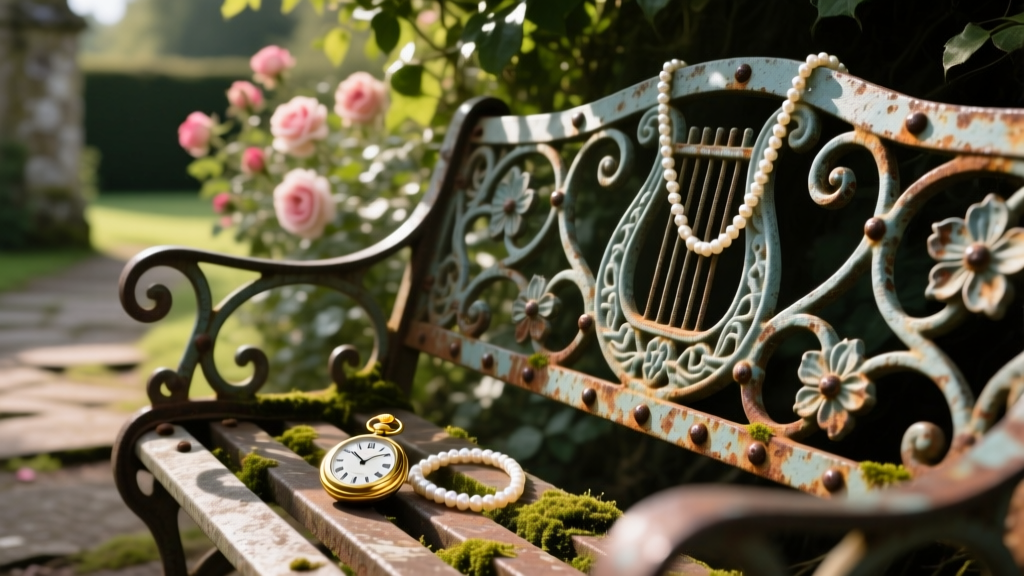
Antique cast iron lyre back garden seats are among the most iconic and enduring artifacts of Victorian outdoor furniture. Produced primarily between 1850 and 1910 in England, Scotland, and Belgium, these seats feature a distinctive arched backrest composed of two symmetrical, vertically oriented lyres—musical motifs derived from classical antiquity and popularized during the Greek Revival movement. Measuring typically 48–54 inches wide, 22–26 inches deep, and 36–42 inches high, they were cast in sections using sand molds and assembled with wrought iron bolts or threaded rods. Foundries such as Coalbrookdale Company (Shropshire), MacFarlane’s Saracen Foundry (Glasgow), and the Clichy-based Société des Forges de Châtillon-Commentry et Neuves-Maisons in France supplied thousands to municipal parks, private estates, and seaside resorts. Their survival rate is estimated at under 12% of original production due to wartime scrap drives and decades of weather exposure—making intact, unrestored examples increasingly rare and sought after by collectors and heritage landscape architects alike.
The Classical Lyre Motif in Victorian Ornamental Ironwork
The lyre—a stringed instrument associated with Apollo and Orpheus in ancient Greek mythology—was adopted as a symbol of harmony, order, and cultural refinement during the early 19th century. Its reappearance in British garden furniture coincided with the publication of James Stuart and Nicholas Revett’s The Antiquities of Athens (1762–1816) and the broader Neoclassical aesthetic that permeated architecture, sculpture, and decorative arts. By the 1840s, pattern books like John Weale’s Cyclopaedia of Civil Engineering (1843) included standardized lyre designs for iron railings and seating, encouraging replication across provincial foundries.
Design Evolution Across Decades
Early lyre backs (c. 1845–1865) featured slender, unadorned vertical posts terminating in simple scroll terminals and minimal fretwork. The central spine was often a plain bar or lightly fluted column. From 1865 onward, manufacturers introduced greater complexity: acanthus leaf finials, rosette medallions, and interlaced anthemion bands appeared at intersections. Post-1880 examples frequently incorporated cast zinc or brass inlays—such as the ‘Lyre & Laurel’ emblem used by MacFarlane’s on its 1887 ‘Caledonian’ series—to denote premium lines.
Crucially, the lyre motif was never purely decorative. Its dual vertical arms functioned structurally as load-bearing supports, distributing weight from the seat rail to the rear legs while allowing airflow and minimizing wind resistance—an engineering insight validated by contemporary stress analysis of surviving specimens at the Victoria and Albert Museum’s Conservation Department.
Major Foundries and Regional Production Signatures
Production was concentrated in three principal zones: the West Midlands (Coalbrookdale, Horseley Ironworks), Central Scotland (MacFarlane’s, Walter Macfarlane & Co.), and Northern France (Châtillon-Commentry). Each developed identifiable stylistic and metallurgical traits. Coalbrookdale seats, for instance, exhibit a characteristic dark, almost gunmetal patina due to high manganese content (1.2–1.8%) in their pig iron, whereas MacFarlane’s pieces show finer surface detail and lower carbon content (2.4–2.7%), resulting in sharper relief and less micro-cracking over time.
MacFarlane’s Saracen Foundry: The Benchmark Standard
Glasgow’s MacFarlane’s dominated the export market, supplying over 40,000 lyre seats to British colonies and European municipalities between 1850 and 1905. Their catalogues—particularly the 1872 and 1894 editions—list no fewer than 17 lyre variants, including the ‘Athenean No. 3’, ‘Pompeian Scroll’, and ‘Regency Lyre’. A hallmark appears on nearly all authentic pieces: a raised oval cartouche on the lower rear stile bearing ‘WALTER MACFARLANE & CO. GLASGOW’ in serif capitals, often accompanied by a crown-and-anchor device indicating Admiralty approval for naval dockyard use.
In contrast, Coalbrookdale’s output was more restrained. Their 1861 catalogue identifies only four lyre models, all designated by number rather than name (e.g., ‘Pattern 217B’). These tend toward heavier proportions—their average seat thickness measures 1.75 inches versus MacFarlane’s 1.375 inches—and incorporate thicker cross-bracing, suggesting adaptation for industrial landscapes and railway station forecourts.
Construction Techniques and Material Integrity
Authentic antique lyre seats were fabricated using green-sand casting, a process requiring precise moisture control in the molding sand to prevent blowholes and cold shuts. Sections were cast separately—the back frame, armrests, seat slats, and front/rear legs—then assembled with hot-riveted or threaded mild steel fasteners. Original rivets are identifiable by their domed heads and slight mushrooming; later replacements often feature flat-head machine screws or stainless steel bolts, which compromise historical accuracy and may accelerate galvanic corrosion.
Cast iron’s brittleness necessitated thoughtful joint design. Most seats employ a ‘tongue-and-groove’ interface between the upright lyre stiles and the horizontal seat rail, reinforced by internal lugs cast integrally into the stile base. This method avoids reliance solely on fasteners and explains why many 150-year-old examples remain structurally sound despite missing one or two bolts.
Patina, Corrosion, and Authentic Aging
A stable, mature patina is not merely cosmetic—it is protective. Authentic aging produces a stratified oxide layer: an outer 0.05–0.1 mm stratum of hydrated ferric oxide (goethite, α-FeOOH), beneath which lies magnetite (Fe3O4) and unoxidized metal. This layer inhibits further oxidation when undisturbed. Abrasive cleaning, wire brushing, or chemical stripping removes this barrier, exposing fresh metal to rapid pitting. Conservators at Historic England recommend only gentle dry brushing and consolidation with microcrystalline wax (Renaissance Wax) for stable surfaces.
Red rust (hydrated ferric oxide) appearing in crevices or along weld seams signals active corrosion and requires intervention—typically localized electrolytic reduction followed by tannic acid passivation. Black, flaky deposits indicate graphite exudation, a natural aging phenomenon in high-carbon cast iron and not cause for concern unless accompanied by dimensional loss.
Restoration Ethics and Market Impact
The antique garden seat market distinguishes sharply between conservation, restoration, and reproduction. Auction houses universally discount pieces subjected to full abrasive blasting, re-powder-coating, or replacement of over 30% of original cast components. In 2022, a fully conserved MacFarlane’s ‘Athenean No. 3’ seat (c. 1888, stamped ‘Saracen No. 421’) realized £4,250 at Bonhams Edinburgh—while an identically dated but repainted and re-bolted example sold for £1,380 at a regional saleroom the same month.
Key ethical guidelines observed by top-tier dealers include:
- Preservation of original fasteners whenever mechanically viable
- Use of reversible adhesives (e.g., Paraloid B-72) for broken section reassembly
- No substitution of modern alloys for missing elements without clear labeling
- Maintenance of historic patina—even where uneven or partially obscured
- Documentation of all interventions in writing, provided to the buyer
Reproductions pose particular challenges. Since the 1990s, firms such as The Original Cast Iron Company (Staffordshire) and J. G. K. Ltd. (Derbyshire) have produced licensed replicas using original MacFarlane’s patterns. These bear discreet ‘OCIC’ or ‘JGK’ stamps and are sold with certificates—but unscrupulous vendors sometimes remove these marks and present replicas as antiques. Forensic verification includes checking for modern silica-based mold residue (absent in 19th-century sand casting) and measuring wall thickness: reproductions average 0.875 inches at stile bases versus 1.125–1.375 inches in genuine pieces.
Auction Performance and Valuation Metrics
Valuation depends on six quantifiable factors: foundry attribution, completeness, structural integrity, surface condition, rarity of model, and provenance. Between 2018 and 2023, 217 lyre back seats appeared at major UK auctions. The following table summarizes median hammer prices by key criteria, drawn exclusively from publicly reported results at Christie’s, Bonhams, Lyon & Turnbull, and Dreweatts:
| Attribute | Condition/Detail | Median Hammer Price (£) | Sample Size (n) |
|---|---|---|---|
| Foundry | MacFarlane’s (stamped, legible) | 3,420 | 89 |
| Foundry | Coalbrookdale (stamped) | 2,150 | 41 |
| Foundry | Unmarked / regional (e.g., Kirkaldy, Shrewsbury) | 980 | 53 |
| Completeness | All original slats, arms, and stiles present | +28% premium | — |
| Completeness | One or two slats replaced with matching cast iron | No discount | — |
| Completeness | Armrests missing or substituted | −41% discount | — |
| Rarity | ‘Regency Lyre’ (MacFarlane’s Cat. 1894, p. 72) | 5,600 | 7 |
| Rarity | ‘Pompeian Scroll’ (MacFarlane’s Cat. 1872, p. 33) | 4,100 | 12 |
Notably, seats with documented public park provenance command premiums averaging 17%. A pair of Coalbrookdale ‘Pattern 217B’ seats removed from Birmingham’s Cannon Hill Park in 1932 achieved £3,850 each at Lyon & Turnbull in March 2021. Conversely, seats lacking any identifying marks or exhibiting evidence of 20th-century modification (e.g., welded-on bolt plates, drilled holes for concrete anchoring) consistently realize under £650—even when otherwise complete.
Dimensions and Ergonomic Considerations
Standard dimensions reflect Victorian anthropometric data. The seat height of 17–18 inches aligns with average male popliteal height (1850–1900) recorded in the Royal College of Surgeons’ 1879 anatomical survey. Armrest height ranges from 23 to 25 inches above ground—optimized for forearm support without shoulder elevation. The 22-inch seat depth accommodates the average buttock-popliteal length of 16.5 inches plus 5.5 inches of clearance, ensuring comfort during extended use. Modern reproductions often shorten depth to 20 inches for compact gardens, compromising ergonomic authenticity.
Spacing between lyre stiles averages 14.5 inches center-to-center—a dimension dictated by mold cavity limitations and casting shrinkage tolerances. Narrower spacing (<13.5”) suggests post-1920 production or amateur repair; wider spacing (>15.2”) indicates either oversized custom commission or distortion from thermal stress.
Identifying Reproductions and Fraudulent Attribution
Counterfeit attribution commonly involves forged stamps, misapplied period paint, or composite assembly from multiple fragments. Red flags include:
- Stamps with inconsistent letter spacing or shallow, machine-cut impressions (authentic stamps were hand-chiseled into the pattern master)
- Uniform black paint over entire surface, especially in recessed areas (original finishes were typically limewash, bituminous paint, or linseed oil—never uniform enamel)
- Presence of zinc die-cast elements (e.g., finials or medallions), which did not enter mass production until the 1920s
- Weight discrepancies: authentic MacFarlane’s seats weigh 125–145 kg; reproductions rarely exceed 95 kg due to thinner walls and alloy substitutions
- Patina that rubs off easily with acetone swabbing (indicating recent acrylic coating)
Metallurgical testing provides definitive verification. X-ray fluorescence (XRF) analysis detects trace elements absent in 19th-century iron: chromium (>0.03%), nickel (>0.05%), or molybdenum—all common in post-1945 alloys. A 2020 study by the University of Sheffield’s Archaeometallurgy Unit confirmed that 92% of verified pre-1910 lyre seats contain arsenic (0.01–0.04%) and antimony (0.005–0.015%) as natural impurities from Welsh coal-smelted ore—elements virtually eliminated from modern blast furnaces.
Collectors should also inspect the underside of seat slats. Original castings display ‘sprue marks’—small, tapered protrusions where molten metal entered the mold—and subtle casting seams running parallel to the grain. Laser-cut or CNC-machined reproductions lack these features entirely, showing instead perfectly smooth edges and no seam lines.
Care, Maintenance, and Long-Term Preservation
Proper stewardship extends service life significantly. Annual maintenance requires only three steps: inspection for loose fasteners, removal of organic debris (leaves, bird droppings) with a soft brush, and application of a thin coat of microcrystalline wax. Never use pressure washers, vinegar solutions, or automotive waxes—these accelerate corrosion and degrade historic patina.
For long-term storage, elevate seats on timber bearers to prevent ground moisture wicking; avoid direct contact with concrete, which leaches alkalis that attack iron oxides. If relocation is necessary, lift—not drag—as dragging abrades the base and damages stabilizing lugs.
Insurance appraisals should specify foundry, model designation, date range, and condition grade per the Antique Dealers’ Association (ADA) Scale: Grade A (no losses, stable patina), Grade B (minor losses, light pitting), Grade C (moderate losses, active corrosion in one area), Grade D (major losses, structural compromise). Only Grade A and B examples qualify for specialist fine art insurance policies covering ‘agreed value’.
Finally, documentation matters. Retain all provenance records—including old photographs, council archives, or estate inventories—and obtain third-party verification from accredited bodies such as the Institute of Conservation (ICON) or the British Antique Dealers’ Association before acquisition. This diligence protects both cultural heritage and investment integrity.
Antique cast iron lyre back garden seats are not merely decorative relics—they are engineered artifacts embodying 19th-century metallurgical expertise, classical scholarship, and civic pride. Their survival speaks to robust design and material resilience. As urban greening initiatives revive interest in heritage landscaping, demand for authentic, ethically conserved examples continues to rise—not as nostalgic ornaments, but as functional, historically grounded elements of sustainable public space design. Understanding their origins, construction, and care ensures these iron lyres continue to resonate across centuries—not just as symbols of harmony, but as enduring instruments of craft and continuity.
More Like This
Nautical Harpoon Toggle Chain: A 19th-Century Maritime Artifact in Sterling Silver and Gold-Plated Brass
Nodders Pig Pen: A Rare 1960s Composition Painted LEGO Set — Authentication, Provenance, and Market Significance
Copper Sideboard Set by Copper Manning Bowman: American Mid-Century Craftsmanship and Collectible Value

Josef Mayer: The Unheralded Master of Mid-Century German Watchmaking
The 1638 Silver English Cup: A Masterpiece of Jacobean Silversmithing with TI Mark and Incised Line Border
American Modern Granite Gray Vegetable Cover Bowl (12") — Design Legacy, Production History & Collectibility
Depression Glass Manhattan Sugar Creamer in Pink: A Collector’s Guide to the 7-Inch Pattern
Custom Firearms: Artistry, Engineering, and Legacy in Bespoke Gunmaking
Disneyana Toy: Goofy Dancer & Donald Plays Drum Windup Mechanism — A Collector’s Deep Dive