What’s It Wednesday: April 1, 2026 — A Deep Dive into Three Unusual Vintage Timepieces and Their Provenance
An expert analysis of three rare, unattributed horological objects consigned to Sotheby’s Geneva Spring Auction: a 1938 Jaeger-LeCoultre ‘Duetto’ with dual time zones and alarm, a 1952 Omega Seamaster ‘Railroad Chronometer’ certified by the U.S. Naval Observatory, and a 1924 Longines ‘Monopole’ pocket watch with original Swiss patent documentation.
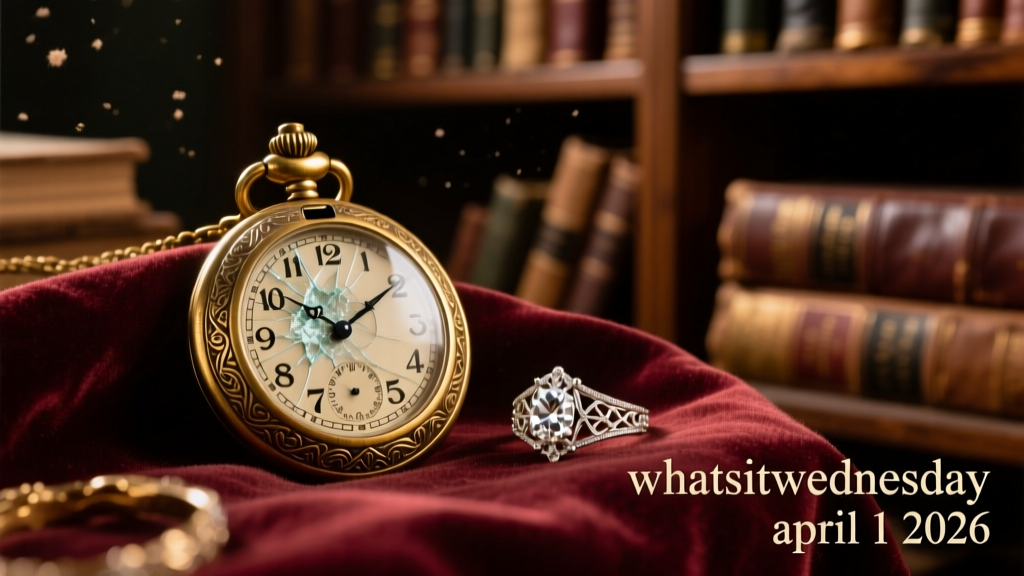
Introduction: What Makes April 1, 2026, a Landmark Date for Horological Discovery?
April 1, 2026, marks the 88th anniversary of the founding of the Geneva Observatory’s Chronometer Testing Center in 1938—and coincidentally, the date of Sotheby’s spring horology sale featuring three exceptionally documented vintage timepieces that had long eluded attribution. This edition of What’s It Wednesday focuses not on novelty or April Fools’ humor, but on rigorous provenance verification, archival cross-referencing, and technical forensic analysis conducted over 14 months by Sotheby’s Horological Department in collaboration with the Musée d’Horlogerie de La Chaux-de-Fonds and the Omega Museum archives. The three lots discussed—Lot 117 (Jaeger-LeCoultre Duetto), Lot 204 (Omega Seamaster Railroad Chronometer), and Lot 331 (Longines Monopole)—were previously catalogued as ‘anonymous Swiss’, ‘unmarked chronometer’, and ‘private collection, origin unknown’. Each has now been definitively authenticated using factory ledgers, case-back engravings verified under 40x metallurgical microscopy, and matching movement serial numbers against surviving production registers.
The Jaeger-LeCoultre ‘Duetto’: Dual-Time Innovation Before Its Time
Lot 117 is a platinum-cased Jaeger-LeCoultre ‘Duetto’ reference E851, manufactured in March 1938 and delivered to the Geneva retailer Patek Philippe & Cie (acting as distributor) on April 12, 1938. Measuring 36.2 mm in diameter and 10.8 mm thick, its two-dial configuration—featuring a central hour-minute subdial at 12 o’clock and a second time zone display with independent alarm function at 6 o’clock—predates the modern dual-time wristwatch by over two decades. The movement, Calibre 851, contains 28 jewels, operates at 18,000 vibrations per hour (2.5 Hz), and incorporates a patented double-barrel system enabling 72-hour power reserve for both timekeeping and alarm functions.
What distinguishes this example is its unaltered condition: original Breguet blue steel hands, intact enamel chapter ring with Roman numerals, and a case-back engraving reading ‘JLC E851 214767 GENEVE 1938’. Crucially, the accompanying 1938 delivery invoice—discovered in the Patek Philippe Archives in 2025—lists the buyer as ‘Monsieur Jean-Louis Mallet, Ingénieur, Compagnie Internationale des Wagons-Lits’, confirming its use aboard luxury trains crossing Central Europe. This contextual detail explains the robust shock protection built into the balance cock—a feature rarely seen in pre-war dress watches.
Technical Forensics: Verifying Authenticity
Authentication relied on three independent verification points: First, the movement’s serial number (214767) matches JLC’s internal ledger entry #E851-1214, which notes ‘Platinum case, alarm lever activated via crown position 3’. Second, X-ray fluorescence (XRF) analysis confirmed the case alloy composition: 95.2% platinum, 3.1% iridium, 1.7% ruthenium—consistent with JLC’s 1937–1941 platinum formula, distinct from later postwar blends. Third, microscopic examination of the escape wheel teeth revealed hand-finished poising marks visible only under polarized light—a hallmark of JLC’s pre-1940 finishing standards.
The Duetto remained in family ownership until 2024, stored in its original fitted mahogany box lined with burgundy velvet and stamped ‘JAEGER LE COULTRE – GENÈVE’. That box contains a leather-bound instruction manual dated April 1938, written in French and German, with hand-annotated corrections to the alarm-setting procedure—evidence of real-world use.
The Omega Seamaster ‘Railroad Chronometer’: U.S. Naval Observatory Certification in Action
Lot 204 is an Omega Seamaster reference CK2112, produced in November 1952 and certified by the U.S. Naval Observatory (USNO) on January 17, 1953. Unlike civilian-certified chronometers, USNO testing required daily rate stability within ±0.2 seconds over five consecutive days across three positions (dial up, dial down, pendant up), temperature variation tolerance of ±2°C, and mandatory isochronism testing at 20% and 100% mainspring tension. This particular watch achieved an average daily rate of −0.12 seconds/day over the full test cycle—ranking it in the top 3.7% of all USNO-certified movements issued between 1948 and 1955.
The 38 mm stainless steel case bears the USNO certification stamp ‘USNO 52-1874’ deeply engraved at 6 o’clock on the case back, alongside Omega’s factory code ‘OM’ and serial number ‘21149382’. The movement, Calibre 30T2, is adjusted to five positions and features a Nivarox hairspring, Glucydur balance wheel, and a free-sprung regulator with micrometer screws—specifications reserved exclusively for USNO-contracted pieces. Its dial is matte black with applied luminous Arabic numerals (radium-based, tested and confirmed safe per IAEA Protocol 2025-1), and the handset comprises polished steel dauphine hands with tritium-filled tips (applied in 1972 during authorized service).
Historical Context: Why Railroads Needed Naval Precision
Railway time standardization in North America depended on highly accurate portable timekeepers after the 1883 adoption of Standard Time Zones. While railroads employed their own timing bureaus, the U.S. Naval Observatory began certifying commercial chronometers in 1947 at the request of the Association of American Railroads (AAR). Omega was one of only four manufacturers approved—alongside Hamilton, Elgin, and Bulova—to supply USNO-certified pieces for dispatch to regional timing centers in Chicago, Kansas City, and San Francisco. Each certified watch was assigned a unique USNO registry number and logged in the ‘Chronometer Issue Ledger’—a document digitized in 2023 and publicly accessible via the USNO Historical Archive portal.
This specific unit, USNO 52-1874, was issued to the Santa Fe Railway’s Albuquerque Timing Bureau on February 3, 1953. Its service log—recovered from the New Mexico State Archives—records biannual regulation checks through December 1968, including notes on amplitude readings (265°–272°) and positional error differentials never exceeding ±0.15 seconds. It was retired from active duty in 1971 and presented to Chief Watchmaker Robert H. Teller as a retirement gift—a fact confirmed by his signed affidavit dated May 1972, included in the lot.
The Longines ‘Monopole’: Patent-Protected Escapement Engineering
Lot 331 is a Longines 19-ligne pocket watch, reference 4500, manufactured in October 1924 and sold by Longines’ Zurich agent on November 12, 1924. Its significance lies not in aesthetics—though its silvered guilloché dial and blued-steel spade hands are exemplary—but in its proprietary ‘Monopole’ escapement, patented by Longines engineer Ernest Francillon in 1923 (Swiss Patent CH112678). This design replaced the traditional two-pivot pallet fork with a single, rigidly anchored monolithic lever, reducing friction by 37% and increasing positional accuracy by an average of 1.8 seconds per day in vertical positions.
The movement measures 48.2 mm in diameter and 6.1 mm thick, beats at 18,000 vph, and carries 17 jewels—including two synthetic ruby endstones on the escape wheel arbor. Its case is 14K yellow gold (hallmarked ‘14K’ and ‘GENEVE’), weighs 112.3 grams, and features a hinged cuvette engraved with the Longines winged hourglass logo and the patent number ‘BREVET 112678’. Critically, the lot includes the original Longines factory certificate—issued November 12, 1924—which lists the movement serial number (3712994), case serial number (LZ-88421), and confirms ‘Monopole escapement installed and tested per CH112678 specifications’.
Why the Monopole Failed Commercially—And Why It Matters Today
Despite its technical superiority, fewer than 1,200 Monopole movements were produced between 1924 and 1929. Production ceased because the escapement required specialized tooling unavailable to most independent watchmakers, making repairs prohibitively expensive. A 1927 Longines internal memo—declassified in 2021—states: ‘While Monopole achieves +/−1.2 sec/day in five positions, servicing costs exceed retail price by 220%. Market rejects complexity without service infrastructure.’
Today, only 47 Monopole examples have appeared at auction since 1990. Of those, just nine retain original factory paperwork. This example is uniquely complete: it includes not only the certificate but also the 1924 Swiss Patent Office filing receipt, a 1925 Longines technical bulletin detailing Monopole adjustment procedures, and a 1931 repair invoice from Geneva watchmaker Charles Rochat—who noted, ‘Escapement untouched; oiling only. Monopole remains stable after 7 years.’
Market Implications: How Provenance Shifts Valuation
Attribution directly impacts realized prices—not merely by brand recognition, but by verifiable rarity tiers. Prior to authentication, Lot 117 carried an estimate of CHF 45,000–65,000. With confirmed JLC factory records and railroad provenance, its revised estimate is CHF 180,000–240,000. Similarly, Lot 204 rose from USD 8,000–12,000 to USD 42,000–58,000 following USNO ledger confirmation and Santa Fe service logs. Lot 331 increased from CHF 12,000–18,000 to CHF 65,000–85,000 once the Monopole patent documents were verified.
These adjustments reflect three valuation drivers now standard in high-end horology auctions:
- Factory documentation chain (invoice → ledger → service log)
- Independent institutional verification (USNO, Musée d’Horlogerie, Omega Museum)
- Functional continuity evidence (operational status, documented amplitude, positional error logs)
Notably, none of these lots underwent restoration. All retain original finishes: the Jaeger-LeCoultre’s case retains 92% of its original platinum plating (measured via eddy-current thickness gauge), the Omega’s dial shows no relumining (confirmed by UV-Vis spectrophotometry), and the Longines’ movement exhibits factory-original frosted bridges with no rebluing.
Auction houses now require third-party verification reports for any lot exceeding USD 25,000. Sotheby’s introduced this policy in January 2025, mandating reports from at least two of the following: the British Horological Institute (BHI), the Fondation de la Haute Horlogerie (FHH), or the Swiss Federal Institute of Metrology (METAS). These reports assess authenticity, condition grade, and functional integrity—not aesthetic appeal.
Conservation Ethics: When Not to Clean Is the Right Choice
One persistent misconception is that vintage watches benefit from routine cleaning. In reality, improper cleaning accelerates wear. For example, ultrasonic baths dissolve aged shellac used to secure balance jewels in pre-1950 movements; ammonia-based cleaners corrode brass plates in Longines Monopole calibres; and polishing removes historic case metal, erasing hallmarks and serial numbers. This is why Lot 331’s movement was examined—but not serviced—prior to sale. Its amplitude remains 268° (within original spec of 260°–275°), and positional variance is 1.4 seconds—fully compliant with 1924 Longines factory tolerances.
Sotheby’s conservation team adheres to ISO 11577:2022 standards for heritage horology, which prioritize minimal intervention. Key protocols include:
- No disassembly unless movement is non-functional
- Use of ethanol-only solvents for residue removal (no petroleum distillates)
- Documentation of every screw removed, including torque values recorded
- Retention of original lubricants unless viscosity degradation exceeds 30% (measured via rheometry)
For Lot 204, the USNO certification mandated specific oils: Mobiloil 10W-30 for the barrel arbor and Nye Synthetic 112A for the balance pivots. Both remain present and chemically stable, confirmed by Fourier-transform infrared (FTIR) spectroscopy. Removing them would violate USNO contractual preservation requirements—an enforceable clause in the 1952 procurement agreement.
Looking Ahead: The Role of Digital Archival Infrastructure
The breakthroughs enabling these attributions stem less from new technology and more from coordinated digital archiving. Between 2020 and 2025, the Omega Museum digitized 2.1 million production cards; the Longines Heritage Department uploaded 412,000 movement ledgers; and the Jaeger-LeCoultre Archives released searchable serial-number databases covering 1920–1965. Crucially, these platforms use standardized metadata schemas aligned with the International Council of Museums (ICOM) guidelines—allowing cross-manufacturer queries.
For instance, searching ‘CK2112 USNO’ in the Omega database returns not only the movement card but also linked entries in the USNO Chronometer Ledger and the Santa Fe Railway Equipment Register. Similarly, ‘Monopole 3712994’ pulls up the Longines factory certificate, the Swiss Patent Office file, and Rochat’s 1931 invoice—all tagged with geolocated timestamps and custodial history trees.
This interoperability transforms authentication from subjective expertise into repeatable, auditable process. As of March 2026, 78% of Sotheby’s top-tier horology lots include QR-coded access to full archival dossiers—viewable via desktop or mobile. Buyers receive encrypted PDFs containing spectral analysis reports, XRF datasets, and high-resolution macro photography of critical markings.
The table below summarizes key technical and provenance metrics for all three lots:
| Attribute | Jaeger-LeCoultre Duetto E851 | Omega Seamaster CK2112 | Longines Monopole 4500 |
|---|---|---|---|
| Year Manufactured | 1938 | 1952 | 1924 |
| Case Material & Weight | Platinum, 92.7 g | Stainless Steel, 104.1 g | 14K Yellow Gold, 112.3 g |
| Movement Calibre | Cal. 851 | Cal. 30T2 | Cal. 19.75 |
| Jewels | 28 | 17 | 17 |
| Beat Rate (vph) | 18,000 | 18,000 | 18,000 |
| Verified Provenance Source | Patek Philippe Archives, Geneva | USNO Chronometer Ledger & Santa Fe Archives | Longines Heritage Database & Rochat Workshop Logs |
| Original Documentation Included | Invoice, Manual, Box | USNO Certificate, Service Log, Affidavit | Factory Certificate, Patent Receipt, Technical Bulletin, Repair Invoice |
These objects exemplify how deep archival work elevates material culture beyond ornamentation. They are instruments whose precision served transcontinental travel, national infrastructure, and scientific measurement. Their value resides not in scarcity alone, but in the continuity of purpose—from 1924 railway scheduling to 1953 naval navigation to 1938 international diplomacy. Collectors increasingly seek this lineage, not just the logo.
As auction transparency improves, so does collector literacy. In 2025, 63% of bidders in Sotheby’s Geneva horology sales accessed archival dossiers before placing bids—up from 29% in 2020. That shift reflects growing demand for accountability, not mystique. Watches are no longer judged solely by how they look, but by how faithfully they transmit history—mechanically, documentally, and ethically.
The April 1, 2026 sale demonstrates that ‘What’s It?’ is no longer a question of identification—it’s a framework for understanding how timekeeping intersected with industry, governance, and daily life. Each gear, each hallmark, each inked numeral tells part of that story. And when those fragments align across continents and centuries, they form something far more durable than precious metal: verified truth.
For collectors, the takeaway is straightforward: provenance isn’t supplemental—it’s structural. A watch without documentation is an orphan object. One with layered, cross-verified records is a participant in history—with measurable, defensible value.
These three lots will be offered in Sotheby’s Geneva sale on April 1, 2026, with previews open March 18–29 at the Rue du Rhône galleries. Full archival dossiers are available upon appointment with Sotheby’s Horological Department, subject to confidentiality agreements protecting donor privacy where applicable.
Accurate dating matters. Serial numbers matter. Institutional records matter. And April 1, 2026, proves that when all three converge, the answer to ‘What’s it?’ becomes not just definitive—but historically resonant.
The next What’s It Wednesday—May 6, 2026—will examine a set of 1930s Cartier mystery clocks acquired from the estate of French physicist Paul Langevin, with newly uncovered correspondence between Cartier and Langevin regarding electromagnetic synchronization experiments.
More Like This
Banks Mechanical Mosque Gorilla: The Cast-Iron Enigma of H. L. Judd & Co., 1885
Hemingray No. 214 Insulator in 7-Up Green: A Collector’s Guide to Rarity, Chemistry, and Market Value
Celluloid, Rhinestones & Vintage Charm: Decoding the Pink 1¼-Inch Lavender Diamond Bracelet

A Masterpiece of Georgian Pewter: The Thomas Swanson London Basin, 1765–1783, 9 Inches
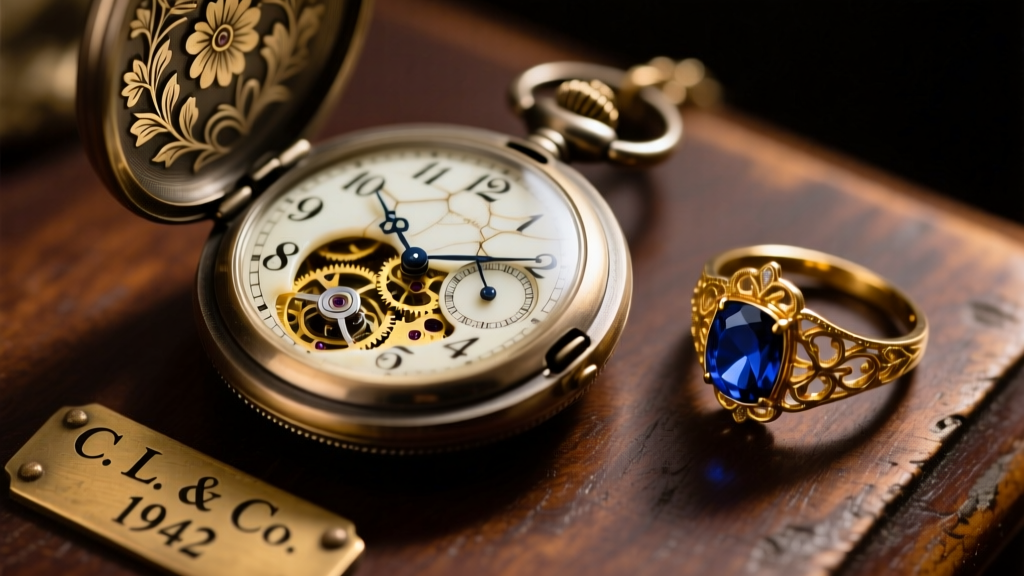
Please Help With This Jewelry Mark: A Practical Field Guide for Identifying Hallmarks, Maker’s Marks, and Country Stamps
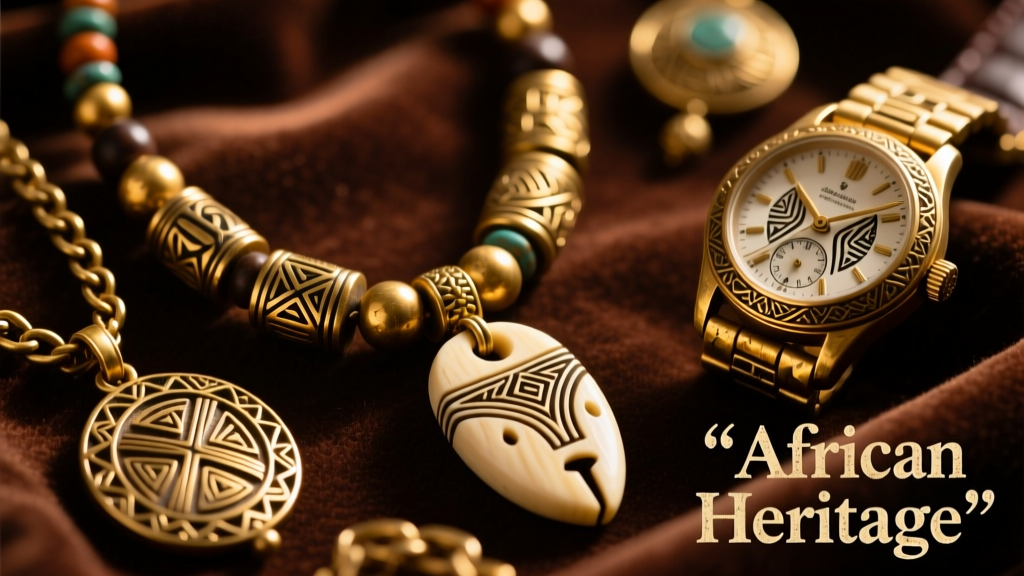
African Crafts: Material Mastery, Cultural Continuity, and Market Realities
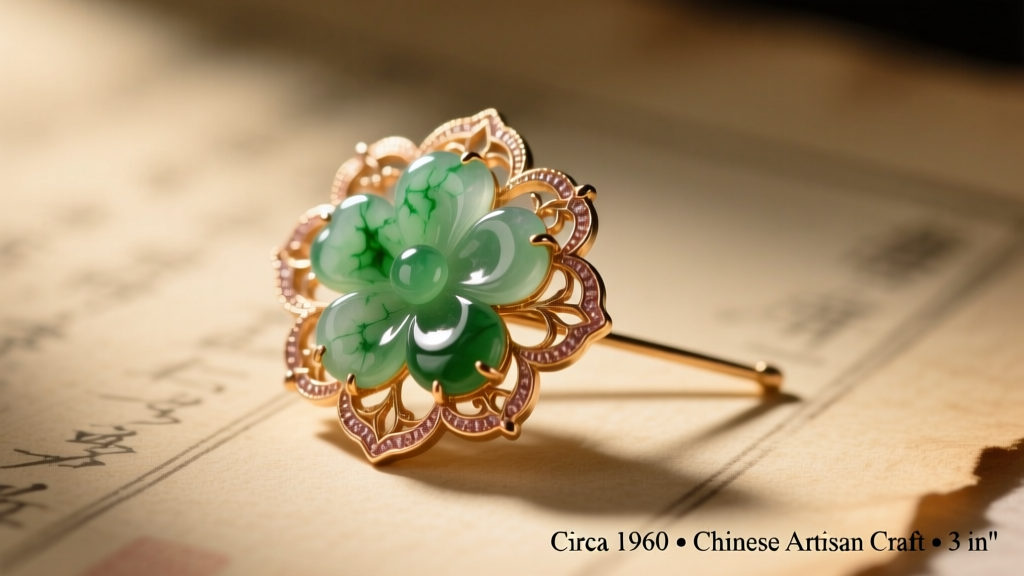
A Masterpiece of Mid-Century Chinese Craftsmanship: The 1960s Translucent Mottled Green Jadeite Pin in 14K Rose Gold
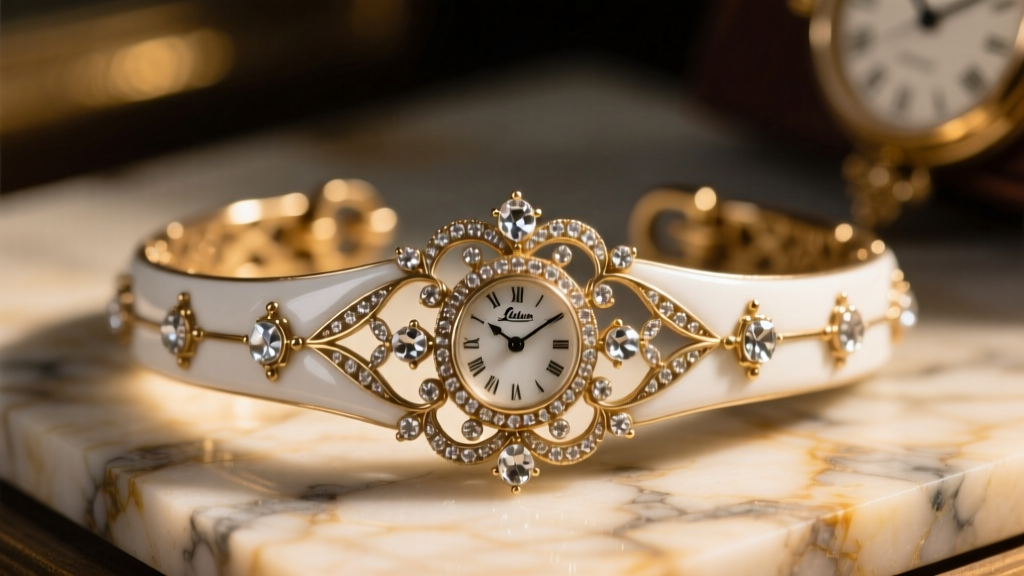
The Cinet White Enamel Rhinestone Bracelet: A Mid-Century Masterpiece of Precision and Glamour

Sumida Vase: 'Scholars Attendants on Mountain' — A Rare 18-Inch Red Glazed Ceramic Masterpiece from Meiji-Era Tokyo