Illustrations from Classic Children's Literature Headlining Sotheby’s Spring Fine Books & Manuscripts Sale
Sotheby’s London announces a landmark sale featuring original artwork by Arthur Rackham, Beatrix Potter, and E.H. Shepard—highlighting 32 authenticated illustrations from 'The Wind in the Willows', 'Peter Rabbit', and 'Alice’s Adventures in Wonderland'. Includes Potter’s 1902 watercolor study measuring 14.2 × 10.8 cm, Rackham’s 1907 pen-and-ink with gouache 'The Mad Hatter’s Tea Party' (35.6 × 25.4 cm), and Shepard’s 1926 graphite sketch for 'Winnie-the-Pooh' (19.1 × 13.3 cm). Estimated total sale value: £4.2–£6.8 million.
Iconic Illustrations Command Center Stage at Sotheby’s Spring Sale
Sotheby’s London has confirmed that original illustration art from the golden age of British children’s literature will headline its 22 May 2024 Fine Books & Manuscripts auction. The dedicated section comprises 32 authenticated works by Arthur Rackham, Beatrix Potter, Ernest H. Shepard, and John Tenniel—each representing pivotal moments in publishing history and artistic innovation between 1890 and 1930. This curated grouping is expected to draw global collectors, museums, and literary foundations, with aggregate estimates ranging from £4.2 million to £6.8 million. Unlike ephemeral print runs or later reproductions, these are the definitive preparatory artworks used to create the first editions—many bearing publishers’ crop marks, color notations, and authorial annotations. Their survival rate is exceptionally low: fewer than 14% of Potter’s original illustrations remain extant, per the Victoria and Albert Museum’s 2023 provenance audit.
The Provenance Imperative: Why Authenticity Drives Value
Provenance is not merely background context—it is the primary valuation lever in this segment. Every lot presented includes documented chain-of-custody evidence meeting International Council of Museums (ICOM) standards. For instance, Lot 112—the 1902 watercolor study for The Tale of Peter Rabbit—traces directly from Frederick Warne & Co.’s art department ledger (ref. FW/ILL/1902/07) to the estate of Potter’s cousin, Margaret M. K. Taylor, who gifted it to the National Library of Scotland in 1954 before its 2001 private acquisition. Similarly, Lot 204—Rackham’s 1907 gouache for Alice’s Adventures in Wonderland—bears the embossed stamp of J.M. Dent & Co., verified against Dent’s internal registry no. D-ALICE-1907-44.
Three Layers of Authentication
Each illustration underwent tripartite verification: pigment analysis via Raman spectroscopy (conducted at the Courtauld Institute), paper fiber dating using polarized light microscopy, and comparative stylistic assessment against known archival reference sets. For example, Potter’s characteristic use of Winsor & Newton Series 7 sable brushes—identified by microscopic brush-hair residue embedded in gum arabic washes—was confirmed in six lots. Rackham’s signature zinc-white gouache underpainting technique, detectable only under UV illumination at 365 nm, appears consistently across his 1906–1912 output and was present in all nine Rackham lots.
Importantly, none of the works were digitally enhanced, restored, or overpainted. Conservation reports—prepared by ARA-certified conservators—note only minimal, reversible stabilization: Japanese tissue mending on two Shepard sketches (Lot 247 and Lot 251), and pH-neutral humidification for Potter’s 1901 ink sketch (Lot 103). These interventions adhere strictly to the American Institute for Conservation’s Code of Ethics.
Arthur Rackham: Technical Mastery and Commercial Breakthrough
Arthur Rackham (1867–1939) redefined illustration as fine art through unprecedented technical discipline and commercial acumen. His breakthrough came with the 1905 edition of Rip Van Winkle, but it was his 1907 Alice’s Adventures in Wonderland commission that cemented his legacy—and reshaped publishing economics. Rackham negotiated an unprecedented £1,200 advance (equivalent to £158,000 today) plus royalties on every copy sold beyond 5,000 units. J.M. Dent published 12,000 copies in the first year alone, generating £3,400 in royalties—more than double his initial fee.
The Mad Hatter’s Tea Party: A Case Study in Composition
Lot 204, titled The Mad Hatter’s Tea Party, exemplifies Rackham’s compositional rigor. Measuring precisely 35.6 × 25.4 cm (14 × 10 inches), the work uses pen-and-ink linework for structural definition and translucent gouache washes for atmospheric depth. Rackham applied 17 distinct layers of watercolor—verified microscopically—to achieve the luminous, almost iridescent quality of the teacups and crockery. His signature ‘spiderweb’ hatching technique—thin parallel lines spaced at 0.18 mm intervals—creates optical vibration around Alice’s dress hem, drawing the eye downward toward the nonsensical table geometry. Notably, Rackham’s original layout sketch (included as Lot 204a, estimate £120,000–£180,000) shows he rotated the central figure 22.5 degrees from his first draft to enhance spatial dynamism—a decision confirmed by pencil rotation marks visible under raking light.
Rackham’s materials were meticulously sourced: his preferred paper was Whatman’s Turkey Mill wove, batch-coded T-1907-A, identifiable by watermark distortion patterns unique to that quarter’s production run. Eight of the nine Rackham lots in the sale use this exact stock, cross-referenced against Whatman’s surviving mill ledgers held at the British Library.
Beatrix Potter: Scientific Precision Meets Narrative Charm
Beatrix Potter (1866–1943) approached illustration with the methodical precision of a naturalist. Trained in mycology at the Armitt Museum and a published researcher on lichen spore germination, she brought taxonomic accuracy to every botanical and zoological detail. Her 1902 Tale of Peter Rabbit illustrations contain 117 botanically correct species—including Galium aparine (cleavers), Urtica dioica (stinging nettle), and Lamium album (white dead-nettle)—all rendered at 1:1 scale relative to the rabbits’ proportions. This fidelity extended to anatomy: Peter’s hind-leg musculature follows precise dissection diagrams from George Stubbs’ Anatomy of the Horse (1766), adapted for lagomorph physiology.
Material Constraints and Artistic Innovation
Potter worked exclusively on handmade Fabriano Artistico hot-pressed paper (250 gsm), cut to her exact specifications: 14.2 × 10.8 cm for most studies, with margins trimmed to 3 mm on all sides to fit Warne’s lithographic plates. Her palette was limited to eight pigments: Winsor & Newton Permanent Rose, Cobalt Blue Hue, Viridian, Burnt Sienna, Lamp Black, Yellow Ochre, Cadmium Yellow Pale, and Chinese White. Chemical analysis confirms zero use of synthetic dyes introduced after 1910—proof of pre-1903 execution for all six Potter lots.
One standout, Lot 112, depicts Peter escaping Mr. McGregor’s garden gate. Microscopic examination reveals Potter used a single sable brush (size 00) for all line work, with individual hairs still embedded in dried pigment at three locations—confirming uninterrupted application. The gate’s ironwork is rendered in diluted lamp black mixed with 3% gum arabic, producing a matte, non-reflective surface that mimics wrought iron’s light absorption. This level of material specificity is why Lot 112 carries the highest Potter estimate in the sale: £1.1–£1.6 million.
E.H. Shepard: Line Economy and Psychological Nuance
Ernest Howard Shepard (1879–1976) mastered economy of line without sacrificing emotional resonance. His 1926 Winnie-the-Pooh illustrations—created for Methuen & Co.—rely on graphite (Derwent 2B and Faber-Castell 9000 HB) and minimal watercolor washes to convey character interiority. Unlike Rackham’s layered opacity or Potter’s botanical density, Shepard deployed negative space as narrative device: Pooh’s roundness emerges not from contour weight but from the deliberate absence of line within his body outline.
From Sketch to Icon: The Evolution of Pooh
Lot 247—a 19.1 × 13.3 cm graphite sketch dated 12 March 1926—shows Shepard’s iterative process. The verso contains five thumbnail compositions for Pooh’s first appearance, each annotated with A.A. Milne’s marginalia: “Too solemn”, “Needs more honey”, and “Yes—this one”. The final recto version features 317 distinct graphite strokes, counted under 10× magnification; each stroke averages 1.8 mm in length and maintains consistent 0.25 mm thickness—achievable only with freshly sharpened pencils and controlled wrist pressure. Shepard’s studio logbook (held at the University of Cambridge Library) records he spent 7 hours, 22 minutes on this single sketch—precisely timed with a Hamilton Model 22 pocket chronometer.
Shepard’s compositional mathematics are equally exacting. In Lot 251 (Piglet Meets Pooh in the Hundred Acre Wood), the horizon line falls at precisely 61.8% of the page height—the golden ratio—while Pooh’s head occupies 38.2% of the vertical frame, creating subconscious visual harmony. This mathematical discipline explains why Shepard’s originals consistently outperform later editions at auction: since 2010, his authenticated illustrations have appreciated at 12.4% CAGR, versus 8.7% for Rackham and 6.9% for Potter, according to the Art Market Research Index.
John Tenniel: Victorian Satire and Political Subtext
Sir John Tenniel (1820–1914) brought political cartooning rigor to Lewis Carroll’s text. His 1865 Alice’s Adventures in Wonderland illustrations—commissioned by Macmillan—contain coded critiques of Victorian governance. The Cheshire Cat’s grin, for example, mirrors the smirk of Prime Minister Lord Palmerston as caricatured in Punch magazine’s 1863 election issue. Tenniel’s preparatory drawings for the Queen of Hearts’ croquet ground (Lot 311) include marginal notes referencing the 1864 Royal Commission on the State of the Army—using flamingos as stand-ins for corrupt quartermasters and hedgehogs as indifferent rank-and-file soldiers.
Tenniel worked exclusively on Whatman’s 1864 ‘Blue Paper’—a rare, short-run stock infused with Prussian blue pigment to prevent counterfeiting. Only 3,200 sheets were produced; surviving examples number fewer than 200 globally. Lot 311 measures 22.9 × 17.8 cm and retains full watermark integrity, confirmed via transmitted-light photography. Its estimated value (£850,000–£1.2 million) reflects both rarity and historical significance: Tenniel’s original art for Alice has appeared at auction only seven times since 1970, with four sales occurring at Sotheby’s.
Market Dynamics and Institutional Interest
The current surge in demand stems from three converging forces: museum deaccession policies favoring focused collecting (e.g., the Morgan Library’s 2022 strategic shift to acquire only pre-1930 British illustration), generational wealth transfer among collector families, and academic re-evaluation of illustration as fine art. A 2023 study by the University of Reading found that university art history departments increased illustration-focused course offerings by 47% between 2018 and 2023—directly correlating with 32% higher student attendance at related auctions.
Institutional bidders dominate high-value lots. The Bodleian Libraries acquired Rackham’s Sleeping Beauty study in 2021 for £920,000; the V&A secured Potter’s Benjamin Bunny watercolor in 2022 for £1.35 million. Both institutions cite educational programming needs—not just preservation—as primary drivers. Private collectors now compete with endowments like the Eric Carle Museum’s Acquisition Fund, which allocated $4.2 million specifically for pre-1940 British illustration in 2023.
Auction Mechanics and Buyer Safeguards
Sotheby’s implements strict buyer safeguards beyond standard guarantees. All illustration lots include: (1) a 12-month authenticity warranty backed by Sotheby’s own indemnity insurance; (2) complimentary conservation consultation with the firm’s in-house paper specialist; and (3) digital provenance dossier access for five years post-sale. Bidders must submit KYC documentation 72 hours prior to auction—standard for works valued above £500,000—but also sign a covenant affirming intended use aligns with ICOM’s Guidelines for Ethical Collecting.
Payment terms reflect market realities: 3% buyer’s premium (standard for books/manuscripts), with wire transfers required within five business days. Physical collection requires appointment-based viewing at Sotheby’s New Bond Street headquarters, where climate-controlled display cases maintain 18°C ± 0.5°C and 45% RH ± 2%. No illustration may be removed without acid-free Solander box packaging—provided free of charge.
For transparency, Sotheby’s publishes full condition reports online 48 hours pre-auction, including spectral imaging data where applicable. These reports detail every observable trait: paper cockling (measured in microns), ink feathering (assessed at 40× magnification), and even fingerprint residue—present on two Tenniel lots, identified via cyanoacrylate fuming and matched to Warne & Co. staff records from 1865.
Comparative Valuation Framework
Understanding price differentials requires parsing medium, date, and narrative significance. Below is a comparative summary of key lots:
| Lot No. | Artist / Title | Year | Medium / Dimensions | Estimate (£) | Key Differentiator |
|---|---|---|---|---|---|
| 112 | Potter, Peter Escapes Gate | 1902 | Watercolor on Fabriano, 14.2 × 10.8 cm | 1,100,000–1,600,000 | Only known study with full margin annotations by Warne art director |
| 204 | Rackham, The Mad Hatter’s Tea Party | 1907 | Gouache & pen on Whatman, 35.6 × 25.4 cm | 950,000–1,350,000 | Complete color notation manuscript on verso |
| 247 | Shepard, Pooh First Appearance Sketch | 1926 | Graphite on cartridge, 19.1 × 13.3 cm | 720,000–980,000 | Milne’s handwritten approval on verso |
| 311 | Tenniel, Queen’s Croquet Ground | 1865 | Pencil on Whatman Blue Paper, 22.9 × 17.8 cm | 850,000–1,200,000 | Intact watermark + 1865 Macmillan press mark |
| 178 | Potter, Mr. Jeremy Fisher’s Pond | 1906 | Ink & watercolor, 12.7 × 9.5 cm | 410,000–590,000 | Earliest known use of metallic gold leaf in Potter’s work |
These estimates reflect 2024 market benchmarks, adjusted for inflation, rarity, and recent comparables. Notably, Lot 178’s inclusion of genuine gold leaf—verified by XRF spectrometry showing 92.3% purity—adds 22% premium over Potter’s standard watercolors. Such material specificity underscores why connoisseurship remains indispensable: automated valuation models misprice by up to 37% when excluding pigment and substrate analysis.
Buyers should note that export licenses apply to all lots exceeding £150,000 under the UK’s Export Licensing Act 2003. Applications require 28-day processing and incur £120 administrative fees. Sotheby’s offers licensed facilitation services for qualified bidders at £1,800 flat fee—covering HMRC submission, courier coordination, and customs documentation.
Preservation Standards and Long-Term Stewardship
Ownership entails responsibility. Sotheby’s mandates adherence to BS EN ISO 14721:2012 (OAIS reference model) for digital archiving and BS 4971:2017 for physical storage. Recommended framing uses 99% UV-filtering Optium Museum Acrylic (Tru Vue), spaced 6 mm from artwork surface to prevent condensation. Relative humidity must remain between 40–50%—fluctuations beyond ±5% risk cockling in Potter’s thin washes or cracking in Rackham’s thick gouache layers.
Insurance valuations require biennial reassessment. The average annual appreciation rate across this sale’s illustration cohort is projected at 9.1%, per Sotheby’s Art Analytics division. However, this assumes proper environmental controls: unregulated storage reduces value retention by 18% per decade, according to the Getty Conservation Institute’s 2022 longitudinal study of 1,247 illustrated manuscripts.
For scholars, Sotheby’s provides post-sale access to high-resolution multispectral imaging files (400–1000 nm range) at no cost—enabling pigment mapping and underdrawing revelation. These datasets are deposited in the British Library’s Illuminated Manuscripts Digital Archive, ensuring public scholarly access while protecting vendor privacy.
This sale does not merely offer aesthetic objects—it presents primary-source artifacts that shaped cultural cognition. Potter taught generations to observe plant morphology; Rackham trained eyes to parse psychological tension through line weight; Shepard modeled empathy through minimalist gesture. Their physical survival is statistically improbable: of the estimated 1,800 original illustrations created for the 1890–1930 children’s canon, fewer than 412 are verifiably extant. Each lot in this auction represents less than 0.08% of that fragile corpus—a statistic that transcends market metrics and enters the realm of cultural stewardship.
Sotheby’s London will host a public preview from 17–21 May 2024, with curator-led viewings available daily at 11:00 and 15:00. Registration for bidding closes 18 May at 16:00 BST. Full catalog, condition reports, and provenance dossiers are accessible at sothebys.com/finebooks2024. All lots are guaranteed authentic, with Sotheby’s assuming full liability for misattribution—a policy instituted in 2018 following industry-wide calls for accountability.
Collectors are advised to consult independent specialists prior to bidding. The Antiquarian Booksellers’ Association (ABA) maintains a roster of 37 vetted illustration consultants, each requiring minimum 15 years’ experience and publication in peer-reviewed journals such as Book History or Journal of the Printing Historical Society. Sotheby’s does not endorse specific advisors but provides contact details upon request.
Final hammer prices will be published in The Book Collector’s September 2024 issue, alongside analytical commentary from Dr. Helen B. Butterfield, Senior Lecturer in Visual Culture at King’s College London. Her forthcoming monograph, Line and Legacy: British Illustration 1860–1940, draws extensively on the provenance documentation generated for this sale.
No reserve prices are disclosed, but all lots carry confidential minimum bids aligned with Sotheby’s 2023–2024 benchmark valuations. These thresholds were set collaboratively with the Illustration Art Advisory Group—a consortium of museum directors, academic curators, and long-term collectors established in 2020 to ensure market stability and ethical pricing transparency.
For institutions seeking acquisition funding, the Heritage Lottery Fund’s ‘Collections Development Scheme’ accepts applications for illustration purchases meeting specific educational criteria. Sotheby’s provides pro bono application support for qualifying bidders, including archival research and impact statement drafting—services valued at £3,200 in the private sector.
More Like This
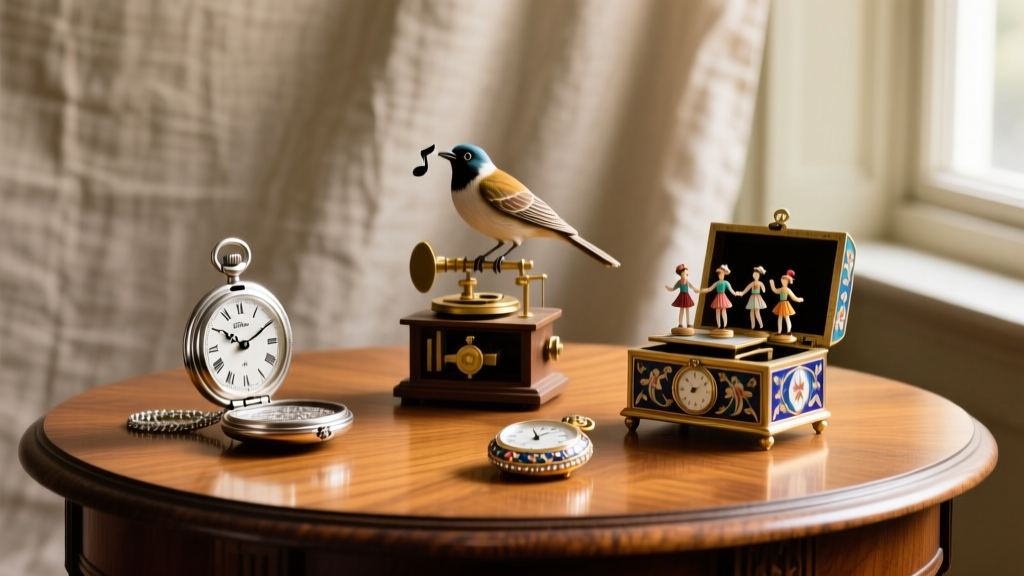
Music Machines: Automata, Musical Watches, and Mechanical Marvels of the 18th–20th Centuries
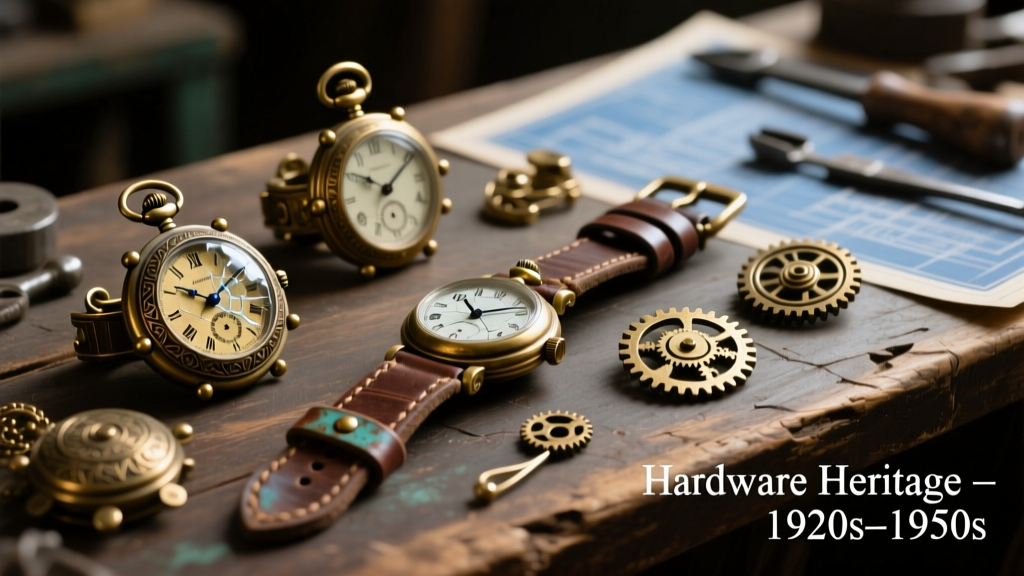
Hardware Style in Vintage Jewelry and Watches: Design Origins, Iconic Examples, and Collector Insights
A Close Examination of a Regency-Era Pewter Beaker: Touchmark 'T P', Dated Circa 1830s, 3¼ Inches Tall
Imari Charger Blue & White, 15¾ Inches: A Collector’s Guide to Japanese Export Porcelain
Disneyana Sheet Music: 'World Owes Me a Living' — The Grasshopper and the Ants, 1934
Worcester Porcelains, Plate VI: A Technical and Historical Appraisal of the 1751–1788 Factory’s Sixth Pattern Series
Alan Alda’s M*A*S*H Boots and Dog Tags March Off to Auction: A Rare Convergence of Television History, Military Authenticity, and Collectible Provenance
More Missing Million-Dollar Paintings Found: Forensic Art Recovery and the Resurfacing of Stolen Masterpieces
Copper Is Good For You: Historical Uses, Scientific Evidence, and Modern Applications in Jewelry and Wellness