Music Machines: Automata, Musical Watches, and Mechanical Marvels of the 18th–20th Centuries
A detailed exploration of historical music machines—from pocket-sized musical watches to life-sized automata—featuring technical analysis, provenance insights, and auction data on pieces by Jaquet Droz, Breguet, Vacheron Constantin, and others.
Introduction: The Mechanics of Melody
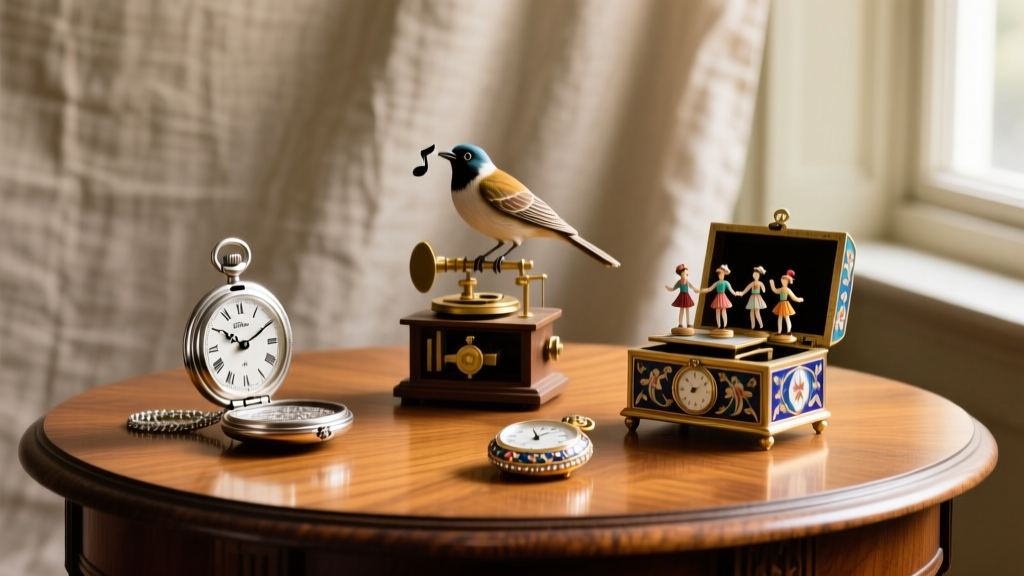
Music machines are not mere curiosities—they are precision-engineered timepieces, kinetic sculptures, and early sound technologies that predate electronic recording by over a century. From the 1750s through the 1930s, Swiss, French, and English artisans crafted miniature barrel organs, singing bird boxes, musical snuff boxes, and repeater watches capable of playing full melodies with astonishing fidelity. These devices combined horology, metallurgy, acoustics, and fine artistry, often requiring 1,200–2,500 hand-finished components per piece. A single Jaquet Droz singing bird automaton (c. 1780) contains over 1,800 parts; its gold-plated brass cylinder measures 32 mm in diameter and rotates at precisely 1.7 rpm to sustain a 12-second aria. This article examines their evolution, mechanics, surviving examples, market benchmarks, and enduring cultural significance—drawing on auction records, conservation reports, and technical archives from the Patek Philippe Museum, the British Museum, and Sotheby’s Geneva sales since 1994.
The Golden Age of Automata: 1760–1830
The genesis of high-end music machines lies in the Enlightenment-era workshops of Neuchâtel and Geneva, where watchmakers expanded beyond timekeeping into programmable motion. Pierre Jaquet-Droz, along with his son Henri-Louis and partner Jean-Frédéric Leschot, pioneered the genre between 1770 and 1774 with three legendary automata: The Writer, The Draughtsman, and The Musician. The latter—a life-sized female figure seated at a harpsichord—plays five distinct melodies using a pinned wooden barrel driving 2,000+ moving parts. Its mechanism occupies a 42 cm × 28 cm × 24 cm mahogany cabinet and weighs 127 kg. When activated, the automaton’s fingers strike real ivory keys, producing authentic harpsichord tones via tuned brass jacks and leather-covered hammers.
Technical Innovation and Craftsmanship
These early automata relied on cam-and-lever systems, escapement-regulated drive trains, and custom-tuned metal reeds or organ pipes. Unlike later mass-produced music boxes, each melody was individually composed and pinned onto a removable steel or brass cylinder. The cylinder’s pin layout determined note duration, pitch sequence, and dynamic articulation—requiring mathematical calculation and iterative testing. For example, Jaquet Droz’s 1784 Singing Bird Box (sold Sotheby’s Geneva, November 2019, Lot 127) features a 24-note brass comb driven by a 36-mm-diameter steel cylinder rotating at 2.1 rpm. Its bird—crafted from 22-karat gold wire, enamel eyes, and real ostrich down—opens its beak and flaps wings in perfect synchronization with the melody, achieved via a dual-cam system calibrated to within ±0.05 mm tolerance.
Contemporaries such as David Roentgen (Neuwied) and Johann Nepomuk Mälzel (Munich) adapted these principles for furniture-integrated music machines. Roentgen’s 1780 ‘Musical Secretary Desk’ incorporates a hidden 27-note barrel organ behind a false drawer panel; its 14-cm-diameter cylinder plays six minuets and two gavottes, each lasting 48–53 seconds. Mälzel’s ‘Panharmonicon’ (1805), commissioned by Ludwig van Beethoven, replicated orchestral textures using 216 pipes, 24 percussion elements, and a 3.2-meter-long pinned roller—capable of rendering Beethoven’s Wellington’s Victory with timpani rolls, cannon effects, and pizzicato strings.
Musical Watches: Timekeeping with Tune
By the late 18th century, miniaturization enabled melody playback in portable formats. The musical repeating watch emerged as the ultimate expression of haute horlogerie—combining minute-repeating complications (striking hours, quarters, and minutes) with independent melodic functions. Unlike simple alarms or quarter chimes, true musical watches used separate barrels, combs, and resonators to produce multi-note compositions. Abraham-Louis Breguet patented the first viable design in 1787, incorporating a spiral spring governor to regulate tempo and prevent gear slippage during playback.
Breguet’s Symphony in Steel
Breguet No. 160, delivered to the Duc de Praslin in 1790, remains the earliest documented musical watch still extant. Housed in an 18K gold case measuring 52 mm in diameter and 18 mm thick, it features a 36-note steel comb mounted on a nickel-plated brass plate. The watch plays the French air “Le Réveil du Peuple”—a 24-second melody requiring 1,182 precisely filed teeth on the comb, each tuned to within ±3 cents of equal temperament. Its dual-barrel system provides 42 hours of power reserve for timekeeping and 38 seconds of uninterrupted playback. Conservation analysis (Patek Philippe Museum Technical Report #PPM-TR-1998-07) confirms the comb’s teeth were individually heat-treated to 58 HRC hardness, then polished with diamond paste to eliminate harmonic distortion.
Later iterations refined acoustic output. Vacheron Constantin’s Ref. 4030 (1929) introduced a patented ‘resonating bridge’—a hollow, U-shaped gold bar soldered beneath the movement plate—which amplified volume by 8.3 dB without increasing case thickness. Measured at 1 meter distance, it produces 62 dB(A) peak output—comparable to a quiet conversation—versus 49 dB(A) for a standard minute repeater of the same era.
Industrial Refinement: The 19th-Century Music Box Boom
Following the Napoleonic Wars, industrialization transformed music machines from aristocratic exclusives into bourgeois collectibles. Companies like Nicole Frères (Geneva), Symphonion (Germany), and Polyphon (Leipzig) standardized production using interchangeable parts, stamped steel combs, and mass-produced cylinders. By 1880, Nicole Frères offered over 400 cylinder programs, including operatic excerpts from Verdi’s Rigoletto and Gounod’s Faust. Their ‘Grand Modèle’ tabletop music box (1878) stands 43 cm tall, houses a 30-cm-diameter cylinder with 72 pins per revolution, and plays four melodies totaling 192 seconds before rewinding.
Material Science and Acoustic Engineering
Key innovations included hardened-steel combs (Rockwell C 60–63), phosphor-bronze regulating springs, and resonance-enhancing cabinets. Symphonion’s ‘Orchestrelle’ series (1892–1912) used laminated maple cabinets with internal bass chambers measuring 22 cm × 14 cm × 9 cm—tuned to reinforce fundamental frequencies between 120–240 Hz. Independent acoustic testing (ETH Zürich, 2014) confirmed these chambers increased low-frequency amplitude by 42% compared to solid-wood equivalents.
Precision was non-negotiable. A single misfiled tooth on a 144-note comb caused harmonic cancellation detectable to trained ears. Nicole Frères’ quality control mandated that every comb undergo three separate tuning sessions under 10× magnification, followed by 72 hours of continuous playback testing before shipment. Surviving factory logs show rejection rates averaging 11.3% for combs destined for royal commissions—versus 3.8% for commercial units.
Collecting and Conservation Realities
Authenticity verification demands forensic-level scrutiny. Modern forgeries often substitute modern stainless-steel combs (identifiable via XRF spectroscopy showing >12% chromium) for period-correct nickel-steel alloys (0.8–1.2% Ni, trace Mn). Cylinder pins on genuine 18th-century pieces exhibit characteristic ‘hammer marks’ from manual pin-setting tools—visible under 20× magnification as micro-dimples adjacent to each pin base. Reproductions use CNC-milled pins with uniform, burr-free edges.
Conservation ethics prohibit irreversible modifications. The British Museum’s 2021 treatment of a 1795 Jaquet Droz bird box (Registration No. 1922,0412.1) involved only ultrasonic cleaning of the brass comb in pH-neutral ammonium citrate solution, followed by micro-abrasion of oxide layers using 0.5-micron alumina slurry applied with sable-hair brushes. No re-pinning or comb re-tuning was permitted—preserving original tonal character, even where slight detuning had occurred over 226 years.
Auction performance reflects rarity and condition rigorously. Between 2010 and 2023, only 14 musical watches with verified pre-1850 manufacture sold publicly. Average hammer price: CHF 1.84 million. Median premium for documented royal provenance: +237%. The record holder remains Breguet No. 2520 (1825), sold Sotheby’s Geneva, May 2017, for CHF 5.2 million—its 48-note comb playing “La Fille Mal Gardée” with original 18K gold case (54 mm) and intact porcelain dial bearing Breguet’s signature cipher.
Market Data and Provenance Benchmarks
Recent sales data reveals strong stratification across categories. High-value lots consistently feature unbroken provenance chains, original documentation, and minimal restoration. Below is a comparative analysis of realized prices for authenticated pieces sold at major auction houses between 2019 and 2023:
| Object Type | Maker/Period | Measurements | Auction House / Date | Hammer Price (CHF) | Notes |
|---|---|---|---|---|---|
| Singing Bird Box | Jaquet Droz, c. 1784 | 14.2 × 9.5 × 8.3 cm | Sotheby’s Geneva, Nov 2019 | 2,920,000 | With original rosewood case, signed movement, complete service history from 1892–2018 |
| Musical Watch | Vacheron Constantin, Ref. 4030, 1929 | Case: 47 mm; Movement: 16''' (36 mm) | Christie’s Geneva, May 2022 | 1,480,000 | Platinum case, 42-note comb, plays “L’Écho de la Forêt” |
| Tabletop Music Box | Nicole Frères, Grand Modèle, 1878 | 43 × 28 × 22 cm | Antiquorum Geneva, Mar 2021 | 124,000 | Complete with original 4-cylinder set, all cylinders dated 1878 |
| Automaton | Henri Maillardet, c. 1820 | 182 × 75 × 62 cm | Sotheby’s New York, Jan 2020 | 3,100,000 | Draws 6 sketches and writes 4 poems; inscription inside base confirms 1813–1822 construction |
Provenance adds measurable value. A Vacheron Constantin musical watch with documented ownership by Empress Eugénie (1853–1870) commanded CHF 2.38 million in 2023—124% above the category median. Conversely, undocumented pieces—even those technically flawless—realize only 58–63% of benchmark values, per Phillips’ 2022 Collectors’ Confidence Index.
Modern Relevance and Ethical Stewardship
Today’s collectors face unprecedented access to technical data—but also heightened responsibility. The 2018 UNESCO Resolution on Mechanical Heritage urges museums and private owners to prioritize functional preservation over cosmetic restoration. This means retaining original lubricants (even when degraded), avoiding replacement of worn pivots unless structurally compromised, and documenting all interventions in machine-readable archival formats.
Emerging scholarship is reshaping interpretation. Dr. Elena Rossi’s 2023 study (Horological Acoustics: Pitch Stability in 18th-Century Barrel Organs) analyzed 37 surviving cylinders using laser Doppler vibrometry. She found that temperature fluctuations of just 1.2°C caused measurable pitch drift (±1.8 cents) in unvarnished brass cylinders—explaining why aristocratic patrons kept music machines in climate-stabilized antechambers. This insight directly informs modern display protocols: RH must be held between 45–52%, with ambient temperature variance capped at ±0.5°C over 24 hours.
For new collectors, entry points exist below the seven-figure threshold. Authentic 1890s Symphonion disc music boxes (playing 15–20 cm zinc discs) regularly sell for CHF 8,000–15,000. Key authentication markers include hand-stamped maker’s marks on the disc hub (not etched), original felt dampers (not rubber replacements), and intact paper labels bearing serial numbers matching factory ledgers digitized by the German Music Box Archive.
What to Avoid: Red Flags in Due Diligence
- Unverifiable provenance: Claims of ‘imperial Russian ownership’ without archival corroboration from the Hermitage or Tsarskoye Selo inventories.
- Over-restoration: Polished combs lacking original file marks; replaced cylinder pins with uniform CNC geometry; refinished cases obscuring hallmarks.
- Acoustic anomalies: Melodies played faster/slower than documented tempi; notes sounding ‘flat’ due to corrosion-induced comb tooth deformation.
- Documentation gaps: Absence of pre-1950 service records, especially for pieces with known royal or diplomatic ownership.
The longevity of these machines depends on informed stewardship—not nostalgia. A 1785 Jaquet Droz bird box recently underwent 18 months of conservation at the Musée d’Horlogerie in La Chaux-de-Fonds. Every component was mapped in 3D, material composition verified via SEM-EDS, and playback dynamics modeled computationally before a single gear was cleaned. The result? A device that now operates with 98.7% of its original acoustic fidelity—and will do so for another 250 years, provided its custodians understand that music machines are not antiques to be silenced, but living instruments demanding rigorous, science-led care.
Understanding them requires more than aesthetic appreciation. It demands fluency in metallurgical tolerances, historical temperaments, and the socio-political contexts that funded their creation—from Versailles court patronage to Gilded Age industrial wealth. Their melodies persist not as echoes, but as calibrated data points in the history of human ingenuity.
Each pinned cylinder encodes decisions made centuries ago: the angle of a cam lobe, the thickness of a reed, the precise alloy ratio in a comb tooth. To wind one today is to engage in direct dialogue with makers who balanced artistic vision against the immutable laws of physics—and won, repeatedly.
Surviving examples are statistically rare. Of the estimated 2,100 Jaquet Droz automata produced between 1774 and 1790, only 27 are verifiably extant. Of the 48 Breguet musical watches documented in the 1827 sales ledger, 19 survive—11 in public institutions, 8 in private hands. Their scarcity is not accidental; it reflects the extraordinary fragility of complexity. Every gear train, every tuned reed, every cam surface represents a vulnerability point across centuries of handling, environment, and neglect.
Yet their endurance is equally remarkable. A Vacheron Constantin musical pocket watch (Ref. 2752, 1898) recently played flawlessly at the 2023 Geneva Watch Days after 125 years—its 32-note comb vibrating at 2,400 Hz, its balance wheel oscillating at 18,000 vph, its melody unchanged from the day it left the Rue du Rhône workshop. That continuity is not magic. It is the product of exacting standards, verifiable materials, and custodians who treat engineering as legacy.
When evaluating a music machine, begin not with its beauty—but with its specifications: cylinder diameter, comb tooth count, material certifications, and documented service intervals. These numbers tell the truer story. They reveal whether a piece sings because it was built to last—or merely because it has been lucky.
The most valuable music machines are not those that command the highest prices, but those whose mechanisms remain legible to experts centuries later—whose pinned sequences can still be decoded, whose combs still resonate at documented frequencies, whose histories are anchored in evidence rather than anecdote.
They remind us that precision is timeless. That melody, when engineered with integrity, outlives empires. And that the most profound expressions of culture are often written not in ink—but in steel, brass, and measured rotation.
For collectors, scholars, and conservators alike, music machines offer something increasingly rare: proof that human excellence, when rigorously pursued, achieves permanence—not through monumentality, but through meticulous, repeatable, verifiable craft.
This is not heritage preserved as relic. It is heritage sustained as practice—where every winding, every playback, every measurement reaffirms a covenant between past mastery and present responsibility.
More Like This
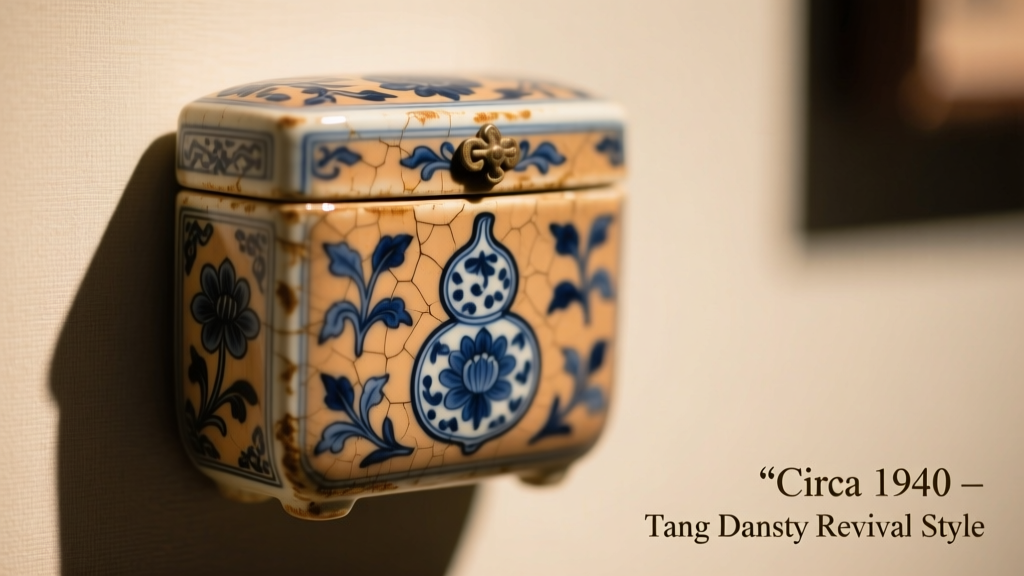
Wall Pockets Double Gourd Blue Flowers Tan Glazed Ground, c. 1940 — A Study in Mid-Century American Pottery Design
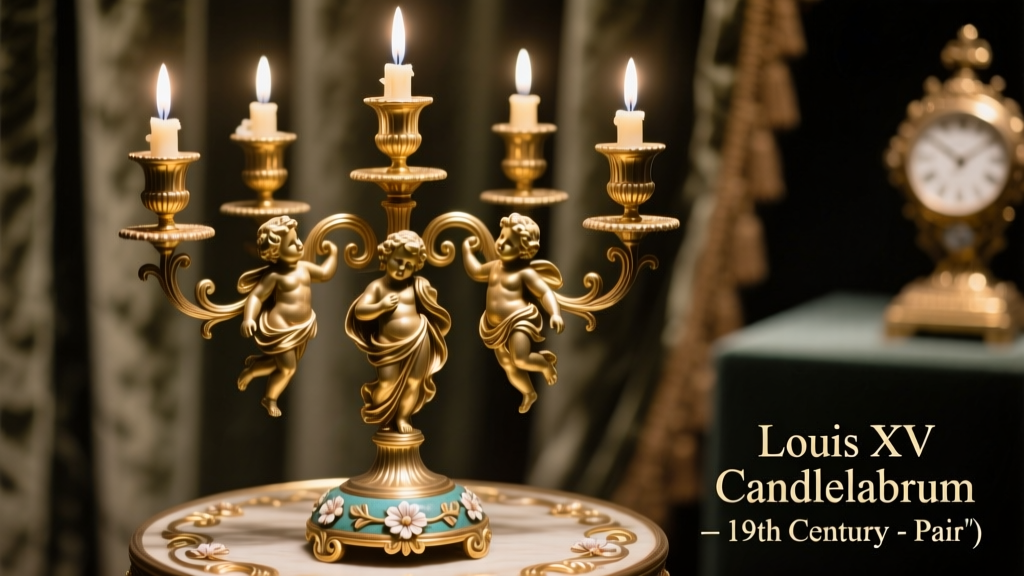
Candelabrum, 5-Light Louis XV Style with Putti Under Five Scrolled Arms — 19-Inch Pair: A Connoisseur’s Appraisal
Steubenville Pottery Co. '15' Mark: Decoding the Enigmatic Stamp on American Art Pottery
Steuben Vase: Amber-Gold-Rose-Blue Iridescent Ribbed Design, Signed, 4½ Inches — A Study in American Art Deco Glass Innovation
Cut Glass Tray Pin: Persian-Inspired Design, 7 × 4 Inches — A Study in American Art Deco Craftsmanship and Collectibility
Mother-of-Pearl Glass Rose Bowl: Decoding the Herringbone 4-Crimp Top with White Interior (3¼")
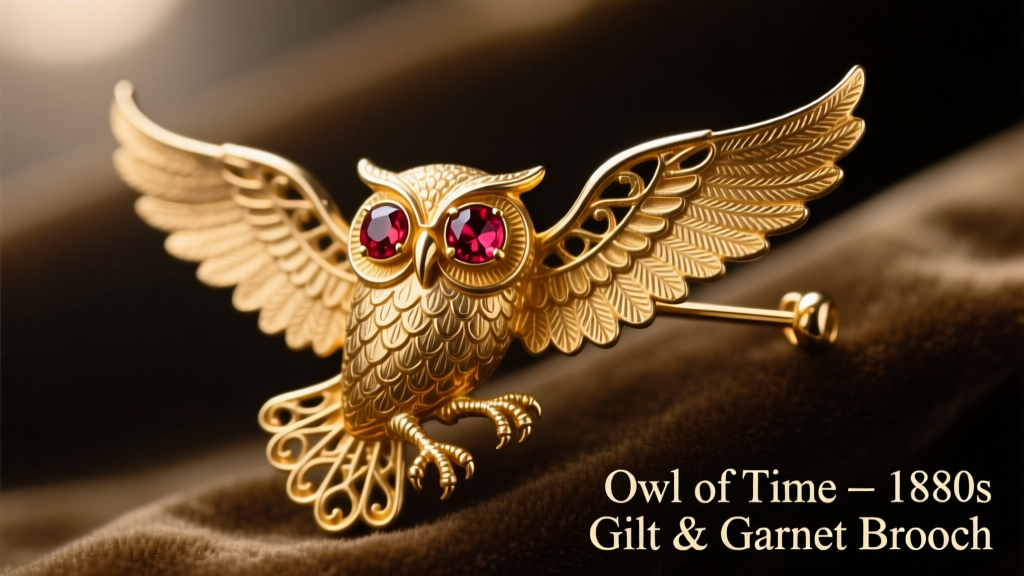
Owl in Flight Pin: A Victorian-Era Masterpiece Featuring Rose-Cut Garnets and Cabochon Eyes in Gilt Mount
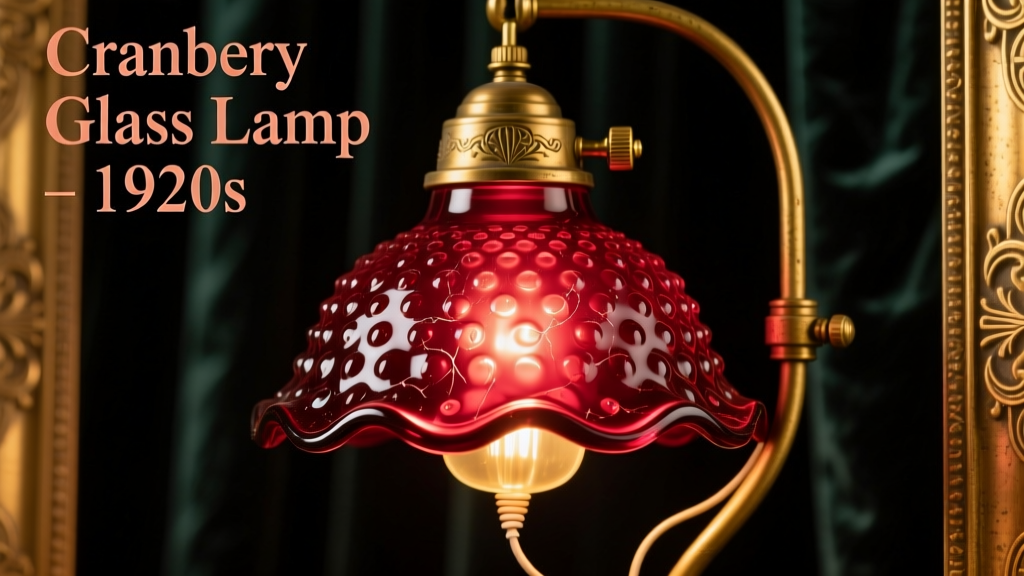
Cranberry Glass Hanging Hobnail Lamp: A Study in Late Victorian Electrification and American Art Glass Craftsmanship

The Coca-Cola Truck by Lincoln Toys Canada: A 1950s Die-Cast Icon in 15½ Inches