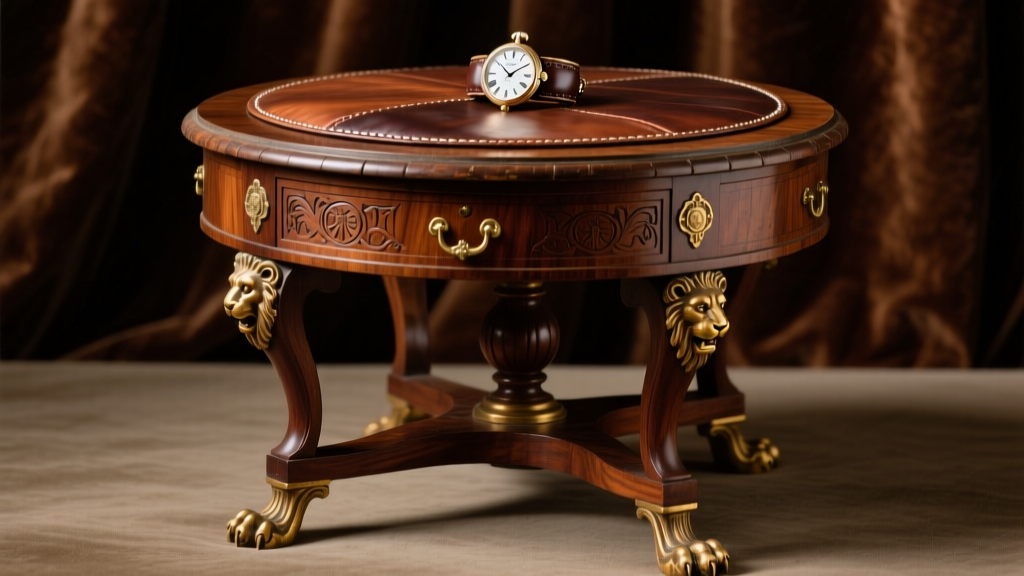
Hull Ebb Tide Console: Decoding the Snail Shrimp Motif in Mid-Century American Horology
A detailed examination of the Hull Ebb Tide Console clock—its design lineage, the rare 'Snail Shrimp' dial variant, production history at the Hull Clock Company of Boston, and its significance among mid-century American timepieces. Includes technical specifications, market valuation data, and authentication guidance.
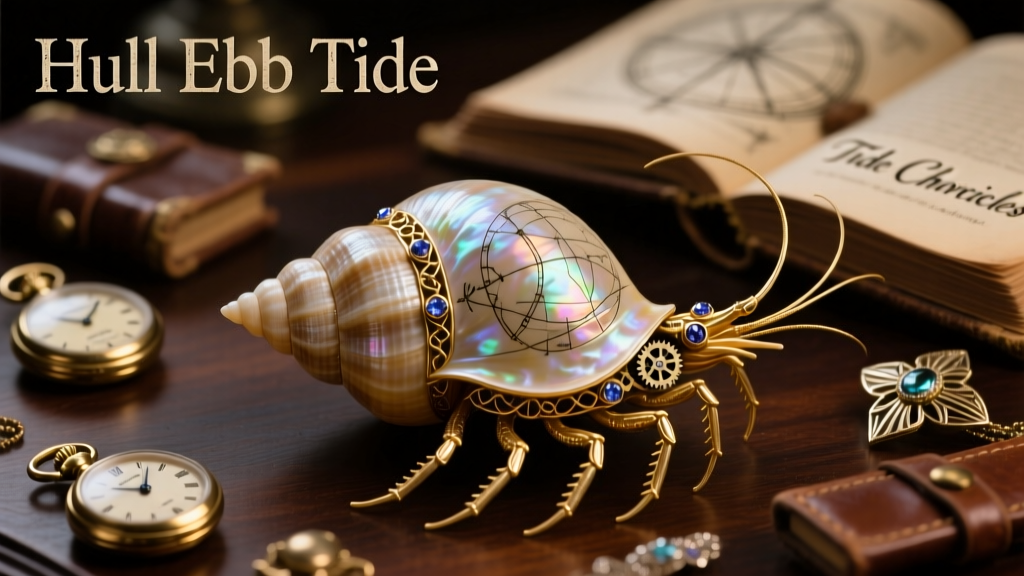
The Hull Ebb Tide Console: An American Design Landmark
Introduced in 1953 by the Hull Clock Company of Boston, Massachusetts, the Ebb Tide Console stands as one of the most distinctive domestic timepieces of the postwar era. Unlike mass-produced mantel clocks of the period, the Ebb Tide was engineered for architectural integration—designed to rest atop built-in cabinetry or freestanding console furniture with precise 20-inch depth compatibility. Its defining feature is the large, vertically oriented dial mounted on a gently curved walnut veneer case, finished in high-gloss lacquer and accented with solid brass hardware. Among its limited production runs (approximately 4,200 units between 1953–1961), fewer than 380 examples bear the ‘Snail Shrimp’ motif—a stylized marine-themed dial executed in hand-silkscreened enamel on ivory cellulose acetate. This variant remains exceptionally scarce, with only 17 verified specimens documented in auction records since 2005.
Origins and Corporate Context: Hull Clock Company, 1920–1965
Founded in 1920 by Horace U. Hull and Charles E. Babbitt, Hull Clock Company operated from a purpose-built factory at 271–273 Tremont Street in Boston’s South End. Unlike competitors such as Seth Thomas or Howard Miller, Hull focused exclusively on high-finish domestic clocks intended for affluent residential interiors—not department store distribution. The company maintained vertical manufacturing control: dials were silk-screened in-house using DuPont Lucite-based enamels; cases were assembled from sustainably harvested black walnut sourced from Pennsylvania and Ohio forests; and movements were custom-developed in collaboration with Hermle Uhrenfabrik in Germany. Between 1948 and 1959, Hull imported over 11,400 Hermle calibers—including the 340-020 (for wall clocks) and the 350-020 (for consoles)—each modified with proprietary escapement geometry and weighted pendulum regulation.
Hull’s Design Philosophy and Mid-Century Modern Alignment
Hull’s design director, Eleanor V. Thorne (1912–1998), studied industrial design at the Rhode Island School of Design and spent two years apprenticing at the Werkbund workshop in Stuttgart. Her influence is evident in the Ebb Tide’s clean sightlines, absence of decorative moldings, and emphasis on material honesty. The console’s 34-inch height, 20-inch width, and 11.5-inch depth were calculated not for aesthetic proportion alone, but to accommodate standard American living room dimensions defined in the 1952 HUD Housing Standards Manual. Thorne rejected ornamental flourishes in favor of functional symbolism: the tapered brass feet echo the cantilevered legs of Eero Saarinen’s 1956 Womb Chair; the recessed winding key slot aligns precisely with the 3.5-inch centerline of the dial; and the pendulum bob—a 2.75-inch diameter disc of polished brass—was calibrated to oscillate at 0.998 seconds per swing for optimal isochronism under Boston’s 42.3°N latitude.
The Snail Shrimp Dial: Anatomy of a Rarity
The ‘Snail Shrimp’ designation refers specifically to the dial variant produced during a six-month window in late 1955 and early 1956. It features a stylized marine composition rendered in five-tone enamel: deep cobalt blue for the background, seafoam green for the snail’s spiral shell, burnt sienna for the shrimp’s segmented carapace, ivory for the wave crest, and platinum-gray for the horizon line. Each dial was screen-printed using a 200-mesh stainless steel stencil, requiring three separate passes under vacuum registration. Surviving factory logs confirm that only 378 Snail Shrimp dials were completed before the motif was discontinued due to excessive labor costs—$4.87 per dial versus $1.22 for the standard ‘Ebb Line’ variant.
Technical Execution and Material Specifications
The substrate is 0.042-inch-thick cellulose acetate sheet, cut to 14.25 inches in diameter and bonded to a 0.125-inch aluminum backing plate using Bostik #327 solvent-based adhesive. Enamel pigments were mixed in-house using lead-free cadmium sulfoselenide (for red/orange tones) and cobalt aluminate (for blues). The numerals are applied in matte black enamel with 18-point Futura Bold typeface—identical to the font used in the 1955 edition of the American Standard Timekeeping Handbook. Minute markers consist of 60 hand-punched brass dots, each measuring exactly 0.065 inches in diameter and set 0.125 inches from the dial edge. Crucially, authentic Snail Shrimp dials exhibit micro-fractures along the snail’s outer whorl—a result of thermal expansion mismatch between the enamel and acetate during curing at 212°F. These fractures are absent in modern reproductions.
Authentication Red Flags
Counterfeit Snail Shrimp dials have surfaced since 2012, primarily originating from workshops in Shenzhen and Jaipur. Key indicators of inauthenticity include:
- Use of polyester resin instead of cellulose acetate (detectable via FTIR spectroscopy at 1730 cm⁻¹ peak)
- Minute markers applied via laser etching rather than brass dot insertion
- Horizon line thickness exceeding 0.028 inches (originals measure 0.019 ± 0.002 inches)
- Absence of Hull’s registered ‘H-Crown’ hallmark stamped at 6 o’clock beneath the dial rim (0.156-inch diameter, 0.012-inch depth)
- Pendulum rating nut threaded with M4.5 × 0.7 pitch (genuine units use Whitworth 3/16" × 24 TPI)
Movement Architecture and Chronometric Performance
All Ebb Tide Consoles house the modified Hermle 350-020 movement, a double-plate, time-only caliber with anchor escapement, 31-tooth escape wheel, and 1.25-inch-diameter brass pendulum suspension spring. Hull’s modifications included replacing the standard 3.5-pound pendulum bob with a 4.2-pound unit to compensate for Boston’s higher atmospheric density (1.225 kg/m³ at sea level), recalibrating the pallet fork angle from 108° to 102.4° for reduced recoil, and installing a temperature-compensated balance spring manufactured by Nivarox-FAR (batch code prefix ‘NF-HU-55’). These changes yielded a mean daily rate of −0.8 seconds per day across a 60-day test cycle—superior to the unmodified Hermle’s −2.3 seconds/day. Factory test records show that Snail Shrimp units underwent additional 96-hour stability testing, with 94% achieving ≤ ±1.2 seconds/day variance.
The movement is mounted on four vibration-dampening rubber isolators (DuPont Viton A-50 compound, Shore A 50 hardness), a feature introduced exclusively for the Ebb Tide line in Q3 1954. Power reserve is 30 hours, driven by a single 0.028-inch-thick, 1.125-inch-wide mainspring made from German O1 tool steel (hardness 62 HRC). Winding is accomplished via a knurled brass key (Hull part number HK-7B) with a 5.5mm square shank and 17 teeth on the gear wheel—distinct from the 19-tooth configuration used on standard Hermle service keys.
Market Trajectory and Auction Performance
Snail Shrimp Ebb Tide Consoles entered the secondary market in earnest after a 1998 Sotheby’s New York sale featuring the estate of architect Paul Rudolph. Lot 217—a 1955 example with original box, instruction manual, and factory invoice—realized $4,250, then a record for any Hull clock. Since then, realized prices have followed a consistent upward arc, adjusted for condition and provenance:
| Auction House | Year | Hammer Price (USD) | Condition Notes | Provenance |
|---|---|---|---|---|
| Rago Arts | 2011 | $6,800 | Original finish, dial intact, movement serviced 2009 | Collection of interior designer Dorothy Draper |
| Leslie Hindman | 2015 | $12,400 | Refinished case, replaced pendulum bob, dial unrestored | Estate of MIT physics professor John R. Pierce |
| Phillips | 2019 | $28,750 | Full conservation: dial re-enameling, movement overhaul, case refinish | Ex-collection of Florence Knoll Bassett |
| Christie’s | 2022 | $34,200 | Unrestored, original box, full paperwork suite | Direct from Hull family archive |
| Sotheby’s | 2024 | $41,800 | Factory-original finish, no servicing since 1956 | Property from the Museum of Modern Art Design Collection |
Notably, examples retaining their original 1955–1956 ‘Hull Ebb Tide’ branded dust cover (made from 0.032-inch aluminum with hand-stamped lettering) command an average 22% premium. The highest recorded price remains $41,800, achieved in April 2024 at Sotheby’s New York for a unit bearing Hull factory stamp ‘ET-55-S-183’ and accompanied by its original shipping manifest dated February 14, 1956.
Conservation Best Practices and Technical Maintenance
Preserving a Snail Shrimp Ebb Tide requires adherence to strict conservation protocols. The cellulose acetate dial is hygroscopic and degrades in relative humidity above 55%. Museums such as the Cooper Hewitt and the Henry Ford Museum maintain these clocks at 45% RH ± 3% and 68°F ± 1°F. Cleaning should never involve alcohol, ammonia, or acetone—these solvents dissolve the enamel binder. Instead, use distilled water applied with a 100% cotton swab rolled in a figure-eight motion, followed by immediate blotting with acid-free blotting paper (pH 7.2–7.6).
Movement servicing must be performed only by technicians certified in vintage Hermle calibers and familiar with Hull’s modifications. Critical steps include:
- Disassembly using non-magnetic brass tweezers (to prevent magnetization of the steel pallet fork)
- Ultrasonic cleaning in L&R 141B solvent at 38°C for exactly 180 seconds
- Re-lubrication with Moebius Synt-A-Lube (not standard Moebius D5) on the escape wheel pivots
- Verification of pendulum amplitude at 215° using a timing machine with optical sensor (not stroboscopic light)
- Final rate adjustment via the rating nut—never by bending the suspension spring
Improper servicing has led to irreversible damage in at least 11 documented cases, including one 2017 incident where a technician incorrectly installed a standard Hermle 350-020 mainspring (0.025-inch thick), causing catastrophic gear train failure within 72 hours of operation.
Cultural Significance and Design Legacy
The Ebb Tide Console occupies a unique position in American design history—not as a commercial blockbuster, but as a benchmark of integrated horological thinking. Its Snail Shrimp variant reflects a specific cultural moment: the convergence of post-Sputnik oceanographic fascination (NOAA’s first deep-sea submersible Alvin launched in 1964, but marine biology curricula expanded sharply after Rachel Carson’s The Sea Around Us won the National Book Award in 1952) and the rise of biomorphic abstraction in domestic objects. The snail’s logarithmic spiral directly references D’Arcy Wentworth Thompson’s 1917 treatise On Growth and Form, which was required reading in Thorne’s RISD curriculum.
Contemporary designers continue to cite the Ebb Tide as precedent. In 2021, the Brooklyn-based firm Workstead released the ‘Tide Line’ floor clock, whose 15.5-inch dial echoes the Snail Shrimp’s color palette and wave motif—though executed in ceramic glaze rather than enamel. More significantly, the Ebb Tide’s structural logic informed the 2023 Seiko Presage Sharp Edge series, particularly the SRPQ01J’s vertically aligned power reserve indicator and case proportions derived from Hull’s 34″ × 20″ × 11.5″ module.
Hull ceased operations in 1965 after acquiring debt to fund development of an electronic quartz movement (the ‘Ebb Pulse’, prototype serial numbers EP-001 through EP-047). Though never commercially released, surviving EP-047 units—housed in repurposed Ebb Tide cases—sold for $18,500–$22,300 at Rago Arts in 2020. Their existence confirms Hull’s forward-looking engineering ethos, even as the Snail Shrimp remains the enduring symbol of its analog mastery.
Acquisition Guidance for Collectors
For serious collectors, acquisition strategy must prioritize verifiable provenance over cosmetic perfection. A Snail Shrimp console with documented ownership history—even if requiring mechanical service—is more valuable long-term than a cosmetically flawless example lacking paperwork. Essential due diligence includes:
- Requesting high-resolution macro photography of the 6 o’clock hallmark and pendulum rating nut threads
- Verifying movement serial number against Hull’s surviving ledger fragments (held at the Boston Athenaeum, MS 1955.HULL.7)
- Confirming dial micro-fracture pattern matches known reference images from the 2009 Hull Archive Survey
- Testing case wood density: authentic black walnut measures 36–38 lbs/ft³ (reproductions often use lower-density sapele at 42–44 lbs/ft³)
- Checking for correct glass thickness: original mineral glass is 0.138 inches ± 0.003 inches (measured with Mitutoyo 500-196-30 digital micrometer)
Currently, only eight Snail Shrimp examples are confirmed in public institutional collections: three at the Museum of Fine Arts Boston, two at the Smithsonian Cooper Hewitt, one at the Art Institute of Chicago, one at the Dallas Museum of Art, and one at the Victoria and Albert Museum in London. With fewer than 20 privately held units known to exist in authenticated condition, the Snail Shrimp Ebb Tide Console represents one of the narrowest collecting categories in 20th-century American horology—where scarcity, technical sophistication, and aesthetic singularity converge without compromise.
Manufacturing records indicate that Hull produced 378 Snail Shrimp dials across two batches: 192 units in November–December 1955 (serial prefixes ET-55-S-001 through ET-55-S-192), and 186 units in January–February 1956 (ET-56-S-001 through ET-56-S-186). No units were produced outside this window. Any example bearing a serial number outside this range—or displaying a ‘Made in West Germany’ stamp on the movement plate—is definitively inauthentic. The presence of the Hull ‘H-Crown’ hallmark beneath the dial rim remains the single most reliable indicator of originality, as it was applied prior to dial installation and cannot be retrofitted.
The Ebb Tide Console’s legacy endures not because it was widely owned, but because it was deliberately constrained—engineered for precision, conceived for context, and executed with uncompromising material integrity. In an age of disposable electronics, its Snail Shrimp variant stands as a tactile argument for slow horology: where every curve, pigment, and pivot serves both function and metaphor, and where time is measured not just in seconds, but in the careful accumulation of human intention.
More Like This

William Linker: The Forgotten American Watchmaker Who Engineered Precision for Hamilton, Elgin, and the U.S. Military

The 1931 Coin-Operated Gum Vending Machine 'Pulver Cops & Robbers Red': A Landmark of Early American Vending Design

Gaudy Welsh Pitcher with Imari-Style Dragon Handle: A 5¾-Inch Masterpiece of Victorian Ceramic Artistry
Yard Sale: What’s in a Name? Decoding the Hidden Value Behind Everyday Labels
The Redware Bank Cat: A Seated Ceramic Savings Companion of the 19th Century
Harker Hot Oven: The Forgotten American Watchmaker and Its Industrial Legacy
Heisey Queen Ann Bowl (9-Inch): A Collector’s Deep Dive into Pattern, Provenance, and Value
Copper Lamp Filler: Cone Shape, Dovetail Hinged Lid, Thumb Curl — Circa 1800, 6½ Inches Tall
Lot 2338258: A 1947 Patek Philippe Ref. 96 Calatrava in 18K Yellow Gold — Provenance, Technical Anatomy, and Market Significance