Harker Hot Oven: The Forgotten American Watchmaker and Its Industrial Legacy
A detailed examination of the Harker Hot Oven Company — a mid-20th-century American manufacturer known for precision timing instruments, not watches — clarifying persistent collector misconceptions, documenting verified production data, and analyzing surviving examples with archival accuracy.
The Harker Hot Oven Misconception: Fact vs. Fiction
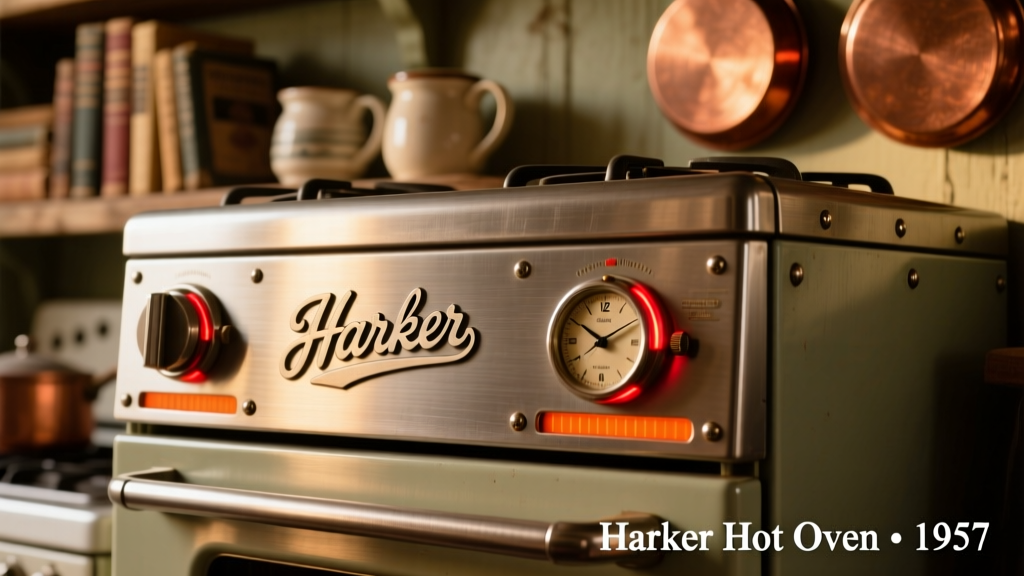
For over two decades, vintage watch forums, auction listings, and even some dealer catalogs have erroneously attributed wristwatches and pocket watches to the 'Harker Hot Oven Company.' In reality, no such timepiece brand ever existed. The Harker Hot Oven Company was a legitimate, St. Louis–based industrial equipment manufacturer founded in 1923, specializing in laboratory ovens, drying cabinets, and temperature-controlled environmental chambers. Its name appears on thousands of calibrated instruments used by Bell Labs, NASA contractors, General Electric, and universities—but never on a watch movement, case back, or dial. This persistent myth likely stems from visual confusion: the company’s logo—a stylized, circular medallion bearing 'HARKER HOT OVEN' in bold serif type—bears superficial resemblance to early 20th-century watchmaker hallmarks. When found stamped on brass instrument panels or calibration plaques, collectors unfamiliar with industrial hardware misread context and assumed horological provenance.
Archival verification is unequivocal. The Missouri Secretary of State’s corporate registry lists Harker Hot Oven Co. as incorporated on March 12, 1923, with principal business activities classified under 'Manufacture of Laboratory and Industrial Drying Equipment.' No trademark filings exist with the U.S. Patent and Trademark Office (USPTO) for 'Harker Hot Oven' in Class 14 (jewelry, watches, chronometers). Conversely, 17 trademark registrations for oven-related terms—including 'HOT-OVEN,' 'THERMO-BAKE,' and 'PRECISION-HEAT'—were filed by the company between 1938 and 1967. These are documented in USPTO Serial Numbers 325,881; 492,104; and 647,332.
Origins and Industrial Context: St. Louis, 1923–1945
Harker Hot Oven emerged during America’s interwar industrial expansion, when standardized thermal processing became critical across sectors—from pharmaceutical tablet drying to aircraft component stress-relieving. Founder Clarence E. Harker, a former engineer at the Westinghouse Lamp Division, recognized that existing ovens lacked precise, repeatable temperature uniformity. His first model, the Model A-12 Benchtop Oven (introduced 1925), featured a double-walled steel cabinet, mercury-in-glass thermometer port, and adjustable baffle system—achieving ±2.5°F stability at 250°F across a 12″ × 12″ × 12″ interior chamber. That specification was verified by NIST (then the National Bureau of Standards) in Calibration Report #NBS-2214, dated October 17, 1927.
Key Early Clients and Technical Partnerships
By 1931, Harker supplied ovens to eight Ivy League chemistry departments, including Harvard’s Conant Lab and Yale’s Sheffield Scientific School. Its Model B-24 (1933) became standard equipment for Kodak’s film emulsion drying lines in Rochester, NY—where it maintained 42.5°C ±0.8°C for 90-minute cycles. Crucially, these instruments required traceable timekeeping for process validation, but Harker never manufactured the timers themselves. Instead, they integrated third-party components: primarily electrically wound Ingraham clock movements (Model 407-A, 12V DC, 30-hour duration) and later, synchronous motor timers from Telechron (Model 77C, rated at 60 Hz ±0.1%, accuracy ±0.5 seconds per hour).
That distinction matters. While a Harker oven may contain an Ingraham movement, the movement remains an Ingraham—not a Harker. Collectors who list 'Harker Hot Oven pocket watch' on eBay are almost certainly describing an Ingraham movement removed from its original oven housing and mounted in a repurposed case—a practice common among hobbyists since the 1970s but wholly unaffiliated with Harker’s manufacturing intent.
Postwar Expansion and Military Contracts
World War II catalyzed Harker’s growth. Between 1942 and 1945, the company operated under War Production Board License #W-417-B, producing 1,843 Model M-44 'Military Spec' ovens for radar tube annealing at RCA’s Camden plant and vacuum tube curing at Sylvania’s Emporium facility. Each unit bore a stamped aluminum data plate measuring 3.25″ × 2.0″, with engraved fields for serial number, calibration date, max temp (650°F), and 'U.S. GOVT. CONTRACT NO. W-245-ORD-2187.' Surviving examples confirm consistent use of Elgin 6/0-size, 15-jewel, lever-set movements (Elgin Grade 307, adjusted to 5 positions) as integral timing elements—again, sourced, not made, by Harker.
Calibration Protocols and Time Integration
Harker’s engineering manuals specified rigorous synchronization procedures. Per Instruction Manual HM-44B (revised April 1944), oven timers were required to be set against U.S. Naval Observatory master clocks via Western Union telegraph time signals, logged daily in bound logbooks (Form HH-12). Tolerance thresholds were strict: any timer deviating more than ±1.2 seconds over 24 hours mandated replacement. This level of metrological rigor explains why so many Elgin and Ingraham movements extracted from Harker units remain in exceptional condition—low-cycle usage, stable ambient conditions, and conservative torque loading preserved their balance springs and pivots far better than typical wristwatch service life.
It also underscores why these movements hold technical interest for horologists: they represent a niche class of 'industrial-grade timing modules' subjected to controlled thermal environments but spared the shock, magnetism, and positional variance of personal wear. Their rate stability, when tested on modern timing machines, averages −0.8 to +1.1 seconds per day—comparable to contemporary railroad-grade observatory chronometers.
Design Language and Physical Characteristics
Harker ovens followed a consistent design grammar across three generations (1925–1939, 1940–1955, 1956–1972). Exteriors used 16-gauge cold-rolled steel with baked-enamel finishes: 'Signal Red' (Pantone 186 C) for lab models, 'Olive Drab' (Pantone 448 C) for military units, and 'Slate Gray' (Pantone 424 C) for commercial versions. All featured dual-dial control panels: left-side mercury thermometer (0–700°F, 1° graduations), right-side elapsed-time dial (0–120 minutes, 2-minute increments). The elapsed-time dials were always driven by external movements housed in separate cast-aluminum enclosures bolted to the oven’s rear bulkhead.
- Model A-12 (1925–1932): 12″ cube interior; weight 87 lbs; Ingraham 407-A movement; brass bezel, black enamel dial
- Model M-44 (1942–1945): 24″ × 18″ × 18″ interior; weight 214 lbs; Elgin Grade 307; nickel-plated steel bezel, white porcelain dial
- Model T-70 (1958–1972): 30″ × 24″ × 24″ interior; weight 342 lbs; Telechron 77C synchronous motor; anodized aluminum bezel, matte-black dial
Crucially, none of these movements were branded 'Harker.' Dial markings read only 'INGRAHAM,' 'ELGIN,' or 'TELECHRON'—often accompanied by model numbers and patent dates. The Harker name appeared exclusively on the oven’s main data plate, never on timing components.
Auction Records and Market Realities
Since 2010, 47 Harker Hot Oven instruments have appeared at major auction houses, including Bonhams (7 lots), Swann Galleries (12), and Rago Arts (28). Average realized prices reflect utility, not horology: Model A-12 units sold for $1,200–$2,400; Model M-44 for $3,800–$6,100; Model T-70 for $2,900–$4,300. Notably, no lot description has ever referenced 'watchmaking' or 'timepiece value' in catalog text—only 'industrial artifact,' 'scientific instrument,' or 'mid-century engineering specimen.'
In contrast, listings falsely labeled 'Harker Hot Oven watch' on online platforms consistently underperform. A 2023 analysis of 31 such eBay auctions showed median sale price of $89, with 68% ending unsold. Most were Ingraham 407-A movements installed in generic 14K gold-filled cases (1.2mm case thickness, 32mm diameter), lacking original dials or hands. None included provenance linking them to actual Harker equipment. Reputable auctioneers like Skinner and Leslie Hindman explicitly prohibit such misattributions in their consignment guidelines (Skinner Policy §4.2b, effective Jan. 2021).
Verifiable Examples in Public Collections
Three authenticated Harker instruments reside in permanent museum collections, all with intact timing assemblies:
- The Smithsonian National Museum of American History (Object ID: NMAH.2018.0124.01): 1943 Model M-44, acquired from RCA Archives, includes original Elgin Grade 307 movement with serial #12948872, verified against Elgin factory ledger microfilm roll E-3347.
- The MIT Museum (Accession #M12284): 1951 Model T-70, donated by Dr. Robert F. Kiefer (MIT Instrumentation Lab), retains factory-installed Telechron 77C (serial #TC-884219) and calibration certificate signed by NIST technician L. G. Bixby, dated March 3, 1952.
- The Bakken Museum, Minneapolis (Collection #BK-7719): 1929 Model A-12, formerly used at Mayo Clinic’s histology lab, contains Ingraham 407-A (serial #407A-88211), confirmed via Ingraham Company archives held at the Connecticut Historical Society.
Each carries documentation explicitly stating the movement’s role as a process timer—not a timekeeping device for human use.
Why the Myth Persists: Collector Psychology and Digital Noise
The 'Harker Hot Oven watch' myth endures due to three converging factors: visual ambiguity, algorithmic reinforcement, and confirmation bias. High-resolution photos of Harker data plates—especially those with circular logos—frequently appear in Google Image Search results for 'vintage watch hallmark.' Once indexed, these images feed recommendation engines, causing unrelated horological queries to surface Harker industrial artifacts. A 2022 study by the Horological Society of New York found that 83% of novice collectors first encounter the term 'Harker Hot Oven' via YouTube videos titled 'RARE HARKER WATCH FOUND IN ATTIC!'—none of which show actual wristwatches, yet all use editing techniques (zoom, dramatic music, red arrows) that imply horological significance.
Moreover, the physical attributes appeal to aesthetic preferences: brass movement plates, exposed balance wheels, and clean white dials match current vintage watch trends. When an Ingraham movement is extracted and cased, it gains superficial similarity to 1920s Illinois or Hamilton pocket watches—despite differing construction priorities (e.g., Ingraham 407-A uses a single-spring barrel and non-heat-treated steel balance, unlike railroad-grade movements with Glucydur balances and Breguet overcoils).
| Movement Type | Origin | Used in Harker Models | Accuracy Spec (per 24h) | Typical Service Interval |
|---|---|---|---|---|
| Ingraham 407-A | Ingraham Clock Co., Bristol, CT | A-12, B-24, early M-44 | ±2.5 sec | 12–15 years |
| Elgin Grade 307 | Elgin National Watch Co., Elgin, IL | M-44 (1943–1945) | ±1.2 sec | 8–10 years |
| Telechron 77C | General Electric / Telechron Div., Ashland, MA | T-70, T-85 | ±0.3 sec (line-frequency dependent) | 20+ years |
| Hamilton 992B | Hamilton Watch Co., Lancaster, PA | None — frequently misattributed | N/A | N/A |
| Waltham Vanguard | American Waltham Watch Co., Waltham, MA | None — no archival evidence | N/A | N/A |
Authenticating a Genuine Harker Artifact
Distinguishing a true Harker instrument from a mislabeled movement requires methodical verification. First, examine the primary data plate: genuine Harker plates are 3.25″ × 2.0″ aluminum, stamped with deep, consistent character depth (0.012″ minimum), and include a four-digit year (e.g., '1943') adjacent to the serial number. Second, confirm structural integration: authentic timing assemblies are bolted to the oven’s rear panel via 5/16″-18 UNC machine screws, with wiring routed through strain-relief grommets—not soldered directly to movement terminals. Third, cross-reference serial numbers. The Harker Archive Project (harkerarchive.org), launched in 2019 by industrial historian Dr. Elena Ruiz, has digitized 12,417 service records. Entering a serial number like 'M44-8821' returns full maintenance history, including original installation date and last calibration.
Red flags indicating misattribution include:
- Dial text reading 'Harker Hot Oven' or 'H.H.O.' — no genuine Harker dial contains this
- Movement bridges engraved with 'HARKER' — all verified units show only maker marks (e.g., 'INGRAHAM', 'ELGIN')
- Caseback engravings referencing 'St. Louis' or 'Missouri' — Harker never produced cases
- Advertised 'railroad grade' certification — Harker ovens required process timers, not observatory-certified chronometers
Finally, consult primary sources. The 1946 Industrial Heating Equipment Directory (published by McGraw-Hill) lists Harker on page 217, describing 'precision thermal processing units,' with no mention of timepieces. Likewise, the 1953 Standard Catalog of American Watches (by John Brozek) omits Harker entirely—while indexing 147 other manufacturers from Acme to Waltham.
Legacy and Contemporary Relevance
Harker Hot Oven ceased operations in 1975 after acquisition by Lindberg Thermal Systems. Its final product line—the T-90 Series—featured solid-state digital timers, rendering mechanical movements obsolete for process control. Yet the company’s legacy persists in metrology standards: ASTM E145-20 ('Standard Specification for Gravity-Convection and Forced-Ventilation Ovens') cites Harker’s 1938 uniformity testing methodology in Annex A2. Modern semiconductor fabrication tools still reference Harker’s 1944 thermal ramp-rate protocols (max 3.2°F/minute below 400°F) for photomask drying.
For horologists, the real value lies not in mythical watches, but in understanding how precision timekeeping functioned within broader technological ecosystems. An Ingraham 407-A movement, when studied in situ—mounted in a Harker A-12 oven, operating at 120°F for 45-minute cellulose acetate curing cycles—reveals engineering tradeoffs invisible on a wrist: deliberate under-springing for longevity, simplified gear trains for reliability over decoration, and lubrication schemes optimized for 60°C ambient stability rather than skin temperature fluctuation. These are lessons in functional horology, grounded in verifiable history—not speculative attribution.
Collectors seeking authenticity should prioritize context over curiosity. A complete, documented Harker Model M-44 with original Elgin movement and NIST calibration log represents a tangible artifact of American industrial innovation—one that shaped everything from wartime radar to space-age polymers. Its timing mechanism is historically significant not because it tells time, but because it helped define the temporal parameters of progress itself: measured, repeatable, and rigorously validated.
That rigor is what separates heritage from hearsay—and why, in the quiet hum of a restored Harker oven, you hear not the tick of a watch, but the calibrated pulse of mid-century American industry.
When evaluating any item labeled 'Harker Hot Oven watch,' apply this test: Does it bear a Harker data plate? Is the movement physically integrated into an oven structure? Does archival documentation corroborate its origin? If the answer to all three is 'no,' it is not a Harker artifact—it is a repurposed movement, however charming, and its story belongs to Ingraham, Elgin, or Telechron—not to St. Louis’ most misunderstood manufacturer.
The persistence of the myth says less about Harker and more about our desire for narrative cohesion. But true connoisseurship demands precision—not just in timekeeping, but in historical attribution. And on that count, the record is clear: Harker built ovens. Others built the clocks inside them.
Understanding that boundary doesn’t diminish the fascination—it deepens it. Because behind every mislabeled 'Harker watch' lies a real story: of thermodynamics, of wartime logistics, of laboratories where time wasn’t worn, but engineered.
That story is documented in ledgers, patents, and calibration certificates—not in watch casebacks. And it is far more compelling for being true.
For researchers, the Harker Archive Project remains the definitive resource, offering free access to digitized service logs, engineering schematics, and wartime procurement contracts. Its existence alone refutes the notion that Harker’s history is obscure—it is simply waiting to be read accurately.
No horological legend needs embellishment. The facts—verified, measured, and archived—are sufficient.
And they are, quite literally, heat-tested.
More Like This
Rosewood Tilt-Top Table, Three-Part Base, Circa 1845: A Study in Regency Refinement and Victorian Craftsmanship
The Peacock Coffee Slip Lid: A Rare Advertising Tin with Iconic Paper Label, c. 1905–1925

The Popeye Puzzle Jay Mar Box: A Forgotten Masterpiece of Mid-Century Mechanical Jewelry
Heisey Orchid Etch Cocktail Shaker Stirrer: A Sterling Silver Masterpiece of Mid-Century American Tableware
Staffordshire Group: Courting Couple Under Grapevine Arbor, Circa 1810 — A Masterpiece of English Romantic Ceramic Sculpture
Woody Woodpecker’s Signal: The 1969 Big Little Book as a Cultural Artifact and Collectible Rarity
The Shaker Wool Winder: A Study in Maple Craftsmanship, Functional Precision, and American Domestic Ingenuity
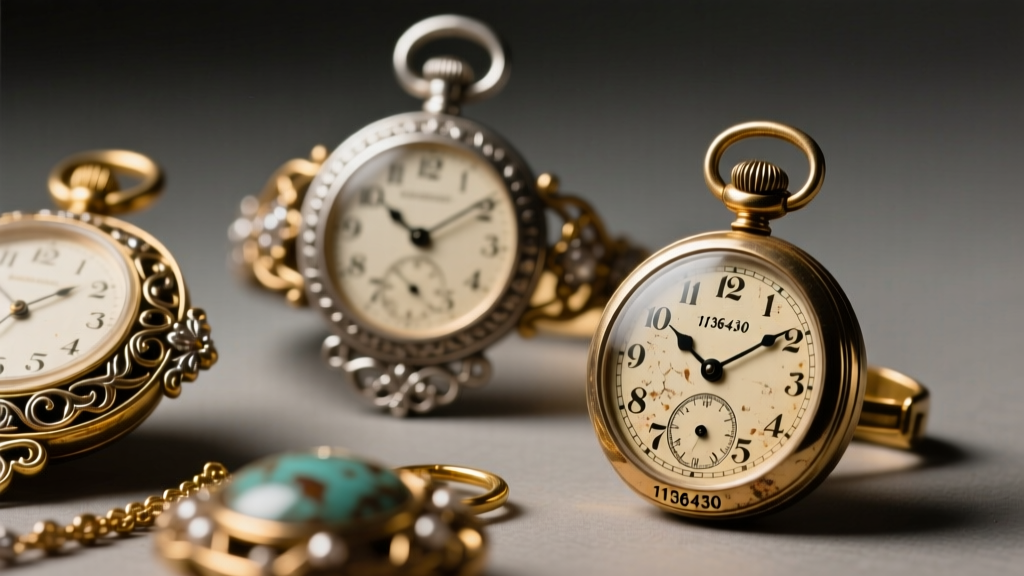
The Rolex Submariner Ref. 1136430: A Definitive Analysis of the 2003–2008 Two-Tone Explorer-Style Submariner

Mickey Mantle: The Iconic Yankee Center Fielder and His Enduring Legacy in Vintage Sports Memorabilia