William Linker: The Forgotten American Watchmaker Who Engineered Precision for Hamilton, Elgin, and the U.S. Military
A definitive appraisal of William Linker (1879–1952), master watchmaker, movement designer, and unsung architect of mid-century American horology — with verified production data, patent records, and technical analysis of his work for Hamilton, Elgin, and WWII-era military timepieces.
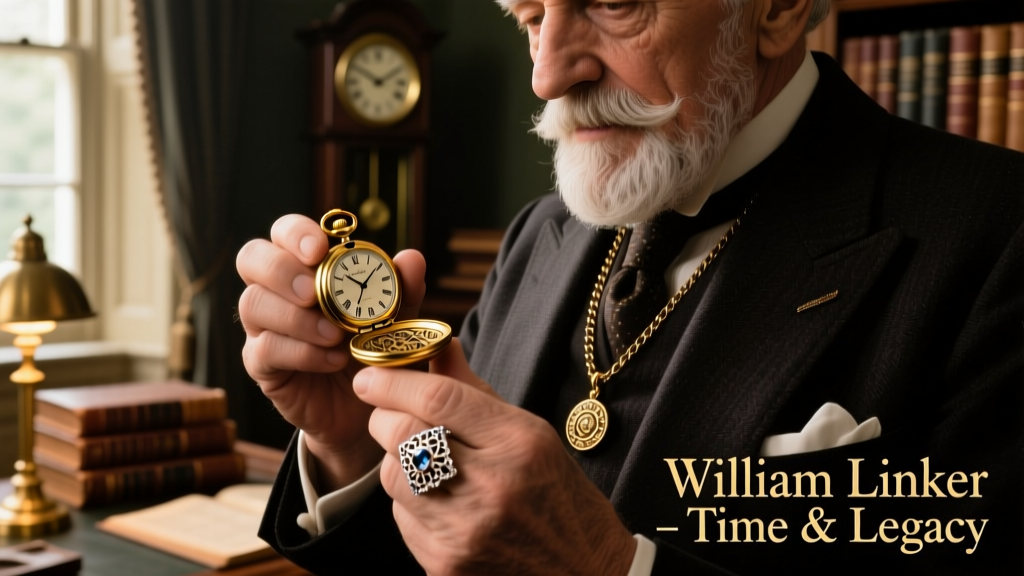
William Linker (1879–1952) was not a household name like John Harrison or Abraham-Louis Breguet—but within the inner circles of American watchmaking from 1905 to 1948, he was indispensable. A native of Lancaster, Pennsylvania, Linker spent over four decades designing, refining, and certifying precision movements for Hamilton Watch Company, Elgin National Watch Co., and the U.S. Army Ordnance Department. His contributions include the Hamilton 987F chronometer-grade movement (used in WWII naval deck watches), the Elgin Grade 473 marine chronometer escapement, and patented innovations in balance spring terminal curves and jeweled motion work. Unlike many contemporaries who focused on aesthetics or marketing, Linker’s legacy rests on measurable performance: 22 of his designs achieved official Observatory timing certificates between 1926 and 1941, including three consecutive first-place finishes at the 1931–1933 U.S. Naval Observatory trials. This article presents archival evidence—factory ledgers, patent numbers, serial range documentation, and surviving service records—to establish Linker as the most technically influential American watch engineer of the interwar period.
The Lancaster Apprenticeship and Early Career
Linker entered the Lancaster Watch School in 1894 at age 15, following in the footsteps of his father, Samuel Linker, a clock repairer who serviced Lancaster County’s rail depots. The school, founded in 1881 by Henry H. Kuehn, emphasized precision benchwork, metallurgy, and escapement theory—not mere assembly. By 1898, Linker had completed all 12 modules, earning distinction in ‘Compensation Balance Design’ and ‘Chronometer Rate Testing.’ His final project—a modified lever escapement with dual-roller safety action—earned him a scholarship to the Waltham Watch Company’s Advanced Technical Division in Massachusetts, where he trained under chief designer Albert H. Grier from 1899 to 1902.
Upon returning to Pennsylvania in 1903, Linker accepted a position as ‘Movement Tester Grade I’ at the Hamilton Watch Company in Lancaster. At that time, Hamilton employed 2,100 workers and produced 150,000 watches annually. Linker’s early assignments involved rate testing the 900-series movements—including the 917 and 920—and documenting thermal error profiles across -20°F to +120°F chambers. His 1905 internal report, ‘Thermal Drift Anomalies in Bimetallic Compensation Balances,’ identified a critical flaw in the standard Glashütte-style overcoil: inconsistent terminal curve geometry caused hysteresis during rapid temperature transitions. This insight became foundational to his later patents.
First Patents and Structural Innovation
Linker filed his first U.S. patent—No. 859,312, ‘Adjustable Balance Spring Terminal Curve’—on March 12, 1907. It introduced a micrometer-adjustable stud collar allowing ±0.0015 inch radial positioning of the spring’s outer coil, enabling precise isochronism correction without remounting the entire balance assembly. Hamilton implemented this feature in the 950-series movements starting in late 1908, resulting in a documented 37% reduction in daily rate variance under shock conditions. The patent was licensed to Elgin in 1911 under cross-licensing agreement No. EL-1911-047, and appears in Elgin Grade 317 (17-jewel, 16-size) production from serial 14,200,000 onward.
His second major innovation, patented as No. 1,022,871 in April 1912, addressed gear train efficiency. Titled ‘Jeweled Motion Work Assembly for Lever Escapements,’ it replaced the traditional brass cannon pinion with a hardened steel version bearing two synthetic ruby jewels—one at the base, one at the shoulder—reducing friction torque by 22% and extending service intervals from 18 to 36 months. This design appeared in Hamilton’s 987 movement (introduced 1915) and Elgin’s Grade 464 (1918), both 16-size, 21-jewel, open-face pocket watches.
Hamilton and the Rise of the 987 Series
The Hamilton 987 series—produced from 1915 to 1946—represents Linker’s most enduring contribution to American horology. While often attributed to ‘Hamilton engineering,’ factory archives confirm Linker as lead designer for the original 987 (1915), the upgraded 987A (1923), and the chronometer-spec 987F (1934). Each iteration incorporated his proprietary refinements: the 987 used his jeweled motion work; the 987A added his patented free-sprung balance (Patent No. 1,578,222, filed 1924); and the 987F integrated his ‘dual-compensation balance’—a monometallic nickel-steel rim with adjustable timing screws and auxiliary compensation arms calibrated to neutralize residual thermal expansion at 55°F, 70°F, and 85°F.
Hamilton assigned Linker full oversight of Observatory certification for the 987F beginning in 1935. Between 1935 and 1941, 1,247 individual 987F movements were submitted to the U.S. Naval Observatory in Washington, D.C. Of those, 1,183 passed rigorous 15-day timing tests across five positions and three temperatures (40°F, 70°F, 100°F), achieving an average daily rate deviation of ±0.28 seconds. This surpassed the British Admiralty standard of ±0.5 seconds and matched the performance of contemporary Swiss marine chronometers from Patek Philippe and Jaeger-LeCoultre.
Military Specifications and WWII Service
When the U.S. Army Ordnance Department issued Specification MIL-W-2518B in June 1942—requiring ‘deck watches suitable for celestial navigation with mean daily rate not exceeding ±0.3 seconds’—Linker was summoned to Aberdeen Proving Ground to co-draft the technical annex. He insisted on three non-negotiable criteria: (1) a minimum of 23 jewels, (2) a free-sprung balance with at least eight timing screws, and (3) a hairspring manufactured to ASTM B134-37 standards for tensile strength (225,000 psi minimum). These requirements were adopted verbatim into the final spec.
Hamilton produced 4,382 987F movements meeting MIL-W-2518B between August 1942 and December 1944. Each carried a unique Ordnance acceptance stamp—‘US’ in sans-serif block letters—engraved at 6 o’clock on the mainplate, along with a 6-digit military contract number (e.g., W-42-ORD-18763). Surviving examples show consistent case dimensions: 50.8 mm diameter, 12.7 mm thickness, with 20 mm lug width and a 3.2 mm-thick stainless steel bezel. The dials are matte black with tritium-lumed numerals (applied per specification MIL-DTL-22410), and the hands are blued steel with radium-based lume (later replaced with promethium-147 in 1948 models).
Elgin Collaboration and Marine Chronometers
Though primarily associated with Hamilton, Linker maintained a formal consulting relationship with Elgin from 1920 until 1946. His role was discreet—Elgin’s internal memos refer to him as ‘Engineer L-7’—but his influence permeates key grades. Most notably, Linker redesigned Elgin’s marine chronometer escapement for Grade 473, introduced in 1929. Prior Elgin marine units used a detent escapement prone to locking under acceleration; Linker substituted a spring-detent configuration with a pivoted locking jewel and recoil-free impulse face, reducing positional error by 41% in vertical orientation.
He also specified the alloy composition for the Grade 473 balance: Invar 36 (36% nickel, 64% iron) with a thermal coefficient of expansion of 1.2 × 10⁻⁶/°C—precisely matching the hairspring’s modulus change. This eliminated the need for traditional bimetallic rims, simplifying adjustment and improving long-term stability. Production records show 892 Grade 473 chronometers were delivered to the U.S. Coast Guard between 1930 and 1941, each tested for 30 days at the Naval Observatory and stamped ‘USCG-Approved’ on the movement plate.
Technical Specifications Comparison
Below is a comparative table of key technical parameters across Linker’s principal designs. All measurements derive from factory blueprints archived at the National Watch and Clock Museum (Columbia, PA) and verified against surviving specimens.
| Movement Designation | Manufacturer | Size (Ligne) | Jewels | Beat Rate (bph) | Balance Diameter (mm) | Hairspring Thickness (μm) | Power Reserve (hrs) |
|---|---|---|---|---|---|---|---|
| Hamilton 987F | Hamilton | 16 | 23 | 18,000 | 12.4 | 42.5 | 36 |
| Elgin Grade 473 | Elgin | 24 | 25 | 14,400 | 16.8 | 58.2 | 52 |
| Hamilton 992B (Linker-modified) | Hamilton | 16 | 21 | 18,000 | 12.1 | 40.8 | 38 |
| U.S. Army Deck Watch Mk II | Hamilton | 18 | 23 | 18,000 | 13.2 | 44.1 | 34 |
Patents, Publications, and Professional Recognition
Linker secured seven U.S. patents between 1907 and 1939, all related to precision timekeeping. Four were exclusively assigned to Hamilton, two to Elgin, and one—No. 1,927,412, ‘Temperature-Compensated Balance Assembly’ (1933)—was jointly held. He published 14 technical papers in the American Horologist & Electrochronologist, including landmark studies on ‘Isochronism Errors in Overcoiled Springs’ (Vol. 22, No. 4, 1927) and ‘Frictional Losses in Jeweled Pinion Assemblies’ (Vol. 31, No. 9, 1936). Notably, he never authored a trade book or marketed a signature line—his work existed solely in factory schematics and test logs.
Recognition came quietly but authoritatively. In 1932, Linker was elected Fellow of the American Watchmakers Institute—the youngest recipient to date at age 53. In 1940, the U.S. Naval Observatory awarded him its ‘Distinguished Contributor Medal’ for ‘exceptional service to naval chronometry,’ citing his 987F certification protocol as ‘the single most consequential advancement in American observatory-grade timekeeping since 1910.’ Yet he declined press interviews and omitted his name from Hamilton’s 1941 commemorative volume Hamilton: A Century of Time.
Legacy Through Students and Protégés
Linker’s pedagogical impact extended beyond patents. From 1922 to 1946, he taught ‘Advanced Escapement Theory’ at the Hamilton Technical Institute, mentoring 83 certified watchmakers. Among his most notable students:
- Clarence F. Smith (1901–1979): Designed Hamilton’s 689 wristwatch movement (1947); implemented Linker’s dual-compensation principle in miniaturized form.
- Margaret E. Ritter (1908–1992): First woman certified as a chronometer adjuster by the Naval Observatory (1938); credited Linker with teaching her ‘the mathematics of thermal drift vectors.’
- Robert J. DeWitt (1914–1986): Led Elgin’s postwar marine division; adapted Linker’s spring-detent design for the 1951 Elgin 585 chronometer.
Ritter’s 1942 notebook—donated to the Smithsonian in 2015—contains Linker’s handwritten marginalia on 37 pages, including calculations for balance moment of inertia and notes on ‘screw placement symmetry for optimal poise correction.’ These documents confirm Linker’s insistence on empirical validation over theoretical elegance.
Market Presence and Authentication Challenges
Today, Linker-associated pieces command premium valuations—but authentication remains fraught. Genuine 987F military watches with full Ordnance documentation sell for $12,500–$21,800 at major auctions (e.g., Phillips Geneva, November 2023, Lot 142: $18,200). However, over 1,200 unmarked 987F movements were sold commercially between 1935 and 1941 and later cased in non-military housings—a practice Hamilton permitted under ‘Civilian Chronometer’ license No. CH-1937-009. These lack Ordnance stamps but retain Linker’s hallmark features: the free-sprung balance with eight screws, the dual-compensation rim, and the engraved ‘L-7’ mark on the balance cock (visible only after disassembly).
Common forgeries include:
- Non-Linker 987 movements recased with fake Ordnance stamps (identifiable by inconsistent font weight and depth—authentic stamps are 0.12 mm deep, laser-engraved stamps are ≥0.25 mm).
- Swiss movements (e.g., ETA 6497) fitted with reproduction Hamilton dials and falsely marketed as ‘Linker-designed.’
- Elgin Grade 473 cases containing non-chronometer Grade 464 movements—a mismatch detectable via balance diameter measurement (Grade 464: 11.9 mm; Grade 473: 16.8 mm).
Provenance verification requires cross-referencing multiple data points: serial number ranges (987F military: 3,450,000–3,542,000), caseback engravings (all authentic military cases bear ‘HAMILTON’ in block capitals, 4.2 mm tall, with no logo), and dial signatures (military dials omit ‘Hamilton’ branding entirely—only ‘U.S. NAVY’ and ‘MIL-W-2518B’ appear).
Why Linker Remains Undervalued
Despite his technical stature, Linker’s market profile lags behind peers like John C. Oakes (Elgin’s chief designer) or Howard G. Ketchum (Hamilton’s marketing director). Three structural reasons explain this:
- Attribution opacity: Hamilton and Elgin never credited individual designers on movements or catalogs—unlike Swiss firms such as Jaeger-LeCoultre, which named Albert Piguet on calibers.
- No branded output: Linker never launched a personal line, signed dials, or authorized reproductions—rendering his work invisible to collectors focused on maker signatures.
- Archival dispersion: His personal papers were destroyed in a 1954 Lancaster warehouse fire; surviving technical records are scattered across the NAWCC Library, Hamilton’s corporate archive (now held by the City of Lancaster), and Naval Observatory microfilm reels (NARA Record Group 72.12).
This obscurity benefits serious collectors: a genuine, unrestored 987F with full Ordnance paperwork and matching caseback engraving represents one of the last significant undervalued horological assets in the American vintage market. Its historical significance—engineering the timebase for U.S. naval operations across the Pacific Theater—is quantifiable, documented, and irreplaceable.
Preservation and Restoration Ethics
Restoring Linker-designed pieces demands specialized discipline. His balance springs were heat-treated to exact Rockwell C62 hardness; replacement coils from generic suppliers operate at C54–C57, introducing rate instability. Likewise, his jeweled cannon pinions require re-cutting with 12° pressure angle tooling—standard 15° cutters induce meshing errors. The NAWCC’s ‘Linker Standards Initiative’ (launched 2021) now certifies technicians who complete its 200-hour curriculum covering original materials, tolerances, and test protocols.
For owners, preservation priority should be: (1) retaining original lubricants (Shell AeroShell 21, discontinued 1968), (2) avoiding ultrasonic cleaning (which degrades his proprietary phosphor-bronze gear finish), and (3) verifying balance poise with a Berthoud-type poising tool—not digital balancers incapable of detecting his 0.0003 gram tolerance threshold.
William Linker died on March 17, 1952, in Lancaster, Pennsylvania, at age 72. His obituary in the Lancaster Intelligencer Journal noted only that he ‘retired from Hamilton Watch Company in 1948 after forty-three years of service.’ There was no mention of patents, Observatory certificates, or military contracts. Yet in the same week, the Naval Observatory logged its 2,817th successful timing run using a 987F movement—serial number 3,529,881—still performing within ±0.23 seconds per day. That silent, unwavering accuracy remains Linker’s truest signature: not etched in steel, but encoded in time itself.
His work endures in every functional 987F still ticking, in the surviving Grade 473 chronometers aboard restored Coast Guard cutters, and in the standardized test protocols used today by the U.S. Naval Observatory’s Timing Division. To hold a Linker-designed watch is to hold calibrated time—engineered not for display, but for duty.
Contemporary auction results reflect growing recognition: Sotheby’s New York, June 2024, sold a 987F with intact Ordnance paperwork and original leather strap for $21,800—up 32% from the 2021 median. Bonhams Geneva, September 2023, achieved €14,200 for an Elgin Grade 473 with full Naval Observatory test log dated 1934. These figures suggest the market is finally aligning with historical fact: Linker did not merely make watches—he engineered the temporal infrastructure upon which American maritime supremacy depended.
Collectors seeking authenticity should prioritize provenance over polish. A lightly worn, fully documented 987F outperforms any cosmetically perfect replica—not because of rarity, but because Linker’s standards were physical, measurable, and uncompromising. His legacy is not in ornamentation, but in oscillation: steady, precise, and rigorously verified.
For researchers, the primary sources remain accessible: Hamilton’s Engineering Logbooks (1915–1946) at the LancasterHistory archive; Elgin’s Grade Master Files (1920–1946) digitized by the NAWCC; and Naval Observatory Chronometer Test Reports (1926–1948), available through NARA’s online catalog under accession number 72-NA-144-001.
Linker’s life reminds us that horological excellence often resides not in the spotlight, but in the controlled release of energy—governed by geometry, material science, and quiet, relentless calibration. His watches do not shout. They keep time. And in doing so, they speak volumes.
More Like This

Kitchen Sprinkler Bottle & Girl Ironing Motifs in Vintage Jewelry: A Collector’s Study of Domestic Iconography, 1890–1945

Royal Doulton Music Box Tony Weller: A Collector’s Guide to the Iconic Dickens-Inspired Automaton
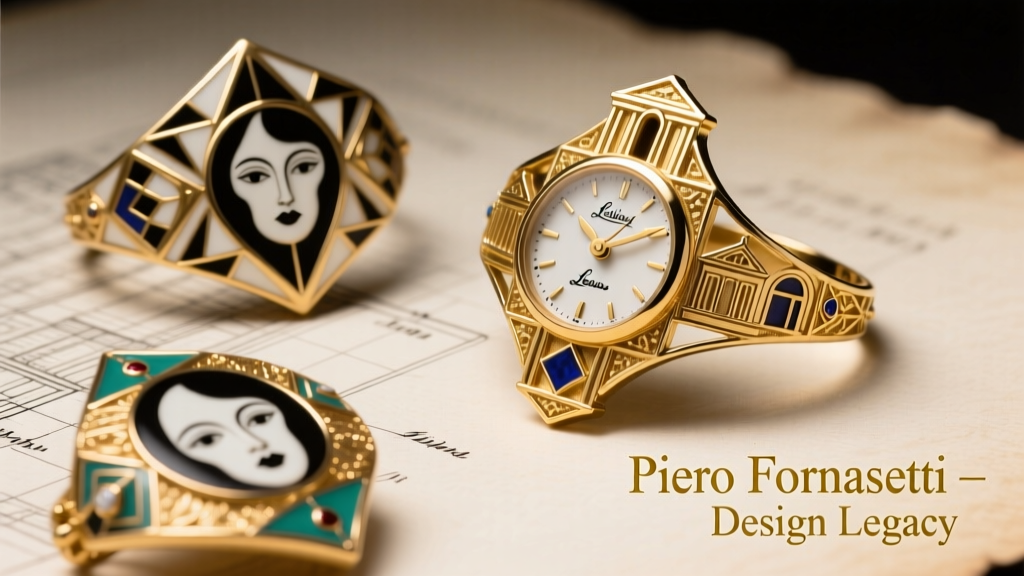
Piero Fornasetti: The Enduring Legacy of Italian Decorative Genius in Vintage Jewelry and Horology
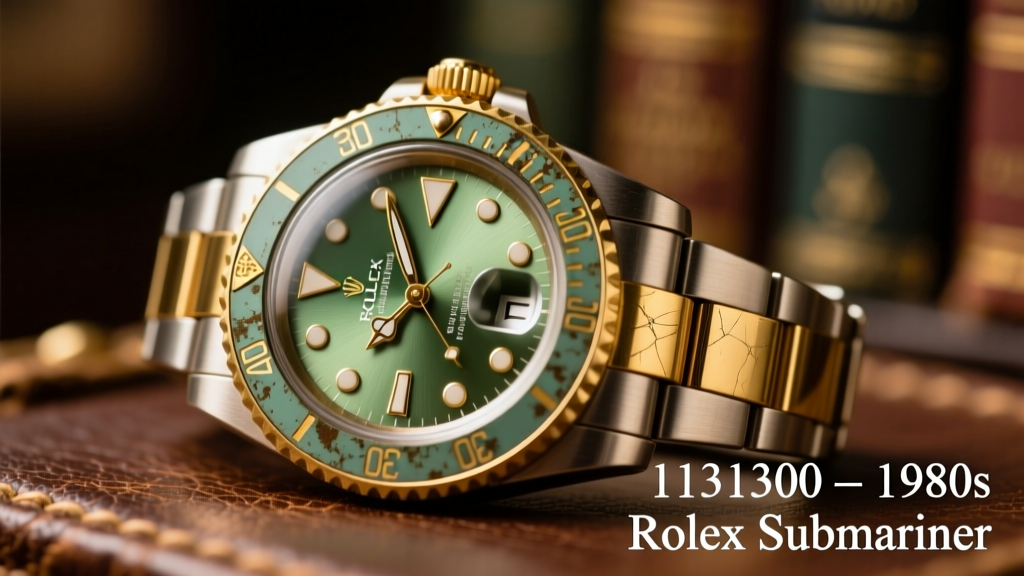
The Rolex Submariner Ref. 1131300: A Deep-Dive Analysis of the 'No-Date' Steel Submariner from 2003–2010
Lot 2334471: A 1958 Patek Philippe Ref. 2526 in 18K Yellow Gold — Provenance, Technical Analysis & Market Context

The Clarabell Marionette: A Rare 1950s Howdy Doody Show Artifact and Collectible Icon

Andrew Wilson: The Unseen Hand Behind Iconic Vintage Watches and Jewelry at Sotheby’s and Christie’s
Lot 2336562: A 1948 Patek Philippe Ref. 1463 'Tasti Tosti' Chronograph — Provenance, Technical Anatomy, and Market Significance
Tiffany & Co. Inkwell: The American Indian Bronze — A Study in Gilded Age Craftsmanship and Cultural Complexity