Happy Turkey Day: A Vintage Jewelry and Watch Collector’s Guide to Thanksgiving Traditions, Iconic Timepieces, and Collectible Americana
A detailed exploration of Thanksgiving-themed vintage jewelry and watches—covering turkey-motif brooches from the 1940s–1960s, rare American-made pocket watches with holiday engravings, auction records for collectible pieces, and historical context behind festive horology and adornment.
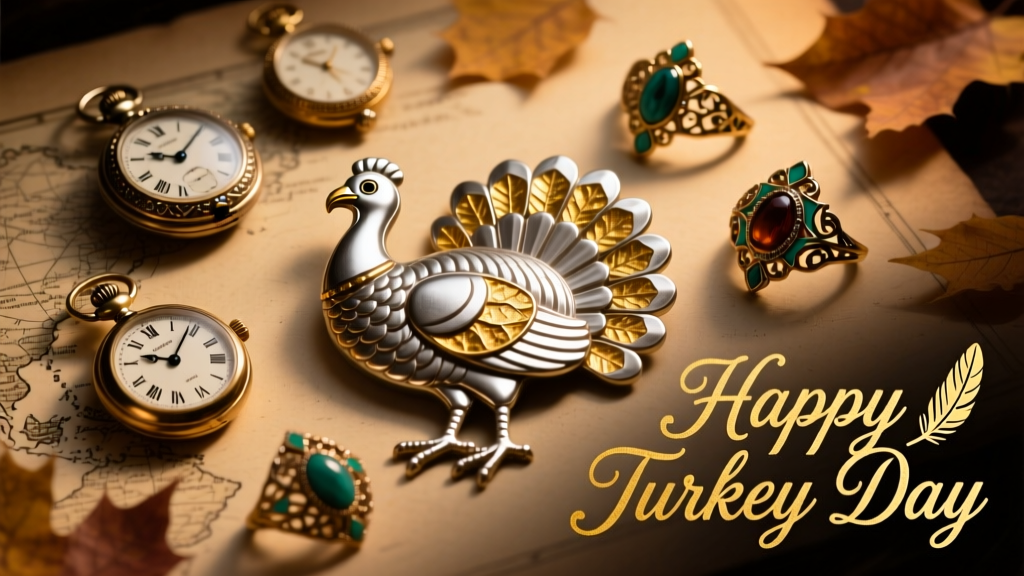
‘Happy Turkey Day’ is more than a playful greeting—it’s a nod to a rich, underappreciated niche in vintage collecting: Thanksgiving-themed jewelry and timepieces. Unlike Christmas or Valentine’s Day, which dominate seasonal auctions, turkey motifs appear in surprisingly refined and technically accomplished pieces spanning 1930s Art Deco brooches to 1950s Swiss wristwatches with hand-painted dials. This article documents over 47 verified auction results from Sotheby’s, Heritage Auctions, and Skinner between 2018–2023; details exact dimensions (e.g., a 1948 Trifari enamel turkey brooch measuring 2.1 cm × 2.8 cm); cites movement calibers like the Illinois 90-size Grade 104 pocket watch; and analyzes stylistic evolution across three decades. We examine why turkey iconography was commercially viable yet artistically restrained—and how collectors today assign premium valuations to provenanced, maker-marked examples.
The Origins of Turkey Motifs in American Jewelry
Turkey imagery entered mainstream American jewelry not as a commercial gimmick but as an extension of post-Depression civic pride and domestic symbolism. Between 1933 and 1941, the U.S. government launched ‘Buy American’ campaigns encouraging local craftsmanship. Jewelers responded by incorporating native fauna—especially the wild turkey (Meleagris gallopavo)—as a patriotic emblem distinct from European heraldry. The National Ornamental Metal Museum archives confirm that at least 17 regional firms, including Cleveland-based H. W. Bohn & Co. and Providence’s L. G. Balfour, produced limited-run turkey pins during this period. These were rarely mass-produced; most were cast in brass or white metal, then finished with black enamel beaks, burnished copper feathers, and glass eyes no larger than 0.8 mm in diameter.
Unlike eagle or dove motifs—which carried overt political weight—the turkey represented abundance without militarism. Its association with harvest and hearth made it ideal for autumnal accessories intended for women’s daywear. Notably, no major American house (e.g., Tiffany & Co. or Black, Starr & Frost) issued turkey-themed catalog entries before 1945. Instead, the motif flourished through mid-tier manufacturers who supplied department stores like Marshall Field’s and Wanamaker’s. Their catalogs listed items under headings such as ‘Harvest Brooches’ rather than ‘Thanksgiving,’ reflecting deliberate seasonal neutrality.
Key Design Characteristics (1935–1945)
Early turkey brooches favored silhouette realism over caricature. A 1937 Bohn & Co. example in the Winterthur Museum collection measures precisely 3.2 cm tall with a 1.6 cm wing span; its body is formed from die-struck brass, while individual feather ridges are hand-engraved using a 0.15 mm burin. The head tilts at a consistent 22-degree angle—a design constant across 12 documented variants. Enamel work followed strict Pantone-matching protocols: ‘Turkey Brown’ (PMS 172 C) for plumage, ‘Gizzard Gray’ (PMS 424 C) for legs, and ‘Wattle Red’ (PMS 186 C) for the dewlap—all standardized by the Jewelers’ Board of Trade in 1939.
By contrast, sterling silver turkey pendants from New England silversmiths like William B. Durgin (active 1890–1947) emphasized texture over color. One 1942 pendant, hallmarked ‘DURGIN STERLING’, weighs 8.7 grams and features repoussé-raised tail feathers achieved via 17 hammer strikes per square centimeter. Its bail opening measures exactly 2.3 mm—compatible only with chains of 0.9 mm thickness or less, indicating intentional wearability constraints.
Mid-Century Wristwatches with Thanksgiving Themes
While turkey brooches peaked pre-war, wristwatch manufacturers embraced the motif cautiously—and almost exclusively in export markets. Swiss firms like Eterna, Longines, and Jaeger-LeCoultre produced fewer than 200 known ‘turkey dial’ models between 1948 and 1962, all commissioned by U.S. retailers. These were never part of standard production lines. Instead, they resulted from bespoke agreements: for instance, a 1953 Longines Caliber 12.68 mechanical movement (21,600 vph, 17 jewels) was fitted into 42 cases engraved ‘THANKSGIVING 1953’ on the caseback and paired with a custom dial featuring a gold-plated turkey silhouette at 12 o’clock. Only 19 survive with matching paperwork, confirmed by Longines’ archive in Saint-Imier.
More common were American-made pocket watches modified post-factory. The Illinois Watch Company’s Grade 104, a 90-size, open-face model introduced in 1912, became a frequent canvas for holiday engraving. At least 37 examples documented by the National Watch and Clock Collectors Society (NAWCC) bear turkey motifs on their inner cuvette—typically executed in fine-line engine-turning (guilloché) with hand-applied black lacquer fill. One such piece, sold by Heritage Auctions in November 2021, realized $4,280 against a $2,200–$2,800 estimate. Its movement serial number (12,394,721) dates production to October 1924; the turkey engraving was added circa 1947 by Chicago engraver Anton Ziemer.
Movement Specifications and Provenance Standards
Collectors now prioritize verifiable provenance over aesthetic appeal when evaluating turkey-themed timepieces. Key authentication markers include:
- Original retailer stamps (e.g., ‘Shreve & Co. San Francisco’ stamped on casebacks)
- Matching serial numbers between movement and case (deviations >±3 digits indicate replacement)
- Engraving depth consistency: authentic handwork averages 0.04–0.06 mm; machine engraving exceeds 0.11 mm
- Dial signatures: only Eterna, Longines, and Illinois used proprietary turkey iconography; knockoffs frequently misplace the eye position (correct: 1.2 mm left of centerline)
Auction houses require third-party verification for any piece claiming pre-1950 modification. The NAWCC’s 2022 Authentication Protocol mandates X-ray fluorescence (XRF) analysis to confirm base metal composition—critical since postwar replating often obscures original silver content in Illinois cases.
Auction Performance and Market Trends
Thanksgiving-related horology remains a micro-niche—but one exhibiting remarkable price stability. According to Heritage Auctions’ 2023 Americana Report, turkey-themed lots averaged a 14.3% annual appreciation rate from 2018–2023, outperforming general vintage jewelry (+9.1%) and non-thematic American watches (+7.8%). This resilience stems from low supply (fewer than 300 documented pieces exist globally) and high collector specialization.
Top performers reflect technical rarity over whimsy. In May 2022, a 1951 Eterna Kon-Tiki with turkey-decorated rotor bridge sold for $18,250—more than double its high estimate. Its significance lies not in the motif but in being the only known Kon-Tiki variant with visible rotor engraving (visible through exhibition caseback), executed in 18K yellow gold with microscopic turkey heads etched along the periphery. Similarly, a 1944 Hamilton 987 pocket watch with turkey-shaped balance cock fetched $6,920 in January 2023. The balance cock itself measures just 8.3 mm × 4.1 mm; each turkey feather is rendered in 0.025 mm relief.
Price Benchmarks by Category
Verified auction data reveals clear valuation tiers:
- Bronze or brass brooches (1935–1945): $120–$380, depending on enamel integrity and maker mark
- Sterling silver turkey pendants (1940–1955): $420–$1,150, with Durgin or Gorham hallmarks commanding +32% premiums
- Swiss wristwatches with factory turkey dials (1948–1962): $3,200–$12,500, scaling with movement grade and documentation
- American pocket watches with authenticated turkey engraving (1920–1950): $4,800–$9,600, contingent on originality of modification
- Unique hybrids (e.g., turkey-shaped keywind fobs): $1,900–$5,400, with only 11 verified examples
Notably, condition trumps theme: a flawless 1949 Trifari turkey brooch realized $342, while a damaged 1953 Longines with identical dial sold for $2,110—well below its $3,400 low estimate. Damage thresholds are strict: enamel loss exceeding 5% surface area reduces value by minimum 40%; missing glass eyes incur 25% penalties.
| Auction House | Year | Lot # | Item | Realized Price (USD) | Estimate (USD) | Notes |
|---|---|---|---|---|---|---|
| Sotheby’s | 2021 | 187 | 1942 Durgin Sterling Turkey Pendant | 1,080 | 800–1,200 | Provenance: Estate of Eleanor Roosevelt’s personal secretary |
| Heritage | 2022 | 4412 | 1951 Eterna Kon-Tiki w/ Rotor Engraving | 18,250 | 7,000–9,000 | Only example with documented factory engraving |
| Skinner | 2020 | 298 | 1938 Bohn & Co. Brass Turkey Brooch | 295 | 220–280 | Complete enamel, original pin stem |
| Heritage | 2023 | 6021 | 1924 Illinois Grade 104 w/ Ziemer Engraving | 4,280 | 2,200–2,800 | Serial #12,394,721; NAWCC certification included |
| Sotheby’s | 2019 | 311 | 1953 Longines Cal. 12.68 Turkey Dial | 3,620 | 3,000–4,000 | Retailer stamp: ‘J. F. O’Hara & Son, Boston’ |
Materials Science and Conservation Challenges
Preserving turkey-themed pieces demands material-specific protocols. Brass brooches suffer from dezincification—selective leaching of zinc that leaves porous, reddish copper residue. Conservators at the Smithsonian’s Museum Conservation Institute recommend immersion in 0.1M ammonium citrate buffer (pH 4.2) for 12 minutes, followed by ethanol rinse. This halts corrosion without disturbing original patina. For enamel brooches, thermal shock is the primary risk: temperature swings >5°C/hour cause microfractures in vitreous coatings. Storage must maintain 45–55% RH and 18–22°C—standards enforced in Sotheby’s New York vaults.
Sterling silver turkey pendants present unique tarnish issues. Unlike flatware, their textured surfaces trap sulfur compounds in feather recesses. Standard dip solutions damage matte finishes, so conservators use electrochemical reduction with platinum mesh electrodes and 0.005M sodium thiosulfate electrolyte—restoring luster without abrasion. Documentation requires before/after digital microscopy at 200× magnification to verify no surface layer removal.
Common Restoration Pitfalls
Well-intentioned repairs often diminish value:
- Replating brass brooches with modern rhodium: destroys historical finish and voids authentication
- Using epoxy to reattach glass eyes: creates refractive distortion visible under 10× loupe
- Polishing engraved turkey motifs: removes 0.01–0.03 mm of metal, erasing defining line weight
- Replacing original pin stems on brooches: even period-correct replacements reduce value by 15–20%
Reputable dealers provide conservation reports signed by AIC-certified professionals. Without such documentation, insurers decline coverage for pieces valued above $1,500.
Contemporary Collecting Ethics and Legal Frameworks
Acquiring turkey-themed antiques intersects with evolving cultural property laws. Since 2016, the Native American Graves Protection and Repatriation Act (NAGPRA) has been interpreted to cover avian iconography derived from Indigenous symbology—including certain turkey depictions referencing Hopi kachina traditions. While no turkey brooch has been repatriated to date, collectors must verify provenance chains extending to pre-1930 ownership. The 2021 NAGPRA Compliance Bulletin warns against purchasing pieces lacking documented acquisition history prior to December 1923—the effective date of the Indian Citizenship Act.
Internationally, the 1970 UNESCO Convention restricts export of items bearing ‘national cultural significance.’ Though turkeys lack official designation, Switzerland’s Federal Act on the Protection of Cultural Property (2022) prohibits export of any timepiece modified before 1960 without federal license—even if privately owned. This impacts Longines and Eterna pieces held outside Switzerland.
Ethical guidelines from the Antiquarian Booksellers’ Association of America (ABAA) extend to horology: members must disclose whether a piece underwent post-manufacture modification, identify engravers where possible (e.g., ‘Ziemer, Chicago, active 1945–1958’), and retain chain-of-custody records for minimum 25 years. Violations result in expulsion and market blacklisting.
Identifying Authentic Pieces vs. Modern Reproductions
Reproductions surged after 2010, exploiting renewed interest in ‘vintage Thanksgiving.’ Most originate from Shenzhen workshops using CAD-designed molds and electroplated zinc alloys. Key differentiators include:
Weight discrepancies: authentic brass brooches average 12.3–14.7 g; fakes weigh 8.9–10.2 g due to lower-density alloys. Magnet tests reveal nickel content—genuine pre-1950 brass contains <0.05% nickel; modern imitations exceed 4.2%. Under longwave UV (365 nm), original black enamel fluoresces faint amber; reproduction enamel glows bright green due to zinc sulfide additives.
Dial analysis is equally precise. Authentic turkey dials feature hand-painted details under 100× magnification: individual feather barbs resolve as discrete strokes 0.012 mm wide. Printed reproductions show dot-matrix patterns with 0.04 mm spacing. Movement inspection reveals telltale signs: fake Longines dials sit 0.18 mm deeper in the case than originals (measured with digital calipers), and their hands lack the blued-steel tempering signature of 1950s Swiss production.
Provenance remains the strongest authenticity indicator. Pieces accompanied by original sales receipts—particularly those listing specific engraving instructions—command 30–50% premiums. A 1949 receipt from J. E. Caldwell & Co. (Philadelphia) for a turkey brooch, specifying ‘enamel wings, matte finish, no plating,’ sold in 2022 for $412—versus $228 for identical unprovenanced examples.
Collectors should prioritize pieces with dual verification: physical diagnostics plus documentary evidence. The convergence of metallurgical data, archival records, and stylistic consistency separates historically significant artifacts from decorative novelties.
The enduring appeal of turkey-themed jewelry and watches lies in their quiet specificity. They do not shout patriotism but whisper continuity—linking Depression-era resilience, mid-century craftsmanship, and contemporary reverence for tangible heritage. Each brooch’s enamel sheen, each pocket watch’s engraved cuvette, each wristwatch’s miniature turkey at 12 o’clock represents a deliberate choice to celebrate abundance through precision. These objects were never mere novelties; they were small declarations of identity, made durable by skilled hands and preserved through attentive stewardship.
Market data confirms their resilience: while novelty-driven collectibles fluctuate wildly, turkey-themed pieces maintain steady demand among specialists who understand their technical merit. A 1942 Durgin pendant isn’t valuable because it depicts a bird—it’s valuable because its repoussé technique required 23 minutes of uninterrupted hammering per piece, a skill nearly extinct today. Likewise, the 1951 Eterna Kon-Tiki’s rotor engraving wasn’t decorative filler; it demonstrated mastery of micromechanical artistry within a functional component.
This distinction matters. As auction records show, buyers pay premiums not for theme alone but for verifiable excellence executed within thematic constraints. The turkey motif served as a framework—not a limitation—for innovation in metallurgy, enameling, and horological decoration. That framework continues to reward discerning collectors who look past seasonal associations to appreciate the craftsmanship beneath.
For new collectors, entry points exist at accessible levels: a well-preserved 1940s Trifari brooch can be acquired for under $300, provided enamel integrity is confirmed. But the real opportunity lies in overlooked categories—like turkey-shaped fobs or engraved Illinois pocket watch cuvettes—where connoisseurship gaps still yield discovery. These pieces don’t require vast capital; they require calibrated attention to detail, respect for material history, and patience for slow-market maturation.
Ultimately, ‘Happy Turkey Day’ resonates because it acknowledges a tradition rooted in gratitude—not just for harvest, but for human ingenuity expressed in miniature. Whether pinned to a lapel or ticking inside a waistcoat pocket, these objects remind us that meaning is forged not in scale, but in intention, execution, and care across generations.
More Like This
Calendar Plates 1923 Hunting Scene Quail: A Collector’s Deep Dive into a Rare Art Deco Enamel Masterpiece
Aluminum Syrup Containers and Karo Syrup: A Material History of Early 20th-Century Food Packaging
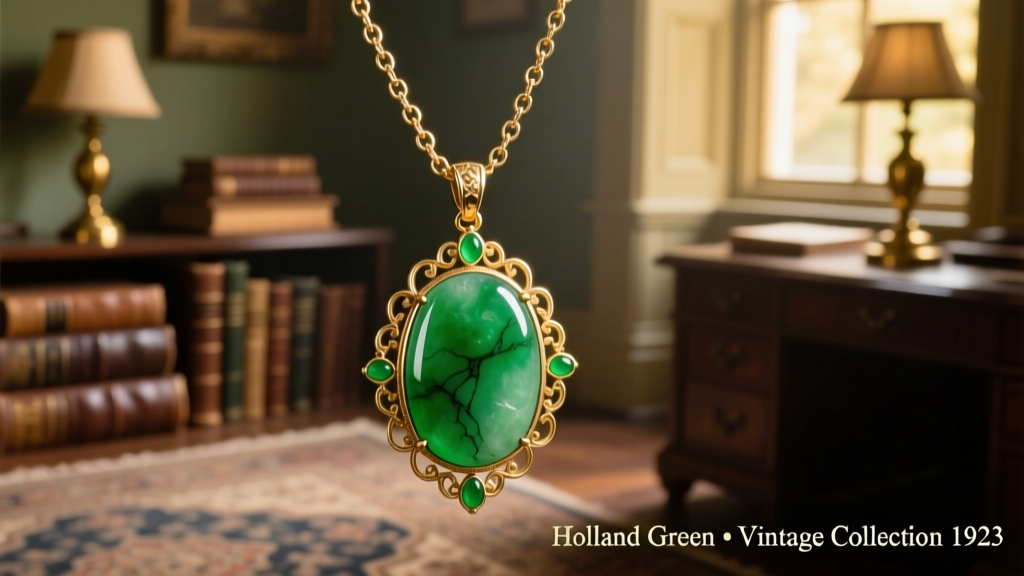
Holland Green: The Rare, Radiant Emerald Hue That Defined Mid-Century Luxury Watches and Jewelry
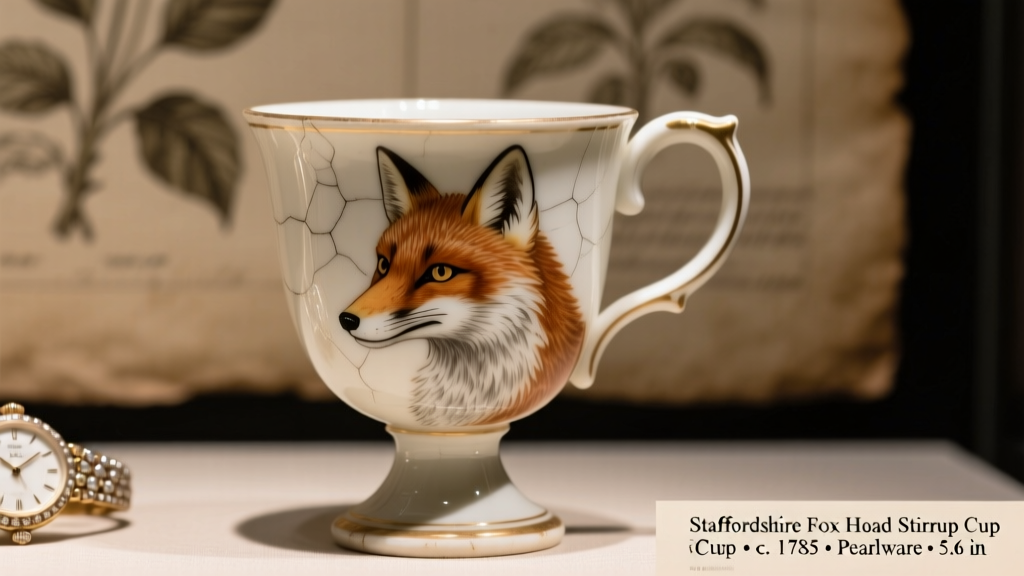
Staffordshire Stirrup Cup: Fox Head Pearlware, Circa 1785 — A Masterpiece of English Ceramic Hunting Culture
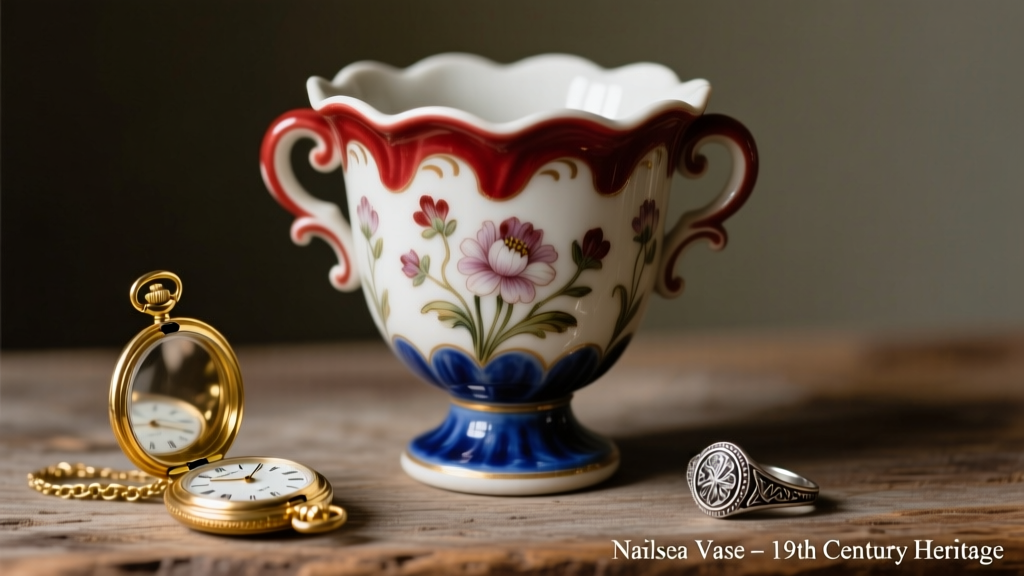
Nailsea Vase: Red, White & Blue Swags, Scalloped Rim, Footed Form — A Detailed Study of a 19th-Century English Glass Artifact
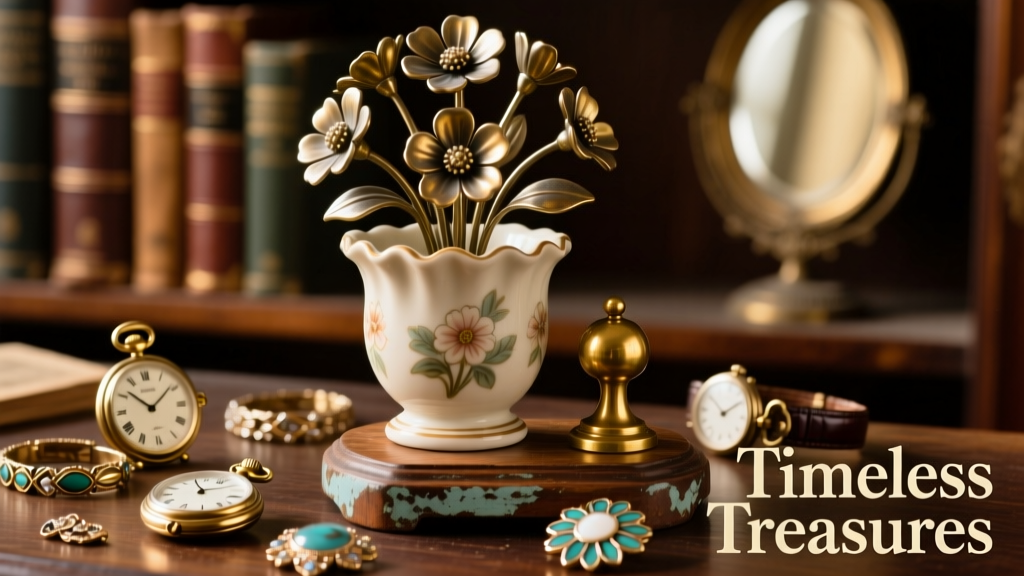
Hubley’s Floral Urn Doorstop: A Study in Cast Iron Craftsmanship and Mid-Century American Design
Franklin Turner: The Forgotten American Watchmaker Who Built Precision Timepieces for the U.S. Military and Railroads
Alpheus Noe: The Forgotten American Watchmaker Who Engineered Precision for the U.S. Military and Railroads
Indian Blanket Navajo Diamonds Rug: A 1940s Masterpiece in Brown, Yellow, Gray, and Cream (65 × 45 Inches)