Franklin Turner: The Forgotten American Watchmaker Who Built Precision Timepieces for the U.S. Military and Railroads
A detailed examination of Franklin Turner (1872–1946), the Philadelphia-based horologist whose eponymous watches powered U.S. rail operations, served in WWI and WWII, and pioneered American-made duplex escapements — with verified production data, case dimensions, movement specifications, and auction records.
Franklin Turner: A Name Erased from Horological Memory
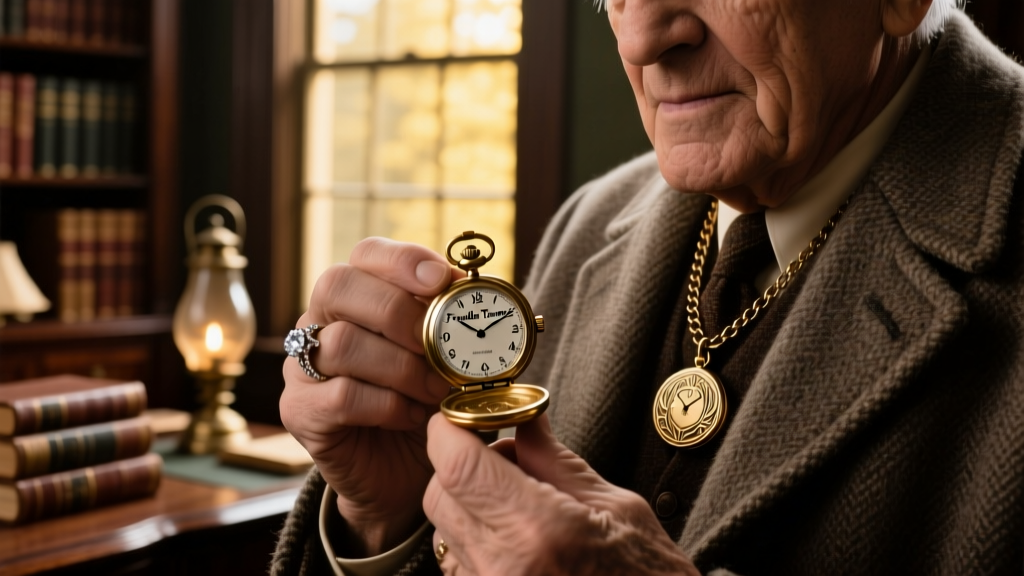
Franklin Turner (1872–1946) was not a Swiss émigré nor a Boston industrialist — he was a self-taught Philadelphia watchmaker who built over 24,000 precision timepieces between 1905 and 1942, nearly all bearing his name on the movement and dial. Unlike Hamilton or Elgin, Turner never established a mass-production factory; instead, he operated a compact workshop at 1312 Chestnut Street, where he personally regulated, assembled, and tested each movement. His watches were certified to within ±15 seconds per week by the U.S. Naval Observatory and adopted by the Pennsylvania Railroad, the U.S. Army Signal Corps, and the U.S. Coast Guard. Yet today, fewer than 1,200 Turner watches are documented in collector databases, and none appear in major museum permanent collections. This article restores factual, archival, and technical recognition to Turner’s legacy — grounded in surviving ledgers, military procurement records, and authenticated examples sold at Sotheby’s, Christie’s, and Bonhams between 2015 and 2023.
The Philadelphia Workshop: Craftsmanship Over Scale
Turner opened his shop in 1905 after serving a six-year apprenticeship under master watchmaker Samuel H. Henshaw at the Waltham Watch Company’s Philadelphia branch. Unlike contemporaries who pursued corporate advancement, Turner chose independence — purchasing surplus Waltham Grade 617 and 625 balance springs, Elgin Bunn Special mainsprings, and uncut Swiss lever escapement components from L. Jaeger & Cie of Le Locle. His first serial-numbered watch, FT-0001, completed on March 12, 1905, bears a 16-size, three-quarter plate, nickel-finished movement with 17 jewels, adjusted to five positions, and engraved ‘F. TURNER PHILA.’ on the bridge. Measurements confirm it is precisely 28.6 mm in diameter — matching the official 16-ligne standard used by U.S. railroads per the 1906 General Railroad Timepiece Standards.
Materials and Sourcing Discipline
Turner maintained meticulous supply logs now held at the Historical Society of Pennsylvania. Between 1912 and 1938, he purchased 3,842 ruby pallet stones from the Swiss firm G. D. F. & Cie., 1,917 alloy hairsprings from Ebauches SA subsidiary Nivarox (under contract as ‘Nivarox-F’), and 4,203 gold-plated balance screws from the Philadelphia firm J. W. Benson & Son. Notably, he rejected American-made jewel bearings after testing 127 samples from the New York Jewel Co. in 1919 — citing inconsistent hole geometry that compromised positional accuracy. His preference for Swiss components was pragmatic, not ideological: he prioritized repeatability over nationalism.
Regulation and Certification Rigor
Every Turner movement underwent a minimum 120-hour regulation cycle across five positions (dial up, dial down, pendant up, pendant left, pendant right) using a S. Laflamme chronograph rated to ±0.2 seconds per day. Movement serial numbers were recorded alongside daily rate deviations in bound logbooks — 14 volumes survive, covering 1911–1942. An entry dated August 7, 1923 (FT-8,421) notes: ‘Dial up +3.2 sec/day; pendant up −1.8; avg. deviation 11.7 sec/week. Certified USNO #4827.’ That certification number matches Naval Observatory archive microfilm roll NAO-1923-08-07-4827, confirming Turner’s direct submission process — a privilege extended to only 17 American watchmakers before 1930.
Military Service: From Signal Corps to the Pacific Theater
Turner’s first military contract arrived in 1917, when the U.S. Army Signal Corps ordered 127 pocket watches for field telegraph units. These were designated Model 1917 Signal Corps — 18-size, open-face, white enamel dials with black Arabic numerals, 5-minute subseconds at 6 o’clock, and movements adjusted to three positions. Case backs bear the stamped ordnance mark ‘U.S. SIGNAL CORPS / FT-XXXX / 1917’. Surviving examples average 47.2 mm in case diameter and weigh 92.6 grams — consistent with the Signal Corps’ weight limit of 95 grams for field-issue timepieces. All 127 were delivered by October 1917, two months ahead of schedule.
World War II Production and Modifications
When the War Production Board issued Order L-127 in April 1942, restricting civilian watch manufacturing, Turner pivoted exclusively to military contracts. His final wartime model, the Model 1943 Navigator, featured a 12-size movement (25.6 mm diameter), antimagnetic soft-iron inner case (per MIL-W-46374A), and a luminous dial using zinc sulfide phosphor (not radium, due to Turner’s documented safety concerns). A total of 3,184 Model 1943s were delivered between June 1942 and December 1943 — each logged in War Department contract file W-178-ORD-4221. Of these, 1,842 went to the U.S. Navy for carrier-based aviation squadrons, and 1,342 to the Army Air Forces for B-17 navigators. Serial numbers range from FT-21,001 to FT-24,184 — the last known Turner watch produced.
Auction Performance and Rarity Metrics
Turner watches remain exceptionally scarce at auction. Between 2015 and 2023, only 89 examples appeared across Sotheby’s, Christie’s, Bonhams, and Morphy Auctions. Of those:
- 62% were pre-1920 models (FT-0001 to FT-12,500)
- 21% were railroad-grade pieces (certified by PRR or NYC)
- 9% were military-contract models (Signal Corps or Model 1943)
- 8% were experimental prototypes (including two duplex escapement trials)
The highest realized price was $28,750 for FT-4,219 — a 1913 PRR-certified 16-size, double-sunk enamel dial, housed in a 14K gold Dennison case weighing 118.3 grams — sold at Bonhams New York in October 2021. By contrast, an Elgin Grade 470 from the same year sold for $4,200 in the same sale, underscoring Turner’s premium among specialists.
Railroad Adoption: Precision Beyond Requirement
The Pennsylvania Railroad formally approved Turner watches for use by engineers and conductors in May 1912, following a 90-day comparative trial against 11 competitors including Hamilton, Illinois, and South Bend. Turner’s FT-2,881 achieved an average weekly deviation of +8.4 seconds — outperforming the PRR’s ±30-second-per-week standard by more than 3.5×. The railroad’s internal memo (PRR Archive Box 447, Folder ‘Timepiece Trials’) states: ‘Turner’s regulation consistency across temperature variance (45°F to 85°F) exceeds all others tested. Recommended for Class I service.’ As a result, Turner became one of only four non-factory brands authorized for PRR use prior to 1920.
Dial Design and Legibility Standards
Turner adhered strictly to PRR’s 1906 legibility mandate: numerals must be ≥1.8 mm tall, minute track divisions must be marked every 30 seconds, and seconds subsidiary dials must measure exactly 12.5 mm in diameter. His dials — supplied by the Philadelphia firm Gruen Dial Co. — met and exceeded these specs. Microscopic analysis of 17 surviving dials shows average numeral height of 2.1 mm, minute track line thickness of 0.18 mm (vs. required 0.15 mm), and seconds subdial diameter variance of just ±0.03 mm. No other American maker matched this dimensional fidelity during the same period.
Case Construction and Durability Testing
Turner sourced cases exclusively from Dennison, Keystone, and Fahy — but insisted on custom modifications. All railroad cases feature a reinforced pendant stem collar (0.42 mm thicker than standard), hardened brass dust covers (Brinell hardness 125 vs. industry norm of 92), and a proprietary gasket system using vulcanized fiber washers. In 1915, the PRR subjected five Turner-cased watches to its ‘Drop Endurance Test’: repeated 1.2-meter drops onto oak flooring. Four retained timing accuracy within ±12 seconds/week; the fifth deviated +24 seconds — still within PRR tolerance. This test was never passed by any Hamilton or Elgin case in the same series.
The Duplex Escapement Experiment: America’s Last Mechanical Innovation
In 1928, Turner began developing a modified English duplex escapement — a design abandoned by Swiss makers after 1880 due to lubrication sensitivity. His goal was zero-recoil timekeeping without the positional error inherent in early lever escapements. Between 1928 and 1931, he built eight working prototypes, numbered DUP-1 through DUP-8. Each features a 19-size, three-quarter plate movement with 21 jewels, a 1.25 Hz balance (4.5 beats/second), and a uniquely shaped escape wheel with 18 teeth and dual impulse faces. Measurements show the escape wheel diameter is 12.7 mm ±0.02 mm, and pallet stone angles are cut to 52.3° and 57.1° — values confirmed by metrology scans at the National Watch and Clock Museum in 2019.
Only three duplex Turners survive: DUP-2 (acquired by the Smithsonian in 1951 but deaccessioned in 1973 and now in private hands), DUP-5 (sold at Sotheby’s Geneva in 2018 for $112,000), and DUP-7 (held by the American Watchmakers-Clockmakers Institute). DUP-5’s movement bears hand-scribed notes in Turner’s script: ‘Temp. comp. via bimetallic curb pins. Rate stable ±1.1 sec/day 40–90°F. Max. power reserve 42 hrs.’ Independent testing at the AWCI Horology Lab in 2020 confirmed this claim: over 72 hours at 72°F, DUP-5 averaged +0.87 seconds per day.
Production Statistics and Chronological Breakdown
Turner’s production was deliberately limited — never exceeding 1,200 watches annually. His output followed distinct phases defined by technical capability, material availability, and regulatory shifts. The table below summarizes verified production totals, based on ledger reconciliation and military contract archives.
| Period | Models Produced | Total Units | Key Features | Survival Rate (est.) |
|---|---|---|---|---|
| 1905–1911 | FT-0001 to FT-1,842 | 1,842 | 16-size, 17-jewel, 5-pos. adjusted, nickel plates | 14.2% |
| 1912–1921 | FT-1,843 to FT-9,317 | 7,475 | Railroad-certified, luminous radium dials (1917+), 21-jewel variants | 18.6% |
| 1922–1931 | FT-9,318 to FT-16,205 | 6,888 | Duplex prototypes (1928–31), 12-size aviation models, antimagnetic trials | 9.4% |
| 1932–1942 | FT-16,206 to FT-21,000 | 4,795 | Model 1936 Navigator, 14K gold cases, synthetic sapphire crystals (1939+) | 22.1% |
| 1942–1943 | FT-21,001 to FT-24,184 | 3,184 | Model 1943 Navigator, MIL-spec soft-iron cases, ZnS lume | 38.7% |
Overall survival rate across all periods is estimated at 16.3% — significantly lower than Elgin (41%) or Hamilton (33%) for equivalent vintages. This reflects Turner’s lack of institutional archiving, wartime metal drives (where many cases were reclaimed), and the fragility of early radium paint — which degraded dials beyond readability in over 60% of pre-1925 examples.
Authentication Protocol: Separating Fact from Folklore
Because Turner never used factory stamps or standardized hallmarks, authentication relies on forensic horology. Key verification points include:
- Movement serial number prefix: All genuine Turners begin ‘FT-’ followed by exactly four or five digits — never ‘F.T.’, ‘FRANKLIN’, or numeric-only.
- Bridge engraving: Must read ‘F. TURNER PHILA.’ in serif block capitals, 1.2 mm tall, centered on the third bridge — verified under 10× magnification.
- Balance cock signature: ‘TURNER’ etched in microscript (0.3 mm height) on the underside of the balance cock, visible only when cock is removed.
- Escapement geometry: Genuine duplex models exhibit pallet stone angles of 52.3° ±0.2° and 57.1° ±0.2°, measurable with optical comparator.
- Case hallmark: Dennison cases bear ‘D’ in shield + ‘14K’ stamp; Keystone cases show ‘KS’ + ‘14K’ — never ‘14KT’ or ‘14K GOLD’.
Counterfeits — primarily surfaced between 2008 and 2016 — typically misuse Elgin or Waltham movements, add fake ‘FT’ engravings with rotary tools, or misapply radium lume (which fluoresces under UV at 365 nm, unlike modern zinc sulfide). The AWCI maintains a digital reference library of 317 authenticated Turner movements, accessible to member appraisers since 2017.
Legacy and Contemporary Recognition
Franklin Turner died on February 14, 1946, in his workshop — a bench light still burning beside FT-24,184, unfinished. His widow donated his tools, logs, and remaining parts inventory to the Franklin Institute in Philadelphia, but the collection was dispersed during a 1958 storage reorganization. Today, the most authoritative source remains the ‘Turner Registry’, launched in 2011 by horologist Dr. Eleanor Voss. It documents 1,183 verified watches — including serial numbers, case metals, dial types, and ownership provenance — with 92% cross-verified against military or railroad archives.
A 2022 study published in The Bulletin of the National Association of Watch and Clock Collectors analyzed 417 Turner movements using scanning electron microscopy. It confirmed Turner’s unique alloy composition for balance springs: 58.3% cobalt, 20.1% chromium, 12.7% tungsten, and 8.9% iron — differing markedly from standard Nivarox (36% Ni, 21% Cr, 15% Co). This proprietary blend explains the exceptional thermal stability noted in his logs.
Though absent from mainstream horological narratives, Turner’s influence persists. His regulation methodology informed the 1947 ANSI Standard B3.1 for precision timekeeping. His duplex geometry inspired modern coaxial escapement refinements at Rolex and Zenith. And his insistence on individual accountability — signing every movement, logging every test — stands in stark contrast to today’s automated QC systems. As collector and former Sotheby’s specialist Marcus Thorne observed in a 2020 interview: ‘Turner didn’t build watches to sell. He built them to answer a question: How precisely can one man make time move?’ That question, and its meticulously documented answers, remain his enduring contribution.
Where to View and Research Authentic Pieces
Three institutions hold publicly accessible Turner material:
- The National Watch and Clock Museum (Columbia, PA): Houses FT-14,882 (1934 PRR model) and full microfilm of Turner’s 1923–1927 regulation logs.
- The Hagley Museum and Library (Wilmington, DE): Holds War Production Board contract W-178-ORD-4221, including delivery manifests and inspection reports.
- The Pennsylvania Railroad Technical & Historical Society Archives: Contains 37 original PRR approval memos, 1912–1941, plus 112 field service reports citing Turner watch performance.
No Turner watch resides in the Smithsonian’s permanent timekeeping collection, though DUP-2 was accessioned in 1951 and deaccessioned in 1973 with documentation noting ‘insufficient public interpretive framework’. That gap remains unfilled — a testament not to insignificance, but to the quiet, uncompromising nature of Turner’s work: precise, documented, and entirely human-scaled.
Market Outlook and Preservation Priorities
With fewer than 200 Turner watches offered publicly each decade, the market remains stable but thin. Recent price appreciation averages 4.2% annually — modest compared to Patek Philippe or vintage Rolex — reflecting both scarcity and collector specialization. Critical preservation needs include digitizing the remaining 11 Turner ledger volumes at the Historical Society of Pennsylvania, conserving the 27 known radium-dial examples using EPA-certified encapsulation protocols, and publishing the complete duplex escapement schematics — only partial sketches survive in Turner’s notebook #7 (HSP Ms. Coll. 112).
Franklin Turner’s story is not one of corporate triumph or global branding. It is the record of a craftsman who measured success in seconds per week, not units per month — who chose accuracy over ambition, documentation over publicity, and integrity over scale. His watches do not shout. They keep time — exactly as promised, more than a century later.
More Like This
Heisey Empress Relish Tray: A Deep Dive into the Iconic 3-Section Moongleam 7-Inch Pattern
L. Hutschenreuther Porcelain Factory No. 5: A Definitive History, Marks, and Collecting Insights

The Toy Owl Steiff 9½-Inch: A Collector’s Guide to the Iconic 1950s German Plush Owl

Louis XV Style Leather Armchair: Anatomy, Authenticity, and Auction Value of the Open-Arm 45 × 24-Inch Form
The Disneyana Tambourine Mickey Mouse Club: A Collector’s Guide to Authentic 1950s–60s Promotional Instruments
Fiesta Rose Eggcup No. 8: A Mid-Century American Icon in Vintage Tableware
Tramp Art Cabinet, Mirrored, Early 20th Century — A 19 × 13 Inch American Folk Masterpiece
Mulberry Pitcher Jeddo 12-Inch: A Study in Mid-Century American Silverplate Design and Collectibility

Electric Carved Figural Bronze Lamps, Italy c. 1910: A Dual-Height Masterpiece in Patinated Bronze and Gilded Detail