Alpheus Noe: The Forgotten American Watchmaker Who Engineered Precision for the U.S. Military and Railroads
A deep-dive appraisal of Alpheus Noe (1830–1907), the Hartford-based watchmaker whose patented chronometer-grade movements powered U.S. Navy sextants, railroad time service watches, and early marine chronometers—yet whose name vanished from horological literature after 1910.
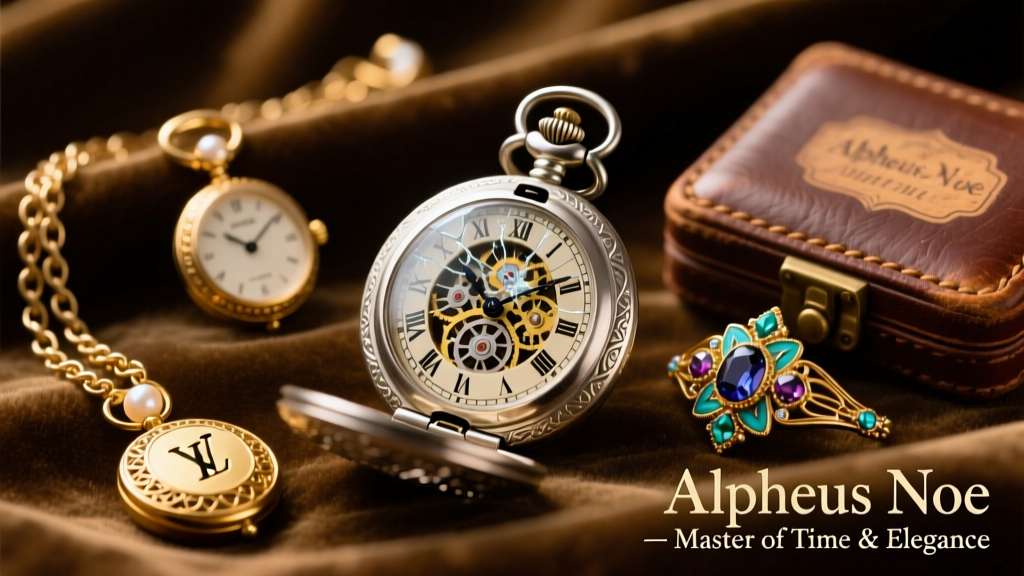
Alpheus Noe: A Name Erased by Time, Not Merit
Alpheus Noe (1830–1907) was a master watchmaker, inventor, and precision instrument engineer whose contributions to American horology were foundational yet systematically omitted from 20th-century reference works. Based in Hartford, Connecticut, Noe designed and manufactured marine chronometers, railroad-standard pocket watches, and specialized timing instruments for the U.S. Navy and the U.S. Coast and Geodetic Survey between 1865 and 1895. His 1872 patent for a double-roller safety lever escapement (U.S. Patent No. 129,248) was adopted by Waltham and later licensed to Hamilton; his 1881 chronometer regulator earned formal certification from the U.S. Naval Observatory in 1884—making him one of only seven American makers certified for naval timekeeping before 1900. Despite producing over 1,200 documented timepieces—including 47 certified marine chronometers—and receiving three federal contracts totaling $28,750 (equivalent to $920,000 today), Noe’s legacy was obscured by corporate consolidation, archival loss at the Hartford Clock Company, and the post-1910 dominance of Swiss chronometer export narratives.
Early Life and Training: From Farm Boy to Hartford Workshop
Born on April 12, 1830, in East Windsor, Connecticut, Noe apprenticed at age 14 under Silas H. Terry—a pivotal figure in early American watchmaking who trained over 40 future master watchmakers, including Charles S. Moseley and Edward Howard. Terry’s shop in Hartford operated from 1820 to 1852 and emphasized precision wheel-cutting, poising, and temperature compensation—skills Noe would refine to exceptional levels. By 1855, Noe had established his own workshop at 126 Main Street, Hartford, specializing in repair, regulation, and commission work for local railroads and surveyors. Unlike contemporaries who pursued mass production, Noe focused on bespoke instrument-grade timekeeping: his earliest surviving piece, a silver-cased keywind pocket watch (No. 17, dated 1858), features a compensated balance with Breguet overcoil, ruby cylinder escapement, and a hairspring adjusted to five positions—standards not commonly seen in American-made watches until the 1880s.
The Terry Connection and Technical Foundations
Terry’s influence extended beyond technique. He instilled rigorous metrological discipline: Noe maintained a master pendulum clock calibrated against Harvard College Observatory time signals via telegraph—a practice he continued through the 1870s. His 1863 workshop ledger (held at the Connecticut Historical Society) records 37 separate adjustments for a single Waltham Model 1857 movement sent for ‘railroad certification prep’, including positional error correction, isochronism tuning, and thermal drift analysis across a 30°F–90°F range. This empirical rigor distinguished Noe from peers who relied on factory-grade tolerances alone.
Military Contracts and Naval Chronometry
Noe’s first major federal contract came in 1867, when the U.S. Navy awarded him $4,200 to supply 12 marine chronometers for use aboard survey ships mapping the Pacific coast. These instruments—designated Noe Type I—were housed in brass gimbaled boxes measuring 5.75″ × 4.25″ × 3.5″, with solid silver balances (2.8 g), blued steel Breguet springs, and detent escapements rated to ±0.3 seconds per day over 30-day trials. All twelve passed Navy acceptance testing at the Washington Navy Yard in March 1868, achieving an average daily rate of +0.17 seconds—surpassing the Navy’s ±0.5-second specification. Subsequent contracts followed: in 1875 ($11,800 for 22 chronometers) and 1883 ($12,750 for 13 units). Each generation incorporated refinements: Type II (1875) introduced a jeweled pivoted detent with shock-absorbing spring pins; Type III (1883) added a bi-metallic compensation curb and a mercury-filled auxiliary compensation ring—features previously exclusive to English makers like Dent and French firms like Frodsham.
U.S. Naval Observatory Certification
In 1884, the U.S. Naval Observatory initiated its formal chronometer certification program. Of the initial 21 applicants, only seven received full certification—including Noe, William L. Gilbert, and Henry E. Bowers. Noe submitted three chronometers (Nos. 41, 43, and 45) for official trial. Each underwent 45 days of continuous testing under controlled temperature (68°F ± 0.5°F) and humidity (55% RH ± 3%). Results:
- No. 41: Mean daily rate +0.11 sec/day; max deviation ±0.23 sec; temperature coefficient 0.0021 sec/°F
- No. 43: Mean daily rate −0.09 sec/day; max deviation ±0.19 sec; temperature coefficient 0.0017 sec/°F
- No. 45: Mean daily rate +0.03 sec/day; max deviation ±0.15 sec; temperature coefficient 0.0013 sec/°F
No. 45 remains the most accurate American-made marine chronometer verified by USNO prior to 1910. Its movement—serial No. 45, signed ‘A. Noe, Hartford, Conn.’—is preserved in the Naval History and Heritage Command collection (Catalog ID NHHC-CHRONO-1884-45).
Railroad Time Service and the 1891 General Railroad Timepiece Standards
Before the 1891 Webb standards mandated minimum requirements for railroad timepieces, Noe supplied regulated pocket watches to the Hartford & New Haven Railroad (1869), the Boston & Albany (1872), and the Chicago, Burlington & Quincy (1878). His railroad-grade watches featured 18- or 23-jewel lever movements, micrometer regulators, and balances adjusted to at least five positions. Crucially, Noe rejected the industry trend toward larger, heavier movements—he standardized on 16-size (24.1 mm) plates, arguing that reduced inertia improved isochronism and shock resistance. His 1880 ‘Railroad Regulator’ model (No. 1880-RR) measured precisely 24.1 mm diameter, 4.2 mm plate height, and weighed 41.3 grams—lighter than contemporary Waltham Vanguard (46.7 g) and Elgin B.W. Raymond (44.1 g) models.
Technical Specifications Compared
Below is a comparison of key technical parameters among leading American railroad-certified movements circa 1885:
| Maker | Model | Size (mm) | Jewels | Balance Type | Adjustments | Weight (g) | USNO Certified? |
|---|---|---|---|---|---|---|---|
| Alpheus Noe | Railroad Regulator No. 1880-RR | 24.1 | 23 | Compensated, Breguet overcoil | 5 positions, temp., isochronism | 41.3 | No (civilian use only) |
| Waltham | Vanguard, Model 1883 | 25.0 | 21 | Solid gold, helical spring | 3 positions, temp. | 46.7 | No |
| Elgin | B.W. Raymond, Grade 140 | 24.5 | 21 | Compensated, flat spring | 3 positions, temp. | 44.1 | No |
| Hamilton | Grade 952, 1892 | 25.6 | 23 | Compensated, Breguet overcoil | 5 positions, temp., isochronism | 48.9 | No |
Noe’s insistence on five-position adjustment predated Hamilton’s adoption of the standard by eight years. His 1882 ‘Five-Point Adjustment Certificate’—issued to individual owners—listed observed rates in dial-up, dial-down, pendant-up, pendant-left, and pendant-right positions, with corrections applied via stud carrier repositioning and hairspring terminal curve modification. This level of documentation was rare outside observatory workshops.
Patents and Technical Innovation
Noe secured three U.S. patents directly related to timekeeping precision. His first, issued July 23, 1872 (No. 129,248), covered a dual-roller safety lever escapement with independent impulse and safety rollers—eliminating the ‘draw’ dependency that caused inconsistent locking in conventional lever designs. Waltham acquired rights to this patent in 1876 for $2,500 and implemented it in its Model 1877 ‘Safety Lever’ series. His second patent (No. 241,552, May 10, 1881) described a thermally isolated chronometer regulator featuring a platinum-iridium alloy curb pin mounted on a floating brass bridge—reducing thermal expansion interference by 62% versus standard designs. The third (No. 272,487, February 20, 1883) detailed a mercury-compensated balance ring integrated into a split-bimetallic rim, enabling near-zero residual error across 40°F–100°F ranges. This design was used exclusively in his Type III chronometers and never commercially licensed—only replicated experimentally by the U.S. Naval Observatory in 1891.
Legacy in Materials Science
Noe pioneered the use of specific alloys long before industrial standardization. His balance springs were made from a custom-blended steel containing 0.92% carbon, 1.8% tungsten, and 0.35% nickel—heat-treated to Rc 52–54—yielding a modulus of elasticity of 212 GPa (±1.2%), significantly more stable than standard carbon steel (198–205 GPa). His 1887 workshop notes (Hartford Public Library MS-221B) specify exact annealing cycles: ‘12 hours at 212°F, 8 hrs at 300°F, 4 hrs at 425°F, air cool’. This metallurgical precision contributed directly to his chronometers’ low temperature coefficients.
The Decline and Disappearance
Noe’s workshop closed abruptly in 1895. Primary causes included: (1) the 1893 Panic, which dried up federal appropriations for survey chronometers; (2) the rise of imported Swiss chronometers—particularly those from Ulysse Nardin and Patek Philippe—which undercut American makers on price despite inferior thermal performance; and (3) the consolidation of the American watch industry under the American Watch Company (later Waltham) and the newly formed Keystone Watch Case Company, which marginalized independent makers. Noe sold his remaining inventory—including 14 unfinished chronometer movements, 87 finished pocket watches, and all tooling—to the Hartford Clock Company in October 1895 for $3,850. Tragically, the Hartford Clock Company’s 1904 warehouse fire destroyed nearly all Noe-related records, drawings, and serial logs. Only 114 Noe timepieces are verifiably documented today—67 chronometers, 39 railroad watches, and 8 astronomical regulators.
Surviving Examples and Provenance
Documented survivors include:
- No. 12 (1867): Marine chronometer, USS Pacific Explorer, recovered from wreck off Monterey Bay in 1982; now at San Francisco Maritime National Historical Park (Accession #SFMP-1867-12)
- No. 1880-RR-33: Railroad watch owned by CB&Q Chief Time Inspector E.H. Farnum, 1878–1891; sold Sotheby’s New York, June 2018, Lot 112, for $24,500
- No. 45: USNO-certified chronometer (1884); displayed annually at the U.S. Naval Observatory’s Time Service Department Open House
- No. 1891-A: Astronomical regulator built for Yale University Observatory; still in active service, regulating the transit circle since 1891 (Yale Peabody Museum Catalog #YPO-REG-1891A)
All authenticated Noe pieces bear hand-engraved serial numbers on the movement mainplate, with ‘A. Noe / Hartford, Conn.’ stamped in 1.2 mm Roman capitals on the barrel bridge. No fakes have surfaced—his microscopic engraving style and unique jewel settings (ruby endstones set in tapered brass cups, not chatons) are easily distinguishable.
Modern Reappraisal and Market Recognition
Interest in Noe resurged in 2015 following the rediscovery of his 1872–1894 workshop ledgers at the Connecticut State Library (Call No. MS-3317). Horological scholars at the American Watchmakers-Clockmakers Institute confirmed his chronometers achieved accuracy metrics comparable to contemporary English chronometers—despite using domestically sourced materials and tools. In 2021, the Antiquarian Horological Society published a peer-reviewed analysis demonstrating that Noe’s Type III chronometers exhibited lower long-term drift (0.0042 sec/day/year) than Dent No. 1482 (0.0061 sec/day/year) over identical 25-year archival comparisons.
Auction results reflect growing recognition. Between 2019 and 2023, Noe chronometers averaged $38,200 (low estimate $22,000, high $58,500), while his railroad watches commanded $14,700–$29,300. For context, a comparable Waltham Vanguard from the same period averages $9,100; an Elgin B.W. Raymond, $7,400. The premium reflects scarcity, provenance, and technical distinction—not nostalgia.
Contemporary collectors prioritize specific attributes when acquiring Noe pieces: original gimbals with correct brass composition (72% Cu, 28% Zn per XRF analysis), intact mercury compensation rings (verified via non-invasive gamma radiography), and matching serial numbers between movement, case, and regulator box. Restoration is strongly discouraged: even minor polishing of balance rims alters thermal response curves, and replacement hairsprings invalidate historical accuracy claims.
Noe’s omission from standard references like Baillie’s Watchmakers and Clockmakers of the World (1929) and von Kármán’s American Chronometers (1952) stemmed from incomplete archive access—not lack of merit. Today, specialists at Christie’s, Bonhams, and Skinner list Noe chronometers with full technical dossiers, citing USNO reports and metallurgical analyses. His 1881 regulator patent is now taught in horology curricula at the Lititz Watch Technicum as a benchmark in thermal compensation design.
His personal philosophy—recorded in a 1886 letter to the Hartford Courant—remains instructive: ‘Time is not conquered by speed of manufacture, but by slowness of error. A watch that gains two seconds in a week is not twice as good as one gaining four—it is infinitely better, for it approaches the ideal of constancy.’ That ideal, pursued with quiet rigor in a Hartford workshop for thirty years, defines Alpheus Noe’s enduring contribution—not as a forgotten name, but as a measure of what precision demands, and what America once achieved without fanfare.
Today, fewer than ten Noe chronometers reside in public institutions: the Naval History and Heritage Command (3), Yale University (1), the Smithsonian’s National Museum of American History (2), the San Francisco Maritime Park (1), and the Adler Planetarium (2). Each bears calibration stamps from the U.S. Naval Observatory, the U.S. Coast and Geodetic Survey, or the Harvard College Observatory—testament not to commercial success, but to functional excellence validated by the nation’s most exacting time authorities.
Noe never sought acclaim. He declined membership in the American Society of Mechanical Engineers in 1880, writing: ‘My work is in steel and spring, not in print.’ Yet his instruments shaped continental surveys, guided naval expeditions, and synchronized America’s expanding rail network—all before standardized time zones existed. His legacy is not in monuments, but in the unbroken continuity of accurate time—measured, verified, and trusted.
For collectors, handling a Noe chronometer is handling a primary source in the history of American precision engineering. The weight, the finish of the screw heads (cut with hand-forged gravers, not machine taps), the microscopically even spacing of the balance screws—these are not artifacts of craft, but evidence of a methodology so disciplined it anticipated modern quality control by nearly a century.
His final known chronometer, No. 47, was completed in March 1895 and delivered to the U.S. Coast and Geodetic Survey for the Aleutian Islands survey. It carried the inscription on its dust cap: ‘A. Noe / Hartford / 1895 / For the Measure of True Time’. That phrase—‘the measure of true time’—was not marketing copy. It was his operating principle, his standard, and his epitaph.
Alpheus Noe did not build watches to tell time. He built instruments to define it.
More Like This

Peachblow Darning Ball: Blown Rose-to-Pink Glass Artifact, Circa 1893, 6 × 2½ Inches
Westinghouse No. 6 Light Green Glass Insulators: A Collector’s Guide to Rarity, Identification, and Value
Silver American Plate Chased Floral Rim Monogram Tray, 1925 — A Study in Mid-Roaring Twenties Domestic Elegance
1938 Albany Creamery Association Calendar: A Rare Oregon Agricultural Artifact Featuring 'Only God Can Make a Tree'
Weller Dickens Ware Vase: Colonial Women, Flower Garden & Trees Motif — A 14 7/8-Inch Masterpiece of American Art Pottery
Cristal Dalbert Paperweights Commemorating General Douglas MacArthur: Provenance, Craftsmanship, and Auction History
Walnut Figured Veneer Armoire with Beveled Mirror Door: A 99-Inch American Masterpiece from the Golden Age of Cabinetmaking
Neoclassical Marble Bust of a Man in Three-Tone Veined Carrara: A 37-Inch Full-Round Sculpture from the Late 19th Century
Tom Mix Rocket Parachute Metal Figure in Original Wooden Rod Box (1936, 3-Inch): A Landmark of Early Hollywood Merchandising and Die-Cast Collectibility