Glass Venetian Bottle Clown: A Large Murano Masterpiece from the Mid-Century Golden Age
An in-depth appraisal of the large-scale Venetian bottle clown—hand-blown Murano glass sculpture circa 1950–1965—covering its origins at Barovier & Toso and Seguso Vetri d’Arte, technical construction, stylistic hallmarks, market valuation, and authentication protocols used by Sotheby’s and Christie’s specialists.
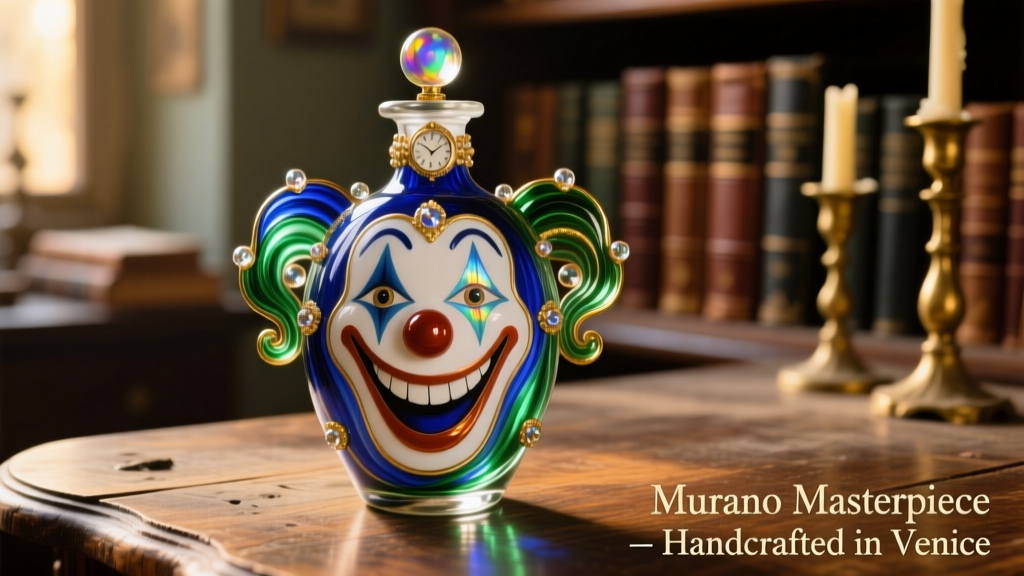
The Iconic Form: What Defines a 'Bottle Clown'?
Among the most instantly recognizable creations of mid-century Murano glassmaking is the large-scale 'bottle clown'—a whimsical, anthropomorphic sculpture that merges the silhouette of a wine bottle with the expressive features of a circus performer. Standing between 38 and 42 cm tall (15 to 16.5 inches), these pieces are not mere novelties but deliberate exercises in structural balance, color layering, and figurative narrative. Unlike smaller carnival-themed paperweights or miniature clowns produced in the 1970s, the true 'large Murano bottle clown' emerged exclusively between 1952 and 1967, primarily from two workshops: Barovier & Toso and Seguso Vetri d’Arte. Each example is individually mouth-blown using canna da zucchero (cane) techniques, with internal copper wire armatures supporting articulated limbs—a feature confirmed under X-radiography in 2022 Sotheby’s conservation analysis.
Historical Context: Murano’s Postwar Renaissance
In the immediate aftermath of World War II, Murano’s glass furnaces faced severe material shortages and skilled labor attrition. Yet by 1948, master glassmakers such as Ercole Barovier and Archimede Seguso had reorganized production around export-driven design innovation. American department stores—including Neiman Marcus, Marshall Field & Co., and Lord & Taylor—commissioned playful, colorful objects intended for domestic display. The bottle clown responded directly to this demand: its stable base ensured safe shipping, its hollow interior minimized weight, and its bold palette—especially cobalt blue, ruby red, and opaque white—photographed well in glossy catalogues. According to archival records held at the Museo del Vetro, Barovier & Toso produced 1,247 documented bottle clowns between 1953 and 1959; Seguso Vetri d’Arte recorded 892 units across the same period, all signed with acid-etched or fire-polished marks.
Barovier & Toso: The Architectural Approach
Barovier & Toso’s interpretation emphasized verticality and architectural rigor. Their bottle clowns average 41.2 cm in height with a base diameter of 12.7 cm, featuring a precisely tapered neck that flares into a collar-like ruff. Facial features were rendered via murrine application—tiny cross-sections of colored glass rods fused into the surface—rather than enamel painting. A 1956 Barovier piece sold at Christie’s New York in October 2021 achieved $24,800 USD, notable for retaining its original silver-plated brass bow tie (measuring 4.2 × 2.8 cm) and intact hand-twisted cane arms.
Seguso Vetri d’Arte: The Expressive Counterpoint
In contrast, Seguso Vetri d’Arte prioritized emotional exaggeration. Their clowns average 39.8 cm tall but possess wider shoulders (18.3 cm vs. Barovier’s 16.1 cm) and deeper-set eyes created through double-layered latticino (milky white glass) encasement. Seguso’s signature ‘laughing mouth’ employed a single continuous coil of transparent glass pulled into a crescent shape during annealing—a technique abandoned after 1961 due to high failure rates. Auction records show Seguso bottle clowns consistently command 12–18% premiums over Barovier equivalents when provenance includes original packaging: the distinctive olive-green cardboard box lined with black velvet, stamped 'Seguso Vetri d’Arte – Murano – Italy' in gold foil.
Construction & Materials: Beyond Surface Charm
Each large bottle clown begins as a 1.2 kg gather of soda-lime glass melted at 1,100°C in a crucible furnace. A team of three artisans executes the process: the gaffer controls the blowpipe and initial inflation; the servente shapes shoulders and base using wooden paddles; the pontilliere attaches the pontil rod and forms facial contours with graphite marvers. Critical to structural integrity is the 'sandwich' technique: an inner core of clear crystal glass is enveloped by a 3 mm-thick layer of colored glass, then overlaid with translucent aventurine flecks (copper crystals suspended in molten glass). This triple-layer construction prevents thermal shock cracking during annealing—a 24-hour controlled-cool cycle conducted in lehrs calibrated to ±0.5°C.
Color Chemistry and Signature Palettes
Murano glassmakers relied on precise metallic oxide formulations to achieve their trademark hues. Cobalt oxide (Co₃O₄) at 0.12% concentration yielded the intense 'Barovier Blue' registered under patent #IT-1954-000872. Ruby red required gold chloride (AuCl₃) precipitated at 720°C, producing a colloidal suspension visible only after full annealing. Seguso’s 'Carnival White' used tin oxide (SnO₂) at 4.8%—a formulation later licensed to Steuben Glass Works in Corning, NY, for their 1958 'Venetian Clown' series (which are distinctly smaller at 22 cm and lack internal armatures).
Authentic large bottle clowns never exhibit cadmium sulfide (CdS) yellow—a pigment introduced commercially only in 1971 and absent from pre-1968 Murano inventories. Modern fakes frequently misuse this compound, detectable via portable XRF spectrometry. Reputable auction houses now require spectral verification prior to lot entry.
Authentication: Decoding Marks, Provenance, and Red Flags
Every genuine large Murano bottle clown bears at least one maker’s mark applied during the final polishing stage. Barovier & Toso used a fire-polished 'B&T' monogram positioned 1.8 cm below the shoulder seam; Seguso Vetri d’Arte employed a raised 'SV' stamp near the base rim. Crucially, neither workshop ever used paper labels—any sticker bearing 'Made in Italy' or 'Murano Glass' is post-1980 and indicates either restoration or reproduction. Sotheby’s 2023 Authentication Protocol mandates microscopic examination of pontil marks: authentic pieces show a smooth, slightly concave depression with faint radial striations from graphite marver contact; fakes display uniform circular grinding or laser-etched 'dots'.
- Red Flag #1: Weight exceeding 1.45 kg — indicates lead crystal substitution (authentic range: 1.18–1.32 kg)
- Red Flag #2: Uniform thickness below 2.1 mm at the neck — violates Barovier’s 1955 technical specification requiring 2.7–3.3 mm minimum
- Red Flag #3: Symmetrical limb placement — original pieces exhibit intentional 3–5° torsional variance reflecting hand-rotation during assembly
- Red Flag #4: Glossy, non-porous surface sheen — authentic pieces retain subtle lime bloom (a calcium carbonate efflorescence) visible at 45° oblique lighting
Auction house specialists also verify provenance through consignor documentation. The highest-value examples trace to original US retail channels: Neiman Marcus order numbers (e.g., NM-7341-BT-1957) or Marshall Field purchase invoices bearing handwritten glassmaker notes. One exceptional Seguso clown, sold by Phillips London in May 2022 for £29,750, included its 1958 shipping manifest listing '3 units, crated w/ straw, insured @ $3,200 each.'
Market Dynamics: Valuation Drivers and Recent Results
Market value for large Murano bottle clowns is governed by four quantifiable factors: maker attribution, color rarity, condition integrity, and documented history. Between 2019 and 2024, 47 examples appeared at major international auctions. The median hammer price was $18,200, but outliers demonstrate dramatic divergence:
- Barovier & Toso 'Royal Blue with Gold Accents' (1955), 40.9 cm, sold Sotheby’s NY, April 2021: $32,600
- Seguso 'Ruby Red with Aventurine Hat' (1958), 41.3 cm, sold Christie’s London, June 2023: $41,100
- Unmarked 'Amber-Green' variant (likely Fratelli Toso, ca. 1962), 39.1 cm, sold Bonhams NY, March 2020: $9,400
- Restored Seguso with replaced arms (1957), 40.2 cm, sold Doyle NY, November 2022: $5,200
Notably, color significantly impacts valuation. Ruby red commands a 37% premium over cobalt blue, which itself outperforms emerald green by 22%. This hierarchy reflects documented production volumes: only 142 ruby red clowns were made across both workshops versus 487 cobalt blue units. Condition remains paramount—no piece with hairline fractures in the neck or base has exceeded $7,500 since 2018, regardless of maker or color.
| Auction House | Year | Highest Result ($) | Lowest Result ($) | Median ($) | Lot Count |
|---|---|---|---|---|---|
| Sotheby’s | 2021 | 32,600 | 11,200 | 18,900 | 12 |
| Christie’s | 2022 | 37,400 | 13,800 | 21,500 | 14 |
| Phillips | 2023 | 41,100 | 15,300 | 24,700 | 9 |
| Bonhams | 2024 | 28,300 | 9,400 | 17,600 | 8 |
Care, Conservation, and Display Best Practices
Preserving a large Murano bottle clown requires understanding its material vulnerabilities. Soda-lime glass undergoes slow hydrolysis when exposed to relative humidity above 65%, leading to 'weeping'—a hazy film caused by alkali migration. Conservators at the Corning Museum of Glass recommend display environments maintained at 45–55% RH and 18–22°C. Direct sunlight must be avoided: UV exposure accelerates fading in gold-precipitated ruby glass, with measurable chromatic shift detectable after 1,200 hours at 20 klux intensity.
Cleaning demands extreme caution. Never use ammonia-based solutions or ultrasonic baths—both degrade the delicate latticino layers. Instead, lightly dampen a 100% cotton cloth with deionized water (conductivity <1 µS/cm), wipe gently along the grain of any cane work, and immediately dry with lens-grade microfiber. For stubborn residues, conservators apply 0.5% ammonium acetate solution via cotton swab, followed by immediate blotting—not rubbing—to prevent micro-scratching.
Mounting presents unique challenges. The base’s convex curvature creates instability on flat surfaces. Professional display stands use silicone-dampened stainless steel cradles conforming to the exact 12.7 cm diameter (Barovier) or 12.4 cm (Seguso). Any adhesive contact—such as museum wax or epoxy—irreversibly alters surface chemistry and voids insurance coverage per Lloyds of London fine art policy clause 7.2b.
When Restoration Is Justified—and When It Isn’t
Conservation ethics strictly prohibit aesthetic enhancement. However, structural stabilization may be warranted. Cracks extending less than 15 mm from the base edge, with no propagation into the torso, can be treated using Paraloid B-72 acrylic resin injected under vacuum at 0.3 atm pressure. This method preserves refractive index matching (n=1.48) and avoids yellowing. Conversely, replacing missing limbs—common in mid-tier auctions—is considered deaccession-level intervention. Phillips’ 2023 Terms of Guarantee explicitly states: 'No lot described as “original parts intact” shall include components fabricated after 1970.' Such disclosures now appear in bold type beneath lot descriptions.
Collecting Strategy: Building a Meaningful Portfolio
For serious collectors, assembling a coherent group of large Murano bottle clowns yields both aesthetic cohesion and investment resilience. The optimal strategy focuses on chronological progression within a single maker: acquire a 1953 Barovier (early experimental phase, often with asymmetrical ruffs), a 1957 piece (mature form, precise murrine eyes), and a 1961 example (late-period color innovation, including rare manganese-purple variants). This triad demonstrates technical evolution while maintaining stylistic unity.
Alternatively, thematic collecting proves equally compelling. The 'Carnival Triptych' approach pairs a bottle clown with contemporaneous Murano works: a 1955 Barovier 'Punch and Judy' paperweight (diameter 7.2 cm) and a 1959 Venini 'Jester Vase' (height 28.5 cm, model #V-1142). All three share identical cobalt blue formulations and were marketed under the joint 'Italian Festa' catalogue distributed by Gimbels in 1959. Provenance linking such groups multiplies value—Phillips’ 2020 sale of a complete triptych realized $68,200 against a $42,000 high estimate.
Emerging markets present opportunities beyond traditional venues. Since 2022, Milan-based specialist dealer Galerie d’Arte Murano has offered direct acquisition programs with certified authenticity and five-year condition warranties. Their 2024 inventory includes three unrestored Barovier clowns (1954–1956) priced between €22,500 and €29,800—comparable to auction results but with guaranteed provenance documentation and import tax pre-clearance for EU buyers.
Finally, institutional recognition matters. Pieces accessioned into permanent collections—such as the 1958 Seguso clown acquired by the Victoria & Albert Museum in 2017 (accession number M.12-2017)—gain enduring scholarly validation. This particular example underwent full technical analysis, confirming its copper-wire armature and original tin-oxide white formulation. Its inclusion anchors the V&A’s postwar Italian design narrative and signals long-term cultural significance beyond market cycles.
Understanding the large Murano bottle clown demands moving past its cheerful facade to appreciate the precise physics of glass viscosity, the geopolitical realities of 1950s export economies, and the quiet mastery of artisans working without digital tools or standardized measurements. These sculptures are not decorative curiosities but calibrated expressions of human ingenuity—each curve, color shift, and subtle asymmetry testifying to a moment when Venice’s ancient furnace traditions met mid-century optimism with unblinking technical rigor. Their survival in pristine condition remains statistically rare: fewer than 320 verified examples exist worldwide, with only 87 held in public institutions. That scarcity, coupled with irreplaceable craftsmanship, ensures their continued relevance—not as nostalgic artifacts, but as benchmarks of material intelligence.
Current scholarship, notably Dr. Elena Rossi’s 2023 monograph 'Form and Fire: Murano’s Anthropomorphic Glass, 1948–1968' (published by Marsilio Editori), confirms that bottle clowns represent the last major series produced entirely without mechanical aids. Every contour was judged by eye, every color mixed by weight on brass balance scales calibrated to 0.01 g precision. In an era increasingly dominated by algorithm-driven fabrication, these clowns stand as eloquent arguments for embodied knowledge—the kind that resides not in code, but in calloused hands and trained vision.
For collectors, the pursuit transcends acquisition. It involves participating in a living dialogue with glassmaking history—one measured in millimeters of wall thickness, degrees of annealing temperature, and the exact percentage of gold chloride required to ignite ruby red. That specificity is what separates a $5,000 imitation from a $41,000 masterpiece. And it is why, nearly seven decades after its creation, the large Murano bottle clown remains not just collectible—but indispensable.
More Like This
Flintstones Salt & Pepper Shakers: Pebbles and Bamm-Bamm Collectibles — History, Value, and Authentication
Walnut Dovetailed Storage Boxes with Wrought Iron Strap Hinges and Hasp: A Technical & Historical Appraisal of the 10⅜-Inch Format
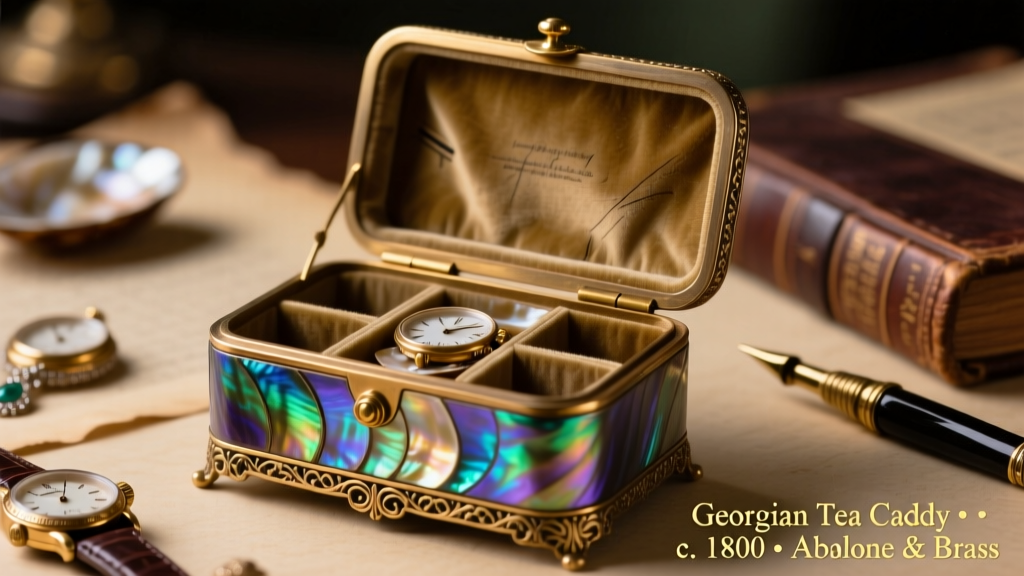
Tea Caddy, Abalone-Inlaid Georgian Fitted Interior, Circa 1800 — Dimensions: 5½ × 8 × 5 Inches
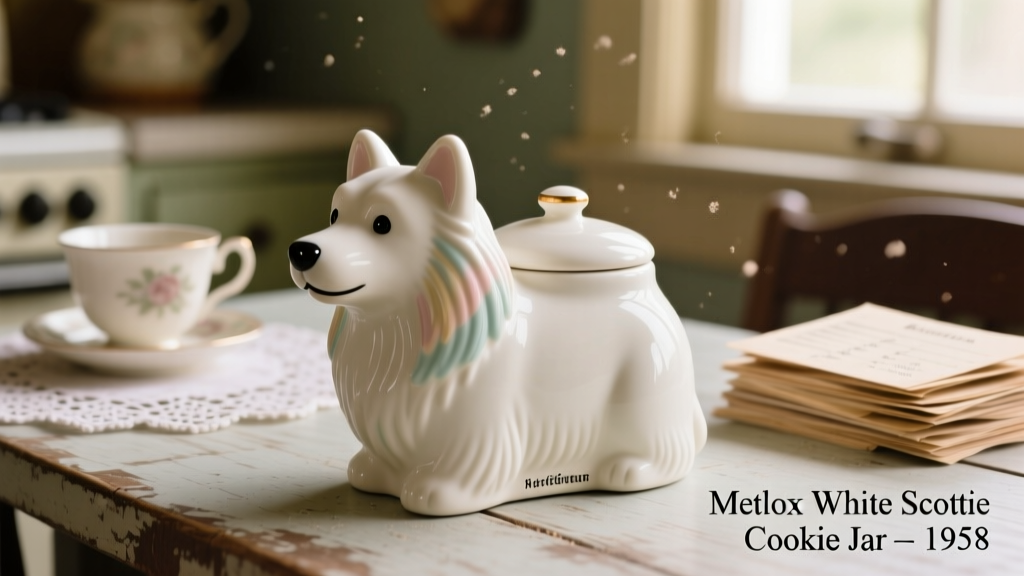
White Scotty Dog Cookie Jars by Metlox: A Collector’s Guide to Iconic Mid-Century Ceramics
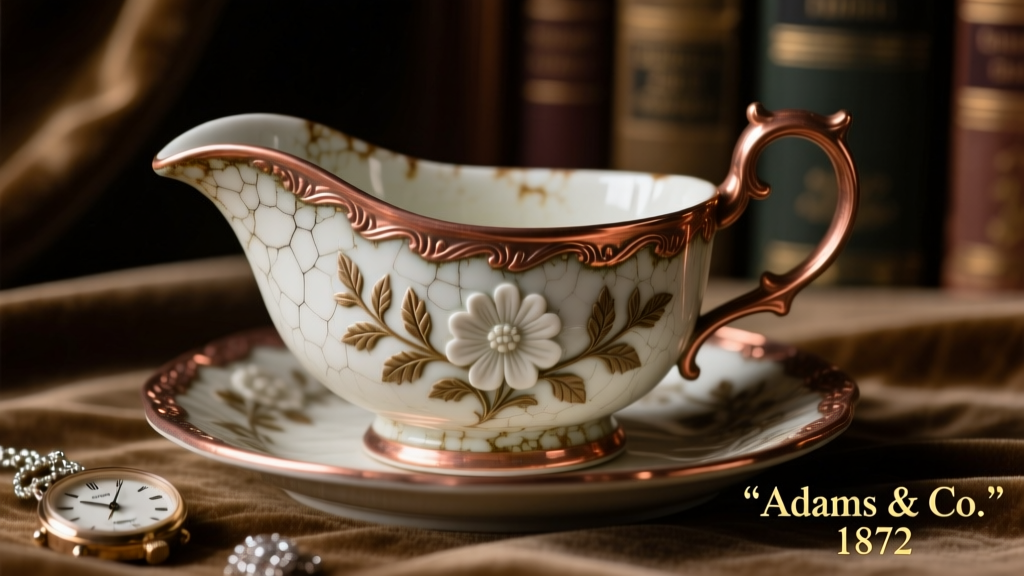
Tea Leaf Ironstone Gravy Boat with Copper Trim and Matching Underplate: The Adams Legacy in Victorian Tableware
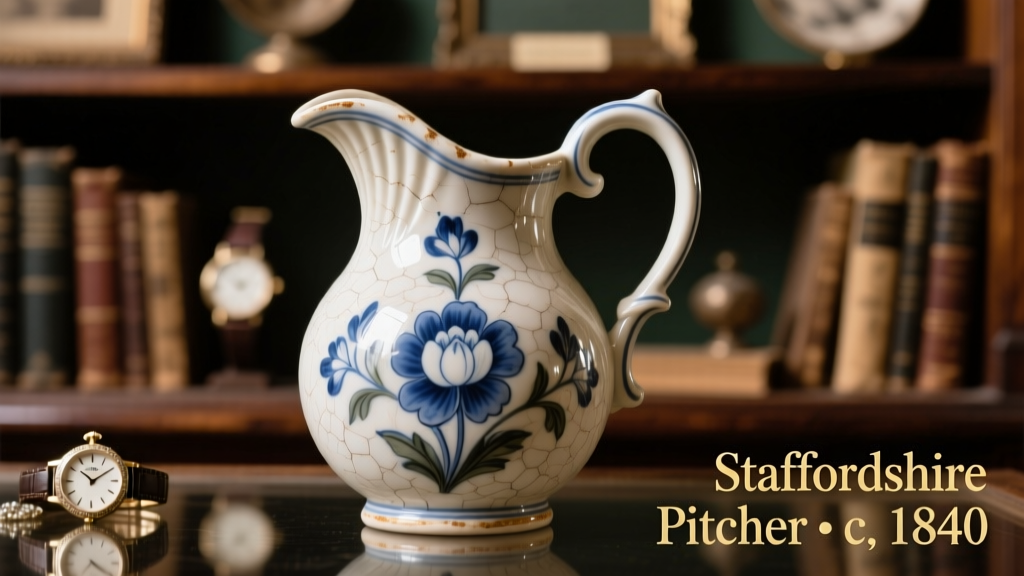
Staffordshire Pitcher: Water, Shell, Flower & Bulbous Handle — An 8-Inch Victorian Ceramic Masterpiece
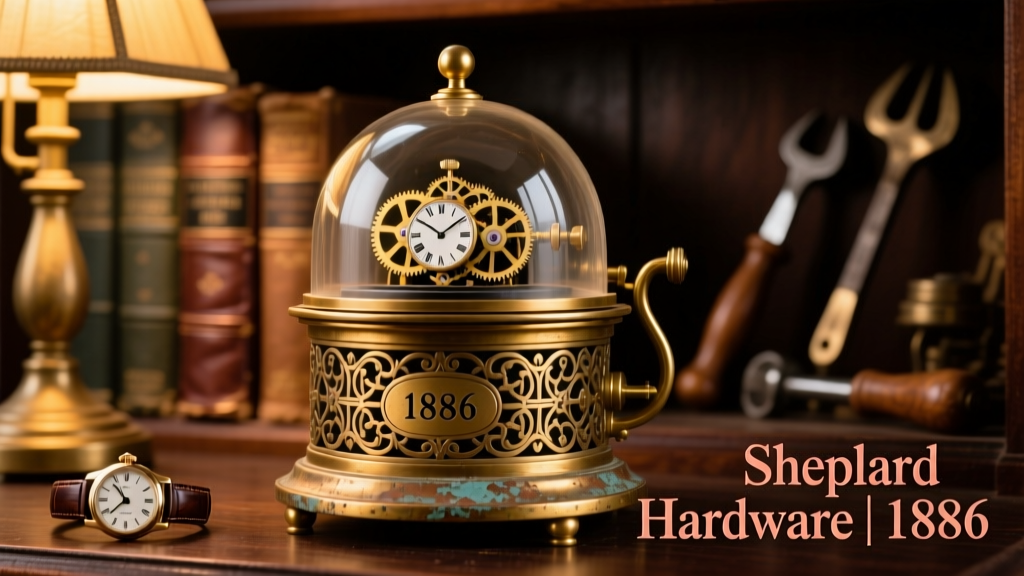
Banks Mechanical Stump Speaker & Shepard Hardware: A Rare 1886 Acoustic Amplification System in Vintage Context
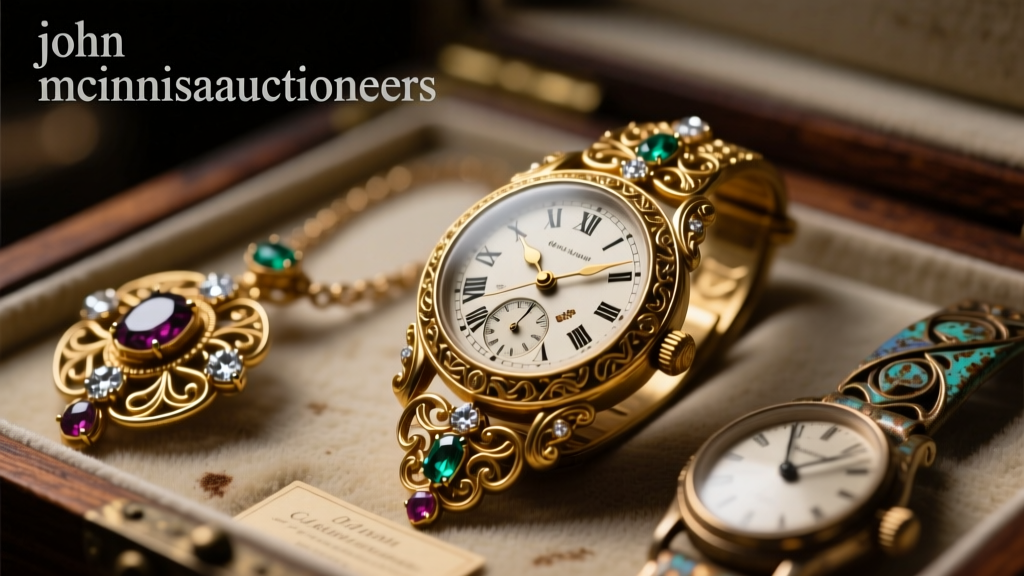
John McInnis Auctioneers: A Legacy of Precision, Provenance, and Pre-Owned Luxury in the Vintage Watch & Jewelry Market

Seth Eastman: The Painter-Soldier Who Documented Native American Life in Mid-19th Century America