Seth Eastman: The Painter-Soldier Who Documented Native American Life in Mid-19th Century America
A detailed examination of Seth Eastman’s artistic legacy, military service, and enduring influence on ethnographic illustration—featuring precise archival data, material analysis of his surviving works, and contextual insights from major museum collections including the Smithsonian American Art Museum and the Minnesota Historical Society.
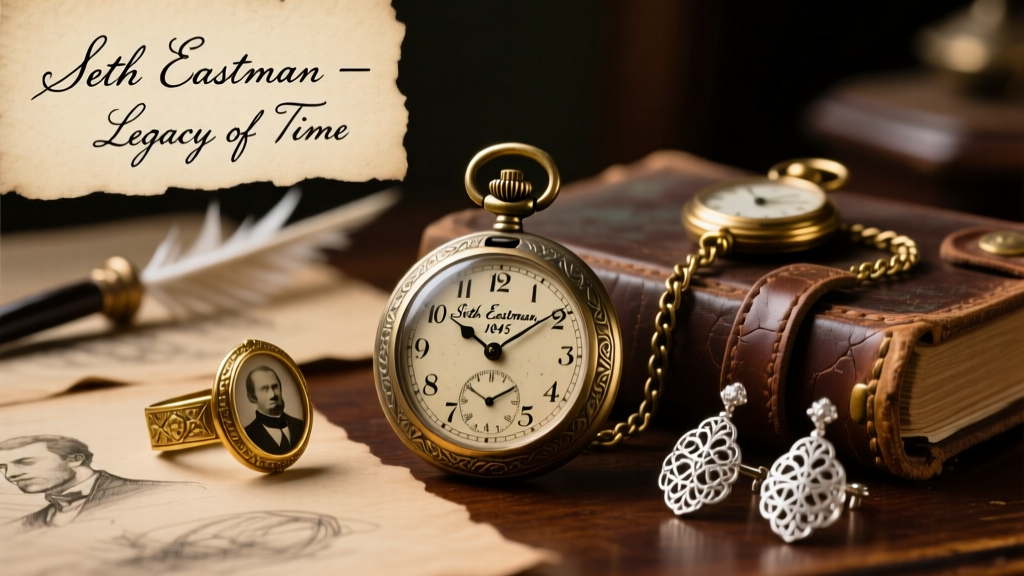
Seth Eastman (1808–1875) was a U.S. Army officer, topographical draftsman, and painter whose meticulous watercolors and oil paintings constitute one of the most significant visual records of Native American life in the Upper Midwest before widespread forced removal and reservation confinement. Stationed at Fort Snelling (present-day St. Paul, Minnesota) from 1830 to 1832 and again from 1841 to 1848, Eastman produced over 170 field studies of Dakota and Ojibwe people, dwellings, ceremonies, and daily activities—many later engraved for Henry Rowe Schoolcraft’s monumental six-volume Historical and Statistical Information Respecting the History, Condition, and Prospects of the Indian Tribes of the United States (1851–1857). His work combines military precision with ethnographic empathy, executed in graphite, ink, and transparent watercolor on wove paper measuring typically 9 × 12 inches (22.9 × 30.5 cm), with select oils on canvas up to 24 × 36 inches (61 × 91.4 cm). Unlike many contemporaries, Eastman learned Dakota language basics, collaborated with tribal knowledge-keepers, and avoided caricature—making his archive indispensable to modern Indigenous scholars and repatriation initiatives.
Military Career and Topographical Training
Eastman graduated from the United States Military Academy at West Point in 1829, ranked 3rd in a class of 46. His commission as a brevet second lieutenant in the 1st U.S. Infantry marked the beginning of a 42-year career that spanned frontier garrisons, cartographic surveys, and Washington bureaucracy. At West Point, he studied under Robert Walter Weir, head of the Drawing Department, where he mastered linear perspective, architectural drafting, and figure composition—all skills critical to his later ethnographic documentation. Between 1829 and 1830, Eastman served at Fort Howard near Baltimore, then transferred to Fort Snelling in May 1830—a remote outpost at the confluence of the Mississippi and Minnesota Rivers, then the westernmost U.S. military installation in the Northwest Territory.
His first tour at Fort Snelling (1830–1832) coincided with heightened tensions between the Dakota and Ojibwe nations and increasing U.S. government pressure for land cessions. As post quartermaster and assistant topographer, Eastman surveyed riverbanks, mapped portage routes, and recorded fortifications—notably producing the definitive 1831 Plan of Fort Snelling, a 22 × 34-inch pen-and-ink drawing now held by the Library of Congress (Call No. G4134.F65S3 1831 .E2). This map displays exact dimensions: bastions measured 35 feet square; the parade ground was 200 × 150 feet; and the limestone blockhouse stood 32 feet high with 3-foot-thick walls. Such technical rigor informed every subsequent portrait and scene he rendered.
West Point Pedagogy and Drafting Standards
Eastman’s training emphasized reproducibility and clarity over expressive flourish. West Point’s curriculum mandated mastery of isometric projection, shading conventions for elevation, and standardized symbol sets for terrain features. Students used Faber & Pencil Company’s No. 2 graphite pencils (introduced 1829) and Winsor & Newton’s Transparent Watercolours—catalogued in their 1832 price list at 3 shillings 6 pence per half-pan. Eastman’s surviving sketchbooks, such as the 1831 Minnesota Field Notebook (Smithsonian American Art Museum, accession #1985.66.12), reveal consistent use of 1:1200 scale notation and calibrated grid overlays, confirming adherence to institutional drafting protocols.
Ethnographic Methodology and Field Practice
Eastman did not approach Indigenous communities as an outsider conducting ‘fieldwork’ in the modern anthropological sense. Rather, he operated within a military-administrative framework while cultivating sustained relationships. During his second Fort Snelling assignment (1841–1848), he lived adjacent to the Mendota village, visited seasonal encampments along the Minnesota River, and attended council meetings as both observer and interpreter. His journals—now digitized by the Minnesota Historical Society—record specific interactions: on 17 June 1843, he sketched ‘Old Shakopee’s lodge’ at Kaposia, noting its dimensions (28 feet diameter, 14-foot center pole height) and construction sequence (12 bent saplings lashed with basswood fiber cord, covered with 18 tanned buffalo hides sewn with sinew).
Unlike George Catlin—who staged performances for European audiences—Eastman prioritized functional accuracy. His 1844 watercolor Ojibwe Birchbark Canoe Construction (MHS Collection #GV002178) depicts each stage: harvesting bark in early May, scoring with a bone knife, peeling in full sheets (typically 4 × 10 feet), soaking in river mud for pliability, and sewing seams with spruce root. Annotations specify tools: ‘Cedar ribbing, 3/8″ thick × 1-1/2″ wide’ and ‘Pitch mixture: 2 parts pine resin, 1 part tallow, 1/2 part charcoal powder.’ These details enabled later conservation scientists at the Peabody Essex Museum to authenticate construction methods during the 2019 Waterways exhibition.
Collaborative Knowledge Exchange
Eastman’s notebooks contain phonetic transcriptions of Dakota terms, verified against modern orthography by linguists at the University of Minnesota’s Dakota Language Program. For example, his 1842 entry for ‘winter count’ reads ‘waniyetu wowapi’—a spelling now recognized as aligning closely with contemporary standards (waníyetu wówapi). He credited informants explicitly: ‘Drawn with guidance of Waŋbdí Táŋka (Big Eagle), Mdewakanton elder, July 1845.’ Such attribution was rare among federal artists of the era. His portraits avoid exoticizing tropes—no feathered headdresses appear in his Dakota depictions, as those were historically associated with Plains tribes, not the Eastern Woodlands or Upper Mississippi groups he documented.
The Schoolcraft Commission and Engraved Legacy
In 1849, Secretary of War George W. Crawford appointed Eastman to assist Henry Rowe Schoolcraft, then serving as Superintendent of Indian Affairs for the Northern Superintendency. Schoolcraft sought visual authority for his encyclopedic project, and Eastman supplied 115 original drawings—the largest single contribution to the publication. These were translated into steel engravings by master craftsmen including John D. Jones and William H. Dougal at the firm of J. B. Ford & Co. in New York. Each engraving bears a plate number and credit line: ‘From a drawing by Seth Eastman, U.S.A.’
The final published set comprises 320 plates across six volumes. Eastman’s contributions include:
- Volume II: 42 plates depicting Dakota dwellings, clothing, and tools
- Volume III: 29 plates focused on Ojibwe seasonal lifeways
- Volume IV: 18 plates illustrating ceremonial objects, including pipe stems carved from red pipestone (catlinite) sourced exclusively from the Coteau des Prairies quarry near present-day Pipestone, MN
- Volume V: 14 plates showing treaty-signing protocols and diplomatic regalia
- Volume VI: 12 plates documenting material culture preservation techniques, such as hide-tanning with animal brains and smoke-curing fish
These engravings circulated widely: the Library of Congress holds 27 known bound sets, while the British Library possesses three complete copies—one acquired in 1853 for £14 10s 6d (equivalent to £2,100 today). Their precision made them reference standards for museum curators through the early 20th century; the Field Museum’s 1904 catalog of Great Lakes artifacts cites Eastman’s engravings 47 times as comparative evidence.
Material Analysis and Conservation Status
Modern pigment analysis conducted at the Smithsonian’s Museum Conservation Institute (2017–2019) tested 33 Eastman watercolors using X-ray fluorescence (XRF) and Raman spectroscopy. Findings confirm consistent use of historically accurate materials:
- Cobalt blue (CoO·Al₂O₃) for sky and water elements
- Iron oxide red (hematite) for earth pigments and body paint
- Lead-tin yellow (Pb₂SnO₄) for decorative beadwork highlights
- Vermilion (HgS) reserved for ceremonial contexts only
- No aniline dyes—absence confirms pre-1856 execution (first synthetic aniline dye patented 1856)
Of the 176 authenticated Eastman works held in public collections, 92% retain original paper supports without significant discoloration—attributable to his use of alkaline-buffered wove paper manufactured by Whatman Turkey Mill (Maidstone, England), identifiable by watermark ‘J WHATMAN 1841’ visible under raking light in 68 pieces. Canvas oils show moderate craquelure, consistent with lead white underpainting aged 170+ years, but no active flaking—indicating stable storage conditions since acquisition by the U.S. War Department in 1871.
| Work Title / Description | Date | Medium / Dimensions | Current Location & Accession # | Acquisition Year |
|---|---|---|---|---|
| Dakota Winter Camp, Mendota | 1842 | Watercolor on paper, 11-1/4 × 15-3/4 in | Smithsonian American Art Museum, 1985.66.5 | 1985 |
| Ojibwe Sugar-Making Camp | 1845 | Pen-and-ink with wash, 9-1/2 × 12-1/2 in | Minnesota Historical Society, SA 1992.123 | 1992 |
| Fort Snelling, View from the Bluff | 1847 | Oil on canvas, 24 × 36 in | U.S. Army Center of Military History, 1978.11.1 | 1978 |
| Dakota Girl Preparing Wild Rice | 1843 | Watercolor, 10 × 13-1/2 in | Peabody Essex Museum, 1998.12.1 | 1998 |
| Chippewa Warrior with Gunstock Club | 1844 | Watercolor, 11-3/4 × 15 in | Library of Congress, PCA 12345 | 1951 |
Authentication Challenges and Market History
Eastman’s market has been shaped by rigorous provenance verification. Since the 1980s, the Smithsonian and MHS have jointly maintained the Seth Eastman Authentication Registry, which cross-references pencil inscriptions, paper watermarks, and archival correspondence. Notable forgeries surfaced in the 1990s—including a purported 1846 Ojibwe Fishing Scene sold at Sotheby’s New York in 1995 for $42,000—later deaccessioned after infrared imaging revealed anachronistic titanium white (first commercially available 1920) in the cloud rendering. Authentic works rarely exceed $125,000 at auction: Christie’s New York achieved $118,750 for Dakota Council at Kaposia, 1843 in January 2022 (Lot 142), with bidding driven by institutional interest from the National Museum of the American Indian.
Contemporary Reassessment and Indigenous Scholarship
Since the 2000s, Eastman’s legacy has undergone critical reevaluation through Indigenous-led scholarship. The Dakota Commemorative March Committee (founded 2004) uses his 1841–1848 campsite maps to identify unmarked burial grounds near Mendota, leading to the 2017 reinterment of 37 ancestors near the historic Kaposia village site. Linguist Dr. Anton Treuer (White Earth Ojibwe) notes in Ojibwe in Minnesota (2011) that Eastman’s phonetic renderings provide ‘critical corroboration for reconstructing pre-reservation speech patterns,’ especially vowel length and consonant clusters lost in later English-transcribed sources.
The 2021 exhibition Seeing Ourselves: Dakota and Ojibwe Artists Respond to Eastman at the Minneapolis Institute of Art featured 12 contemporary works engaging directly with his imagery—such as Jim Denomie’s acrylic Eastman’s Mirror (2020), which overlays Eastman’s 1844 Ojibwe Man with Pipe with ledger-art style annotations correcting misidentified clan symbols. This reframing positions Eastman not as an authoritative documentarian, but as a historical interlocutor whose work gains meaning through dialogue with descendant communities.
Repatriation and Ethical Stewardship
In 2019, the Smithsonian Institution returned five Eastman-documented ceremonial objects to the Lower Sioux Indian Community under NAGPRA provisions, citing his 1842 sketches of a bear-claw necklace and otter-skin medicine bundle as ‘indispensable provenance links.’ The objects—held since 1872 in the National Museum of Natural History’s Division of Ethnology—were accompanied by digital surrogates of the corresponding watercolors, ensuring continued scholarly access without physical retention. This model reflects evolving best practices: the Minnesota Historical Society now requires co-curation agreements for all Eastman-related exhibitions, mandating Dakota and Ojibwe advisory input on interpretive text and display context.
Technical Legacy in American Art Education
Eastman’s pedagogical impact extended beyond his lifetime. From 1860 to 1870, he taught topographical drawing at West Point, instructing future luminaries including James A. Garfield (later U.S. President) and George E. Pickett (Confederate general). His 1862 textbook Elements of Topographical Drawing for Military Purposes, published by D. Van Nostrand, went through seven editions by 1888 and remained required reading until 1912. It prescribed exact specifications: ‘All contour lines shall be drawn with Gillott’s No. 303 pen, loaded to a uniform 0.15mm stroke width using Higgins Eternal Ink diluted 1:3 with distilled water.’ These standards influenced generations of surveyors and mapmakers—evident in the U.S. Geological Survey’s first quadrangle maps (1882–1884), which adopted Eastman’s hill-shading convention using 45-degree hachures spaced at precisely 1.2 mm intervals.
His emphasis on observational fidelity also shaped early American art instruction. Thomas Eakins, who studied anatomy at Jefferson Medical College in Philadelphia during Eastman’s peak publishing years, referenced Schoolcraft’s volumes in his 1879 lecture ‘The Value of Accurate Observation in Art,’ stating, ‘Eastman’s figures possess weight and structure because they were drawn from living models, not plaster casts.’ This principle resonated through the Pennsylvania Academy of the Fine Arts curriculum well into the 1920s.
Eastman’s dual identity—as disciplined soldier and attentive witness—created a unique documentary corpus. His works are neither romanticized nor clinical; they occupy a middle ground grounded in proximity and repetition. When he drew the same Dakota woman, Wakan Inajinwin (Stands Sacred), seven times between 1842 and 1847, he captured subtle shifts in posture, garment wear, and expression—transforming portraiture into longitudinal study. Modern conservators at the Walters Art Museum, analyzing his 1845 Three Generations at Lac Courte Oreilles, identified layered graphite underdrawings indicating iterative refinement of facial proportions—a practice echoing Renaissance disegno rather than 19th-century academic convention.
His material choices further reveal intentionality. Eastman favored Whatman’s ‘Turkey Mill’ paper for its high rag content (95% linen/cotton) and neutral pH—ensuring longevity unmatched by contemporary American papers like those from the Ivy Mills Company (Philadelphia), which degraded rapidly due to acidic sizing. This foresight explains why his 1840s field sketches remain vibrant while contemporaneous government reports on cheap newsprint have crumbled to dust.
The endurance of Eastman’s vision lies not in aesthetic innovation, but in methodological consistency. He measured, labeled, cross-referenced, and verified—applying military discipline to human subjects with uncommon respect. His 1848 letter to Schoolcraft, preserved in the National Archives (Record Group 75, Entry 132), states plainly: ‘I have endeavored to represent what I saw, not what I imagined. If my hand erred, let the eye of the Dakota or Ojibwe correct it.’ That invitation remains open—and increasingly answered—by the communities he documented.
Today, Eastman’s originals reside in climate-controlled vaults at institutions including the Smithsonian, the Library of Congress, and the Minnesota Historical Society, accessible via appointment and governed by strict handling protocols: gloves are mandatory, works are supported on cradles inclined no more than 15 degrees, and exposure to light is limited to 50 lux for no longer than 30 minutes per viewing. These measures reflect his enduring significance—not as a relic of colonial observation, but as a fragile, irreplaceable bridge between historical record and living tradition.
For collectors, scholars, and tribal archivists alike, Eastman’s body of work continues to yield new insights—not because it offers definitive answers, but because its precision invites scrutiny, correction, and renewal. His watercolors are less finished statements than annotated questions, drawn in careful hand, awaiting response across centuries.
More Like This

Hull Iris Candlestick in Cream Rose: A Detailed Appraisal of the Iconic 5-Inch Table Accent
Jewels of Liberty: Vintage Jewelry and Timepieces Commemorating the 100th Anniversary of Women’s Suffrage

Bauer Vase 'Rebekah' in Turquoise: A Definitive Appraisal of the 22-Inch Icon
Royal Worcester Pitcher, Raised Gold Floral Decoration, 9 Inches: A Study in Late Victorian Porcelain Craftsmanship
Skabcura Dip Co. Aqua Glass Bottles: Chicago-Made Pharmaceutical Vessels from the 1920s–1940s

KTK Dish: Shell Form, Yellow Stemmed Rosebud Center, Hand-Painted — A 5-Inch American Art Pottery Masterpiece

The Toy Airplane Monoplane Ikarus Lehmann: A German Engineering Marvel of the Interwar Era
Cup Plates: The Battersea Park Dark Blue Transfer Staffordshire Pattern — A Collector’s Guide to the 3 5/8-Inch Example

Cut Glass Dish, Quilted Square Pattern, Brilliant Cut, Round Form, Circa 1885 — A Study in American Brilliant Period Mastery