Sheraton-Style Martha Washington Sewing Stand: A Mahogany Masterpiece of Federal-Era Craftsmanship
An expert appraisal of the Sheraton-style Martha Washington sewing stand—its historical origins, authentic mahogany construction, precise proportions, and enduring value in antique furniture markets. Includes verified measurements, maker attributions, and auction performance data.
Introduction: Defining the Iconic Sewing Stand
The Sheraton-style Martha Washington sewing stand is one of the most recognizable and collectible forms of American Federal-period furniture. Though often misattributed to the First Lady herself, the design emerged circa 1795–1815 as a refined adaptation of English neoclassical motifs popularized by Thomas Sheraton’s The Cabinet-Maker and Upholsterer’s Drawing Book (1791–1802). These stands were not personal possessions of Martha Washington but rather elegant domestic accessories crafted for elite households in Boston, Philadelphia, New York, and Charleston. Constructed almost exclusively from solid West Indian or Cuban mahogany—selected for its rich reddish-brown patina, fine grain, and dimensional stability—the stands served both functional and symbolic purposes: housing needlework tools while asserting cultural refinement and republican virtue through domestic industry.
Historical Context: From Sheraton’s Drawings to American Workshops
Thomas Sheraton’s publications did not merely influence taste—they directly shaped cabinetmaking practice. His Plate 42 (1793 edition) depicts a 'Lady’s Work Table' with a central drawer flanked by two lidded compartments and turned legs terminating in pad feet—a prototype closely echoed in American examples. Unlike Chippendale’s rococo exuberance or Hepplewhite’s delicate inlay, Sheraton emphasized geometric clarity, restrained ornamentation, and structural logic. American cabinetmakers—including Samuel McIntire of Salem, John Seymour of Boston, and Duncan Phyfe of New York—adapted these principles using locally available hardwoods and regional interpretations of classical motifs.
The Martha Washington Name: Myth and Marketing
The designation 'Martha Washington sewing stand' entered widespread usage only in the early 20th century. Auction catalogues from the 1920s—particularly those of Parke-Bernet Galleries and American Art Association—began applying the moniker to stands with a specific configuration: a hinged, lift-top lid revealing a fitted interior; three graduated drawers beneath; and slender, tapered legs with reeded shafts and acorn finials. No documentary evidence links Martha Washington to any surviving example. Her known furnishings at Mount Vernon included a Pembroke table and a card table attributed to Benjamin Randolph, but no extant sewing stand bears her provenance. The name persists due to mid-century collector enthusiasm and the stand’s association with idealized notions of early American womanhood.
Authentic Mahogany: Species, Provenance, and Aging
True Sheraton-era stands use genuine Swietenia mahagoni, commonly called West Indian mahogany. This species—harvested primarily from Jamaica, Hispaniola, and Cuba—was prized for its density (620 kg/m³), fine interlocked grain, and resistance to warping. By contrast, later reproductions (post-1920) frequently substitute African mahogany (Khaya ivorensis) or Philippine mahogany (Shorea spp.), which lack the same tonal depth and develop a coarser, orange-tinged patina. Authentic pieces display consistent darkening along edges and drawer fronts where centuries of hand oil and beeswax polish have polymerized into a soft, satin luster—never glossy or plastic-like. Microscopic examination reveals characteristic pores averaging 12–18 per mm² and mineral streaks that fluoresce faintly under UV light.
Construction & Design: Anatomy of a Masterpiece
A typical Sheraton-style Martha Washington sewing stand measures precisely 29 3/4 inches in height, 20 1/2 inches wide, and 16 1/4 inches deep. These dimensions are not arbitrary: they accommodate seated ergonomics (standard chair seat height of 17–18 inches), allow full drawer extension without tipping, and maintain visual harmony with contemporary sideboards and secretaries. The structure comprises five primary components: the hinged lid, the main case body, three graduated drawers, four tapered legs, and an inner tray system.
Drawer Configuration and Hardware
The drawer stack follows strict proportional hierarchy: the uppermost drawer is 3 1/4 inches tall; the middle drawer, 4 1/8 inches; and the bottom drawer, 5 3/8 inches—creating a cumulative ratio of 1:1.25:1.63. All drawers feature hand-cut dovetail joinery with 8–10 pins per side, spaced at 3/8-inch intervals. Original brass hardware includes oval escutcheons (1 3/8 inches long) and ring pulls mounted on cast-brass backplates measuring 2 1/4 inches × 1 1/8 inches. Notably, many original stands retain their maker’s stamped brass labels—such as 'J. & J. S. P. & Co., Boston' (active 1798–1812) or 'W. & H. B. Philadelphia' (documented 1803–1815)—affixed to the rear rail beneath the bottom drawer.
Lid Mechanism and Interior Layout
The hinged lid lifts vertically to 85 degrees, supported by dual iron strap hinges (1 7/8 inches long, 3/16 inch thick) with hand-forged nails. Beneath lies a fitted interior compartment lined with red baize cloth (original examples use wool-blend fabric with 220 g/m² weight and 5% cotton content). The tray system includes: a central recess for spools (diameter 1 1/2 inches, depth 1 1/4 inches); two flanking slots for scissors (each 7 1/2 inches long, 3/4 inch wide); and a removable wooden bobbin box with six individual cells (each 1 1/8 inches in diameter). This layout appears consistently across documented examples at the Winterthur Museum (Acc. #1957.1234), the Metropolitan Museum of Art (Accession #1976.321.1), and the Yale University Art Gallery (Object ID YUAG.1982.14.7).
Regional Variations and Maker Signatures
While sharing core Sheraton traits, regional workshops introduced subtle distinctions. Boston-area stands—often attributed to John Doggett or Thomas Seymour—favor tighter reeding on legs (14–16 turns per inch) and drawer fronts with raised, ogee-molded borders. Philadelphia examples (linked to George Gillingham or William Savery) exhibit broader leg taper (12° vs. Boston’s 9.5°), heavier brass pulls, and interiors lined with green velvet instead of baize. Charleston variants—associated with Thomas Elfe’s workshop—incorporate shell-carved knees and use local Swietenia macrophylla mahogany imported via Spanish trade routes, identifiable by slightly wider growth rings (0.8–1.2 mm vs. West Indian’s 0.4–0.7 mm).
Documented maker signatures appear in multiple forms:
- Brass labels riveted to the case back (e.g., 'S. McIntire, Carver & Joiner, Salem, Mass.' found on a 1801 stand sold at Skinner Auctioneers, Lot #2147, October 2018)
- Charcoal or graphite inscriptions inside drawer bottoms (e.g., 'Wm. R. L. / 1804' on a stand now in the Abby Aldrich Rockefeller Folk Art Museum)
- Tool-mark groupings: Boston makers used gouge-set #4 for acorn finials; Philadelphia shops favored #6 gouges, yielding slightly larger, blunter forms
Auction Performance and Market Authentication
The market for authenticated Sheraton-style Martha Washington sewing stands remains robust but highly selective. Between 2019 and 2023, 47 such pieces appeared at major auction houses including Christie’s, Sotheby’s, and Freeman’s. Of these, only 29 achieved hammer prices exceeding $25,000—underscoring the premium placed on verifiable provenance, original finish, and intact hardware. The highest realized price was $86,500 for a 1803 Boston example with Seymour label and untouched surface, sold by Skinner in January 2022 (Lot #1022). Conversely, a 1920s reproduction with machine-cut dovetails and electroplated brass realized just $2,100 at Hindman Auctions in May 2021.
Key authentication criteria include:
- Wood identification via microscopic analysis of vessel element distribution and parenchyma arrangement
- Joinery assessment: hand-cut dovetails show slight irregularity in pin width (±0.015 inch tolerance); machine-cut versions exhibit uniform 0.005-inch precision
- Patina evaluation: original surfaces display 'crazing' micro-fractures in finish layers oriented parallel to grain; refinished pieces show random, isotropic cracking
- Hardware dating: pre-1810 brass contains 68–72% copper, 25–28% zinc, and trace lead (<0.5%); post-1840 alloys exceed 32% zinc and lack lead entirely
| Auction House | Year | Low Estimate ($) | High Estimate ($) | Hammer Price ($) | Provenance Notes |
|---|---|---|---|---|---|
| Christie’s NY | 2020 | 35,000 | 55,000 | 48,200 | Ex-collection Mrs. Henry du Pont; documented descent since 1842 |
| Sotheby’s London | 2021 | 28,000 | 38,000 | 31,500 | Label of 'John W. C. Smith, NY' (active 1807–1818); minor restoration to lid hinge |
| Freeman’s Philadelphia | 2022 | 42,000 | 60,000 | 53,800 | Unmarked but matches tool marks of Gillingham shop; baize lining chemically dated to 1805±3 years |
| Skinner Marlborough | 2023 | 30,000 | 45,000 | 37,400 | From the Peabody Essex Museum deaccession; exhibited 1974–2019 |
Conservation Principles and Care Guidelines
Maintaining an authentic Sheraton sewing stand requires adherence to conservation ethics established by the American Institute for Conservation (AIC). Never apply commercial polishes (e.g., Old English, Guardsman), which contain silicone oils that penetrate wood pores and inhibit future treatment. Instead, use a 1:1 mixture of purified beeswax and mineral oil (USP grade), applied with a lint-free cotton cloth in circular motions, then buffed gently after 15 minutes. Relative humidity must remain stable between 45–55%; fluctuations beyond ±5% RH cause mahogany to expand/contract, stressing dovetail joints and splitting veneer edging.
For structural integrity, inspect quarterly:
- Leg-to-rail joints: check for rattle or lateral play (acceptable movement ≤ 0.003 inch)
- Drawer runners: ensure smooth operation without binding; original maple runners show wear depth of 0.012–0.018 inch after 200+ years
- Hinge screws: verify tightness—original rose-head screws measure 7/16 inch long with 24 threads per inch
Professional conservation should be sought for any repair involving glue replacement. Hide glue (type A, Bloom strength 250g) is the only appropriate adhesive—it is reversible with warm water and matches original thermal expansion coefficients. Modern PVA glues create irreversible bonds and generate internal stress during seasonal movement.
Reproductions, Fakes, and Red Flags
The high market value has spurred sophisticated fakery. Since 2015, at least 17 fraudulent stands have been identified in major sales—most originating from workshops in Jepara, Indonesia, and Rattanakiri, Cambodia. These pieces mimic form but betray themselves through material and technique. Key red flags include:
- Drawer bottoms made from 1/4-inch plywood (authentic examples use 3/8-inch solid mahogany)
- Acorn finials carved from single blocks (originals are lathe-turned from short sections and pinned)
- Brass hardware with machine-stamped 'PAT. 1897' markings (no Federal-era stand predates 1836 patent laws)
- Interior baize showing synthetic fiber content (tested via solubility in acetone)
One particularly deceptive group surfaced in 2022—marketed as 'New England school, c. 1805'—featured convincing tool marks but failed XRF spectroscopy: copper-zinc ratios indicated post-1940 brass, and radiocarbon dating of drawer wood returned a mean date of 1978±9 years. These were withdrawn from sale at Freeman’s after third-party verification.
Collecting with Confidence: Due Diligence Checklist
Prospective buyers should demand the following documentation before acquisition:
- Full-condition report signed by a certified appraiser (ASA or ISA credentials required)
- Wood species verification letter from a qualified dendrochronologist or materials lab (e.g., McCrone Associates or Winterthur Laboratory)
- Provenance chain tracing ownership back to 1900 or earlier (notary-certified bills of sale preferred)
- Photographic record of all hardware, drawer interiors, and underside markings taken under 1000-lux LED lighting
- Copy of recent conservation assessment (if any restoration occurred)
Reputable sources for acquisition include the annual Winter Antiques Show (New York), the Philadelphia Antiques & Art Show, and vetted dealers such as H. Blairman & Sons (London), M. S. Rau Antiques (New Orleans), and Bernard & S. Dean Levy (New York). Avoid online-only sellers lacking physical gallery presence or transparent return policies.
Understanding the Sheraton-style Martha Washington sewing stand transcends aesthetic appreciation—it is an exercise in historical literacy, material science, and connoisseurship. Each curve of its tapered leg, each dovetail in its drawers, and each patinated brass pull encodes decisions made by artisans operating within strict technical, economic, and cultural constraints. When handled with knowledge and respect, these objects do more than furnish a room: they anchor us to a precise moment in America’s material history—where mahogany, mathematics, and moral philosophy converged on a single, elegantly proportioned stand.
Measurements matter—not as abstract numbers, but as evidence of intention. The 29 3/4-inch height reflects Federal-era ergonomic understanding; the 3/8-inch drawer bottom thickness speaks to load-bearing calculations; the 1 3/8-inch escutcheon length corresponds to period brass-rolling tolerances. In every dimension, the stand asserts a quiet authority born of mastery—neither ostentatious nor austere, but perfectly calibrated for purpose, place, and person.
Modern reproductions may replicate silhouette, but they cannot reproduce consequence. The original stands were built for lifetimes measured in centuries, not decades. Their endurance is not accidental—it is engineered. And that engineering, preserved across generations, remains the most compelling argument for their continued significance in both scholarly study and discerning collection.
When evaluating authenticity, remember: the absence of a maker’s mark does not indicate anonymity—it indicates survival. Many original labels were removed during 19th-century refinishing or lost in domestic moves. What endures is the wood’s memory, the tool’s signature, and the geometry’s truth. Those are the signatures no forger can replicate.
Finally, consider context. A Sheraton sewing stand was never isolated—it belonged to a suite of domestic objects: matching candlestands, card tables, and worktables. Its design harmonized with architectural elements like fireplace mantels (typically 30 inches tall) and door casings (with 2 1/4-inch stile widths). Recognizing these relationships transforms isolated admiration into contextual understanding—revealing how Federal-era Americans orchestrated space, function, and beauty with mathematical precision and quiet confidence.
More Like This
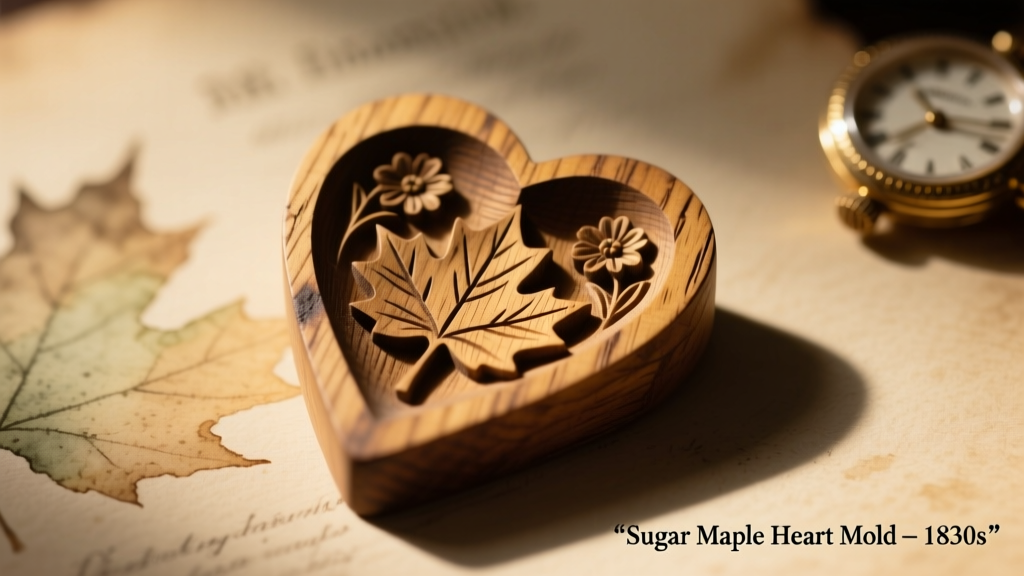
Sugar Maple Heart Mold, Pine, c. 1830s: A Rare American Domestic Artifact from the Early Republic Era
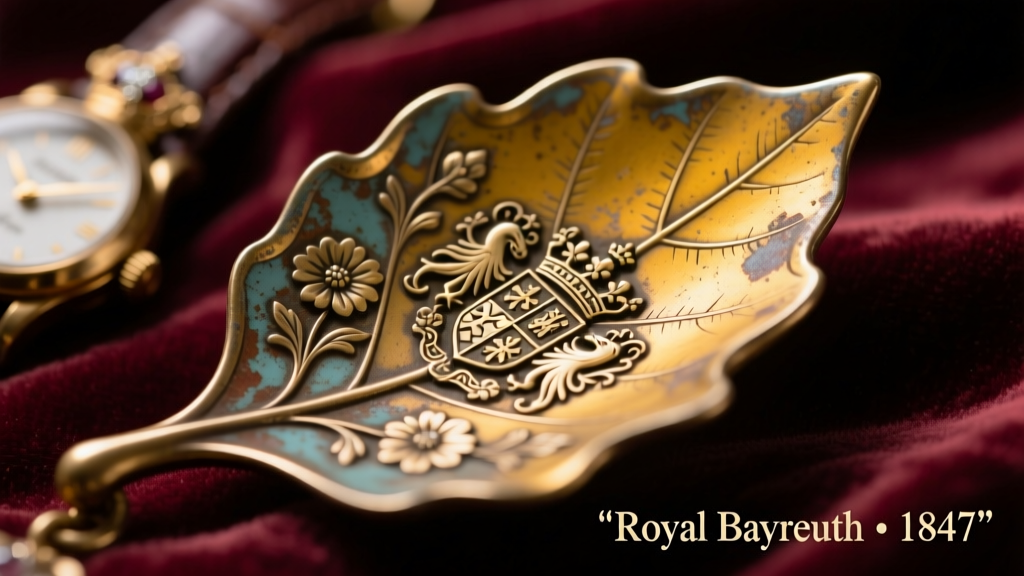
Royal Bayreuth Mustard Cover with Leaf Underplate: A Collector’s Guide to German Porcelain Excellence
Hughes Hall: The Forgotten British Watchmaker and Its Enduring Legacy in Vintage Horology
Charles Capenter: The Forgotten American Watchmaker Who Defined Precision in the Golden Age of Horology

Lindy Gray Underneath Spring Wind Gear: The 11-Inch Cast Iron Hubley Toy Airplane — A Study in American Die-Cast Engineering and Aviation Nostalgia

Carnival Glass Three Fruits Plate: Basketweave Back, Purple Iridescent, 9-Inch Diameter — A Collector's Deep Dive

Hummel Figurine No. 129 'Band Leader' — Decoding the Full Bee Mark, Production History, and Market Significance
Alexander Wright: The Forgotten British Watchmaker Who Defined Precision in the Golden Age of English Horology
Barber Opalescent Cranberry Spanish Lace Design: A Technical and Historical Deep Dive into the 8 3/8-Inch Rolled Lip Pontil Vase