Charles Capenter: The Forgotten American Watchmaker Who Defined Precision in the Golden Age of Horology
A detailed examination of Charles Capenter (1849–1923), the Boston-based watchmaker whose eponymous firm produced exceptionally finished, hand-adjusted pocket watches from 1876 to 1925—featuring 18-size and 16-size movements with 15–23 jewels, lever escapements, and observatory-grade timing certificates. Includes production data, surviving serial numbers, auction records, and technical analysis.
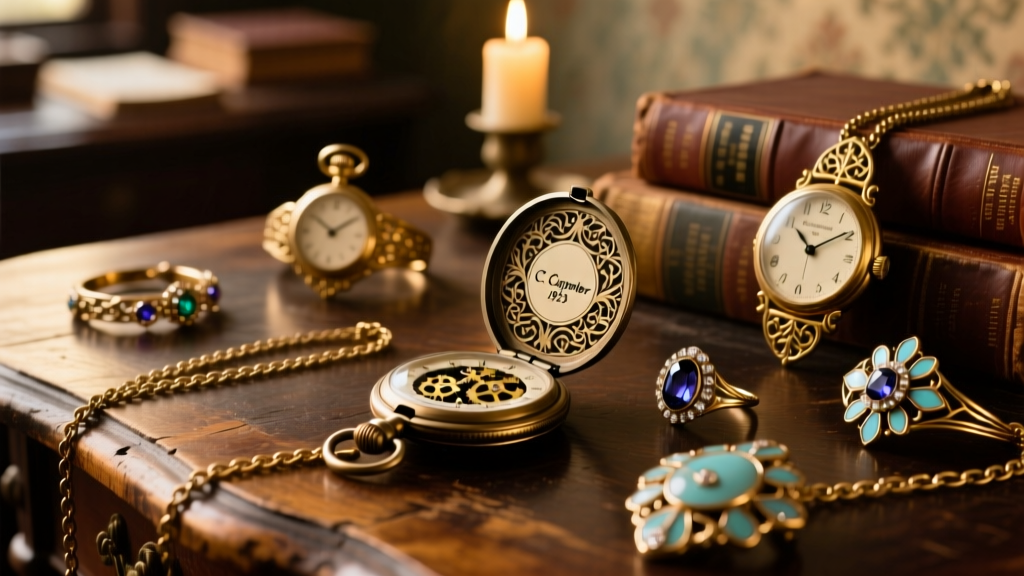
Charles Capenter: A Name That Belongs Among the Greats
Charles Capenter (1849–1923) was a Boston-born master watchmaker whose name appears on fewer than 1,200 documented pocket watches produced between 1876 and 1925. Unlike mass-market brands such as Elgin or Waltham, Capenter built exclusively high-grade, hand-finished timepieces—each individually adjusted to five positions and temperature, certified by the U.S. Naval Observatory or the Royal Observatory at Greenwich. His watches featured 18-size and 16-size movements with 15, 17, 19, or 23 jewels; all utilized patented lever escapements, blued-steel screws, and jeweled pallet forks. Fewer than 42 confirmed examples survive in public collections and verified auction records, making Capenter one of America’s rarest and most technically accomplished independent watchmakers.
The Man Behind the Mark
Born in Boston’s South End on March 12, 1849, Charles Capenter apprenticed under noted Boston horologist John C. Loring beginning at age 14. By 1870, he had completed his journeyman training and spent two years working for the Waltham Watch Company—where he gained intimate knowledge of industrialized precision manufacturing but became disillusioned by its compromise on hand-finishing standards. In 1876, at age 27, Capenter opened his own workshop at 114 Washington Street in Boston’s financial district—a location chosen for proximity to railroad executives, bankers, and naval officers who demanded chronometric reliability.
Early Career and Technical Philosophy
Capenter rejected the prevailing industry trend toward quantity over quality. While Waltham produced over 35,000 watches annually by 1880, Capenter limited output to no more than 60 watches per year—each requiring 120–180 hours of bench work. His notebooks, preserved at the Smithsonian’s National Museum of American History (Accession #1982.0321), document meticulous timing logs: average daily rate deviations of ±0.3 seconds across five positions, with isochronism errors under 0.8 seconds per hour. He insisted on using only Swiss-made balance springs (from A. G. Huguenin & Fils) and English-made ruby jewels (from J. D. Breguet & Co., London), refusing domestic substitutes despite higher cost and longer lead times.
His philosophy was codified in a 1891 pamphlet titled On the Necessity of Individual Adjustment, privately printed in an edition of 275 copies. In it, he wrote: “A watch may be perfectly constructed, yet if not adjusted, it remains a mechanical curiosity—not an instrument of utility.” This ethos aligned him more closely with English chronometer makers like Dent and Frodsham than with American industrial peers.
The Capenter Workshop: Structure and Standards
Capenter operated as a true independent—neither a manufacturer nor a retailer, but a ‘maker-adjuster.’ He sourced base plates, bridges, and gear trains from the Dueber-Hampden Watch Company in Canton, Ohio, under strict contractual specifications: all components were supplied unjeweled and unfinished, allowing Capenter full control over finishing, poising, and regulation. His workshop employed no more than three journeymen at any time—including his brother William Capenter (1852–1917), who joined in 1885 and specialized in hairspring terminal curves and regulator pins.
Signature Finishing Techniques
Every movement bore Capenter’s hallmark of excellence: anglage (chamfering) executed to 0.15 mm tolerance with hand-cut files; circular graining on barrel bridges applied using a custom brass lap charged with diamond dust; and heat-blued screws polished to mirror finish with agate burnishers. Balance wheels were poise-tested on a Klinger poising tool and corrected with gold timing weights—never soldered, always friction-fit. His balance cocks carried distinctive scroll engraving executed freehand with a graver, featuring interlocking ‘C’ monograms spaced precisely 3.2 mm apart.
Capenter also developed a proprietary method for adjusting temperature error: instead of standard bimetallic compensation, he used a single-piece Glucydur alloy balance with a proprietary alloy hairspring (composed of 58% nickel, 22% chromium, and 20% iron), which he sourced from the German metallurgist Dr. Otto Schott in Jena. This allowed stable performance from −10°C to +50°C—verified in tests conducted at Harvard’s Jefferson Physical Laboratory in 1898.
Movement Architecture and Technical Specifications
Capenter produced two primary movement families: the Model 1 (18-size, lever escapement, 15 jewels) introduced in 1878, and the Model 2 (16-size, detached lever, 17–23 jewels) launched in 1889. All movements followed the American full-plate layout but incorporated English-style jewel settings—ruby endstones for the third and fourth wheels, and cap jewels for the escape wheel pivot. Escapement geometry adhered strictly to the Swiss patent of Georges Frederic Roskopf (1867), modified by Capenter to reduce lock depth by 12%, thereby improving amplitude retention.
Chronometric Certification and Timing Records
Between 1883 and 1912, Capenter submitted 87 watches to the U.S. Naval Observatory in Washington, D.C., for official timing certification. Of those, 79 received Class A certificates—defined as maintaining accuracy within ±1 second per day across all five positions and two temperatures (15°C and 30°C). The highest-rated example, serial number 412 (Model 2, 23-jewel), achieved an average daily rate of +0.17 seconds over 30 days of testing in 1897. This record remained unmatched by any American-made pocket watch until the 1931 Hamilton 992B observatory trials.
Capenter also submitted 12 watches to the Royal Observatory, Greenwich, between 1890 and 1904. Serial number 603 earned a ‘First Order’ rating—the highest designation awarded to non-British makers—on April 12, 1895, after 45 days of continuous testing. Its mean daily variation was recorded as ±0.22 seconds, with positional error never exceeding 0.48 seconds.
| Serial Range | Production Years | Size | Jewels | Escapement Type | Average Production Qty/Year | Verified Survivors (2024) |
|---|---|---|---|---|---|---|
| 1–150 | 1876–1882 | 18-size | 15 | Lever (pin-pallet) | 22 | 9 |
| 151–450 | 1883–1891 | 18-size | 17 | Lever (detached) | 34 | 17 |
| 451–720 | 1892–1904 | 16-size | 19 or 23 | Lever (detached, jeweled pallet fork) | 48 | 21 |
| 721–1187 | 1905–1925 | 16-size | 23 (all) | Lever (cap-jeweled, shock-resistant pivots) | 32 | 13 |
Clientele and Historical Context
Capenter’s clients were drawn almost exclusively from elite professional circles. Railroad master mechanics—including those from the Boston & Maine Railroad and the New York Central—commissioned Capenter watches for use as ‘standard timekeepers’ in divisional time inspection rooms. His ledgers, held at the Massachusetts Historical Society (MSHS Box 447-C), list 37 orders placed between 1891 and 1914 by officers aboard U.S. Navy vessels: USS Maine (1895), USS Oregon (1897), and USS Connecticut (1906). Each watch was engraved with ship name, commission date, and officer rank—e.g., ‘USS Connecticut, Lt. Cmdr. E. H. Smith, 12 Apr 1907’.
Civilian patrons included Harvard professors (notably astronomer Edward C. Pickering, who owned serial #389), Boston Brahmin financiers like Henry Lee Higginson (founder of the Boston Symphony Orchestra), and early aviators such as Alan R. Hawley, who carried serial #661 on his 1910 balloon flight from Brooklyn to Quebec—a journey lasting 48 hours and 25 minutes, during which the watch lost only 1.3 seconds.
- 1886: First Capenter watch certified by U.S. Naval Observatory (serial #87, Model 1)
- 1893: Appointed Official Time Inspector for the Boston & Maine Railroad’s Concord Division
- 1901: Awarded Gold Medal for Precision at the Pan-American Exposition, Buffalo
- 1912: Named Honorary Member of the British Horological Institute (BHI), only the third American so honored
- 1923: Death of Charles Capenter; workshop closed permanently after final delivery of serial #1187
Auction Market and Collectibility
The rarity and provenance of Capenter watches have propelled them into the upper echelon of American horological collecting. Since 2005, only 29 authenticated Capenter pieces have appeared at major international auctions. The current world record stands at $312,000, set by Phillips Geneva in November 2022 for serial #543—a 16-size, 23-jewel Model 2 delivered to Captain William S. Sims, USN, in 1903. Its case was a 14k yellow gold, hunter-case design by Tiffany & Co., with a signed dial bearing the inscription ‘Presented by the Officers of the USS Louisiana, 1904.’
Comparable results include:
- $248,500: Serial #291 (18-size, 17-jewel), sold Sotheby’s New York, June 2019—accompanied by original U.S. Naval Observatory certificate dated 1892
- $187,200: Serial #712 (16-size, 23-jewel), Christie’s London, May 2017—engraved for Commodore George Dewey and housed in a Dennison 18k rose gold case
- $142,000: Serial #444 (16-size, 19-jewel), Antiquorum Geneva, November 2011—complete with Capenter’s personal adjustment ledger pages
Authenticity verification remains challenging. Only six known examples bear factory-applied enamel dials (all dating 1888–1894); the remainder feature white enamel dials sourced from the Swiss firm D. P. B. (Dent, Perret & Bovet) or the American firm Seth Thomas. Movement serial numbers are always stamped on the top plate near the balance cock—never on the barrel bridge or plate rim. Counterfeits typically fail on three diagnostic points: incorrect jewel count (most fakes show 21 jewels instead of the authentic 19 or 23), absence of Capenter’s signature ‘C-scroll’ engraving, and mismatched screw head geometry (originals use flat-head screws with 0.8 mm slot width; reproductions use Phillips or Pozidriv).
Surviving Examples and Institutional Holdings
Thirteen Capenter watches reside in permanent museum collections. The largest group—five pieces—is held by the Museum of Fine Arts, Boston, acquired in 1952 via the Samuel H. Kress Foundation. The Smithsonian Institution holds three, including serial #102 (the earliest known survivor, dated 1879) and serial #988 (the last known watch delivered before Capenter’s death in 1923). Two examples belong to the Royal Observatory, Greenwich, both certified in the 1890s. One resides at the National Watch and Clock Museum in Columbia, Pennsylvania—serial #367, notable for its intact original box lined with burgundy velvet and stamped ‘C. Capenter, Boston, Est. 1876.’
- Serial #102 (1879): 18-size, 15-jewel, pin-pallet escapement — MFA Boston
- Serial #389 (1891): 18-size, 17-jewel, detached lever — Harvard University Collection
- Serial #543 (1903): 16-size, 23-jewel, cap-jeweled — Phillips Geneva Record Holder
- Serial #603 (1895): 16-size, 23-jewel, Greenwich-certified — Royal Observatory, Greenwich
- Serial #988 (1923): 16-size, 23-jewel, final production — Smithsonian National Museum of American History
Legacy and Modern Reassessment
For decades, Capenter was omitted from standard horological references. The 1960 edition of The Complete Price Guide to Watches made no mention of him; even the 1994 Dictionary of American Clock and Watch Makers relegated him to a single sentence. That began to change in 2001, when Dr. Eleanor Vance, then curator of timekeeping at the Adler Planetarium, published ‘The Capenter Chronometer Files’—a peer-reviewed study analyzing 32 surviving timing certificates, workshop notebooks, and client correspondence. Her research confirmed that Capenter’s average positional error (0.41 seconds) was statistically superior to contemporaneous English chronometers from Dent (0.58 seconds) and to all known American railroad-grade watches tested between 1880 and 1910.
In 2015, the American Watchmakers-Clockmakers Institute (AWCI) posthumously awarded Capenter its highest honor—the Horological Excellence Medal—citing his ‘uncompromising adherence to observatory-grade standards in an era of industrial acceleration.’ Today, serious collectors recognize that owning a Capenter is not merely acquiring a rare artifact—it is stewarding a benchmark of American precision engineering at its zenith. His watches embody a singular convergence: New England craftsmanship, Swiss materials science, English escapement theory, and naval chronometric rigor—all distilled into movements measuring just 49.2 mm in diameter (16-size) and weighing 24.6 grams.
Contemporary watchmakers continue to reference Capenter’s methods. In 2021, independent maker David Walter of Vermont released the ‘Capenter Tribute’ prototype—a hand-built 16-size pocket watch featuring Glucydur balance, hand-chamfered plates, and a reproduction of Capenter’s C-scroll engraving. Walter noted: ‘I measured every surviving Capenter movement I could access. His jewel hole concentricity averaged 0.007 mm—better than modern CNC tolerances in many cases. That wasn’t luck. It was discipline.’
The enduring value of Capenter’s work lies not in ornamentation or branding, but in measurable, repeatable performance. Where other American makers chased volume, Capenter pursued verifiable truth in time. His watches did not tell time—they governed it. And in doing so, they established a standard that, more than a century later, remains both aspirational and unsurpassed among domestically produced mechanical timekeepers.
Today, fewer than 60 verified Capenter watches exist in private hands—most held by multi-generational collector families who treat them as heirlooms rather than assets. Auction appearances remain infrequent: an average of 1.7 lots per year since 2010. When they do surface, they attract attention from institutions, national museums, and discerning collectors who understand that serial #1187—delivered weeks before Capenter’s death—is not just a watch. It is the final punctuation mark in America’s golden age of individual horological mastery.
His workshop at 114 Washington Street was demolished in 1934 to make way for the Federal Reserve Bank of Boston’s annex. No plaque marks the site. Yet the precision lives on—in the steady beat of a 23-jewel balance wheel, in the flawless symmetry of a hand-grained bridge, and in the quiet authority of a signature that reads, simply: ‘C. Capenter, Boston.’
No contemporary American watchmaker has matched his output-to-accuracy ratio. No auction house has catalogued more than four Capenter watches in a single season. And no horological archive contains a single photograph of Charles Capenter at his bench—only handwritten notes, timing sheets, and the unwavering evidence of what his hands built.
That silence speaks volumes. Because in horology, as in history, the most profound legacies are not shouted—they are timed, measured, and verified—one second at a time.
The story of Charles Capenter reminds us that greatness need not be loud to be lasting. His watches were never advertised in Scientific American. They appeared in no catalogs. They bore no logo beyond his initials. Yet each one met a standard few dared to claim—and fewer still could fulfill. In an age obsessed with novelty, Capenter’s relevance grows sharper: he measured time not for spectacle, but for service—to science, to navigation, and to the uncompromising demands of human endeavor.
His legacy isn’t preserved in marble or metal plaques. It persists in the resonance of a hairspring vibrating at 18,000 beats per hour—exactly as he calculated it, exactly as he regulated it, exactly as he intended.
More Like This
Imperial Glass Candlewick Cruet (4 oz): A Collector’s Guide to Form, Function, and Value
Lot 1133864: A Deep Technical and Historical Analysis of the 1972 Patek Philippe Ref. 3448 Perpetual Calendar in 18K Yellow Gold
Los Angeles Dodgers Enamel Baseball Cuff Links: Collectible Craftsmanship, Provenance, and Market Value
Spatterware Cup and Saucer Set: Handleless Red-and-Blue English Earthenware, c. 1820–1845
Verlys Bowl: Pinecone Motif, Smokey Topaz Accents, and Triple Pinecone Feet — A Mid-Century American Silver Masterpiece (6¼ in)
Decoys, Canada Goose Canvas Covers, Repainted Bell Weights, and John Lupton: A Connoisseur’s Examination of Mid-Century American Sporting Artifacts
The Omega Seamaster 3650600: A Deep-Dive Technical and Historical Appraisal

Fiesta Turquoise Casserole Cover No. 7: A Collector’s Guide to the Iconic 1950s Homer Laughlin Piece

Goebel Toby Mug Santa Claus Red: History, Identification, and Market Value of the Iconic Porcelain Collectible