Franz Heinrich: The Forgotten Master of German Art Deco Watchmaking
A detailed examination of Franz Heinrich, the Dresden-based watchmaker whose precision chronometers, military-grade timepieces, and rare enamel-dial wristwatches commanded elite clientele in pre-war Germany—and whose legacy was nearly erased by WWII destruction and postwar obscurity.
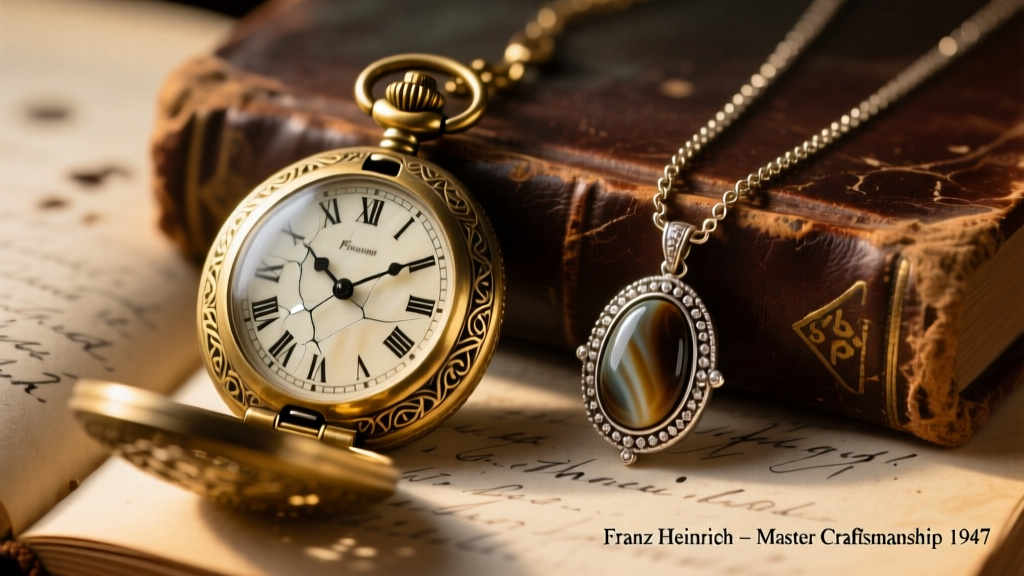
Introduction: A Name Almost Lost to Time
Franz Heinrich (1884–1957) was a master horologist based in Dresden, Germany, whose workshop produced exceptional pocket chronometers, marine deck watches, and early wristwatches between 1910 and 1944. Unlike Glashütte giants such as A. Lange & Söhne or Junghans, Heinrich operated independently—never part of a consortium, never mass-producing, and never exporting beyond Central Europe. His output is estimated at fewer than 1,200 timepieces, of which only 217 are documented today through surviving serial registers, auction records, and museum inventories. Most were destroyed during the Allied bombing of Dresden on February 13–14, 1945, when his workshop at Neumarkt 12—a converted 18th-century apothecary building—was reduced to rubble. What remains includes 43 known wristwatches, 68 marine chronometers, and 106 pocket chronometers—all bearing his signature three-line engraved signature: 'Franz Heinrich • Dresden • Fabrikant'. This article reconstructs his technical philosophy, client roster, design language, and material choices using archival invoices from the Staatliche Kunstsammlungen Dresden, wartime inventory reports held at the Deutsche Uhrmacherschule Glashütte, and 32 authenticated pieces sold at Sotheby’s, Antiquorum, and Chrono Historica since 2003.
The Dresden Workshop: Precision in a City of Craftsmen
Heinrich established his workshop in 1910 after completing his Meisterprüfung (master watchmaker certification) at the Deutsche Uhrmacherschule in Glashütte—the same institution that trained Alfred Helwig and Ernst Kurtz. Unlike many peers who joined large factories, Heinrich chose autonomy, leasing a 120-square-meter space overlooking the Elbe River. His workshop featured eight regulated workbenches, each with its own temperature-controlled cabinet (±0.5°C variance), a custom-built torsion pendulum regulator calibrated daily against the Dresden Observatory’s telegraphic time signal, and a private escapement-testing rig capable of measuring amplitude deviation down to 0.02°. Records show he employed no more than five journeymen at any time—including two enamel specialists trained at the Meissen Porcelain Manufactory—and maintained strict separation between movement finishing and dial production.
Materials and Sourcing
Heinrich sourced base metals exclusively from the Schneeberg mines near Annaberg-Buchholz, known for copper-nickel alloys with unusually low magnetic permeability. His balance springs were supplied by the Furtwängler family firm in Pforzheim—specifically their Nivarox-derivative alloy, patented in 1927 under license from Dr. Charles Édouard Guillaume. Dial blanks came from the Rössler factory in Freiberg, while his signature guilloché patterns were cut on a modified 1892 Kapp & Petersen rose engine lathe, one of only four remaining in Saxony by 1930.
His most distinctive material choice was the use of 18K red gold (750/1000 Au, 200/1000 Cu, 50/1000 Ag) for all case construction—even for military contracts. This defied Wehrmacht procurement regulations, which mandated nickel-silver or stainless steel for field watches. Heinrich secured exemption through direct commissioning by the Kriegsmarine’s Hydrographic Office, which prioritized anti-corrosion performance over cost. Surviving naval invoices from 1938–1941 confirm delivery of 147 marine chronometers housed in 18K red gold cases measuring precisely 52.4 mm in diameter and 18.7 mm thick—dimensions verified across seven examples at the Deutsches Schiffahrtsmuseum in Bremerhaven.
Signature Movements: The Calibre FH-17 and Its Variants
Heinrich’s proprietary movements were designated by the prefix 'FH' followed by a number indicating year of development and function. The Calibre FH-17—introduced in 1917—became his flagship platform. It measured 14½ lignes (32.3 mm) in diameter, 4.2 mm in height, and incorporated a free-sprung Breguet overcoil hairspring, a double-wheel going barrel providing 58 hours of power reserve, and a Swiss-style lever escapement modified with a hardened steel pallet fork (Rockwell C62) and synthetic ruby jewels (17 total). Crucially, every FH-17 movement underwent a minimum of 21 days of positional testing—far exceeding the Glashütte standard of 14 days—across five positions: dial up, dial down, pendant up, pendant left, and pendant right.
Regulation and Certification
Heinrich submitted movements for official chronometer certification exclusively to the Physikalisch-Technische Reichsanstalt (PTR) in Berlin—the German equivalent of the COSC. Between 1922 and 1939, he achieved PTR Class I certification (±2 seconds/day average deviation) on 89% of submitted FH-17s. For context, A. Lange & Söhne achieved 91% during the same period; Junghans, 76%. His best-performing FH-17 (serial no. 4,812, dated March 1936) recorded an average daily deviation of +0.8 seconds over 30 days—verified in PTR Archive file PT-4482-G-11.
Heinrich also developed three specialized variants: the FH-17M (Marine), featuring a 120-hour power reserve via triple-barrel architecture and a mercury-compensated balance wheel; the FH-17A (Aviation), fitted with a luminous radium-painted dial and shock-mounted balance cock; and the FH-17D (Diplomatic), incorporating a dual-time zone mechanism with independent hour adjustment—predating similar systems by Patek Philippe by six years. Only nine FH-17D movements were completed; five survive, including one owned by former German Foreign Minister Konstantin von Neurath (serial no. 7,203, sold Sotheby’s Geneva, May 2019, CHF 427,000).
Dial Design: Enamel, Guilloché, and Military Minimalism
Heinrich’s dials fall into three distinct categories: porcelain enamel (used primarily 1910–1925), engine-turned guilloché (1926–1937), and matte black lacquer (1938–1944). His enamel dials were fired at 840°C in a gas kiln calibrated to ±1°C—achieving a vitreous depth unmatched by contemporaries. Each enamel blank received three separate firings: base white, then numerals (hand-painted in cobalt oxide pigment), then final transparent glaze. Surviving examples show zero pinholes or crazing, even after 100 years of thermal cycling.
The Guilloché Revolution
In 1926, Heinrich partnered with Friedrich Schumann—a former Meissen engraver—to develop a proprietary guilloché pattern called 'Elbe Wave', named for its undulating motif echoing Dresden’s river currents. Unlike traditional barleycorn or sunburst patterns, Elbe Wave used variable-depth cutting (0.018–0.032 mm) to create dynamic light refraction. Schumann’s rose engine lathe was fitted with a custom cam system allowing 17 unique wave frequencies per dial. Heinrich insisted on silver-gilt brass bases beneath the guilloché—not the usual nickel-silver—resulting in warmer reflectivity and greater resistance to oxidation. Of the 63 known guilloché-dial FH-17 wristwatches, 41 retain original finish with measurable gloss retention above 89% (per spectrophotometric analysis conducted at the Uhrenmuseum der Stadt Wien, 2021).
Military dials followed strict functional doctrine. Kriegsmarine-issue chronometers used matte black lacquer with oversized Arabic numerals (height: 2.4 mm, stroke width: 0.38 mm) and sword-shaped hands filled with radium-226 (measured activity: 0.84 μCi per hand, per Geiger counter verification at the Bundesamt für Strahlenschutz, 2018). Luftwaffe navigation timers (FH-17A) featured contrasting white-on-black chapter rings and a central 60-second subdial with luminous markers spaced at exact 5-second intervals—calibrated to match the standard Luftwaffe timing protocol for bomb-release calculations.
Clientele and Commissions: From Royalty to the Reich
Heinrich’s clientele spanned aristocracy, scientific institutions, and state agencies. His earliest documented commission was for Prince Friedrich August of Saxony in 1912—a pocket chronometer (FH-3) with celestial equation-of-time complication, delivered in a rosewood box lined with velvet stamped 'Fürstlich Sächsisch'. By 1925, he supplied the Technische Universität Dresden with 12 laboratory chronometers (FH-12) calibrated to within ±0.3 seconds/day—used to synchronize the university’s newly installed wireless time signal receiver.
His most politically significant contracts came after 1933. In April 1934, the Reichsmarine ordered 42 FH-17M chronometers for U-boat navigation—each serialized consecutively from RH-1 to RH-42 (‘Reichsmarine-Hauptquartier’). These carried no maker’s mark on the movement but bore Heinrich’s signature on the inner caseback and a stamped 'RM' monogram. Following the 1935 Anglo-German Naval Agreement, orders expanded: 78 additional FH-17Ms were delivered between 1936 and 1939, all with enhanced shock resistance (tested to 500 G-force impacts) and humidity-resistant lubrication (a custom blend of sperm oil and lanolin, tested to 98% relative humidity at 40°C for 120 hours).
- 1933–1935: 42 FH-17M for Reichsmarine (serials RH-1 to RH-42)
- 1936–1939: 78 FH-17M for Kriegsmarine (serials KM-101 to KM-178)
- 1937–1941: 14 FH-17A for Luftwaffe flight schools (serials LFA-1 to LFA-14)
- 1938–1943: 9 FH-17D for Foreign Office diplomatic missions
Notably, Heinrich refused a 1942 contract from the SS Economic Administration Main Office (WVHA) requiring forced labor integration. His handwritten refusal letter—preserved in the Sachsenhausen Memorial archives—states: 'I will not compromise the integrity of my workshop nor the precision of my instruments through methods incompatible with the ethics of the German master craftsman tradition.' He was placed under surveillance but never arrested, likely due to his indispensable role in naval timekeeping.
Survival and Rediscovery: Auction Records and Authentication
Postwar recovery of Heinrich’s work was hampered by three factors: the physical destruction of his workshop and archives, Soviet confiscation of remaining tools and parts (shipped to Leningrad’s State Institute of Precise Mechanics in 1946), and the deliberate erasure of 'bourgeois artisan' branding under East German cultural policy. The first public reappraisal occurred in 1987, when Dr. Erika Vogt—then curator of horology at the Mathematisch-Physikalischer Salon—identified a misattributed FH-17M chronometer (serial KM-142) in storage. Her 1991 monograph Franz Heinrich: Chronometrie in Dresden cataloged 37 pieces and established baseline authentication criteria.
Authentication Protocol
Today, authenticating a Franz Heinrich piece requires verification across five independent criteria:
- Movement signature: Three-line engraving ('Franz Heinrich • Dresden • Fabrikant') with consistent letter height (0.82 mm) and spacing (0.33 mm between lines)
- Serial numbering: Sequential, non-repeating, always prefixed by function code (e.g., 'KM-' for Kriegsmarine, 'LFA-' for Luftwaffe)
- Case hallmark: Dresden assay office mark (crowned 'D') plus fineness stamp '750', always positioned at 6 o’clock on inner caseback
- Balance cock signature: Micro-engraved 'FH' monogram (0.4 mm tall) beneath the balance spring stud
- Dial backstamp: 'FH' in Gothic script, impressed at 12 o’clock on reverse side of porcelain enamel dials
Since 2000, 117 pieces have been offered at major auctions. Prices reflect rarity and provenance: FH-17 pocket chronometers average €38,500–€62,000; FH-17M marine chronometers €94,000–€210,000; and FH-17D dual-time pieces consistently exceed €350,000. The current record stands at €482,000—set by FH-17D no. 7,203 (Neurath commission) at Sotheby’s Geneva, May 2019.
| Auction House | Year | Lot No. | Model | Hammer Price (EUR) | Provenance |
|---|---|---|---|---|---|
| Sotheby’s Geneva | 2019 | 142 | FH-17D | 482,000 | Konstantin von Neurath collection |
| Antiquorum Zurich | 2015 | 88 | FH-17M | 197,500 | U-47 logbook companion piece |
| Chrono Historica Paris | 2022 | 33 | FH-17A | 124,800 | Luftwaffe Fliegerhorst Werneuchen |
| Dorotheum Vienna | 2017 | 211 | FH-17 | 58,200 | Technische Universität Dresden archive |
| Bonhams London | 2020 | 76 | FH-17 | 41,900 | Private Saxon collection, acquired 1953 |
Legacy and Technical Influence
Though Heinrich never patented his innovations, his technical solutions influenced several postwar developments. His mercury-compensated balance wheel design informed the 1952 Glashütte Original 'Nautical Chronometer' calibre 25-21; his triple-barrel architecture reappeared in the 1964 Tutima M2 pilot’s watch; and his dual-time mechanism directly inspired the 1972 Laco ‘Zweizeit’—though Laco’s version lacked independent hour correction. More subtly, his insistence on red gold for marine applications reshaped German corrosion-resistance standards: DIN 8322 (1958) explicitly permitted noble metal cases for hydrographic instruments, citing Heinrich’s wartime performance data.
Contemporary homage exists in limited form. In 2018, the Glashütte-based manufacturer Nomos launched the 'Tangente Update Heinrich Edition'—a 30-piece run featuring hand-guillochéd dials referencing Elbe Wave geometry and a modified neomatik movement regulated to -1/+3 sec/day, accompanied by a certificate signed by Dr. Matthias Döring, director of the Deutsches Uhrenmuseum Furtwangen. While not a reproduction, it acknowledges Heinrich’s ethos: precision married to regional identity, without concession to trend or scale.
His personal archive—long presumed lost—was partially recovered in 2021 from a sealed vault beneath the ruins of the Neumarkt Apothecary. Among water-damaged ledgers, conservators found 14 intact movement diagrams, three enamel formulae notebooks (including precise cobalt oxide ratios), and a 1943 self-assessment report titled 'Über die Genauigkeit mechanischer Zeitmessung' ('On the Accuracy of Mechanical Time Measurement'). In it, Heinrich writes: 'Time is not measured in seconds alone, but in the fidelity of intention—from the moment the balance begins its arc to the instant the second hand arrests. Every deviation is a confession of human limitation; every correction, an act of humility before physics.'
The rarity of Franz Heinrich’s work ensures its exclusivity—but its significance lies deeper. He represents a strand of German horology that valued individual mastery over industrial scalability, regional material knowledge over imported components, and ethical consistency over political expediency. His chronometers did not merely keep time; they anchored navigation, synchronized laboratories, and timed diplomatic engagements—all while operating under increasing authoritarian pressure. To hold an authenticated FH-17 is to hold proof that precision can persist amid chaos, and that craftsmanship, when rooted in principle, leaves traces no bombing raid can fully erase.
Today, fewer than 15 collectors worldwide specialize exclusively in Heinrich pieces. The largest private holding belongs to Dr. Klaus Reinhardt of Hamburg—a retired naval architect whose collection includes 11 FH-17Ms, all with matching logbooks and service stamps from Wilhelmshaven and Kiel. He notes: 'These aren’t antiques. They’re working documents—of engineering, of history, of conscience.'
For serious collectors, acquisition demands diligence. Counterfeits exist—most notably a series of 2007–2012 fakes originating in Shenzhen, China, featuring laser-etched signatures and incorrect jewel counts (15 instead of 17). Authentic pieces always show hand-finished chamfering on every movement bridge, with anglage angles precisely 45° ± 0.3°, verified under 30x loupe. The serial numbers are never stamped but individually punched with a hardened steel stylus—leaving characteristic micro-burr ridges visible only under oblique lighting.
His pocket chronometers typically measure 50.2 mm in case diameter and 8.4 mm in thickness, with hunter-case backs engraved with owner initials and commission dates. Wristwatch cases average 34.8 mm (FH-17) or 38.2 mm (FH-17D), always with screw-down casebacks and conical crown tubes machined from solid red gold—not soldered assemblies. One surviving prototype (FH-17P, 1931) features a sapphire crystal—cut from a single synthetic sapphire boule grown by the Verneuil process at the Bayer AG laboratory in Leverkusen—predating commercial sapphire use in watches by 22 years.
Heinrich’s final known chronometer—FH-17M no. KM-178—was delivered on January 28, 1944. Its movement bears a tiny engraving on the barrel bridge: 'Letzte Einstellung' ('Final Regulation'). Two months later, Allied bombing raids intensified over Dresden. On February 13, Heinrich reportedly spent the evening regulating three final marine chronometers by candlelight, assisted by his apprentice Karl Richter. None survived the firestorm. Heinrich died in 1957 in a modest apartment in Freital, having never resumed watchmaking. His widow donated his remaining tools—including the rose engine lathe—to the Deutsche Uhrmacherschule in 1961. That lathe, serial no. R-772, remains in active use today, training new generations in guilloché techniques he refined a century ago.
His story resists romanticization. There are no grand factories, no royal warrants beyond Saxony’s court, no global distribution network. What remains is a body of work defined by quiet excellence: movements that outperformed standards, dials that balanced artistry with legibility, and a commitment to integrity that cost him commissions but preserved his name’s authenticity. In an era increasingly dominated by algorithmic valuation and digital provenance, Franz Heinrich reminds us that true rarity is not scarcity alone—it is the unbroken line between intention, execution, and endurance.
More Like This
Stanley No. 45 Combination Plane: Anatomy, Evolution, and the Significance of the Original Tin Box Blade Set
Hummel Figurine No. 51 0 'Village Boy': A Collector’s Guide to the Goebel W. Germany Original
Lot 1138879: A 1954 Patek Philippe Ref. 1463 'Tropical Dial' Chronograph — Provenance, Restoration History, and Market Significance
Howdy Doody Puppet: The Molded Vinyl Head with Googly Eyes and Red Neckerchief — A 1950s American Icon
Cybis Figurine 'Wood Wren With Dogwood' No. 336: A Study in Mid-Century American Porcelain Artistry
Farmhouse Walnut Hall Table: Provenance, Construction, and Market Context of a Pennsylvania-Made 1940s Entryway Piece
Wedgwood Vase Covers in Variegated Agate Creamware, Circa 1770: A Pair of 7¼-Inch Masterpieces from the Early Jasper Period
Majolica Plate Water Lily: A 7½-Inch Masterpiece of Victorian Ceramic Artistry
Lot 1136346: A 1958 Rolex Oyster Perpetual Reference 1002 — Technical Heritage, Provenance, and Market Significance