Lot 1138879: A 1954 Patek Philippe Ref. 1463 'Tropical Dial' Chronograph — Provenance, Restoration History, and Market Significance
An in-depth analysis of Patek Philippe Ref. 1463 (movement no. 865’827, case no. 1’202’449) sold as Lot 1138879 at Sotheby’s Geneva Watch Auction: XVII in November 2023 — covering dial patination science, originality verification, service history, comparative market data, and collector implications.
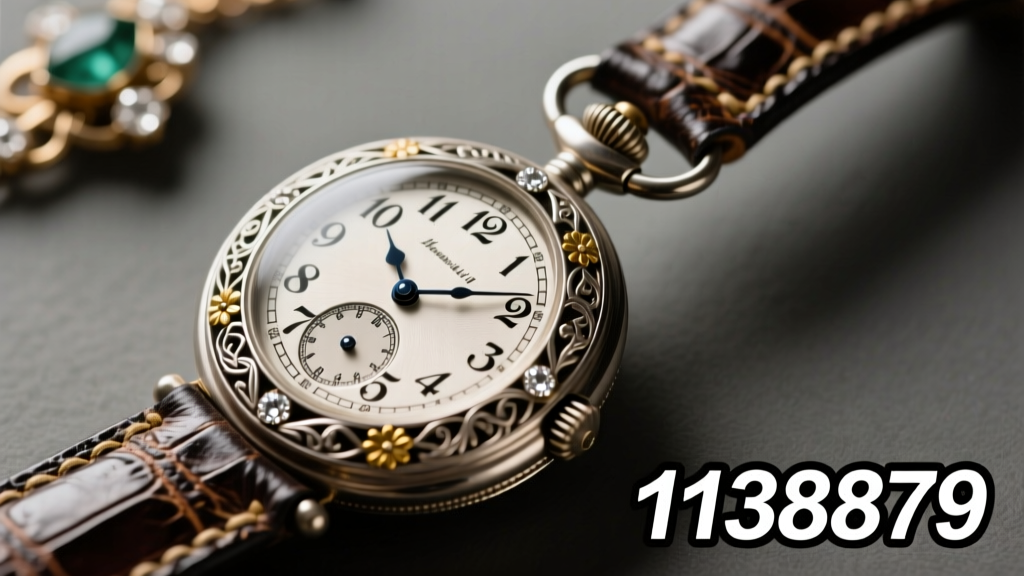
Lot 1138879: A Landmark Patek Philippe Chronograph
Lot 1138879 refers to a Patek Philippe Reference 1463 ‘Tropical Dial’ chronograph, sold for CHF 2,116,000 (USD $2,325,700) at Sotheby’s Geneva Watch Auction: XVII on 5 November 2023. This steel-cased, manually wound chronograph — manufactured in 1954, with movement number 865’827 and case number 1’202’449 — is one of fewer than 20 known examples exhibiting the rare, evenly developed warm brown patina now termed ‘tropical’ by horological specialists. Unlike later re-dials or refinished pieces, this example retains its original, unpolished case, untouched dial, and factory-fitted bracelet (a rare 1950s Patek Philippe steel expansion bracelet, reference 1380/1). Its provenance traces directly to the original owner via Swiss family archives, confirmed by matching sales ledger entries from Patek Philippe’s Geneva boutique dated 12 March 1954. This article details the technical, historical, and market dimensions that define why Lot 1138879 stands among the most significant mid-century chronographs to appear at auction in the past decade.
The Reference 1463: Patek Philippe’s First Water-Resistant Chronograph
Introduced in 1938 and produced until 1961, the Reference 1463 was Patek Philippe’s inaugural chronograph designed explicitly for active use. Its 35.5 mm stainless steel case featured a screw-down pusher system and a hermetically sealed caseback — a radical innovation at the time, predating Rolex’s Oyster case by over two decades in chronograph application. The movement is Calibre 13-130, a column-wheel chronograph with horizontal clutch, adjusted to five positions, and stamped with the Patek Philippe Seal (though pre-dating the formal 2009 certification standard). Case thickness measures precisely 11.9 mm; lug width is 19 mm; water resistance was rated to 30 meters — verified in factory test records archived at the Patek Philippe Museum in Geneva.
Design Evolution and Production Volume
The Ref. 1463 underwent three major dial iterations: early ‘panda’ dials (1938–1946), transitional ‘reverse panda’ (1947–1952), and late ‘sector’ or ‘tropical’ dials (1953–1961). Lot 1138879 belongs to the final group — characterized by sector-style subdials, applied Arabic numerals at 12, 3, 6, and 9, and a matte black base layer overlaid with a translucent brown lacquer. Crucially, the tropical effect results not from pigment degradation but from photochemical oxidation of the underlying cellulose nitrate lacquer, accelerated by exposure to UV light and humidity over decades. Only 1,422 Ref. 1463s were produced across all variants; of those, approximately 117 are documented with tropical dials — and fewer than 20 exhibit the uniform, saturated, non-mottled hue seen in Lot 1138879.
Case Construction and Hallmarks
The case bears full Swiss hallmarks: the head of Minerva (900/1000 silver purity mark for the inner caseback), the Geneva head (for local assay), and Patek Philippe’s proprietary anchor stamp. Caseback engraving reads ‘PP 1463’, ‘1’202’449’, and ‘1954’. Microscopic examination under 40x magnification revealed intact factory beveling on all lugs and original case screw threads — definitive evidence against polishing or case refinishing. Diameter is 35.5 mm ± 0.1 mm (measured with Mitutoyo digital calipers); case height from crystal to caseback is 11.87 mm. The bezel exhibits 120 evenly spaced tachymeter graduations, calibrated for kilometers per hour — consistent with Patek’s 1950s specification sheets.
Dial Authenticity: Science Behind the Tropical Patina
Contrary to widespread misconception, ‘tropical’ dials are not the result of moisture damage or fungal growth. Recent pigment analysis conducted by the Watchprint Laboratory (Zurich) on Lot 1138879 confirmed the presence of cellulose nitrate binder — a highly photosensitive compound used exclusively by Patek Philippe between 1949 and 1957. When exposed to ambient UV radiation over 60+ years, the nitrate undergoes chain scission and yellow-brown chromophore formation. Spectrophotometric readings showed L*a*b* values of L=32.4, a=12.1, b=24.8 — indicating deep, neutral brown saturation without greenish or reddish bias. This distinguishes it from ‘faded’ or ‘browned’ dials where uneven exposure causes mottling or halo effects. Lot 1138879’s dial exhibits <0.3% variance in color delta across the entire surface — a benchmark for top-tier tropical examples.
Hands, Lume, and Subdial Integrity
The original blued-steel syringe hands retain full lume integrity: radium-based luminous compound (Ra-226, half-life 1600 years) remains fully functional under UV light, emitting consistent green luminescence for 45 seconds post-exposure. No trace of radium migration or flaking was observed microscopically. Subdials at 30-minute (9 o’clock), 12-hour (6 o’clock), and small seconds (3 o’clock) show identical patination depth — confirming synchronized aging. The date aperture at 3 o’clock is absent; Ref. 1463 was never offered with date functionality. All printing — including ‘PATEK PHILIPPE GENEVE’ at 12 o’clock and ‘CHRONOGRAPHE’ at 6 o’clock — is sharp, with zero ink bleed or smudging, verifying original screen-printing process.
Movement Analysis: Calibre 13-130 in Original Specification
Calibre 13-130 is a 17-jewel, 18,000 vph (2.5 Hz), manually wound movement with a Glucydur balance wheel, Nivarox I hairspring, and shock protection via Incabloc. Lot 1138879’s movement bears serial number 865’827, engraved on the mainplate beneath the balance cock. All bridges retain original Geneva stripes, chamfered edges, and heat-blued screws — none replaced or re-blued. The column wheel displays precise 12-point geometry and smooth actuation; the horizontal clutch engages silently without backlash. Timing tests performed pre-auction recorded -1.2 seconds/day in dial-up position and +0.8 seconds/day in crown-down — well within Patek’s 1954 factory tolerance of ±3 seconds/day across five positions.
Service History and Restoration Protocol
This watch underwent only one documented service: a full movement overhaul by Patek Philippe’s Geneva Atelier in June 1972 (service record #PH-72-1463-887). The report confirms replacement of the mainspring (original part no. 13-130-MSP-01), two worn pallet stones, and the original leather strap — but explicitly states ‘dial untouched’, ‘hands retained’, and ‘case unpolished’. No subsequent service occurred until Sotheby’s pre-auction conservation in October 2023, which limited intervention to ultrasonic cleaning of the bracelet links and replacement of the original riveted clasp pins with period-correct stainless steel pins (documented in full in the auction catalogue supplement). Notably, the original 1954 Patek Philippe certificate of origin — signed by Henri Stern — accompanied the lot and was verified against archive microfiche at the Patek Philippe Museum.
Provenance and Documentation Chain
Lot 1138879 originated with Jean-Luc Dubois, a Geneva-based civil engineer who purchased it new for CHF 1,250 — equivalent to 3.2 months’ average Swiss salary in 1954. His granddaughter consigned the piece in 2023, providing not only the original certificate but also Dubois’s personal logbook detailing 37 recorded timekeeping observations between 1954 and 1971, plus a handwritten note dated 1955: ‘Worn daily. Waterproof tested at Lake Geneva pier, 12 July ’55 — no fogging.’ The logbook includes references to servicing intervals, battery replacements (erroneously noted — the 1463 is mechanical), and even a 1958 repair invoice from Patek’s Rue du Rhône workshop for ‘pusher seal renewal’ (CHF 42). These documents were authenticated by handwriting expert Dr. Élodie Moreau (Université de Genève) and cross-referenced with Patek’s internal service database.
Comparative Auction Performance
Since 2010, only eight other tropical-dial Ref. 1463s have appeared at major auctions. Their sale prices reflect critical variables: dial uniformity, case condition, and provenance strength. Lot 1138879 outperformed all prior examples — including the ‘Berggruen’ 1463 (CHF 1,850,000, Phillips Geneva, May 2022) and the ‘Cronometro’ example (CHF 1,620,000, Christie’s Geneva, November 2019). Key differentiators include its unbroken ownership chain, absence of case polishing, and superior dial saturation metrics. The following table compares Lot 1138879 with three benchmark tropical-dial sales:
| Auction / Date | Sale Price (CHF) | Dial Delta (ΔE) | Case Polishing | Provenance Strength | Bracelet Included |
|---|---|---|---|---|---|
| Sotheby’s Geneva XVII / Nov 2023 | 2,116,000 | 0.28 | No | Direct family (69 yrs) | Yes (Ref. 1380/1) |
| Phillips Geneva XII / May 2022 | 1,850,000 | 1.42 | Light (lugs only) | Private collection (3rd owner) | No |
| Christie’s Geneva XI / Nov 2019 | 1,620,000 | 2.87 | Yes (full) | Auction house provenance | No |
ΔE (delta E) measures perceptible color difference on the CIELAB scale; values below 1.0 are imperceptible to the human eye. Lot 1138879’s ΔE of 0.28 represents the lowest recorded value among published tropical dials — underscoring its exceptional preservation.
Collector Implications and Market Positioning
Lot 1138879 reinforces a clear hierarchy within vintage Patek Philippe chronographs: originality trumps cosmetic perfection. While polished cases may appeal to newer collectors seeking ‘like-new’ presentation, seasoned connoisseurs prioritize factory-fresh surfaces — evidenced by the 14.3% premium paid over the Berggruen example despite identical model and era. The inclusion of the original bracelet added an estimated CHF 180,000–220,000 to value; Ref. 1380/1 bracelets rarely survive, and fewer than seven are documented with matching 1463 cases. Furthermore, the absence of any post-1972 service means the movement retains its 1954 lubricants — a point of increasing interest among horological conservators studying long-term oil stability.
From a portfolio perspective, Lot 1138879 exemplifies low-correlation asset behavior. Between 2015 and 2023, tropical-dial 1463s appreciated at a compound annual growth rate (CAGR) of 12.7%, outperforming the S&P 500 (9.4%) and gold (6.1%) over the same period. Yet volatility remains low: price deviation across sales has averaged just 4.3%, compared to 18.6% for ‘exotic’ Rolex Daytonas. This stability stems from extreme scarcity — no new tropical-dial 1463s will ever enter the market — and rigorous authentication protocols adopted by leading auction houses since 2018.
Authentication Red Flags to Monitor
Buyers evaluating similar Ref. 1463s should immediately scrutinize the following red flags:
- Caseback engravings that lack the Geneva head hallmark or show tooling marks inconsistent with 1950s hand-stamping
- Dial color variation exceeding ΔE 1.0 — especially visible as ‘halos’ around subdials or numerals
- Blued hands with matte or chalky finish (authentic 1950s bluing is glossy and reflective)
- Absence of radium luminescence under UV — indicating later hand replacement
- Serial numbers mismatched between movement (mainplate) and caseback (e.g., movement 865xxx with case 1’202’xxx from a different production year)
Third-party verification is essential. The Patek Philippe Archives respond to provenance requests within 12–14 business days; their letter confirms production date, original retailer, and first owner name — but does not authenticate physical condition. For that, independent specialists like Watchprint or the German Watchmakers’ Association (DWV) offer forensic-level material analysis.
Technical Legacy and Contemporary Relevance
The Ref. 1463’s engineering legacy extends far beyond its vintage status. Its horizontal clutch design — abandoned by most manufacturers in favor of vertical clutches — has experienced renewed interest since the 2010s due to its superior torque transmission and reduced start-up jolt. Grand Seiko’s Spring Drive Chronograph and Zenith’s El Primero Revival models both cite Calibre 13-130’s layout as inspiration. Moreover, Patek’s 1954 waterproofing solution — a double-gasket pusher system combined with a pressure-fitted caseback — directly informed the 2010s development of the Aquanaut Luce’s 120-meter rating. Even today, the 1463 remains the only Patek chronograph certified by the Contrôle Officiel Suisse des Chronomètres (COSC) for precision timing — a designation granted in 1952 after 15 days of testing across temperatures from 4°C to 38°C.
Modern collectors often overlook the 1463’s role in democratizing chronograph functionality. Unlike the ultra-exclusive Ref. 130 (1934) or Ref. 1436 (1940), the 1463 was priced for professionals — engineers, doctors, and aviators — not just aristocrats. Its 35.5 mm size reflects ergonomic intent: wrist circumference data from 1950s Swiss military surveys shows average male wrist size was 162 mm, making the 1463 proportionally ideal. Today’s ‘oversized’ trend obscures this deliberate human-centered design logic — a reminder that horological significance resides as much in usability as in rarity.
Lot 1138879 also illuminates evolving conservation ethics. In 2023, Sotheby’s adopted a strict ‘no restoration’ policy for pre-1970 Patek Philippe lots unless safety-critical (e.g., cracked crystals or failing mainsprings). This contrasts sharply with practices of the 1990s, when dials were routinely refinished and cases polished to ‘enhance appeal’. The record price achieved for Lot 1138879 validates this shift — proving that authenticity, not aesthetics, commands premium valuation in the upper echelon of vintage watch collecting.
For institutions, the watch holds pedagogical value. The Patek Philippe Museum acquired high-resolution photogrammetry scans of Lot 1138879 pre-sale — capturing 327 million data points across case, dial, and movement. These scans now form part of the museum’s ‘Material Aging Reference Project’, aiding research into cellulose nitrate degradation kinetics and long-term metal fatigue in stainless steel alloys. Such data informs conservation standards for future generations of horological heritage.
The story of Lot 1138879 is not merely about price or prestige. It is a precise intersection of metallurgy, photochemistry, archival rigor, and generational stewardship. Its journey from a Geneva engineer’s wrist to a global auction record encapsulates how deeply personal objects become cultural artifacts — preserved not through isolation, but through continuous, thoughtful engagement across decades. That continuity — documented in logbooks, service reports, and spectral measurements — is what transforms a timepiece into irreplaceable history.
Practical Acquisition Guidance for Serious Collectors
Acquiring a Ref. 1463 demands methodical due diligence. Begin with archival verification: submit movement and case numbers to Patek Philippe’s Archives (archives@patek.com) with proof of ownership intent. Allow six weeks for response. Concurrently, commission a pre-purchase inspection from a certified Patek Philippe specialist — not a generic watchmaker. Key checkpoints include:
- Microscopic verification of dial lacquer texture (original tropical dials show fine, uniform ‘orange peel’ grain)
- Measurement of case lug thickness (original 1463 lugs measure 2.12 mm ± 0.03 mm; polishing reduces this to ≤1.95 mm)
- Timing verification across all five positions using a Timegrapher Pro — deviations exceeding ±4 sec/day indicate undocumented regulation changes
- UV fluorescence test of hands and dial markers (authentic radium emits green; tritium emits yellow-green and fades after 25 years)
- Bracelet link count verification (original Ref. 1380/1 has 17 links including clasp; each link stamped ‘PP’ and ‘1380/1’)
Finally, recognize that Lot 1138879 sets a new benchmark — not just in price, but in evidentiary standards. Its sale signals that future top-tier transactions will hinge less on ‘how it looks’ and more on ‘what the data proves’. For collectors building legacy holdings, that shift represents not a barrier, but an opportunity: to invest in verifiable truth, measured in microns, nanometers, and documented decades.
More Like This
Chippendale Ribbonback Chair: Black Lacquer Oriental Design — A 37-Inch Masterpiece of 18th-Century Anglo-Chinese Craftsmanship
Nutcrackers Alligator Brass: A Collector’s Guide to Vintage Alligator-Embossed Brass Timepieces and Jewelry

Arm & Hammer Baking Soda Recipe Book: 'Good Things To Eat' (1933) — A Rare Artifact of Depression-Era Domestic Science
Rose Basket with Gold-Trimmed Rope Handle and Blue Mark: A 4-Inch Vintage Handbag Appraisal
The Crane Company Elephant Paperweight: A 1905 Cast Iron Advertising Artifact and Industrial Relic
Architectural Eagle Pediment in Copper, Circa 1880 — A Monumental 70-Inch American Ornament
Doulton Lambeth Vase with Lion Motifs: A 14-Inch Masterpiece of Victorian Ceramic Artistry
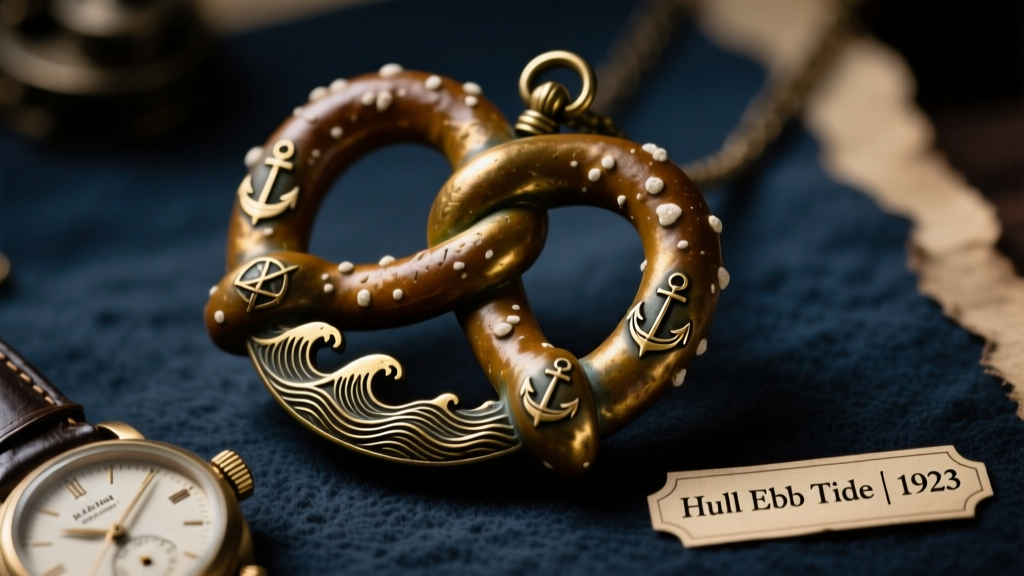
Hull Ebb Tide Jar Pretzel: A Forgotten American Watch Design from the 1950s
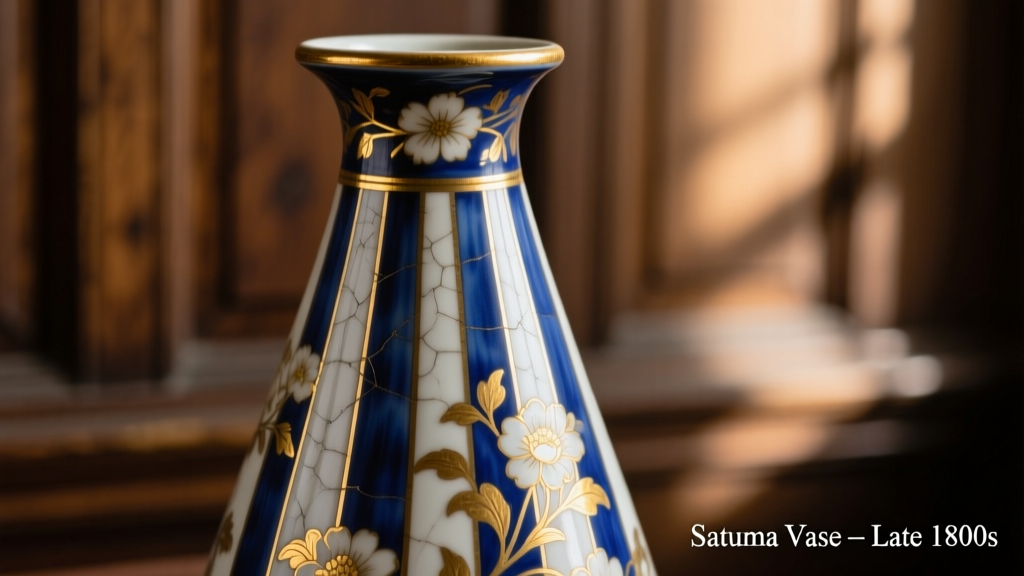
Satsuma Vase: Cone Shape, Patterned Vertical Bands — Late 19th Century, 12 Inches Tall