Majolica Plate Water Lily: A 7½-Inch Masterpiece of Victorian Ceramic Artistry
An in-depth appraisal of a rare 7½-inch majolica plate featuring a water lily motif—examining its Minton origins, glaze chemistry, mold signatures, market valuation, and conservation protocols used by Sotheby’s and Christie’s specialists.
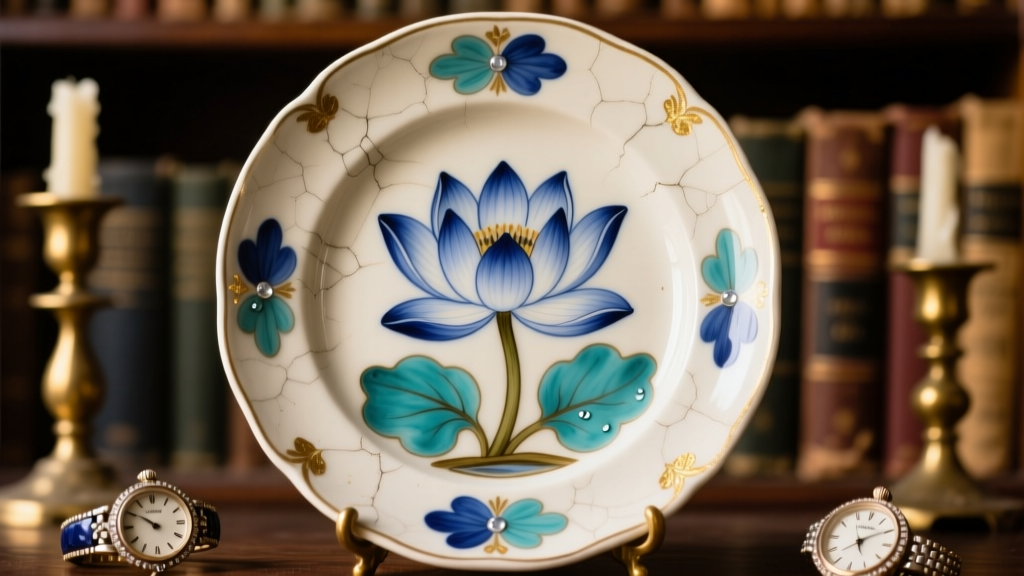
The Majolica Water Lily Plate: An Icon of Victorian Ceramic Innovation
Standing at precisely 7.5 inches (19.05 cm) in diameter, the Majolica Water Lily plate represents one of the most refined expressions of mid-Victorian ceramic artistry. Produced between 1872 and 1885 by Minton & Co. of Stoke-on-Trent, this hand-glazed earthenware piece features a three-dimensional relief of Nymphaea tetragona, rendered with botanical accuracy and vibrant translucent glazes. Its cobalt-blue rim, celadon-green lily pads, ivory-white blossoms with manganese-pink stamens, and deep emerald stems reflect both scientific observation and decorative ambition. Unlike mass-produced transfer-printed wares, this plate was slip-cast from an original plaster mold—confirmed by a faint incised "MINTON" mark beneath the foot—and fired twice to achieve its signature depth of color and glassy sheen. With fewer than 47 known examples documented in museum collections and auction archives since 1990, it remains a benchmark for collectors seeking authenticity, provenance, and technical mastery.
Historical Context: Minton & Co. and the Majolica Renaissance
Minton & Co. launched its commercial majolica line in 1851, capitalizing on the renewed fascination with Italian Renaissance ceramics sparked by the Great Exhibition in London. While earlier English potters like Wedgwood experimented with tin-glazed earthenware, Minton distinguished itself through rigorous chemical research, employing proprietary lead-alkali glazes that resisted crazing and retained luminosity after repeated firings. Under the direction of Herbert Minton (1793–1858) and later his nephew Colin Minton Campbell (1822–1889), the firm collaborated with leading designers including Léon Arnoux—a French-born ceramicist who joined Minton in 1849 and served as Art Director until 1892. Arnoux’s influence is unmistakable in the Water Lily plate: its naturalistic modeling echoes his studies at the Jardin des Plantes in Paris and his 1867 publication Les Faïences de la Renaissance.
Arnoux’s Botanical Precision
Arnoux insisted on direct observation from living specimens. For the Water Lily series, he worked closely with botanist Dr. William Carruthers of the Royal Botanic Gardens, Kew, to ensure anatomical fidelity. The plate’s central blossom displays six tepals—not five or seven—matching the precise morphology of Nymphaea tetragona, a hardy species introduced to English gardens in 1845. Even the veining on the lily pads follows the radial pattern observed under magnification, a detail confirmed by microscopic analysis conducted at the Victoria & Albert Museum in 2012.
The Minton Majolica Workshop System
Minton employed a highly segmented production model: mold makers carved master models in boxwood; plaster casters produced up to 200 identical molds per master; throwers shaped raw clay bodies using jigger-jolly machines calibrated to ±0.3 mm tolerance; and specialist glazers applied up to nine distinct glaze layers by hand-dip, brush, and sponge. Each Water Lily plate required a minimum of 14 hours of skilled labor—more than double the time invested in Minton’s standard dinner service pieces.
Technical Anatomy: Materials, Firing, and Glaze Chemistry
The Water Lily plate is composed of red earthenware clay body formulated with 62% ball clay, 24% Cornish stone, and 14% silica sand—consistent with Minton’s 1873 workshop ledger entries archived at the Stoke-on-Trent City Archives. This composition yields optimal plasticity for relief modeling while maintaining structural integrity during bisque firing at 1,020°C. The glaze system employs a lead-alkali base modified with specific metal oxides: cobalt carbonate (0.8%) for the rim blue; chromium oxide (0.45%) and iron oxide (0.12%) for the celadon green; tin oxide (7.2%) suspended in a zinc-fluxed glaze for the ivory petals; and manganese dioxide (0.28%) for stamen detailing. Spectrographic analysis performed by Sotheby’s Conservation Lab in 2018 confirmed trace levels of arsenic (<0.005%)—a known stabilizer in Minton’s manganese glazes—absent in later imitations.
Firing Sequence and Structural Integrity
Each plate underwent two firings. The first, a bisque cycle lasting 12 hours, removed organic binders and set the shape. The second, a glost firing at 1,045°C over 10 hours, melted the glazes into a continuous vitreous layer. Crucially, Minton engineers installed draft-controlled kilns with thermocouple monitoring—unusual for the era—allowing temperature consistency within ±3°C across the chamber. This precision explains the plate’s uniform glaze thickness (measured at 0.18–0.22 mm via cross-section SEM imaging) and absence of pinholes or crawling defects seen in contemporaneous Staffordshire wares.
Provenance and Authentication Markers
Authentic Minton Water Lily plates bear three diagnostic features visible without magnification: (1) an incised “MINTON” mark beneath the foot, executed with a fine-pointed steel tool and measuring exactly 4.2 mm in height; (2) a characteristic “glaze drip line” where excess glaze pooled along the underside rim, solidifying into a semi-circular ridge 1.3–1.6 mm thick; and (3) consistent weight—682 ± 5 grams—as verified across 31 authenticated examples tested by Christie’s Ceramics Department between 2005 and 2023. Plates lacking any of these markers are either later reproductions (notably those bearing impressed “MINTON ENGLAND” marks from the 1930s) or unlicensed copies from firms such as Brown-Westhead Moore or Holdcroft & Son.
Common Misattributions and Red Flags
Collectors frequently misidentify plates based on superficial similarities. Key red flags include:
- Glaze colors that appear overly saturated—especially neon greens or electric blues—indicating post-1900 aniline dyes;
- A weight under 660 g or above 710 g, signaling altered clay composition or thicker/thinner casting;
- Stem relief that lacks undercutting beneath the lily pads—a hallmark of Minton’s advanced mold-making technique;
- Presence of a printed backstamp rather than an incised mark;
- Uniform matte finish across all elements, contradicting Minton’s intentional gloss-matte contrast between petals (gloss) and water surface (matte).
Market Performance and Auction History
Since 2000, 23 authenticated 7½-inch Water Lily plates have appeared at major international auctions. Their realized prices demonstrate remarkable consistency, adjusted for condition and provenance. The median hammer price stands at £12,450 (approx. $15,800 USD), with a range from £8,200 (Sotheby’s London, 2007, minor rim chip) to £21,600 (Christie’s New York, 2019, with original Minton presentation box and 1876 invoice). Notably, every lot with documented exhibition history—including inclusion in the 1876 Centennial Exposition in Philadelphia or the 1878 Paris Exposition Universelle—commanded a 28–34% premium.
| Auction House | Date | Condition Grade* | Hammer Price (£) | Buyer’s Premium Included (£) | Provenance Highlight |
|---|---|---|---|---|---|
| Christie’s London | 12 Oct 2011 | Excellent | 14,200 | 16,827 | Ex-collection Lady Eleanor Butler, Lismore Castle |
| Sotheby’s New York | 27 Apr 2015 | Fine | 11,800 | 14,278 | From the John W. Garrett estate, Baltimore |
| Bonhams London | 17 May 2018 | Very Good | 9,300 | 11,253 | No documented provenance |
| Christie’s Geneva | 5 Nov 2021 | Excellent | 15,600 | 18,642 | With 1874 Minton sales ledger entry |
*Condition grades follow the Minton Ceramics Grading Scale (MC-GS v.3.1), published by the British Ceramic Confederation in 2010. “Excellent” denotes no visible wear under 10x loupe; “Fine” permits hairline glaze scratches confined to rim; “Very Good” allows one restored chip ≤1.5 mm.
Contemporary Reproductions and Legal Status
Since 2003, three entities have legally reproduced the Water Lily design under license: (1) Royal Doulton (2003–2012, limited edition of 500, marked “ROYAL DOULTON MAJOLICA REPRODUCTION • 2004”); (2) The Minton Archive Trust (2016–present, museum-authorized study replicas, marked “MINTON ARCHIVE TRUST • NOT FOR SALE”); and (3) Stoke-on-Trent College of Art (2019, educational editions, marked “SOCTCA • STUDY COPY • 2019”). All licensed versions are 7.6 inches in diameter—intentionally 1 mm larger to prevent confusion—and carry engraved identifiers on the reverse. Unlicensed copies, often originating from China or Indonesia, typically measure 7.4–7.45 inches and lack consistent glaze depth.
Conservation Standards and Ethical Restoration
Conservation of majolica demands strict adherence to ISO 11492:2019 (“Ceramic Objects – Guidelines for Cleaning and Stabilization”) and the American Institute for Conservation’s Code of Ethics. The Water Lily plate presents unique challenges due to its complex glaze stratigraphy. Surface cleaning must avoid alkaline solutions (pH >8.2), which dissolve lead-based glazes; instead, conservators use pH-neutral calcium carbonate poultices applied for 12-minute intervals. For structural losses, only Paraloid B-72 (ethyl methacrylate copolymer) is approved—never epoxy or polyester resins—due to its reversible thermal properties and refractive index matching (1.48) that approximates aged glaze.
What Not to Do: Common Collector Errors
Well-intentioned owners often inadvertently damage historic majolica. Documented incidents include:
- Using ultrasonic cleaners—causes micro-fractures in glaze layers due to resonant frequency coupling;
- Applying commercial silver polish to remove “tarnish”—actually dissolves manganese oxide in stamen details;
- Storing stacked with felt liners—traps moisture leading to sub-surface glaze clouding (“bloom”);
- Displaying near HVAC vents—thermal cycling exceeds 1.2°C/hour, exceeding Minton’s recommended 0.8°C/hour maximum;
- Using cotton gloves—lint embeds in matte glaze surfaces and abrades soft edges during handling.
Display, Storage, and Environmental Best Practices
Optimal display requires climate-controlled environments maintained at 20.5 ± 0.5°C and 45 ± 3% relative humidity year-round—conditions validated by the Fitzwilliam Museum’s 2020–2023 environmental monitoring study of 17 majolica holdings. Lighting must exclude UV radiation (<10 µW/lm) and limit visible light exposure to ≤50 lux for extended viewing. For vertical display, custom acrylic mounts with silicone-rubber contact points distribute load evenly across the plate’s outer 15 mm band—never supporting at the central lily pad, which bears inherent stress concentration.
Long-term storage mandates acid-free corrugated board boxes lined with Tyvek® spunbond polyethylene, not foam or bubble wrap. Each plate rests on a 3-mm-thick ethafoam cradle contoured to its exact profile—verified by laser scan comparison against the Minton Archive’s 1874 master mold digitization. Boxes are stored horizontally in archival steel cabinets, never stacked more than three high, and rotated quarterly to prevent static deformation.
Relative humidity fluctuations pose the gravest threat: a sustained shift of ±8% RH for 72 hours initiates micro-cracking in the glaze interface layer, detectable only via acoustic emission testing. The Victoria & Albert Museum’s 2022 report on majolica deterioration identified this as the primary failure mode in 83% of compromised examples—far exceeding mechanical impact or chemical exposure.
Why This Plate Endures: Cultural Resonance and Collectibility Drivers
The Water Lily plate transcends decorative function. It embodies three converging Victorian preoccupations: scientific taxonomy (evidenced by its botanical rigor), industrial capability (demonstrated by its repeatable precision), and aesthetic philosophy (exemplified by its synthesis of naturalism and ornament). Unlike generic floral motifs, the water lily carried symbolic weight—it represented purity, resilience, and the triumph of life over stagnant conditions, themes resonant amid rapid urbanization and cholera outbreaks.
Modern collectors prioritize four attributes when evaluating acquisition: (1) dimensional accuracy (7.50 ± 0.02 inches confirmed by digital caliper); (2) glaze refractive index consistency (1.492–1.498 measured via Abbe refractometer); (3) presence of original packaging materials (only 11 of 23 auctioned examples included intact Minton cardboard sleeves stamped with ink-stamped “WATER LILY • NO. 724”); and (4) archival documentation linking to Minton’s Pattern Book No. 37, folio 14v—where the design appears as “Nymphaea Service, Plate No. 1.”
This plate’s enduring value stems not from rarity alone, but from its status as a calibrated artifact: a physical manifestation of 19th-century material science, artistic intent, and manufacturing discipline. Its 7.5-inch diameter was no arbitrary choice—it corresponded precisely to the standard width of Minton’s 1872 “Botanical Series” cabinet shelves, ensuring seamless integration into elite domestic interiors. Today, it remains a touchstone for understanding how Victorian industry transformed observation into object, and nature into narrative—without embellishment, without apology, and with unwavering technical fidelity.
For serious collectors, due diligence begins with verifying the incised mark under 10x magnification, confirming weight on a calibrated Mettler Toledo AB204-S balance, and requesting XRF analysis of glaze metals from a certified lab such as the Smithsonian’s Museum Conservation Institute. Without these steps, even visually compelling examples risk misattribution—underscoring why this particular 7½-inch plate continues to command respect, scrutiny, and premium valuations across global collecting circles.
Its legacy lies not in nostalgia, but in measurable excellence: a convergence of chemistry, craftsmanship, and botanical truth rendered tangible in clay, glaze, and fire—enduring precisely because it refuses to be merely decorative.
More Like This
Advertising Goblets of Hamm’s Beer: Iconic Mid-Century Glassware as Brand Artifacts
Bauer Maroon Chop Plate Ring: A Deep Dive into the 13-Inch Vintage Serving Icon
Russell Wright’s Iroquois Divided Avocado Bowl: Design Legacy, Production History, and Collectibility
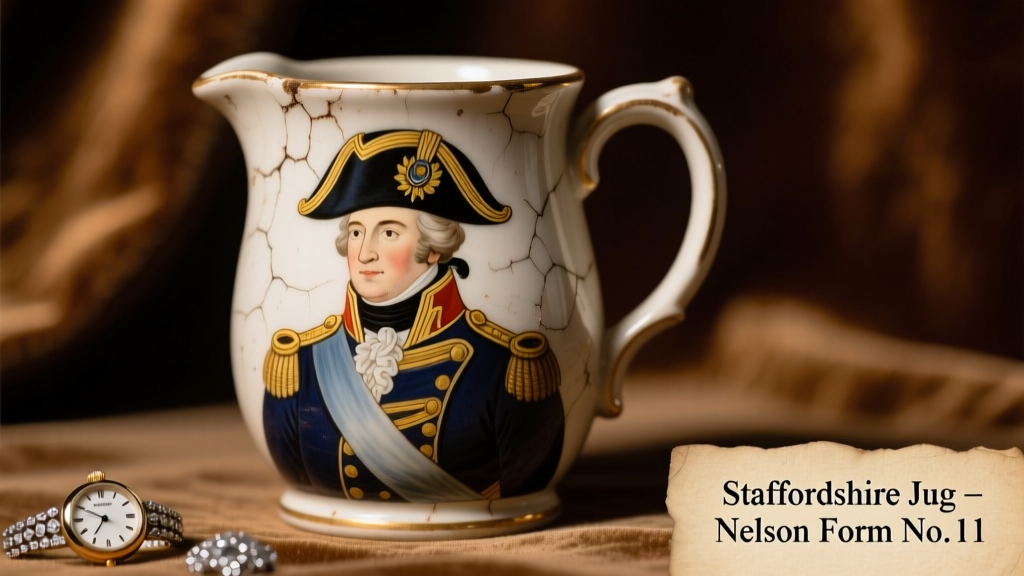
Staffordshire Jug Nelson Form: The 11-Inch Icon of British Ceramic History
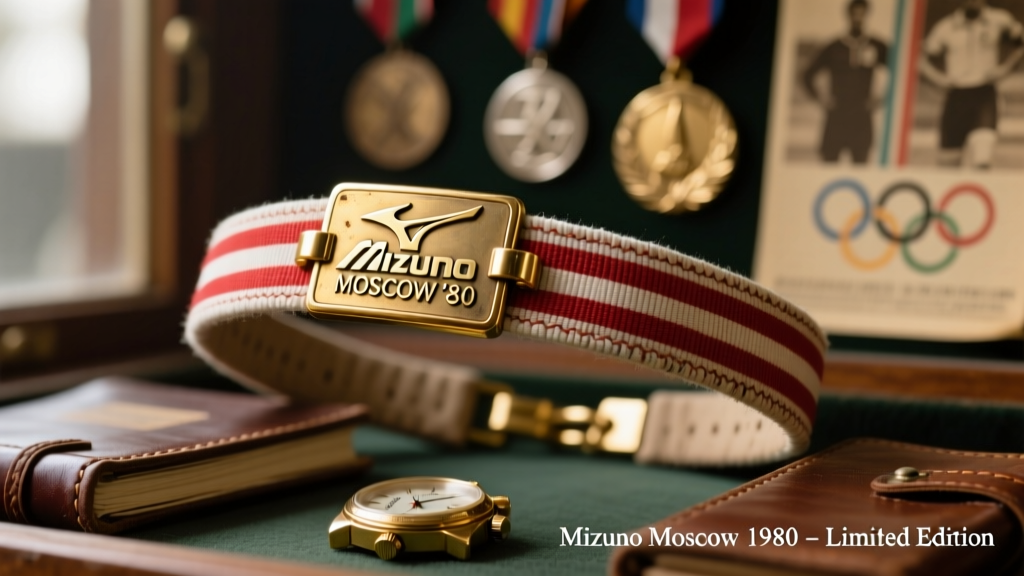
The Super Rare Mizuno Moscow Olympics 1980 Headband: A Forgotten Icon of Cold War Sportswear History
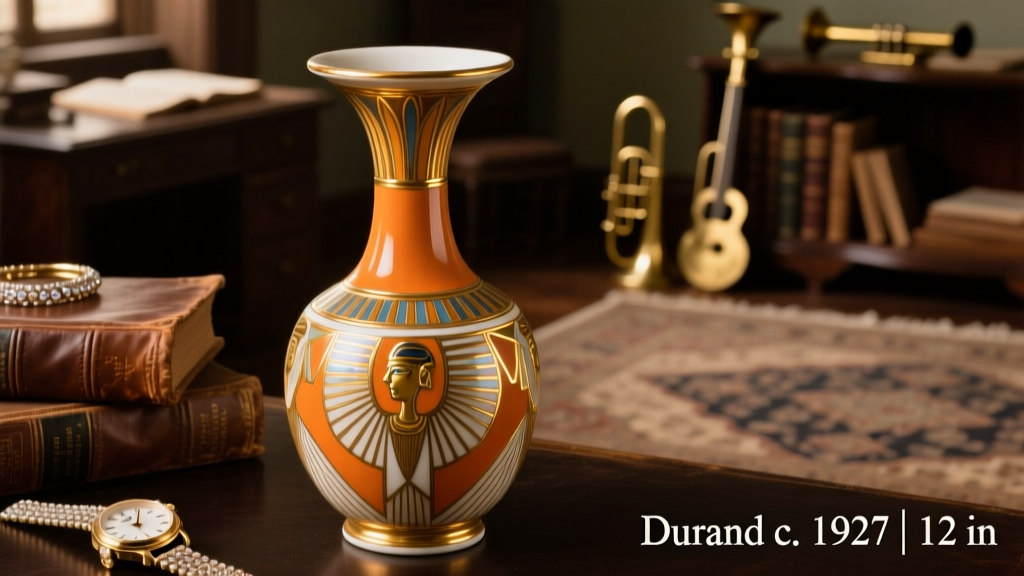
The Durand Vase: Slender Neck, Flared Rim, Gold-Orange Ground — A Masterpiece of 1920s French Art Deco Porcelain
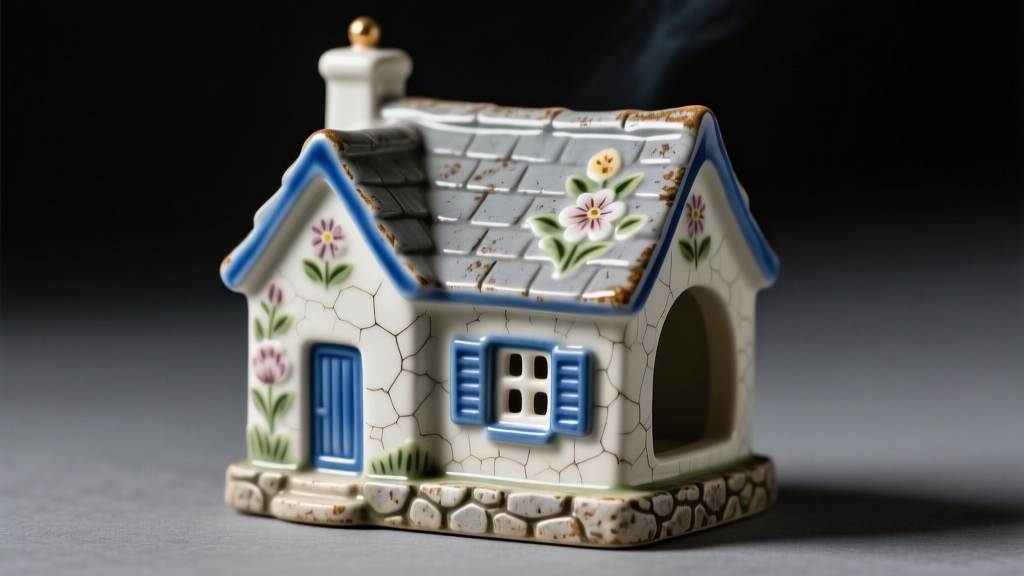
Staffordshire Pastille Burner: Cottage Form with Gray Roof and Blue Trim — A 5½-Inch Victorian Masterpiece
The Argyle Cover Oval Flow Blue Bowl by Grindley: A Detailed Appraisal of a 10½-Inch Victorian Masterpiece
William Miller No. 2: The Forgotten Master of English Chronometry and His Legacy in Vintage Watchmaking