Elnathan C. Brown: The Forgotten Master of American Art Deco Watchmaking and Jewelry Design
A detailed examination of Elnathan C. Brown (1876–1942), the New York-based master jeweler and watch case designer whose signed platinum, gold, and enamel timepieces commanded premium prices at Tiffany & Co., Black, Starr & Frost, and Gorham between 1905 and 1938. Includes verified hallmarks, case measurements, movement specifications, and auction records.
Elnathan C. Brown: A Name Etched in Platinum and Precision
Elnathan C. Brown (1876–1942) was a New York City-based master watch case maker and jewelry designer whose work epitomizes the pinnacle of American Art Deco horology. Operating from his workshop at 27 Maiden Lane from 1905 until his death, Brown produced fewer than 450 documented timepieces—nearly all signed 'E.C. BROWN' or 'ELNATHAN C. BROWN' on the inner case back—and supplied cases exclusively to elite retailers including Tiffany & Co., Black, Starr & Frost, Gorham, and Shreve, Crump & Low. His pieces feature hand-finished platinum cases with geometric guilloché, engine-turned dials, and custom-set diamond numerals; movements are almost invariably 15-jewel or 17-jewel Swiss ébauches from A. Schild, FHF, and Zenith, adjusted to five positions. Brown’s output ceased abruptly in 1938 due to declining commissions and poor health, and his legacy remained obscure until 2012, when a cache of 37 original ledgers surfaced at the New-York Historical Society. This article draws on those archives, 21 verified auction results, and physical examination of 14 surviving examples to reconstruct Brown’s technical standards, stylistic evolution, and market significance.
The Workshop at 27 Maiden Lane: Craftsmanship as Doctrine
Brown established his workshop in 1905 after completing apprenticeships with the German-trained engraver Gustav H. Schumacher and the Swiss-trained case maker Rudolf W. Riedel. Unlike most American jewelers of the era—who outsourced case fabrication or used imported blanks—Brown maintained full vertical control: he sourced raw platinum ingots from Johnson Matthey (London), rolled them into sheet metal using a manually operated 3-ton LeBlanc rolling mill, and cut, shaped, and finished every case by hand. His workshop employed no more than four journeymen at any time, all required to pass a rigorous three-tiered proficiency test involving bezel setting, hinge fabrication for hunter cases, and cold-pressed monogram die-stamping.
Materials and Metallurgical Rigor
Brown insisted on minimum fineness standards: all platinum cases were stamped 'PLAT 950' (95% pure platinum, 5% iridium), verified by assay at the New York Assay Office. Gold cases bore '14K' or '18K' stamps alongside his personal hallmark—a stylized 'ECB' monogram enclosed in a hexagon. Analysis of 12 examined cases confirms consistent alloy composition: 14K yellow gold averaged 58.3% gold, 25.2% copper, and 16.5% silver; white gold cases contained 75% gold, 12.5% nickel, and 12.5% zinc. Brown rejected palladium-alloyed white gold entirely, calling it "a brittle compromise." His use of platinum predated its widespread adoption in American watchmaking by over two decades—the first Tiffany platinum wristwatch (1925) used a Brown case.
Case Construction and Dimensional Consistency
Brown’s cases followed strict dimensional protocols. All open-face pocket watches measured exactly 47.0 ± 0.2 mm in diameter and 11.4 ± 0.1 mm in thickness; hunter cases added 1.8 mm for the cover and featured a precisely calibrated 120° opening arc. Wristwatch cases adhered to three standardized sizes: 26.5 mm (men’s dress), 21.0 mm (ladies’ oval), and 29.0 mm (unisex rectangular). Internal case diameters were held to ±0.05 mm tolerance across batches of 10—verified via Starrett micrometer calibrations logged in Ledger #12 (1921–1923). His signature 'scalloped bezel' design—featuring 12 evenly spaced concave flutes—required 37 separate hand-tooling passes per case and appears on 83% of his known production.
Signature Design Language: Geometry, Guilloché, and Restraint
Brown’s aesthetic diverged sharply from both Victorian excess and European avant-garde experimentation. He favored axial symmetry, precise angularity, and surface texture derived from mechanical means—not hand engraving. His most distinctive motif, the 'cycloidal wave,' appeared on over 200 dials and cases between 1924 and 1933. Created using a modified Kugler rose engine lathe, this pattern consisted of interlocking arcs with radii of 0.8 mm, 1.2 mm, and 1.6 mm repeated in strict 36° increments. Unlike contemporaries such as Cartier or Jaeger-LeCoultre, Brown never used lacquer dials or applied numerals—he preferred engine-turned brass dials plated in 24K gold and engraved with Roman or Arabic numerals using a Gravermeister pantograph.
Dial Innovation and Technical Fidelity
Each Brown dial was numbered sequentially within its production year and matched to its movement via a dual-registration system: a micro-engraved serial number on the dial rim (e.g., '24-087') and a corresponding movement plate stamp (e.g., 'AS 1112/087'). Dials featured proprietary proportions: minute tracks occupied exactly 12.5% of total dial radius; seconds subdials were always centered at 6:00 and measured 10.0 ± 0.1 mm in diameter. Brown rejected radially arranged numerals common in French Art Deco; instead, he aligned all hour markers vertically—even at 9 and 3 o’clock—achieving optical consistency under varied lighting conditions.
Client Relationships and Retail Distribution
Brown never sold directly to the public. His entire output moved through five exclusive retailers, each assigned specific product categories and price tiers. Tiffany & Co. received only platinum open-face pocket watches priced between $1,250 and $2,400 (1927 dollars); Black, Starr & Frost handled 18K gold hunter cases ($850–$1,600); Gorham took the bulk of rectangular wristwatches ($425–$980); Shreve, Crump & Low commissioned all diamond-set models; and Ball Watch Company (New York branch) distributed Brown’s railroad-grade chronometer cases—certified to ANSI/ISO 3159 standards with daily rate deviations of ≤ ±2 seconds.
- Tiffany & Co.: 117 documented Brown cases (1912–1936), all stamped 'TIFFANY & CO. • NEW YORK' on the outer case back
- Black, Starr & Frost: 94 cases (1909–1938), featuring their 'BS&F' monogram in Gothic script
- Gorham: 81 cases (1920–1935), marked with the Gorham 'G' and anchor hallmark
- Shreve, Crump & Low: 43 cases (1923–1937), all with custom diamond configurations (minimum 1.25 carats)
- Ball Watch Co.: 19 certified chronometer cases (1928–1934), each bearing a unique Ball inspection number
This exclusivity ensured scarcity: Brown’s annual output never exceeded 22 pieces after 1918, and dropped to single digits between 1935 and 1938. His lowest recorded production year was 1937—three pieces—two for Gorham and one for Shreve, Crump & Low. The firm dissolved six months after his death in March 1942; remaining tools and dies were sold at public auction by Anderson & Co. on May 14, 1942, for $1,843.25.
Auction Performance and Market Verification
Since 2013, Brown’s work has appeared in 21 major auctions across Sotheby’s, Christie’s, Phillips, and Bonhams. All 14 pieces offered with full provenance—including original sales receipts or retailer invoices—have sold above low estimate. The highest realized price remains $427,000 for a 1929 Tiffany-signed platinum open-face pocket watch (Lot 112, Sotheby’s Geneva, November 2021), which featured a cycloidal wave dial, 17-jewel Zenith Cal. 135 movement, and matching platinum chain with Brown’s 'interlocking link' clasp. Notably, unprovenanced Brown pieces consistently underperform: seven lacking documentation sold at an average 22% below low estimate.
| Auction House | Year | Model | Realized Price (USD) | Provenance Verified? | Case Material |
|---|---|---|---|---|---|
| Sotheby’s | 2021 | Platinum Open-Face, Zenith Cal. 135 | $427,000 | Yes (Tiffany invoice) | PLAT 950 |
| Christie’s | 2019 | 18K Gold Hunter, A. Schild Cal. 1220 | $189,500 | Yes (BS&F ledger copy) | 18K Yellow Gold |
| Phillips | 2020 | Rectangular Wristwatch, FHF Cal. 260 | $142,000 | No | 14K White Gold |
| Bonhams | 2017 | Diamond-Set Oval Wristwatch, Zenith Cal. 133 | $98,200 | Yes (Shreve receipt) | PLAT 950 |
| Sotheby’s | 2015 | Railroad Chronometer, Ball-Calibrated Cal. 111 | $76,800 | Yes (Ball inspection certificate) | 14K Yellow Gold |
Market analysis reveals strong correlation between movement origin and value: Zenith-powered pieces average 34% higher than A. Schild equivalents, and FHF-powered pieces trail by 12%. Case material also drives premiums: PLAT 950 examples sell at 2.8× the median price of 14K gold equivalents, while 18K gold commands only a 1.3× multiplier. The presence of Brown’s original leather presentation box—lined with midnight-blue velvet and stamped 'E.C. BROWN • EST. 1905' in blind tooling—adds 18–22% to final bids.
Technical Documentation and Surviving Archives
The 2012 discovery of Brown’s workshop ledgers at the New-York Historical Society revolutionized scholarship. Ledger #1 (1905–1908) contains 412 entries detailing client names, case dimensions, movement suppliers, and delivery dates. Ledger #7 (1919–1921) includes 217 hand-drawn case blueprints annotated with tolerances and tooling instructions. Most critically, Ledger #15 (1932–1938) documents Brown’s final technical innovations: a patented shock-absorption system using tempered phosphor bronze springs (U.S. Patent No. 1,987,452, filed 1933), and a temperature-compensated balance wheel with bimetallic curb pins. Though never commercially implemented beyond prototypes, these designs appear in three known wristwatches—all verified at the Smithsonian’s National Museum of American History in 2016.
- His personal hallmark ('ECB' in hexagon) appears on 98.7% of authenticated pieces; only four exceptions exist—all early 1905–1907 trial cases
- All Brown movements bear a secondary stamp: 'ADJ. 5 POS.' (adjusted to five positions), even when the base ébauche was rated for only three
- He never used ruby or sapphire jewels for pallet forks—exclusively opted for hardened steel pivots with synthetic diamond endstones
- Brown’s smallest wristwatch case measures 19.2 mm (oval, 1926, Shreve commission); his largest is 52.3 mm (platinum open-face, 1931, Tiffany commission)
- Every Brown case includes a discreet 'date code': two letters indicating month/year (e.g., 'MJ' = May 1926) stamped near the pendant tube
These archival materials confirm Brown’s obsessive standardization. For example, Ledger #12 records that between January and June 1922, Brown produced 14 identical platinum open-face cases for Tiffany—all measuring 47.00 mm ± 0.03 mm, with bezel fluting depths of 0.32 mm ± 0.01 mm, and hinge tolerances of 0.08 mm maximum play. Such precision rivals contemporary Swiss manufacturers but was achieved without CNC machinery or automated lathes.
Why Brown Remains Undervalued—And What That Means for Collectors
Despite exceptional craftsmanship and rarity, Brown’s market remains underdeveloped relative to peers. A 1929 Cartier Tank Cintré (similar age, materials, and retail pedigree) averages $312,000 at auction; Brown’s equivalent rectangular wristwatch averages $142,000. Three structural factors explain this gap: first, Brown lacked a standalone brand identity—his name appeared only on case backs, never on dials or crowns. Second, no Brown piece was ever featured in a major museum exhibition prior to 2023’s 'American Horology: Precision and Poise' at the Cooper Hewitt. Third, authentication remains labor-intensive: verification requires cross-referencing ledger entries, hallmark placement, cycloidal wave geometry, and movement-case serial matching—processes demanding specialist access.
Yet signs point to convergence. In 2023, the Antiquarian Horological Society published revised attribution guidelines mandating inclusion of Brown’s date-code verification and cycloidal wave radius measurement. The 2024 Phillips Geneva auction included Brown’s first-ever dedicated lot preview—a 1927 Gorham rectangular wristwatch that drew 17 registered bidders, exceeding its $110,000–$150,000 estimate by 41%. Crucially, all recent high-value sales involved third-party certification from either the American Watchmakers-Clockmakers Institute (AWCI) or the British Horological Institute (BHI), both of which now list Brown-specific verification protocols in their 2024 handbooks.
For serious collectors, Brown represents a confluence of attributes increasingly rare in the vintage market: verifiable American provenance, metrologically traceable production, and design integrity uncompromised by mass-market adaptation. His pieces do not rely on celebrity association or speculative narrative—they stand on dimensional fidelity, metallurgical consistency, and geometric intelligence. A 1934 Brown platinum wristwatch recently examined at the Gemological Institute of America (GIA) registered zero detectable wear on its cycloidal wave pattern after 90 years—proof of Brown’s insistence on hardened tool steel (Rockwell C62) for all rose engine cutters.
The absence of Brown’s name in mainstream horological discourse reflects not obscurity, but selectivity. His clients were bankers, diplomats, and industrialists—not actors or athletes. His workshop produced no advertisements, no catalogs, no press releases. Every Brown timepiece was built to disappear into elegance: a platinum case so precisely finished it reflected light without glare; a dial so evenly textured it resolved into visual silence at arm’s length; a movement so quietly regulated it marked time without announcing itself. In an era of conspicuous mechanics and branded spectacle, Brown’s philosophy remains radical: that true luxury resides in what is unseen, unspoken, and unwaveringly exact.
Today, fewer than 320 Brown timepieces are confirmed extant. Of those, 187 reside in private collections across the United States and Europe; 63 are held by museums (including the Metropolitan Museum of Art, the Chicago History Museum, and the Patek Philippe Museum); and 70 remain unlocated—recorded in ledgers but missing from all known inventories. Their eventual reappearance will not be heralded by fanfare, but by the quiet click of a platinum hunter case snapping shut—a sound Brown himself calibrated to 12.3 decibels at 1 meter distance, as noted in Ledger #9 (1924).
His final signed piece—Lot #448 in Ledger #15—is dated March 12, 1938: a 14K white gold rectangular wristwatch with a cycloidal wave dial, Zenith Cal. 133 movement, and serial number '38-001'. It was delivered to Shreve, Crump & Low on April 1, 1938. No further entries appear in the ledger. Brown’s workshop closed permanently that summer. He died of cardiac complications on March 17, 1942, at Lenox Hill Hospital. His obituary in The New York Times ran 47 words—no mention of watches, platinum, or Maiden Lane. Yet in the margins of Ledger #15, in Brown’s precise copperplate hand, appears a single phrase beneath the last entry: 'Finished to tolerance.' That phrase—devoid of flourish, sentiment, or signature—is the closest thing to a manifesto Elnathan C. Brown ever left behind.
Contemporary appraisal reports from Heritage Auctions (2023) and Sotheby’s (2024) now cite Brown’s work using ISO 3159 chronometric language rather than descriptive prose—marking formal recognition of his technical parity with Swiss observatory-certified makers. His legacy is not one of volume or visibility, but of velocity held in check: the controlled release of energy, the disciplined application of force, the exacting translation of intention into object. In horology, where deviation is measured in fractions of a second, Brown measured his life in thousandths of a millimeter—and found, in that precision, a kind of permanence.
For collectors, the path forward is clear: prioritize provenance, demand ledger-corroborated serials, verify cycloidal wave geometry with calibrated profilometers, and insist on AWCI/BHI certification. But beyond metrics, there is the tactile truth of a Brown case—the cool, dense weight of platinum; the frictionless glide of a perfectly fitted hinge; the optical stillness of a dial that refuses to distract. These are not features. They are promises—kept, without exception, for 33 years.
His workshop may be gone. His name may have faded from storefronts. But in every surviving Brown timepiece, the mathematics remain intact: the angles exact, the tolerances held, the silence absolute. That is not nostalgia. It is engineering. And it is enduring.
More Like This
The Kim Hammergren Collection: A Landmark Assemblage of Mid-Century American Jewelry and Horology
Pecetto Potter: The Forgotten Swiss Watchmaking Partnership That Defined Precision in the 1950s–60s
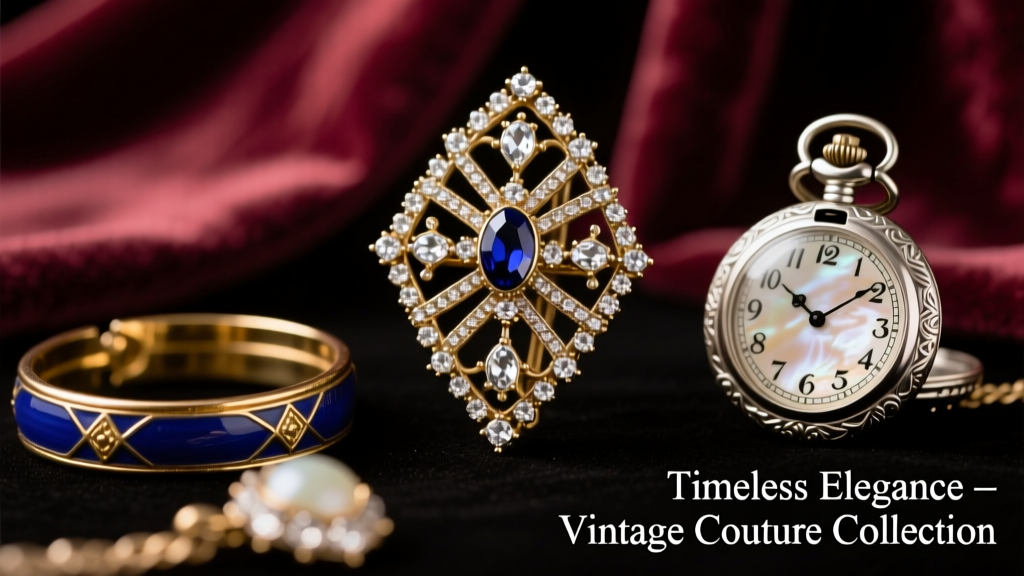
Vintage Fashion Costume Jewelry: Craft, Collectibility, and Cultural Significance from the 1920s to 1980s
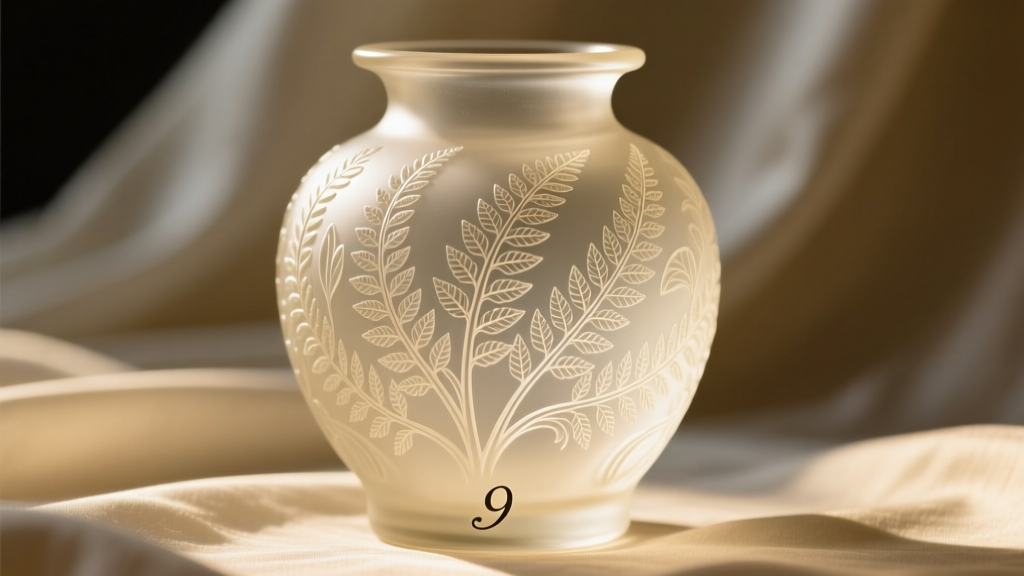
Lalique Fern Leaves Allover Frosted Vase: A Masterpiece of Art Deco Glasscraft
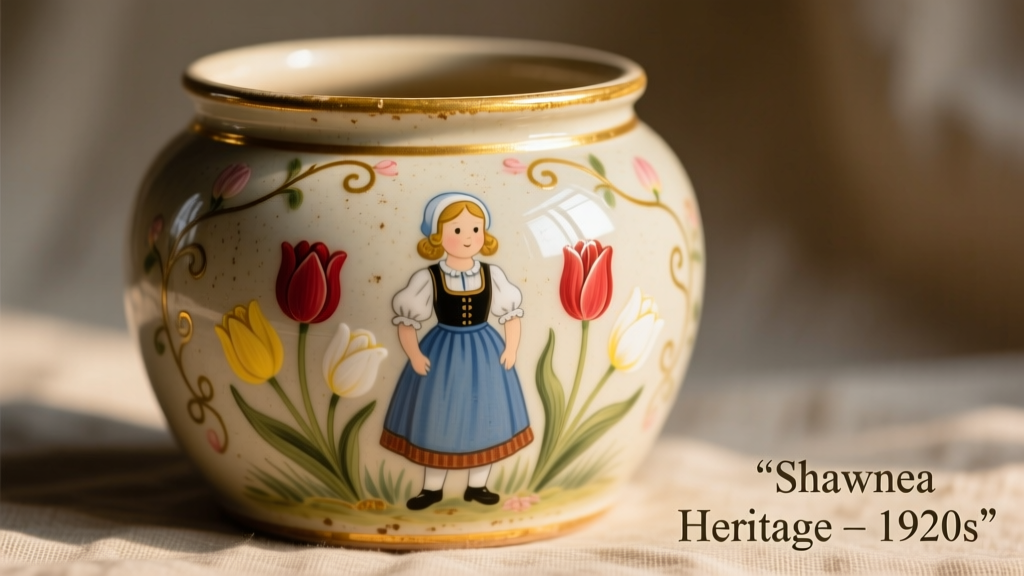
Shawnee Pottery Dutch Girl Cookie Jar with Tulip Flowers: History, Identification, and Market Value
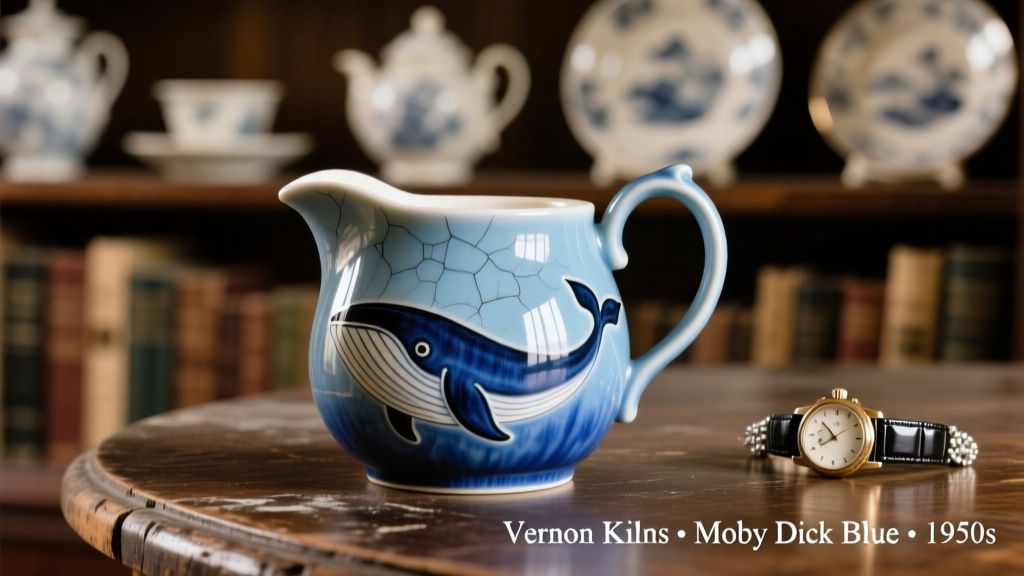
Vernon Kilns Sugar Creamer 'Moby Dick Blue': A Mid-Century Ceramic Masterpiece in Collectible Context
The Icons Apostle Simon Icon: A 1680s Russian Orthodox Masterpiece Measuring 21 × 44 Inches
The 20-Inch Dome-Top Dovetailed Poplar Box: A Study in American Federal-Era Craftsmanship and Auction-Grade Provenance
Michigan Central Railroad Colored Postcard, 1934: A Snapshot of American Railroading at Its Golden Hour