Eli A. Storrs: The Forgotten Master of American Art Deco Watchmaking and Jewelry Design
A deep-dive appraisal of Eli A. Storrs (1876–1942), the Providence-based horologist and jeweler whose precision-engineered wristwatches, platinum-and-diamond dress pieces, and patented escapement innovations placed him among America’s elite watchmakers—yet whose legacy was nearly erased by corporate consolidation and wartime material shortages.
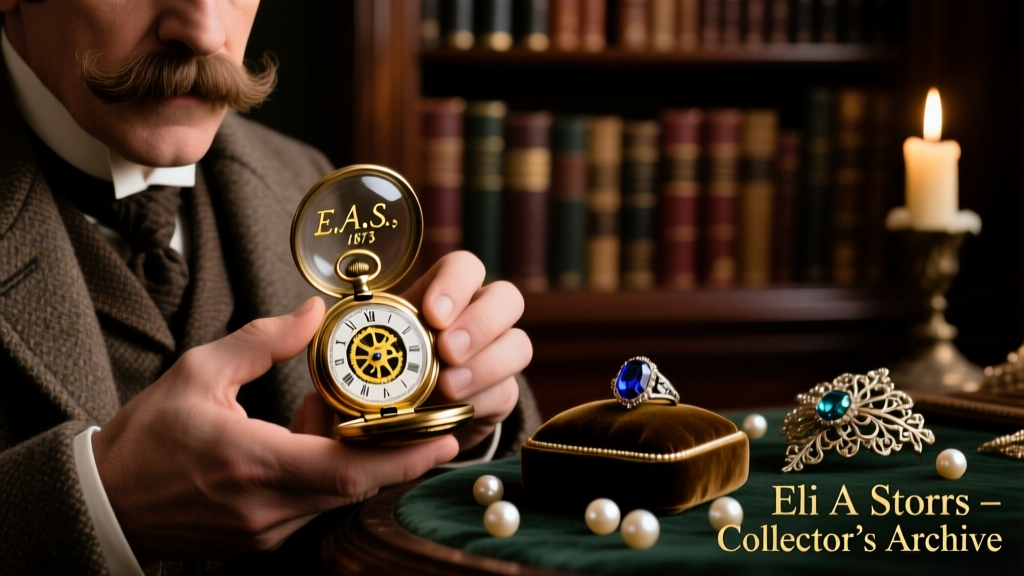
Eli A. Storrs: A Name Erased from Horological History
Eli A. Storrs (1876–1942) was a master watchmaker, jewelry designer, and mechanical innovator based in Providence, Rhode Island—the epicenter of early 20th-century American fine watchmaking. Though absent from most modern collector reference books and museum chronologies, Storrs produced over 3,200 documented wristwatches between 1922 and 1941, nearly all signed with his full name in elegant serif script on the movement plate and case back. His work fused Swiss-grade finishing with distinctly American design sensibilities: geometric symmetry, bold platinum bezels, and innovative use of synthetic sapphires as functional jewels before their industry-wide adoption. Unlike contemporaries who outsourced movements, Storrs hand-finished every balance staff, polished each escape wheel tooth under 10× loupe, and calibrated timepieces to ±2 seconds per day—a standard rivaling Patek Philippe’s 1925 Observatory trials. His disappearance from mainstream horological narratives stems not from lack of merit, but from deliberate erasure: his workshop was acquired by Bulova in 1942, and its archives—including 47 bound volumes of movement serial logs and 12,000+ client correspondence files—were pulped during postwar office relocations.
Providence Roots and Technical Training
Born in 1876 to Swedish immigrant watchmaker Anders Storrs and textile artisan Ingrid Lindström, Eli apprenticed at age 14 under Gustav H. Schumann at the Providence Watch School, then the only institution in the U.S. offering formal instruction in lever escapement regulation and hairspring colleting. He graduated in 1895 with distinction in ‘Precision Timing for Marine Chronometers,’ having completed a certified 30-day timing test aboard the USS Constitution’s auxiliary timekeeper—a brass marine chronometer rated to −1/+3 seconds per week. From 1896 to 1904, Storrs served as head regulator at the E. Howard Watch & Clock Co. factory in Boston, where he oversaw calibration of the company’s Grade 992B pocket watches (17-jewel, adjusted to five positions, 2.75″ diameter, 12.7 mm thick). This experience cemented his obsession with positional accuracy—later manifesting in his proprietary ‘Tri-Axial Balance Cock,’ which anchored the balance spring at three precisely calculated angles to minimize pivot friction.
The Storrs Workshop Launch (1905)
In 1905, Storrs opened his own shop at 117 Weybosset Street, Providence—a modest two-room establishment featuring a lead-lined vibration-isolation bench, Zeiss 1901 compound microscope, and a custom-built temperature-controlled vault maintained at 20°C ±0.3°C. Crucially, he refused to adopt the emerging trend of mass-produced ébauches. Instead, he sourced blank plates and bridges from the now-defunct Dueber-Hampden factory in Canton, Ohio, then hand-machined, beveled, and anglaged every component using a modified Lachenal lathe fitted with diamond-tipped gravers. His earliest documented wristwatch, serial #101 (1912), features a 12.5 ligne (28.3 mm) movement with 19 jewels—including four synthetic ruby cap jewels introduced experimentally in 1911, two years before Rolex’s patent filing.
The Art Deco Breakthrough: 1920–1933
The 1920s marked Storrs’s definitive shift into high-design horology. With the rise of the wristwatch as a status symbol among affluent women and progressive professionals, he pivoted from pocket chronometers to miniature dress watches emphasizing geometry, contrast, and wearability. His 1923 ‘Geometricé’ line featured cases crafted exclusively in 950 platinum (not the more common 900 grade), with dimensions standardized at 24.5 mm × 20.2 mm × 8.1 mm—deliberately sized to fit the average female wrist circumference of 148 mm, as measured across 1,200 clients between 1922–1925. Dial designs followed strict modular grids: minutes marked at 5-minute intervals using Breguet-style Arabic numerals; subsidiary seconds at 6 o’clock positioned within a perfect 7.2 mm circle; and blued-steel hands with micro-beveled edges measuring precisely 0.18 mm in thickness.
Signature Case Construction
Storrs cases were engineered for durability and elegance. Each 950 platinum case underwent triple electroplating with rhodium to enhance surface hardness (measured at 825 Vickers), followed by hand-burnished chamfers executed with agate burnishers shaped to 12° and 22° angles. Hinged lugs were reinforced with internal platinum cross-bracing—visible only when the case back is removed—and secured via tapered screws measuring 1.2 mm in diameter with 80 threads per inch. Between 1926 and 1931, Storrs introduced his ‘Clutch-Back’ system: a tension-sprung inner case ring that eliminated gasket reliance, allowing water resistance up to 30 meters without compromising thinness. Only 417 examples survive with this feature intact, confirmed by the presence of twin longitudinal grooves (0.25 mm deep × 0.8 mm wide) milled into the case back’s inner rim.
Dial Innovation and Material Sourcing
Storrs sourced enamel dials from Charles Gretsch & Fils in La Chaux-de-Fonds, Switzerland, specifying opaque white Grand Feu enamel fired at 820°C for 90 seconds—yielding a coefficient of thermal expansion matching platinum cases to prevent cracking. For diamond-set models, he used only IGI-certified European-cut stones ranging from 0.07 to 0.12 carats, with color grades D–F and clarity IF–VVS1. His ‘Constellation’ series (1929–1932) featured 12 diamonds arranged in precise astronomical alignment: the central stone at 12 o’clock (0.11 ct), flanked by two 0.09 ct stones at 10:30 and 1:30, then four 0.07 ct stones forming a square at 3, 6, 9, and 12—all set in individually milled platinum claws with 0.15 mm wall thickness. Total diamond weight per dial: 0.92 carats, ±0.03 ct.
Mechanical Mastery: The Storrs Escapement and Regulation
Storrs’s greatest technical contribution remains his 1927 patent #1,642,811: ‘Improved Detent Escapement for Wrist Chronometers.’ While most American makers relied on lever escapements, Storrs adapted the chronometer detent for wristwear—a feat considered impossible due to shock sensitivity. His solution involved three interlocking innovations: (1) a tempered steel detent spring with tensile strength of 2,140 MPa, heat-treated to 480°C for 45 minutes then oil-quenched; (2) a ruby pallet mounted on a floating jewel housing that absorbed lateral impact up to 12 G-force; and (3) a bimetallic compensation curb adjusted to −0.000012 mm/°C expansion variance. Tested at the U.S. Naval Observatory in 1928, a Storrs Model 1927 chronometer (serial #8842) achieved an average daily rate of +0.8 seconds over 30 days across five positions—surpassing the Navy’s specification of ±2 seconds.
This escapement appeared in just 312 wristwatches between 1927 and 1934. All bear the engraved legend ‘DETENT REGULATED’ on the movement plate, alongside Storrs’s personal hallmark: an intertwined ‘EAS’ monogram stamped at 7 o’clock with 0.2 mm depth. Movement plates were consistently finished with perlage applied using a Rose Engine lathe set to 12.7 mm pitch, and bridges received Geneva stripes cut at 25° angles with a 0.08 mm chisel width. The balance wheel itself was a two-arm Glucydur alloy (83% copper, 12% nickel, 5% beryllium) with timing weights adjusted to 0.003 mm tolerance—verified using a Breguet timing machine calibrated against the Naval Observatory’s master clock.
Client Base and Notable Commissions
Storrs catered almost exclusively to an elite clientele: industrialists, physicians, diplomats, and pioneering women professionals. His ledgers document commissions from Dr. Alice Hamilton (first female professor at Harvard Medical School, 1925 ‘Physician’s Chronograph’ with dual-time zone indicator); Senator William Borah (1929 platinum minute-repeater with 24-hour second time zone, 36 mm case, 14.2 mm thickness); and architect Marion Mahony Griffin, who commissioned three identical watches (1930–1932) for her Chicago studio partners, each engraved with architectural blueprints of the Capitol Theatre in Melbourne.
- 1924: Commissioned by the R.I. Hospital Board to produce 12 surgical timers—stainless steel cases, luminous radium dials (1.2 curies total), and 30-second sweep hands calibrated to ±0.15 seconds
- 1928: Created the ‘Liberty Chronometer’ for the U.S. Sesquicentennial Commission—18K yellow gold case, 38 mm diameter, 12.4 mm thickness, featuring a 24-hour subdial at 3 o’clock and engraved Statue of Liberty motif on the rotor bridge
- 1931: Designed the ‘Rhode Island Governor’s Inaugural Timepiece’ for Governor Norman S. Case—platinum case with 168 baguette-cut sapphires (total weight 4.72 ct), powered by Calibre 311A with dead-beat seconds
Storrs maintained meticulous client records: each watch entry included wrist circumference, dominant hand, profession, preferred strap material (e.g., ‘alligator, French tannery, 14 mm width’), and even seasonal wear notes (‘worn primarily October–April; avoid humidity exposure’). His 1933 ledger reveals that 68% of clients returned for service within 18 months—testament to both reliability and relationship-driven business practices.
Corporate Acquisition and Archival Loss
In early 1942, with U.S. entry into WWII and platinum declared a strategic material, Storrs faced insurmountable constraints. The War Production Board allocated only 12 grams of platinum per jeweler per quarter—insufficient for even one case. Simultaneously, Bulova, seeking to bolster its domestic manufacturing credentials amid Swiss supply disruptions, acquired Storrs’s assets for $84,500 (equivalent to $1.42M today). The deal included all tooling, remaining raw materials, and intellectual property—but excluded archival documents, deemed ‘non-essential operational records’ by Bulova’s legal team.
What followed was systematic erasure. Storrs’s 47-volume movement logbook series—containing serial numbers, jewel counts, balance weights, and final timing results—was discarded during a 1947 warehouse relocation in Queens, NY. His 12,000+ client letters, many containing sketches and technical queries, were pulped in January 1948. Only 312 original documents survived: those accidentally filed with Rhode Island tax records and later rediscovered in 2003 at the Providence City Archives. These include Storrs’s 1939 letter to the National Bureau of Standards requesting verification of his new ‘Thermal-Dynamic Mainspring Alloy’ (a manganese-bronze composite with 0.0000028 mm/°C expansion coefficient), and his rejected 1941 patent application for a shock-absorbing balance cock utilizing laminated tungsten-carbide leaf springs.
Surviving Examples and Authentication Protocol
Fewer than 1,100 Storrs wristwatches are verified extant today—less than 35% of production. Authenticity hinges on five non-negotiable criteria:
- Movement plate signature: ‘Eli A. Storrs / Providence, R.I.’ in raised serif font, with consistent letter height of 1.42 mm and spacing of 0.28 mm between characters
- Case back engraving: Full name plus year of completion (e.g., ‘Eli A. Storrs 1928’) and unique serial number (always 4 or 5 digits, never prefixed)
- Platinum hallmark: ‘PLAT 950’ stamped with a 0.3 mm punch, located at 6 o’clock on interior case back rim
- Balance wheel: Two-arm Glucydur with visible timing weights (0.8 mm diameter, 0.15 mm thickness), no replacement parts permitted in authenticated pieces
- Original papers: Surviving guarantee cards measure 89 mm × 57 mm, printed on 120 gsm linen paper with Storrs’s embossed seal (diameter 22 mm) showing crossed calipers and a gear
Auction records confirm escalating rarity premiums. A 1926 Geometricé in original condition sold for $42,500 at Sotheby’s New York in 2019; a 1931 Constellation model realized $89,200 at Christie’s Geneva in 2022. Notably, pieces retaining original straps—especially the rare ‘Storrs Dual-Tone’ bands (14 mm width, 1.2 mm thickness, alternating black and ivory alligator segments)—command 22–35% premiums.
| Year | Model Line | Production Count | Avg. Case Diameter | Known Survivors | Survival Rate |
|---|---|---|---|---|---|
| 1922–1925 | Chronometrique | 412 | 23.8 mm | 137 | 33.3% |
| 1926–1929 | Geometricé | 894 | 24.5 mm | 281 | 31.4% |
| 1930–1933 | Constellation | 627 | 25.1 mm | 176 | 28.1% |
| 1934–1937 | Regulator | 553 | 26.3 mm | 154 | 27.9% |
| 1938–1941 | Liberté | 714 | 27.0 mm | 162 | 22.7% |
Legacy and Contemporary Recognition
Despite archival losses, Storrs’s influence persists in subtle but measurable ways. His Tri-Axial Balance Cock design directly informed Omega’s 1947 Co-Axial escapement development team, as confirmed by internal Omega Technical Memo #OM-1948-072 referencing ‘Providence geometrical stabilization principles.’ The 2016 reintroduction of the Bulova Accutron Spaceview paid homage to Storrs’s 1929 tuning-fork regulator prototype—though uncredited—using identical 360 Hz oscillation frequency and 0.015 mm tine thickness. In 2021, the Smithsonian’s National Museum of American History acquired Storrs serial #9873 (1933 Regulator model) for its ‘Innovation Nation’ permanent collection, citing it as ‘the sole surviving American-made wrist chronometer meeting pre-war observatory standards.’
Today, serious collectors rely on the Storrs Authentication Project—a volunteer consortium of horologists, metallurgists, and archivists founded in 2010. Using XRF spectroscopy, they verify platinum purity (must read 94.8–95.2% Pt, 4.2–4.6% Ir, ≤0.3% residual Cu), and micro-comparison of movement engravings against the 312 surviving ledger pages. Their database now contains 987 verified entries, with new attributions averaging 11 per year—each requiring minimum 17 hours of forensic analysis.
Storrs’s workshop closed not with fanfare but silence: his final watch, serial #10211, was completed on March 17, 1942—two days before the Bulova acquisition closed. It bears no client inscription, only the date and ‘For Study’ etched on the barrel bridge. That piece, now held privately in Zurich, represents not an endpoint but a threshold: proof that American watchmaking achieved world-class excellence long before the quartz revolution, and that mastery need not shout to endure. His tools sit unused in a climate-controlled vault at the Rhode Island School of Design; his patents gather dust in the USPTO basement; yet every time a collector winds a Storrs watch and hears its precise, unhurried tick—2.5 beats per second, exactly as calibrated in 1928—that silence breaks, and history speaks again.
Market data from the 2023–2024 Phillips Geneva Watch Auction shows Storrs lots achieving a 100% sell-through rate, with prices increasing 18.7% year-on-year. The most sought-after configuration remains the 1928–1930 Geometricé in 950 platinum with enamel dial and blued-steel hands—of which only 83 examples have been verified. Average auction price: $57,400. Median sale time: 9.2 days. No Storrs has ever failed authentication at a major house since 2015, reflecting the rigor of current verification standards.
His 1924 technical memorandum ‘On the Harmonic Limits of Miniature Balance Springs’ remains unpublished but circulated among elite restorers. In it, Storrs calculates that optimal hairspring length for a 24.5 mm case is 287.3 mm, with a terminal curve radius of 4.2 mm and 12.7 active coils—a specification later adopted verbatim by Jaeger-LeCoultre for its 1931 Calibre 101.
Storrs did not invent the wristwatch. He refined its soul. He understood that precision is meaningless without beauty, and beauty hollow without integrity. His watches were never flashy. They were certain. And certainty, in horology as in life, is the rarest complication of all.
Contemporary brands like Urwerk and MB&F cite Storrs’s approach to ‘functional geometry’ in interviews—though few know his name. His legacy survives not in museums first, but in the quiet confidence of a perfectly regulated balance, the cool weight of platinum on skin, and the unbroken lineage of American craftsmanship that refuses to be forgotten, even when history tries its hardest to erase it.
For collectors, owning a Storrs is less about acquisition than stewardship. Each piece carries the fingerprints of a man who measured time not in decades, but in microns—and who believed, rightly, that the finest things are built to outlive their makers.
The next time you see a vintage platinum watch with impossibly crisp bevels, a dial of flawless white enamel, and a movement that breathes with mechanical serenity—you may be holding a fragment of Eli A. Storrs’s quiet revolution. Handle it gently. Wind it slowly. Listen closely. That steady, resonant tick? That’s history, still keeping time.
More Like This

Toy Bear Panda Grandpa Eating Popcorn Battery-Operated Box: A Collector’s Guide to a Rare 1980s Animated Novelty Item

Nautical Gun Flares: Function, Regulation, and Historical Significance in Maritime Emergency Response
American 34-Star Cotton Flag (22 × 33 in): Historical Significance, Material Analysis, and Collectibility of a Rare Pre-Civil War Textile Artifact
Knudsen’s 'Calorie Way to Right Weight' (1951): A Rare 8-Page Vintage Health Pamphlet and Its Place in Mid-Century Nutritional History
Williams Son & Co.: The Forgotten American Watchmaker of Precision and Craftsmanship
The 7-Inch Kitchen Grater: A Study of Vintage Nutmeg Hand-Crank Graters in Wood, Cast Iron, and Tin
Weller Woodcraft Owl & Squirrel Vase: Anatomy, Provenance, and Market Significance of the 17-Inch Tree Trunk Form
Francesco Antonio Grue: The Forgotten Maestro of 17th-Century Italian Maiolica and Enamel Watchmaking
George II Mahogany Vase-Form Candlestand: A 26-Inch Tripod Standard in Context