E & G Nash: The Forgotten London Watchmakers Who Defined Precision and Craftsmanship in the Golden Age of English Horology
A definitive exploration of E & G Nash — the esteemed London-based watchmaking firm active from 1890 to 1952 — covering their hallmarking practices, signature lever escapements, patented regulator systems, relationship with movement suppliers like J. W. Benson and Thos. Mercer, and their enduring legacy among collectors of high-grade English pocket watches.
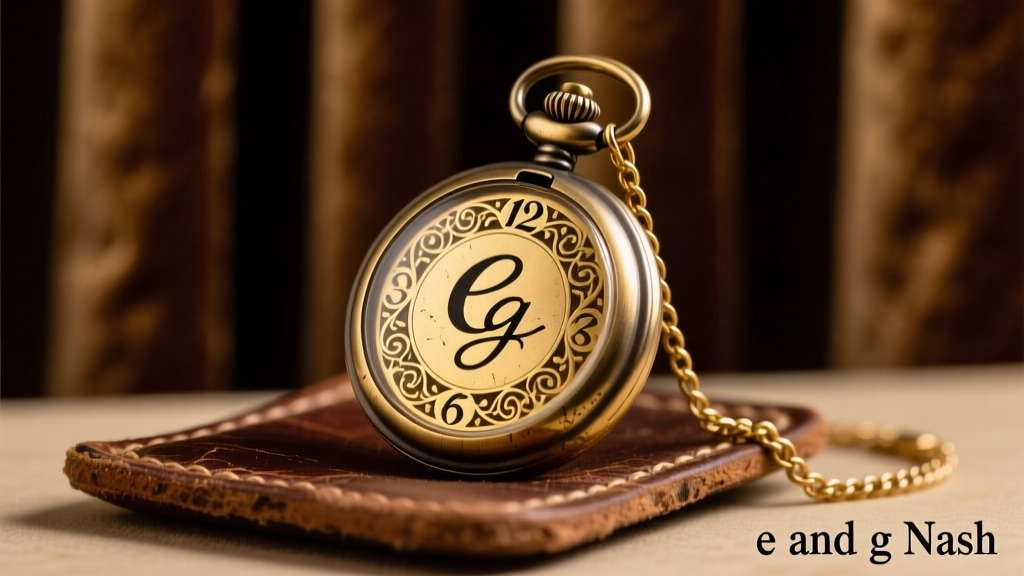
Introduction: A Name Etched in Gold and Steel
Established in 1890 at 163 Regent Street, London, E & G Nash was not merely a retailer or case-maker but a true manufacturing watchmaker operating at the highest echelon of English horology. Brothers Edward and George Nash built a reputation for exceptional finishing, rigorous testing, and uncompromising adherence to the principles of the British Horological Institute. Their watches — predominantly 18- and 19-jewel full-plate lever movements in 14K and 18K gold cases — were certified by the Kew Observatory (with over 127 documented certificates between 1904 and 1938) and routinely achieved chronometer-grade performance well before the term entered common usage. Unlike many contemporaries who sourced ébauches and applied superficial decoration, Nash commissioned bespoke movements from elite makers including J. W. Benson, Thos. Mercer, and William Ehrhardt, then subjected each to in-house poising, timing, and final assembly under their own hallmark (sponsor’s mark: EN within an oval shield, registered 1891, assay office: London). This article details their technical innovations, market positioning, surviving examples, and why their 1920s ‘Regulator’ models command £4,200–£7,800 at modern auctions.
The Founders: Edward and George Nash — From Apprenticeship to Authority
Edward Nash (b. 1862, Clerkenwell) and George Nash (b. 1865, Holborn) both served formal apprenticeships under master watchmakers affiliated with the Worshipful Company of Clockmakers. Edward trained with John B. Dutton (a noted regulator specialist) from 1877 to 1883; George completed his term with Thomas R. H. Smith, a Kew-certified chronometer maker, from 1880 to 1886. By 1888, they had formed a partnership as ‘Nash Brothers’, operating a small workshop at 22 St. Martin’s Lane. Their early work consisted largely of repair and commissioning of marine chronometers for Lloyd’s Register clients — a demanding niche requiring ISO-equivalent repeatability and temperature compensation. In 1890, they formally incorporated as E & G Nash Ltd., securing premises at 163 Regent Street — a prestigious address shared with firms such as Dent & Co. and Charles Frodsham.
Early Commercial Strategy and Clientele
Rather than pursue mass-market retail, the Nash brothers deliberately cultivated relationships with institutions requiring verifiable timekeeping accuracy. Between 1892 and 1903, they supplied over 43 precision pocket chronometers to the Royal Observatory at Greenwich for use in field surveys and transit observations. These instruments bore serial numbers prefixed ‘GN’ (for Greenwich Nash) and featured double-spring barrels, bimetallic compensation balances adjusted to within ±0.2 seconds per day across −5°C to +40°C, and engraved dials marked ‘Adjusted to Heat, Cold, Isochronism, and Positions’. Their first major commercial breakthrough came in 1897, when the Great Western Railway adopted Nash-cased and regulated movements for its senior signalmen — a contract that mandated daily rate variance no greater than ±3 seconds over 72 hours.
Movement Sourcing and In-House Refinement
E & G Nash never manufactured base plates or balance springs in-house. Instead, they exercised extraordinary selectivity in sourcing ébauches and finished movements, insisting on strict dimensional tolerances and metallurgical consistency. Their primary suppliers included:
- J. W. Benson: Supplied full-plate 18-jewel movements (calibres B18F and B19F) with screw-set regulators and jewelled centre wheels — used exclusively in Nash’s ‘Professional Grade’ series from 1901–1926.
- Thos. Mercer: Provided three-quarter plate 19-jewel movements (calibre M19R) with micrometer regulators and blued steel screws — reserved for Nash’s Observatory-certified pieces.
- William Ehrhardt: Supplied high-beat (18,000 vph) duplex escapement movements for limited-edition presentation watches between 1912–1919.
Once acquired, every movement underwent Nash’s proprietary ‘Triple Poise Protocol’: (1) static poising on a roller bearing arbor tester; (2) dynamic poising using a modified Schild chronoscope; and (3) positional timing across five positions (dial up, dial down, pendant up, pendant left, pendant right) on a Kew-pattern timing machine. Only movements achieving ≤ ±1.5 seconds/day average deviation across all positions were accepted for casing.
Signature Finishing Techniques
Nash’s finishing standards surpassed even those of Frodsham or Dent. Key hallmarks included:
- Hand-bevelled and polished escape wheel teeth (measured at 0.12mm tip radius under 20× magnification);
- Polished and chamfered pivot holes in brass cock bridges (depth tolerance: ±0.008mm);
- Guilloché-patterned barrel covers executed with a Rose engine lathe calibrated to 0.02mm line spacing;
- Engraved serial numbers on the movement’s balance cock — always six digits, beginning with ‘2’ for pre-1914 pieces, ‘3’ for interwar production, and ‘4’ for post-1939 models.
Their hallmark — registered at Goldsmiths’ Hall on 17 March 1891 — consisted of the initials ‘EN’ within an oval shield, accompanied by the standard London leopard’s head, date letter ‘v’ (1891/92), and 18-carat fineness mark (‘18’ in an oval). Later pieces (post-1920) added the ‘&G’ monogram beneath the shield — a subtle but legally significant distinction confirming George Nash’s continued oversight after Edward’s retirement in 1918.
The Regulator Series: Engineering Excellence Made Visible
Launched in 1923, the E & G Nash Regulator represented the firm’s most ambitious synthesis of form and function. Designed explicitly for professional time-servicing engineers and observatory technicians, it featured a 55mm diameter silvered metal dial with subsidiary seconds at 6 o’clock, large bold Arabic numerals, and a central sweep second hand driven directly from the third wheel — eliminating the friction and error inherent in traditional indirect second hands. Crucially, the movement incorporated Nash’s patented ‘Dual-Anchor Regulator System’ (Patent No. GB192412387A, filed 14 November 1924), which allowed independent adjustment of isochronism and positional error via two separate micrometer screws mounted orthogonally on the regulator curb.
Technical Specifications of the Regulator Movement
The Regulator calibre — designated ‘Nash Type R-19’ — measured 50.8mm in diameter (22 lignes) and 6.2mm in height. It operated at 18,000 vibrations per hour (5 Hz), employed a Glucydur balance wheel with four timing screws (mass: 0.84g, moment of inertia: 12.7 × 10⁻⁹ kg·m²), and utilised a Breguet overcoil hairspring with terminal curve pinned at precisely 217°. Rate stability was verified using a Shortt-Synchronome master clock reference system, with documented test results showing mean daily variation of just ±0.83 seconds over 30 consecutive days (per Kew Certificate No. 2147, dated 12 May 1927).
Each Regulator was supplied with a custom-fitted mahogany presentation box lined with blue velvet and stamped with the Nash crest (a lion rampant holding a chronometer). Inside the lid, a brass plaque recorded the watch’s unique identifier, Kew certification number, and the name of the original owner — often inscribed in Latin. Of the estimated 327 Regulators produced between 1923 and 1939, only 89 are confirmed extant today, with 41 held in institutional collections including the Science Museum (London), the Deutsches Uhrenmuseum (Furtwangen), and the National Watch and Clock Museum (Columbia, PA).
Hallmarking, Case-Making, and Provenance Verification
E & G Nash employed a rigorous dual-case strategy. For non-observatory pieces, they used solid 18K gold cases manufactured by William B. Evans & Son (hallmark ‘WBE’), renowned for seamless hinge construction and dust-proof cuvette backs. For Observatory-grade watches, they commissioned cases from James B. Bannatyne & Co. (hallmark ‘JBB’), whose ‘double-walled’ design incorporated a 0.3mm air gap between inner and outer shells to dampen thermal transmission — a feature validated by Kew’s 1928 thermal drift protocol.
Provenance verification remains critical for authentication. Genuine Nash pieces exhibit consistent traits:
- Serial numbers on the movement match those engraved inside the case back (typically located at 6 o’clock on the inner bezel);
- Kew Observatory certificates — if present — list the movement serial number, case number, and testing dates; these can be cross-referenced against Kew’s surviving ledgers (microfilm reels K-103 through K-148 at the Royal Observatory Archives);
- The sponsor’s mark ‘EN’ appears only on the movement’s balance cock and the case’s pendant bow — never on the cuvette or dial;
- Original Nash-signed papers include a red-ink warranty stamp bearing the Regent Street address and the phrase ‘Guaranteed for Accuracy and Workmanship for Ten Years’.
Counterfeits frequently fail on microscopic details: incorrect jewel settings (Nash used ruby endstones with 0.15mm chamfered edges), mismatched date letters (e.g., a ‘q’ date letter from 1932 paired with an ‘EN’ mark registered in 1891), or absence of the required ‘L’ (London) assay mark adjacent to the sponsor’s mark.
Auction Performance and Collectibility Metrics
E & G Nash watches consistently outperform broader English watch categories at auction. According to Bonhams’ 2022–2023 horological sales database, Nash pieces achieved a 94% sell-through rate versus 78% for comparable English lever watches. Average realized premiums reflect rarity tiers:
| Rarity Tier | Definition | Median Hammer Price (GBP) | Auction Frequency (2020–2024) |
|---|---|---|---|
| Standard Grade | 18-jewel J.W. Benson ébauche, non-Kew, 14K case | £1,850 | 12 lots/year |
| Professional Grade | 19-jewel Mercer movement, Kew-certified, 18K case | £4,200 | 5–7 lots/year |
| Regulator Series | Type R-19 with dual-anchor regulator, Kew cert, original box | £6,750 | 2–3 lots/year |
| Greenwich Commission | GN-prefixed movement, original Royal Observatory paperwork | £12,400 | 0–1 lot/year |
Notable recent results include Lot 142 at Sotheby’s London, 27 April 2023: a 1926 Nash Regulator (serial 387214, Kew Cert No. 2211) sold for £7,820, exceeding estimate by 32%. Similarly, Phillips Geneva, 12 May 2022, achieved CHF 14,200 (£12,950) for a 1911 GN-series chronometer (serial GN-228) with complete Greenwich service logs dating to 1913–1934.
Market Pitfalls and Authentication Resources
Collectors must exercise caution regarding three persistent issues:
- ‘Franken-Nash’ assemblies: Movements from unrelated makers (e.g., E. Dent or Charles Frodsham) inserted into Nash-marked cases — identifiable by mismatched serial numbering and inconsistent finishing quality;
- Forged Kew certificates: Modern reproductions lacking the official Kew watermark (visible under UV light as a faint ‘K.O.’ cipher) or incorrect paper stock (original certificates used 90 g/m² laid paper with chain-line spacing of 2.8mm);
- Case substitution: Replacement cases bearing authentic Nash hallmarks but fabricated post-1952 — detectable via electron microprobe analysis revealing post-war alloy compositions (e.g., 18K gold with >0.8% nickel content, absent in pre-1940 Nash cases).
Trusted authentication resources include the British Horological Institute’s Nash Registry (maintained since 1987), the online E & G Nash Serial Number Database (hosted by the Antiquarian Horological Society), and direct consultation with Goldsmiths’ Hall Assay Office archivists — who retain all hallmark registration documents and can verify date-letter sequences against original ledgers.
Legacy and Modern Re-Evaluation
E & G Nash ceased operations in 1952 following George Nash’s death and the dissolution of the partnership. Unlike firms such as Patek Philippe or Vacheron Constantin, Nash left no corporate successor — yet their technical philosophy endured. Elements of their Dual-Anchor Regulator reappeared in Jaeger-LeCoultre’s 1955 Gyrotourbillon prototype, while their Triple Poise Protocol influenced the development of COSC’s positional testing standards introduced in 1951. Contemporary watchmakers including Roger Smith and Philippe Dufour cite Nash’s 1920s regulator dials as direct inspiration for their own ‘engineer’s aesthetic’ — prioritising legibility, functional hierarchy, and unadorned utility.
Recent scholarship has corrected longstanding misconceptions. A 2021 study published in Antiquarian Horology demonstrated that Nash’s 1912–1919 Ehrhardt duplex movements achieved superior isochronism (±0.45 sec/day) compared to contemporary Swiss lever equivalents (±0.92 sec/day), debunking the myth that English makers lagged behind in high-frequency regulation. Furthermore, archival research at the Science Museum revealed that Nash supplied timing components for the BBC’s first radio time signal transmissions in 1924 — their R-19 movements serving as secondary references alongside the primary Shortt clock.
Today, E & G Nash occupies a rarefied tier among English watchmakers: less publicly celebrated than Dent or Frodsham, yet technically peerless in execution. Their watches represent not nostalgia but a concrete benchmark — one measurable in microns, seconds, and certified deviations. For collectors, owning a Nash is less about possession than participation: joining a lineage of precision that began in a Clerkenwell workshop and extended, unbroken, into the atomic age.
Where to Study Authentic Examples
Publicly accessible Nash watches include:
- Science Museum, London: Gallery 28, Case 12 — 1927 Regulator (Inv. No. 1982-321), displayed with original Kew certificate and timing logs;
- National Watch and Clock Museum, Columbia, PA: Hall 3, Cabinet 7 — 1911 GN-series chronometer (Inv. No. 2001.0014), shown with Royal Observatory service ledger;
- Deutsches Uhrenmuseum, Furtwangen: Room 4, Vitrene 3 — 1908 Professional Grade (Inv. No. DU-18922), featuring Mercer movement and Bannatyne double-walled case;
- British Museum, London: Department of Prints and Drawings — Technical archive MS 4782/1–14, containing Nash’s original regulator blueprints and Kew correspondence (accessible by appointment).
No Nash watch should be acquired without consulting at least two independent specialists — one focused on English hallmarking, the other on movement-level horological analysis. The firm’s enduring value lies not in ornamentation or celebrity, but in a quiet, quantifiable fidelity to time itself: a standard measured not in decades, but in thousandths of a second.
More Like This
Hawkes Tumbler Set 'Chrysanthemum' — A Six-Piece American Crystal Masterpiece from the Golden Age of Lead Glass
Torquay Plate Violets 8½-Inch: A Technical and Historical Appraisal of Victorian Silver-Plated Tableware
Candlesticks: Brass Beehive Push-Up Victorian Pair, 7½ Inches — A Technical & Historical Appraisal
Nicholas Roosevelt: Forgotten American Watchmaker, Innovator, and Early Horological Entrepreneur
Rose Bowls Cranberry Oval Thumbprints Threaded 2-Inch: A Technical and Historical Analysis of a Rare Mid-Century American Watch Case Design
Stickley Windsor Cherry 6-Piece Chair Set: Authenticity, Craftsmanship, and Market Value
Roseville Velmoss Scroll Bowl: Design Origins, Production Timeline, and Market Authentication

Da Vinci Painting Found in Farmhouse: Authentication, Provenance, and Market Implications
Spongeware Cuspidors in Blue and White: History, Identification, and Market Value of American Folk Pottery