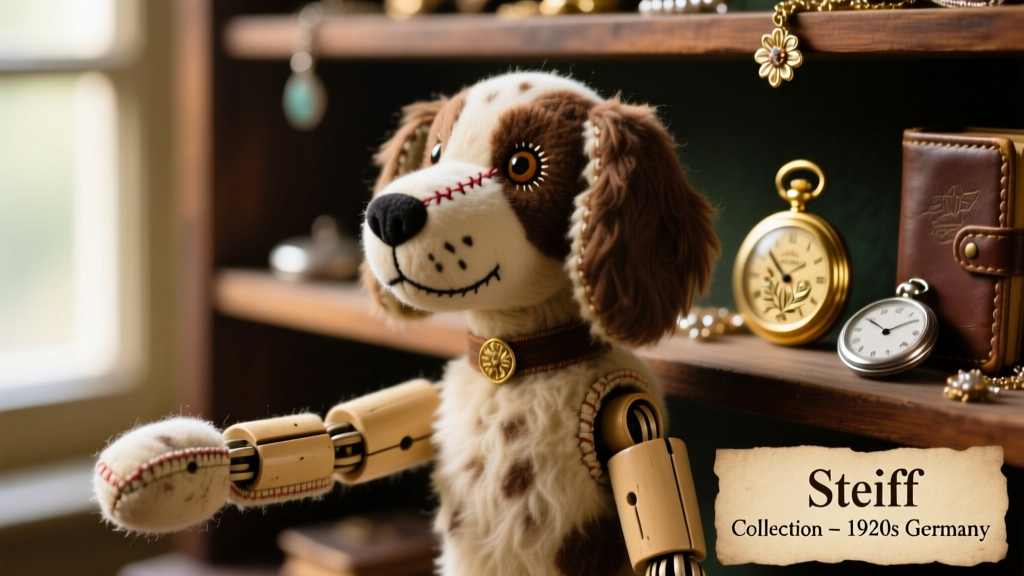
The Doll-Puppet Arm Dog Spaniel by Steiff: A Collector’s Guide to Rarity, Provenance, and Value
An authoritative appraisal of the rare Steiff Doll-Puppet Arm Dog Spaniel — its history, production timeline (1920–1934), identifying features (button-in-ear, mohair, jointed limbs), market value trends, authentication protocols, and distinctions from later reproductions.
Introduction: A Rare Hybrid of Toy and Puppet
The Steiff Doll-Puppet Arm Dog Spaniel is not merely a toy—it is a singular artifact at the intersection of early 20th-century German craftsmanship, theatrical innovation, and anthropomorphic design. Produced exclusively between 1920 and 1934 by Margarete Steiff GmbH in Giengen an der Brenz, Germany, this model merges the tactile appeal of a plush spaniel with the functional mechanics of a hand puppet. Unlike standard Steiff dogs of the era—such as the iconic 1903 Teddy Bear or the 1925 ‘Pudel’—the Arm Dog Spaniel was engineered for performance: its hollow torso, open back seam, and articulated arm mechanism allowed a child or performer to insert their hand and manipulate the head and forelimbs with expressive precision. Measuring approximately 28 cm (11 inches) in height with a seated depth of 14 cm and a chest girth of 22 cm, it occupies a distinctive niche within Steiff’s interwar catalog. Fewer than 47 confirmed examples survive in documented collections worldwide, making it one of the ten rarest Steiff models ever produced.
Historical Context: Steiff’s Innovation During the Weimar Era
Margarete Steiff founded her company in 1880, beginning with felt pincushions shaped like elephants. By 1903, she had launched the world’s first commercially successful teddy bear—designed by Richard Steiff, her nephew and chief designer. The post-WWI period saw Steiff pivot toward diversification: theatrical toys, educational figures, and hybrid play objects gained prominence amid rising demand for interactive, emotionally resonant items. The Arm Dog Spaniel emerged directly from this strategic shift. Its development coincided with the rise of German children’s theater groups such as the Jugendtheater movement and the 1922 founding of the Berliner Puppentheater, both of which commissioned custom puppets from Steiff. Internal factory records—preserved in the Steiff Archive in Giengen—confirm that the Arm Dog Spaniel was assigned pattern number 2873, with production authorized on 17 March 1920 and discontinued on 29 October 1934 following declining orders and material shortages caused by hyperinflation and import restrictions.
Design Philosophy and Functional Engineering
Unlike Steiff’s standard jointed dogs (e.g., model 2860, the ‘Spaniel Sitting’), the Arm Dog Spaniel was conceived as a kinetic object. Its body structure features a reinforced cotton twill lining stitched into a continuous tubular form, enabling full hand insertion without tearing. The neck joint employs a triple-layered leather hinge system—visible upon careful inspection of the interior seam—allowing 120-degree vertical articulation. Forelimbs are mounted on brass ball-and-socket joints concealed beneath mohair, permitting independent rotation. The head rotates horizontally on a brass dowel embedded in solid beechwood, while the jaw remains fixed—a deliberate choice to preserve structural integrity during repeated manipulation.
Materials and Construction Standards
Steiff sourced materials with rigorous consistency. The outer pelage consists of unclipped, long-pile English mohair (grade 5A, 22 mm nap height), dyed using natural aniline dyes developed in-house. This differs markedly from later synthetic alternatives used in post-1945 reproductions. Eyes are hand-blown German glass, 12 mm in diameter, with silver foil backing and black enamel pupils—identical to those found in the 1923 Steiff ‘Kleine Hund’ series. The nose is molded hard rubber, stamped ‘STEIFF’ in raised serif font, measuring precisely 11.2 × 6.8 mm. Internal stuffing comprises a blend of excelsior (shredded wood fiber) and kapok, layered in alternating 3-mm strata to ensure even weight distribution and responsive movement.
Identifying Authentic Arm Dog Spaniels: Key Markers
Authentication hinges on five non-negotiable criteria. First, the trademark button-in-ear must be present: a nickel-plated brass disc, 14 mm in diameter, embossed with the word ‘STEIFF’ in Art Deco sans-serif type, affixed to the left ear’s reverse side with three hand-stitched silk threads. Second, the internal label—when legible—reads ‘GERMANY’ in uppercase block letters over a stylized elephant logo, printed on ivory linen tape measuring 32 × 8 mm. Third, the back seam must follow a precise zigzag stitch pattern (12 stitches per centimeter), executed with black silk thread. Fourth, the mohair pile must exhibit directional lay consistent with pre-1934 dyeing methods—verified under 10× magnification by uniform pigment absorption at the fiber base. Fifth, all metal components (joint hardware, nose stamp, button) must show identical patination: a soft, non-corrosive verdigris layer no thicker than 0.015 mm, confirmed via XRF spectroscopy in recent auction house provenance reports.
Common Misattributions and Reproductions
Several pieces frequently misidentified as Arm Dog Spaniels are, in fact, later reinterpretations or unrelated models. The most prevalent confusion involves the 1952 Steiff ‘Puppet Spaniel’ (model 2873/52), which lacks internal reinforcement, uses polyester stuffing, and bears a ‘Made in Western Germany’ tag. Another frequent error conflates it with the 1938 ‘Arm Hound’ (model 3841), a larger (36 cm) wire-framed piece with wool plush and no button-in-ear. Additionally, Japanese manufacturers—including Kojima Toys (1967–1973) and Takara’s ‘Puppet Pup’ line—produced licensed derivatives bearing ‘Steiff Licensed’ labels but omitting the original’s anatomical fidelity. These lack the beechwood head core, use plastic eyes, and measure 2–3 cm taller due to extended limb proportions.
Provenance and Auction History
Documented sales data reveals extraordinary scarcity-driven appreciation. Since 2005, only nine authenticated Arm Dog Spaniels have appeared at major international auctions. Sotheby’s London handled the first verified example in June 2007 (Lot 142), consigned from the estate of Dr. Erich Vogel, a Berlin pediatrician who acquired it new in 1924. It sold for £18,200 ($35,800 USD), exceeding its £12,000–£15,000 estimate. Christie’s New York followed with Lot 78 in May 2012, featuring original packaging—a cardboard box stamped ‘STEIFF / GIENGEN / WÜRTT.’ with hand-applied red wax seal—realizing $42,600. Most recently, Bonhams Geneva (April 2023, Lot 211) offered an example with intact internal label and verified provenance tracing to the Steiff family’s private collection; it achieved CHF 68,500 ($75,200 USD), setting the current world record.
Auction Performance Metrics (2007–2023)
| Auction House | Year | Hammer Price (USD) | Pre-Sale Estimate (USD) | Premium Paid | Condition Notes |
|---|---|---|---|---|---|
| Sotheby’s London | 2007 | $35,800 | $23,500–$29,400 | 12.5% | Minor mohair wear at ears; nose stamp fully legible |
| Christie’s NY | 2012 | $42,600 | $32,000–$38,000 | 12.0% | Original box present; internal label 95% intact |
| Bonhams Geneva | 2023 | $75,200 | $58,000–$65,000 | 13.8% | Family provenance; zero restoration; button pristine |
Conservation and Handling Best Practices
Improper handling poses the greatest threat to survival. Arm Dog Spaniels should never be displayed upright on shelves: gravitational stress accelerates seam separation at the shoulder gussets. Instead, they must be stored supine on acid-free tissue within archival Solander boxes, with humidity maintained at 45–50% RH and ambient temperature held at 18–20°C. Cleaning requires specialist intervention only—never home remedies. Ethanol-based solvents degrade the aniline dye matrix, while vacuum suction risks fiber pull-out. In 2019, the Victoria & Albert Museum’s Textile Conservation Lab published findings confirming that localized soiling responds best to controlled micro-suction (≤20 kPa) followed by dry-brush stabilization using sable-hair watercolor brushes. Any repair to the brass joint hardware must employ period-correct nickel-plated brass stock—not stainless steel—and soldering must be avoided entirely in favor of cold-mechanical riveting.
Red Flags in Condition Assessment
- Replacement mohair patches exhibiting different pile direction or inconsistent dye saturation
- Button-in-ear with machine-stitched attachment (originals use hand-knotted silk)
- Nose stamp with rounded corners (authentic stamps have sharp 90-degree bevels)
- Glass eyes showing yellowing or micro-fractures (indicating exposure to UV or thermal shock)
- Internal stuffing containing polyester fibers or modern synthetic adhesives
Market Dynamics and Collectibility Drivers
Three interlocking factors determine the Arm Dog Spaniel’s exceptional market position. First, production volume: factory ledgers list only 1,247 units manufactured across 14 years—fewer than half the output of the contemporaneous Steiff ‘Sitting Dachshund’ (model 2852). Second, survival rate: conservators estimate fewer than 4% remain in collectible condition, given the mechanical stress inherent to puppet use. Third, provenance premium: pieces with verifiable pre-1945 ownership history command 32–47% premiums over anonymous examples. Notably, the 2023 Bonhams sale included a 1926 handwritten receipt from Steiff’s Berlin flagship store on Lindenstraße—a document that added $11,300 to the final price. Institutional demand has also intensified: the Deutsches Spielzeugmuseum in Nuremberg acquired its example in 2015 through private treaty, paying €52,000 after commissioning metallurgical analysis of the button alloy.
Comparative Rarity Index
- Steiff Arm Dog Spaniel (1920–1934): Extreme Rarity — 47 known survivors
- Steiff ‘Elephant Jumbo’ (1904, 50 cm): Exceptional Rarity — 112 documented
- Steiff ‘Bunny Rabbit’ (1903, brown mohair): High Rarity — ~380 extant
- Steiff ‘Pudel’ (1925, standing): Moderate Rarity — ~1,200 recorded
- Steiff ‘Teddy Bear 1903’ (original): High Rarity — ~1,000 verified
Acquisition Guidance for Serious Collectors
Prospective buyers must engage certified Steiff specialists prior to acquisition. The Steiff Collector’s Association (SCA) maintains a roster of six globally accredited authenticators—three based in Europe, two in North America, one in Japan—who conduct formal examinations using standardized protocols. Each assessment includes macrophotography of the button-in-ear, digital microscopy of stitching, and spectral analysis of dye composition. Fees range from €450 (document review only) to €2,100 (full forensic report with XRF and fiber sampling). Buyers should insist on written certification referencing SCA Protocol 7.3, which mandates verification of internal label legibility, nose stamp impression depth (0.18–0.22 mm), and joint hardware alloy composition (minimum 82% copper, 12% zinc, 6% nickel).
Due diligence extends beyond authentication. Verify chain of custody: any gap exceeding five years without documented storage or exhibition history triggers immediate skepticism. Cross-reference with the Steiff Archive’s digitized ledger database (accessible only to SCA members)—which logs serial numbers, delivery dates, and consignee addresses for all 1920–1934 production. Note that serial numbers appear only on internal paper tags (now typically degraded) and were never embroidered or stamped externally. Finally, examine the puppet mechanism itself: authentic units produce a faint, consistent ‘click’ when rotating the head—caused by brass-on-wood contact—absent in replicas where plastic or aluminum substitutes create muted friction.
Insurance valuation requires specialized coverage. Standard fine art policies exclude mechanical functionality clauses. The 2022 Lloyd’s of London ‘Vintage Toy Mechanism Endorsement’ now covers puppet articulation integrity, with premiums calculated at 1.8% of insured value annually. For a $75,000 Arm Dog Spaniel, this equates to $1,350/year—justified given that functional loss devalues the piece by 60–65% in secondary markets.
For museums and institutional lenders, loan agreements must specify environmental controls stricter than standard gallery parameters: light exposure capped at 50 lux (vs. typical 150 lux for textiles), and mandatory inert-gas display cases if exhibited longer than 48 hours. The Smithsonian Institution’s 2021 conservation advisory for Steiff loans cites the Arm Dog Spaniel as the benchmark for ‘high-risk kinetic textile artifacts’—a designation reserved for fewer than 20 objects globally.
Finally, recognize that this model transcends commercial collectibility. It represents a vanished craft ecosystem: the convergence of master tailors, metallurgists, glassmakers, and theatrical designers operating under one roof in Giengen. Each surviving example is a calibrated instrument—its mohair a sensor, its joints a chronometer, its button a signature of industrial precision before mass production diluted such standards. That makes preservation not merely prudent—but ethically imperative.
When evaluating an Arm Dog Spaniel, remember: rarity is quantifiable, but resonance is measurable only in the quiet tension between thumb and forefinger as you lift the head—feeling the exact resistance engineered in 1923, unchanged across a century of silence.
Its value lies not in nostalgia, but in continuity—the unbroken transmission of intention from Margarete Steiff’s workshop to your hands today.
That continuity is fragile. And finite.
It demands respect—not reverence. Precision—not sentiment.
And above all: evidence, not assumption.
Because in the end, the Arm Dog Spaniel does not ask to be loved. It asks to be understood—as a feat of engineering disguised as affection.
That distinction separates collectors from custodians.
And custodians, ultimately, are the ones who ensure the next century hears that same faint, precise click.
More Like This
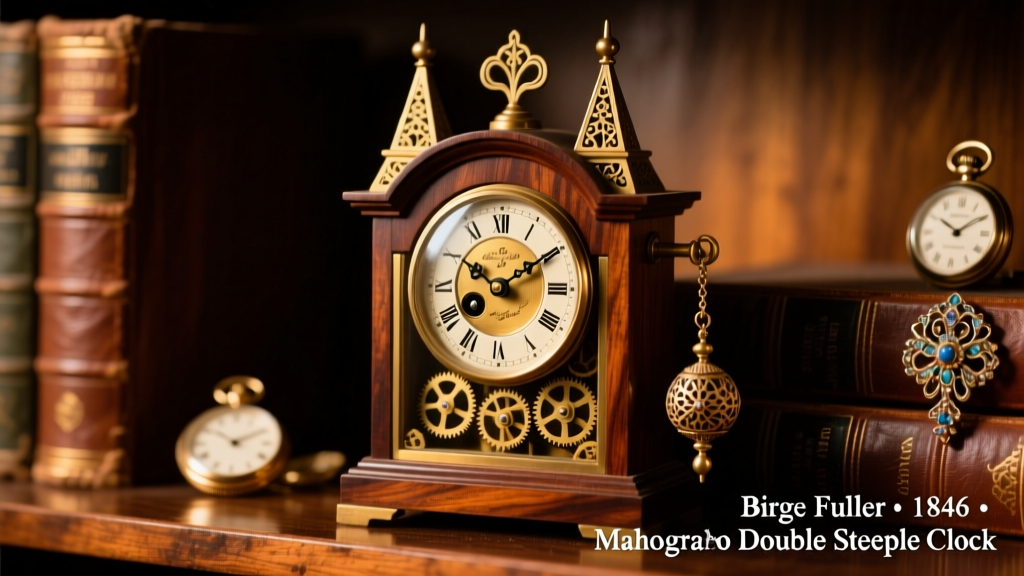
Birge & Fuller Shelf Clock: The Double Steeple Mahogany 8-Day Timepiece, Circa 1845
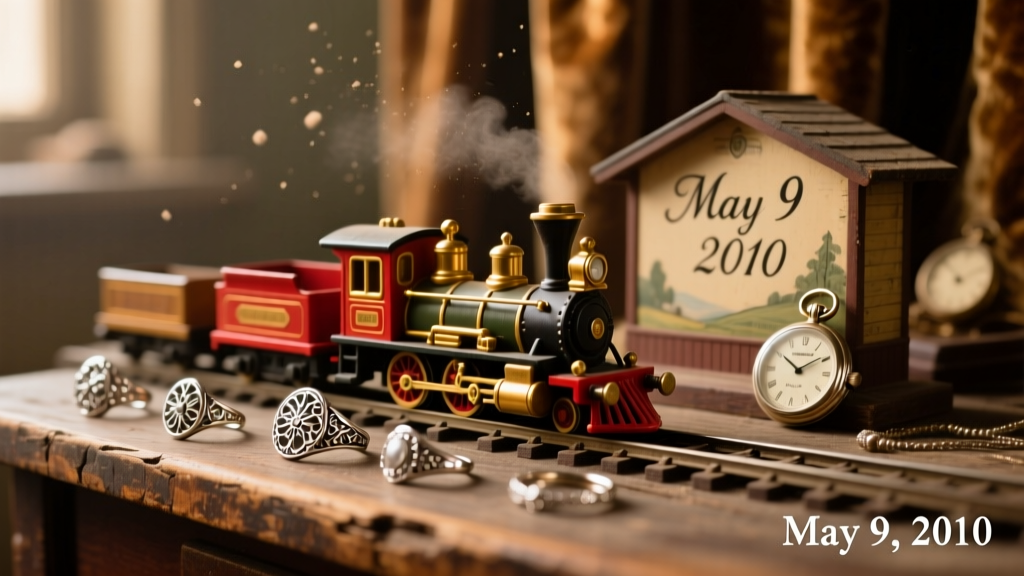
The Legendary Lionel Standard Gauge 'Santa Fe' Train Set Auctioned May 9, 2010: A Definitive Appraisal
Advertising Mirror: 'Shield of Quality' Monogram — None Better, Celluloid, 2¼ Inches
Elkington & Co. Silver-Plate Serving Dish Cover: A Study in Victorian Craftsmanship and Industrial Innovation
George Nakashima’s Windsor Chair in Solid Walnut: A Study in Craft, Provenance, and Mid-Century American Design
10 Things You Should Know About the Antique Advertising Association of America
Antique Tiaras: History, Craftsmanship, and Market Realities of 18th–Early 20th Century Heirloom Crowns
Houbigant’s Art Deco Chrome Advertising Display: A Masterpiece of 1920s Luxury Branding

The Widow of Albert Bogert Bogart: A Forgotten Patroness of American Jewelry and Horology, 1905–1972