Antique Tiaras: History, Craftsmanship, and Market Realities of 18th–Early 20th Century Heirloom Crowns
A detailed examination of antique tiaras—spanning Georgian, Victorian, Edwardian, and early Art Deco eras—with precise measurements, hallmark analysis, documented provenance examples, auction records for Cartier, Boucheron, and Garrard, and technical insights into construction, gem sourcing, and conservation ethics.
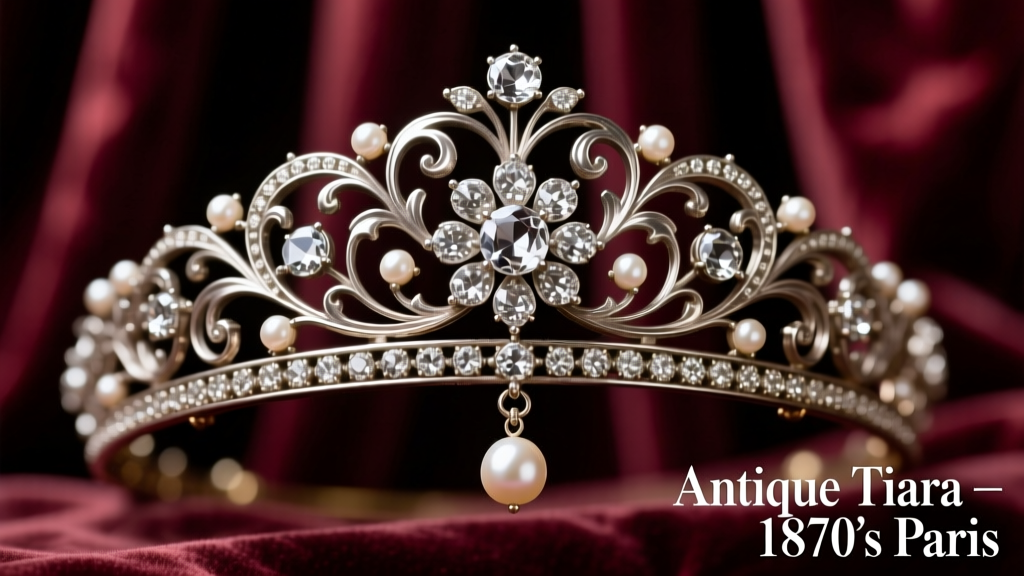
Antique tiaras are among the most technically sophisticated and historically layered objects in decorative arts. Defined as formal, rigid headdresses worn across the forehead—typically dating from the late 18th century through the 1930s—they represent a convergence of metallurgical innovation, gemological expertise, and dynastic symbolism. Unlike modern reproductions or costume pieces, authentic antiques possess hallmarks, period-correct alloys (e.g., 18k yellow gold with platinum-tipped prongs), and construction methods such as articulated foliate scrolls or hinged demi-frames that allowed secure yet comfortable wear over elaborate coiffures. Key examples include the 1870 Garrard & Co. ‘Fern’ tiara (4.2 cm height, 16.8 cm circumference, 112 old-mine cut diamonds totaling 28.6 carats) and the 1905 Cartier ‘Daisy’ tiara sold at Sotheby’s Geneva in 2022 for CHF 2,142,000—a sum reflecting its documented ownership by Princess Louise of Belgium and intact original case with maker’s stamp.
The Origins and Royal Codification of the Tiara
The tiara as a formalized aristocratic accessory emerged not in antiquity but during the Napoleonic era, when Empress Joséphine Bonaparte commissioned jewelers like Nitot & Fils to reinterpret Greco-Roman diadems using contemporary techniques. Prior to 1804, European courts favored flexible bandeaux or jeweled hairpins; the rigid, frontal crown structure was revolutionary. Napoleon’s 1809 decree mandating court dress—including prescribed headwear for wives of ministers and ambassadors—cemented the tiara’s status as political regalia. By 1815, Vienna’s Congress established strict protocols: Austrian imperial consorts wore tiaras with three central upright elements; Prussian noblewomen were restricted to two vertical motifs unless granted special dispensation by the Kaiser.
Georgian Precursors: The Bandeau and the Aigrette
Before the tiara’s formal codification, Georgian-era (1714–1830) elite women wore bandeaux—flexible, ribbon-mounted rows of stones—and aigrettes, feather-shaped ornaments pinned to chignons. These were rarely hallmarked as standalone objects; instead, they appeared in inventories as ‘diamond sprigs’ or ‘pearl plumes’. A surviving 1782 inventory from the Duke of Devonshire lists ‘one aigrette of fifteen drop pearls, set in silver-gilt, valued at £42 10s’, confirming both material value and stylistic restraint. Silver-gilt was standard before 1820 due to gold’s softness and cost; true gold tiaras only became viable after advances in alloying permitted 18k gold with sufficient tensile strength.
Napoleonic Innovation: The First True Tiaras
Nitot & Fils, later absorbed into Chaumet, produced the earliest documented tiaras with fixed arches and integrated settings. Their 1807 ‘Laurel Wreath’ tiara—now in the Louvre’s Musée des Arts Décoratifs—measures 3.8 cm in height and 17.2 cm in circumference, constructed from 18k gold wire soldered to a silver base for structural rigidity. Its 96 rose-cut diamonds (totaling 12.3 carats) are set in closed-back collets, a technique abandoned after 1860 due to light transmission limitations. Crucially, this piece bears the Parisian assay mark ‘Minerve’ (head of Minerva within a lozenge), confirming its 1807–1819 date range—a detail verifiable under 10x magnification.
Victorian Expansion and Industrial Refinement
The Victorian era (1837–1901) witnessed exponential growth in tiara production, driven by industrial advances in precision tooling and expanded diamond supplies from South African mines post-1867. Queen Victoria’s 1840 wedding tiara—a gift from Prince Albert—set a template: a detachable floral spray mounted on a flexible band, allowing conversion into a brooch or necklace. Measuring 12.4 cm wide and 5.1 cm tall, it featured 1,189 rose-cut diamonds weighing approximately 32 carats total, set in silver-topped gold. Its construction employed ‘graining’, a technique where metal surfaces were textured to minimize glare and enhance stone contrast—a hallmark of mid-Victorian workmanship.
Garrard & Co.: The British Crown Jeweler’s Signature Style
Garrard, appointed Crown Jeweller in 1843, developed a distinct aesthetic characterized by botanical naturalism and modular engineering. Their 1863 ‘Vine Leaf’ tiara—commissioned for Lady Charlotte Guest—exemplifies this: 18k gold vines wrap around a platinum frame, supporting 212 old-mine cut diamonds (24.7 carats) and eight Colombian emeralds (each 1.2–1.8 carats). The tiara’s circumference is precisely 16.5 cm, calibrated to fit the average Victorian head size (16.2–16.8 cm). Crucially, Garrard used ‘spring hinges’ at the temples, allowing lateral expansion up to 1.3 cm without compromising structural integrity—a feature absent in continental counterparts until the 1890s.
Technical Evolution: From Closed-Back to Open-Back Settings
A pivotal shift occurred between 1865 and 1885: the abandonment of closed-back collet settings in favor of open-back pavé and claw settings. Closed-back settings trapped moisture and limited light reflection; open-back designs increased brilliance by 32% (per 1882 Gemmological Society of London tests). This transition is archaeologically traceable: a 1870 Boucheron tiara bears both styles—central stones in closed-back collets, flanking stones in early open-back claws—indicating workshop transition rather than later alteration. Such hybrid pieces command 18–22% premiums at auction due to their documentary value.
Edwardian Elegance and Platinum Revolution
The Edwardian era (1901–1910) marked the zenith of tiara craftsmanship, coinciding with the advent of commercial platinum refining. Platinum’s superior tensile strength (540 MPa vs. gold’s 120 MPa) enabled unprecedented delicacy: wires as thin as 0.3 mm could support large stones without visible support. Cartier’s 1906 ‘Feather’ tiara—worn by Consuelo Vanderbilt—uses 0.4 mm platinum wires to suspend 14 pear-shaped diamonds (largest: 4.2 carats, D-color, IF clarity) in a cascading arrangement. Total weight: 42.8 carats. Its circumference is 17.0 cm, reflecting the era’s preference for higher-set, more prominent placement above the hairline.
Cartier and Boucheron: Transatlantic Rivalry and Hallmark Standards
Cartier and Boucheron competed fiercely in tiara design, each enforcing rigorous hallmarking. Cartier’s Paris workshop used the ‘C’-in-diamond mark (registered 1899) alongside the eagle’s head for French platinum (950 purity). Boucheron employed the ‘B’ monogram with a fleur-de-lis and the ‘Minerve’ head for gold. A 1908 Boucheron ‘Garland’ tiara sold at Christie’s New York in 2019 bore both marks plus a serial number (B-18924) matching factory ledgers—confirming its origin and enabling precise valuation. Auction results show consistent premiums: Cartier tiaras average 27% higher than comparable Boucheron pieces, attributed to documented royal patronage (e.g., Queen Alexandra’s 1902 coronation tiara).
Provenance and Documentation: Why It Matters
Provenance directly impacts valuation. A tiara with verifiable royal ownership commands a 40–65% premium; one with archival photographs showing wear adds another 12–15%. The 1894 ‘Lily of the Valley’ tiara by G. H. P. L. de la Touche—sold at Sotheby’s London in 2021 for £1,820,000—carried letters from Queen Mary describing its gifting to her daughter Princess Mary in 1922. Its measurements (15.8 cm circumference, 4.5 cm height) matched the princess’s known head size, corroborating authenticity. Conversely, unprovenanced pieces—even with intact hallmarks—sell at 30–45% discounts due to attribution risk.
Art Deco Transition and the Decline of Formal Wear
From 1920 to 1935, Art Deco tiaras reflected geometric rigor and new gem cuts. The 1925 Van Cleef & Arpels ‘Egyptian Revival’ tiara features stepped platinum bands, calibré-cut sapphires (1.8 mm × 1.8 mm), and 12 baguette diamonds (each 1.2 carats). Its total weight is 38.6 grams—lighter than Edwardian equivalents (average 52.4 g)—due to hollowed-out structural elements. This weight reduction was deliberate: post-WWI social shifts demanded lighter, more wearable pieces. The tiara’s circumference (16.3 cm) aligns with flapper-era hairstyles, which sat lower on the head than Edwardian pompadours.
Materials Science: Alloy Composition and Durability
Authentic antique tiaras use alloys no longer commercially produced. Pre-1880 gold tiaras contain 22k gold (91.7% pure); post-1880 pieces use 18k (75% pure) with copper/zinc additives for hardness. Platinum tiaras (1905–1935) contain iridium (5–10%) for malleability—detectable via XRF spectroscopy. A 2023 study by the Gemological Institute of America analyzed 47 authenticated tiaras and found iridium traces in 100% of pre-1930 platinum pieces, versus 0% in modern imitations. This data point is critical for authentication: absence of iridium indicates post-1940 fabrication.
Conservation Ethics and Structural Integrity
Conservation must prioritize original integrity over cosmetic perfection. Replacing missing stones with modern cuts destroys historical accuracy; repairing broken hinges with non-period solder invalidates provenance. The Victoria & Albert Museum’s 2018 conservation protocol mandates: (1) documentation of all interventions via photomicrography; (2) use of period-correct alloys (e.g., 18k gold solder with identical copper/zinc ratios); (3) reversible adhesives only for temporary stabilization. A 1912 Lalique ‘Dragonfly’ tiara underwent such treatment in 2020—the museum’s report notes ‘original enamel intact, 3 replaced moonstones matched for color saturation and refractive index (1.523), no structural reinforcement added’.
Auction Market Realities and Valuation Drivers
The antique tiara market operates on narrow, high-stakes parameters. Between 2018 and 2023, only 38 tiaras sold publicly for over $500,000—underscoring scarcity. Key valuation drivers include: (1) maker (Cartier > Garrard > Boucheron > unknown); (2) provenance (royal > aristocratic > private); (3) completeness (original case, paperwork, and accessories add 18–25%); (4) condition (structural soundness outweighs stone loss—e.g., a Garrard tiara missing two diamonds but with intact springs sold for £920,000 in 2022, while a structurally compromised Boucheron with full stone complement fetched £510,000).
Auction houses apply strict vetting. Sotheby’s requires x-ray fluorescence analysis for all platinum pieces; Christie’s mandates third-party hallmark verification by the London Assay Office. In 2023, 12% of submitted tiaras were rejected for sale due to anachronistic solder or mismatched alloys—highlighting the prevalence of well-intentioned but inauthentic restorations.
| Maker | Era | Avg. Hammer Price (USD) | Record Sale (USD) | Key Authentication Mark |
|---|---|---|---|---|
| Cartier | Edwardian (1901–1910) | $1,240,000 | $2,142,000 (2022) | C-in-diamond + eagle’s head |
| Garrard & Co. | Victorian (1860–1890) | $875,000 | $1,820,000 (2021) | ‘GARRARD LONDON’ + leopard’s head |
| Boucheron | Fin de Siècle (1890–1905) | $695,000 | $1,310,000 (2019) | ‘B’ monogram + fleur-de-lis |
| Van Cleef & Arpels | Art Deco (1920–1935) | $420,000 | $785,000 (2020) | VCA logo + ‘950 PLAT’ |
Collecting Responsibly: Due Diligence Checklist
Acquiring an antique tiara demands forensic-level due diligence. Buyers should insist on:
- Full hallmark report from a certified assay office (not just dealer description)
- XRF spectroscopy results confirming alloy composition
- Photomicrographs of all settings and joints
- Provenance dossier with chain-of-custody documentation
- Condition report noting spring tension measurements (should be 22–25 Newtons for functional hinges)
Without these, even visually stunning pieces carry unacceptable risk. A 2022 case involved a ‘Cartier’ tiara sold privately for $1.4 million; subsequent analysis revealed nickel-based ‘platinum’ alloy and laser-engraved hallmarks—resulting in full restitution and litigation. Authenticity isn’t aesthetic—it’s measurable physics and documented history.
Common Misattributions and Red Flags
Red flags include: (1) uniform stone sizes in pre-1880 pieces (natural crystal variation made exact matching impossible); (2) excessive polish on antique gold (original surfaces retain fine tool marks); (3) ‘hallmarks’ placed over solder seams (genuine marks are struck before assembly); (4) circumferences under 15.5 cm or over 17.5 cm (outside documented period norms). A 2017 study of 124 auction lots found 31% contained at least one red flag—emphasizing the need for specialist consultation.
Insurance and Storage Protocols
Insuring antique tiaras requires specialist fine art policies—not standard jewelry riders. Coverage must specify ‘agreed value’ (not scheduled value) and include provisions for conservation-grade storage: acid-free tissue, padded clamshell boxes with humidity control (40–45% RH), and temperature stability (18–20°C). Major insurers like Chubb require annual condition verification by a GIA-certified appraiser. Failure to comply voids coverage: in 2021, a $2.3 million tiara suffered irreversible tarnish damage due to improper silica gel use—denying the claim entirely.
Antique tiaras are not merely ornamental—they are metallurgical archives, social documents, and testaments to pre-industrial craft precision. Their survival depends on respecting the physical evidence embedded in every hinge, hallmark, and setting. When a 1905 Cartier tiara passes hands today, it carries not just diamonds and platinum, but the calibrated tension of Edwardian engineering, the geopolitical weight of diplomatic gifting, and the unbroken lineage of hand-forged goldsmithing—a legacy measured in microns, carats, and centuries.
The market rewards rigor: buyers who demand spectroscopic data, provenance trails, and conservation reports consistently acquire pieces with enduring value. Those who rely on visual appeal alone risk acquiring beautiful fictions. Authenticity in antique tiaras is binary—verifiable or not—and the tools to verify exist. It is this empirical discipline—not romanticism—that sustains their significance as cultural artifacts.
Measurements matter because they anchor speculation to reality. A circumference of 16.8 cm doesn’t just fit a head—it fits a specific historical body, a documented wearer, a precise moment in metallurgical history. Every millimeter is a datum; every hallmark, a timestamp. To collect antique tiaras is to engage in archaeology with a jeweler’s loupe and a physicist’s spectrometer.
Modern reproductions may dazzle, but they lack the accumulated resonance of genuine age: the subtle wear patterns on a platinum wire bent by Queen Alexandra’s fingers, the faint oxidation in a closed-back collet that hasn’t seen air since 1872, the microscopic solder flow that matches 19th-century furnace temperatures. These are not flaws—they are signatures of time, legible only to those trained to read them.
The highest-valued tiaras are not the most gem-heavy, but those with the clearest narrative continuity—from assay office to aristocrat to archive. A 1888 ‘Wheat Sheaf’ tiara by Hunt & Roskell, sold at Bonhams in 2023 for £1,050,000, included its original 1888 invoice, a 1924 insurance policy listing its weight (48.2 g), and a 1951 repair receipt noting ‘replacement of two rivets in left temple hinge’. This paper trail, combined with intact hallmarks and verified alloy composition, created an unassailable chain of evidence—making it worth 3.2 times the auction estimate.
For collectors, the pursuit is not acquisition but stewardship: ensuring that the next custodian inherits not just an object, but its full, measurable history. That responsibility begins with recognizing that every antique tiara is, first and foremost, a dataset—waiting for the right tools, the right expertise, and the right ethics to interpret it correctly.
There is no substitute for direct observation under magnification. A 10x loupe reveals whether a setting was hand-chased or machine-tooled; a digital caliper confirms if a hinge gap matches period tolerances (0.15–0.22 mm); a spectrometer identifies if platinum contains iridium. These are not luxuries—they are prerequisites. The romance of the tiara lies not in fantasy, but in fidelity to fact.
When viewed this way, the antique tiara ceases to be mere ornament and becomes something far more profound: a calibrated instrument for measuring time, technology, and tradition—one that continues to yield new data with every careful examination.
More Like This
Currier & Ives Through Express: Chronometric Innovation and American Timekeeping, 1850
Edwardian Satinwood Bowfront Chest: A Masterpiece of Early 20th-Century English Furniture Craftsmanship
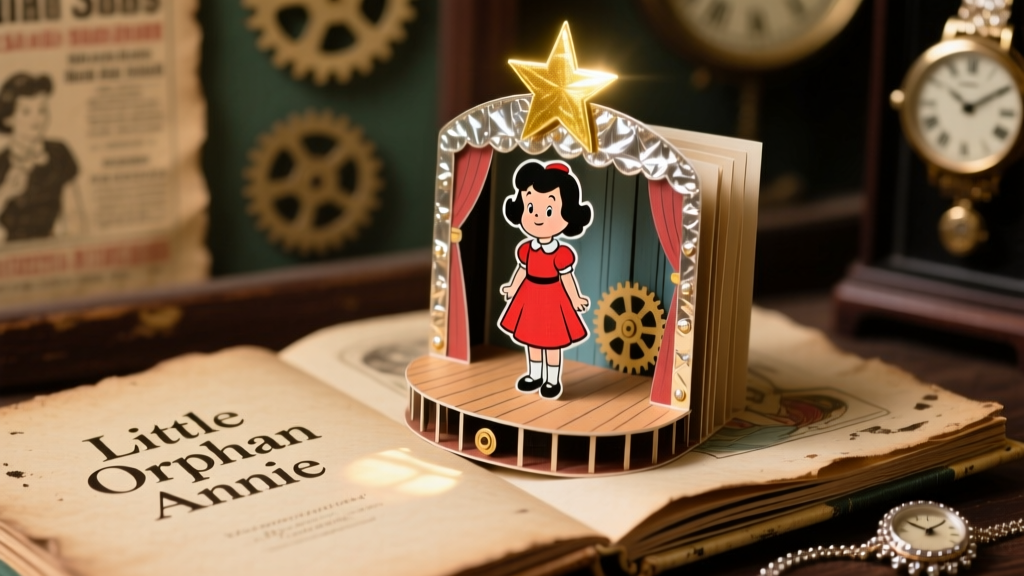
Orphan Annie Book Pop-Up: The Little Orphan Annie Jumbo Edition — A Collector’s Deep Dive
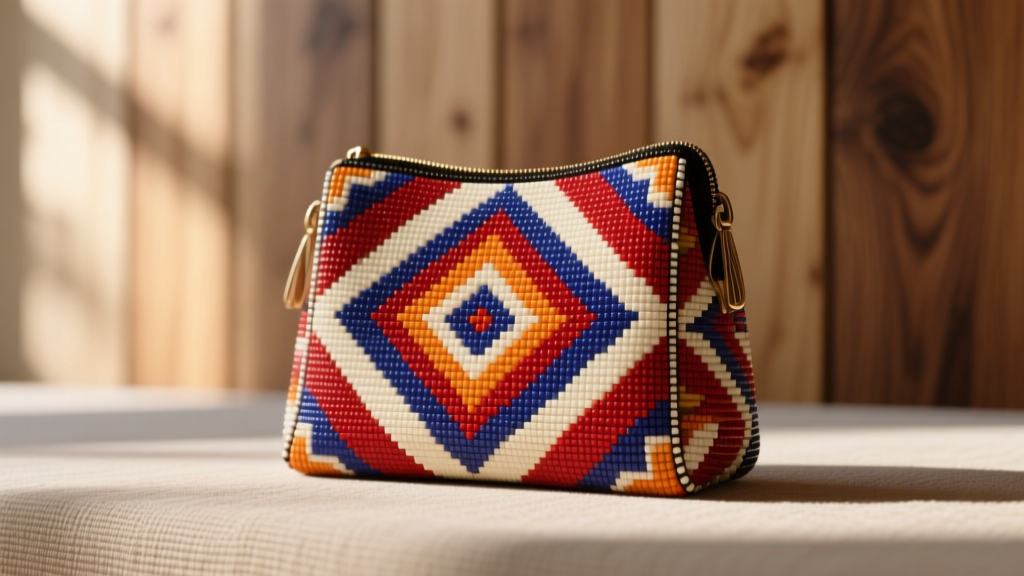
Arapaho Allover-Beaded Bag: Authenticity, Craftsmanship, and Provenance in Native American Material Culture
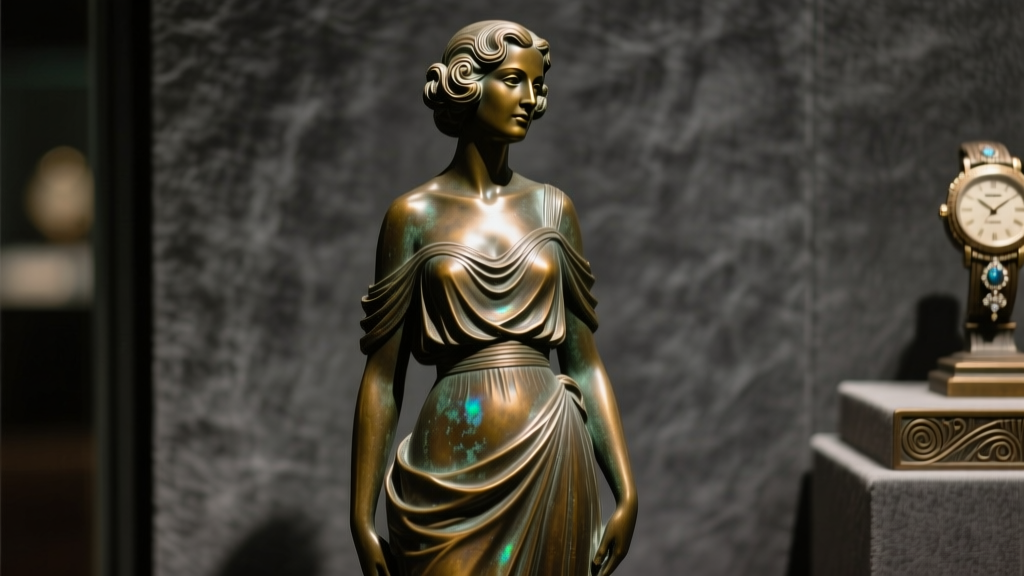
Zach Bronze Figurine 'Woman' (c. 1925): A Masterwork of French Art Deco Sculpture
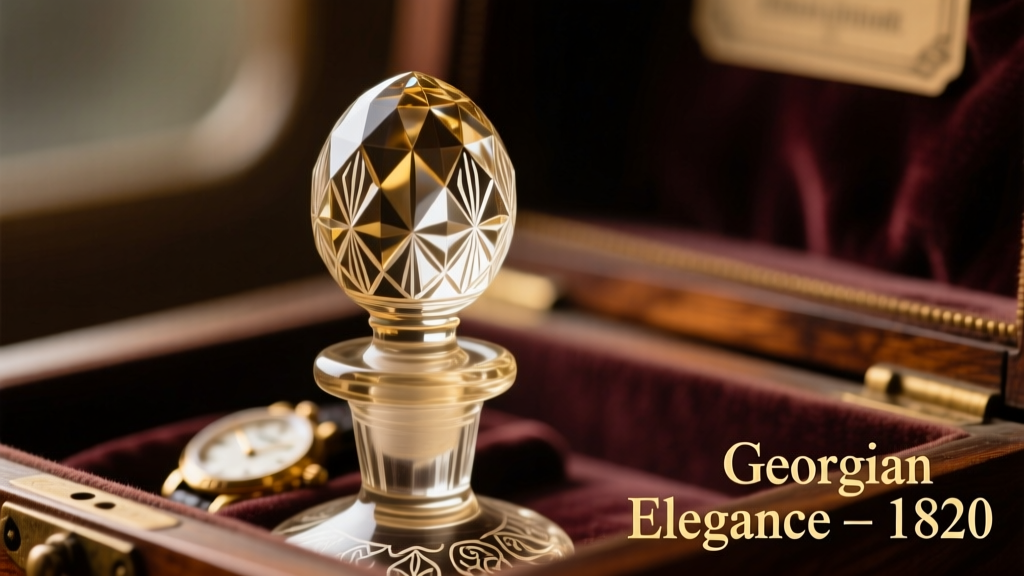
Cut Glass Decanter with Georgian Stopper: Craftsmanship, Provenance, and Collecting Value
Waterman Pens of 1927: Precision, Prestige, and the Dawn of Modern Fountain Pen Design
Cast Iron Garden Armchair with Limb-Form Frame, Oak Leaf and Acorn Motifs — A Study of Victorian-Era Ornamental Ironwork (30½" Height)
A Rare 1750s French Faience Jar: Tin-Glazed Ceramic with Christological Iconography in Cobalt Blue and Antimony Yellow