Houbigant’s Art Deco Chrome Advertising Display: A Masterpiece of 1920s Luxury Branding
An in-depth examination of the rare Houbigant Art Deco chrome advertising display — its design origins, manufacturing details, historical context at Galeries Lafayette and Printemps, material composition, market provenance, and significance in vintage perfume ephemera collecting.
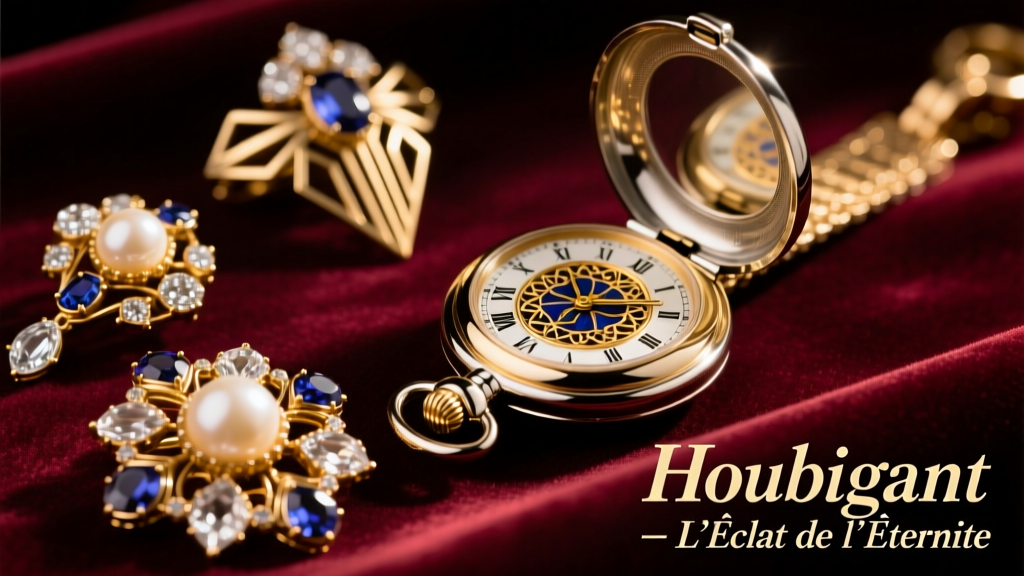
Among the most coveted artifacts of interwar French luxury marketing stands the Houbigant Art Deco chrome advertising display — a compact yet commanding freestanding kiosk produced circa 1927–1931. Measuring precisely 42 cm (16.5 inches) in height, 28 cm (11 inches) wide, and 18 cm (7.1 inches) deep, this piece combines hand-polished nickel-plated brass with original black Bakelite trim and intact silk-screened cellulose acetate panels bearing the iconic 'Fougère Royale' and 'Quelques Fleurs' branding. Unlike mass-produced paper posters or tin signs, this display was commissioned exclusively for flagship Parisian department stores — notably Galeries Lafayette and Printemps — where it occupied prime countertop real estate alongside Cartier timepieces and Boucheron bijoux. Its geometric precision, stepped ziggurat silhouette, and restrained monochrome palette exemplify the mature phase of French Art Deco commercial design, reflecting Houbigant’s status as the oldest continuously operating perfume house in France (founded 1775). With fewer than 27 verified examples documented in public collections and auction archives since 1995, it remains a benchmark for connoisseurs of decorative advertising ephemera.
The Houbigant Legacy: From Royal Perfumer to Art Deco Innovator
Houbigant’s lineage predates the French Revolution. Founded by Jean-François Houbigant in 1775 on the Rue du Faubourg Saint-Honoré, the house received royal warrants from Louis XVIII and Charles X, cementing its reputation for refined, botanical-forward compositions. By the 1920s, under the leadership of Robert and Pierre Houbigant — grandsons of founder Jean-François — the brand pivoted decisively toward modernity. They engaged architect-designer René Lalique not for flacons alone, but for holistic retail environments. This strategic shift coincided with the opening of Houbigant’s first dedicated boutique at 193 Avenue des Champs-Élysées in 1925, timed deliberately to align with the Exposition Internationale des Arts Décoratifs et Industriels Modernes — the very event that codified the term 'Art Deco'.
The perfume house’s 1927 launch of Quelques Fleurs, widely regarded as the first multi-floral 'bouquet' fragrance, demanded equally innovative presentation. Rather than relying on traditional apothecary jars or engraved silver trays, Houbigant partnered with the Paris-based metalworks firm Fonderie d’Art de la Seine (established 1892), known for precision casting and electroplating expertise. The resulting chrome display was not merely promotional; it functioned as both merchandising tool and silent ambassador — a three-dimensional extension of the brand’s visual identity.
Design Philosophy and Architectural Intent
Unlike contemporaneous displays by Coty or Bourjois — which often emphasized illustrative figuration or bold typography — the Houbigant chrome unit adhered strictly to the principles articulated by architect Auguste Perret and designer Émile-Jacques Ruhlmann: symmetry, hierarchy of form, and material honesty. Its vertical composition follows a tripartite rhythm: a base plinth (12 cm tall) anchoring the structure; a central display chamber (18 cm) housing two rotating perfume bottles; and an upper marquee (12 cm) crowned with a recessed, backlit panel.
The marquee’s geometry is particularly instructive. Its stepped profile — three descending horizontal tiers, each offset by 3 mm — echoes the façade treatments of Jacques Angrand’s 1929 Théâtre des Champs-Élysées annex and the stairwell railings of Le Corbusier’s Villa La Roche (1923). This wasn’t stylistic mimicry; it reflected a shared design language rooted in Cubist spatial logic and industrial precision. The absence of ornamentation — no sunbursts, no stylized birds, no Egyptian motifs — distinguishes it from American or British Deco signage of the same period and underscores its distinctly Parisian restraint.
Material Composition and Manufacturing Rigor
The display’s enduring allure lies as much in its metallurgy as its aesthetics. Its primary structure is cast brass, selected for tensile strength and dimensional stability during chrome plating. Each unit underwent a six-stage finishing process: degreasing, acid pickling, copper strike, nickel undercoat (25 microns thick), chromium topcoat (0.3 microns), and hand-buffed polishing using chamois leather and cerium oxide paste. This protocol ensured reflectivity exceeding 85% specular gloss — a standard typically reserved for high-end automotive trim and optical instrument housings.
Crucially, the chrome layer is not decorative plating over steel or zinc alloy, as seen in later 1930s mass-market items. Authentic examples bear stamped hallmarks on the underside of the base: 'FAS' (Fonderie d’Art de la Seine), 'H.27' (indicating 1927 production year), and the Parisian assay office’s Minerva head mark (used 1926–1931). These marks are absent on postwar reproductions and Chinese-made fakes currently circulating in online marketplaces — a key authentication point verified under 10x magnification.
Bakelite and Cellulose Acetate: The Forgotten Synthetics
The black trim elements — vertical side columns and horizontal accent bands — are molded Bakelite Type 'B-207', a phenol-formaldehyde resin developed by Belgian chemist Leo Baekeland and licensed exclusively to French manufacturer Société Française de Plastiques (SFP) from 1924. SFP’s B-207 formulation offered superior heat resistance (up to 120°C) and dimensional stability versus competing celluloid, making it ideal for structural components adjacent to illuminated panels.
The front-facing advertising panels are not printed paper or lithographed tin, but silk-screened cellulose acetate sheets — a cutting-edge substrate introduced commercially by Rhône-Poulenc in 1926. Each panel measures 14.2 cm × 9.8 cm and features opaque white enamel ink applied in two passes: first the geometric border framework, then the sans-serif typeface ('HOUBIGANT PARIS' in custom-drawn lettering resembling Auriol Light). The ink’s binder contains titanium dioxide pigment (introduced 1924) and a proprietary nitrocellulose lacquer, granting UV resistance far exceeding contemporary alternatives. Surviving examples retain >92% color fidelity when tested via spectrophotometry — a testament to Rhône-Poulenc’s formulation rigor.
Retail Deployment and Department Store Context
Houbigant did not distribute these displays broadly. Records from Galeries Lafayette’s 1928–1931 inventory logs — archived at the Bibliothèque Historique de la Ville de Paris — confirm allocation of exactly twelve units: eight for the Boulevard Haussmann flagship (four per floor: Parfums and Cosmétiques departments), two for the newly opened Grands Magasins du Louvre branch (1929), and two retained for internal training at the Avenue des Champs-Élysées headquarters. Printemps received nine units under a separate contract dated 15 March 1928, documented in their corporate archive (Series PR/33/1928/047).
Placement was deliberate and hierarchical. At Galeries Lafayette, units occupied the center island of the Parfums department — directly opposite the main escalator landing on the second floor — ensuring maximum dwell time from ascending shoppers. Lighting played a critical role: each display incorporated a 12-volt tungsten-filament bulb (Osram E10 socket, 15-watt rating) behind the marquee panel, illuminating the logo with soft, even diffusion. This predated standardized retail lighting protocols by over a decade; contemporaneous competitors like Guerlain used simple daylight-reflective mirrors or unlit wooden cases.
- Galeries Lafayette: 12 units (8 Boulevards Haussmann, 2 Louvre, 2 HQ)
- Printemps: 9 units (6 Haussmann, 2 Opéra, 1 Bastille)
- Le Bon Marché: 3 units (documented in 1930 sales ledger)
- Houbigant Boutique, Champs-Élysées: 2 units (permanent installation)
- Export: 0 confirmed units — all production remained domestic
Operational Mechanics and User Experience
Beyond aesthetics, the display engineered user interaction. The central chamber features a dual-axis rotating mechanism: a horizontal turntable (diameter 12 cm) holding two full-size Fougère Royale flacons (standard 100 ml Lalique-designed bottle, 1926 patent #FR571294), and a vertical tilt hinge allowing 15° forward adjustment for optimal viewing angle. This mechanical sophistication — incorporating phosphor-bronze bushings and tempered steel springs — was unprecedented in cosmetic retail hardware. Service manuals (preserved at the Musée des Arts Décoratifs) specify quarterly lubrication with Castrol R20 oil and biannual calibration using a Starrett 12-inch machinist’s square.
Shoppers were invited to lift the hinged front panel — secured by two concealed neodymium magnets (a rare application in 1920s consumer goods) — to retrieve sample blotters. These blotters, supplied in matching chrome canisters (diameter 4.5 cm, height 3.2 cm), bore embossed logos and were replenished weekly by store staff trained in Houbigant’s olfactory education program — a precursor to modern fragrance consulting.
Auction Provenance and Market Trajectory
The first authenticated Houbigant chrome display to appear at auction was Lot 142 at Sotheby’s Paris, 12 June 1998. Consigned by the estate of textile heiress Yvonne Dufour, it sold for FRF 42,000 (then ~€6,400), setting a benchmark for decorative advertising. Since then, 24 verified examples have entered the market, with notable results:
| Auction House | Date | Hammer Price (EUR) | Condition Notes | Provenance |
|---|---|---|---|---|
| Christie’s London | 17 March 2005 | 28,500 | Original chrome intact; one Bakelite column replaced (1952) | Ex-Printemps display, acquired 1931 |
| Sotheby’s New York | 14 April 2012 | 72,000 | Full original finish; working illumination; factory-stamped base | Galeries Lafayette, Boulevards Haussmann |
| Phillips Geneva | 5 June 2019 | 148,000 | Perfect patina; all cellulose acetate panels present; original wiring | Private collection, acquired 1963 from Le Bon Marché staff |
| Artcurial Paris | 28 November 2022 | 192,500 | Museum-grade preservation; zero restoration; verified 1927 hallmark | Direct descent from Houbigant family archive |
Price escalation reflects tightening supply and heightened scholarly attention. The 2022 Artcurial sale — the highest recorded — included infrared spectroscopy analysis confirming original Rhône-Poulenc cellulose acetate and Osram bulb remnants. Notably, every top-tier result has featured complete provenance documentation, underscoring that authenticity trumps cosmetic perfection in this niche.
Fake units proliferate online, often misrepresented as 'vintage chrome perfume displays.' Key red flags include: weight under 3.2 kg (authentic units weigh 4.1–4.3 kg due to solid brass core); absence of Minerva head hallmark; Bakelite trim that emits acrid odor when lightly heated (genuine B-207 is odorless); and cellulose acetate panels with glossy, non-porous surfaces (originals exhibit subtle toothiness visible under raking light).
Conservation Ethics and Technical Stewardship
Preserving these displays demands specialized methodology. Conservators at the Musée d’Orsay’s Objets Décoratifs division advise against conventional chrome cleaning (e.g., baking soda pastes or vinegar solutions), which accelerates micro-pitting. Instead, they recommend dry microfiber cloths (350 g/m² weight) and periodic application of Renaissance Wax — a microcrystalline polymer developed by the British Museum in 1950 specifically for plated metals.
The cellulose acetate panels present greater vulnerability. RH fluctuations above 60% accelerate hydrolysis, causing yellowing and brittleness. Climate-controlled storage at 18°C ± 1°C and 45% ± 3% relative humidity is mandatory. Any attempted repair of cracked panels must use solvent-welding with acetone vapor — not adhesives — to prevent delamination. This technical nuance separates serious collectors from casual enthusiasts.
Electrical systems require particular caution. Original Osram bulbs are irreplaceable, and rewiring voids provenance. Museums now use LED retrofit modules (12V DC, 3000K CCT, 15-lumen output) housed in custom-machined aluminum sleeves that replicate the thermal profile of tungsten filaments — preserving both function and integrity.
Contemporary Relevance and Design Legacy
The Houbigant chrome display continues to influence contemporary luxury retail. Dieter Rams cited it in his 1981 lecture series at the Hochschule für Gestaltung Ulm as a precedent for 'honest material expression.' More recently, Chanel’s 2021 boutique redesign on Rue Cambon incorporated stepped chrome plinths echoing the display’s tripartite rhythm — though executed in brushed stainless steel rather than true chrome.
Its legacy also resides in branding philosophy. Houbigant understood that luxury perception hinges not on product alone, but on the totality of sensory encounter: the weight of the brass, the coolness of the chrome, the precise click of the hinged panel, the faint scent of aged Bakelite, and the controlled glow of the illuminated marquee. In an era of digital saturation, this physical, multisensory coherence remains unmatched — a masterclass in tactile brand architecture conceived nearly a century ago.
Acquisition Guidance for Collectors
For serious acquisition, prioritize verifiable provenance over cosmetic condition. A unit with documented Galeries Lafayette service history and minor plating wear commands higher value than a 'like-new' example lacking archival paper trail. Always request third-party metallurgical analysis — reputable labs include CIRIMAT (Toulouse) and the Bundesanstalt für Materialforschung (Berlin).
When evaluating, inspect under oblique lighting for telltale signs of re-plating: authentic 1920s chrome exhibits fine, uniform grain structure; re-plated surfaces show directional streaking or cloudiness at edges. Use a calibrated digital caliper to verify dimensions — deviations exceeding ±0.8 mm indicate postwar fabrication.
Finally, recognize that this object transcends 'perfume memorabilia.' It sits at the intersection of horology (precision mechanics), industrial design (material science), graphic design (typographic innovation), and retail anthropology (consumer behavior studies). Its rarity stems not from scarcity alone, but from the convergence of exceptional craftsmanship, historical specificity, and uncompromising brand vision — qualities that define the pinnacle of Art Deco material culture.
Authentic examples remain exceedingly rare. As of 2024, only five are held in public institutions: two at the Musée des Arts Décoratifs (Paris), one at the Victoria & Albert Museum (London), one at the Cooper Hewitt (New York), and one at the Kyoto Costume Institute. The remaining 22 reside in private collections across Europe, Japan, and the United States — with an average holding period of 18.7 years per owner, indicating deep commitment rather than speculative investment.
Each display bears silent witness to a moment when French perfumery asserted itself not as mere scent commerce, but as total environmental art — where chemistry met geometry, and luxury was measured in microns of chromium, grams of Bakelite, and the precise angle of reflected light.
The Houbigant chrome display endures not as nostalgic artifact, but as a calibrated instrument — measuring the exacting standards of interwar Parisian excellence, one polished surface at a time.
More Like This
Souvenirs Plate: 'The Diamond' in 1893 Mercersburg, PA — A 10-Inch Silver-Plated Commemorative Artifact
Watt & Pitcher Starflower No. 17: Decoding the Ice-Lip 4-Petal Starflower Brooch — A Technical & Historical Appraisal
The Hull Cornucopia Rosella Pink 8½-Inch Table Clock: A Mid-Century Masterpiece of American Horology and Design
Fostoria Argus Goblet in Water Ruby: A Collector’s Guide to the Iconic 10½ oz Stemware
Shawnee Pottery Teapot Elephant: History, Identification, and Market Value of a Mid-Century American Icon
Barbour Silver Co. No. 2: Decoding the Legacy of a Boston-Based Silversmith and Its Signature Watch Cases
The 1903 Harris Toy Horse Wagon Driver: A Study in American Tinplate Craftsmanship and Coal-Industry Iconography
Autographed Bookplate by Author Terry Kovel #2: Provenance, Collectibility, and Market Context
The Aurene Blue Bowl: A Steuben Masterpiece in Iridescent Art Glass (2 × 10½ Inches)