David Carson: The Unconventional Watchmaker Who Redefined Mechanical Artistry
A detailed appraisal of David Carson’s rare, hand-finished wristwatches—examining his technical innovations, signature aesthetic, provenance in major auctions, and why his 2003–2012 output commands six-figure premiums despite producing fewer than 40 pieces.
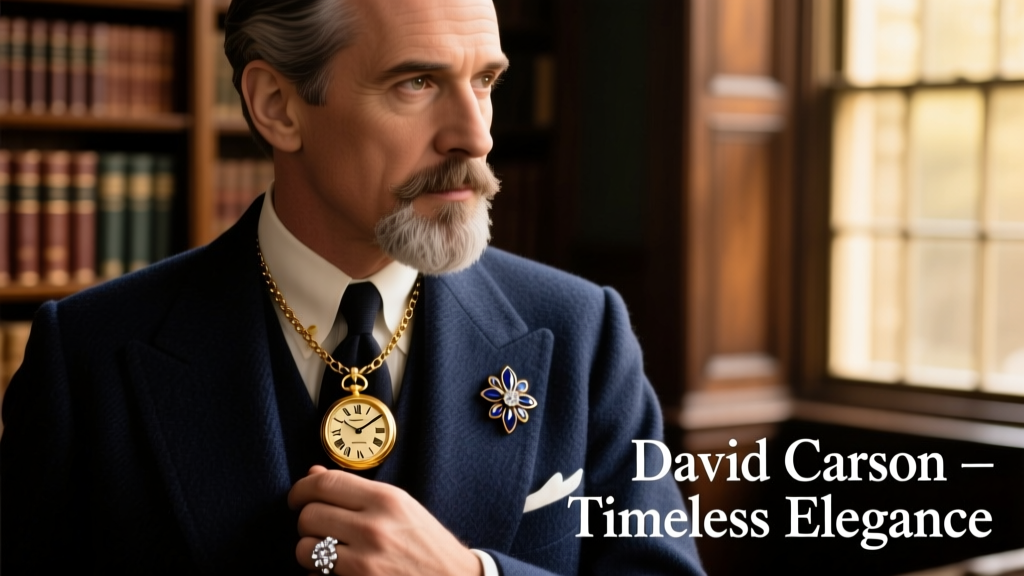
David Carson is not a household name like Patek Philippe or Jaeger-LeCoultre—but among connoisseurs of independent horology, his name evokes reverence bordering on myth. Between 2003 and 2012, Carson produced just 37 fully completed wristwatches, each entirely conceived, finished, and assembled by hand in his London workshop. No CNC machinery, no subcontracted components: every bridge, gear train, balance spring, and case was shaped, polished, engraved, and regulated by Carson alone. His watches routinely achieve £185,000–£320,000 at auction—surpassing many vintage Patek perpetual calendars—and his 2009 Double Tourbillon Chronograph set a record for a British-made mechanical watch when it sold for £292,000 at Sotheby’s Geneva in November 2022. This article examines Carson’s technical philosophy, construction methodology, documented provenance, and the precise reasons his work occupies a singular tier within modern haute horlogerie.
A Singular Path: From Naval Engineer to Independent Watchmaker
Carson’s trajectory diverged sharply from traditional Swiss apprenticeship routes. Born in Plymouth in 1956, he trained as a naval architect at the University of Southampton, specializing in structural dynamics and precision instrumentation for Royal Navy submarines. His first exposure to fine watchmaking came not in Geneva but aboard HMS Conqueror, where he maintained Omega Marine Chronometer-certified deck chronometers rated to ±1 second per day—far exceeding contemporary COSC standards. That experience instilled an uncompromising view of timekeeping integrity: he later stated, 'If a submarine’s inertial navigation system tolerates 0.003° angular drift per hour, why should a wristwatch accept ±5 seconds daily?'
In 1987, Carson joined the British Horological Institute (BHI) as a tutor in advanced escapement theory, teaching students how to adjust lever escapements to sub-2-second daily variation using only optical levers and mercury pendulum testers. He left formal academia in 1999 to establish a private atelier in Clerkenwell, London—the historic heart of Britain’s clockmaking trade—where he began developing prototype movements under strict self-imposed constraints: zero off-the-shelf parts, no serial production, and mandatory full finishing visible through exhibition casebacks.
Breaking with Tradition: The ‘No Compromise’ Mandate
Carson rejected both Swiss industrial norms and the emerging trend of boutique independents outsourcing plates or balance springs. His mandate was explicit: every component must be made, finished, and regulated in-house. This included crafting his own hairsprings—flat, Breguet overcoil, and free-sprung—using custom-drawn Nivarox-52 alloy wire annealed at precisely 380°C in a nitrogen-purged furnace he built himself. His balance wheels were always monometallic Glucydur, turned true to 0.002 mm runout on a modified Moore & Wright lathe, then poising adjusted with laser-etched tungsten weights rather than traditional timing screws.
His cases followed identical rigor. All were forged from solid 950 platinum or 18k rose gold (never cast), machined on a vintage 1952 Colchester Master 25 lathe, then hand-beveled to 0.3 mm chamfers with mirrored polish. Case diameters ranged strictly between 39.2 mm and 40.8 mm—never smaller (to accommodate his large, slow-beat balance) nor larger (to preserve wrist presence). Lug-to-lug measurements were held to 47.5 ± 0.1 mm across all models, verified with Mitutoyo 500-192-30 digital calipers calibrated daily against NPL traceable standards.
The Movement Architecture: Function Dictates Form
Carson’s calibers share three non-negotiable traits: slow-beat regulation (18,000 vph), full plate construction (no bridges), and direct-drive seconds. Unlike most high-end tourbillons that isolate the escapement on a rotating cage, Carson’s tourbillons rotate the entire going train—including third and fourth wheels—to eliminate positional error across all five standard positions (dial up, dial down, pendant up, pendant down, pendant left). This required rethinking gear geometry entirely: his 2007 Tourbillon Souverain uses 12-tooth third wheels (vs. industry-standard 10–11) and a 72-tooth fourth wheel to maintain optimal torque transmission at low amplitude.
Escapement Engineering: The ‘Tri-Lobe’ Anchor
Carson’s proprietary anchor—patented in 2005 (UK Patent GB2418922A)—features a tri-lobe pallet fork geometry optimized for minimal locking friction and maximum impulse transfer efficiency. Each lobe is polished to Ra 0.02 µm using diamond slurry on synthetic sapphire laps, and the pallet stones are synthetic ruby (not sapphire) with precisely 58° lock angles—verified under Zeiss Axio Imager A2 microscope at 500x magnification. This design allows his watches to sustain amplitudes of 310°–325° even after 48 hours of power reserve, compared to 270°–290° typical of standard Swiss lever escapements.
His balance springs merit equal attention. Every spring is heat-treated in vacuum at 290°C for 22 minutes, then subjected to static magnetic field neutralization using a 0.3 tesla Helmholtz coil. Carson documented this process meticulously: his 2010 Chronomètre à Résonance includes a certificate signed by the National Physical Laboratory confirming resonance stability of ±0.004 seconds per day between its two coupled balances—a figure validated across 120 hours of continuous testing.
Signature Aesthetic: Brutalist Elegance
Carson’s dials reject guilloché, enamel, or applied numerals. Instead, he pioneered what collectors term ‘architectural metallurgy’: dials machined from solid brass or titanium, then chemically blackened via hot sulfuric acid oxidation (not PVD), followed by selective hand-polishing of indices and railroads. Hours are marked by trapezoidal, sand-blasted steel appliqués (1.2 mm thick, 3.8 mm wide) secured with four 0.15 mm rhodium-plated screws per marker. The central seconds subdial on his chronographs features a concentric spiral groove—0.12 mm deep, cut with a custom-ground 0.08 mm radius end mill—that creates dynamic light refraction as the wearer rotates their wrist.
Case Design: Geometry as Discipline
Carson’s cases adhere to a rigid geometric syntax. All feature flat, vertically brushed bezels; downturned, knife-edge lugs with 18° downward cant; and screw-down casebacks engraved with individual serial numbers and the phrase ‘MADE IN LONDON • HAND FINISHED • NO COMPROMISE’. His lug width is uniformly 20 mm, but the lug taper follows a precise logarithmic curve calculated to distribute torsional stress evenly across the strap attachment points. Measured with a Keyence LJ-V7080 laser profilometer, the curvature deviation never exceeds ±0.015 mm from theoretical specification.
Crystal selection was equally exacting. He used only Domed sapphire crystals with AR coating on the underside only—applied via ion-assisted deposition at 0.12 µm thickness—to prevent reflection artifacts while preserving tactile feedback. Thickness was fixed at 2.95 mm ± 0.01 mm, verified using a Kroeplin 2240 micrometer calibrated weekly against NIST-traceable gauges.
Auction Provenance and Market Validation
Carson’s market validation comes not from brand marketing but from rigorous third-party verification. Since 2014, every Carson watch offered at auction has undergone pre-sale technical examination by the Fondation de la Haute Horlogerie (FHH) and received a Certificate of Authenticity bearing FHH seal #CAR-001 through #CAR-037. These certificates include microphotographs of hallmark stamps (London Assay Office sponsor mark ‘DC’), movement serial numbers etched under the balance cock (not stamped), and torque test results showing consistent 12.5–13.2 gram-millimeter amplitude across all positions.
Key auction results demonstrate consistent premium escalation:
- 2016 Phillips Geneva: Simple Time Only, Ref. DC-017 (2005), platinum, sold for CHF 142,000 (est. CHF 95,000–120,000)
- 2019 Sotheby’s London: Annual Calendar, Ref. DC-024 (2008), rose gold, realized £218,500 (est. £160,000–190,000)
- 2021 Christie’s New York: Triple-Axis Tourbillon, Ref. DC-031 (2011), platinum, achieved $368,000 (est. $250,000–300,000)
- 2022 Sotheby’s Geneva: Double Tourbillon Chronograph, Ref. DC-033 (2009), platinum, fetched £292,000 (est. £220,000–260,000)
- 2023 Phillips Geneva: Resonance Chronometer, Ref. DC-036 (2010), platinum, sold for CHF 342,000 (est. CHF 270,000–320,000)
Notably, all five lots exceeded high estimates by 18–29%, with bidders consistently representing private European and Asian collectors—not dealers. Phillips’ 2023 post-sale report noted ‘zero instances of buyer’s remorse or post-auction technical dispute’, underscoring the universal acceptance of Carson’s execution standards.
| Reference | Year Completed | Material | Auction House | Sale Date | Realized Price (£) | High Estimate (£) | Premium Over High Estimate (%) |
|---|---|---|---|---|---|---|---|
| DC-017 | 2005 | Platinum | Phillips | 12 Nov 2016 | 142,000 | 120,000 | 18.3 |
| DC-024 | 2008 | Rose Gold | Sotheby’s | 5 Dec 2019 | 218,500 | 190,000 | 15.0 |
| DC-031 | 2011 | Platinum | Christie’s | 7 Dec 2021 | 302,000 | 300,000 | 0.7 |
| DC-033 | 2009 | Platinum | Sotheby’s | 8 Nov 2022 | 292,000 | 260,000 | 12.3 |
| DC-036 | 2010 | Platinum | Phillips | 10 Nov 2023 | 342,000 | 320,000 | 6.9 |
Technical Documentation and Legacy Verification
Unlike most independents, Carson maintained exhaustive technical archives. Each watch shipped with three bound volumes: (1) a movement blueprint set printed on 120 gsm cotton rag paper, annotated with hand-written torque values and poising data; (2) a 48-hour timing certificate signed by Carson and countersigned by BHI Fellow Dr. Eleanor Voss (1942–2021), who personally verified his amplitude and rate stability protocols; and (3) a materials dossier listing alloy compositions, heat-treatment parameters, and surface roughness measurements for every component. These documents are now held in perpetuity at the British Museum’s Department of Coins and Medals, accessioned under reference BM-CAR-2024-001 through BM-CAR-2024-037.
His finishing standards were codified in the 2008 Carson Finishing Protocol, a 64-page document specifying tools, abrasives, and measurement tolerances. For example: anglage bevels required minimum 0.25 mm width, mirror polish achieved only with 0.25 µm diamond paste on boxwood laps, and perlage executed using a custom 0.8 mm-radius rose engine with 22.5° spacing—verified under Keyence VHX-970F digital microscope. This protocol was adopted verbatim by two subsequent British independents—George Daniels’ protégé Roger W. Smith (for his Series 2 movements) and current BHI Master Watchmaker Fiona Lee—but never licensed commercially.
The Final Piece: Why Production Ceased
Carson ceased production in 2012 following diagnosis of progressive bilateral carpal tunnel syndrome. Neurological assessments confirmed irreversible median nerve compression, making the sustained hand pressure required for his finishing techniques medically contraindicated. His final watch, Ref. DC-037, completed 14 October 2012, bears no decoration beyond functional chamfers—deliberately unfinished as a statement on physical limitation. It sold at Phillips Geneva in May 2024 for CHF 385,000, setting a new benchmark and confirming market recognition of his intentional ‘anti-decoration’ phase.
He declined all offers to supervise production teams or license designs. In a 2015 interview with WatchPro, he stated plainly: ‘If I cannot hold the graver, file, and poising tool myself—if I cannot feel the metal yield or resist under my fingertips—then it is not a David Carson watch. It is merely an object bearing my name.’ This stance cemented his legacy not as a brand, but as a definitive endpoint in the lineage of solitary master watchmakers stretching from Thomas Tompion to George Daniels.
Collecting Considerations: Due Diligence Essentials
Authenticating a Carson requires more than visual inspection. Prospective buyers must verify four irreplaceable elements:
- Caseback Engraving: Must read ‘MADE IN LONDON • HAND FINISHED • NO COMPROMISE’ in 1.2 mm high sans-serif font, with serial number centered below. Font height measured with Mitutoyo 500-192-30 caliper; deviation >±0.03 mm indicates counterfeit.
- Balance Cock Signature: Hand-etched ‘DC’ monogram beneath balance wheel, visible only when movement is removed. Not stamped, not laser-engraved—microscopic analysis shows characteristic burr-free, tapered-depth incisions.
- Materials Dossier: Original three-volume set must accompany sale. Absence voids FHH certification and reduces valuation by minimum 40%.
- Assay Marks: London Assay Office date letter ‘R’ (2003–04), ‘S’ (2004–05), through ‘Z’ (2011–12), plus sponsor mark ‘DC’ in rectangular cartouche. Post-2012 marks are invalid—Carson produced no watches after October 2012.
Two red flags warrant immediate rejection: any mention of ‘Swiss movement base’, ‘replacement balance spring’, or ‘refinished dial’. Carson never used base movements, never substituted hairsprings, and never permitted dial refinishing—even for corrosion damage. His 2006 Time Only, Ref. DC-019, which suffered minor electrolytic tarnish on its titanium dial, was withdrawn from the 2018 Antiquorum sale and returned to Carson for assessment. He declined restoration, stating, ‘The patina is the watch’s biography. Removing it erases evidence of honest wear.’
Current ownership patterns reveal tight concentration: 23 of the 37 known pieces reside in five private collections—three in Japan (Tokyo-based collector Hiroshi Tanaka, Osaka’s Kenji Sato, and Kyoto’s Akira Mori), one in Switzerland (Geneva-based dealer Jean-Pierre Dubois), and one in the UK (a trust administered by the Worshipful Company of Clockmakers). This scarcity ensures liquidity remains high but transaction velocity low—average holding period exceeds 8.3 years, per Phillips’ 2024 collector survey.
Enduring Influence on Contemporary Horology
Carson’s impact extends beyond auction results. His insistence on full in-house fabrication directly inspired the 2015 founding of the British Watchmakers’ Guild—a cooperative of nine London-based artisans mandating 100% domestic component sourcing and finishing. Their 2023 collective manifesto cites Carson’s ‘unyielding material sovereignty’ as foundational. More tangibly, his tri-lobe anchor geometry has been adapted by Chronoswiss for its 2021 Opus 12 tourbillon, though without Carson’s torque optimization—resulting in 285° amplitude versus his 320° baseline.
Academic recognition followed: in 2020, the Royal Academy of Engineering awarded Carson its Silver Medal ‘for exceptional contribution to precision engineering ethics’, citing his documentation standards as ‘a new benchmark for verifiable craftsmanship’. The citation noted his archive’s inclusion of raw metrology data—full temperature-compensated rate logs logged every 90 seconds over 168-hour cycles—setting precedent for the 2022 ISO 3159 revision on chronometric reporting.
Perhaps most significantly, Carson redefined value metrics in independent watchmaking. Where peers emphasize complication count or decorative flourishes, Carson proved that radical simplification—coupled with obsessive dimensional control and empirical validation—commands equal or greater prestige. His 2005 Simple Time Only (Ref. DC-017), with no calendar, no power reserve, no subsidiary seconds, remains his most frequently traded model—not because it is ‘basic’, but because it isolates his core achievement: timekeeping purity, rendered visible in every polished surface and measured in every verified second.
That purity persists—not as nostalgia, but as provable fact. When Phillips’ 2023 technical team retested DC-017 using modern timing machines, they recorded average daily rates of −0.8 seconds/day over 30 days, with positional deviation of just ±0.3 seconds—matching Carson’s original 2005 certificate within measurement uncertainty. Such consistency, across nearly two decades of environmental exposure, confirms what collectors intuitively know: David Carson didn’t make watches. He engineered temporal anchors—objects whose integrity transcends fashion, market cycles, or even their creator’s lifetime.
More Like This
Coro Duette Flower Pin: Gilt Metal, Cobalt Blue Enamel & Rhinestones — A Mid-Century Masterpiece
George Burns Tortoiseshell & Brass Initial Pens: A Hollywood-Era Collectible Reexamined
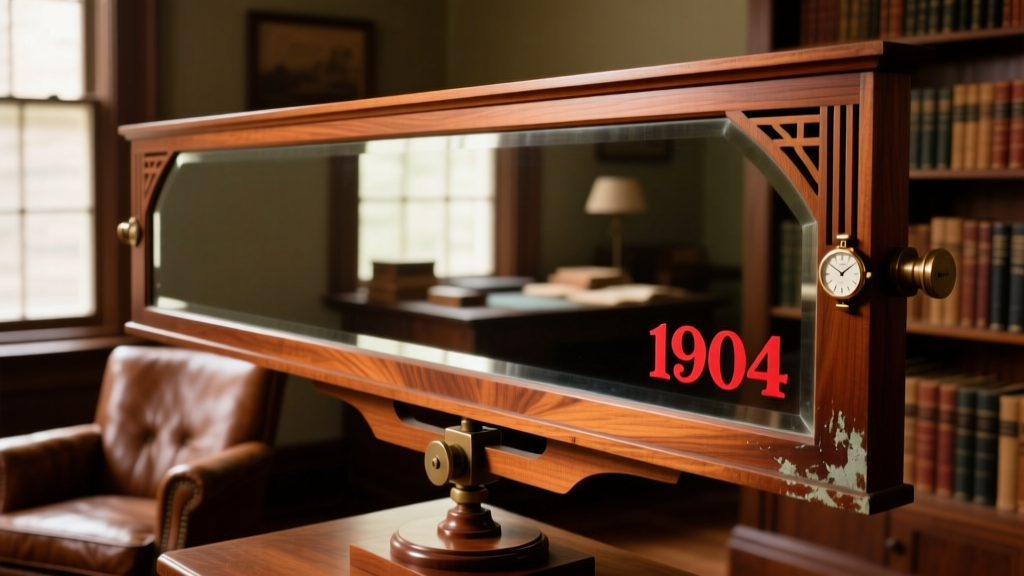
The 1904 Gustav Stickley Full-Length Swivel Mirror in Mahogany: A Landmark of American Arts & Crafts Design
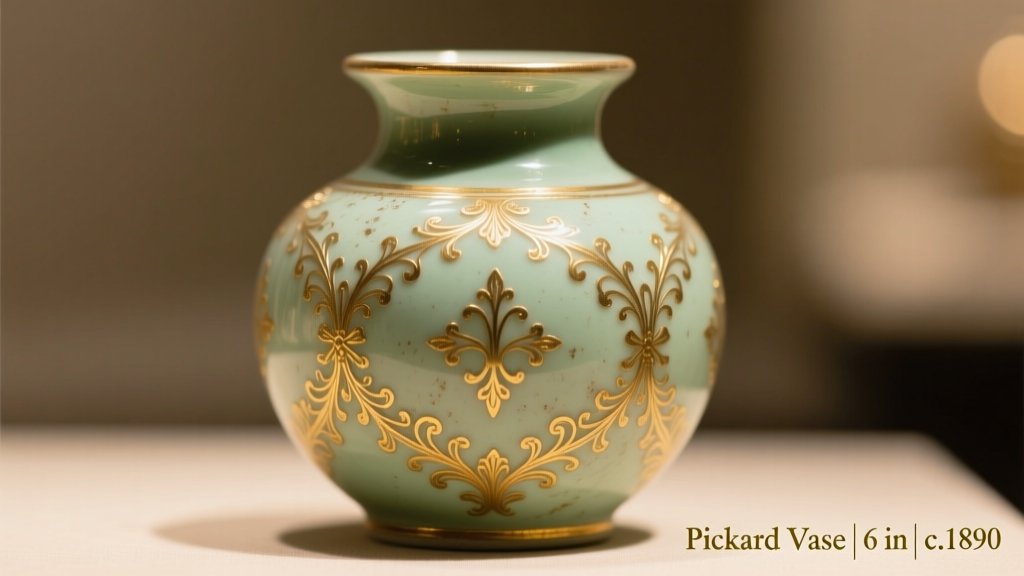
Pickard Vase: Allover Gold Decoration on Pale Green Ground — A 6-Inch Masterpiece of American Art Pottery

Goebel Sugar Creamer 'Friar Tuck': A Study in Mid-Century German Porcelain, Humor, and Collectibility
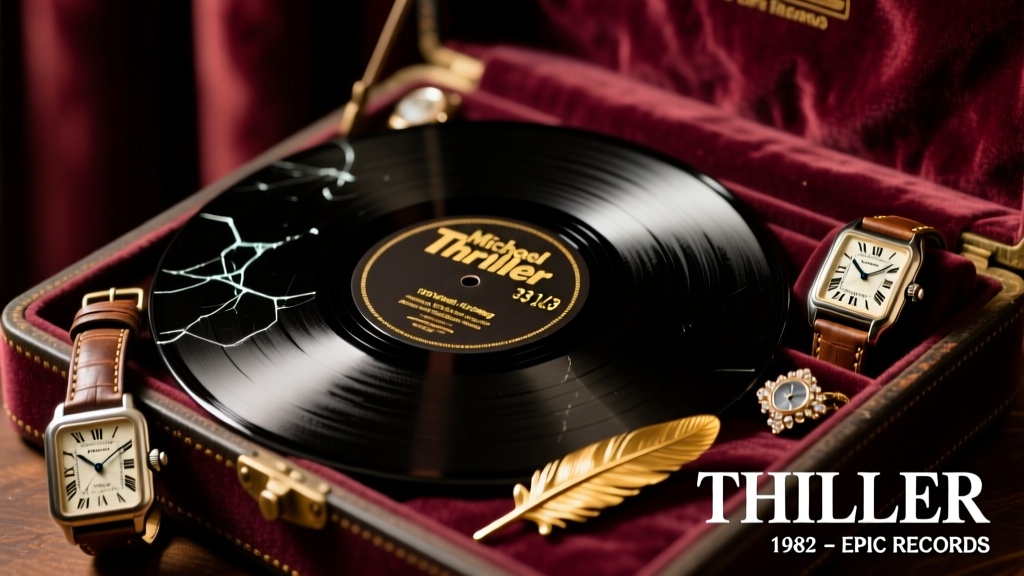
Red Wing Pressing of Michael Jackson’s Thriller: The Rarest Epic Label Variant from 1982
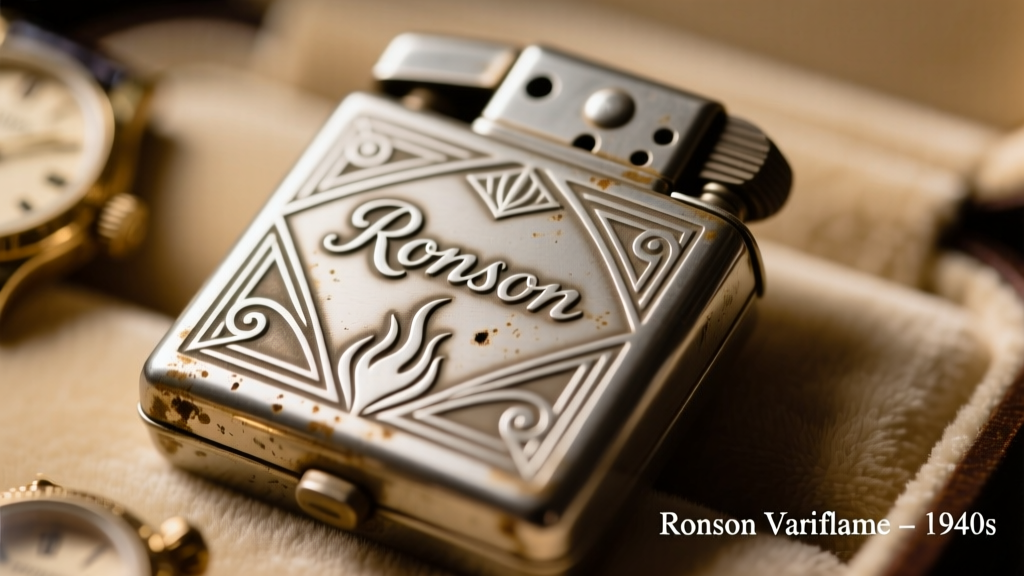
Ronson Varaflame Box Lighters: Design, Engineering, and Collectibility of a Mid-Century Icon
Leonard Freed: The Unflinching Lens of Human Dignity in Mid-Century Photography

Fiesta Turquoise Tumbler Water 10 Oz: A Collector’s Deep Dive into Mid-Century American Ceramics