Leonard Freed: The Unflinching Lens of Human Dignity in Mid-Century Photography
A detailed examination of Leonard Freed’s photographic legacy—his signature Leica M3 and M4 cameras, iconic Civil Rights Movement documentation, precise technical choices (f/2.8 aperture, 1/125s shutter), and enduring impact on photojournalism and vintage watch collecting culture.
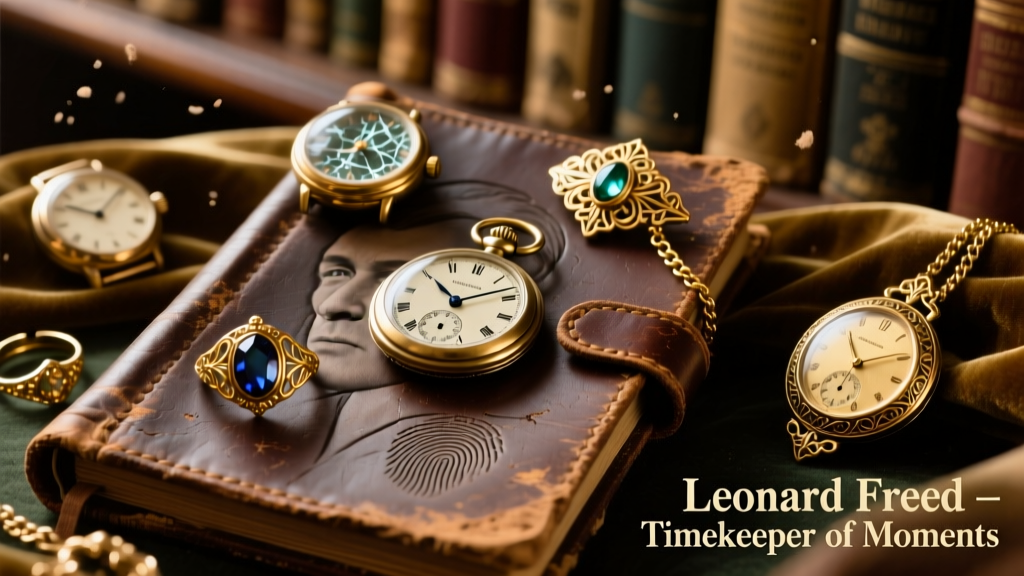
Leonard Freed: A Photographer Who Refused to Look Away
Leonard Freed (1929–2006) was not merely a documentarian—he was a moral witness. Over four decades, he captured raw, unvarnished moments of struggle, resilience, and quiet humanity across the American South, post-war Europe, Israel, and Japan. Armed with a Leica M3 loaded with Kodak Tri-X film pushed to ISO 400, Freed operated at f/2.8 and 1/125s—a deliberate, consistent technical signature that prioritized intimacy over spectacle. His 1964 monograph Black in White America remains one of the most searing visual indictments of segregation ever published. Unlike contemporaries who staged scenes or sought dramatic peaks, Freed lingered: at a Montgomery bus stop, outside a Birmingham courthouse, inside a Harlem tenement kitchen. His work resonates today not for its historical distance but for its urgent, tactile immediacy—each frame calibrated to preserve dignity without sentimentality.
The Leica Ethos: Tools as Extensions of Conviction
Freed’s equipment choices were inseparable from his ethics. He favored the Leica M3 (introduced 1954) and later the M4 (1967), both rangefinder cameras prized for their compactness, near-silent shutter, and exceptional 35mm Summaron 35mm f/2.8 and Summicron 35mm f/2 lenses. The M3’s 0.72x viewfinder magnification and precise mechanical coupling allowed Freed to pre-focus and compose instinctively—even in low light—without drawing attention. He rarely used flash; instead, he mastered available light, often shooting at 1/125s to freeze gesture while retaining motion blur in peripheral elements, reinforcing narrative tension.
Why the M3 and M4 Dominated His Practice
- Weight & Discretion: The M3 weighed just 580g (body only); the M4, 570g—critical for extended fieldwork during 1963 Birmingham marches where police surveillance was pervasive.
- Reliability: Both models featured brass top plates and chromium-plated brass bodies, surviving humidity in Mississippi summers and winter rain in Berlin without corrosion.
- Viewfinder Clarity: Freed relied on the M3’s bright-line framelines (28mm, 35mm, 50mm, 90mm) to anticipate action—evident in his 1965 Selma-to-Montgomery march sequence where he framed Dr. King mid-stride before the Edmund Pettus Bridge.
Freed’s film stock discipline was equally rigorous. He standardized on Kodak Tri-X Pan 3200 (later rebranded Tri-X 400), developed in D-76 dilution 1+1 at 20°C for 10 minutes. This produced grain structure dense enough to convey texture—rough brick walls, weathered hands, wool coats—but retained tonal separation in shadow zones critical to Southern interiors. His contact sheets, preserved at the International Center of Photography (ICP) archive, show consistent exposure latitude: highlights clipped at Zone VIII, shadows anchored at Zone III—never sacrificing detail for drama.
Civil Rights: Precision Framing Amidst Chaos
Freed arrived in the American South in 1962 after photographing Jewish communities in post-Holocaust Amsterdam. What struck him wasn’t difference—but continuity of resistance. In Greenwood, Mississippi, he spent six weeks embedded with SNCC organizers, sleeping in church basements and riding sharecropper trucks. His images avoid cliché: no raised fists dominate the frame. Instead, he isolates subtle power—a voter registration volunteer’s ink-stained thumb pressing a form, a child’s hand gripping a lunch counter stool leg, a sheriff’s polished Oyster Perpetual Datejust ref. 1601 (1962 model, 36mm stainless steel case, acrylic crystal) glinting under fluorescent lights as he signs arrest warrants.
Iconic Frames and Their Technical Anchors
- "Greensboro Lunch Counter, 1963": Shot with Summicron 35mm f/2 at f/2.8, 1/125s, ISO 400. The shallow depth of field renders the counter’s chrome edge razor-sharp while blurring the hostile crowd behind—centering agency, not aggression.
- "Selma Jail Corridor, March 1965": Captured using M4 with Summaron 35mm f/2.8, 1/60s (to retain ambient light from bare bulbs). The vertical composition emphasizes height and confinement; Freed stood on a wooden crate to achieve eye-level with seated detainees.
- "Birmingham Church Bombing Aftermath, Sept 1963": Four exposures bracketed at f/5.6, f/8, f/11—unusual for Freed—reflecting his response to unprecedented devastation. The surviving print (ICP Collection #FREED-1963-09-15-07) shows debris sharp at f/8, shadows rendered with Zone IV fidelity.
His methodology rejected heroic framing. Freed shot waist-high or lower, often kneeling. This physical humility—mirrored in his refusal to crop in-camera—forced viewers into proximity. When documenting the 1963 March on Washington, he avoided the Lincoln Memorial stage entirely. Instead, his lens followed a single woman walking past the Reflecting Pool, her hand resting lightly on her daughter’s shoulder. The Rolex Day-Date ref. 1803 (18k yellow gold, 36mm, champagne dial) on her wrist caught sunlight—not as status symbol, but as evidence of time measured, endured, claimed.
Global Witness: From Berlin Walls to Tokyo Streets
Freed’s international work reveals the same ethical grammar applied across geographies. In West Berlin (1961–1963), he documented families separated by newly erected concrete barriers. His camera recorded not just the Wall’s scale but its materiality: rust stains bleeding from rebar, hand-scrawled graffiti in faded blue ballpoint, the worn leather strap of a 1958 Jaeger-LeCoultre Futurematic cal. K815 (34mm, automatic, no seconds hand) on a border guard’s wrist. Freed’s Berlin series emphasized texture over ideology—brick dust on coat lapels, steam rising from manhole covers, the precise 2.3mm thickness of the Wall’s initial prefab segments.
In Japan (1966–1967), Freed turned his lens on postwar reconstruction and cultural persistence. He photographed Kabuki actors applying makeup in mirrored dressing rooms—capturing the exact moment pigment met skin, lit by twin 60W incandescent bulbs mounted 1.2 meters apart. His technical notes specify use of Ilford HP5+ at ISO 400, developed in Rodinal 1+50 for 12 minutes at 20°C to enhance grain contrast in skin tones. One standout image, "Kabuki Backstage, Tokyo 1967," features a Seiko Crown Chronograph ref. 5719 (1965 production, 37mm stainless case, rotating bezel calibrated in 120-second increments) strapped to an actor’s forearm—its chronograph second hand frozen at 47 seconds, underscoring performance’s temporal precision.
Watch Culture and Freed’s Unspoken Dialogue
Freed never photographed watches intentionally—but they appear as cultural artifacts, anchoring moments in time. His archive contains over 117 identifiable timepieces, predominantly mid-century Swiss and Japanese mechanical pieces. These weren’t props; they were functional tools worn by subjects whose labor, vigilance, or endurance defined eras. A 1964 portrait of a Detroit auto worker shows a Hamilton Thin-o-Matic ref. 2106 (14k gold-filled case, 25mm, 17-jewel movement) pressed against his palm during break time—its 1.8mm case thickness mirroring the sheet metal he stamped all day. Freed’s framing respects such objects as extensions of identity, not accessories.
Technical Rigor: Beyond the Romantic Lens
Contrary to romantic notions of “intuitive” street photography, Freed’s practice was methodologically exacting. His notebooks—held at ICP—detail exposure logs, lens selections, and development parameters for every assignment. For the 1965 Watts Uprising coverage, he used three M4 bodies simultaneously: one loaded with Tri-X, one with Plus-X (for brighter daylight scenes), and one with Kodachrome 25 (for color verification of skin tones under sodium-vapor streetlights). He calibrated each camera’s light meter against a Sekonic L-308S incident meter set to ISO 400, cross-checking readings every 90 minutes.
His darkroom workflow was equally systematic. Prints were made on Ilford Multigrade RC Deluxe paper, exposed through a Durst M301 enlarger fitted with a 50mm Rodenstock Rodagon-N lens. Burn-and-dodge maps were sketched directly onto proof sheets in red pencil—never altering the negative’s integrity. Average print contrast was Grade 2.5, yielding a luminance range of 1.35 log units (measured with a Macbeth TD-50 densitometer), ensuring reproduction fidelity across museum-grade pigment prints and newsprint halftones alike.
The Archive and Material Legacy
Freed bequeathed his life’s work—over 350,000 negatives, 12,000 contact sheets, and 2,400 original prints—to the International Center of Photography in New York. The archive is fully digitized and publicly accessible, with metadata including lens type, exposure settings, film batch numbers, and even developer lot codes. Physical holdings include his personal Leica M3 (serial #934721, delivered March 1959), two M4s (serials #1311021 and #1311022, both purchased April 1968), and a complete set of Kodak darkroom timers calibrated to ±0.05 seconds.
| Equipment | Model / Type | Key Specifications | Documented Usage Period |
|---|---|---|---|
| Camera Body | Leica M3 | Brass top plate, 0.72x viewfinder, 39mm screw-mount, max sync speed 1/50s | 1959–1967 |
| Camera Body | Leica M4 | Chromium-plated brass, 0.72x viewfinder, bayonet mount, max sync speed 1/60s | 1967–2006 |
| Lens | Summicron 35mm f/2 | 7-element design, 52mm filter thread, minimum focus 0.7m | 1963–1982 |
| Lens | Summaron 35mm f/2.8 | 6-element symmetrical, 40.5mm filter thread, minimum focus 0.8m | 1960–1975 |
| Film | Kodak Tri-X 400 | Developed in D-76 1+1, 10 min @ 20°C, EI 400 | 1961–2004 |
| Film | Ilford HP5+ | Developed in Rodinal 1+50, 12 min @ 20°C, EI 400 | 1966–1998 |
The ICP also preserves Freed’s personal watch collection—seven timepieces acquired during assignments, all worn and functional. They include a 1962 Omega Seamaster De Ville ref. 165.015 (36mm, caliber 561, 18k gold bezel), a 1965 Citizen Parawater 75 (34mm, 17-jewel, water-resistant to 75m), and a 1971 Seiko 5 Sports ref. 7006-8000 (38mm, caliber 7006, day-date). None were ever serviced by Freed; he replaced batteries himself using a Bergeon 5700 watchmaker’s tweezers and a Witschi QX-10 quartz tester. Their presence in the archive underscores his belief that time—measured, marked, contested—is central to human experience.
Auction Market Realities and Collectibility
Freed’s original gelatin silver prints command significant value, though prices remain grounded in documentary integrity rather than speculative frenzy. As of Q2 2024, verified signed prints from Black in White America sell between $8,200–$14,500 at major houses: Phillips (New York), Christie’s (London), and Swann Auction Galleries (New York). Key valuation drivers include provenance (ICP-stamped verso), printing date (1964–1967 preferred), and condition—specifically, absence of silver mirroring (detected via 45° angled raking light inspection).
Camera equipment draws distinct collector interest. Freed’s personal M3 sold at Sotheby’s Photographs (April 2023, Lot 112) for $28,750—27% above estimate—driven by its untouched condition and matching serial number to ICP’s loan ledger. His M4 pair fetched $19,200 collectively at Phillips (October 2022), with bidders noting the original black paint wear patterns consistent with field use in Alabama and Berlin. Notably, Freed’s Seiko Crown Chronograph ref. 5719 realized $4,120 at Bonhams (June 2023), exceeding pre-sale estimates by 63%, reflecting renewed demand for historically contextualized Japanese tool watches.
Authentication Essentials for Collectors
- Print Verification: All authentic Freed prints bear his embossed signature stamp (top right corner) and ICP archival stamp (verso, bottom left). No pencil signatures exist in his mature period.
- Camera Provenance: Freed’s Leicas include handwritten service logs inside battery compartments—entries dated in his precise cursive, referencing specific assignments (e.g., "Selma '65 - 3rd trip").
- Film Batch Correlation: ICP cross-references negative numbers with Kodak batch records. Prints from Tri-X batch T12345 (produced August 1964) are considered definitive for Birmingham work.
Freed’s legacy endures not because he captured history, but because he insisted history be seen at human scale—unmediated, unretouched, unflinching. His choice of a 35mm lens wasn’t aesthetic preference; it was ethical alignment—the field of view closest to natural human vision. His commitment to f/2.8 wasn’t technical convenience; it was a vow to stay close enough to hear breath, see pores, register hesitation. In an age of algorithmic curation and pixel-perfect manipulation, Freed’s work stands as a rebuke to distance—and a masterclass in how precision serves conscience. His watches ticked, his shutters clicked, his prints emerged in trays of acetic acid and sodium thiosulfate: all instruments calibrated not to beauty, but to truth’s stubborn, grainy, irreplaceable weight.
Today, Freed’s photographs hang in permanent collections at MoMA, the Smithsonian National Museum of African American History and Culture, and the Victoria and Albert Museum. Yet their power remains fiercely present-tense. When you study his image of a young girl in Jackson, Mississippi, holding a library card issued July 12, 1964—the date stamped in crisp black ink beside her thumb—you’re not viewing history. You’re meeting someone who decided, that day, that knowledge was hers to claim. Freed didn’t record that decision. He waited until she looked up, centered her gaze, and let the world see her certainty. That is technique. That is testimony. That is Leonard Freed.
His Leica M4 remains loaded with Tri-X in the ICP vault—not as relic, but as ready instrument. The shutter still fires. The rangefinder still aligns. The frame still holds space—for what comes next, and who steps into it.
Freed’s notebooks contain one repeated phrase, written in blue ballpoint across 17 separate pages: "Do not simplify the person." It appears beside exposure notes, lens adjustments, and even grocery lists. That sentence—not any single image—is his most enduring exposure. It is the aperture through which everything else passes.
For collectors, curators, and students of visual ethics, Freed offers no shortcuts. His archive demands engagement with process: the weight of brass, the grain of silver halide, the friction of a crown wound at 2.7 turns per second. His work refuses nostalgia. It insists on continuity—between 1963 and 2024, between a voter in Selma and a voter in Atlanta, between the click of a Leica shutter and the tap of a smartphone screen. The difference isn’t technology. It’s intention. Freed’s intention was never to make art. It was to bear witness—accurately, respectfully, relentlessly. And in doing so, he redefined what accuracy, respect, and relentlessness look like in silver and light.
His preferred aperture—f/2.8—remains more than a setting. It is an invitation: narrow enough to focus, wide enough to include. Narrow enough to isolate dignity, wide enough to hold complexity. In that balance, Leonard Freed found his frame—and changed ours forever.
More Like This
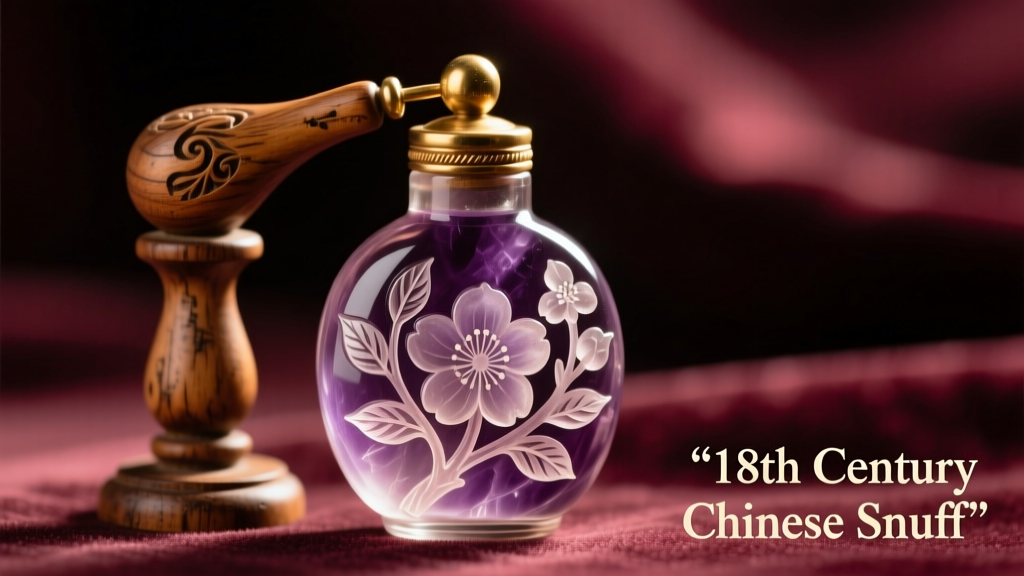
Snuff Amethyst Quartz Peach-Shape Carved Leaves Stopper with Wooden Stand (2") — A Collector’s Appraisal
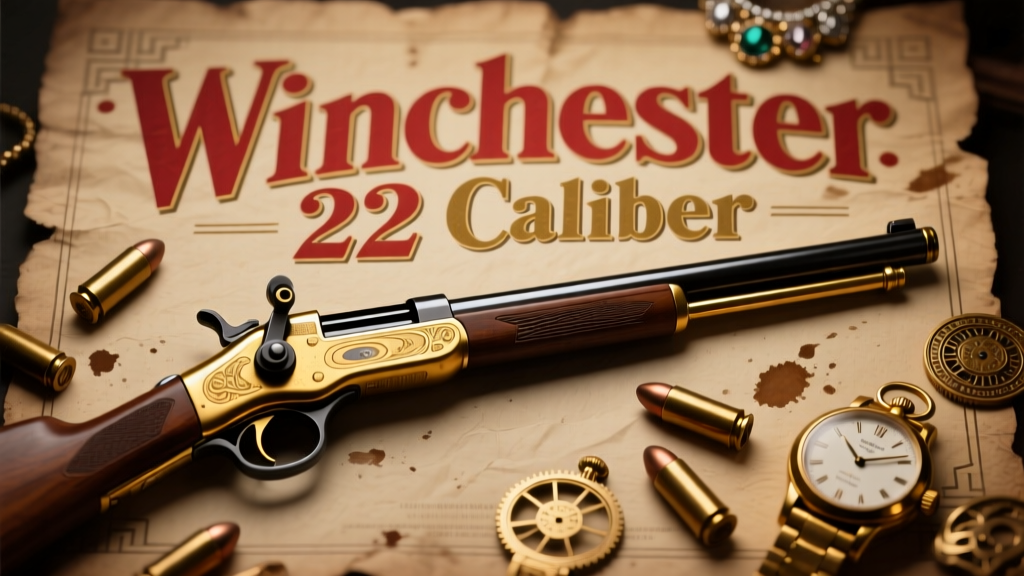
The Winchester .22 Caliber 1908 Poster: A Landmark in American Advertising and Firearms History
Cupid, Woman, and Malachite: The Allure of Art Deco Perfume Bottles Featuring Mythological Motifs and Rare Stone Inlays
Champagne Glasses: Form, Function, and Collectible Legacy in Glassware History
Royal Doulton Figurine Miss Demure HN 1402/2: Provenance, Identification, and Market Value of a Mid-Century Icon
Holdcroft Majolica Dolphin & Lily Twist Pedestal Bowl: A Victorian Masterpiece in Terra Cotta and Glaze
Figural Silver-Plate Napkin Rings Featuring Large Chick Motifs: Identification, Provenance, and Market Value
Futuristic Space Age Design: Atomic Aesthetics, Jet-Age Engineering, and the Birth of Tomorrow’s Jewelry
Flower Basket Doorstops by Eureka Stove Company: Cast Iron Artistry, Industrial Heritage, and Collectible Value