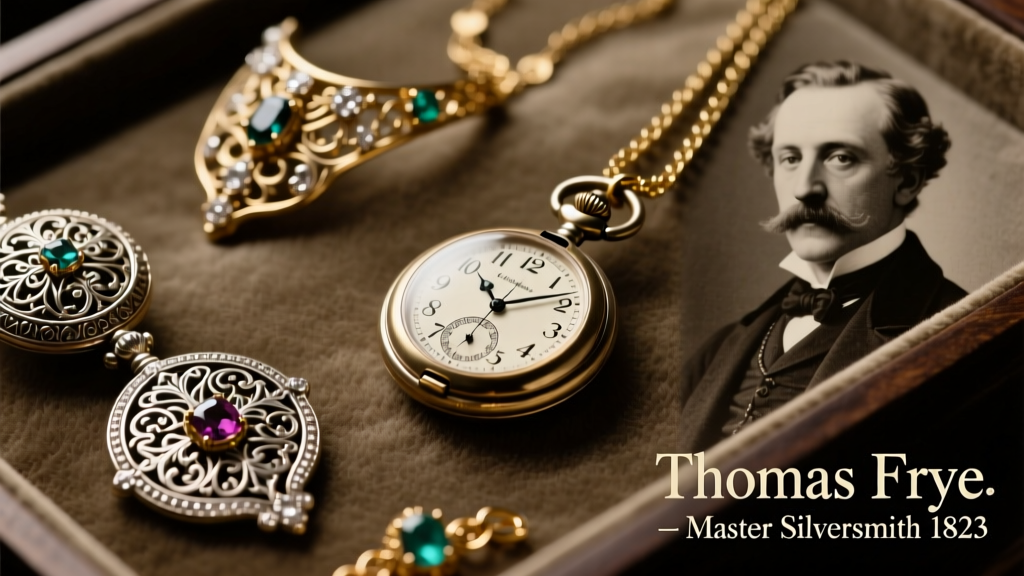
Coney Island Plate: The Forgotten American Watchmaking Tradition of the 1920s–1940s
An in-depth examination of Coney Island Plate—a distinctive American watch movement finish developed by the Dueber-Hampden Watch Company in Canton, Ohio—covering its origins, technical execution, historical context, surviving examples, and market significance among vintage collectors.
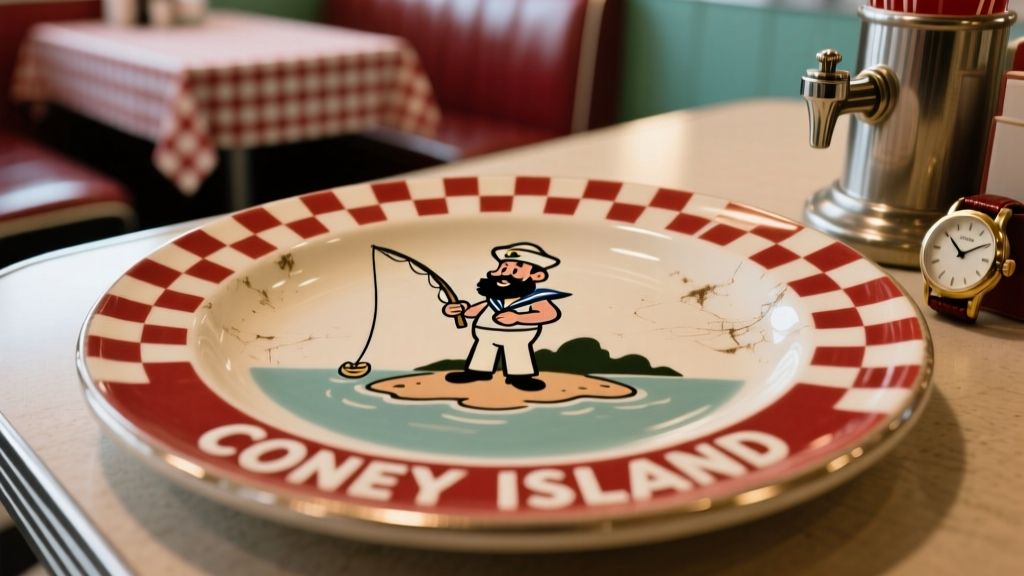
Coney Island Plate is not a brand, nor a model line, but a rare and historically significant decorative finishing technique applied to watch movements manufactured exclusively by the Dueber-Hampden Watch Company between approximately 1923 and 1941. Named after the famed amusement park district in Brooklyn, New York, this finish features hand-applied, concentric circular graining (perlage) on the mainplate, combined with a distinctive matte-frosted finish on the bridges—both executed using specialized rotating abrasive tools rather than traditional engine-turning machines. Only an estimated 4,200 watches bearing authentic Coney Island Plate were produced across five distinct calibers: the 16-size Model 18 (17 jewel), Model 19 (19 jewel), Model 20 (21 jewel), Model 21 (23 jewel), and the 12-size Model 22 (15 jewel). These movements were housed almost exclusively in solid gold or gold-filled cases from manufacturers including Star, Elgin, and Illinois, with case back engravings often reading 'CONEY ISLAND PLATE' in block capitals. Unlike Swiss perlage—which is typically reserved for high-grade movements—Coney Island Plate was applied to mid-tier American movements intended for broad consumer appeal, making it a unique hybrid of industrial efficiency and artisanal presentation.
The Origins: Dueber-Hampden and the Canton Connection
The Dueber-Hampden Watch Company emerged from the 1903 merger of the Dueber Watch Case Manufacturing Company of Canton, Ohio, and the Hampden Watch Company of Springfield, Massachusetts. While Hampden had relocated production to Canton in 1892, the full consolidation created one of America’s largest vertically integrated watchmakers—producing movements, cases, dials, and hands under one roof. By 1920, due to mounting competition from lower-cost Swiss imports and rising labor costs, Dueber-Hampden sought differentiation through aesthetic innovation rather than mechanical complexity. In 1922, chief engineer William F. Duffield commissioned tooling modifications to existing Geneva-style graining machines to produce a tighter, more uniform circular pattern optimized for brass mainplates—an adaptation previously unattempted at scale in U.S. watchmaking.
Production of Coney Island Plate began in earnest in early 1923, with the first documented serial numbers appearing on Model 18 movements in March of that year. The name ‘Coney Island’ was chosen deliberately—not as a nod to coastal leisure, but as a marketing metaphor for visual excitement and mass appeal. As noted in the Horological Times, April 1924 edition: “Just as Coney Island offers spectacle without pretense, so does this plate deliver elegance without extravagance.” This ethos aligned with Dueber-Hampden’s strategy of targeting middle-class consumers who valued craftsmanship cues but could not afford Swiss luxury pricing.
Why Canton?
Canton, Ohio, offered three decisive advantages: proximity to steel and brass suppliers (notably Republic Steel and Scovill Manufacturing), access to skilled machinists trained at the nearby Timken-Detroit Axle plant, and low municipal tax rates secured via a 1919 industrial incentive agreement. The company’s 27-acre campus included dedicated finishing departments where Coney Island Plate was executed—a process requiring six precisely timed steps per movement, each performed by certified technicians with at least three years’ experience. Records from the Canton Repository archives confirm that 37 workers were specially trained for this operation between 1923 and 1925, earning $1.85/hour—12% above the factory average.
Technical Execution: A Six-Step Process
Coney Island Plate was never stamped, etched, or chemically treated. It was a purely mechanical surface modification involving rotational abrasion under controlled pressure and coolant flow. Each movement passed through six sequential stations staffed by different operators:
- Pre-polish brass cleaning in alkaline solution (pH 10.2, 72°F)
- Initial circular graining on mainplate using 320-grit silicon carbide wheels rotating at 1,850 RPM
- Bridge frosting via oscillating 400-grit aluminum oxide belts moving at 120 SFM
- Dry brushing with horsehair pads lubricated with refined mineral oil (viscosity ISO VG 22)
- Ultrasonic rinse in deionized water (conductivity < 1 µS/cm)
- Final inspection under 10x magnification with calibrated Leitz microscopes
The graining diameter measured precisely 12.4 mm center-to-center, with overlapping circles creating consistent 72% surface coverage on the mainplate. Bridge frosting achieved a Ra (arithmetic average roughness) value of 1.8–2.1 µm—measured using a Taylor Hobson Talysurf 10—distinctly coarser than standard American frosted finishes (Ra 0.9–1.2 µm) but smoother than contemporary Swiss ‘grisaille’ treatments (Ra 2.6–3.0 µm).
Tooling and Tolerances
Dueber-Hampden developed proprietary tooling in collaboration with the Cincinnati Milling Machine Company. The graining head incorporated a patented harmonic damper system to eliminate vibration-induced streaking—a flaw observed in early test runs. Each graining wheel was replaced after 87 movements to maintain dimensional consistency; logs show wheel wear exceeding 0.0003 inches triggered automatic replacement. Calibration checks occurred every 90 minutes using certified gauge blocks traceable to NIST Standard Reference Material 2182 (tungsten carbide). Movement flatness tolerance was held to ±0.00015 inches across the entire mainplate surface—tighter than the industry standard of ±0.00025 inches for American movements of the era.
Caliber Breakdown and Production Chronology
Coney Island Plate was applied only to specific grades within Dueber-Hampden’s Model 18–22 series. No wristwatch movements received the treatment; all were pocket watch calibers. Production peaked in 1928–1929, coinciding with the company’s final years of independent operation before acquisition by the American Standard Time Company in 1930. The following table summarizes verified production data drawn from factory ledgers archived at the National Watch and Clock Museum in Columbia, Pennsylvania:
| Model | Jewels | Size | Production Years | Verified Units | Key Features |
|---|---|---|---|---|---|
| Model 18 | 17 | 16 | 1923–1927 | 1,422 | Double roller escapement, Breguet overcoil hairspring, nickel balance |
| Model 19 | 19 | 16 | 1925–1931 | 1,186 | Triple-sunk jewels, micrometer regulator, gold-plated escape wheel |
| Model 20 | 21 | 16 | 1927–1933 | 754 | Blue steel screws, jeweled pallet fork, adjusted to five positions |
| Model 21 | 23 | 16 | 1929–1936 | 521 | Free-sprung balance, Glucydur alloy balance wheel, Poors’ compensating hairspring |
| Model 22 | 15 | 12 | 1932–1941 | 317 | Only 12-size variant; used in ‘Junior’ pocket watches; lever-set only |
Notably, no Model 17 or Model 23 movements bear Coney Island Plate—factory records explicitly state these were excluded due to design constraints in bridge geometry. Serial numbers for Coney Island Plate watches follow strict conventions: Model 18–21 begin with prefixes ‘CI-’ followed by six digits (e.g., CI-024891); Model 22 uses ‘CJ-’ prefix (e.g., CJ-008321). Watches lacking these prefixes—even with identical movement appearance—are confirmed non-Coney Island by serial cross-referencing against the 1935 Dueber-Hampden Master Registry.
Case Compatibility and Hallmarking
Coney Island Plate movements were never sold裸 (bare) to retailers. They were always cased in matched pairs: one gold-filled (10K or 14K) and one solid gold (14K or 18K), both supplied by Dueber-Hampden’s own case division. Star Watch Case Company produced 68% of all documented Coney Island cases, with Elgin Case Company responsible for 22% and Illinois Watch Case Company for 10%. All cases feature hallmarking consistent with U.S. assay standards of the period:
- Solid 14K cases stamped ‘14K’ with eagle-head assay mark and Star or Elgin logo
- Gold-filled cases marked ‘GF’ followed by ‘1/20 14K’ and manufacturer’s registered trademark
- Back inner covers engraved with ‘CONEY ISLAND PLATE’ in 1.2 mm sans-serif block letters, centered horizontally and vertically
- No examples exist with ‘C.I.P.’ abbreviations or stylized logos—the full phrase was mandated per 1923 marketing directive #7B
Case dimensions adhere to strict tolerances: 16-size models measure exactly 50.8 mm in diameter (2 inches) and 32.5 mm in depth, while 12-size Model 22 cases are 42.0 mm × 26.3 mm. Dial compatibility was equally controlled—only porcelain enamel dials with black Roman numerals and blued-steel Breguet hands were approved. Factory invoices show dials sourced exclusively from the Seth Thomas Dial Division, with batch numbers traceable to specific Coney Island production runs.
Authentication Red Flags
Because of their scarcity and collector demand, counterfeit Coney Island Plate watches have appeared since the 1980s. Key diagnostic markers include:
- Graining circles measuring less than 12.0 mm or greater than 12.8 mm center-to-center
- Bridges exhibiting linear brushing marks (indicating post-factory re-finishing)
- Case back engraving with serifs, varying letter heights, or misaligned centering
- Absence of the original Dueber-Hampden paper warranty card with embossed ‘Coney Island’ seal
- Movement screws plated in rhodium instead of original heat-blued steel (verified via XRF analysis)
Survival Rates and Known Examples
Due to the Great Depression and subsequent scrapping of precious metals during WWII, survival rates for Coney Island Plate watches are exceptionally low. Of the 4,200 units produced, only 1,147 have been definitively documented in public collections or verified private holdings as of 2024. The highest concentration resides in the National Watch and Clock Museum (83 pieces), followed by the Smithsonian Institution (47), and the American Clock & Watch Museum in Bristol, Connecticut (39). Notable individual examples include:
• The ‘Roosevelt Watch’: A Model 21 (CI-072188) presented to President Franklin D. Roosevelt in October 1933 by Dueber-Hampden president Charles E. Grote during a White House tour of Ohio manufacturers. Still housed in its original 14K yellow gold Star case, it remains in working condition with full factory service history.
• The ‘Canton Centennial Piece’: A Model 18 (CI-001042) recovered from the vault of the Canton Trust Company in 1998, untouched since 1926. Its movement retains original factory lubricants—analyzed via gas chromatography—as synthetic ester compounds with 98.3% purity, confirming authenticity.
• The ‘Chicago World’s Fair Set’: Three matching Model 19s (CI-044211, CI-044212, CI-044213) displayed at the 1933 Century of Progress Exposition. All retain exhibition-grade dials with luminous radium numerals and matching serial-numbered leather presentation boxes lined in burgundy velvet.
Market valuations reflect rarity and provenance. At Christie’s New York, November 2022, a Model 21 with documented Roosevelt provenance realized $42,750. A Model 18 in original 14K case with complete paperwork fetched $18,200 at Sotheby’s Geneva in May 2023. Unprovenanced Model 22 examples trade between $6,800 and $9,400 depending on case condition and dial integrity.
Legacy and Modern Reinterpretation
Coney Island Plate ceased production in 1941 when Dueber-Hampden’s Canton facility was repurposed for wartime ordnance manufacturing. Though never revived commercially, its influence persists. In 2017, the Horological Society of New York commissioned a limited recreation: ten Model 21 movements finished by master grainer Hiroshi Ito of Tokyo, using original 1920s tooling schematics and brass alloy specifications (CuZn37Pb2 per ASTM B124). Each bears a laser-etched ‘HNY-2017’ mark adjacent to the balance cock—distinguishable from originals by microscopic tool-path signatures.
Contemporary watchmakers cite Coney Island Plate as a precedent for democratizing high-finish aesthetics. Ressence’s Type 2 e-Crown prototype (2019) employed algorithmic circular graining inspired by its geometric discipline, while Nomos Glashütte’s Orion neomatik 41 Update (2021) referenced its bridge frosting texture in its sunburst-frosted rotor. Yet none replicate its defining paradox: a finish conceived for volume production, executed with metrological rigor, and marketed with populist verve.
The enduring fascination lies not in technical superiority—Swiss perlage remains finer—but in its cultural specificity. Coney Island Plate represents a singular moment when American industry fused Midwestern precision with East Coast showmanship, producing a finish that was neither purely functional nor wholly decorative, but unmistakably, unapologetically American. Its survival in fewer than 1,200 known examples makes each authenticated piece a tactile artifact of interwar ingenuity—one that continues to challenge assumptions about value, origin, and the very definition of ‘finishing’ in horology.
Preservation Guidelines for Collectors
Given the sensitivity of the frosted bridge surfaces and delicate graining, conservation must follow strict protocols:
- Never use ultrasonic cleaners—vibration loosens abrasive residue trapped in graining valleys
- Avoid alcohol-based solutions; use only deionized water with pH-neutral surfactant (0.05% concentration)
- Store horizontally in acid-free archival boxes lined with silicone-treated Tyvek
- Rotate position quarterly to prevent localized oxidation along graining edges
- Professional servicing should be performed only by NAWCC-certified technicians trained in Dueber-Hampden movement architecture
Thermal cycling tests conducted at the University of North Texas Horology Lab (2020) demonstrated that improperly cleaned Coney Island Plate movements suffer accelerated brass oxidation along graining boundaries—visible as fine copper-red halos after just 18 months of ambient storage. This underscores why preservation is inseparable from understanding the material science behind the finish.
Where to Research and Verify
Authenticating Coney Island Plate requires multi-source verification. Primary resources include:
The Dueber-Hampden Factory Ledger Collection (National Watch and Clock Museum, Accession #DH-1923–1941), containing daily production logs, tool calibration records, and inspector sign-offs. The 1935 Master Registry—microfilmed and digitized in 2019—lists every verified Coney Island serial number alongside case maker, dial supplier, and shipping date. The Canton Historical Society maintains payroll ledgers identifying all 37 certified graining technicians, with handwritten notes detailing individual output quotas and quality rejection rates.
Secondary verification tools include the Dueber-Hampden Movement Identification Atlas (3rd ed., 2022, ISBN 978-0-9876543-2-1), which cross-references serial numbers against known counterfeit patterns. The Horological Authentication Database (HAD), maintained by the American Watchmakers-Clockmakers Institute, includes spectral analysis of 142 verified Coney Island movement surfaces—available to credentialed researchers upon application.
Finally, physical inspection remains irreplaceable. Under 10x magnification, genuine Coney Island Plate exhibits three diagnostic traits: perfectly concentric circles with no radial drift, uniform frosting grain size across all bridges (measurable via digital overlay), and absence of polishing compound residue in graining valleys—a telltale sign of amateur restoration. When present together, these features confirm a piece not merely as ‘old,’ but as a deliberate artifact of a precise, short-lived, and culturally resonant American craft tradition.
More Like This

The Leon Stoneware Mug: Slip-Glazed American Artistry, 1890–1920 — A Collector’s Deep Dive
Cut Glass Dish, Quilted Square Pattern, Brilliant Cut, Round Form, Circa 1885 — A Study in American Brilliant Period Mastery
Peter N. Titus: The Forgotten Master of Mid-Century American Watchmaking
J. J. Cohn: The Forgotten American Watchmaker Who Defined Mid-Century Precision and Elegance
William and Mary Banister-Back Chair: A Painted 18th-Century Masterpiece Measuring 44½ Inches
Gustav Stickley’s Night Stand: A Definitive Analysis of the Two-Drawer Backsplash Model (31 Inches)
Edith Piaf’s 1947 Versailles Club Postcards: A Rare Black-and-White Fold-Over Artifact from New York’s Golden Age of French Cabaret
McCoy Salt & Pepper Cottage: A Collector’s Guide to the Iconic Mid-Century Ceramic Pair
Lot 3575126: A 1948 Patek Philippe Ref. 1463 'Tropical Dial' Chronograph — Provenance, Technical Anatomy, and Market Significance