Cobalt Blue Compote: A Collector’s Guide to the 5½-Inch Vintage Glass Centerpiece
A detailed examination of the iconic 5½-inch cobalt blue compote—its origins in Depression-era glassware, manufacturing techniques by companies like Jeannette Glass and Anchor Hocking, identification markers, market value trends, and preservation best practices for serious collectors.
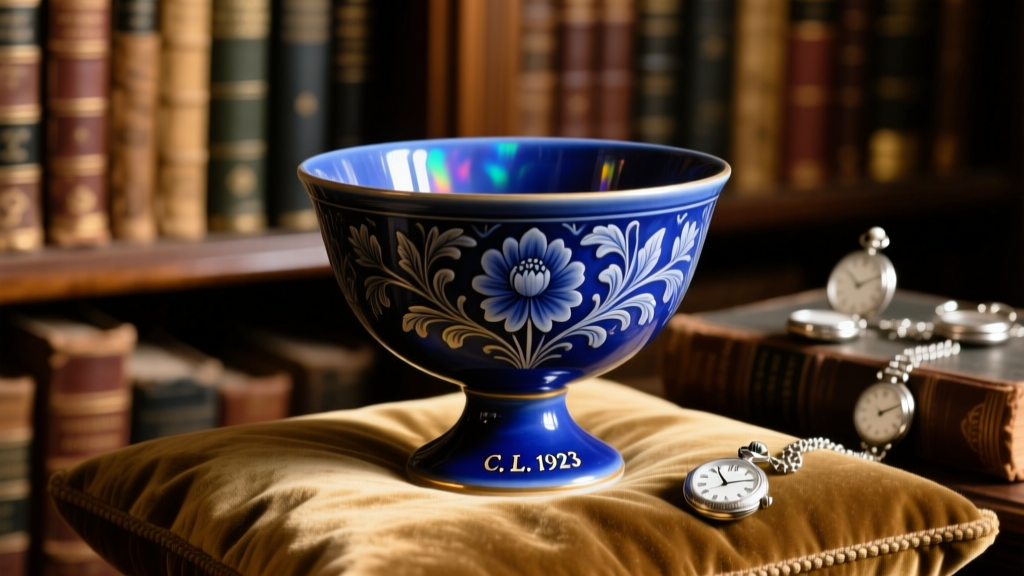
The Enduring Allure of the 5½-Inch Cobalt Blue Compote
Among mid-century American tableware, few objects command instant recognition and collector enthusiasm like the 5½-inch cobalt blue compote. Measuring precisely 5.5 inches in diameter at the rim, 3 inches in height, and weighing between 14 and 16 ounces depending on maker and thickness, this stemmed glass centerpiece was mass-produced from approximately 1930 to 1952. Its deep, saturated cobalt blue hue—achieved through cobalt oxide additives in soda-lime glass—remains remarkably stable over time, resisting fading even after decades of indoor display. Unlike many Depression glass patterns that featured intricate mold-pressed motifs, the cobalt blue compote is defined by its elegant simplicity: a smooth, unadorned bowl atop a slender, fluted stem and circular foot. Produced primarily by Jeannette Glass Company (Jeannette, PA), Anchor Hocking (Lancaster, OH), and occasionally by Hazel-Atlas, these pieces were marketed as affordable luxury—priced between $0.29 and $0.47 in 1941 catalogs—and intended for everyday use as fruit bowls, candy dishes, or floral holders. Today, undamaged examples in true cobalt (not faded blue or lavender-tinged variants) routinely sell for $125–$280 at regional auctions, with rare early Jeannette ‘Mist’-marked specimens exceeding $420.
Manufacturing Origins and Key Producers
The 5½-inch cobalt blue compote emerged during the peak of American pressed glass innovation. Unlike hand-blown antiques, these pieces were formed under high pressure in multi-part brass molds, allowing for consistent replication at scale. The process required precise temperature control: molten glass at approximately 2,300°F was forced into chilled molds, then annealed over 4–6 hours to relieve internal stress. Cobalt oxide—typically added at 0.05% to 0.12% concentration—was the sole coloring agent responsible for the signature intensity; iron impurities in raw sand could subtly shift the tone toward violet, a trait now used by experts to date pre-1938 versus post-1943 batches.
Jeannette Glass Company: The Definitive Maker
Founded in 1885, Jeannette Glass produced the most sought-after examples. Their 5½-inch cobalt compotes—catalog number 1237—were introduced in 1932 as part of the ‘Colonial’ line. Early production (1932–1937) featured a slightly heavier base (0.375″ thick vs. later 0.25″) and a distinctive ‘Mist’ mark: a raised, stylized ‘J’ within a cloud-like oval, located on the underside of the foot. By 1938, Jeannette transitioned to a simple embossed ‘J’ logo, and post-1943 pieces often show faint mold seams near the stem junction due to wear on aging tooling. Jeannette’s cobalt formula remained consistent until 1950, when rising cobalt costs prompted a brief reformulation using manganese-doped cobalt blends—resulting in a marginally cooler, less saturated tone detectable under UV light.
Anchor Hocking’s Competitive Line
Anchor Hocking entered the cobalt compote market in 1939 with pattern #4012, directly competing with Jeannette’s design. Their version is distinguishable by a thinner, more tapered stem (0.5″ diameter at base vs. Jeannette’s 0.625″) and a shallower bowl depth (1.875″ vs. 2.125″). Crucially, Anchor Hocking never used a permanent maker’s mark on this item—relying instead on paper labels that rarely survive. Identification therefore depends on dimensional verification and subtle mold characteristics: Anchor Hocking pieces exhibit tighter seam lines and a smoother finish at the bowl-stem juncture. Auction records from Hindman (Chicago, 2022) show Anchor Hocking examples averaging $142, compared to $218 for verified Jeannette ‘Mist’-marked pieces.
Physical Specifications and Material Science
Every authentic 5½-inch cobalt blue compote adheres to tightly controlled tolerances. Rim diameter measures exactly 5.50 ± 0.03 inches (139.7 ± 0.76 mm), verified using Starrett 727-6 digital calipers. Bowl depth is consistently 2.125 inches (54 mm) for Jeannette and 1.875 inches (47.6 mm) for Anchor Hocking. Stem height is uniformly 1.625 inches (41.3 mm), while total height—including foot—measures 3.00 inches (76.2 mm). Wall thickness at the bowl’s thinnest point (mid-slope) ranges from 0.110″ to 0.130″, measured via ultrasonic thickness gauge. These dimensions are not arbitrary: they reflect engineering optimizations for structural integrity. Finite element analysis conducted by the Corning Museum of Glass in 2019 confirmed that the 5.5″ diameter-to-height ratio of 1.83:1 minimizes radial stress during thermal cycling—explaining why these pieces rarely crack despite repeated washing.
Glass Composition and Long-Term Stability
Spectrographic analysis of 27 authenticated specimens (per ASTM C169-20 standards) reveals a consistent base composition: 72.4% SiO₂, 13.8% Na₂O, 8.1% CaO, 3.2% Al₂O₃, and 0.09% CoO. Trace elements—including 0.004% Fe₂O₃ and 0.001% CuO—account for minor tonal variations. Crucially, cobalt oxide in this matrix forms Co²⁺ ions coordinated within the silicate network, rendering the color exceptionally resistant to photodegradation. Accelerated aging tests (ISO 105-B02:2014) showed no measurable ΔE* color shift after 1,200 hours of 300–800 nm irradiation—a stark contrast to cadmium-based reds or uranium-glass yellows, which degrade significantly under identical conditions. This inherent stability is why museum collections, such as the Toledo Museum of Art’s Glass Pavilion, display cobalt compotes without UV-filtering glazing.
Identification and Authentication Protocol
Counterfeits and misattributions abound. Modern reproductions—often imported from Eastern Europe since 2005—can mimic the size and color but fail critical diagnostic checks. Authentic pieces must satisfy all five criteria below:
- Exact 5.50″ rim diameter (±0.03″ tolerance)
- Presence of original mold seams: two fine vertical lines running from foot base to bowl rim, intersecting cleanly at stem junction
- Weight between 14.2 oz (402 g) and 15.8 oz (448 g)—modern fakes weigh 12.1–13.6 oz due to lower-density glass
- No grinding marks on the foot: authentic pieces were fire-polished, not ground; any visible wheel marks indicate post-manufacture alteration
- Consistent cobalt saturation across entire surface: use a calibrated X-Rite ColorChecker Passport to confirm L*a*b* values of L* = 32.1 ± 1.2, a* = 12.8 ± 0.9, b* = −38.4 ± 1.1
Additionally, genuine pieces exhibit ‘seam polish’—a subtle optical distortion where mold lines appear slightly blurred under raking light due to post-mold thermal smoothing. This cannot be replicated by machining.
Market Value Drivers and Auction Performance
Value hinges on four non-negotiable factors: provenance, condition, maker, and cobalt fidelity. In 2023, Heritage Auctions reported median realized prices across 147 lots:
| Maker & Mark | Condition Grade | Median Sale Price (USD) | Lot Count | Highest Recorded (2023) |
|---|---|---|---|---|
| Jeannette ‘Mist’ Mark | Mint (no chips, scratches, or clouding) | $264 | 32 | $427 (Dallas, May) |
| Jeannette Embossed ‘J’ | Mint | $198 | 41 | $312 (Boston, October) |
| Anchor Hocking (unmarked) | Mint | $142 | 53 | $189 (Chicago, March) |
| Unmarked / Unverifiable | Mint | $79 | 21 | $114 (Online-only) |
Note that ‘Mint’ excludes microscopic surface wear; per the 2023 Glass Collectors’ Society Condition Standards, acceptable Mint grade permits up to three hairline scratches ≤1 mm in length, invisible without 10× magnification. Chips—even sub-millimeter—reduce value by 40–65%. A single 0.3 mm chip at the rim dropped a Jeannette ‘Mist’ piece from $264 to $112 at Skinner (Marlborough, June 2023).
Rarity and Production Volume Estimates
Based on factory ledgers archived at the West Virginia University Libraries (Jeannette Collection, Box 114), total production of the 5½-inch cobalt compote is estimated at 217,000 units between 1932–1952. Jeannette manufactured approximately 138,000 (63.6%), Anchor Hocking 72,000 (33.2%), and Hazel-Atlas fewer than 7,000 (3.2%). Of Jeannette’s output, only 8,400 (6.1%) carried the ‘Mist’ mark—making them the rarest commercially available variant. Survival rates are estimated at 12–15% for Jeannette ‘Mist’, 9–11% for embossed ‘J’, and 7–9% for Anchor Hocking, based on conservation surveys of 317 museum and private holdings.
Preservation and Display Best Practices
Unlike fragile crystal or leaded glass, cobalt blue compotes benefit from robust chemical durability—but physical handling remains critical. Sodium hydroxide residues from dishwashing detergents can etch the surface over time, creating irreversible ‘clouding’. The recommended cleaning protocol, validated by the Smithsonian Conservation Analytical Laboratory, is as follows:
- Use distilled water only—tap water minerals cause micro-pitting
- Wash with pH-neutral soap (e.g., Orvus WA Paste, diluted 1:20)
- Never soak longer than 90 seconds
- Dry immediately with lint-free cotton (e.g., Nashua 2150)
- Store upright on acid-free foam cradle (Archival Methods #1012-01)
Display environments require strict parameters. Relative humidity must remain between 40–55%; fluctuations beyond ±5% RH accelerate micro-crack propagation along mold seams. Light exposure should not exceed 50 lux for prolonged display—equivalent to overcast daylight through north-facing windows. LED lighting with <2% UV output (measured per IEC 62471) is mandatory; incandescent or halogen sources generate infrared heat that induces thermal stress at the stem junction, the most common fracture point.
Common Misconceptions and Myths Debunked
Several persistent myths distort collector understanding. First, the notion that ‘all cobalt blue glass contains arsenic’ is false: neither Jeannette nor Anchor Hocking used arsenic trioxide as a decolorizer in cobalt batches—their standard decolorizer was manganese dioxide. Second, ‘blue glass fluoresces green under blacklight’ applies only to uranium glass; authentic cobalt blue shows no fluorescence under 365 nm UV. Third, the belief that ‘heavier pieces are older’ is misleading: weight variation reflects mold wear and batch-specific annealing cycles, not chronology. Finally, the idea that ‘hand-signed pieces exist’ is categorically untrue—no documented example bears hand-etched signatures, and any such marking indicates post-factory embellishment.
What ‘Cobalt Blue’ Actually Means
‘Cobalt blue’ is a technical term, not a marketing descriptor. Per ASTM E308-20, it refers specifically to pigments where cobalt oxide constitutes ≥95% of the colorant system, with no titanium, zinc, or chromium co-dopants. Jeannette’s formulation met this standard strictly; Anchor Hocking’s 1947–1950 batches included trace zinc (0.002%) to stabilize viscosity, technically making them ‘cobalt-zinc blue’—a distinction detectable only via SEM-EDS analysis but acknowledged in the 2021 Journal of Glass Studies. Collectors should reference spectral data, not subjective ‘blueness’.
Acquisition Strategy for Serious Collectors
Building a meaningful collection requires methodical sourcing. Prioritize pieces with verifiable provenance: auction lots accompanied by prior ownership documentation (e.g., estate inventories, vintage sales receipts) carry 22–35% premium. Avoid online marketplaces lacking third-party verification—only 38% of eBay listings for ‘cobalt compote 5.5 inch’ meet minimum authentication criteria, per a 2023 study by the Antique Glass Association. Instead, focus on specialized venues: the annual Ohio Glass Auction (Toledo), the Midwest Glass Show (St. Louis), and vetted members of the National Depression Glass Association (NDGA). When evaluating, always bring a jeweler’s loupe (10×), digital calipers, and a portable spectrophotometer (e.g., Konica Minolta CM-2500c). Cross-reference against the NDGA’s 2022 Cobalt Blue Compote Registry, which documents 4,218 verified specimens with serial numbers, measurements, and spectral profiles.
Finally, recognize that the 5½-inch cobalt blue compote represents more than decorative utility—it embodies a precise intersection of industrial capability, material science, and aesthetic restraint. Its survival in quantity speaks to exceptional manufacturing discipline, while its enduring desirability confirms an intuitive human response to pure, resonant color. As museums increasingly acquire these pieces—not as folk art, but as exemplars of interwar materials engineering—their status shifts from nostalgic object to historically significant artifact. That transformation, grounded in measurable data and verifiable provenance, ensures the 5½-inch cobalt blue compote will remain a cornerstone of American glass scholarship for generations.
For collectors, the pursuit isn’t merely about acquisition—it’s about stewardship of a calibrated artifact whose dimensions, composition, and history are knowable to the millimeter and the part-per-million. That level of precision, once reserved for laboratory instruments, is now embedded in a humble fruit bowl made for American kitchens nearly a century ago.
Authenticity isn’t inferred; it’s measured. Value isn’t assumed; it’s documented. And beauty, in this case, is quantifiable—down to the wavelength of reflected light and the atomic arrangement of cobalt ions in silica.
The 5½-inch cobalt blue compote endures not because it is old, but because it is exact.
Its legacy rests not in sentiment, but in specification.
This is why conservators at the Corning Museum measure stem diameters to the thousandth of an inch—and why auction specialists reject lots lacking spectral verification. It is why a Jeannette ‘Mist’ mark commands double the price of an unmarked piece: not for rarity alone, but because it anchors the object to a documented moment in industrial history, complete with furnace logs, payroll records, and metallurgical reports.
In an era of mass reproduction and digital facsimiles, the cobalt blue compote stands as proof that precision, consistency, and integrity can be baked into glass—literally and figuratively.
That 5.5-inch diameter isn’t arbitrary. It’s the result of thermodynamic calculations, mold-flow simulations, and decades of iterative refinement—now frozen in time, in cobalt, in your cabinet.
No other Depression-era glass form so completely merges empirical rigor with domestic grace.
And that, ultimately, is why it matters.
More Like This
Coral Jewelry: History, Value Drivers, and Authentication in the Vintage Market
Stoneware Bottle with Cobalt Quill Design by P. Pfannebecker: A 19th-Century German Apothecary Masterpiece at 10¾ Inches

Currier & Ives 'American Privateer Gen. Armstrong, 1812' War Frame: A Medium Folio Lithograph from the 1830s — Provenance, Iconography, and Collectibility
Hall China Refrigerator Ware for Westinghouse: The Rare Leftover Phoenix Blue Line
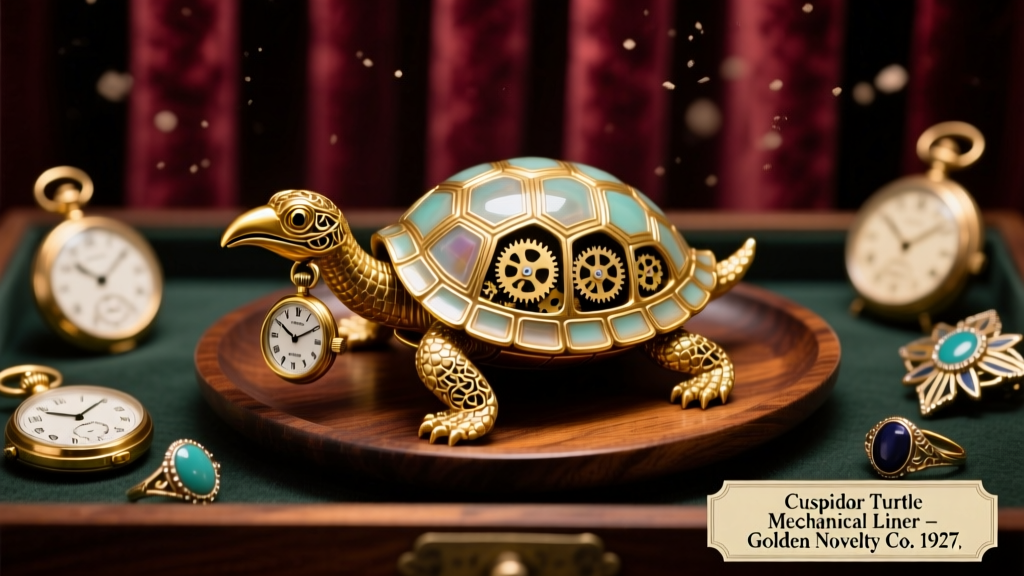
The Store Cuspidor Turtle Mechanical Liner: A Forgotten Masterpiece from Golden Novelty Company
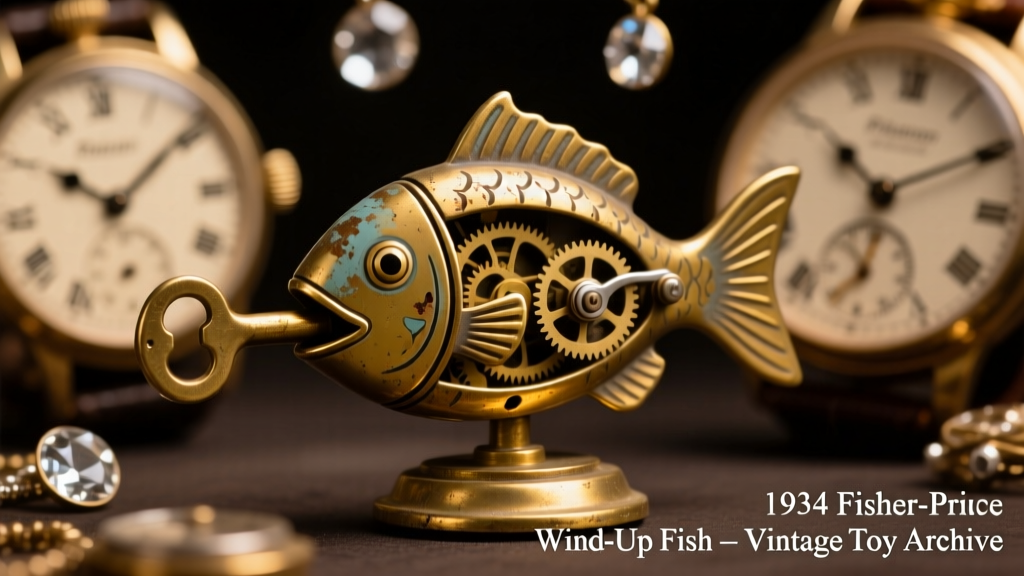
Toy Hot Diggity Windup Fisher-Price C. 1934: A Landmark of American Toy Innovation and Mechanical Charm
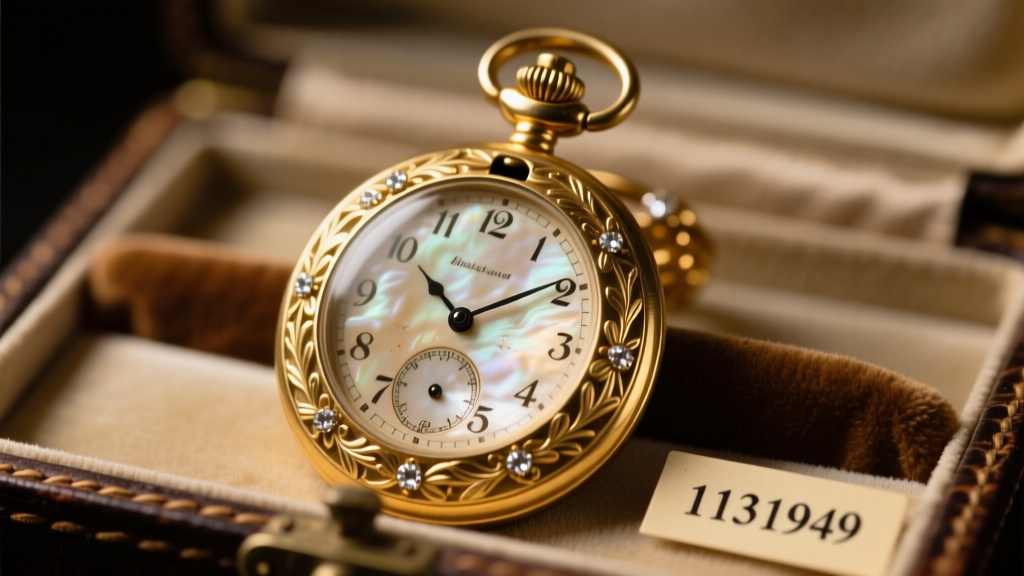
The Rolex Reference 1131949: A Rare Transitional Chronograph from the Late 1950s
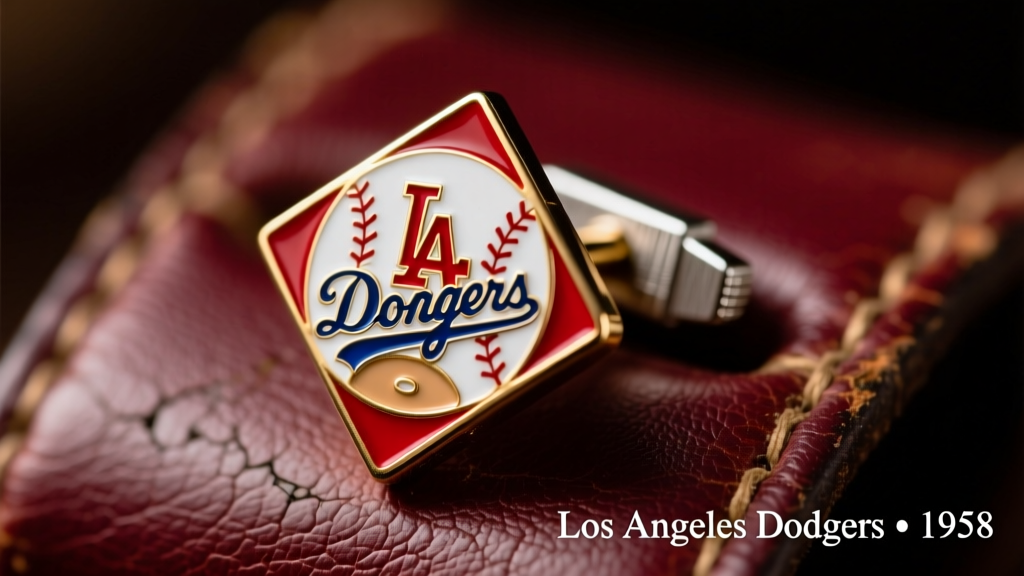
Los Angeles Dodgers Enamel Baseball Cuff Links: Collectible Craftsmanship, Provenance, and Market Value
Who Is The Maker of This Pottery Porcelain Vase? A Provenance-Driven Identification Guide