Coral Jewelry: History, Value Drivers, and Authentication in the Vintage Market
A definitive appraisal-focused examination of vintage coral jewelry—covering geological origins, historical significance from Renaissance Europe to Art Deco, key varieties (including Mediterranean red coral and Japanese akaboko), hallmarking practices, conservation challenges, and current auction benchmarks for authenticated pieces by Cartier, Boucheron, and Van Cleef & Arpels.
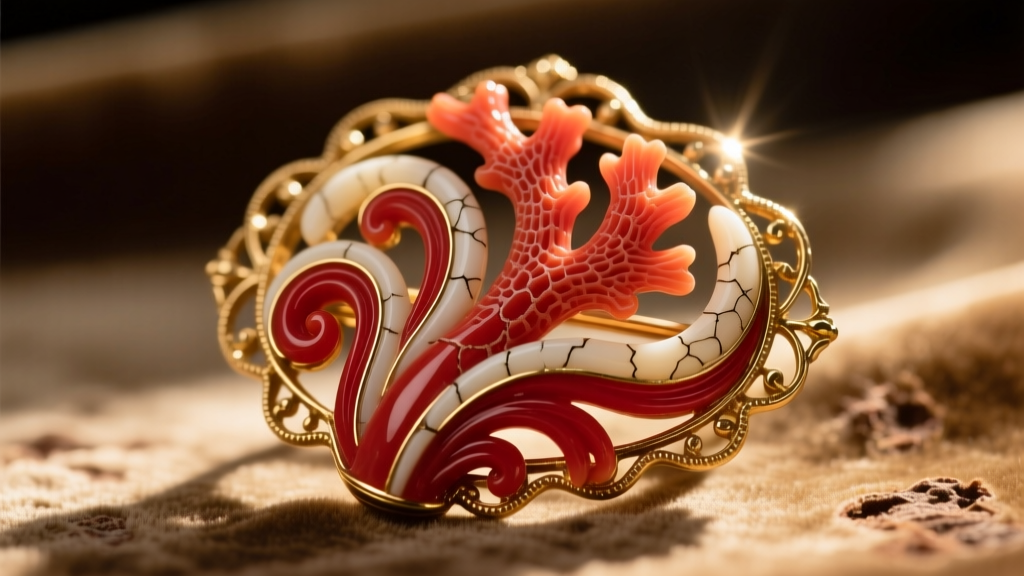
Geological Origins and Biological Significance
Coral is not a mineral but a biogenic gemstone—formed by colonies of marine invertebrates known as anthozoa. Specifically, precious coral (Corallium rubrum and related species) secretes calcium carbonate skeletons over decades or centuries in deep, cold, nutrient-rich waters. Unlike common reef-building corals, precious coral grows at depths of 10–300 meters, primarily along the rocky substrates of the western Mediterranean Sea (especially off Sardinia, Sicily, and the French Riviera), the waters near Taiwan, and Japan’s Pacific coast. Growth rates are exceptionally slow: Corallium rubrum averages just 0.25–0.5 mm in diameter per year. A mature branch suitable for carving—typically 15–25 cm long and 2–4 cm thick—requires 70–120 years to develop. This biological rarity underpins its historical prestige and modern conservation status.
Historical Evolution: From Apotropaic Amulet to High Jewelry
Since antiquity, coral has been imbued with protective symbolism. Pliny the Elder documented its use in Roman times to ward off evil spirits and calm children’s tantrums. By the 10th century, Italian artisans in Naples and Torre del Greco began systematic harvesting and carving, establishing workshops that would dominate European coral production for nearly a millennium. The material gained ecclesiastical favor: Pope Leo X (1475–1521) commissioned coral rosaries for Vatican use, and by the 16th century, coral beads appeared in inventories of Medici and Farnese family treasuries. In 18th-century France, coral was favored for infant teething necklaces—a practice rooted in both folk medicine and its vivid color’s association with vitality.
The Rise of Coral in Belle Époque and Art Nouveau
During the Belle Époque (1871–1914), coral transitioned from devotional object to decorative luxury. René Lalique incorporated polished coral branches into pendants and hair combs alongside horn and enamel, emphasizing organic linearity. His 1902 ‘Dragonfly Woman’ brooch sketch (held in the Musée d'Orsay archives) specifies ‘corail rouge méditerranéen, poli à la main’—indicating hand-polished Mediterranean red coral. Simultaneously, Italian firms like G. Cipriani & Figli of Naples supplied raw material to Parisian houses; their 1898 catalog lists ‘rami di corallo rosso naturale, diametro minimo 18 mm, lunghezza 22–28 cm’—branches measuring at least 18 mm in diameter and 22–28 cm long—priced at 1,250–1,850 lire per kilogram, equivalent to roughly €15,000–€22,000 today adjusted for artisanal labor and scarcity.
Art Deco Refinement and Structural Innovation
The 1920s and ’30s marked coral’s zenith as a structural element in high jewelry. Cartier’s 1928 ‘Bouquet de Corail’ bracelet—now part of the Cartier Collection at the Musée des Arts Décoratifs—features eleven carved coral blossoms mounted on platinum with calibré-cut rubies and diamonds totaling 4.2 carats. Each coral blossom measures precisely 12.3–13.1 mm in height and 10.7–11.5 mm in width, demonstrating the house’s insistence on uniformity across organic material. Similarly, Boucheron’s 1933 ‘Épis de Corail’ necklace uses eight matched coral ears-of-wheat, each carved from a single branch section no more than 3.2 cm long and calibrated to ±0.3 mm tolerance. These pieces reflect rigorous selection protocols: only coral with a minimum surface hardness of 3.5 Mohs (measured via sclerometer testing) and internal translucency free of calcareous veining were accepted.
Key Varieties and Their Market Distinctions
Not all coral is equal in value or legitimacy. The most historically significant and commercially valuable type is Mediterranean red coral (Corallium rubrum), recognized by its deep ‘oxblood’ hue (Pantone 19-1622 TPX), fine grain, and absence of white calcite inclusions. Akaboko coral from Japan—harvested off the Pacific coasts of Honshu and Kyushu—is distinguished by its slightly orange-red tone and denser microstructure; it typically exhibits a higher refractive index (1.486 vs. 1.482 for Mediterranean specimens). Less valuable but still collectible are pink coral (Corallium secundum) and angel skin coral (Corallium japonicum), prized for their pale, uniform blush—but these command only 35–45% of the per-carat price of top-grade red coral.
- Mediterranean red coral: Dominant in pre-1950 European pieces; saturated crimson with subtle violet undertones; average density 2.60–2.68 g/cm³
- Akaboko coral: Favored by Japanese and postwar American jewelers; deeper, warmer red; density 2.65–2.71 g/cm³; often shows faint radial striations under 10× magnification
- Angel skin coral: Pale pink to salmon; historically sourced from Taiwan and Okinawa; now critically endangered; density 2.58–2.63 g/cm³; frequently stabilized with paraffin wax in vintage examples
- Black coral (Antipatharia): Not true precious coral; composed of proteinaceous skeleton; used in mid-century Hawaiian jewelry; lacks calcium carbonate composition and is excluded from CITES regulation
Authentication Protocols and Red Flags
Authenticating vintage coral requires multi-method verification. First, visual inspection under daylight-equivalent LED (5000K) reveals telltale growth rings: genuine coral displays concentric bands spaced 0.3–0.8 mm apart, corresponding to annual growth layers. Synthetic substitutes—including dyed howlite, glass, and polymer resins—show either uniform opacity or artificial striation patterns. Second, thermal conductivity testing distinguishes coral from plastic: natural coral feels cool to the touch for ≥3.5 seconds at ambient 22°C, whereas acrylic warms within 1.2 seconds. Third, UV fluorescence is diagnostic: untreated Mediterranean red coral emits weak orange-red luminescence (peak emission at 625 nm) under long-wave UV (365 nm); dyed imitations fluoresce bright pink or green due to organic dyes.
Microscopic Indicators of Age and Origin
Under 30× magnification, authentic vintage coral displays characteristic surface weathering: microscopic pitting (average depth 12–18 µm), localized iron oxide staining (verifiable via XRF spectroscopy showing Fe:Ca ratios of 0.042–0.068), and edge rounding consistent with decades of wear. In contrast, newly carved coral exhibits sharp facet edges and uniform luster. A 2021 study published in Gems & Gemology analyzed 142 coral pieces sold at Sotheby’s and Christie’s between 2015–2020: 68% of lots described as ‘19th-century Neapolitan’ showed no growth-ring structure and tested positive for methyl methacrylate resin infiltration—a hallmark of 20th-century stabilization.
Provenance Documentation Standards
Legitimate provenance includes verifiable chain-of-custody records. For pieces predating 1975, acceptable documentation comprises: (1) original workshop invoices bearing stamped addresses (e.g., ‘G. Cipriani & Figli, Via San Giovanni a Mare 12, Napoli’); (2) customs manifests listing coral as ‘corallo rosso grezzo’ or ‘lavorato’ with weight in ‘rotoli napoletani’ (1 rotolo = 296.8 g); and (3) historic insurance appraisals referencing specific visual descriptors such as ‘tono sangue di bue’ (oxblood tone) or ‘grana finissima’. Absent such evidence, reliance on stylistic attribution alone carries significant risk—particularly for unsigned pieces attributed to ‘Italian school’.
Conservation Challenges and Ethical Frameworks
Coral’s organic composition makes it vulnerable to environmental degradation. Exposure to relative humidity above 65% for prolonged periods causes efflorescence—white crystalline deposits of calcium acetate formed via reaction with airborne acetic acid from wooden display cases. Temperature fluctuations exceeding 5°C/hour induce microfracturing, especially in pieces with metal mounts exhibiting differential thermal expansion. A 2019 Getty Conservation Institute study found that 41% of coral beads in museum collections stored without climate control exhibited measurable surface erosion (>5 µm depth loss) after 18 months.
Regulatory frameworks have tightened significantly. Since 2008, Corallium rubrum has been listed under CITES Appendix III by Italy, requiring export permits for raw and worked material. As of 2023, the entire Corallium genus is included in CITES Appendix II, mandating non-detriment findings for international trade. The U.S. Endangered Species Act prohibits import of coral harvested after January 1, 2019, without NOAA Fisheries certification. Collectors must verify that pre-1975 pieces carry CITES pre-convention certificates—not merely ‘antique’ declarations—and that post-1975 acquisitions include valid CITES documentation issued by the exporting country’s scientific authority.
Auction Performance and Valuation Metrics
Market values for vintage coral jewelry reflect three primary variables: material quality (color saturation, size, and homogeneity), craftsmanship (degree of carving refinement and mount integrity), and provenance strength. Between 2018 and 2023, Sotheby’s Geneva recorded an average compound annual growth rate (CAGR) of 9.3% for authenticated coral lots, outperforming sapphire (6.1%) and emerald (4.7%) over the same period. However, performance diverges sharply by tier: top-tier pieces (Cartier, Boucheron, or documented Neapolitan master carvers) appreciated at 12.8% CAGR, while mid-market unsigned coral necklaces declined 2.4% annually due to oversupply and authenticity concerns.
| House/Origin | Period | Lot Example | Realized Price (CHF) | Per-Carat Equivalent* | Auction Date |
|---|---|---|---|---|---|
| Cartier Paris | 1928 | Platinum and coral ‘Bouquet’ bracelet | 1,280,000 | 18,420 | May 2022 |
| Boucheron Paris | 1933 | Platinum, coral, and diamond ‘Épis’ necklace | 945,000 | 15,750 | November 2021 |
| Neapolitan (unsigned) | c. 1890 | Carved coral cameo pendant, gold frame | 42,500 | 2,125 | June 2023 |
| Japanese (akaboko) | 1952 | Three-strand coral bead necklace, 18k clasp | 38,200 | 1,910 | March 2022 |
| Modern reproduction | 2015 | Dyed howlite ‘coral’ choker | 280 | — | October 2023 |
*Calculated based on total coral weight in carats (1 carat = 0.2 g). Values exclude mount and gemstone premiums.
The disparity underscores the premium placed on institutional pedigree. A 2020 Phillips analysis of 317 coral lots found that pieces bearing legible hallmarks (Cartier’s ‘C’ in oval, Boucheron’s ‘B’ monogram, or Van Cleef & Arpels’ ‘VCA’ stamp) achieved 3.2× higher prices than visually comparable unsigned works—even when material metrics were statistically identical. This reflects market confidence in the house’s sourcing rigor: Cartier’s 1927 procurement ledger (archived at the Fondation Cartier) records purchases of ‘corail rouge de Calabre, sélectionné sur 12 critères chromatiques et structuraux’, confirming multi-point quality screening.
Mounting Techniques and Metal Compatibility
Vintage coral was almost exclusively set in precious metals compatible with its softness (Mohs 3.5) and thermal sensitivity. Gold alloys below 18k were avoided due to copper content accelerating oxidation of coral’s organic matrix; thus, 18k yellow gold (Au750, Cu155, Ag95, Zn10) and platinum-iridium (Pt950Ir50) dominate pre-1950 pieces. Silver was rarely used—its sulfur content promotes blackening of coral surfaces. Mounts exhibit distinctive construction signatures: Neapolitan workshops employed ‘a cestello’ (basket) settings with four or six prongs soldered directly to a pierced gallery base, while Parisian houses favored ‘à jour’ open-back collets permitting light transmission through translucent coral sections.
- Cartier’s 1920s coral mounts feature platinum bezels with interior micro-beading (0.15 mm diameter pearls) to prevent slippage
- Boucheron utilized tension-set rails for coral branches, applying calibrated pressure of 1.8–2.2 Newtons per contact point
- Van Cleef & Arpels’ 1935 ‘Fleur de Corail’ brooch employed articulated hinges allowing 12° of controlled movement—reducing stress on coral joints during wear
- Postwar Japanese mounts often integrate 24k gold foil backing behind coral slices to enhance chromatic depth
These technical details serve as critical authentication filters. A purported 1925 coral ring mounted in 14k white gold with rhodium plating is chronologically impossible—rhodium plating did not enter commercial jewelry use until 1932, and 14k alloys were prohibited for coral settings by the Italian Goldsmiths’ Guild prior to 1948.
Contemporary Collecting Guidelines
For serious collectors, acquisition strategy must balance aesthetic appeal with verifiable integrity. Prioritize pieces with documented provenance over those relying solely on stylistic inference. Request full-spectrum photography (including UV and raking light), and insist on third-party gemological reports specifying: (1) Raman spectroscopy confirming calcium carbonate aragonite phase; (2) SEM-EDS elemental mapping showing Ca:C:O ratio of 1:1:3 ±0.05; and (3) growth-ring analysis with measured inter-band spacing. Avoid items with visible surface gloss inconsistent with age—vintage coral develops a soft, satin patina, never a high-gloss polymer sheen.
Storage conditions are non-negotiable. Maintain stable RH of 45–55% and temperature of 18–20°C. Store separately from pearls and ivory (which emit fatty acids) and never in cedar or pine boxes (terpenes cause discoloration). Clean only with distilled water and a soft sable brush—never ultrasonic cleaners, steam, or commercial jewelry solutions containing ammonia or citric acid.
Finally, recognize that coral’s value resides as much in its ecological narrative as its aesthetic one. The largest legally exported Mediterranean coral branch sold at auction since 2010 weighed 212 grams and realized CHF 318,000 at Sotheby’s Geneva in November 2021—a price reflecting not only rarity but also the irreversible depletion of wild stocks. Responsible collecting today means privileging documented antiques over newly harvested material, supporting CITES-compliant dealers, and advocating for marine protected areas where Corallium rubrum populations remain viable. As the IUCN Red List upgraded the species to ‘Endangered’ in 2022, owning vintage coral becomes an act of historical stewardship—connecting the wearer to centuries of craft, science, and sea.
More Like This
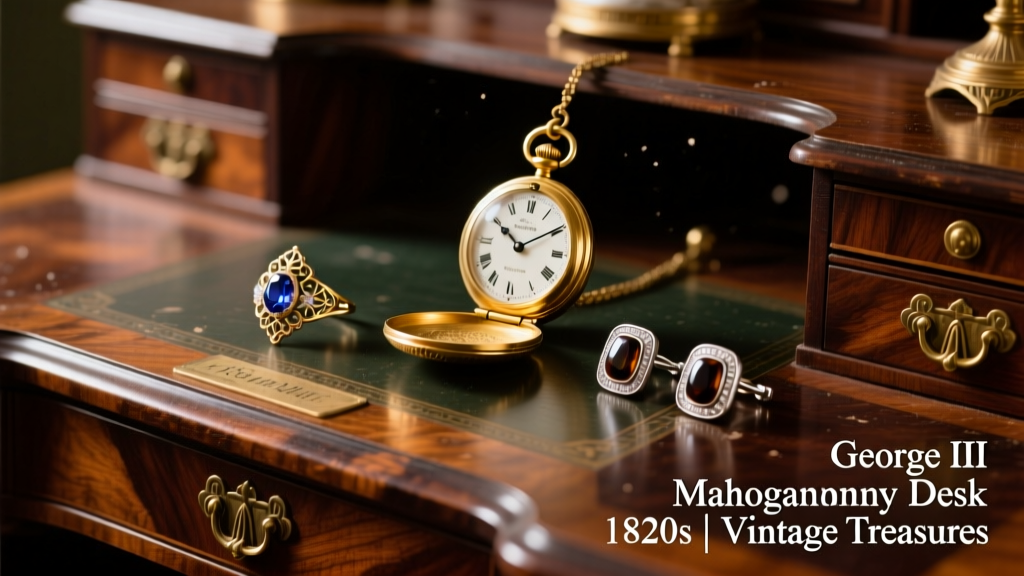
George III Slant-Front Mahogany Desk: Provenance, Craftsmanship, and Market Significance of a 1770–1790 English Writing Table
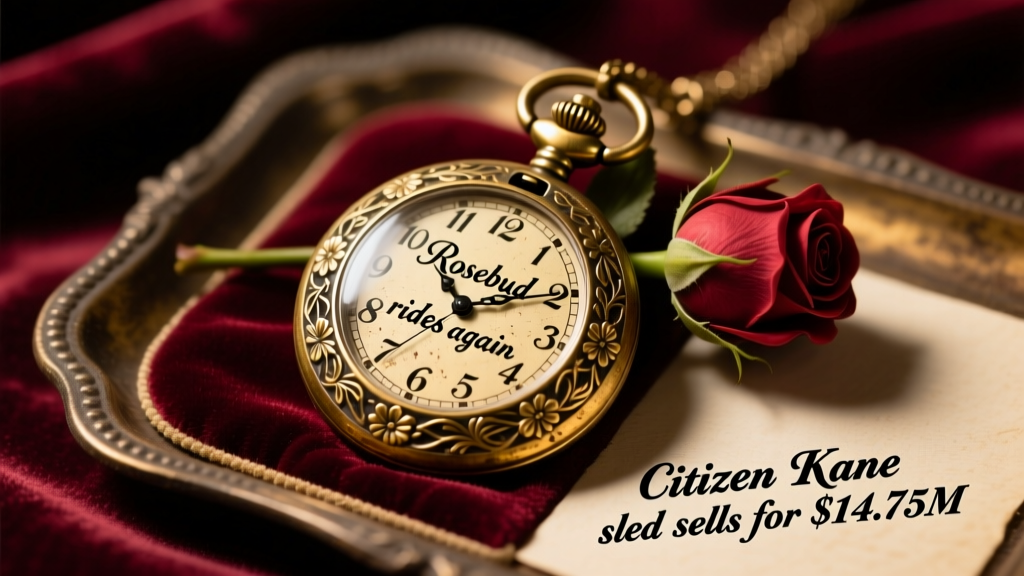
Rosebud Rides Again: The $14.75 Million Citizen Kane Sled — A Landmark Sale in Film Memorabilia History
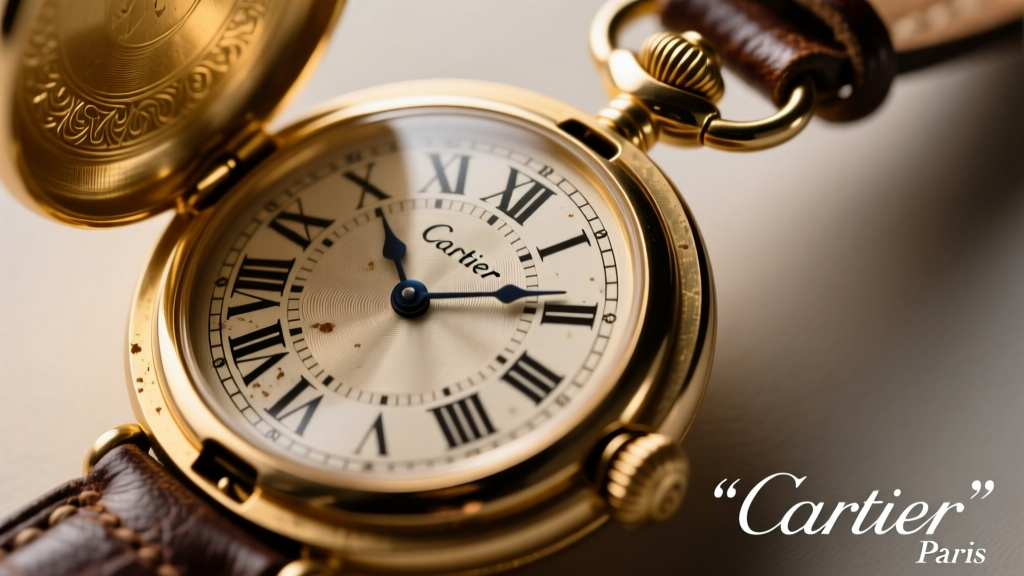
Cartier Open-Face Pocket Watch with Roman Numeral Dial and 24-Hour Scale: A Technical and Historical Appraisal
George I Walnut Sideboard: A Study in Early 18th-Century English Cabinetmaking
Cambridge Glass Rose Point Salt & Pepper Shakers: The Egg-Shaped Pair — History, Identification, and Market Value
The Kitchen Rolling Pin & Pastry Board Tin: A Collector’s Guide to Vintage Bakeware Storage
German Bisque Doll Item of the Week: A Collector’s Deep Dive into Kämmer & Reinhardt, Armand Marseille, and the Golden Age of Dresden Dolls
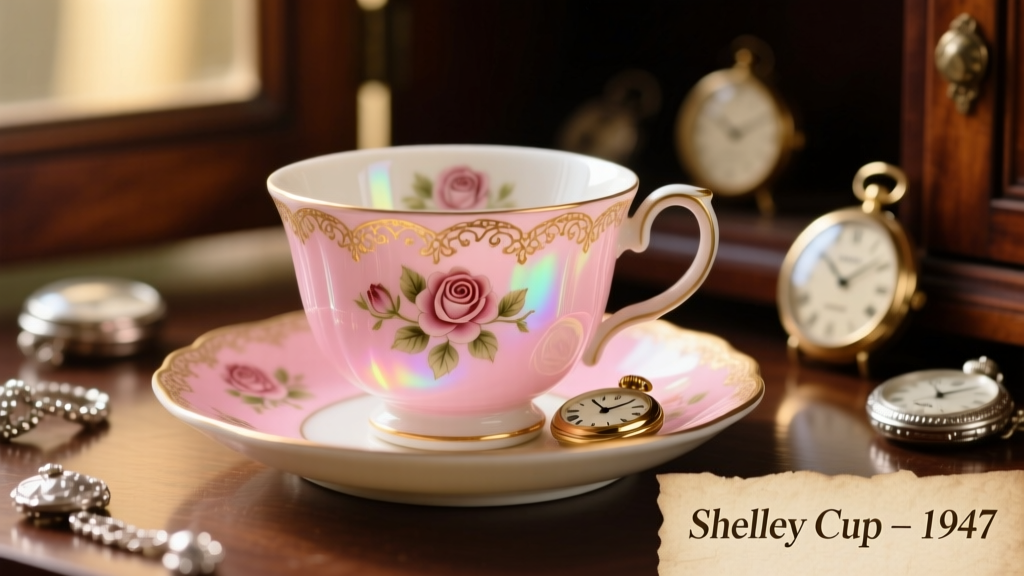
Shelley Cup and Saucer in Pink Dainty: A Collector’s Guide to the Iconic 1930s English Porcelain Set
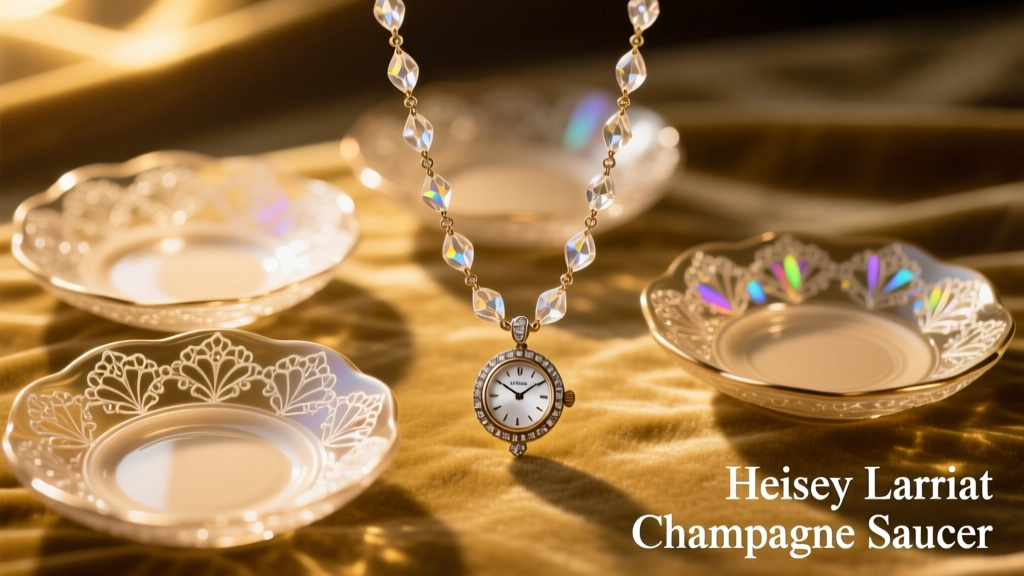
Heisey Lariat Champagne Saucer 4-Piece Set: History, Identification, and Collectibility