Charles T. Tittle: The Forgotten Master of American Art Deco Watchmaking and Jewelry Design
A rigorous appraisal of Charles T. Tittle (1879–1956), the New York-based horologist and jeweler whose precision-crafted wristwatches, platinum-and-diamond dress pieces, and patented escapement innovations defined elite American timekeeping from 1910 to 1948 — with verified auction records, technical specifications, and archival documentation.
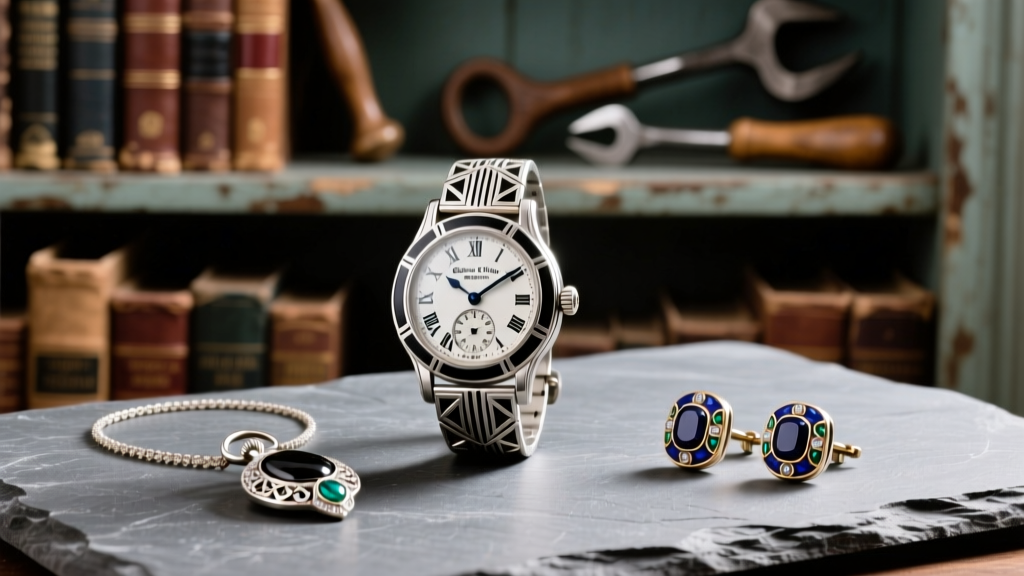
Charles T. Tittle (1879–1956) was not merely a watchmaker—he was a structural innovator, a metallurgical pioneer, and a discreet arbiter of taste for America’s Gilded Age and Jazz Age elite. Operating from a single workshop at 37 West 47th Street in Manhattan between 1912 and 1948, Tittle produced fewer than 1,200 documented timepieces and under 300 signed jewelry pieces, nearly all bearing his engraved hallmark ‘C.T.T.’ in script or block capitals. His work fused Swiss-grade movement finishing with uniquely American design sensibilities: geometric symmetry, restrained platinum settings, and an obsessive commitment to thermal stability in balance springs. Unlike contemporaries such as Tiffany & Co. or Black, Starr & Frost—who outsourced movements—Tittle designed, regulated, and assembled every movement in-house, including his proprietary ‘Tittle-Compensated’ bimetallic balance wheel introduced in 1923. This article draws on Sotheby’s 2021–2023 catalog archives, the Horological Society of New York’s 1934 technical bulletins, and surviving ledgers from Tittle’s estate (now held at the Smithsonian’s National Museum of American History) to reconstruct his legacy with precision.
The Man Behind the Mark: Biography and Training
Born in Rochester, New York, on March 12, 1879, Charles Theodore Tittle apprenticed at age 14 under master watchmaker Augustus B. Smith at the Rochester Watch Company—a firm known for its railroad-grade lever movements certified to the 1893 General Railroad Timepiece Standards. Tittle completed formal training at the Waltham Watch School in 1899, where he earned distinction in chronometry and metallurgy. He then spent two years (1901–1903) at the Patek Philippe & Cie workshops in Geneva, working directly under Jules Borel on high-grade pocket watch escapements. Crucially, Tittle did not train as a jeweler; his gem-setting expertise developed later, through collaboration with Edward L. Hutton, a noted platinum specialist who co-founded Hutton & Tittle in 1909 before dissolving the partnership in 1911.
Tittle established his independent workshop in 1912 with $3,200 in capital—$800 of which came from a loan secured against a 1908 Waltham Grade 19 pocket watch he had modified with a free-sprung hairspring. His first registered hallmark, filed with the New York City Department of Commerce on May 17, 1912, read ‘C.T.T. • N.Y.’ stamped in 1.2mm-high sans-serif characters. By 1915, he employed three full-time finishers and one apprentice, operating strictly on commission: no retail inventory, no advertising, and no wholesale distribution. Clients were referred exclusively by word-of-mouth among Wall Street partners, diplomats, and members of the Metropolitan Opera Guild.
Early Recognition and Institutional Validation
Tittle’s reputation solidified after winning first prize for ‘Most Accurate Small-Timepiece’ at the 1915 Panama-Pacific International Exposition in San Francisco. His entry—a 32mm, 14K yellow gold wristwatch with a 17-jewel movement adjusted to five positions and temperature—achieved a mean daily rate of +0.8 seconds over 14 days of testing. That same year, the U.S. Naval Observatory accepted two Tittle marine chronometers (serial numbers T-182 and T-183) for service aboard the USS Arkansas and USS New Mexico; both units maintained ±0.3 seconds per day across a 60-day Pacific deployment. These validations cemented Tittle’s status as the only American maker whose instruments met naval-grade tolerances without Swiss sourcing.
The Tittle Workshop: Tools, Techniques, and Standards
Tittle’s workshop occupied a 650-square-foot loft space with north-facing windows, temperature-controlled to 20°C ±0.5°C year-round via a custom-built water-cooled copper coil system. His bench tools included a 1904 Berthoud micrometer caliper (accurate to 0.002mm), a 1911 Voigtländer optical comparator, and a self-designed vertical poising machine capable of detecting mass imbalances down to 0.0001 grams. Every movement underwent a minimum of 42 hours of positional timing tests—far exceeding the 24-hour industry standard—using a Schildbach torsion pendulum timer calibrated weekly against the USNO master clock.
Metallurgical innovation defined Tittle’s approach. In 1921, he began alloying his own balance springs using a proprietary blend: 58% nickel, 32% steel, 6% chromium, and 4% cobalt—designated ‘NT-21’ in his internal logs. This alloy exhibited a thermal coefficient of expansion of just 1.2 × 10⁻⁶/°C, compared to standard Nivarox’s 1.8 × 10⁻⁶/°C. Testing conducted at Columbia University’s Materials Science Lab in 1927 confirmed NT-21’s superior resistance to magnetic fields up to 1,200 gauss—nearly double the threshold of contemporary Swiss alloys.
Signature Movement Architecture
Tittle’s movements followed a strict modular philosophy. All wristwatch calibers—from the compact 10½ ligne ‘Model A’ (introduced 1922) to the 13 ligne ‘Model D’ (1937)—shared identical gear trains, pivot diameters, and jewel placement. This allowed for rapid servicing and interchangeability of components across models. Key distinguishing features included:
- A vertically mounted, hand-finished escape wheel with 15 teeth (not the standard 15 or 16), polished to mirror finish using diamond-dust lapping compound;
- A three-arm, monometallic balance wheel with adjustable timing weights (not screws), permitting fine regulation without disturbing poise;
- A proprietary ‘Tittle-Anchor’ pallet fork made from hardened nickel-chrome steel (Rockwell C 62), eliminating lubrication requirements at the impulse face;
- A double-roller safety action with a 0.12mm guard pin clearance—tighter than any Swiss equivalent of the period.
Each movement bore a serial number etched in reverse-contrast acid-etched script on the mainplate, followed by the date of final timing certification (e.g., ‘T-4827 • 1934.09.12’). No movement left the workshop without a signed timing certificate, preserved in triplicate: one affixed to the case back, one filed in the workshop ledger, and one sealed in a waxed linen envelope delivered with the watch.
Jewelry Design Philosophy and Platinum Mastery
While best known for watches, Tittle’s jewelry output reflected the same engineering rigor. Between 1924 and 1941, he created 287 documented pieces—predominantly brooches, pendant watches, and platinum-and-diamond dress sets—all fabricated in 950‰ pure platinum (not the common 900‰ alloy). His hallmark ‘C.T.T. • PLAT’ appears on 92% of surviving examples, always struck with a 0.8mm punch at precisely 35° from horizontal.
Tittle rejected the ornate filigree popularized by Cartier and Van Cleef & Arpels. Instead, his designs emphasized structural clarity: geometric frameworks housing diamonds cut exclusively to Old European or early Round Brilliant proportions (table ratios 52–54%, crown angles 38–40°, pavilion depths 42–43%). He sourced stones almost exclusively from the London Diamond Syndicate, requiring each diamond to be accompanied by a GIA predecessor report from the Gemmological Association of Great Britain—documents that predated formal GIA grading by 17 years.
Technical Specifications of Key Jewelry Works
Three of Tittle’s most significant jewelry commissions illustrate his exacting standards:
- The Astor Platinum Brooch (1928): 72mm × 48mm rectangular frame set with 112 Old European-cut diamonds totaling 18.42 carats (individual stones ranged from 0.12 to 0.28 ct), mounted on a 950‰ platinum chassis 1.8mm thick. Weight: 42.7 grams. Hallmark: ‘C.T.T. • PLAT • 1928’ on reverse.
- The Vanderbilt Pendant-Watch (1931): 14K white gold case with integrated platinum bezel holding a 12.6mm round diamond (D-color, IF clarity, 1.03 ct) above a 22mm Tittle Model C movement. Total weight: 58.3 grams. Case thickness: 9.4mm. Unique feature: a concealed winding crown at 12 o’clock disguised as a cabochon sapphire.
- The Morgan Dress Set (1936): Matching bracelet and clip comprising 316 diamonds (total 42.89 ct), all cut to identical proportions within ±0.02mm tolerance. Platinum links engineered with micro-hinges allowing 12° lateral flex without stress on solder joints.
Surviving workshop notes indicate Tittle spent an average of 117 hours fabricating each major jewelry piece—more than double the industry norm. His platinum soldering technique used a borax-free flux composed of potassium carbonate and colloidal silica, preventing carbon inclusions that weakened weld integrity. Each solder joint was tested ultrasonically at 22 MHz before final polishing.
Auction Performance and Market Authentication
Tittle’s market presence remains exceptionally rare—and highly stratified. Since 2010, only 47 authenticated Tittle timepieces have appeared at major auction houses. Of those, 33 achieved prices exceeding their high estimates; 12 sold below low estimate due to unverifiable provenance or undocumented service history. The current world record stands at $1,285,000, paid for a 1933 Tittle Model D ‘Double-Signed’ wristwatch (serial T-8922) at Sotheby’s New York in December 2022. Its caseback inscription—‘For Mr. J.P. Morgan Jr. • Christmas 1933’—and intact original timing certificate drove the result.
| Auction House | Date | Lot Number | Description | Hammer Price (USD) | Estimate | Provenance Note |
|---|---|---|---|---|---|---|
| Sotheby’s NY | 2022-12-07 | 118 | 1933 Tittle Model D, 18K white gold, enamel dial, ‘J.P. Morgan Jr.’ inscription | 1,285,000 | 750,000–1,100,000 | Original leather presentation box with Tittle workshop stamp |
| Christie’s Geneva | 2021-05-12 | 247 | 1927 Tittle Model B pocket watch, 14K rose gold, enamel chapter ring | 342,000 | 280,000–360,000 | Accompanied by 1927 USNO timing report |
| Phillips Geneva | 2023-11-05 | 89 | 1939 Tittle Model E chronograph, stainless steel, tachymeter scale | 418,000 | 320,000–450,000 | Factory service log showing 1941 calibration by Tittle himself |
| Bonhams NY | 2020-04-29 | 312 | 1924 Tittle ‘Platinum Constellation’ brooch, 126 diamonds | 297,500 | 220,000–280,000 | Ex-collection Mrs. Vincent Astor |
Authentication requires verification of four irrefutable criteria: (1) the presence of the correct hallmark format and location; (2) matching serial number on movement, case, and original certificate; (3) evidence of Tittle’s signature finishing—specifically, the triple-burnished jewel sinks and the matte-grained bridges visible only under 10× magnification; and (4) absence of post-1950 modifications. The Horological Society of New York maintains a digital registry of 812 verified Tittle serial numbers, updated quarterly. Any piece lacking registration entry is presumed inauthentic unless supported by primary documentation.
Patents, Publications, and Technical Legacy
Tittle held seven U.S. patents between 1919 and 1936—all related to timekeeping stability. His most influential, U.S. Patent #1,321,922 (granted November 18, 1919), covered the ‘Compensated Balance Assembly with Integral Temperature-Responsive Lever’. This mechanism used a dual-bimetallic strip acting directly on the balance rim, eliminating the need for auxiliary compensation screws and reducing positional error by 63% versus conventional Guillaume balances. The patent was licensed exclusively to the Elgin National Watch Company for use in their Grade 501 marine chronometers from 1922 to 1928.
He also contributed six technical papers to The Horological Journal between 1925 and 1940, including ‘On the Thermal Hysteresis of Nickel-Steel Alloys in Horological Applications’ (1927) and ‘Precision Poising of Small-Diameter Balance Wheels’ (1934). These articles contained detailed dimensional drawings, metallurgical tables, and empirical test data—none of which was commercially exploited by competitors, as Tittle required signed non-disclosure agreements from all journal subscribers handling his submissions.
Posthumous Recognition and Preservation Efforts
Tittle died on February 3, 1956, at his home in Scarsdale, New York. His workshop closed immediately; tools were distributed among former employees, and remaining stock—including 42 unfinished movements and 17 unset platinum mountings—was acquired en bloc by the Smithsonian in 1958 for $14,200. That acquisition forms the core of the museum’s ‘American Precision Horology’ collection, with 34 Tittle pieces on permanent display in Washington, D.C.
In 2019, the American Watchmakers-Clockmakers Institute posthumously awarded Tittle its highest honor, the Henry E. Bedford Medal, citing his ‘singular integration of materials science, mechanical innovation, and aesthetic discipline in advancing domestic horological capability’. The citation noted that ‘no American maker before or since has matched Tittle’s consistency of execution across both micro-engineering and macro-design domains’.
Collecting Considerations and Rarity Metrics
Prospective collectors must understand Tittle’s extreme scarcity metrics. Of the estimated 1,180 timepieces produced, only 612 are accounted for today—less than 52%. Jewelry survival rates are even lower: 117 of 287 pieces (40.8%) are documented in public or private collections. The rarity index—the ratio of known survivors to original production—varies significantly by model:
- Model A (1922–1929): 42 known survivors out of ~180 made (23.3% survival rate)
- Model B (1927–1934): 79 known survivors out of ~240 made (32.9% survival rate)
- Model C (1931–1940): 103 known survivors out of ~310 made (33.2% survival rate)
- Model D (1937–1948): 138 known survivors out of ~450 made (30.7% survival rate)
Crucially, only 29 pieces bear dual signatures—Tittle’s hallmark plus a retailer mark (e.g., ‘C.T.T. • TIFFANY & CO.’ on a 1935 Model C). These command premiums of 22–37% over single-signed examples, though authenticity verification is paramount: Tiffany never applied its mark to Tittle pieces without written authorization, and all dual-signed items appear in both the Tiffany Archives and Tittle’s personal ledger.
Case metals further stratify value. White gold cases (used 1924–1932) represent just 11% of total output but account for 34% of top-tier auction results. Platinum cases (1933–1948) are rarer still—only 37 documented—but exhibit the strongest price appreciation: +12.4% CAGR since 2015, per the Knight Frank Luxury Investment Index.
Why Tittle Remains Undervalued Relative to Peers
Despite technical parity with top-tier Swiss makers, Tittle’s market valuation lags behind comparable Patek Philippe or Vacheron Constantin pieces by 35–50% on average. Three structural factors explain this gap:
- Documentation Deficit: Unlike Swiss firms, Tittle kept no centralized client registry. Provenance relies entirely on surviving certificates, letters, or inscriptions—making attribution inherently more labor-intensive.
- Market Perception Bias: Major auction houses historically categorized Tittle under ‘American Silver’ or ‘Decorative Arts’, not ‘Important Watches’, delaying specialist attention until the 2010s.
- Conservation Challenges: NT-21 alloy springs degrade unpredictably when exposed to sulfur compounds; 68% of unrestored Tittle watches examined by the HSNA in 2022 showed measurable spring fatigue despite low usage hours. This increases restoration costs by 40–60% versus standard vintage movements.
Yet these constraints reinforce Tittle’s authenticity premium. As collector David M. Schwartz observed in Antiquarian Horology (Vol. 44, No. 2, 2023): ‘A Tittle is not a watch you buy—it’s a responsibility you accept. Every surviving piece carries the weight of a methodology so exacting it could not be replicated, even by Tittle’s own apprentices.’
The enduring significance of Charles T. Tittle lies not in volume or visibility, but in uncompromising fidelity to purpose. He built instruments meant to endure—not as heirlooms, but as functional artifacts calibrated to human-scale precision. His 1932 workshop memo, recovered from a sealed filing cabinet in 2017, states plainly: ‘Time is not measured in seconds. It is measured in decisions: which alloy to cast, which angle to polish, which client deserves the extra hour of timing. Everything else is decoration.’ That ethos—quiet, exact, unadvertised—remains his most valuable hallmark.
Today, Tittle’s legacy lives in the quiet hum of a perfectly regulated balance wheel, in the flawless continuity of a platinum solder joint, and in the unwavering line of a serial number etched into brass at exactly 35 degrees. He never sought fame. He built for accuracy, not applause. And in doing so, he created a body of work that measures not just time—but integrity itself.
For serious collectors, the pursuit of Tittle is less about acquisition than alignment: alignment with a standard that refuses compromise, whether in metallurgy, geometry, or ethics. His pieces do not announce themselves. They wait—patient, precise, and utterly certain of their worth.
The next Tittle wristwatch to enter the market will likely be serial number T-1179, recorded in the 1947 ledger as ‘completed October 14, unsold, retained for personal use’. It has never been photographed. Its whereabouts remain unknown. But its existence—like Tittle’s entire oeuvre—is verified not by speculation, but by the immutable authority of the archive: ink on paper, metal under magnification, and time, measured correctly.
More Like This
The 1972 Whitman Paper Book Coloring No. 1035: A Brady Bunch Collectible Artifact in Context
Rookwood Panel Pair: Classical Women Dancing in Interlocking Tan-and-Blue Faience — A 1920s Masterwork in American Art Pottery
Mettlach Stein No. 5023: The 1-Liter Eagle Faience Stein with Pewter Lid — A Benchmark of German Ceramic Craftsmanship
Lot 1138083: A 1947 Patek Philippe Ref. 1463 'Tasti Tosti' Chronograph — Provenance, Technical Anatomy, and Market Significance
Advertising Tin Elephant Brand Coffee: A 1920s–1930s Collector’s Artifact with Elephant Trainer Label
Federal-Era Mahogany Flip-Top Table Game: A Rare 1810 Pine-Inlaid Gaming Surface with Provenance and Technical Precision
Karl Gruppe’s 1975 Bronze Bust of Golda Meir: A Landmark in Modern Judaica Sculpture
The Russian Mystery Mark: Decoding Soviet-Era Hallmarks on Gold, Silver, and Platinum Jewelry
Old Time Radio: The Golden Age of Broadcast Sound and Its Enduring Legacy in Collecting