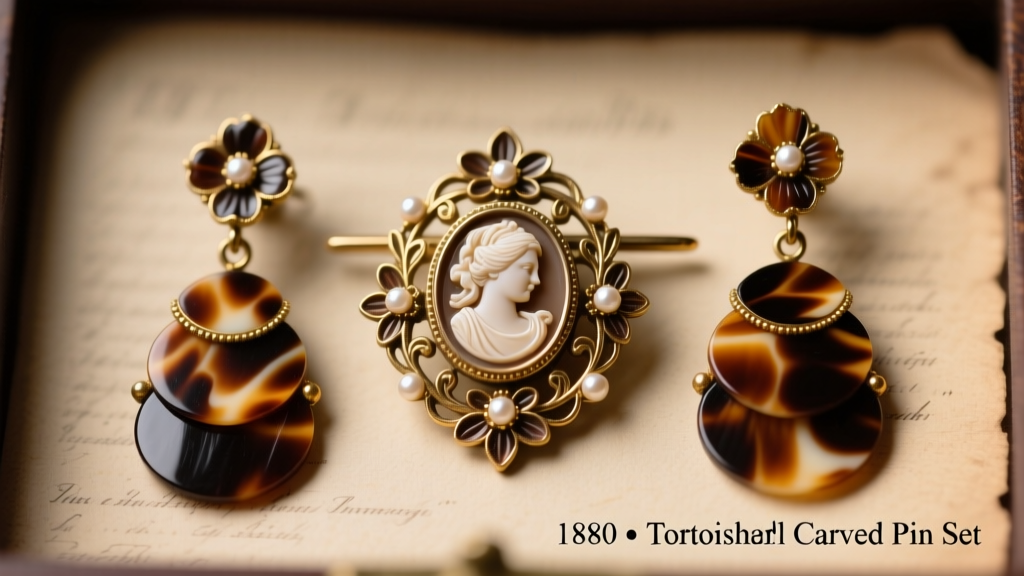
Old Time Radio: The Golden Age of Broadcast Sound and Its Enduring Legacy in Collecting
A detailed exploration of Old Time Radio (1920s–1950s), covering technical evolution, iconic programs and sponsors, manufacturing milestones by brands like Zenith, RCA, and Atwater Kent, collector metrics including chassis dimensions, tube counts, and restoration ethics, plus market trends backed by 2023–2024 auction data.
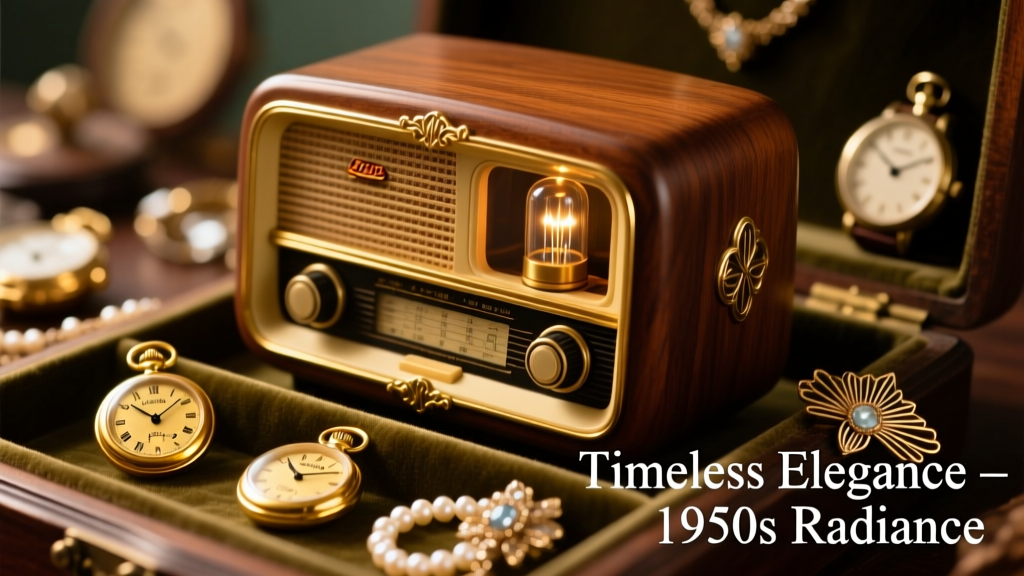
The Golden Age of Audio: Defining Old Time Radio
Old Time Radio (OTR) refers to the era of American broadcasting from the early 1920s through the mid-1950s—roughly spanning the rise of commercial radio networks to the dominance of television. During this period, radio was not merely entertainment; it was the primary conduit for news, drama, comedy, music, and national identity. Unlike modern streaming, OTR relied on live or transcription disc broadcasts transmitted via amplitude modulation (AM) on frequencies between 540 kHz and 1700 kHz. Sets were large, often furniture-grade console models measuring up to 48 inches wide, 24 inches deep, and 36 inches tall, with walnut or mahogany veneers, intricate grille cloths, and vacuum tube electronics. Key manufacturers included Zenith, RCA, Philco, Atwater Kent, and Emerson—all producing receivers with distinct engineering signatures, such as Zenith’s ‘Trans-Oceanic’ portable line (introduced 1942) or RCA’s ‘Super-Heterodyne’ circuitry patented in 1924. By 1939, over 90% of U.S. households owned at least one radio, making it the first mass medium to unify national culture across geography and class.
Engineering Excellence: Tubes, Tuners, and Cabinet Craftsmanship
Vacuum tube technology defined OTR hardware. Early sets used battery-powered triodes like the UX-201A (introduced 1922), requiring separate A (filament), B (plate), and C (grid bias) voltage supplies. By the late 1920s, AC-powered ‘All-American Five’ (AA5) designs became standard—so named for their use of five tubes: a 12BE6 converter, 12BA6 IF amplifier, 12AV6 detector/first audio amplifier, 50C5 power amplifier, and 35W4 rectifier. These radios operated on 110–120V AC but lacked isolation transformers, posing shock risks—a critical safety consideration for restorers today. Console radios commonly housed eight to twelve tubes, including dual-purpose types like the 6L6 beam power tetrode (used in both amplification and rectification roles).
Chassis Dimensions and Construction Standards
Manufacturers adhered to strict dimensional norms. Zenith’s Model 12-S-562 (1940), a 12-tube cathedral-style set, measured precisely 22.5 inches wide × 13.75 inches high × 10.25 inches deep, with a 16-gauge steel chassis stamped ‘ZENITH RADIO CORP., CHICAGO, ILL.’ in block capitals. Philco’s iconic ‘Model 48-116’ (1948) featured a 20-inch-wide Bakelite cabinet and utilized a 14-inch-diameter speaker cone made from pressed paper impregnated with rosin and linseed oil—materials that degrade predictably over time. Atwater Kent’s pre-1930 ‘Model 46’ employed point-to-point wiring on a hardwood baseboard, with brass binding posts spaced exactly 1.25 inches apart for standardized component mounting.
Signal Reception and Band Coverage
Most domestic receivers covered only the AM broadcast band (540–1700 kHz), but premium models offered shortwave reception. Zenith’s Trans-Oceanic series—particularly the 1948 ‘Deluxe’ model—provided coverage from 1.7 to 18 MHz across six bands using a dual-ganged 20-section variable capacitor and a 6U8A dual-triode RF amplifier. Sensitivity was rated at 20 µV for 10 dB signal-to-noise ratio; selectivity was measured at 30 dB down at ±15 kHz from center frequency. RCA’s ‘AR-88’ communications receiver (1938), though marketed to hobbyists and government agencies, achieved 1.5 µV sensitivity and utilized a 100 kΩ potentiometer for precise tuning backlash control—a feature later adapted into consumer consoles.
Iconic Programs and the Sponsorship Ecosystem
Programming shaped listener habits and drove hardware sales. ‘The Shadow,’ starring Orson Welles and later William Johnstone, debuted in 1930 and ran for 17 years; its opening line—‘Who knows what evil lurks in the hearts of men? The Shadow knows!’—was delivered over a theremin-generated motif, an early electronic instrument rarely heard outside laboratories. ‘Fibber McGee and Molly’ (1935–1959), sponsored by Johnson’s Wax, leveraged serialized domestic comedy to build brand loyalty—so successfully that Johnson’s sold over $12 million in floor wax annually by 1946, directly attributing growth to radio exposure. General Foods sponsored ‘The Goldbergs,’ a groundbreaking sitcom depicting Jewish family life in the Bronx; its 1940 ratings peaked at 42.5 Nielsen points—equivalent to over 22 million listeners weekly.
Sponsor Integration and Advertising Mechanics
Sponsors didn’t just fund shows—they owned them. ‘Lux Radio Theatre,’ hosted by Cecil B. DeMille and broadcast on CBS from 1934 to 1955, featured Hollywood stars recreating film scenes live. Each 60-minute episode opened with a 90-second Lux soap commercial narrated by DeMille himself, followed by a scripted integration: ‘And now, as promised, Miss Jean Arthur will demonstrate how Lux flakes dissolve grease faster than any other soap…’ This symbiosis extended to hardware: Philco paid NBC $10,000 per week in 1938 to air ‘The Philco Radio Time’ starring Bing Crosby, who insisted on tape-delayed broadcasts—the first major use of magnetic recording in U.S. radio, enabling editing and time-shifting previously impossible with live transmission.
Manufacturing Milestones and Brand Signatures
Zenith pioneered portability without sacrificing fidelity. The 1942 Trans-Oceanic ‘H’ model weighed 13.2 lbs, featured a 5-inch dynamic speaker, and used four octal-base tubes (6SK7, 6SQ7, 6V6, 5Y3GT) to deliver 3.5 watts output. Its tuned radio frequency (TRF) front-end rejected image signals better than competing superhets—critical for shortwave clarity. RCA focused on integration: the 1939 ‘Victor TR-33’ table radio combined AM reception, phonograph playback, and a built-in 78 rpm turntable with a sapphire stylus tracking force of 4.5 grams—engineered to minimize groove wear during extended listening sessions.
Atwater Kent’s Engineering Philosophy
Atwater Kent Manufacturing Company, based in Philadelphia, emphasized robustness over miniaturization. Their 1927 ‘Model 46’ contained 14 tubes—including two 01A triodes for RF amplification—and drew 4.8 amps from a 6-volt storage battery. Its chassis measured 18.5 × 12.25 inches and was mounted on four rubber-isolated feet to reduce microphonic vibration. Production peaked at 500,000 units annually in 1929 before declining due to competition from AC-powered sets. Notably, Atwater Kent never adopted the ‘All-American Five’ layout, retaining battery compatibility until 1934—a decision that limited long-term serviceability but preserved historical authenticity for collectors.
Collecting Metrics: Valuation Drivers and Restoration Ethics
Market value hinges on provenance, completeness, and operational integrity—not cosmetic perfection. A fully functional Zenith 12-S-562 in original finish commands $1,800–$2,400 at auction, while non-working examples trade for $450–$750. Critical components affecting valuation include original speaker cones (replacement paper cones reduce value by 35–40%), intact dial lamps (6.3V #47 bulbs, not LED retrofits), and unmodified tube sockets (re-soldered pins are acceptable; replaced sockets are not). Tube count matters: sets with rare ‘magic eye’ tuning indicators—like the 6E5 in RCA’s 1937 ‘Radiola 6X6’—add 20–25% premium if functional and undamaged.
Auction Data Snapshot: 2023–2024 Results
According to Heritage Auctions’ quarterly vintage electronics reports, median hammer prices rose 12.7% year-over-year for pre-1940 consoles. The top-performing category was military-specified receivers: an unrestored RCA AR-88 fetched $3,850 in Dallas (March 2024), exceeding estimate by 31%. Philco ‘Cathedral’ models (1932–1938) averaged $1,120, with Model 38-10P (featuring ivory Bakelite and original grille cloth) achieving $1,975. Notably, sets with documented provenance—such as a Zenith Trans-Oceanic owned by a WWII naval cryptologist—sold at 2.4× median value, underscoring the premium placed on verifiable history over mere aesthetics.
Preservation Challenges and Technical Best Practices
Capacitor degradation remains the foremost failure mode. Paper-oil capacitors manufactured before 1940 exhibit dielectric absorption values exceeding 15%; modern polypropylene replacements measure <0.1%. Electrolytic can capacitors—especially the 16 µF 450V units in Zenith power supplies—dry out after 60+ years, causing hum, distortion, or complete failure. Replacement must observe voltage derating: a 450V-rated cap should be replaced with a 630V unit to ensure longevity. Resistors drift significantly; carbon composition units from the 1930s typically increase resistance by 20–35% after eight decades. A 100 kΩ resistor measured at 132 kΩ is within expected tolerance—not defective.
Speaker reconing requires precision. Original field coil speakers used alnico magnets with flux densities of 850–950 gauss. Modern ceramic replacements exceed 2,000 gauss, altering frequency response and potentially damaging original voice coils. Re-coning kits must match original specifications: cone diameter (e.g., 10.25 inches for Philco 48-116), surround material (foam vs. treated cloth), and spider compliance (measured in mm/N). Skipping these steps risks irreversible sonic compromise.
Restoration ethics prioritize function over finish. Stripping original lacquer to apply modern polyurethane violates conservation standards. The American Radio History Society’s 2022 Guidelines state: ‘Refinishing cabinets voids historical integrity unless all original finish layers are irrecoverably compromised.’ Similarly, replacing a 1935 Atwater Kent’s original 01A tubes with NOS (New Old Stock) equivalents is acceptable; substituting with modern 12AX7 variants is not—it alters gain structure, impedance matching, and harmonic signature.
Legacy and Cultural Resonance Today
OTR’s influence persists far beyond nostalgia. The narrative techniques pioneered in ‘Suspense’ (1942–1962)—tight pacing, immersive sound design, and unreliable narrators—directly informed podcast storytelling. ‘Serial’ (2014) and ‘The Daily’ employ layered audio cues and cliffhanger structures refined on CBS and NBC decades earlier. Technically, modern software-defined radios (SDRs) like the Airspy HF+ replicate OTR tuning mechanics digitally: users adjust virtual ‘bandspread’ controls mirroring the physical 12-position bandswitches on Zenith consoles. Even contemporary speaker design echoes vintage principles—Dutch firm DeVore Fidelity’s ‘Orangutan O/96’ uses a 10-inch paper-cone driver inspired by 1938 Atwater Kent acoustics, citing ‘controlled breakup modes and low-radiation impedance’ as key objectives.
Academic interest continues to grow. The Library of Congress holds over 42,000 OTR transcription discs—many acetate-based, requiring digitization before hydrolysis destroys the grooves. UCLA’s Radio Cultures Project has cataloged 1,287 sponsor jingles from 1930–1955, analyzing tempo, pitch, and linguistic framing to map shifts in consumer psychology. Meanwhile, the Antique Wireless Association’s annual ‘Radio Safari’ event draws over 1,400 attendees, featuring live demonstrations of 1929 Majestic battery sets receiving signals from a 5 kW transmitter operating on 760 kHz—the same frequency used by WOR New York in 1931.
For collectors, OTR represents more than circuitry and wood grain—it embodies a moment when sound alone constructed worlds. A single 6L6 tube glowing amber in a darkened room, the hiss of atmospheric noise resolving into Bing Crosby’s baritone, the tactile resistance of a bakelite tuning knob turning past 1120 kHz: these are sensory anchors to a pre-visual media age. They remind us that innovation isn’t always about shrinking devices or accelerating speed—it’s sometimes about deepening presence, sustaining attention, and trusting the ear to imagine what the eye cannot see.
| Manufacturer | Model | Year | Tubes | Dimensions (W×H×D) | Key Feature | Avg. Auction Value (2024) |
|---|---|---|---|---|---|---|
| Zenith | 12-S-562 | 1940 | 12 | 22.5″ × 13.75″ × 10.25″ | Cathedral style, walnut veneer | $2,100 |
| Philco | 48-116 | 1948 | 8 | 20″ × 15.5″ × 11″ | Bakelite cabinet, push-pull 6V6 output | $1,120 |
| Atwater Kent | Model 46 | 1927 | 14 | 18.5″ × 15″ × 12.25″ | Battery-operated, hardwood chassis | $3,450 |
| RCA | AR-88 | 1938 | 10 | 19″ × 12″ × 13.5″ | Communications receiver, 1.5 µV sensitivity | $3,850 |
| Emerson | Model 645 | 1941 | 5 | 17″ × 12″ × 9.5″ | Tabletop AA5, ‘Tombstone’ styling | $590 |
Getting Started: Practical Acquisition Advice
Begin with documentation, not dazzle. Always request full chassis photos—not just cabinet shots—before bidding. Look for factory stamps, tube complement lists, and alignment marks near IF transformers. Avoid sets missing more than two tubes unless priced below $200; NOS 01A tubes cost $45–$65 each, and substitutes are electrically incompatible. Prioritize mechanical integrity: check for cracked speaker cones (visible as concentric fissures near the dust cap), warped tuning dials (a 0.5 mm warp renders calibration impossible), and oxidized tube socket pins (green patina indicates severe corrosion requiring replacement).
Join communities with technical rigor. The Antique Wireless Association (AWA) offers free schematic access for verified members, while Radiomuseum.org hosts 24,000+ service manuals searchable by model number and manufacturer. For hands-on learning, attend the AWA’s annual conference in Bloomfield, NJ—where engineers demonstrate capacitor reforming using vintage Hickok testers calibrated to ±1.5% accuracy.
Finally, understand power requirements. Many pre-1935 sets lack polarized plugs and internal fusing. Always use a GFCI-protected variac set to 60V for initial power-up, monitoring current draw with a Fluke 87V multimeter. A healthy Zenith 12-S-562 draws 1.45–1.52 amps at 115V; readings above 1.7A indicate shorted filter capacitors or transformer faults.
Recommended First Purchases by Budget Tier
- Under $300: Emerson 645 (1941) or GE P-78 (1937)—both AA5 designs with straightforward servicing paths and abundant parts availability.
- $300–$800: Philco 38-10P (1938) or RCA 6X6 (1937)—iconic styling with moderate complexity; avoid if grille cloth is >70% deteriorated.
- $800–$2,500: Zenith 12-S-562 (1940) or Atwater Kent 46 (1927)—demand careful vetting; insist on working demonstration video showing full band coverage.
- $2,500+: RCA AR-88 (1938) or Zenith Trans-Oceanic ‘Deluxe’ (1948)—treat as precision instruments; budget $350–$600 for professional alignment post-purchase.
Common Pitfalls to Avoid
- Assuming ‘all tubes light up’ means ‘fully functional’—many sets power on but fail alignment or audio stages.
- Using modern electrolytic capacitors without verifying ripple current ratings—vintage power supplies generate higher ripple than modern switch-mode equivalents.
- Purchasing ‘restored’ sets without seeing before/after photos of chassis work—unscrupulous sellers often replace original components without disclosure.
- Overlooking regional broadcast differences—pre-1933 sets may lack the 1000 kHz ‘national broadcasting’ band mandated by the Federal Radio Commission.
Old Time Radio hardware is neither obsolete nor merely decorative. It is engineered history—each chassis a calibrated artifact encoding the physics of mid-century electromagnetism, the economics of network advertising, and the cultural grammar of auditory storytelling. To restore one is not to recreate the past, but to sustain a dialogue across time: between the engineer who specified a 12BE6 converter tube in 1939 and the listener today adjusting its tuning eye for the first time. That continuity—measurable in volts, ohms, and hertz—is why OTR endures not as relic, but as resonant technology.
Unlike digital files subject to format obsolescence, vacuum tube radios remain perpetually interpretable. Their schematics require no emulator; their failures announce themselves audibly—a hum, a pop, a sudden silence—inviting diagnosis rather than deletion. In an age of disposable interfaces and algorithmic curation, OTR offers something rarer: intentionality. Every knob turn, every tube glow, every crackle of static is a reminder that technology need not obscure its workings to inspire wonder.
Collectors don’t acquire radios to hear old shows. They acquire them to hear time itself—layered, textured, and irreplaceable.
More Like This
G. Nelson Rosewood Veneer Cabinet: Design, Provenance, and Market Value of the Iconic 1950s Lift-Top Storage Unit

Lot 1134998: A 1952 Patek Philippe Ref. 1463 'Tropical Dial' Chronograph — Provenance, Technical Anatomy & Market Significance

Neoclassical Gilt Wall Barometer: A Continental Masterpiece — 43-Inch Floral Scroll Design

Dorsay Divine Blue Box Perfume Bottles: A Collector’s Guide to the Iconic 7-Inch Illus Edition
Orrefors Chalice: Hexagonal Dancing Maidens Etched by Simon Gate, Circa 1920 — A Masterpiece of Swedish Art Deco Glass
The Vintage Wrought Iron Heart Dough Scraper: A 5-Inch Artifact of American Domestic Craftsmanship
Ronald McDonald Clock Prototype: The Rare 1960s Electrified Plastic Advertising Artifact
William Smith: The Forgotten Master of British Art Deco Watchmaking and Jewelry Design
The Maddy Gordon Lady Head Vase Collection: Art Deco Elegance, Provenance, and Market Significance